Pain guide · Foot pain

Numb, burning or painful feet when cycling: shoes, cleats, insoles and when to get it checked

Numb, burning or painful feet on the bike, often called hot foot, usually come from pressure under the ball of the foot. The pedal force goes through a small cleat, feet swell on long and hot rides, and tight shoes and straps are thought to squeeze the small nerves that run between the toe bones. The harder you push, the higher the pressure, so long climbs and hard efforts often bring it on.

Simple changes come first: looser straps, a wider shoe, cleats moved back towards the ball of the foot, and an insole or a pad placed just behind it. They're mostly untested in riders, so change one thing at a time. A foot that is suddenly cold, pale or numb is a 999 or accident and emergency (A&E) problem, and numbness that lasts after the ride, numbness in both feet off the bike and foot sores that don't heal need a general practitioner (GP) check, especially if you have diabetes, as the National Health Service (NHS) advises. This guide covers those signs, cold feet and Raynaud's, what the pressure studies show, and a three-stage plan with a 3D demo of every move.

When to get help first

Exercise is for pain that has been checked or is clearly mild and settling.

Get urgent medical help if

  • Call 999 or go to A&E: a foot or leg that is suddenly cold, pale, numb, weak or very painful without an injury. A sudden loss of blood supply is a vascular emergency.
  • Call 999 or go to A&E if, after being in very cold temperatures, you have hard, frozen skin, swelling and loss of feeling, or blisters filled with blood or a clear or milky fluid (signs of frostbite), or you're constantly shivering, with slurred speech, slow breathing, tiredness or confusion. Don't warm frostbitten skin with a radiator, hot water bottle or heat lamp, or in a hot bath.
  • Call 999 or go to A&E: you have diabetes and a foot ulcer with a fever or signs of sepsis, an ulcer with poor circulation, or gangrene. NICE asks for these to go straight to hospital.
  • Same day: you have diabetes and a new foot problem, such as an ulcer or wound, signs of infection, or a hot, swollen foot with a change in colour, even if it doesn't hurt. Contact your diabetes foot team or GP: NICE asks for these to reach a specialist foot service within 1 working day, and a suspected Charcot foot is kept off weight until it has been checked.
  • Same day: burning foot pain that carries on at rest, toes that go pale, then numb, then red or black, or foot wounds that won't heal. The blood supply to the foot may be failing, which needs prompt checks.
  • Call 999 or go to A&E: loss of feeling or numbness around the genitals or bottom, new trouble peeing or controlling your bladder or bowels, changes in genital sensation during sex or problems with erections or orgasm, or pain, tingling, weakness or numbness in both legs. These are signs of cauda equina syndrome, which needs treating in hospital urgently. Don't drive yourself.
  • Numbness in the saddle area that doesn't clear after a ride needs checking urgently, and with any of the signs above it is the 999 emergency. Numbness that clears soon after a ride, with none of those signs, is usually pressure from the saddle (our suggestion).
  • Call 999 or go to A&E: after an injury, you heard a crack, the foot or ankle has changed shape or points at an odd angle, a bone is sticking out, there is a bad cut over it, you're in severe pain, or the toes look blue or white, feel numb or are cold to touch. These can mean a broken bone. Don't drive yourself.
  • Same day (urgent GP appointment or NHS 111): after an injury, you can't put weight on it or walk more than a few steps, the pain is very bad or getting worse, there is a lot of swelling or bruising or it is getting worse, or it feels very stiff. If you think it's broken, don't treat it yourself.
  • Same day: a sudden, very painful, hot, swollen, red joint, often the big toe, especially with a high temperature, feeling shivery or being unable to eat. It may be gout, but it could be a joint infection (septic arthritis), which is urgent.
  • Same day: skin on the foot that is painful, hot and swollen. It could be a skin infection (cellulitis).

See a doctor or physiotherapist if

  • Numbness, burning or pins and needles in the foot that is still there after the ride, keeps coming back despite the changes on this page, or is there all the time: see a GP. The NHS says pins and needles from pressure only lasts a few minutes, and to see a GP if it keeps coming back or is constant, and for any tingling, weakness or numbness in the foot.
  • Tingling or loss of feeling in the foot, or a foot that feels weak.
  • Burning, tingling or numbness in both feet that is there whether or not you ride, or comes with poor balance or weakness: see a GP. It can be peripheral neuropathy, which in the UK is most often caused by diabetes, and the sooner it's found, the better.
  • Any foot pain if you have diabetes: foot problems can be more serious.
  • A cut or sore on your foot that isn't getting better, or blisters or cracked skin on your feet if you have diabetes: see a GP or your diabetes nurse.
  • Toes (or fingers) that turn white or blue in the cold, including on winter rides, if the attacks are very bad or getting worse, affect one side only, come with joint pain, skin rashes or muscle weakness, or start for the first time after the age of 30: see a GP (Raynaud's).
  • Chilblains that aren't getting better after 2 to 3 weeks or keep coming back, with pus coming out of the skin, a very high temperature or feeling hot, cold or shivery, or chilblains if you have diabetes: see a GP.
  • Leg ache when you walk or ride that goes after a few minutes' rest: possible peripheral arterial disease (narrowed leg arteries), especially if you smoke or have diabetes.
  • Difficulty lifting the front of your foot and toes (foot drop): see a GP. If it comes on suddenly with a drooping face, an arm you can't lift or slurred speech, or with back pain and numbness around your bottom or bladder or bowel changes, call 999.
  • One spot on a foot bone that hurts with every step and later at night: a possible stress fracture.
  • Pain that isn't better after 2 weeks of looking after it yourself, is getting worse, keeps coming back, or stops you doing normal things.

Where does it hurt?

Location narrows the likely causes; it does not diagnose.

Under the ball of the foot, burning or numb, building through the ride

Worse on hot days, long climbs and hard efforts, and with tight straps or narrow shoes; eases within minutes of loosening the shoe or stopping: pressure under the forefoot, often called hot foot. This guide covers it.

Between two toes, often the 3rd and 4th, with a pebble feeling

Burning or shooting pain, sometimes numb toes, that lingers off the bike and is worse in tight shoes: possibly Morton's neuroma.

Read: Morton's neuroma →
An ache under the joints at the base of the toes, when walking too

Sometimes with hard skin: pain in the ball of the foot (metatarsalgia).

Read: Ball of foot pain →
A second toe that is drifting, lifting or swollen at its base

Pain under the base of the second toe: possibly a plantar plate tear.

Read: Plantar plate tear →
Under the big toe joint, worse pushing hard

The small bones under the big toe joint (sesamoiditis). One spot that hurts with every step can be a stress fracture.

Read: Sesamoiditis →
The outer edge of the foot

Narrow shoes, or a bony bump at the base of the little toe that the shoe rubs: often shoe pressure or a tailor's bunion. After a twist, a sore bump halfway along the outer edge needs the X-ray rules in our foot pain guide.

Read: Tailor's bunion →
The top of the foot, under a strap or buckle

Aching or tingling that eases when you loosen the strap: pressure on the tendons and skin nerves on top of the foot (our suggestion).

Read: Foot pain →
The sole of one foot, burning or tingling, worse after standing and at night

Tingling when the inside of the ankle is tapped: possibly tarsal tunnel syndrome.

Read: Tarsal tunnel syndrome →
Under the heel or the arch, worst on the first steps after rest

Off the bike more than on it: plantar heel pain (plantar fasciitis).

Read: Plantar fasciitis (heel pain) →
The back of the heel, where the tendon joins the bone

Stiff after rest and worse climbing: Achilles tendon pain. A cleat set further back lowered modelled Achilles strain in a lab study.

Read: Achilles tendinopathy →
Both feet, burning, tingling or numb, whether or not you ride

Sometimes with poor balance or weakness: possibly peripheral neuropathy, most often from diabetes. See a GP.

Toes that go white, then blue, then red in the cold

Numb and painful, with pins and needles as they warm up: Raynaud's. See the cold feet note below.

Itchy, burning, red or purple patches on the toes a few hours after a cold ride

Chilblains. They usually clear up on their own; see a GP if they're not better after 2 to 3 weeks.

Calf, thigh or buttock pain or cramp with effort, easing within minutes of rest

Sometimes with a pale or cold foot, especially if you smoke or have diabetes: possibly narrowed leg arteries (peripheral arterial disease). See a GP.

Numbness or tingling down the back of the leg into the foot, with back or buttock pain

Usually one leg: sciatica.

Read: Sciatica →
Difficulty lifting the front of the foot, or a foot that slaps down

Foot drop: see a GP, and see the warning signs if it came on suddenly.

Read: Foot drop →
After a crash, or a foot twisted in the pedal

You can't walk, or a bone is tender: the X-ray rules in our foot pain guide.

Read: Foot pain →

Understand it

Who gets itEmerging evidence

Numb feet or toes were 11.5% of the complaints of 1,505 riders at bike-fit services, and reviews of cycling's leg and foot injuries list foot numbness and pain under the ball of the foot (metatarsalgia). On a 6-day tour of 1,638 riders, foot blisters were among the commonest problems.

Burning feet on the bike is typical of long rides, hot days, hard efforts and long climbs, by riders' and fitters' accounts. We found no study of how often it happens, and none that followed riders with it.

Sources 1, 2, 3

Why feet go numb or burn on the bikeEmerging evidence

Pedalling loads the inner forefoot, the first metatarsal (the long bone behind the big toe) and the big toe most, a pattern set by the foot, shoe and pedal. The harder you push, the higher the pressure: in professional riders, the highest pressure under the foot was about 85% higher at 200 watts than at 100 watts, and changing cadence changed how the load was spread.

The small nerves to the toes run between the metatarsal heads under the ball of the foot, which is where the cleat usually sits. Pressure there, a shoe that squeezes the forefoot, and feet swelling on long or hot rides are the usual explanations for hot foot, but that is expert opinion: no study has measured the nerves in riders.

Stiff carbon soles raised peak forefoot pressure by 18% against plastic soles in one lab study, while carbon insoles didn't raise pressure in another. Clipless pedals produced higher, more spread-out pressures than toe clips in a small pilot study. We found no study of shoe width or strap tightness.

Sources 4, 5, 6, 7, 8

Cold feet: a problem with the blood supplyStrong evidence

In Raynaud's, blood stops flowing properly to the fingers and toes in the cold or with stress, so they change colour (white, then blue, then red as blood returns), with pain, numbness or pins and needles, for minutes to hours. The NHS advises keeping warm, avoiding sudden changes of temperature, regular exercise and not smoking.

For riders, Scleroderma & Raynaud's UK suggests warmer winter shoes, overshoes or oversocks, one warm pair of socks that doesn't make the shoe tight, keeping your core warm, getting inside quickly afterwards and not jumping straight into a hot shower. Chilblains are itchy, burning red or purple patches that appear a few hours after cold and usually clear up on their own, and the NHS says not to warm your feet on a radiator or under hot water. Frostbite needs 999 or A&E.

Sources 9, 10, 11, 12

When numb feet aren't the bikeStrong evidence

Peripheral neuropathy is damage to the nerves of the hands and feet, with numbness and tingling, burning, stabbing or shooting pain, poor balance or weakness that are usually there all the time, though they may come and go. Almost 1 in 10 people aged 55 or over in the UK have it, and diabetes is the most common cause. With diabetes, any new foot problem matters more, and the National Institute for Health and Care Excellence (NICE) asks for an ulcer, infection or a hot, swollen foot to reach a specialist foot service within 1 working day.

Leg pain on exercise that eases after a few minutes' rest can be peripheral arterial disease, and constant pain in the toes or forefoot at rest, ulcers or gangrene need prompt assessment by a vascular specialist. Numbness down the back of the leg into the foot with back or buttock pain points to sciatica. Pins and needles from pressure, by contrast, lasts a few minutes and stops once the weight is off.

Sources 13, 14, 15, 16, 17, 18, 19

When tests helpStrong evidence

Hot foot and Morton's neuroma are diagnosed by examination; our Morton's neuroma guide explains why scan findings can mislead. For numbness that lasts or is in both feet, a GP checks feeling, strength and reflexes and may arrange blood tests (for diabetes and vitamin B12), with nerve conduction tests and electromyography, which measure how well the nerves and muscles work, if needed. For circulation, the ankle brachial pressure index compares the blood pressure at the ankle and the arm.

Sources 20, 16

How it usually goesEmerging evidence

Pins and needles from pressure fades within minutes once the pressure is off, and in one case series of 21 riders, foot pain had eased after a cleat change within five rides. Morton's neuroma often gets worse over time, chilblains usually clear up on their own, and neuropathy depends on its cause: some cases improve, and in some people the damage is permanent. No one can promise a date.

Sources 19, 21, 22, 11, 13

What helps, and how strong the evidence is

Cleats: one uncontrolled series of 21 riders, and lab studiesMixed evidence

In one case series of 21 riders whose feet hurt only when pedalling, the cleats sat well forward, under the toes. Moving them back under the ball of the foot cut pain by 5 points out of 10 after five rides, but there was no comparison group, so time and other changes could explain some of it.

In lab studies, moving the cleat 15 mm forward or back changed the hip, knee and ankle angles without changing performance (12 riders), a cleat 20 mm further back lowered modelled Achilles tendon strain (10 novice riders), and a cleat under the arch gave no advantage (10 riders). A review of 47 studies found no clear advice on cleat position.

Sources 21, 23, 24, 25, 26

Insoles and pads change pressure; no study has tested them for hot footEmerging evidence

In riders, contoured insoles moved contact towards the midfoot and shifted where forefoot pressure fell rather than just lowering it, as a review of 6 lab studies also found. A hard insole with aluminium under the forefoot lowered peak pressure in one crossover study, and custom orthoses had effects that differed from rider to rider.

The evidence for metatarsal pads is walking and running pressure data, not cycling. Placed just behind the metatarsal heads, pads cut pressure there by about a third in 20 people with diabetes and nerve damage, and in people with metatarsalgia, pain fell as pressure fell. A pad placed too far forward raised pressure, and in 23 runners a ready-made pad didn't lower peak forefoot pressure while forefoot cushioning did.

Sources 27, 28, 29, 30, 31, 32, 33, 34, 35

Easing off hard efforts lowers the loadEmerging evidence

Raising power from 100 to 200 watts raised the highest pressure under the foot by about 85% in professional riders, and from 1.5 to 3 watts per kilogram by about 40%. So easier, seated riding in a lighter gear while it settles is a reasonable step, though no study has tested it for symptoms.

Sources 5, 4

Shoes: stiffer isn't always betterMixed evidence

Carbon-soled shoes raised peak forefoot pressure by 18% against plastic soles at 400 watts in one lab study, while carbon insoles didn't raise pressure in another. We found no study of shoe width or strap tightness: wider shoes and looser straps are fitters' and riders' advice.

Sources 6, 7

Morton's neuromaMixed evidence

The NHS suggests wide shoes, soft insoles or metatarsal pads first, and a GP check for any tingling, weakness or numbness in the foot. In one small trial, a steroid injection gave 6 times the odds of success of shoes and pads. In a Cochrane review of 6 trials (373 people), adding a steroid to an anaesthetic injection may make little or no difference to pain (low certainty), while guiding the injection with ultrasound probably reduces pain (moderate certainty). No trial shows exercise treats it; our Morton's neuroma guide covers injections and surgery.

Sources 22, 36, 37

Diabetes and numb feet: keep riding, and check your feetStrong evidence

An international guideline asks people at risk of foot ulcers to learn foot self-care and not to walk without suitable foot protection. Weight-bearing exercise didn't raise foot ulcers in a trial of 79 people with diabetic nerve damage. With numb feet, pain won't warn you of a rubbing cleat bolt or seam, so check your feet and the inside of your shoes after every ride. Cleats built to take weight off the forefoot cut its pressure in small studies of recumbent cycling.

Sources 38, 39, 14, 40, 41

Exercise keeps the feet and calves strong; it doesn't free a nerveEmerging evidence

No exercise trial has been done for hot foot, and no trial shows exercise treats Morton's neuroma. The NHS suggests regular, gentle foot and ankle stretching for pain in the ball of the foot. So the plan keeps the feet, ankles and calves strong and mobile while the shoe, cleat and insole changes do the main work.

Sources 37, 42

How much pain is OK while you exercise?

The foot pain rule, and the numbness ruleEmerging evidence

For the exercises, this guide uses the foot hub's rule: some discomfort is fine. Aim for pain you would call mild to moderate, no more than about 5 out of 10, that settles within an hour, with no more swelling or stiffness the next morning. If it's worse the next day, do a little less, not nothing. The 5 out of 10 figure is the hub's editorial starting point, not a tested rule.

Burning, tingling or numbness isn't a pain score: stop any movement that brings on burning or shooting pain, tingling or numbness between the toes, and change it rather than push through. Pain in one spot on a bone should be pain-free, because it could be a stress fracture. If your feet are numb, pain won't warn you, so check your skin after exercise and after every ride.

On the bike (our suggestion): numbness or burning means change something now. Loosen the straps, unclip and wiggle your toes, or ease off. If it fades within a few minutes, carry on with the changes on this page. If it lasts after the ride, comes back on every ride despite the changes, or is in both feet off the bike, see a GP: the NHS says pins and needles from pressure only lasts a few minutes.

Sources 19, 22, 38

The exercise plan: 3 stages

Start at the first stage. Each move opens a full guide with a 3D demo.

Stage 1

Settle: change the shoes and cleats, and keep the feet moving

About weeks 0 to 2. The shoe, strap, cleat and insole changes below do the main work; these moves keep the feet, ankles and calves moving without loading the ball of the foot. No exercise trial has been done for hot foot, so the plan isn't a treatment in itself. Doses copy our Morton's neuroma and ball-of-foot guides or are editorial.

Ankle circles demonstrated on the 3D figure3D demoAnkle circlesBeginner · No equipment

10 slow circles each way with each foot · The move page's dose. Once or twice a day (our suggestion)

Harder: Ankle CARs (controlled articular rotations)

Wall calf stretch (gastrocnemius) demonstrated on the 3D figure3D demoWall calf stretch (gastrocnemius)Beginner · A wall

3 holds of 30 s each side, once or twice a day · As in the Morton's neuroma guide. The NHS suggests gentle foot and ankle stretching for pain in the ball of the foot

Easier: Seated calf stretch with a towel · Harder: Heel-on-step calf and hamstring stretch

Soleus wall stretch demonstrated on the 3D figure3D demoSoleus wall stretchBeginner · A wall

3 holds of 30 s each side · As in the Morton's neuroma and ball-of-foot guides

Easier: Seated calf stretch with a towel · Harder: Toes-tucked kneeling (toe squat)

Towel toe curl demonstrated on the 3D figure3D demoTowel toe curlBeginner · Other / check instructions + A bench or box

2 sets of 10, seated · As in the Morton's neuroma guide. Stop if it brings on burning or tingling

Easier: Big toe press (seated toe-flexor hold) · Harder: Short foot + toe splay

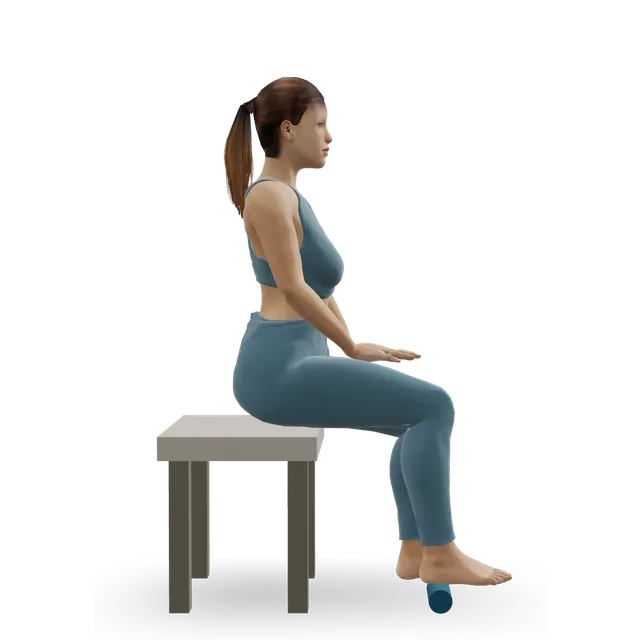
Foot roll (ball or roller) demonstrated on the 3D figure3D demoFoot roll (ball or roller)Beginner · A massage ball

1 to 2 minutes per foot · The move page's dose. Gentle pressure on the arch, not the sore spot; with numb feet or diabetes, check your skin afterwards, as the move page says

Harder: Calf foam rolling

Stationary cycling demonstrated on the 3D figure3D demoStationary cyclingBeginner · Cardio machine

20 to 30 min, easy, seated, in a light gear, every other day · Editorial. With the straps loose and the cleat and insole changes made

Easier: Recumbent exercise bike · Harder: Air bike intervals

Move on when: Easy 30-minute rides with the changes leave no numbness after the ride, and walking is comfortable.

Follow along: a timer, a cue and the next move, one step at a time.
Stage 2

Build: calves, shins, feet and balance

About weeks 2 to 6, 2 to 3 days a week: strength for the lower leg and foot without pressing hard on the forefoot, while rides lengthen within the numbness rule. Doses copy our Morton's neuroma and ball-of-foot guides.

Seated bent-knee calf raise (soleus raise) demonstrated on the 3D figure3D demoSeated bent-knee calf raise (soleus raise)Beginner · A bench or box

3 sets of 15 · As in the Morton's neuroma and ball-of-foot guides

Harder: Slow calf raise

Slow calf raise demonstrated on the 3D figure3D demoSlow calf raiseBeginner · A wall

3 sets of 10, stopping short of full tiptoe · As in those guides. Stopping short of full tiptoe keeps weight off the ball of the foot, as the move page advises

Easier: Seated bent-knee calf raise (soleus raise) · Harder: Standing dumbbell calf raise

Tibialis raise demonstrated on the 3D figure3D demoTibialis raiseBeginner · No equipment

2 to 3 sets of 10 to 15 · As in those guides

Harder: Single-leg tibialis raise

Single-leg stand demonstrated on the 3D figure3D demoSingle-leg standBeginner · A wall

3 holds of 30 s each leg, in shoes · As in those guides. With numb feet, keep a hand on a counter or wall, as the move page says

Easier: Tandem stance and heel-to-toe walk · Harder: Single-leg reach matrix

Move on when: None of these brings on burning, tingling or a pebble feeling, and rides of 45 to 60 minutes leave no numbness afterwards.

Follow along: a timer, a cue and the next move, one step at a time.
Stage 3

Back to longer and harder rides, and keep strong

From about week 6, then ongoing, twice a week. Riding comes back by our suggested steps: add time first, and bring long climbs, big-gear efforts and long events back last, ideally on cooler days at first, because pressure rises with effort and, fitters say, feet swell in the heat.

Single-leg calf raise from a step demonstrated on the 3D figure3D demoSingle-leg calf raise from a stepIntermediate · A step + A wall

2 to 3 sets of 8 to 10 each leg, to half height at first · As in the Morton's neuroma guide. Only after controlled raises on the floor

Easier: Slow calf raise · Harder: Single-leg pogo hops

Step-up demonstrated on the 3D figure3D demoStep-upBeginner · A step

3 sets of 8 to 10 each side · As in the Morton's neuroma and ball-of-foot guides

Easier: Low step-up · Harder: Dumbbell step-up

Tandem stance and heel-to-toe walk demonstrated on the 3D figure3D demoTandem stance and heel-to-toe walkBeginner · A wall

3 holds of 20 to 30 s, then 10 heel-to-toe steps, 2 to 3 times · Editorial. Balance work for numb feet; keep a hand on a counter or wall, as the move page says

Easier: Semi-tandem stance · Harder: Single-leg stand

Stationary cycling demonstrated on the 3D figure3D demoStationary cyclingBeginner · Cardio machine

Every other day: 20 to 30 min, easy, flat or indoors, with the changes made · Our suggestion. Ride a similar route 3 or 4 times within the pain rule before adding anything, then add time, about 10% a week, before hills or harder efforts

Easier: Recumbent exercise bike · Harder: Air bike intervals

Move on when: Our suggestion: keep adding time, about 10% a week, while rides leave no numbness afterwards. If numbness or burning starts, change something at once, and end the ride if it doesn't fade within a few minutes. Loosen the straps again as your feet warm, and check your feet after every ride if they're numb or you have diabetes.

Follow along: a timer, a cue and the next move, one step at a time.

What to change for now

What to change on the bike today (written steps)

Our 3D figure can't show these changes. None has been tested in a trial in riders: they come from one case series, lab pressure studies, walking and running studies of pads, a charity's advice and fitters' experience, and where a step is our suggestion, it says so. Change one thing at a time, a few rides apart.

  • 1. Loosen the straps or dials, especially over the forefoot, before long rides and again as your feet warm and swell. This is fitters' advice: we found no study of strap tightness.
  • 2. Choose shoes wide enough across the ball of the foot: a wide-fit model in your size rather than a longer size (our suggestion; no study has tested shoe width).
  • 3. Move the cleats back towards the ball of the foot, or slightly behind it, a few millimetres at a time, on both shoes. In one uncontrolled series of 21 riders whose cleats sat under the toes, moving them back cut pain by 5 points out of 10. Cleat moves change the hip, knee and ankle angles, so recheck your saddle height afterwards (our suggestion).
  • 4. Set the cleat angle so your feet point the way they naturally do, with some float (our suggestion; cleat angle related to forefoot shape and hip rotation in a study of 37 riders).
  • 5. Try a supportive insole that fills the arch, or a firm insole with forefoot support. Contoured insoles moved load towards the midfoot in lab studies of riders, and a hard insole cut peak forefoot pressure, but none has been tested for symptoms.
  • 6. Try a metatarsal pad or dome placed just behind the ball of the foot, never under the sore spot, and build up the time you wear it gradually (our suggestion). The evidence for pads is walking and running pressure data: placed behind the metatarsal heads, they cut pressure there, while a pad too far forward raised it.
  • 7. Ease off long, hard efforts and long climbs for a while, and spin a lighter gear seated: pressure under the foot rose about 85% from 100 to 200 watts in professional riders.
  • 8. When it starts, unclip and wiggle your toes, or stand and pedal for a few strokes (our suggestion).
  • 9. Very stiff carbon soles aren't automatically the fix: they raised forefoot pressure in one study. If a stiff shoe hurts, try a different one.
  • 10. Check inside the shoe for cleat bolt heads or seams pressing into the sole, and wear thinner socks in the heat (our suggestion).
  • 11. On cold rides: overshoes or oversocks, warmer winter shoes, one warm pair of socks that doesn't squeeze your toes, and a warm core, as Scleroderma & Raynaud's UK suggests.

Sources 21, 23, 43, 27, 28, 30, 32, 34, 5, 6, 10

Custom insoles, injections and surgery

Custom insoles and orthoses had effects that varied from rider to rider, with no consistent change, so try simpler changes first and see a podiatrist if they don't help (our suggestion). For Morton's neuroma, a foot specialist may offer injections or surgery for very severe symptoms; our Morton's neuroma guide covers them. With diabetes, foot care and taking weight off a sore area are the foot team's job, and cleats built to take weight off the forefoot exist if cycling is part of the plan.

Sources 31, 27, 22, 37, 14, 38, 40

Positions to swap, and why

Habit or positionWhy it mattersInstead
Riding on with numbness or burning that won't fadeA nerve or the blood supply is being squeezed, and numbness that lasts needs a GP.Change something at once, and end the ride if it doesn't fade within minutes.
Doing the straps or dials up hard at the start and leaving themFeet swell on long and hot rides, and a squeezed forefoot is the usual suspect (fitters' advice).Snug, not tight, and loosen the forefoot strap as your feet warm (our suggestion).
Buying a longer shoe to get more widthA longer shoe moves the cleat holes and the widest part of the shoe away from your forefoot (our suggestion).A wide-fit model in your size.
A metatarsal pad stuck under the sore spotIn walking studies, pads worked just behind the metatarsal heads, and a pad too far forward raised pressure.Place it just behind the ball of the foot, and build up the time you wear it.
Changing shoes, cleats, insoles and pedals all at onceYou can't tell what helped, and cleat moves change the hip, knee and ankle angles.One change at a time, a few rides apart (our suggestion).
Long, hard efforts and long climbs while it settlesPressure under the foot rose about 85% from 100 to 200 watts.Easier, seated riding in lighter gears.
Kneeling on tucked toes while the ball of the foot hurtsIt puts weight through the front of the foot.Seated calf raises.Try: Seated bent-knee calf raise (soleus raise)
Pogo hops and heel drops during a flareThey're impact through the forefoot (our suggestion). Both are in our strength workout for cyclists, so leave them out for now.Slow calf raises short of full tiptoe, with impact work back last.Try: Slow calf raise
Two pairs of thick socks for the coldSocks that are too thick can restrict blood flow to the toes, Scleroderma & Raynaud's UK says.One warm pair that doesn't squeeze, plus overshoes or oversocks.
Warming cold feet on a radiator, under hot water or in a hot bath straight after a rideThe NHS advises against it for chilblains, and after frostbite it's dangerous.Warm up gradually: dry socks, a warm room, and swing your legs.
Skipping a check of your feet after rides when they're numbPain won't warn you of a rubbing cleat bolt or seam.Check your feet and the inside of your shoes after every ride.

Routines to follow

More moves for this area

Questions people ask

Why do my feet go numb when I cycle?

Usually pressure under the ball of the foot, where the cleat sits and the small nerves to the toes run between the toe bones. Tight or narrow shoes, straps done up hard, feet swelling on long or hot rides and hard efforts all add to it, and the harder you push, the higher the pressure. Cold feet are different: that's the blood supply.

What is "hot foot"?

Burning, numbness or pain under the ball of the foot on the bike, usually building through a long or hard ride and easing when you loosen your shoes or stop. Reviews of cycling injuries describe forefoot pressure and numbness, but no study has followed riders with hot foot, so most advice comes from fitters and lab pressure studies.

How do I stop my feet going numb on the bike?

Loosen the straps, especially over the forefoot, try a wider shoe, move the cleats back towards the ball of the foot in small steps, add a supportive insole or a pad just behind the ball of the foot, and ease off hard efforts for a while. Change one thing at a time, a few rides apart. None of these has been tested in a trial in riders, so keep what helps.

Where should my cleats be?

Under the ball of the foot or slightly behind it, not under the toes (our suggestion). In one uncontrolled series of 21 riders whose cleats sat under the toes, moving them back cut pain by 5 points out of 10 after five rides. Cleat moves change your hip, knee and ankle angles, so move them a few millimetres at a time and recheck your saddle height.

Do metatarsal pads work for cycling?

We don't know: the evidence is walking and running pressure data, not cycling. Placed just behind the metatarsal heads, pads cut pressure there and pain fell as pressure fell, while a pad too far forward raised it. They're cheap to try in cycling shoes; build up the time you wear them gradually.

Are stiffer or carbon shoes better?

Not always: carbon soles raised peak forefoot pressure by 18% in one lab study, while carbon insoles didn't raise pressure in another. Fit across the forefoot matters at least as much, in fitters' experience.

Is it Morton's neuroma?

It may be if the burning or shooting pain is between two toes, often the 3rd and 4th, with a pebble feeling or numb toes, and it lingers off the bike. The NHS suggests wide shoes, soft insoles or metatarsal pads first, and a GP check for any tingling, weakness or numbness in the foot. Our Morton's neuroma guide covers injections and surgery.

My toes go numb and white in the cold. What should I do?

That sounds like Raynaud's. Keep your whole body warm, wear overshoes or oversocks and one warm pair of socks that doesn't squeeze your toes, and warm up gradually afterwards. See a GP if attacks are very bad, on one side only, come with joint pain, rashes or muscle weakness, or start after the age of 30.

I have diabetes. Is cycling OK for my feet?

Usually yes, and it's good exercise, but check your feet and the inside of your shoes after every ride, because numb feet won't warn you of a sore. A new ulcer, a sign of infection or a hot, swollen foot needs your diabetes foot team or GP the same day: NICE asks for these to reach a specialist foot service within 1 working day.

My feet are numb even when I'm not cycling. Is that the bike?

Probably not. Numbness, tingling or burning in both feet that's there whether or not you ride, especially with poor balance or weakness, can be peripheral neuropathy, and in the UK diabetes is the most common cause. See a GP: the sooner it's found, the better.

How long should numbness last after a ride?

Pins and needles from pressure usually stops within a few minutes of taking the pressure off. Numbness that lasts after the ride, keeps coming back or is there all the time needs a GP.

Can I keep riding?

Yes, if the numbness fades within minutes when you change something and you've made the changes on this page. Stop long rides and get checked if it lasts after rides, affects both feet off the bike, or comes with weakness.

Related exercise guides

Other pain guides

Sources

  1. Oliveira 2025 · The main complaints of 1,505 cyclists at bike-fit services (cross-sectional study, J Bodyw Mov Ther)
  2. Wanich 2007 · Cycling injuries of the lower limb (review, J Am Acad Orthop Surg)
  3. Dannenberg 1996 · Injuries among 1,638 riders on a 6-day bicycle tour (prospective cohort study, Am J Sports Med)
  4. Sanderson 2000 · Cadence, power and in-shoe pressure in competitive and recreational cyclists (lab study, J Sports Sci)
  5. Navarro-Martínez 2026 · Power, cadence and plantar pressure in professional cyclists (lab study, Sports)
  6. Jarboe 2003 · Cycling shoe stiffness and forefoot pressure (lab study, Foot Ankle Int)
  7. Baur 2012 · Carbon insoles and plantar pressure in cycling (lab study, Sportverletz Sportschaden)
  8. Davis 2011 · Plantar pressure with clipless and toe-clip pedals (pilot study of 18 people, Muscles Ligaments Tendons J)
  9. NHS · Raynaud's (past its review date: reviewed July 2023, review due July 2026)
  10. Scleroderma & Raynaud's UK · Raynaud's and cycling (read as an archived copy of 5 December 2024)
  11. NHS · Chilblains
  12. NHS · Frostbite
  13. NHS · Peripheral neuropathy (past its review date: reviewed October 2022, review due October 2025)
  14. NICE NG19 · Diabetic foot problems: prevention and management (2015, updated 2019)
  15. NHS · Complications of type 2 diabetes
  16. NHS · Peripheral arterial disease (PAD)
  17. NHS Scotland Centre for Sustainable Delivery · Intermittent claudication: vascular surgery pathway (past its review date: reviewed September 2024, review due September 2026)
  18. NHS · Sciatica
  19. NHS · Pins and needles
  20. NHS · Peripheral neuropathy: diagnosis (past its review date: reviewed October 2022, review due October 2025)
  21. Bonfatti 2024 · Cleat position and foot pain in 21 cyclists (case series without a comparison group, J Sports Med Phys Fitness)
  22. NHS · Morton's neuroma
  23. Chartogne 2023 · Small changes in cleat position in 12 road cyclists (lab study, Sports Biomech)
  24. Firminger 2026 · Cleat position and Achilles tendon strain in 10 novice cyclists (lab and modelling study, Med Sci Sports Exerc)
  25. Paton 2009 · A mid-foot cleat position in 10 competitive cyclists (crossover study, Int J Sports Physiol Perform)
  26. Husband 2024 · Riding position changes and cycling biomechanics and physiology: 47 studies (systematic review, J Sports Sci)
  27. Yeo 2014 · Foot orthoses and in-shoe wedges during cycling: 6 studies (systematic review, J Foot Ankle Res)
  28. Bousie 2013 · Contoured insoles and plantar contact in 12 cyclists (lab study, J Sci Med Sport)
  29. Bousie 2018 · Insole hardness and posting, plantar pressure and comfort in 23 cyclists (lab study, J Sci Med Sport)
  30. Casado-Hernández 2023 · Hard insoles and plantar pressure in cycling (crossover study, Bioengineering)
  31. O'Neill 2011 · Custom foot orthoses in 12 competitive cyclists (lab study, J Sci Med Sport)
  32. Hsi 2005 · Where to place a metatarsal pad in metatarsalgia (walking study of 10 people, Am J Phys Med Rehabil)
  33. Kang 2006 · Metatarsal pads, plantar pressure and pain in metatarsalgia (prospective study of 13 people, BMC Musculoskelet Disord)
  34. Hastings 2007 · Metatarsal pad placement and pressure in 20 people with diabetes and nerve damage (walking study, Foot Ankle Int)
  35. Hähni 2016 · Forefoot cushioning or a metatarsal pad and forefoot pressure in 23 runners (crossover study, J Foot Ankle Res)
  36. Matthews 2019 · Non-surgical treatments for Morton's neuroma (systematic review and meta-analysis, J Foot Ankle Res)
  37. Matthews 2024 · Treatments for Morton's neuroma: 6 trials (Cochrane review)
  38. Bus 2024 · Preventing foot ulcers in people with diabetes (International Working Group on the Diabetic Foot guideline, 2023 update, Diabetes Metab Res Rev)
  39. LeMaster 2008 · Weight-bearing activity and foot ulcers in 79 people with diabetic neuropathy: the Feet First trial (randomised trial, Physical Therapy)
  40. Crews 2017 · A cycling cleat designed for diabetic foot ulcers (preliminary study, J Am Podiatr Med Assoc)
  41. Klein 2008 · A cleat to lower forefoot pressure in recumbent cycling (proof-of-concept study, J Am Podiatr Med Assoc)
  42. NHS · Pain in the ball of the foot
  43. Ramos-Ortega 2014 · Cleat angle and the shape of the lower limb in 37 cyclists (correlational study, Clin J Sport Med)
  44. NHS · Back pain
  45. NHS · Symptoms of a stroke

Exercise education, not a diagnosis or treatment plan. It is written from the guidelines and studies listed above; review by a clinician is pending. If your pain follows an injury, is severe, is getting worse, or comes with any warning sign listed on this page, get it assessed. Health disclaimer.