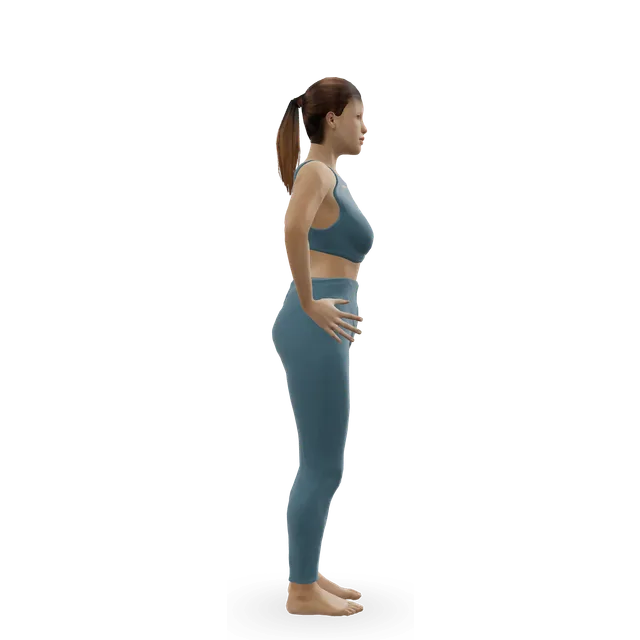
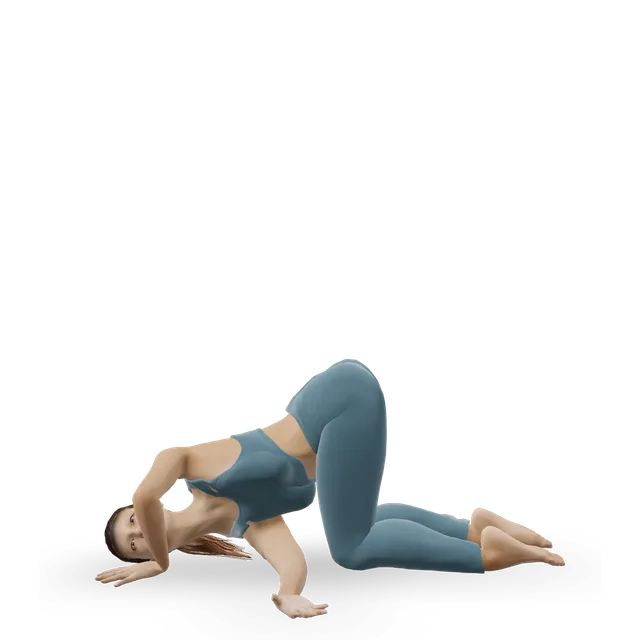
A common shape
Flat-back posture means a flatter lower-back curve, with the pelvis level or tipped back. Healthy curves vary widely, and a flatter one is one of the normal shapes.
Posture guide
Flat back posture means a flatter-than-average curve in your lower back, with the pelvis level or tipped back. Healthy curves vary a lot: on X-rays of 468 adults without back problems, the curve averaged 57 degrees, give or take 11, and the shape of the pelvis helps set it. Flatter curves are a little more common in people with back pain, but that doesn't show the shape causes it.
Flatback syndrome is different: a fixed stoop, usually after spinal surgery or with wear, in which people bend their knees to stand upright, and it needs a spinal specialist. For flat-back posture, one small trial suggests exercise may deepen the curve by a few degrees, and back, hip and core exercises build strength and comfort whatever the angle.
This guide explains what's normal, what 'loss of lumbar lordosis' on a scan means, flatback syndrome, the moves with 3D demos and a 20-minute routine.
Flat-back posture means a flatter lower-back curve, with the pelvis level or tipped back. Healthy curves vary widely, and a flatter one is one of the normal shapes.
On X-rays, people with back pain have slightly flatter curves on average, and a flatter curve went with a modestly higher chance of later back pain in 3 studies. Neither shows the shape causes pain, and a review of 54 studies found no strong link between spinal curves and health.
'Loss of lumbar lordosis' means the curve looked flatter than average on that image, often taken lying down. On its own it doesn't tell you the cause or mean damage.
It's a fixed, stooped posture from a flattened lower spine, usually after spinal surgery or with wear, and it needs a spinal specialist.
In one small trial of 36 women, allocated by order of enrolment rather than at random and not followed up, exercise deepened the curve by about 4 to 7 degrees over 12 weeks. Stretching doesn't change spinal posture. Back, hip and core work builds strength and comfort whatever the angle.
A flatter lower-back curve, often with a flatter upper back too, and the pelvis level or tipped back. It's one of the classic posture types, alongside a deep curve (lordotic posture) and sway-back. The medical word for a flatter curve is hypolordosis.
Source 1
Posture charts list which muscles are 'short' or 'weak' in flat-back posture, for example 'shortened yet hyperactive' hamstrings, but these come from clinical experience. When muscles were measured, hamstring length was only weakly linked with the lower-back curve, and men with short hamstrings stood like men with long ones.
In flat-back posture the body is stacked fairly straight. In sway-back posture the hips sit forward of the ankles and the upper body leans back, with a long rounded upper back and a short, often flatter lower curve. The swayback guide covers that posture.
Source 1
On standing X-rays of 468 adults aged 18 to 80 without back problems, the lower-back curve averaged 57 degrees, give or take 11. In 300 adults it averaged 60, give or take 10, so most healthy people fall somewhere between about 40 and 80 degrees.
The shape of the pelvis, a fixed bone angle called pelvic incidence, partly sets the size of the curve (a correlation of 0.53 in the 468 adults). In 160 volunteers, the lower back took four common normal shapes, set largely by the slope of the top of the sacrum.
A meta-analysis of 35,913 volunteers found the curve flatter in older age groups and the pelvis tipped back further after 60, while the 468-person study found no change in the curve with age. Women tend to have larger curves than men.
Sitting flattens everyone's lower back while they sit: by about half in 50 healthy adults, and from 49 to 34 degrees in 109 people with back pain.
Spinal curves change as children grow, and growth spurts change them differently in girls and boys. In 656 children and teenagers, pelvic incidence, which helps set the curve, averaged about 34 degrees in younger children and 43 in teenagers. In 639 boys around 12, 42% stood in a neutral way, 31% in sway-back and 27% leaning forward. A flat-looking back in a child without pain or stiffness needs nothing.
Reports say 'loss' or 'straightening' of the lumbar lordosis when the lower-back curve looks flatter than average on that image. Flatter curves are a little more common in people with back pain, but the phrase on its own doesn't tell you the cause or mean damage. Ask your GP what it means for you.
Magnetic resonance imaging (MRI) scans are usually done lying down. In 63 people, the whole lower-back curve on MRI was within about 3 degrees of a standing X-ray on average, though single levels differed more, and lying with straight legs reproduced the standing curve to within a median of 3 degrees in 22 people.
In 38 people with back pain, the curve was about 6 degrees flatter than in 38 people without, both lying and standing, and it changed by the same amount between the two positions.
Across 13 X-ray studies (796 people with back pain and 927 without), people with back pain had slightly flatter curves, with a bigger difference in those with disc problems, though the studies varied a lot. In 3 studies that followed 1,657 mostly young people, a flatter curve went with about 37% higher odds of later back pain, but the result was close to no effect and each study measured differently. A review of more than 120 studies called the evidence on lordosis and back pain inconclusive.
A review of 54 studies, mostly of low quality, found no strong evidence linking the spine's front-to-back curves with spinal pain or any other health outcome. An umbrella review of 41 reviews found no agreement that spinal posture causes back pain.
In 600 adults, the size of the lower-back curve wasn't linked to back pain, while the endurance of the back muscles was the factor most linked to it. The study looked at one point in time, so it can't show cause.
Source 25
36 women with flexible flat back and back pain that hadn't improved for 3 months were allocated by the order they enrolled, not at random, to 12 weeks of exercise (60 minutes, 3 times a week) or to physiotherapy with heat, ultrasound and electrical current treatments. Corrective exercise based on Schroth methods deepened the curve from about 33 to 40 degrees and lowered disability scores from 25 to 15 out of 100. Resistance training deepened it from about 33.5 to 37 degrees and lowered disability from 24 to 21. Physiotherapy alone changed neither.
The curve was measured from the first to the fifth lumbar vertebra, so these numbers can't be compared with the normal values above, and nobody was followed up after the 12 weeks.
Source 11
In 12 women with flat or deep lower-back curves, a 12-week exercise programme moved both groups towards the middle of the range. The authors noted that exercise can raise strain on the tissues of the back as well as lower it.
Source 26
Across 23 studies in healthy people, stretching didn't change spinal or pelvic posture, and strengthening didn't significantly change the lower back and pelvis.
Source 12
The Scoliosis Research Society defines it as 'forward posture usually due to a flattened lumbar spine from postoperative or degenerative changes', in which the head may be several centimetres in front of the hips. To stand upright, a person 'must contract the back muscles, and possibly flex at the hips and knees', which can lead to severe pain over time.
Disc degeneration, compression fractures, ankylosing spondylitis, and a laminectomy or spinal fusion that doesn't keep the lower back's curve. After a fusion, the spine at first makes up for it with more curve at the neighbouring levels and less rounding of the upper back; as the back muscles tire, the pelvis tips back and the hips extend to keep the body balanced.
Many people are treated without surgery at first, with physiotherapy including walking and posture training, exercise and pain medicines. A review says non-surgical care 'is frequently unsuccessful' once the imbalance is large (the spine more than 5 cm in front of the pelvis), and that surgery to restore the curve can improve quality of life despite significant complication rates.
Use the exercises on this page for flatback syndrome only if your surgical team agrees (our editorial advice).
Two or three sessions a week of the 20-minute routine below (our editorial starting point). The flat back trial used 60-minute sessions 3 times a week for 12 weeks, and the NHS asks adults to do muscle-strengthening activity on at least 2 days a week.
Our editorial starting points, matching the swayback guide: sphinx, 30 to 60 seconds, 3 times; low cobra, 8 slow lifts with 3 breaths at the top; locust, 3 to 5 holds of 10 to 20 seconds. The prone back raise has a move page dose: 2 to 3 sets of 10 to 15 slow reps, stopping with 2 or 3 reps in reserve. The prone press-up's page dose (10 slow repetitions, 3 to 5 times a day, while it helps) is for people whose back is comfortable arching.
Source 25
Hip hinges, 2 sets of 8 to 10, then kettlebell deadlifts, 2 to 3 sets of 8 to 10; bridges, 2 to 3 sets of 10 to 12; bird dogs, 2 to 3 sets of 6 to 8 each side (our editorial starting points).
Sitting flattens everyone's lower back, and a review of 24 studies found strong evidence that sitting at work isn't linked to back pain. The authors of the 109-patient X-ray study suggested that a lumbar support that increases the curve may help when you sit; that's their discussion, not a trial, so treat it as a comfort choice.
Stretch your hamstrings for comfort or to bend further, not to change your curve: standing posture didn't differ with hamstring length, and stretching doesn't change posture.
At the doses above. Skip any arching move that sends pain, tingling or numbness down a leg. The 45-degree back extension is for a gym: 2 to 3 sets of 8 to 12, moving slowly if you have osteoporosis (editorial).
 3D demoSphinx pose (Salamba Bhujangasana)Beginner · No equipment
 3D demoLow cobra (Bhujangasana)Beginner · No equipment
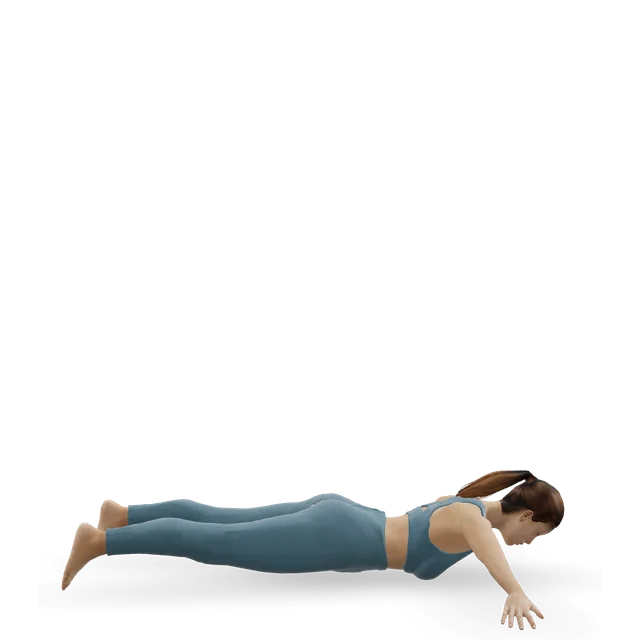 3D demoProne back raise, arms out to the sidesBeginner · No equipment
 3D demoLocust pose (Salabhasana)Beginner · No equipment
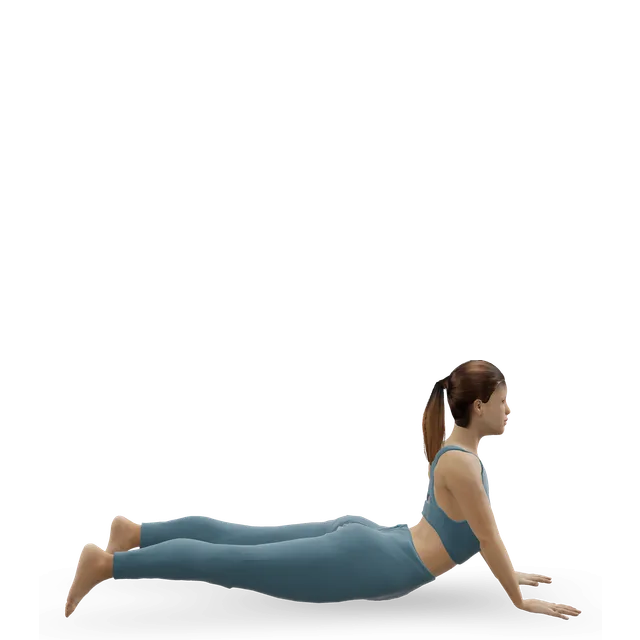 3D demoProne press-up (McKenzie press-up)Beginner · No equipment
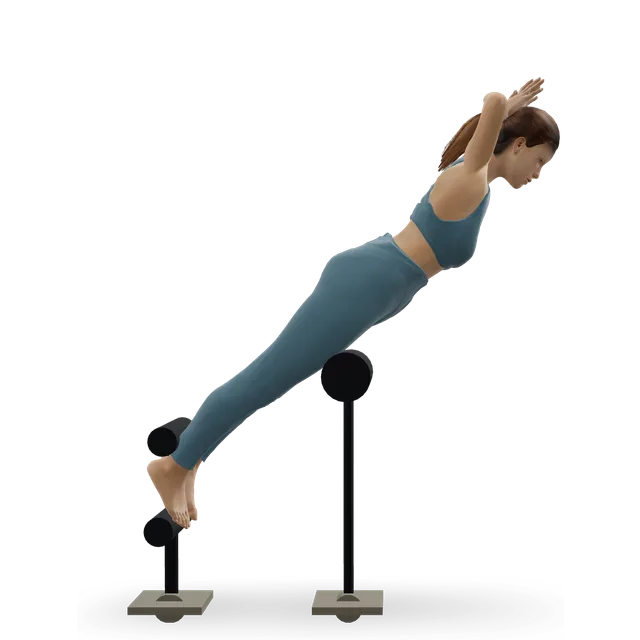 3D demoBack extension on a 45-degree benchIntermediate · A bench or box
Cat-cow at its move page's dose (8 waves, slower than feels natural); the rest at the editorial doses above. The hamstring stretch, 2 to 3 holds of 30 seconds each leg, is optional, for comfort.
The posterior pelvic tilt and flat back routine 2 or 3 times a week (editorial). Yoga for posture includes sphinx, low cobra and locust.
A 20-minute routine for a tucked pelvis or a flat lower back: pelvic tilts, hip hinges, back extensions, bridges and bird dogs, for control and strength.
20 minBeginner10 movesNo equipmentTwenty-five minutes of back-strengthening yoga for posture: arm and leg reaches, face-down back lifts and standing poses with the arms raised.
25 minBeginner15 movesNo equipmentA 15-minute routine that moves your neck, upper back and lower back through bending, arching, side bending and twisting, then holds the spine steady.
15 minBeginner12 movesNo equipmentA back workout at home with dumbbells and a band: pull-ups or band-assisted pulls, two rows, face pulls, reverse flys, shrugs and Romanian deadlifts.
40 minIntermediate14 movesA band, Pull-up barA 30-minute session from the hip hinge to your first deadlift: hinge practice, kettlebell deadlifts, slow Romanian deadlifts, a light bar and a carry.
30 minBeginner9 movesA kettlebell, A dumbbellPosture exercises are not where to start if you have back pain with any of these. In the US, call 911.
Source 30
If you have back pain and:
Source 30
If back pain:
Source 30
Needing to bend your knees to stand upright, leaning further forward as the day goes on, or a stoop that is new or getting worse can be flatback syndrome, above all after spinal surgery. See a GP, who can refer you to a spinal specialist.
Back pain and stiffness that get better with exercise but not with rest, are worse in the morning and at night, or come with pain around your buttocks, especially if they started in your teens or as a young adult, can be ankylosing spondylitis. See a GP, who can refer you to a rheumatologist.
A child's flat-looking back needs nothing on its own. See a GP for back pain that keeps going, or stiffness that's getting worse (our editorial advice).
Healthy curves vary widely, and a flatter one is one of the normal shapes. Flatter curves go with back pain a little more often, but that doesn't show the shape causes it, and reviews find no strong link between spinal curves and health.
Standing posture didn't differ with hamstring length, hamstring length was only weakly linked with the curve, and stretching doesn't change spinal posture.
It describes the curve on that image, often taken lying down. People with back pain were only about 6 degrees flatter than people without, so the phrase isn't specific.
Physiotherapy is often tried first, but a review says non-surgical care is frequently unsuccessful once the imbalance is large. It needs a spinal specialist.
It's a flatter-than-average curve in your lower back, with the pelvis level or tipped back, and often a flatter upper back too. It's one of the classic ways people stand, alongside a deeper curve and sway-back. The medical word is hypolordosis.
Not necessarily. The lower-back curve varies widely in healthy adults, and flatter curves are one of the normal shapes. Flatter curves are a little more common in people with back pain, but that doesn't show the shape caused it.
Partly the shape of your pelvis, which helps set the size of the curve. Disc wear with age, ankylosing spondylitis, compression fractures and spinal fusion can flatten the curve too.
It's a fixed, stooped posture from a flattened lower spine, usually after spinal surgery or with wear, in which the head ends up in front of the hips. People bend their knees and work their back muscles hard to stand upright. It needs a spinal specialist; flat-back posture, in someone who can stand up straight easily, is different.
Exercise reliably builds back, glute and trunk strength; changing the curve itself is less certain. In one 12-week trial of 36 women, corrective exercise deepened the curve by about 7 degrees and resistance training by about 4, but the groups weren't randomly allocated and nobody was followed up. Stretching doesn't change spinal posture.
Back extensions such as sphinx, low cobra, the prone back raise and locust, plus hip hinges, glute bridges and bird dogs. Two or three sessions a week is a sensible start. The 20-minute routine on this page puts them together.
It means the curve looked flatter than average on that image, and MRI scans are usually done lying down. People with back pain were about 6 degrees flatter than people without, lying and standing, so the phrase on its own doesn't tell you the cause. Ask your GP what it means for you.
Possibly after 60: a meta-analysis of 35,913 volunteers found the curve flatter and the pelvis tipped back further in older age groups. A study of 468 healthy adults aged 18 to 80 found no change with age. Height loss or a new stoop in later life needs a GP check.
In flat-back posture the lower curve is flatter and the body is stacked fairly straight. In sway-back the hips sit forward of the ankles and the upper body leans back, with a long rounded upper back. Both are common ways to stand.
Physiotherapy, posture and walking training, and pain medicines are tried first, and many people are treated without surgery. When the imbalance is large, non-surgical care is often unsuccessful, and surgery to restore the curve can improve quality of life despite significant risks.
Sitting flattens everyone's lower back while they sit, by around a third to a half. We found no evidence that it permanently changes your standing curve, and sitting at work isn't a proven cause of back pain.
Probably not. Men with short, medium and long hamstrings stood the same, and in teenage girls hamstring length was only weakly linked with the lower-back curve. Hamstrings affect how far your pelvis tips when you bend to touch your toes, not how you stand.
Exercise education, not a diagnosis or treatment plan, and clinical review of these guides is pending. Get a curve or hunch that is new or getting worse checked, above all in a growing child or after a fall, and get urgent help for numbness or weakness in the legs or a change in bladder or bowel control. Health disclaimer.