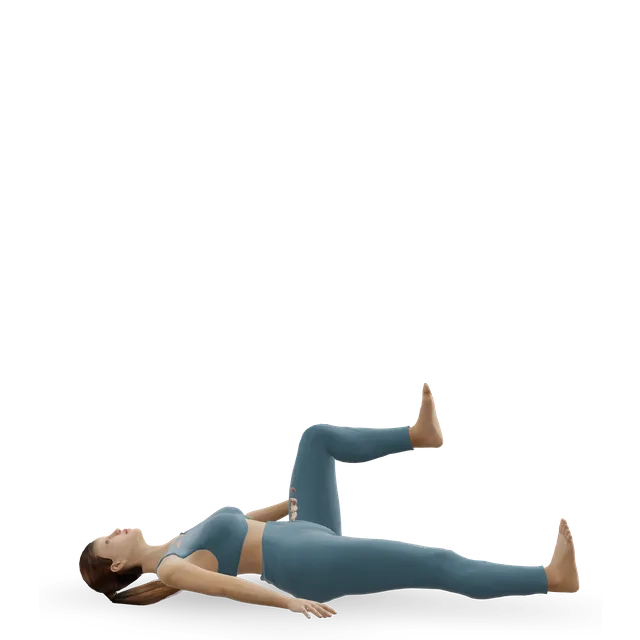
Walk from the first dayStrong evidence
Every NHS plan gets people up and walking within hours or the next day, with frequent short walks that build each day; one leaflet says "frequent shorter walks are better than fewer longer ones". A London NHS hospital's plan aims to build up to 150 minutes a week of walking that leaves you warm and slightly out of breath.
In a US trial of 250 people after complex lumbar surgery, a programme started at 3 months, with a walking goal, a pedometer and phone calls, roughly doubled the gain in walking at 4 months, and some of the gain lasted to a year. Its effect on disability hasn't been reported yet, and no trial has tested whether a walking programme changes pain or disability after back surgery.
Sources 3, 1, 11, 4, 6, 12
Exercise from about 4 to 6 weeks speeds recovery after disc surgeryEmerging evidence
A Cochrane review of 22 trials (2,503 people) found that exercise programmes starting 4 to 6 weeks after disc surgery reduced pain and disability faster than no treatment in the short term, though not in the long term. More intense programmes did a little better than gentle ones, and programmes at home did about as well as supervised ones. None of the trials found more repeat operations. Programmes started straight after surgery did no better than their comparisons, which included exercise.
The evidence is low to very low quality, and most programmes were tested in only one trial.
Source 13
After a decompression for stenosis, active rehabilitation helpsEmerging evidence
A Cochrane review of 3 trials (373 people) found that active rehabilitation, started 6 weeks to 3 months after the operation in sessions of 30 to 90 minutes once or twice a week, improved back-related function more than usual care: by about 20% in the short term and 23% at a year, on moderate-quality evidence. Back pain and, at a year, leg pain eased more too. No harms were reported, and the effects were small to medium.
Source 14
After a fusion, the evidence is thinnerMixed evidence
A 2016 review found only 3 trials. Pooling 2 of them (237 people), programmes combining exercise with a cognitive-behavioural approach, a kind of talking therapy, reduced disability and fear of movement more than usual care, on low-quality evidence. In a trial of 52 people, starting functional training in the first 12 weeks improved walking distance at 3 months but not at 6 months, with no difference in disability.
Sources 15, 16
Bending, lifting and sitting limits after a discectomy made no differenceEmerging evidence
In a 2026 trial of 200 people after a microdiscectomy, 2 weeks of limits on sitting (15 to 30 minutes in every 2 hours), lifting (under 5 kg) and strenuous activity gave no better results at a year than resuming normal activities as comfort allowed. The disc bulged again in 10% with limits and 14% without, a difference that could be chance, and activity monitors showed only 1 in 10 kept to the limits. In another trial of 108 people, 2 weeks of restrictions did as well as 6. In 152 people given no restrictions at all, 98% returned to work, after an average of 1.2 weeks, and returning very early wasn't linked to sciatica coming back or another operation.
There are gaps. A 2025 review found no study of restrictions after a fusion, and in a 2026 survey of 703 spine surgeons, 79% still restricted activity after a discectomy. NHS hospitals disagree too: one tells people after low back surgery it is safe to lift, bend, twist and sit for as long as they like, while others advise avoiding lifting and bending for at least 6 weeks, and heavy lifting for 6 months after a fusion. Your team's advice comes first.
Sources 8, 9, 17, 18, 19, 6, 1, 4
A brace after a fusion: no benefit shownEmerging evidence
In 5 trials (362 people) after a fusion, wearing a brace made no difference to pain, function, complications or whether the bones fused. In one trial of 90 people, 8 weeks in a corset gave the same results at 2 years as none. Some surgeons still prescribe one; wear it if yours does.
Sources 20, 21
Getting back to workEmerging evidence
Across 31 studies, 78% of people went back to work after a microdiscectomy, at an average of about 5 weeks, and going back became less likely after about 6 weeks. A review of 63 studies (7,100 people) found time off ranging from under a week to 20 weeks, with work before the operation, other illnesses, age and how long the symptoms had lasted predicting it. A 2026 review found going back early didn't lead to worse results or the disc bulging again. These are mostly observational studies.
Sources 22, 23, 24
Exercise before the operation: unprovenMixed evidence
A 2021 review found programmes before lumbar surgery based on cognitive-behavioural therapy did no better than usual care, and too little evidence on exercise. A 2025 review of 8 trials (739 people) found exercise before surgery slightly improved disability at 3 months and back pain at 6 months, on very low-certainty evidence. In a 2026 trial of 164 people aged 75 and over having a fusion, 4 weeks of exercise, nutrition and psychological support before the operation cut complications within 90 days (75% against 91%). Staying active before surgery is sensible, but it isn't proven to change the result.
Sources 25, 26, 27
Surgery or not: what the trials foundStrong evidence
For sciatica from a disc, early surgery gave faster relief of leg pain than a longer try without surgery, but by a year 95% in both groups had recovered, and at 5 years there were no differences; 46% of the group without early surgery had an operation later. For sciatica lasting 4 to 12 months, a microdiscectomy left much less leg pain at 6 months (2.8 against 5.2 out of 10). The sciatica, herniated disc, spinal stenosis and spondylolisthesis guides cover these decisions in full.
Sources 5, 28, 29, 30