Degenerative disc disease: what the label means, what scans show, and what helps
"Degenerative disc disease" is a name for the changes that show on spine scans as discs age: drying, flattening and bulging. It sounds alarming, but these changes are found in most people over 40 who have no back pain at all, and on their own they don't explain pain or predict how your back will feel.
If you've been given this label, the treatment is the same as for other back pain that lasts: keep active, build strength and confidence, including in bending and lifting, and choose exercise you'll keep doing. This guide explains what scans do and don't show, what trials found on surgery and antibiotics, and gives a staged plan with 3D demos.
Exercise is for pain that has been checked or is clearly mild and settling.
Get urgent medical help if
Call 999 or go to A&E: loss of feeling or numbness around the genitals or bottom, new trouble peeing or controlling your bladder or bowels, changes in genital sensation during sex or problems with erections or orgasm, or pain, tingling, weakness or numbness in both legs. These are signs of cauda equina syndrome, which needs treating in hospital urgently. Don't drive yourself.
Call 999 or go to A&E: back pain with chest pain, or back pain that started after a serious accident, such as a car crash.
Same day: leg weakness that is getting worse.
Same day (GP or NHS 111): back pain and you feel hot, cold, shivery or generally unwell, or severe pain that starts suddenly or is getting worse quickly.
Same day: you have or have had cancer, and new back pain that is severe and doesn't let up, is getting steadily worse, is worse at night and disturbs your sleep, is worse when you cough, sneeze or strain, or comes with tenderness over the spine. Contact your cancer team or GP urgently. With cancer, new weakness, difficulty walking, numbness or bladder or bowel problems are an emergency.
See a doctor or physiotherapist if
Back pain that hasn't improved after a few weeks of looking after it at home, stops you doing day-to-day activities, or worries you.
Unexplained weight loss, or a lump, swelling or change in the shape of your back.
Pain that doesn't improve with rest or is worse at night, or pain that is worse when you sneeze, cough or poo.
Back pain that started before 45 and has lasted more than 3 months, especially if it wakes you in the second half of the night, comes with buttock pain, eases with movement or within 48 hours of anti-inflammatories, or you have psoriasis or a parent, sibling or child with spondyloarthritis. These can point to inflammatory back pain (axial spondyloarthritis, such as ankylosing spondylitis); the National Institute for Health and Care Excellence (NICE) refers people with four or more of these features to a rheumatologist.
Unexplained back pain with muscle spasms, loss of height, or a curved spine or change in posture: a possible osteoporotic spinal fracture, more likely with older age or long-term steroid tablets.
Pain spreading below the knee, with tingling, numbness or weakness: this points to an irritated nerve (sciatica), which has its own guide.
Understand it
What the label means
Discs are the cushions between the bones of the spine. With age they lose water and height, and their layers become less distinct. Scan reports describe this as degeneration, desiccation (drying), height loss, bulging, or wear and tear.
"Degenerative disc disease" is a name for these scan changes, not a separate disease. The American Academy of Orthopaedic Surgeons uses it this way for the "smaller disk spaces" seen on X-rays of many older adults.
What scans show in people with no back painStrong evidence
A review of 33 studies pooled the scans of 3,110 people who had no back pain. The authors concluded that many of these features are "likely part of normal aging and unassociated with pain". The estimates for people in their 70s and 80s come from only a few small studies.
Disc degeneration: 37% at age 20, 68% at 40, 88% at 60 and 96% at 80.
Disc bulges: 30% at 20, 50% at 40, 69% at 60 and 84% at 80.
Disc protrusions: 29% at 20, rising to 43% at 80.
Small tears in the outer disc (annular fissures): 19% at 20, rising to 29% at 80.
What a finding does and doesn't meanEmerging evidence
A second review compared MRI (magnetic resonance imaging) scans of people aged 50 or under with and without back pain. Some findings were more common in those with pain, including disc bulges, protrusions, Modic type 1 changes and degeneration; others weren't, including annular fissures. So a finding can shift the odds a little in a younger person, but because the same findings are so common in people without pain, a scan can't show that your pain comes from a disc.
Studies comparing MRI with discography, an injection test into the disc, found some findings modestly informative, which doesn't mean they guide treatment. The Chartered Society of Physiotherapy (CSP) says a scan "sometimes will, but most often won't" show exactly what is wrong, and that scans "can cause fear that influences behaviour, making the problem worse".
In an online experiment, 1,375 people were each given one of six labels for the same back pain. "Degeneration", "disc bulge" and "arthritis" made people rate scans, surgery and second opinions as more needed, the problem as more serious and recovery as less likely than "episode of back pain" or "lumbar sprain" did. The effect was largest in people with back pain who had sought care.
In a study of clinic letters, patients who used degenerative words such as "wear and tear" expected a worse outcome, and they used these words more when specialists' letters did. In 44 people with back pain, those given a factual explanation of their MRI report did worse at 6 weeks than those reassured that the findings were normal changes. Adding normal-prevalence figures to the scan reports of 238,886 people didn't reduce later spine care, though opioid prescribing fell slightly.
Modic changes are signal changes on MRI in the bone next to a disc; type 1 shows fluid in the bone. They were linked with back pain in younger people in one review, and a theory that some are a low-grade infection led to trials of antibiotics, described below.
The scan changes build slowly over decades, and they don't tell you how your back will feel. Back pain itself tends to come and go: NICE notes that most episodes improve within weeks to months, but up to a third of people still have at least moderate pain a year after an episode that needed care, and episodes often come back.
Exercise is the main treatment, as for other long-lasting back painStrong evidence
In a Cochrane review of 249 trials in long-lasting back pain, exercise reduced pain by about 15 points out of 100 and improved function by about 7 compared with no treatment, usual care or placebo (moderate certainty). Motor control or "core" exercise was no better than other exercise (29 trials, 2,431 people). NICE recommends advice on self-management and staying active, and suggests considering a group exercise programme.
These trials were in long-lasting back pain in general, not in people labelled with degenerative disc disease. The label doesn't change the treatment, so the evidence is borrowed, and the benefit is modest: choose the exercise you'll keep doing.
Fusion surgery: no better, or only slightly better, than intensive rehabilitationStrong evidence
In 64 people aged 25 to 60 with disc degeneration and at least a year of pain, a 0 to 100 disability score fell from 41 to 26 after fusion and from 42 to 30 after a programme of education and exercise, a difference that could be chance; 18% of the surgery group had early complications. In a UK trial of 349 people, fusion was 4 points better at 2 years, which the authors called marginal, with no difference in walking or other outcomes.
Following 473 people from three such trials for an average of 11 years, the difference between fusion and rehabilitation was less than 1 point. NICE says not to offer spinal fusion for low back pain except within a trial.
Disc replacement: a small benefit, below what the trial counted as importantEmerging evidence
In 173 people with long-lasting back pain and degenerative discs, a disc replacement beat 12 to 15 days of intensive rehabilitation by 8.4 points on a 0 to 100 disability score at 2 years, short of the 10 points the trial set as important. One person had a leg amputated after a further operation. The authors noted how much many people in the rehabilitation group improved too. NICE says not to offer disc replacement for low back pain.
Bending and lifting are safe to rebuildEmerging evidence
In the trial where rehabilitation matched fusion, the programme began with a lecture explaining that ordinary physical activity would not harm the disc, with "a recommendation to use the back and bend it", reinforced by three exercise sessions a day for 3 weeks. Fear of movement and forward-bending reach improved more than after surgery. The Chartered Society of Physiotherapy's advice: "Don't fear twisting and bending".
Exercise hasn't been shown to rebuild a discMixed evidence
In 40 people with long-lasting back pain, 6 months of progressive aerobic and strength exercise didn't change the water content of the discs on MRI compared with motor control training and hands-on therapy. Runners had healthier-looking discs than non-runners in a cross-sectional study, especially those whose activity included fast walking and slow running, but that is a link, not proof that running changes discs. A review suggests movement at walking and jogging pace may suit discs better than static, twisting or heavily loaded bending. So exercise for pain, function and fitness, not to repair a disc.
Antibiotics for Modic changes: not recommended routinelyMixed evidence
A Danish trial of 162 people with long-lasting back pain after a disc herniation and Modic type 1 changes reported large improvements after 100 days of antibiotics. The larger Norwegian trial of 180 people with Modic type 1 or 2 changes found 3 months of amoxicillin made no clinically important difference at a year, and 56% had side effects from the drug against 34% on placebo. The trials disagree, and the larger one is negative.
Walking can help keep it from coming backEmerging evidence
In 701 adults who had recovered from an episode of back pain, a walking programme building towards 30 minutes on 5 days a week, with education, delayed the next episode that limited their activities (a median of 208 against 112 days). The trial was in back pain in general, so the evidence is borrowed, but the label doesn't change the advice.
Injections, belts and traction aren't recommendedStrong evidence
NICE says not to offer spinal injections, belts or corsets, traction, acupuncture or electrical nerve stimulation machines for low back pain, and to consider hands-on therapy such as manipulation or massage only alongside exercise.
The back pain rule, and bending is allowedEmerging evidence
Some discomfort during exercise is fine and doesn't mean you are doing damage: the Chartered Society of Physiotherapy calls "pain equals damage" a myth. Aim for pain you would call mild to moderate, no more than about 5 out of 10, that settles within an hour or so and leaves your back no worse the next morning. If it is worse, do less next time (fewer reps, a smaller range, a lighter load), not nothing.
Bending practice may ache a little at first. That is expected and isn't damage, as long as it settles by the next morning; the rehabilitation that matched surgery taught people to use their backs and bend them. The label on your scan doesn't change this rule.
Stop or shrink any move that sends pain, pins and needles or numbness further down a leg, and if your pain keeps getting worse, stop and see a GP for advice, as the NHS says. The 5 out of 10 figure is editorial, matching this site's other back guides.
Start at the first stage. Each move opens a full guide with a 3D demo.
Stage 1
Move often, and find what's comfortable (weeks 0 to 2, or during a flare)
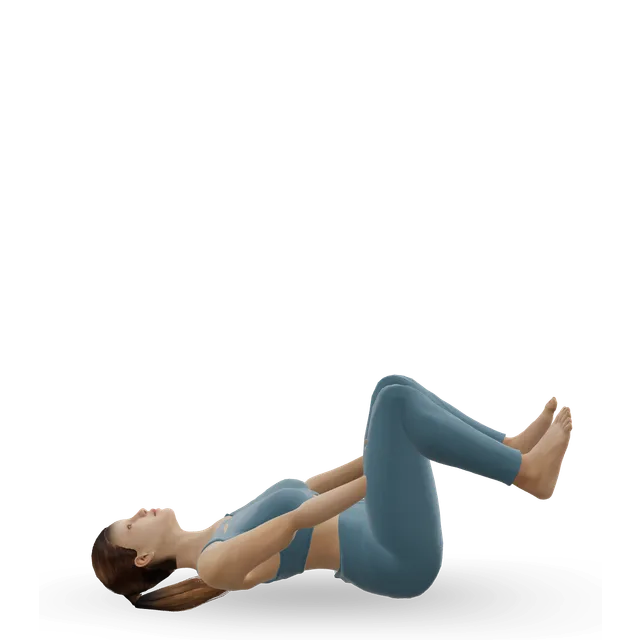
Little and often. Use whichever of the knee-to-chest stretch and the sphinx eases your back; you don't need both. The NHS suggests a heat pack for stiffness or muscle spasm. Doses are editorial unless marked.
Move on when: You can walk for 15 to 20 minutes, and your back is no worse the next morning.
Follow along: a timer, a cue and the next move, one step at a time.
Stage 2
Build strength, and practise bending (about weeks 2 to 8)
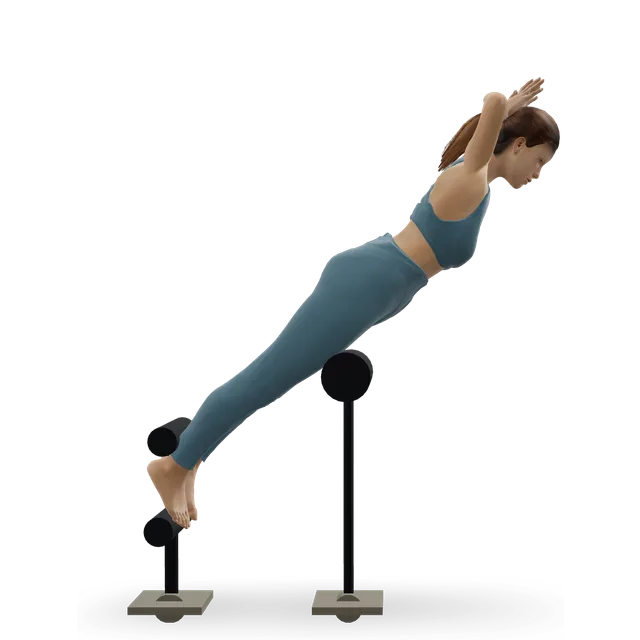
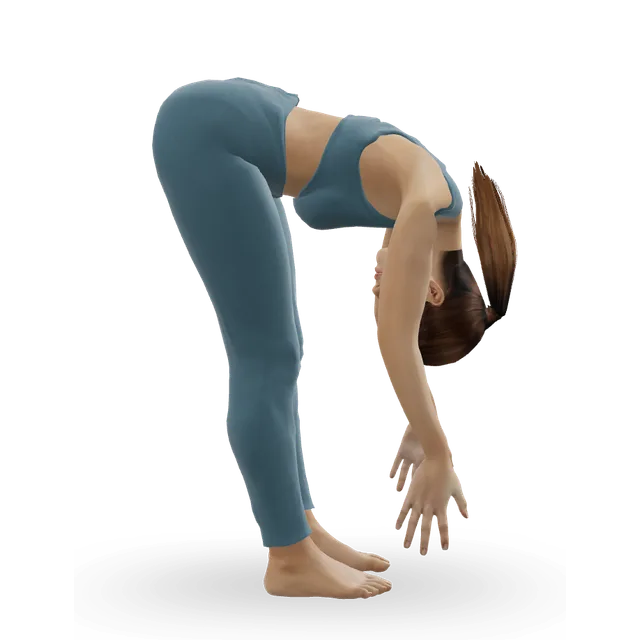
Two or three sessions a week, plus walking building towards 30 minutes on 5 days a week, the WalkBack trial's target. The rehabilitation that matched spinal fusion taught that ordinary activity won't harm the disc and recommended using the back and bending it: the wall roll-down is that practice. Doses are editorial unless marked.
Move on when: You've done most of your planned sessions for a few weeks, and any ache settles by the next morning.
Follow along: a timer, a cue and the next move, one step at a time.
Stage 3
Load it, and keep going (from about week 8)
Add load one change at a time, and keep two strength days a week alongside an activity you enjoy. If you like running, a gradual walk-run plan is fine. Doses are editorial unless marked.
5 slow roll-downs, about 20 s each way · The move's own dose. Bending practice once the wall roll-down is easy; skip it if bending forward brings on leg pain
Move on when: Keep it going, adding load or a new activity one change at a time.
Follow along: a timer, a cue and the next move, one step at a time.
What to change for now
During a flare
Keep moving, little and often, and go back to stage 1 for a few days. The NHS advises staying active and carrying on with your daily activities, and NICE recommends encouragement to continue with normal activities. Favour whichever direction eases the pain for now, and swap sit-ups for the dead bug until the flare settles.
NICE advises against routine imaging for back pain, and a repeat scan is unlikely to change what helps. If a report worries you, ask for it to be explained in plain language: "normal age changes" describes most of it. The label affects how serious people think their back is, so it's worth knowing what it does and doesn't mean.
If you enjoy running, there's no need to give it up. Build up gradually with walk-run intervals: people whose activity included fast walking and slow running had healthier-looking discs in one study, though that is a link, not proof.
Rehabilitation that taught people to use their back and bend it matched spinal fusion, and the Chartered Society of Physiotherapy says don't fear twisting and bending.
Practise bending: the wall roll-down, then the segmental roll-down and hip-hinge lifts.Try: Wall roll-down (wall Pilates)
Repeat scans to check on the degeneration
NICE advises against routine imaging, the findings are common without pain, and the label can raise fear.
Track what you can do instead: walking time, sit-to-stands and lifting.
Calling your spine crumbling or worn out
Degenerative words are linked with expecting a worse outcome.
"Normal age changes": as the Chartered Society of Physiotherapy puts it, even people without back pain have changes in their spine.
Long spells in bed during a flare
The NHS and NICE advise staying active and carrying on with normal activities.
It's the name often given to age-related changes in the discs on a scan: drying, flattening and bulging. It isn't a separate disease, and these changes are found in most people over 40 who have no back pain.
Is degenerative disc disease serious?
Usually not. The changes are common in people without pain and become more common with age. What matters is how your back feels and what you can do, and exercise helps with both. Warning signs such as numbness around the genitals or new bladder problems need urgent help.
Can degenerative disc disease be reversed?
The scan changes don't reverse, and 6 months of exercise didn't change the discs on MRI in a trial. Pain and function can still improve, and that's what exercise is for.
What are the best exercises for degenerative disc disease?
The same as for other long-lasting back pain: walking, strength and trunk exercises, Pilates or yoga all help a little, and the best is the one you'll keep doing. The plan here builds from gentle movement to bending and lifting with confidence.
What exercises should I avoid with degenerative disc disease?
None is banned. The rehabilitation that matched spinal fusion taught people to use their back and bend it. During a flare, favour the direction that eases your pain and swap sit-ups for a dead bug for a while.
Is walking good for degenerative disc disease?
Yes. A walking programme building to 30 minutes on 5 days a week delayed the next bout of back pain in people who had recovered from one. Start where you are and add a few minutes at a time.
Do I need surgery or a disc replacement?
NICE says not to offer disc replacement for low back pain, and fusion only within a trial. In trials, fusion and disc replacement did little better than intensive rehabilitation, and fusion was no different after about 11 years.
Is degenerative disc disease the same as arthritis?
They often go together: wear in the discs and arthritis in the small facet joints behind them both become more common with age, and both are common on scans of people without pain. The facet joint pain guide covers the joints, and in the neck the same changes are called cervical spondylosis.
What are Modic changes, and do antibiotics help?
Modic changes are signal changes in the bone next to a disc on an MRI scan. In the largest trial, 3 months of antibiotics gave no clinically important benefit and more side effects.
Should I have another scan?
Usually not: NICE advises against routine imaging, and another scan is unlikely to change what helps. A scan matters if there are warning signs or surgery is being planned.
Why does the word "degenerative" matter?
In an experiment with 1,375 people, words like "degeneration" made people think scans and surgery were more needed and recovery less likely than "episode of back pain" did. The label describes common age changes; it doesn't predict your future.
Exercise education, not a diagnosis or treatment plan. It is written from the guidelines and studies listed above; review by a clinician is pending. If your pain follows an injury, is severe, is getting worse, or comes with any warning sign listed on this page, get it assessed. Health disclaimer.