Scars take a year or more to mature
A wound has about half its final strength at 6 weeks and never more than about 80% of the original. Remodelling goes on for up to a year or more, and most scars soften and fade over 1 to 2 years.
Fascia guide
A scar is the body's patch: new collagen laid down fast, then remodelled for a year or more. It never gets back the full strength or stretch of the skin and fascia it replaced, but most scars soften, flatten and fade over 1 to 2 years.
Massage, silicone, sun protection and movement can help a scar settle and stay mobile, though most of the evidence comes from small studies. This guide explains what happens in a scar and the fascia around it, when to start massage after surgery, how to do it, what silicone and taping add, and the warning signs that need a doctor.
A wound has about half its final strength at 6 weeks and never more than about 80% of the original. Remodelling goes on for up to a year or more, and most scars soften and fade over 1 to 2 years.
Studies of scar massage report less pain, itch and tightness, but they're mostly small, they measured results in many different ways, and much of the evidence is from burn scars. Massage won't make a scar disappear.
Wait until the wound has closed, the stitches or clips are out and there are no scabs: usually 2 to 4 weeks after many operations, and after your 6-week check following a caesarean. Your surgical team's advice comes first.
Use unperfumed cream or plain oil, and press firmly enough to whiten the skin but not to hurt, for 5 to 10 minutes, 2 to 3 times a day, for months.
Silicone gel or sheets reduce raised scarring a little, with weak but consistent evidence. Keep a new scar covered, or use sun cream with a sun protection factor (SPF) of 30 or more, for at least a year.
In a trial of 392 women, exercise starting a week or so after breast cancer surgery improved arm function at a year, with no more complications. In pigs, restricting movement after a small fascia injury made the layers of fascia glide less.
After a wound, the body lays down new collagen quickly and in a disorganised way, then realigns and cross-links it. That remodelling can last up to a year or more. A wound has about half its final strength by 6 weeks, and the most it can ever reach is about 80% of the original.
A new scar is normally red, hard and raised, and a firm 'healing ridge' under a fresh wound is normal. NHS guidance says most scars fade over up to 2 years, taking up to 18 months to mature and from 3 months to 2 years to become paler, flatter and softer.
Fascia researchers separate densification, a thickened glide layer that can ease quickly, from fibrosis, in which trauma, surgery, diabetes and ageing change the fibrous layers themselves. A surgical scar is the second kind. Scars can tie skin to the layers below, which is why hand therapists use massage mainly to improve glide: 98% of 116 surveyed in Australia did, though few measured the result.
In pigs, a small injury to the low-back fascia plus 8 weeks of restricted movement cut the glide between fascial layers by 52%, even on the uninjured side.
Source 13
After surgery in the abdomen or pelvis, bands of scar tissue between organs and the lining of the abdomen (adhesions) are common. Across 196 studies, they caused over half of small bowel blockages after abdominal surgery, and about 2 in 100 patients had one.
Source 19
A hypertrophic scar is raised and firm but stays within the wound and usually flattens with time. A keloid grows beyond the original wound and doesn't usually settle without treatment. Keloids are more common in people of African, Asian or Hispanic descent and usually appear between puberty and 30. Both are best understood as ongoing inflammation deep in the skin, made worse by tension and irritation.
After common operations, 10% to 50% of people have pain that persists and 2% to 10% have severe pain, mostly from nerve injury. After a caesarean, wound pain persisted in about 15% of women at 3 to 6 months and 11% at a year or more (15 studies, 4,475 women).
A 2022 review of 25 studies of scars after surgery (1,515 people) found every study reported some benefit for pain, movement or the scar itself. But the studies measured results in 45 different ways, ranged from one session to three times a day for 6 months, and 13 added other treatments. An earlier review found 27 of 30 surgical scars improved but called the evidence weak.
Small studies without a comparison group reported softer, less tender caesarean scars and less stuck scars on the limbs. Much of the firmer evidence is from burn scars, below, so it may not carry over to a neat surgical scar.
Across 15 trials (780 adults), massage reduced burn scar pain by about 1.5 points on a 0 to 10 scale and itch by 0.4 points, with unclear effects on stretchiness and redness. Other reviews agree on pain and itch, and in 146 people with raised burn scars, adding massage to standard care improved thickness, colour and elasticity. The studies are of low to moderate quality.
Hands-on therapy reduced adhesions inside the abdomen in rats. In people, the studies are small and uncontrolled, and dense tissue needs far more force than hands apply to change shape. Massage may make a scar softer, more mobile and less sensitive; breaking it up isn't shown.
In a Cochrane review of 20 trials (873 people), silicone gel sheeting roughly halved the risk of raised scars in people prone to them and improved thickness and colour, but the trials were of poor quality and open to bias. After surgery, silicone gel did better than placebo or nothing across 6 trials (375 people), and matched other non-silicone creams. It probably works by keeping the skin covered and moist: a hydrating gel-cream matched it on those measures. Scar guidelines still make silicone the first choice.
Tension across a healing wound drives raised scarring. In a single small trial after caesarean section, 70 women were randomised but only 39 finished: at 12 weeks, raised scars had formed in 41% of those without tape and in none of those who wore paper tape along the scar. A tension-relieving dressing slightly improved scars after tummy tuck surgery at a year.
Stretchy kinesiology tape did no better than the same tape applied without stretch on raised burn scars (22 people), though in 16 people, taped scars were paler 3 months after a small skin graft was taken from the buttock. We found no trials of cupping on scars; one study combined cupping with four other treatments and had no comparison group, so it can't show what helped.
In a double-blind trial in 15 people, each with one scar treated half with vitamin E, it had no effect or made the scar look worse in 90%, and a third developed a skin rash (contact dermatitis). A review of 6 studies found too little evidence for it.
In 392 women at risk of shoulder problems, a physiotherapy-led programme of stretching, strengthening and activity, starting 7 to 10 days after breast cancer surgery, improved arm function and pain at a year, with no more wound complications or lymphoedema.
Source 12
In 46 women with cording in the armpit after breast cancer surgery (axillary web syndrome), 15 sessions of stretching, hands-on therapy and scar massage helped it resolve faster, with less pain and more shoulder movement than in the comparison group.
Source 45
In a Cochrane review of rehabilitation after carpal tunnel surgery, one small trial of a desensitisation programme found no benefit for hand function. It may still help comfort; the steps are below.
Source 46
For keloids and raised scars that keep growing, the evidence is for treatments a clinician gives: steroid injections, laser, freezing (cryotherapy) and surgery combined with other treatment. Even after injections, up to half of keloids come back. Self-care can't do their job, so ask a GP early.
Start once the wound has fully closed, the stitches or clips are out, and there are no scabs or weeping. Your surgical team's timing comes first; these are typical starting points from NHS leaflets.
After a sprain or strain, the scar forms deep inside. NHS advice is to avoid massage for the first couple of days, then keep the area moving gently as soon as you can.
Source 49
Keep the wound clean and dry as your team advises, and move as your surgery guide allows. After a caesarean, gentle activity and a daily walk are encouraged, while exercise, driving and lifting anything heavier than your baby may not be comfortable for 6 weeks or so.
The steps NHS scar leaflets give, in order:
Use silicone gel or a sheet on a newly healed wound, never an open one. One NHS trust advises 12 hours a day for at least 3 months. Stop and ask for advice if the skin under it becomes sore, red or blistered or a rash appears (our suggestion, in line with the stop signs NHS units give for scar care). A pharmacist can recommend products.
Keep the scar covered, or use sun cream of SPF 30 or more, for at least a year; one NHS trust says 2 years.
If your surgeon or midwife suggests it, paper tape along the scar for up to 12 weeks takes tension off it. The evidence is a single small trial in which 39 of 70 women finished. Stop if a rash appears: 4 women using tape had one. Kinesiology tape has its own guide.
Source 37
From an NHS hand therapy leaflet. One small trial found no benefit for function, so use it for comfort.
Move the joints near the scar through their comfortable range every day, within your team's limits: scar tissue and fascia stiffen when kept still, and after a knee replacement the scar tissue tightens over the first 6 weeks. Early on, don't repeatedly stretch the incision hard, because tension drives raised scarring; the postpartum guide explains how to support a tummy wound when you cough or sit up. Once healed, build strength through the full range around the scar (our editorial suggestion; the surgery guides stage it).
Gentle breathing, tummy and trunk movement once your midwife, GP or surgical team is happy; the postpartum guide has the stages after a caesarean.
 3D demoLateral breathing (Pilates breathing)Beginner · No equipment
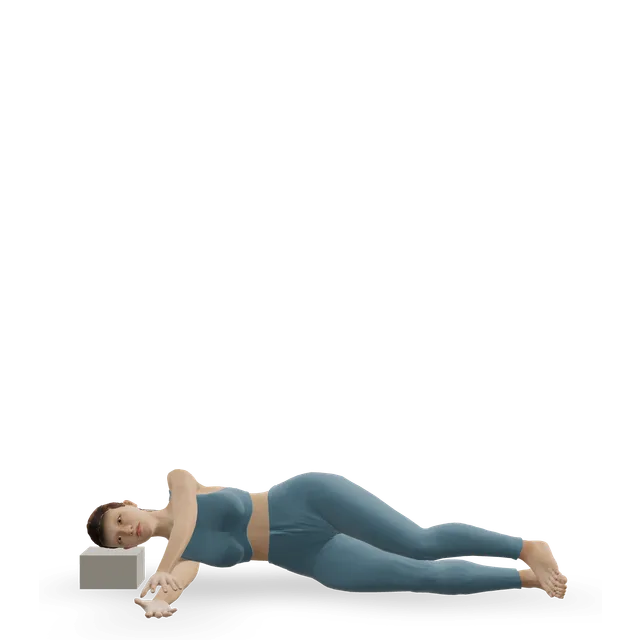 3D demoSide-lying tummy draw-inBeginner · No equipment
 3D demoPelvic tilt into bridgeBeginner · No equipment
 3D demoBreath reachBeginner · No equipment
 3D demoCat-cowBeginner · No equipment
 3D demoSide-lying Open Book RotationBeginner · No equipment
Keep the joint near the scar moving within your team's limits; each surgery guide gives the stages, and the wall angel and chest opener belong to later ones.
 3D demoSupine heel slideBeginner · No equipment
 3D demoQuad set (static quads)Beginner · No equipment
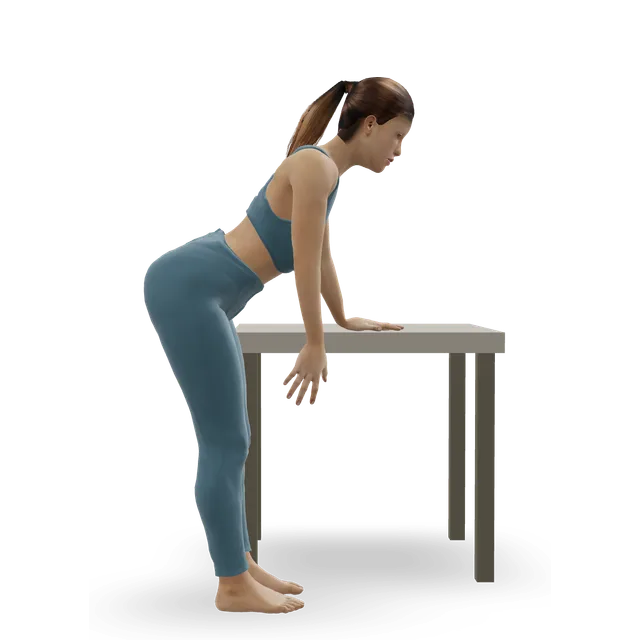 3D demoPendulum exercise (Codman's pendulum)Beginner · A bench or box
 3D demoTable slide (seated forward reach)Beginner · A bench or box
 3D demoWall angelBeginner · A wall
 3D demoDoorway chest openerBeginner · A wall
 3D demoTendon glides (hand tendon gliding exercises)Beginner · No equipment
 3D demoWrist & forearm flowBeginner · No equipment
Each guide stages the exercises after that operation and lists its own warning signs. Start scar massage when it says the wound has healed.
For after a caesarean, after breast or lymph node surgery, after knee surgery and after hand surgery. Check with your team before you start.
A gentle 25-minute routine for the first weeks after birth: pelvic floor, breathing, tummy and hip exercises on the floor, sit-to-stands and a walk.
25 minBeginner12 movesA bench or box, Cardio machineA 15-minute daily routine for lymphoedema: deep breathing, neck and shoulders, then an arm block and a leg block to keep the muscle pump working.
15 minBeginner14 movesOther / check instructions, A bench or boxA 25-minute session for knees that don't currently hurt: thigh and hamstring strength, single-leg control, then an optional full-range block with knees over toes.
25 minBeginner13 movesA bench or box, A wallWrist mobility and forearm strength for desk work, climbing, push-ups and handstands.
10 minBeginner7 movesA wall, A dumbbellSource 50
That's shown only in rats. Human studies are small and uncontrolled, and dense tissue needs far more force than hands apply to change shape. Massage may make a scar softer, more mobile and less sensitive, which is a better way to describe what it does.
It didn't help in a double-blind trial and gave a third of people a skin rash, and a review found too little evidence for it.
Reviews included scars treated from soon after the stitches came out to more than 2 years later, and small studies of older caesarean scars reported changes. Expect smaller changes than with a new scar.
At most, a healed wound reaches about 80% of the original strength.
Source 1
Press firmly enough to whiten the skin, not to hurt. If massage hurts, ease off, or stop for a few weeks and try again.
Movement within your team's limits matters. Early exercise after breast cancer surgery improved arm function without more complications, restricted movement reduced fascial glide in pigs, and knee replacement scars tighten over the first 6 weeks.
It reduces raised scarring a little, with weak evidence. No treatment removes a scar.
We found no trials of cupping on scars, and the one study we found mixed it with four other treatments and had no comparison group. We found no scar evidence for scraping tools either. Dense tissue needs far more force than tools apply to change shape, and bruising is damage, not progress.
Once the wound has fully closed, the stitches or clips are out and there are no scabs: usually 2 to 4 weeks after many operations, and after your 6-week check following a caesarean. Your surgical team's advice comes first.
With unperfumed cream or plain oil, make small circles, then move up and down across the scar and side to side along it, pressing firmly enough to whiten the skin but not to hurt. As it settles, gently lift and roll the scar over the tissue beneath.
About 5 to 10 minutes, 2 to 3 times a day; after a caesarean, at least 4 times a week. Keep going for months, until the scar feels soft and moves like the skin around it.
It probably helps a little with tightness, sensitivity, pain and itch, but the studies are mostly small, measured results in many different ways, and many were on burn scars. It won't make a scar disappear.
Not in the way the phrase suggests. There's no evidence that fingers break up scars or internal adhesions in people, only in rats. What massage can do is make a scar softer, more mobile and less sensitive.
It's never too late to start, according to an NHS leaflet, and studies have included scars treated more than 2 years after surgery. Changes are likely to be smaller than with a new scar.
They reduce raised scarring a little; the evidence is weak but consistent, and scar guidelines recommend silicone first. One NHS trust advises wearing it 12 hours a day for at least 3 months, on healed skin only.
Any unperfumed moisturiser or plain oil works; it's there so your fingers don't drag. Skip vitamin E: it didn't help scars in a trial and gave a third of people a rash.
It's common: after a caesarean, about 1 in 9 women still have wound pain a year on, and after many operations persistent pain affects 10% to 50% of people, usually from nerve injury. See a GP if it's getting worse, stops you doing things, or comes with a lump.
A firm ridge under a healing wound is normal, and numbness and tenderness are common early on. After a knee replacement, scar tissue tightens over the first 6 weeks, so keep up your exercises. A scar that grows beyond the wound, or a bulge near it, needs checking.
After your 6-week check, massage around the scar first, then on it, using small circles, up and down and side to side, and gently roll it between finger and thumb. Aim for at least 4 times a week for 5 to 10 minutes. If it hurts, stop for a few weeks and try again.
We found no trials of cupping on scars. Stretchy kinesiology tape did no better than the same tape applied without stretch on raised burn scars in a trial of 22 people, though in 16 people, taped scars were paler 3 months after a small skin graft was taken. If a scar is raised or growing, ask a GP about treatments with better evidence.
Movement education, not medical advice. Stop for sharp or increasing pain, numbness or tingling, and get individual advice if you are pregnant, after an injury or surgery, or managing a health condition. Health disclaimer.