Pain guide · Hip pain

Exercises after hip arthroscopy: recovery after impingement or labral surgery

Hip arthroscopy is keyhole surgery that reshapes the bone in hip impingement and repairs or trims a torn labrum, the rim of cartilage around the socket. Most people walk without crutches within a couple of weeks, but running usually waits about 3 months and sport about 4 to 7, and full recovery can take 6 months to a year.

This guide sets out the usual stages, with the exercises NHS and hospital protocols use and a 3D demo of each, why hospitals differ on crutches, movement limits and straight-leg raises, and what the trials found. Your surgical team's plan comes first. If you're still deciding about surgery, our hip impingement and hip labral tear guides cover that choice.

When to get help first

Exercise is for pain that has been checked or is clearly mild and settling.

Get urgent medical help if

  • Pain and swelling in your hip or leg with breathlessness or chest pain: call 999 or go to A&E, and do not drive yourself. It can be a blood clot that has reached the lungs.
  • Throbbing or cramping pain in your calf or thigh, a calf or thigh that becomes swollen, tender, red or hot, or a sudden increase in pain and swelling there that keeps getting worse: ask for an urgent GP appointment or get help from NHS 111. It could be a blood clot (deep vein thrombosis, DVT).
  • After the operation: a high temperature, or feeling hot, cold or shivery; fluid, pus or blood coming from a wound, or a wound edge that is red, oozing or painful; or hip pain, swelling or tenderness that is severe or getting worse. Contact NHS 111, or the ward where you had the operation, the same day: these can be signs of an infection.
  • A hot, swollen hip, or hip pain with a fever or feeling generally unwell (a possible joint infection).
  • New numbness, tingling or weakness down the leg or in the foot, or cold, pale or blue toes: get medical help straight away.
  • Severe hip pain after a fall or injury, or you cannot stand, walk or put weight on the leg. In an older adult this can be a broken hip; the leg may look shorter or turned outward.

See a doctor or physiotherapist if

  • Numbness in the groin or genitals, or over the outer thigh, that isn't improving over the first weeks: tell your surgical team. It usually comes from the pull (traction) used during the operation, and settles.
  • Pain at the front of the hip when you lift the leg, or groin pain that builds over days: ease off the hip-lifting exercises and ask your physiotherapist.
  • The hip feels unstable, clunks or gives way, especially if you have a shallow socket (hip dysplasia): see your surgical team.
  • Hip pain that is getting worse rather than better after about 3 months, or keeps you awake at night: see your surgical team or GP.
  • A flight in the first 6 weeks: talk to your surgical team first, because of the clot risk.

Understand it

What the operation does

Under anaesthetic, the leg is gently pulled (traction) so the ball can be eased a little out of the socket, and a camera and fine instruments go in through small cuts. The surgeon can trim a bony bump on the ball (a cam shape) or an overhanging rim of the socket (a pincer shape), repair or trim a torn labrum, smooth damaged cartilage, and remove loose pieces or inflamed lining. Most people go home the same day.

The National Institute for Health and Care Excellence (NICE) says the evidence on symptom relief is adequate in the short and medium term, that there are well-recognised complications, and that the operation should be done by surgeons with specialist expertise.

Sources 1, 2, 3, 4

Who it's for

It's for hip pain from impingement (femoroacetabular impingement, FAI) or a labral tear, mostly in young and middle-aged active adults, that hasn't improved with a good course of exercise-based treatment. Our hip impingement and hip labral tear guides set out that choice. NICE says keyhole washout or tidying shouldn't be offered for osteoarthritis.

In adults aged 40 and over, symptoms improved after surgery, but 9% to 13% had a hip replacement within 2 years and up to 20% within 5.

Sources 5, 6

What a scan finding does and doesn't meanStrong evidence

Labral tears showed on scans in 54% of people without hip pain, and 62% of people with it. Across 2,114 hips without symptoms, a cam shape was found in 37% (55% of athletes), a pincer shape in 67% and labral damage in 68%. So the diagnosis needs symptoms, an examination and imaging together, and a shape or tear on a scan doesn't by itself mean surgery will help.

Sources 7, 8

Why dysplasia matters

Impingement is too much bone cover over the ball; dysplasia is too little, a shallow socket. Surgeons take great care with keyhole surgery in a dysplastic hip, because it can become unstable afterwards. In a multicentre study of repeat hip operations, bone shape that hadn't been corrected was the commonest reason, and in people with dysplasia the first operation had been an arthroscopy in 64%. The FAIT trial left out people whose socket was shallow enough to count as dysplasia.

With borderline dysplasia, 4 comparative studies of carefully selected people (157 borderline and 321 normal hips) found similar results 5 to 10 years after arthroscopy, including repeat operations (14.0% against 20.9%) and hip replacements (1.9% against 4.7%). Our hip dysplasia guide explains the bone shapes; if yours is borderline or shallow, discuss it with a hip preservation specialist.

Sources 2, 9, 10, 11

What recovery usually looks like

Rehabilitation can take 6 to 12 months in all, depending on your goals. The American Academy of Orthopaedic Surgeons (AAOS) says crutches may be needed only until limping stops, or for 1 to 2 months after a more extensive operation. One NHS trust's recovery landmarks, which your team may change:

  • By 2 weeks: bruising, swelling and pain improving, the small scars almost healed, walking without crutches at least for short distances, physiotherapy started, and a desk job possible.
  • By 6 weeks: hip movement back to where it was before the operation, driving, low-impact sport such as swimming or light gym work, and an active job. Some groin pain may remain.
  • By 3 months: a very heavy job, and medium-impact sport such as jogging, still avoiding high-impact, twisting and contact sport.
  • By 4 months: contact sport, once you've returned to full fitness after a full course of physiotherapy.

Sources 12, 13, 2

Complications

Across 276 studies of 36,761 operations, complications were reported after 3.3%. The commonest were nerve injury in 0.9%, mainly to nerves supplying the groin and genitals and the skin of the outer thigh, and accidental damage to cartilage or the labrum in 0.7%; major complications followed 0.2%. In an older review of 92 studies, temporary nerve irritation was one of the two commonest minor problems, and 6.3% had another operation, after about 16 months on average, most often a hip replacement (2.9%).

In early national hospital data presented at a conference, not yet peer reviewed, 22.1% of 22,401 people who had hip arthroscopy in England between 2010 and 2023 had further hip surgery within an average of 2.7 years, including a hip replacement in 14.6%, more often in women. Treat those figures with caution until they're published in full. The AAOS also mentions blood clots, infection and extra bone forming around the hip.

Sources 14, 15, 16, 2

What helps, and how strong the evidence is

Surgery or physiotherapy: the trials in briefMixed evidence

In the UK FASHIoN trial (348 people in 23 NHS hospitals), hip arthroscopy scored 6.8 points better than personalised physiotherapy on a 100-point hip quality-of-life score at 12 months, just over the smallest difference patients notice (6.1). In the UK FAIT trial (222 people), surgery scored 10 points better on a 100-point score of daily activities at 8 months, where 9 is noticeable, and 8.9 points better at about 3 years.

Across 21 trials (1,799 people), the average advantage fell short of the noticeable difference, and pain didn't differ. Patients knew which treatment they had in these trials. Our hip impingement and hip labral tear guides cover this choice in more detail.

Sources 17, 10, 18, 19

Surgery hasn't been shown to prevent arthritisEmerging evidence

At about 3 years in FAIT, X-rays showed no difference in joint space between surgery and physiotherapy, though only 45% had them, and cartilage scores on magnetic resonance imaging (MRI) looked better after surgery. Some patient pages say correcting impingement can prevent future damage; the trials haven't shown that. With arthritis already present, NICE says keyhole washout or tidying shouldn't be offered.

Sources 18, 3, 5

Reshaping the bone: fewer repeat operations, not less painEmerging evidence

In 220 people with impingement, reshaping the bone (with the same labral treatment) gave no less pain at 12 months than a keyhole washout, though it led to fewer repeat operations by 24 months (8 of 105 against 19 of 104). A trial comparing hip arthroscopy with sham surgery (HIPARTI) has published its plan, but we found no main results yet.

Sources 20, 21

Crutch and movement limits vary, and none has been tested against another

A review of 24 studies (2,231 people) found 7 different terms for weight-bearing advice, and not enough evidence to recommend any particular restriction. In 36 US hospital protocols, a brace was required in 36% (for about 3 weeks on average), and weight limits ranged from full weight to about 9 kg (20 lb), with movement limits and exercises that varied too. Reviews found that phased programmes with clear goals and progression checks went with better results for patients, but couldn't say which programme is best.

UK hospitals differ in the same way. One NHS trust lets you take full weight and move the hip as fully as you can unless told otherwise, with crutches until you stop limping; another asks some people to take half their weight; a third says restricted weight usually lasts 2 to 6 weeks; and a fourth lists precautions for up to 8 weeks. That's why your own team's leaflet comes first.

Sources 22, 23, 24, 25, 12, 26, 1, 27

Straight-leg raises: hospitals differMixed evidence

One detailed US hospital guideline leaves out straight-leg raises and other long leg lifts in the first weeks, avoids taking the hip back past straight early on, and keeps repeated hip lifting to a minimum until about 6 weeks, to protect the main hip flexor (the iliopsoas) from irritation. Lifting a straight leg makes that muscle work hard.

But some UK leaflets include hip lifts in the first fortnight: one starts seated knee lifts on the day of the operation and standing lifts from a week, and another includes standing lifts forwards and backwards from the start. No trial has compared the two approaches, so follow your team. Whichever you're given, groin pain that builds when you lift the leg is a reason to ease off and ask.

Sources 28, 26, 27

A steady rehab programme: well tolerated, though untested against noneEmerging evidence

In a 3-month programme tested in 29 people within a sham-controlled trial, 80% of those keeping diaries did 2 or more sessions a week, average pain during rehab stayed below 2 out of 10, and hip quality of life improved by 18.6 points at 6 months. Without a comparison group, it can't show the programme caused the gains, but it supports a steady, gentle, progressive plan like the one below.

Sources 29, 28

Back to sport takes monthsEmerging evidence

Across 35 studies (1,634 athletes), 74% returned to their pre-injury level of sport, on average 7 months after surgery. In 189 Danish athletes aged 18 to 30, 57% were playing their previous sport at their previous level about 3 years later, and only 17% of the whole group reported performing at their best. A review of 14 studies of mixed quality found a higher average return rate, 90%, with definitions that varied, and the time to return ranged from 7 to 32 weeks across rehab studies.

Sources 30, 31, 25, 24

How much pain is OK while you exercise?

Discomfort that fades within an hour; no pinch, and no groin pain that buildsEmerging evidence

NHS leaflets say extra discomfort during the exercises and for up to an hour afterwards is normal but shouldn't last, that none of the exercises should be painful though some discomfort at first is expected, and that the exercises shouldn't make your pain worse. A US hospital guideline aims not to stir up symptoms in any phase, and in a rehab programme within a trial, average pain during exercise stayed below 2 out of 10.

As a working rule, keep pain at 3 out of 10 or less during exercise, settling within an hour and no worse the next morning. This is our suggestion, matching the lower ceiling our anterior cruciate ligament (ACL) guide uses after surgery; it hasn't been tested. A sharp pinch in the groin, or groin pain on lifting the leg that builds over days, means make the movement smaller and drop back a step. The hip pain hub's 5 out of 10 rule is for hips that haven't had surgery.

Your team's limits on weight and movement come before any pain rule.

Sources 13, 12, 27, 28, 29

The exercise plan: 4 stages

Start at the first stage. Each move opens a full guide with a 3D demo.

Stage 1

Protect it, move it gently, wake up the muscles (about weeks 0 to 2, as your team allows)

As your team allows. Take the weight your team sets: full weight with crutches until you stop limping in some NHS hospitals, restricted weight for 2 to 6 weeks after some operations, and a fifth of your weight for 2 to 3 weeks in one US guideline. Keep to any limits on bending and turning. Hospitals differ on leg lifts: one US guideline leaves straight-leg raises and taking the leg back behind you for later, while some UK leaflets include hip lifts from the first days, so follow your team. If your team agrees, lie on your front for 10 minutes twice a day to stop the front of the hip tightening (steps in the notes below). Little and often, 3 to 4 times a day.

Ankle circles demonstrated on the 3D figure3D demoAnkle circlesBeginner · No equipment

Pump the feet up and down 20 times each, 4 times a day for the first few weeks · An NHS leaflet's dose; it helps the circulation while you're less mobile

Harder: Ankle CARs

Quad set (static quads) demonstrated on the 3D figure3D demoQuad set (static quads)Beginner · No equipment

Hold 10 s, 10 times, 3 to 4 times a day · NHS leaflets' dose. Squeeze your buttocks the same way, holding 5 to 10 s

Harder: Straight-leg raise

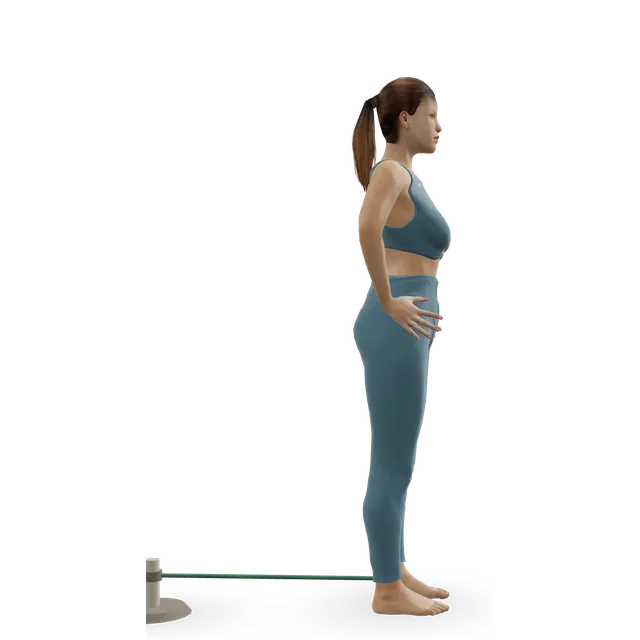
Supine isometric hip abduction (belt press) demonstrated on the 3D figure3D demoSupine isometric hip abduction (belt press)Beginner · A band

3 to 5 holds of 5 to 10 s, twice a day, at a light effort · The move's own starting dose; a US guideline uses gentle holds like this in the first weeks. Only within your team's limits

Harder: Lateral band walk

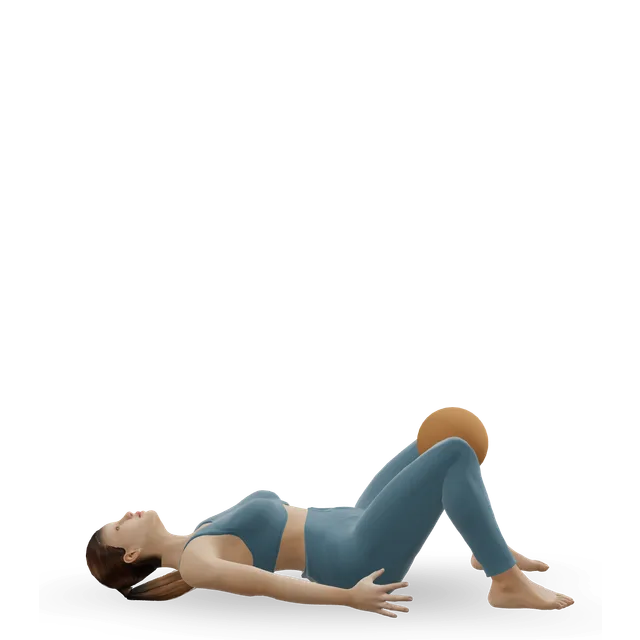
Lying adductor ball squeeze demonstrated on the 3D figure3D demoLying adductor ball squeezeBeginner · Other / check instructions

A pillow or ball between the knees: hold up to 5 s, 5 to 10 times, 3 to 4 times a day · An NHS leaflet's dose

Harder: Copenhagen plank

Supine heel slide demonstrated on the 3D figure3D demoSupine heel slideBeginner · No equipment

Hold 5 s, 5 to 10 times · An NHS leaflet's dose. Only within your team's bending limit: one US guideline aims for about 75° in the first week and 90° by week 4

Harder: Hip Windshield Wipers

Stationary cycling demonstrated on the 3D figure3D demoStationary cyclingBeginner · Cardio machine

10 to 20 minutes with little or no resistance and the saddle raised, pain-free · Only if your team agrees. A US guideline's dose

Harder: Air bike intervals

Move on when: You walk without a limp, so the crutches can go, the pain is settling, and these exercises are comfortable.

Follow along: a timer, a cue and the next move, one step at a time.
Stage 2

Walk well and start strengthening (about weeks 2 to 6, as your team allows)

As your team allows. Build up your walking, and start bridges, hip strength and core work. Keep repeated hip-lifting exercises to a minimum while the front of the hip is sore. Doses are editorial unless named.

Glute bridge demonstrated on the 3D figure3D demoGlute bridgeBeginner · No equipment

Hold 10 s, 5 to 10 times, twice a day · An NHS leaflet's dose. Don't arch your back

Easier: Pelvic tilt into bridge · Harder: Glute kickback (quadruped hip extension)

Side-lying leg raise demonstrated on the 3D figure3D demoSide-lying leg raiseBeginner · No equipment

2 sets of 10 on each side · Keep the leg slightly behind your body line, heel leading, so the hip flexors don't take over

Easier: Lateral band walk · Harder: Lateral band walk, band at the feet

Clamshell demonstrated on the 3D figure3D demoClamshellBeginner · No equipment

2 sets of 10 on each side · Only if it's pain-free and your team allows turning the knee out; some limit it after the joint capsule is repaired

Harder: Lateral band walk

Sit to stand from a chair demonstrated on the 3D figure3D demoSit to stand from a chairBeginner · A bench or box

10 times, arms crossed · From a chair high enough to keep within your bending limit. An NHS leaflet's exercise and dose

Harder: Bodyweight squat

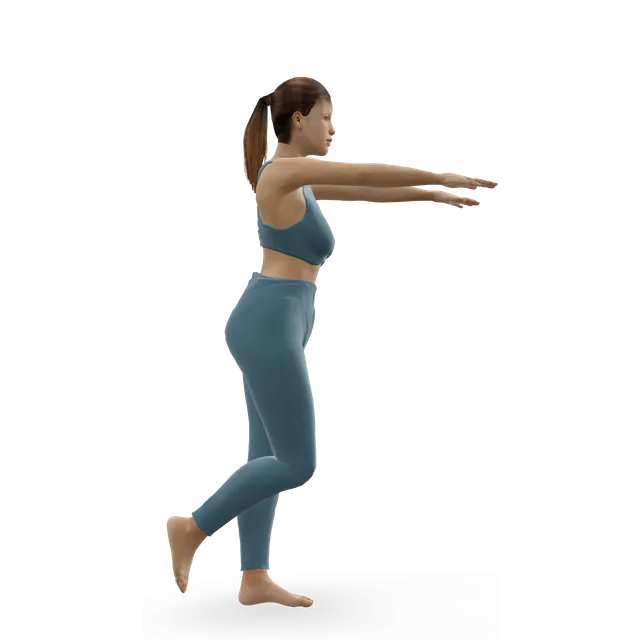
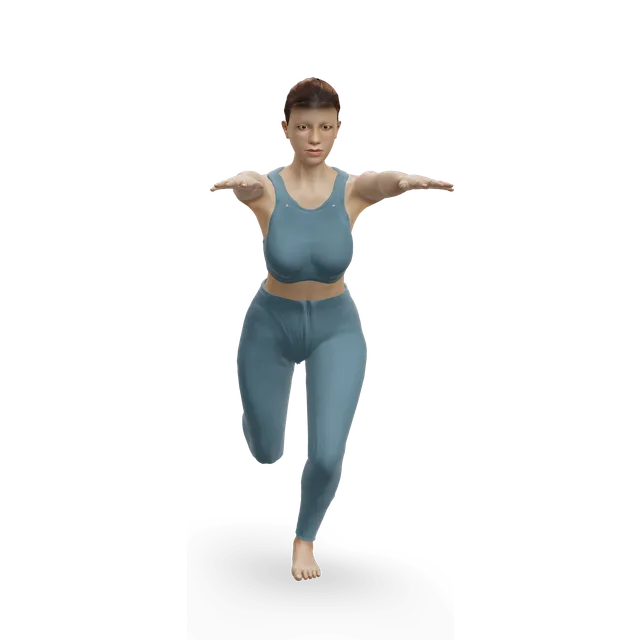
Single-leg stand demonstrated on the 3D figure3D demoSingle-leg standBeginner · A wall

3 holds of 20 to 30 s, holding on as needed · The move's own starting dose

Easier: Tandem stance and heel-to-toe walk · Harder: Single Leg Reach Matrix

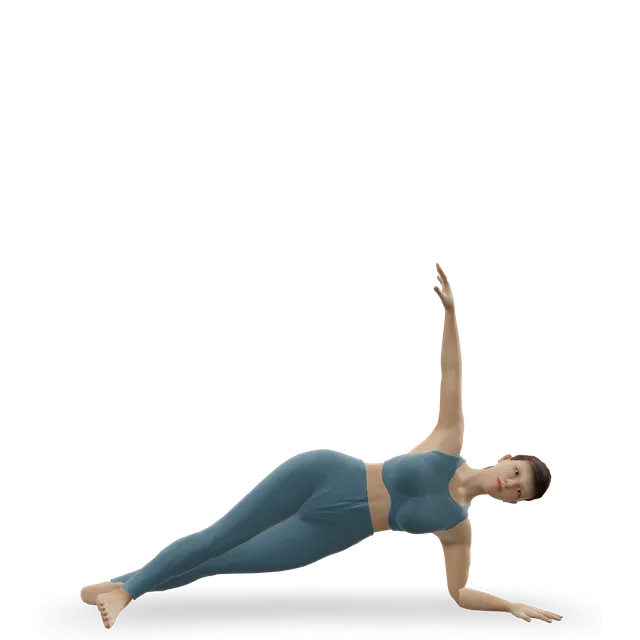
Knee side plank demonstrated on the 3D figure3D demoKnee side plankBeginner · No equipment

3 holds of 15 to 20 s on each side

Harder: Side plank

Move on when: You walk without an aid or a limp, can squat on both legs with control, stand on one leg with your pelvis level, and bend the hip past 90° comfortably: the checks one US guideline uses.

Follow along: a timer, a cue and the next move, one step at a time.
Stage 3

Strength and single-leg control (about weeks 6 to 12, as your team allows)

As your team allows. Heavier and single-leg strength work 2 to 3 times a week. Hip flexor strength comes back gently, to tolerance, and cross-training moves from the bike to the cross-trainer. Doses are editorial unless named.

Dumbbell goblet squat demonstrated on the 3D figure3D demoDumbbell goblet squatIntermediate · A dumbbell

3 sets of 8 to 10, to a box, going deeper over the weeks without a pinch

Easier: Bodyweight squat · Harder: Back squat with bands

Reverse lunge demonstrated on the 3D figure3D demoReverse lungeIntermediate · No equipment

3 sets of 8 on each leg, holding a support · Or a split squat if stepping back is too much

Easier: Split squat · Harder: Split squat with dumbbells

Step-up demonstrated on the 3D figure3D demoStep-upBeginner · A step

3 sets of 8 to 10 on each leg, raising the step slowly over the weeks

Easier: Low step-up · Harder: Dumbbell step-up

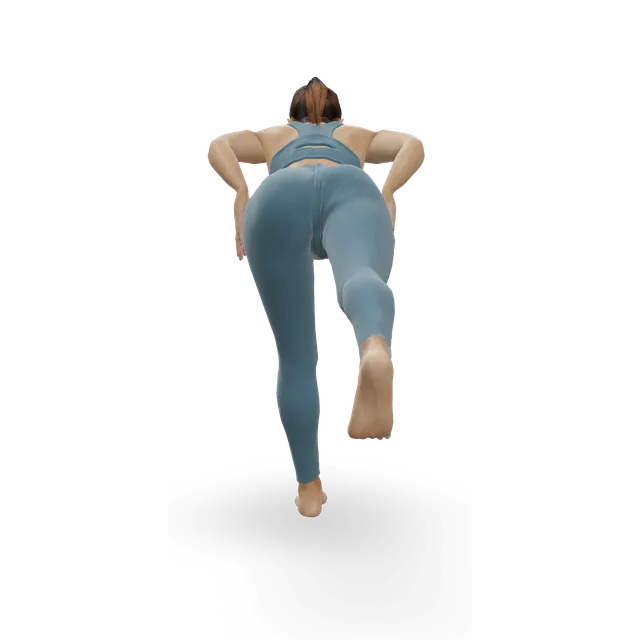
Standing band hip flexion demonstrated on the 3D figure3D demoStanding band hip flexionBeginner · A band + An anchor point

2 to 3 sets of 10 with a light band, to tolerance · Ease off if groin pain builds

Easier: Standing march · Harder: Captain's chair knee raise

Move on when: Strength is at least 80% of the other side, you can hold a front and side plank for 60 s and a single-leg bridge for 15 to 30 s with your pelvis level, and the hip bends to about 110°: one US guideline's checks.

Follow along: a timer, a cue and the next move, one step at a time.
Stage 4

Running, turning and sport (from about 3 to 4 months, as your team allows)

As your team allows. One NHS trust allows jogging at about 3 months and contact sport at about 4; one US guideline starts running at 13 to 16 weeks once you can do controlled single-leg squats and hold a single-leg bridge for 30 to 45 s. Build from straight lines to changes of direction, and from slow to fast. Expect sport to take months: 7 on average in studies. Doses are editorial unless named.

Treadmill jogging demonstrated on the 3D figure3D demoTreadmill joggingIntermediate · Cardio machine

Walk-jog intervals every other day at first, building time before speed

Easier: Treadmill walking · Harder: Sprint intervals

Single-leg Romanian deadlift demonstrated on the 3D figure3D demoSingle-leg Romanian deadliftAdvanced · A dumbbell

3 sets of 6 to 8 on each leg, fingertips on a wall at first

Easier: Dumbbell Romanian deadlift

Hip airplane demonstrated on the 3D figure3D demoHip airplaneAdvanced · No equipment

2 sets of 5 slow turns on each leg, holding a support · The move's own dose. Turn only through a comfortable middle range

Easier: Half-kneeling hip flexor stretch

Lateral bound (skater jump) demonstrated on the 3D figure3D demoLateral bound (skater jump)Beginner · No equipment

2 to 3 sets of 5 on each side, holding each landing

Harder: Box push-off jump

Move on when: Your team clears you for sport: strength over 90% of the other side, and hops and changes of direction without pain or a pinch.

Follow along: a timer, a cue and the next move, one step at a time.

What to change for now

Typical timings, which your team may change

These come from NHS leaflets, and they differ. Your own team's timings come first.

  • Crutches: until you walk without a limp, often 1 to 2 weeks. If your weight is restricted, usually 2 to 6 weeks, and up to 1 to 2 months after a more extensive operation.
  • Driving: usually 1 to 2 weeks after surgery if you're on full weight, comfortable and not taking strong painkillers. Not while your weight is restricted, and at least 6 weeks if you have restrictions in one trust. Check with your insurer.
  • Work: about 10 days to 2 weeks for a desk job; 6 to 12 weeks for a physical one.
  • Swimming: once the wounds have healed and you're on full weight. One trust says no breaststroke until your surgeon and physiotherapist agree.
  • High-impact activity such as running and jumping: usually after 6 to 12 weeks in one trust, depending on the operation, and jogging at about 3 months in another.
  • Flying: talk to your team first if you plan to fly in the first 6 weeks.

Sources 12, 27, 26, 1, 13, 2

Precautions some hospitals give

Some teams give movement precautions for the first weeks; others give none and encourage you to move the hip as fully as you can. These are examples, not rules for everyone:

  • No bending the hip past 90° (knees not above your hips), and no squatting or crouching, for up to 8 weeks in one NHS trust.
  • No crossing your legs, and no turning the foot in or out, for the same period in that trust.
  • Limits on turning the leg out after the joint capsule has been repaired, in one US guideline.
  • Sleeping: one NHS trust says either side is fine, though your back or the other side may be more comfortable at first, with a pillow between your knees.

Sources 27, 28, 12

Two early exercises the 3D figure doesn't show (written steps)

Both come from NHS leaflets' first-week programmes. Do them only if your team includes them.

  • 1. Lying on your front: lie face down on your bed for up to 10 minutes, twice a day, to stop the front of the hip tightening. If it's too much of a stretch, put a pillow under your tummy and hips, and don't arch your back.
  • 2. Leg rolls: lie on your back with the knee straight. Gently roll the whole leg in, so the kneecap faces the other knee, then out. Repeat 10 times. One NHS trust uses this from the first week to stop scar tissue forming, but some teams limit turning the leg in or out, so check first.

Sources 12, 13, 28

Routines that fit, and what to leave out

The beginner core workout suits stage 2 onwards. The glute workout at home fits from about 6 weeks, leaving out its reclined figure four until your team allows deep bending and turning the leg out. Save the strength and balance workout for stage 4. Leave deep hip mobility routines (deep squats, pigeon and frog positions) until your team agrees.

Positions to swap, and why

Habit or positionWhy it mattersInstead
Straight-leg raises in the first weeks, unless your team includes themThey make the main hip flexor work hard, and one US guideline leaves them out early to protect it. UK leaflets differ, so follow yours.Thigh squeezes, and heel slides within your limit.Try: Quad set (static quads)
Bending past your limit, squatting or crouching earlySome teams limit bending to 90° for up to 8 weeks; others set gradual targets.Sit on a higher chair, with your knees below your hips.Try: Sit to stand from a chair
Taking the leg back behind you, or arching your back lying face down, in the first weekOne US guideline avoids taking the hip back past straight early on; some UK leaflets include a standing backward leg lift within the first week or so, so follow your team.Lie on your front with a pillow under your hips, if your team agrees.
Clamshells and sitting cross-legged, when your team has limited turning the knee outTurning the leg out is limited after the joint capsule has been repaired in one guideline.Bridges and side-lying leg lifts within your limits.Try: Glute bridge
Hobbling about without crutches while you still limpAn NHS trust warns that it encourages limping and bad habits.Go from two crutches to one, then none, once you walk without a limp.
Deep hip stretches such as pigeon poseA US hospital guideline avoids aggressive stretching while the hip heals; range comes back gradually within your limits.Gentle movement within your limits, then strength through the comfortable middle of the range.Try: Supine heel slide
Running, jumping and contact sport before about 3 to 4 monthsRunning waits until strength and control checks are met in one guideline, and one NHS trust allows contact sport at about 4 months.The bike, then the cross-trainer; swimming once the wounds have healed.Try: Elliptical trainer
Breaststroke kick while the hip healsOne NHS trust says no impact sport or breaststroke, even once you're on full weight, until your surgeon and physiotherapist agree.Front crawl, or a float between the legs so the arms do the work (our suggestion).
Driving while your weight is restrictedNHS leaflets say not until you're on full weight and off strong painkillers.Usually 1 to 2 weeks after surgery if you're on full weight and can do an emergency stop.

Routines to follow

More moves for this area

Questions people ask

How long does it take to recover from hip arthroscopy?

In one NHS trust's guide, most people walk without crutches by about 2 weeks, drive and do light exercise by about 6 weeks, jog at about 3 months and play contact sport at about 4 months. Full recovery can take 6 to 12 months. Your team's timings come first.

How long will I be on crutches after hip arthroscopy?

Until you can walk without a limp, often 1 to 2 weeks. If your weight is restricted, usually 2 to 6 weeks, and up to 1 to 2 months after a more extensive operation.

What exercises should I do after hip arthroscopy?

Start with ankle pumps, thigh and buttock squeezes, gentle heel slides, lying on your front and, if allowed, an exercise bike with no resistance. Bridges and hip strengthening follow from about week 2, and squats, lunges and single-leg work from about 6 weeks.

Can I do straight-leg raises after hip arthroscopy?

Hospitals differ. One detailed US guideline leaves straight-leg raises out of the first weeks to protect the hip flexor at the front of the hip, while some UK leaflets include hip lifts in the first fortnight. Follow your own team's programme, and ease off if groin pain builds when you lift the leg.

When can I drive after hip arthroscopy?

Usually 1 to 2 weeks after surgery if you're taking full weight, comfortable and not on strong painkillers. If your weight is restricted, not until that's lifted. Check with your insurer.

When can I go back to work after hip arthroscopy?

About 10 days to 2 weeks for a desk job, and 6 to 12 weeks for a physical one, in NHS leaflets. Your team will guide you, depending on the operation and your job.

When can I run again after hip arthroscopy?

Usually from about 3 months, once you have the strength and control to do a single-leg squat and hold a single-leg bridge. Build up with walk-jog intervals.

When can I go back to sport?

Contact sport from about 4 months in one NHS trust. In studies, athletes took 7 months on average, and about 3 in 4 got back to their previous level.

Can I sleep on my side after hip arthroscopy?

One NHS trust says you can sleep on either side, though your back or the other side may be more comfortable at first, with a pillow between your knees. Follow any limits your own team gives you.

Is numbness in the groin or thigh normal after hip arthroscopy?

It can happen from the pull (traction) used during surgery, and it usually goes. Tell your team if it isn't improving over the first weeks, and get help the same day for new numbness or tingling down the leg.

Will hip arthroscopy stop me getting arthritis?

That hasn't been shown: in a UK trial, X-ray joint space didn't differ from physiotherapy at about 3 years. With arthritis already present, NICE says keyhole washout or tidying shouldn't be offered.

Does it matter that I have borderline dysplasia?

It can. With a clearly shallow socket, keyhole surgery alone may not fix the problem; with borderline dysplasia, carefully selected people did about as well as people with normal hips. Our hip dysplasia guide explains the bone shapes.

Related exercise guides

Other pain guides

Sources

  1. Royal Berkshire NHS Foundation Trust · Advice following a hip arthroscopy (day surgery leaflet, 2023)
  2. AAOS OrthoInfo · Hip arthroscopy
  3. AAOS OrthoInfo · Femoroacetabular impingement
  4. NICE HTG273 · Arthroscopic femoro-acetabular surgery for hip impingement syndrome (2011)
  5. NICE NG226 · Osteoarthritis in over 16s: diagnosis and management (2022)
  6. Son 2026 · Hip arthroscopy in adults aged 40 or over (systematic review, Arthroscopy)
  7. Heerey 2018 · Hip findings on imaging in people with and without hip pain (meta-analysis, BJSM)
  8. Frank 2015 · Impingement shapes on imaging in volunteers without symptoms (systematic review, Arthroscopy)
  9. Clohisy 2013 · Bone shape left uncorrected: the commonest cause of repeat hip preservation surgery (multicentre cohort, Clin Orthop Relat Res)
  10. Palmer 2019 · Hip arthroscopy vs physiotherapy and activity modification for impingement: FAIT (RCT of 222, BMJ)
  11. Thamrongskulsiri 2026 · Hip arthroscopy in borderline dysplasia vs normal hips (meta-analysis, Arthroscopy)
  12. Royal Devon University Healthcare NHS Foundation Trust · Rehabilitation after hip arthroscopy (physiotherapy leaflet, 2023)
  13. Gateshead Health NHS Foundation Trust · Post-operative hip arthroscopy (physiotherapy advice, 2025)
  14. Nakano 2017 · Complications after hip arthroscopy (systematic review of 36,761 cases, Bone Joint J)
  15. Harris 2013 · Complications and reoperations after hip arthroscopy (systematic review of 92 studies, Arthroscopy)
  16. Kolhe 2025 · Complications and reoperations after 22,401 hip arthroscopies in England (conference abstract, not yet peer reviewed as a full paper, J Hip Preserv Surg)
  17. Griffin 2018 · Hip arthroscopy vs best conservative care for impingement: UK FASHIoN (RCT of 348, Lancet)
  18. Palmer 2025 · FAIT at a median of 38 months (RCT follow-up, BJSM)
  19. Ramadanov 2025 · Conservative treatment vs hip arthroscopy for impingement (meta-analysis of 21 RCTs, Bone Jt Open)
  20. FIRST Investigators 2021 · Bone reshaping and labral repair vs washout and labral repair for impingement (RCT of 220, AJSM)
  21. Risberg 2018 · Hip arthroscopy vs sham surgery for impingement or labral tears: the HIPARTI trial protocol (JOSPT)
  22. Hemstock 2023 · Weight-bearing restrictions and rehabilitation protocols after hip arthroscopy (systematic review, J Hip Preserv Surg)
  23. Van Zyl 2025 · Variability in physical therapy protocols after hip arthroscopy (review of 36 US protocols, Orthop J Sports Med)
  24. Ankem 2020 · Structured physical therapy protocols after hip arthroscopy (systematic review, J Hip Preserv Surg)
  25. Monselli 2024 · Rehabilitation after hip arthroscopy for impingement (systematic review, J Clin Med)
  26. King's College Hospital NHS Foundation Trust · Physiotherapy after hip arthroscopy (leaflet, 2024)
  27. James Paget University Hospitals NHS Foundation Trust · Hip arthroscopy (patient leaflet, 2021)
  28. Hospital for Special Surgery · Hip arthroscopy, labral repair or debridement: post-operative rehabilitation guidelines (2021 to 2023)
  29. Hibbert 2026 · A 3-month rehabilitation programme after hip arthroscopy for impingement (study of 29, JOSPT)
  30. Reiman 2018 · Return to sport after surgery for hip impingement (meta-analysis of 35 studies, BJSM)
  31. Ishøi 2018 · Return to sport and performance after hip arthroscopy in athletes aged 18 to 30 (cohort of 189, AJSM)
  32. NHS · DVT (deep vein thrombosis)
  33. NHS · Arthroscopy

Exercise education, not a diagnosis or treatment plan. It is written from the guidelines and studies listed above; review by a clinician is pending. If your pain follows an injury, is severe, is getting worse, or comes with any warning sign listed on this page, get it assessed. Health disclaimer.