Pain guide · Foot pain

Recovery after bunion surgery: the post-op shoe, swelling and exercises

Bunion surgery straightens the big toe by cutting and realigning the bone, and it's done for pain, not looks. Recovery is slow but predictable: about 2 weeks resting with the foot raised, about 6 weeks walking in a special post-operative (post-op) shoe, and swelling that can last 6 months or more.

This guide sets out the usual stages, from the first fortnight to sport, with the toe, ankle and leg exercises NHS teams give and a 3D demo where the figure can show it. It also covers shoes, driving and work, what minimally invasive surgery changes, and how often bunions come back. Your surgical team's plan comes first: operations and hospitals differ, especially on when the toe starts moving.

When to get help first

Exercise is for pain that has been checked or is clearly mild and settling.

Get urgent medical help if

  • Call 999: calf or leg pain or swelling with breathlessness or chest pain. It could be a clot that has reached the lungs.
  • Same day (GP or NHS 111): throbbing pain and swelling in one calf, with red or darker skin, or a swollen calf with cramp-like pain behind the knee. It could be a blood clot (deep vein thrombosis, DVT), which is more likely after an operation and while you're less active.
  • Phone your day surgery unit or GP now, or go to A&E: the foot swells a lot, or the toes turn very cold, pale, blue or discoloured, numb or burning. One NHS leaflet says loosen the bandages first.
  • Same day (your surgical team, GP or NHS 111): a fever that won't settle or shaking chills; warmth or redness around the dressing that doesn't go; pus or a bad smell from the wound; or pain that keeps increasing, especially a burning, sunburn-like pain. These can be signs of an infection.
  • Bleeding through the dressing: contact your surgical team rather than your GP; in the evening or at the weekend, go to A&E if you're worried.
  • Pain you can't bear despite your painkillers: contact your day surgery unit or go to A&E.
  • Same day: you have diabetes and a new problem with the wound, signs of infection, or a hot, swollen foot with a change in colour, even if it doesn't hurt. Contact your surgical team, diabetes foot team or GP.

See a doctor or physiotherapist if

  • The dressing loosens, comes off or gets wet: contact your team. Don't re-dress it yourself, because it holds the toe in its corrected position.
  • Pain, swelling and skin changes that are much worse than expected and go on beyond the first few weeks: contact your team promptly. It can be complex regional pain syndrome (CRPS), which needs early treatment.
  • The toe drifting back, metalwork you can feel that rubs, or pain under the ball of the foot that isn't settling: see your team.
  • You fall, or knock the foot hard, while it's healing: ask your team whether it needs checking.

Understand it

What the operation is

Most bunion operations are an osteotomy. The surgeon removes the bump, cuts and realigns the long bone behind the big toe (the first metatarsal), often with a Z-shaped cut called a scarf, and sometimes cuts the big toe bone itself too (an Akin osteotomy). Tight tissue between the first and second toes is released, and the bones are held with small screws or a staple that usually stay in for good. Removing the bump alone rarely works, because the toe drifts back.

Severe deformity or arthritis may need a fusion of the big toe joint, or of the joint at the base of the first metatarsal, and some operations need a spell with no weight on the foot. Surgery is usually a day case, under a general anaesthetic, a nerve block or both. In some NHS services a specially trained podiatric surgeon does the operation.

Sources 1, 2, 3, 4, 5, 6, 7

Who it's for

It's for bunion pain that affects walking and daily life despite wider shoes, pads and other simple measures: not to improve how the foot looks, and not to stop a painless bunion getting worse. Our bunions guide covers that decision.

In a Finnish trial of 209 people with painful mild to moderate bunions, a year after the operation 83% felt better, against 46% with insoles and 24% on a waiting list, and walking pain was about 19 points lower (out of 100) than in those waiting. By 2 years, after most people had been operated on, pain was similar in all the groups, so waiting a year didn't harm the final result. A Cochrane review rated this evidence low certainty, and no trial has compared bunion surgery with a sham operation.

Sources 1, 6, 8, 7, 9, 10, 11

What recovery usually looks like

NHS leaflets agree on the shape of recovery, with different timings. Your own team's plan comes first.

  • Weeks 0 to 2: a bulky dressing holds the toe in place. Rest with the foot raised most of the time, walking only for essentials in the post-op shoe.
  • About 2 weeks: a wound check and the stitches out. Toe movement often starts now or at 3 weeks; some teams keep the bandage on to 6 weeks and start the toe moving then.
  • About 6 weeks: a clinic check, often with an X-ray, and out of the post-op shoe into a wide, supportive one. One podiatric surgery service changes to a trainer at 4 weeks.
  • 6 to 12 weeks and on: walking built up gradually. In one service's leaflet the bones take about 6 weeks to heal and at least 12 weeks to regain full strength; another puts average bone healing at about 4 months.
  • Swelling: commonly up to 6 months, and sometimes a year. Full recovery often takes about 6 months, and occasionally up to a year.

Sources 6, 2, 4, 12, 13, 14, 3, 5, 7

Complications, and how often people are happyEmerging evidence

The British Orthopaedic Foot and Ankle Society (BOFAS) tells patients that complications happen after about 1 in 20 operations, and that up to 1 in 10 people may not be happy with their surgery. A review of 229 studies found 10.6% dissatisfied.

NHS consent leaflets list infection (deep infection in under 1 in 100), numbness near the scar (usually settles, sometimes permanent), a stiffer big toe, pain under the ball of the foot, bones that don't heal (more likely in smokers), over-correction so the toe points the other way (about 1 in 100), screws that can be felt, blood clots and complex regional pain syndrome. Stiffness usually doesn't matter, though dancers and athletes may notice it. One NHS board gives an overall success rate of about 80%.

Sources 6, 15, 2, 5, 3

Teenagers and older adults

The American Academy of Orthopaedic Surgeons (AAOS) says surgery for a teenager's bunion isn't recommended unless pain is severe despite shoes and insoles, and usually waits until growth is nearly complete, because bunions operated on earlier often come back.

In later life, the post-op shoe, crutches and swelling make the first weeks a falls risk. BOFAS expects a walking aid for 2 to 6 weeks, and in a trial people felt steadier in a flat, rigid post-op shoe than in a heel-weight shoe.

Sources 8, 6, 16

What helps, and how strong the evidence is

Rehab after bunion surgery: few trials, and none of exercise before itMixed evidence

A 2025 review found only 5 randomised trials of rehab after bunion surgery, and none of exercise before it. Walking from 2 weeks after a soft-tissue correction gave better foot scores at 12 weeks than 6 weeks without weight, with no more failures (51 people). A flat, rigid post-op shoe and a heel-weight shoe gave similar pain at 6 weeks, but more people were satisfied with how well they could get about (86% against 62%) and how steady they felt (91% against 70%) in the flat shoe. Machines and splints that moved the toe gained a little movement in small trials at high risk of bias.

After a physiotherapy and walking programme starting at week 4, people put more weight through the big toe side of the foot by 6 months, but there was no comparison group. So follow your team's weight and shoe instructions: gentle toe movement and walking practice are standard, with little trial evidence on how much.

Sources 17, 18, 16, 19

Toe movement starts at 2, 3 or 6 weeks, depending on the hospitalEmerging evidence

NHS teams agree that the big toe should move, but not on when. Some start gentle big-toe bending at 2 weeks, when the stitches come out; one podiatric surgery service starts at 3 weeks and adds calf raises, toe presses and toe spreading at 4; another keeps the bandage on and starts at 6 weeks. No trial has compared these timings, so start when your team says.

Sources 4, 12, 13, 14

Bunions can come back: how often depends on the definitionMixed evidence

Reported recurrence ranges from about 5% to 25% in reviews, and more in some long-term X-ray studies, depending on how recurrence is defined and how long people are followed. A review of 229 mostly short to medium-term studies found 4.9%. Pooling 23 studies (2,914 people) gave 24.9%, more likely with a bigger angle before surgery and a toe left less well corrected. Across scarf osteotomy studies, the figures ran from 0% to 78%. By an X-ray threshold of more than 15°, 40% had some recurrence 8 to 14 years after a scarf, though only 2% had a large deformity again. One NHS board's consent sheet gives 20%.

So some drift back over the years is common, but a recurrence big enough to need another operation is much less common. Tight shoes can help bring a bunion back.

Sources 15, 20, 21, 22, 3, 1

Minimally invasive surgery: similar results, not a quicker fixEmerging evidence

The National Institute for Health and Care Excellence (NICE) said in 2024 that minimally invasive (keyhole) bunion surgery with screws can be used by trained surgeons, and works about as well as open surgery, with the same pain and recovery time; there's no evidence the bone heals faster, and longer-term pain isn't different. A 2026 review of 6 studies (342 people) found no meaningful differences in function, pain or correction, slightly less early pain after the keyhole version, and similar complications. A trial of 40 people found better wound healing at 6 weeks and similar results at a year.

The AAOS says it may mean less early swelling and a quicker early recovery, and that it isn't suitable for every bunion. One NHS keyhole pathway still expected swelling for 3 to 6 months.

Sources 23, 24, 25, 8, 26

Smoking slows the bone healingEmerging evidence

One NHS trust asks people to stop smoking for at least 8 weeks before surgery and up to 4 months after, saying smokers are 5 times more likely to have a bone that doesn't heal. BOFAS says smoking raises the risk of complications, and another trust says smoking and diabetes raise the risk of infection. NHS stop-smoking services can help.

Sources 2, 6, 5

Blood clots: assessed for everyone, medicine for someStrong evidence

NICE says to consider medicine to prevent clots after foot surgery that needs the foot kept still (a fusion, for example), when the anaesthetic lasts over 90 minutes, or when your clot risk outweighs your bleeding risk. BOFAS says everyone should be assessed, and without other risk factors no further treatment is generally recommended; some hospitals give preventive injections after the assessment.

Sources 27, 6, 2

How much pain is OK while you exercise?

Uncomfortable is expected; swelling tells you when to restEmerging evidence

NHS leaflets say the toe exercises will be uncomfortable, that activity should build within the limits of comfort, and that the foot will ache and swell depending on how active you are. Swelling and discomfort are expected for 4 to 6 months; when the foot swells, rest it raised at hip height or above.

Once you're walking in a normal shoe, this site's foot and ankle rule applies: mild to moderate pain, no more than about 5 out of 10, that settles within an hour, with no more swelling or stiffness the next morning. If it's worse the next day, do a little less (a smaller range, fewer repetitions), not nothing. The 5 out of 10 figure is an editorial starting point, not a tested rule.

Pain in one spot on the bone that hurts with every step, rather than a general ache, should be checked by your team, as should burning pain or skin changes much worse than expected. Your team's weight and shoe instructions come before any pain rule: weight taken too early, or without the shoe's support, can shift the bones or stop them healing.

Sources 13, 2, 28, 7

The exercise plan: 4 stages

Start at the first stage. Each move opens a full guide with a 3D demo.

Stage 1

Rest, raise and protect (about weeks 0 to 2, as your team allows)

As your team allows. Keep the foot raised above hip level most of the time: one NHS trust asks for 55 minutes in every hour for the first 2 days, then 5 minutes less each day, and BOFAS advises strict rest with the foot raised for 10 to 14 days. Walk only for essentials, in the post-op shoe, with your weight through the heel or the flat foot exactly as you were shown, using crutches as needed. Keep the dressing dry and leave it alone. Exercise the rest of the leg to keep the blood moving; one trust asks for these every hour.

Ankle circles demonstrated on the 3D figure3D demoAnkle circlesBeginner · No equipment

Pump the ankles up and down 5 times every hour, or pump and circle each ankle 10 times, 3 times a day · NHS leaflets' doses. Move the operated ankle gently, inside the dressing

Harder: Ankle CARs

Quad set (static quads) demonstrated on the 3D figure3D demoQuad set (static quads)Beginner · No equipment

Hold 5 s, 10 times · An NHS leaflet's dose. Squeeze your buttocks the same way

Harder: Straight-leg raise

Straight-leg raise demonstrated on the 3D figure3D demoStraight-leg raiseBeginner · No equipment

Lift the leg about 25 cm, hold 5 s, 10 times on each leg · An NHS leaflet's dose

Easier: Quad set (static quads) · Harder: Leg extension

Move on when: Your wound has been checked and the stitches are out, usually at about 2 weeks.

Follow along: a timer, a cue and the next move, one step at a time.
Stage 2

Toes moving, still in the post-op shoe (about weeks 2 to 6, as your team allows)

As your team allows. Keep raising the foot when you rest, and keep walking in the post-op shoe as instructed. Start the big-toe exercises when your team says: from 2 weeks in some services, 3 weeks in another and after 6 weeks in another. The 3D figure can't show them yet, so their steps are in the notes below. Once the wound has healed, massage the scar daily with a plain moisturiser. Keep the rest of the leg strong while walking is limited. Doses are editorial unless named.

Ankle circles demonstrated on the 3D figure3D demoAnkle circlesBeginner · No equipment

10 circles each way, 3 times a day · An NHS leaflet's dose

Harder: Ankle CARs

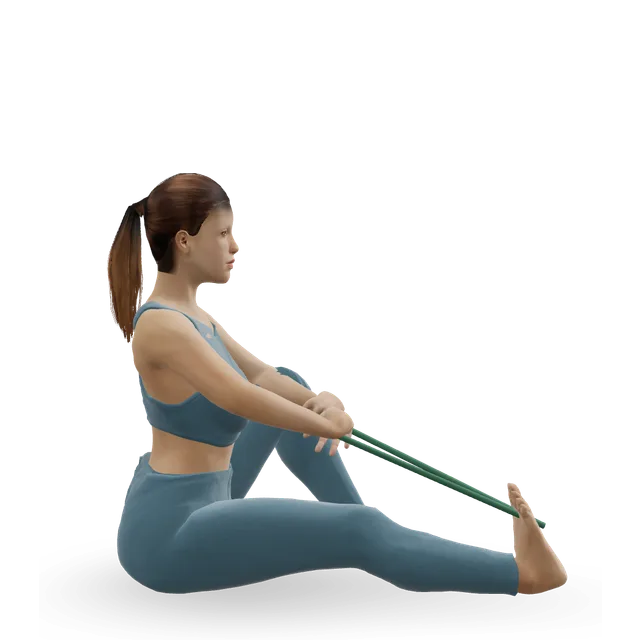
Seated calf stretch with a towel demonstrated on the 3D figure3D demoSeated calf stretch with a towelBeginner · Other / check instructions

Hold about 30 s, 3 times · Loop the towel or band round the middle of the foot, not the toes, while the big toe heals

Harder: Wall calf stretch (gastrocnemius)

Glute bridge demonstrated on the 3D figure3D demoGlute bridgeBeginner · No equipment

2 sets of 10 · Feet flat; press through the heel of the operated foot

Easier: Pelvic tilt into bridge · Harder: Glute kickback (quadruped hip extension)

Towel toe curl demonstrated on the 3D figure3D demoTowel toe curlBeginner · Other / check instructions + A bench or box

10 slow curls, from about 4 weeks · Only once the wound has healed and your team agrees; one NHS service starts toe strength work at 4 weeks

Harder: Short foot + toe splay

Move on when: Your team reviews you, usually at about 6 weeks with an X-ray, and says you can leave the post-op shoe. Some services change to a trainer at 4 weeks.

Follow along: a timer, a cue and the next move, one step at a time.
Stage 3

Into a wide shoe: walking and push-off (about weeks 6 to 12, as your team allows)

As your team allows. Wear a wide, soft, laced trainer, put on first thing before the foot swells. Build up walking gradually, expecting the foot to ache and swell more after busier days, and raise it when it does. One NHS trust allows cycling and swimming from about 2 to 4 months. Doses are editorial unless named.

Slow calf raise demonstrated on the 3D figure3D demoSlow calf raiseBeginner · A wall

Holding on, with your weight even on both feet: lift the heels slightly and hold 5 s, 5 times, 3 to 4 times a day, lifting higher over the weeks · One NHS service's dose; it starts these at 4 weeks. Stop short of full tiptoe while the big toe is stiff

Easier: Seated bent-knee calf raise (soleus raise) · Harder: Standing dumbbell calf raise

Single-leg stand demonstrated on the 3D figure3D demoSingle-leg standBeginner · A wall

3 holds of 20 to 30 s on each leg, holding on at first · The move's own starting dose

Easier: Tandem stance and heel-to-toe walk · Harder: Single Leg Reach Matrix

Wall calf stretch (gastrocnemius) demonstrated on the 3D figure3D demoWall calf stretch (gastrocnemius)Beginner · A wall

3 holds of 45 s on each leg · Once you're walking in normal shoes. The move's own dose

Easier: Seated calf stretch with a towel

Treadmill walking demonstrated on the 3D figure3D demoTreadmill walkingBeginner · Cardio machine

Start with 10 minutes and add a few minutes every few days if the swelling settles overnight · Walking outdoors counts

Harder: Treadmill jogging

Stationary cycling demonstrated on the 3D figure3D demoStationary cyclingBeginner · Cardio machine

10 to 20 minutes, easy · Pedal with the middle of the foot at first

Harder: Air bike intervals

Move on when: You walk comfortably for 30 minutes or more without a limp, push off through the big toe, and the swelling settles overnight. In one service's leaflet the bones take at least 12 weeks to regain full strength.

Follow along: a timer, a cue and the next move, one step at a time.
Stage 4

Strength, balance and sport (from about 3 months, as your team allows)

As your team allows. For running, jumping and high-impact classes, typical ranges from NHS leaflets, which differ, are not before 12 weeks in one, 3 to 6 months in others, and more than 6 months in another; no review has looked at return to sport after bunion surgery. Keep the calf and toe work going a few times a week. Doses are editorial unless named.

Single-leg calf raise from a step demonstrated on the 3D figure3D demoSingle-leg calf raise from a stepIntermediate · A step + A wall

3 sets of 10 to 15 on each leg, on the floor first · The move's own dose

Easier: Slow calf raise · Harder: Single-leg pogo hops

Single Leg Reach Matrix demonstrated on the 3D figure3D demoSingle Leg Reach MatrixIntermediate · No equipment

3 rounds of 5 reaches in each direction · The move's own dose

Easier: Standing crossed-leg side reach · Harder: Single-leg Romanian deadlift

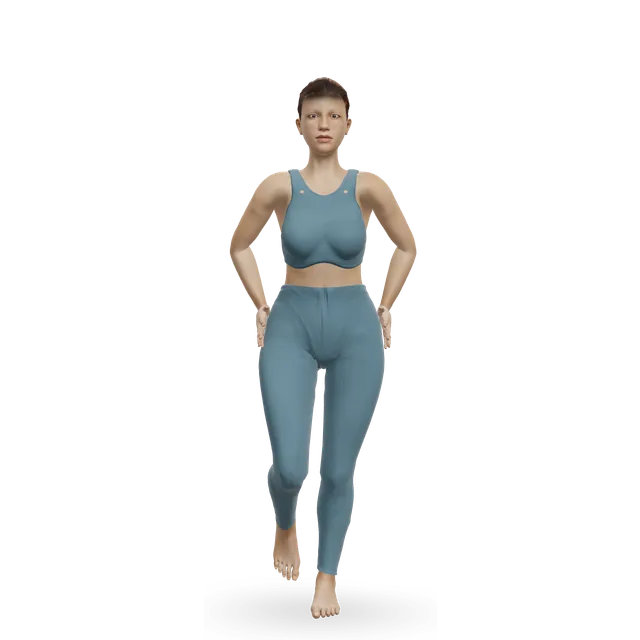
Tandem stance and heel-to-toe walk demonstrated on the 3D figure3D demoTandem stance and heel-to-toe walkBeginner · A wall

Hold 20 s with each foot forward, then 3 walks of 15 steps · The move's own dose

Easier: Semi-tandem stance · Harder: Single-leg stand

Ankle bounces (mini pogo) demonstrated on the 3D figure3D demoAnkle bounces (mini pogo)Beginner · No equipment

2 to 3 sets of 20, every other day, once you're cleared for impact · Then pogo hops

Harder: Pogo hops

Treadmill jogging demonstrated on the 3D figure3D demoTreadmill joggingIntermediate · Cardio machine

Walk-jog intervals once you're cleared, building time before speed

Easier: Treadmill walking · Harder: Sprint intervals

Move on when: Keep going. If the toe drifts, metalwork rubs, or pain under the ball of the foot builds, see your team.

Follow along: a timer, a cue and the next move, one step at a time.

What to change for now

Typical timings, which your team may change

These come from the NHS website, BOFAS and NHS leaflets, and they differ. Your own team's timings come first.

  • Raising the foot: most of the time for the first 2 weeks, and afterwards whenever it swells.
  • The post-op shoe: usually about 6 weeks, and 4 to 5 weeks in some services.
  • Driving: usually after 6 to 8 weeks, once you're out of the shoe and can do an emergency stop. With an automatic car and surgery on the left foot, one trust allows it from about 3 weeks. You can't drive in the post-op shoe or bandages. Check with your insurer.
  • Work: a desk job where you can keep the foot raised from about 2 to 3 weeks; a physical job usually by about 8 weeks, and sometimes not until 3 to 4 months. The NHS says 2 to 12 weeks overall.
  • Sport: swimming and cycling from about 2 to 4 months in one trust. For running and jumping, typical ranges from NHS leaflets, which differ, run from 12 weeks to more than 6 months.
  • Swelling: commonly up to 6 months, and sometimes a year.

Sources 1, 6, 2, 12, 4, 3, 13

Big toe exercises (written steps)

From an NHS podiatric surgery service's leaflet, which carries on with them until its 10-week review. Start only when your team says: from 2 weeks in some services, 3 weeks in this one and after 6 weeks in another. The 3D figure doesn't show these yet; our big toe self-mobilisation, big toe press and short foot with toe splay pages describe similar moves.

  • 1. Big toe bend (from about 3 weeks): sit with the foot supported. Hold the big toe firmly at its base, not the tip. Bend it up as far as you can and hold for 5 seconds, then down as far as you can and hold for 5 seconds. Repeat 5 to 6 times, 3 to 4 times a day. It will be uncomfortable; the aim is a less stiff, stronger joint that helps you walk more normally.
  • 2. Toe press, the bookmark (from about 4 weeks): sit with the foot flat on the floor. Imagine a bookmark under the big toe that someone is trying to pull away, and press the toe down to stop them. Repeat 5 times, 3 to 4 times a day.
  • 3. Toe spread (from about 4 weeks): spread all your toes as wide as you can and hold for 5 seconds. At first the big toe won't want to move. Repeat 5 times, 3 to 4 times a day.

Sources 13, 4, 12, 14

Shoes, now and later

From about 4 to 6 weeks, wear a wide, soft, laced trainer, opened fully and put on first thing in the morning before the foot swells; a sandal may be needed for a few weeks to fit the swelling. The AAOS warns that surgery may not let you wear a smaller size or narrow, pointed shoes, and that you may need to limit the shoes you wear for life; going back to tight shoes can help bring the bunion back.

Sources 13, 5, 7

Routines that fit, and what to leave out

Chair exercises for seniors suit the first 6 weeks, leaving out the calf raises until your team allows weight through the front of the foot. The balance routine fits from about 6 weeks, and the foot and ankle strengthening routine from about 3 months, with its ankle bounces only once you're cleared for impact.

Positions to swap, and why

Habit or positionWhy it mattersInstead
Letting the foot hang down for long spells in the first 2 weeksIt brings on swelling and pain, and can slow wound healing.Keep it raised above hip level most of the time.
Walking without the post-op shoe, or pushing off through the big toe, before you're toldWeight taken too early, or without the shoe's support, can shift the bones or stop them healing.Walk on your heel or flat foot in the shoe, as you were shown.
Changing the dressing yourself, or getting it wetThe dressing holds the toe in its corrected position.Cover it with a plastic bag to wash, and call your team if it loosens, comes off or gets wet.
Squeezing into narrow, pointed or high-heeled shoesThey may never fit comfortably again, and tight shoes can help bring the bunion back.Wide, soft, laced shoes, put on in the morning.
Driving in the post-op shoe or bandagesYou can't drive safely in them.Wait until you're out of the shoe and can do an emergency stop, usually 6 to 8 weeks, and check with your insurer.
Running, jumping and high-impact classes before about 3 monthsIn one service's leaflet the bones take at least 12 weeks to regain full strength, and NHS leaflets' typical timings for impact run from 12 weeks to more than 6 months.Cycling and swimming, from about 2 to 4 months in one trust.Try: Stationary cycling
Forcing the big toe or stretching it hardThe joint is healing: bend it gently, only when your team says.The big toe bend in the written steps, within comfort.
SmokingIt slows bone healing; in one trust's leaflet, smokers were 5 times more likely to have a bone that doesn't heal.Stop for at least 8 weeks before and up to 4 months after, with NHS stop-smoking support.
Kneeling with the toes tucked underBody weight bends the healing big toe joint back hard.Gentle seated toe movement, once your team allows.

Routines to follow

More moves for this area

Questions people ask

How long does it take to recover from bunion surgery?

The bone knits in about 6 weeks and regains its full strength over about 3 to 4 months, but swelling often lasts up to 6 months and full recovery can take up to a year. Most people walk in a special shoe for about 6 weeks, then in a wide trainer.

When can I walk after bunion surgery?

Usually straight away, for short distances, in the post-op shoe, taking your weight through the heel or the flat foot as you were shown. For the first 2 weeks, rest with the foot raised most of the time. Some operations, such as some fusions, need a spell with no weight on the foot, so follow your team.

How long do I wear the post-op shoe?

Usually about 6 weeks, and 4 to 5 weeks in some services. Then a wide, soft, laced trainer, put on in the morning before the foot swells.

How long does the swelling last after bunion surgery?

Commonly up to 6 months, and sometimes a year. It's worse after busy days, and raising the foot helps.

What exercises should I do after bunion surgery?

In the first 2 weeks, ankle pumps, thigh squeezes and leg lifts while you rest. When your team says, often from 2 to 3 weeks, gentle big-toe bending; then toe presses, toe spreading and calf raises from about 4 to 6 weeks; then balance and calf strength. The staged plan follows that order.

When can I drive after bunion surgery?

Usually after 6 to 8 weeks, once you're out of the post-op shoe and can do an emergency stop. With an automatic car and surgery on the left foot, one NHS trust allows it from about 3 weeks. Check with your insurer.

When can I go back to work after bunion surgery?

A desk job where you can keep the foot raised from about 2 to 3 weeks. A physical job usually by about 8 weeks, and sometimes not until 3 to 4 months. The NHS says 2 to 12 weeks overall.

When can I wear normal shoes, or heels?

Wide shoes from about 6 weeks, once the swelling allows. Narrow, pointed or high-heeled shoes may never be comfortable again, and tight shoes can help bring the bunion back.

Can a bunion come back after surgery?

Yes. Reviews give figures from about 5% to 25%, depending on how recurrence is defined and how long people are followed. A recurrence that needs another operation is less common.

Is minimally invasive (keyhole) bunion surgery better?

NICE says it works about as well as open surgery, with the same pain and recovery time in the longer term, and no faster bone healing. Small studies found slightly less early pain and quicker wound healing. It isn't suitable for every bunion.

When can I run or play sport after bunion surgery?

Swimming and cycling from about 2 to 4 months in one NHS trust. For running and jumping, typical ranges from NHS leaflets, which differ, run from no sooner than 12 weeks to more than 6 months. No review has looked at return to sport after bunion surgery, so plan it with your team.

Is it normal for my big toe to be stiff or numb?

Some stiffness is common and usually doesn't matter, though dancers and athletes may notice it. Numbness near the scar usually settles but can be permanent. Tell your team if the toe is getting stiffer rather than freer.

Related exercise guides

Other pain guides

Sources

  1. NHS · Bunions
  2. University Hospitals Coventry and Warwickshire NHS Trust · Hallux valgus (bunion) (patient leaflet, 2023)
  3. NHS Lothian · Bunion correction surgery (hallux valgus): what do I need to know? (patient leaflet, 2023)
  4. NHS Tayside · Bunion correction surgery: a guide for patients (Tayside Foot and Ankle Unit, 2026)
  5. Norfolk and Norwich University Hospitals NHS Foundation Trust · Bunions (hallux valgus) (patient leaflet, 2023)
  6. British Orthopaedic Foot and Ankle Society · A guide to bunion surgery (patient information)
  7. AAOS OrthoInfo · Bunion surgery
  8. AAOS OrthoInfo · Bunions
  9. Torkki 2001 · Surgery vs orthoses vs watchful waiting for hallux valgus (RCT of 209, JAMA)
  10. Torkki 2003 · Hallux valgus: operation now or after a year's wait (RCT of 209, 2-year results, Acta Orthop Scand)
  11. Dias 2024 · Surgical interventions for hallux valgus and bunions (Cochrane review)
  12. East Kent Hospitals University NHS Foundation Trust · Hallux valgus (bunion removal): aftercare advice (day surgery leaflet, 2021)
  13. University Hospitals of Leicester NHS Trust · Exercises after bunion surgery on your foot (podiatric surgery leaflet, 2023)
  14. Wrightington, Wigan and Leigh Teaching Hospitals NHS Foundation Trust · Bunion surgery (patient leaflet, 2023)
  15. Barg 2018 · Unfavourable outcomes after hallux valgus surgery (systematic review of 229 studies, J Bone Joint Surg Am)
  16. Dearden 2019 · Forefoot off-loading shoe vs rigid flat shoe after big toe surgery (RCT, Foot Ankle Int)
  17. Gumuskaya 2025 · Rehabilitation before and after hallux valgus surgery (systematic review, J Foot Ankle Res)
  18. Ling 2020 · How long to keep weight off after hallux valgus surgery (RCT of 51, J Orthop Translat)
  19. Schuh 2009 · Physical therapy and loading of the big toe side of the foot after hallux valgus surgery (study of 30, Phys Ther)
  20. Ezzatvar 2021 · How often hallux valgus comes back after surgery, and why (meta-analysis of 23 studies, J Clin Med)
  21. Clarke 2021 · Scarf osteotomy: rates and reasons for recurrence (systematic review, Foot Ankle Surg)
  22. Lalevee 2024 · Long-term recurrence after shaft osteotomies for hallux valgus (meta-analysis, EFORT Open Rev)
  23. NICE HTG723 · Minimally invasive percutaneous surgery with internal fixation for correcting hallux valgus (2024)
  24. Tham 2026 · Minimally invasive vs open chevron osteotomy for hallux valgus (meta-analysis of 6 studies, Foot Ankle Surg)
  25. Escudero 2025 · Minimally invasive vs open distal osteotomy: wound healing and 1-year results (RCT of 40, Foot Ankle Int)
  26. Brighton and Sussex University Hospitals NHS Trust · Minimally invasive hallux valgus (bunion) correction (patient leaflet, 2019)
  27. NICE NG89 · Venous thromboembolism in over 16s: reducing the risk of hospital-acquired DVT or pulmonary embolism (2018, updated 2019)
  28. King's College Hospital NHS Foundation Trust · Exercises and advice after foot and ankle surgery (leaflet, 2024)
  29. NHS · DVT (deep vein thrombosis)

Exercise education, not a diagnosis or treatment plan. It is written from the guidelines and studies listed above; review by a clinician is pending. If your pain follows an injury, is severe, is getting worse, or comes with any warning sign listed on this page, get it assessed. Health disclaimer.