Yoga guide

Yoga for plus-size bodies: how to start, props and poses that fit, chair and wall yoga, breathing and comfort, and a class

Yoga suits bigger bodies well: it's low-impact, every pose has a supported version, and you can do it sitting, at a wall or on a mat. You don't need to lose weight or be flexible to start. NICE, the National Institute for Health and Care Excellence, asks for people to be encouraged to be more active even if their weight doesn't change, because the health benefits come anyway.

This guide covers how to start, props and positions that make poses fit a plus-size, curvy or larger body, chair and wall yoga, breathing comfortably, getting down to the floor and up again (or not), what trials in people living with overweight or obesity show, finding a class that feels right, and the checks to make first. It ends with a 30-minute chair-to-mat class with a chair-only option and 3D demos.

The short version

Yoga suits bigger bodies

It's low-impact, and every pose has a version on a chair, at a wall or with props. Trials have run yoga safely in people living with overweight or obesity, and the NHS counts yoga as muscle-strengthening activity. You don't need to be flexible to start.

Sources 1, 2, 3

You don't need to lose weight first

NICE asks for adults to be encouraged to be more active "even if they do not lose weight as a result, because of the other health benefits it can bring". Fitness matters at every size: being unfit went with about twice the risk of death from any cause, whatever people weighed.

Sources 1, 4

What changes, and what barely does

In trials in people living with overweight or obesity, yoga lowered blood pressure by about 4/2 mmHg, and in one 12-week trial it trimmed the waist by 3.8 cm. Weight itself barely changed across 30 trials; the other changes came anyway.

Sources 5, 2, 6

Props make poses fit

A sturdy chair, ideally with arms, a wall, blocks, a strap and cushions, with wider stances and room for your belly in folds and twists (our suggestions). In 220 students, props helped most with the harder poses.

Source 7

If lying flat makes you breathless, prop yourself up

Extra weight around the tummy raises the pressure your breathing muscles work against, sitting and lying. Prop your head and shoulders up on cushions, or lie on your side. See a GP if breathlessness lying down is new or getting worse.

Sources 8, 9

Start short, and check first if you need to

In one trial, nearly half the people found hour-long sessions a barrier. Begin with 15 to 20 minutes, 2 or 3 times a week (our suggestion). Get advice first if you have chest pain or unusual breathlessness on effort, blood pressure of 180/100 or more, or diabetes treated with medicines that can cause hypos.

Source 10

Who this guide is for, and why yoga fits

Words matter

NICE asks for non-stigmatising language (its example is "living with overweight"), for exploring "the person's own preferred terms", and for "focusing on improvements in health and wellbeing rather than simply talking about weight". So this guide says plus-size, bigger or larger bodies, and uses the clinical words, overweight and obesity (a body mass index, or BMI, of 25 or more), only when it reports research.

Source 11

Why yoga fits

Most yoga is light activity, about as hard as a slow walk (our weight loss guide), and the NHS counts yoga as muscle-strengthening activity. NICE asks for activity to be built up "using a managed approach with agreed goals", taking your current fitness and ability into account. The NHS's advice on weight starts with "be kind to yourself", and a GP can help with weight if you want it.

Sources 3, 1, 12

What can get in the way

Getting down to the floor and up again, a belly that blocks forward folds and twists, more load on wrists and knees, breathlessness lying flat, heat and chafing, and classes or images that don't feel welcoming. Of 400 women in yoga videos on Instagram, only 13.2% showed average body fat, and over 60% of the poses were advanced.

Sources 8, 13

What the research looks like

About 30 randomised trials of yoga in people living with overweight or obesity exist. Most are small and short, mostly in women, often in Asia, and measure weight, waist and heart risk factors rather than how people move, how much pain they have or how they felt in class. Whether people kept going, and enjoyed it, was barely studied.

Sources 6, 14, 5, 15

Health at any size

Activity helps even if your weight doesn't changeStrong evidence

NICE asks for adults to be encouraged to increase their activity "even if they do not lose weight as a result", towards the UK guidelines: at least 150 minutes of moderate activity a week, and strengthening on at least 2 days.

Sources 1, 16

Fitness matters at every sizeEmerging evidence

Across 20 cohort studies (398,716 observations), fit people living with overweight or obesity had no clearly higher risk of death than fit people of normal weight. Unfit people, at any weight, had about twice the risk of death from any cause, and 2 to 3 times from heart disease. These are links in observational studies, not proof.

Sources 4, 17, 18

Deep belly fat changes without weight lossEmerging evidence

Across 117 studies, exercise reduced deep belly (visceral) fat by about 6% even when weight didn't change. In a Cochrane review of 43 studies, exercise alone lowered blood pressure, blood fats and blood sugar a little, and was linked with better heart risk factors "even if no weight is lost".

Sources 19, 20

Exercise alone moves weight a littleStrong evidence

European obesity experts say exercise alone takes off "on average not more than 2 to 3 kg". They prefer aerobic exercise for weight and blood pressure, and resistance training to keep muscle during weight loss. If you want help with weight, our weight loss guides and a GP are the places to start.

Source 21

What the evidence says

Trials of yoga in larger bodies are mostly small and short, mostly in women, and measure weight more often than how people feel or move.

Weight and waistMixed evidence

In 30 trials (2,173 people), yoga had no overall effect on weight, BMI, body fat or waist. Another review found about 2.3 kg off against no exercise and no difference from other exercise, and in 15 trials of people living with obesity there was no clear change. One trial in 60 women did trim the waist by 3.8 cm over 12 weeks against a waiting list, with no serious side effects.

Sources 6, 22, 14, 2

Blood pressureEmerging evidence

In 23 trials of adults living with overweight or obesity, yoga lowered blood pressure by about 4/2 mmHg (moderate-quality evidence). Changes in blood fats were too small to matter.

Source 5

Getting about, strength and stressMixed evidence

Thai yoga 3 times a week for 8 weeks improved walking, reach and knee strength against no exercise in 22 older women. Sun salutations for 8 weeks improved flexibility and stress in 44 young women. Iyengar yoga eased knee arthritis pain in a pilot of 7 people with no comparison group. All small.

Sources 23, 24, 25

Shorter sessions are easier to keep upEmerging evidence

In 50 adults living with obesity on a weight programme, 74.4% wanted to keep doing yoga, and restorative and vinyasa yoga did equally well. Session length was a barrier for none at 20 minutes, 7.5% at 40 minutes and 48.8% at 60. In another trial, 60 women found twice-weekly yoga acceptable. The yoga programmes with the best weight results used 75 to 90 minute sessions 3 times a week, more than many people want.

Sources 10, 26, 27

A step towards more activityMixed evidence

In 14 inactive adults, a 2-month yoga programme was followed by more physical activity, and they preferred a teacher to a DVD. Whether yoga changes how much people eat or move overall is uncertain (10 small studies, mostly self-report).

Sources 28, 29

KneesStrong evidence

For knee or hip arthritis, NICE recommends exercise for everyone and warns that "joint pain may increase when they start". It also advises weight loss for people living with overweight who have arthritis, because it improves pain and function: in one trial group, each kilogram lost went with about 4 kg less force on the knee per step. No study has measured joint load in yoga poses in larger bodies.

Sources 30, 31, 32

How to start, and how much

Start short

Begin with 15 to 20 minutes, 2 or 3 times a week, and build towards 30 minutes (our suggestion: long sessions were a barrier in one trial). Our class's first three blocks take about 15 minutes.

Source 10

Add walking or other activityStrong evidence

Yoga counts towards strengthening on 2 days a week if you work hard enough to need a short rest. Add walking, cycling or swimming towards 150 minutes of moderate activity a week, in short bouts if you like.

Sources 16, 3

Measure what you can do

Track what feels easier, such as standing up from a chair, reaching, balance and breathing, rather than the scales (our suggestion).

Expect some aching at first

Some pain when you start is common and isn't a sign of harm if it settles. A hot, swollen joint is different: rest it from strengthening.

Source 30

Props and positions

What helps

Our suggestions, matching our Pilates guide for bigger bodies; no trial has tested props in larger bodies:

  • a sturdy chair rated for your weight, ideally with arms and a firm, higher seat
  • a wall, for balance and for half dog with your hands at hip height
  • blocks, or thick books, under your hands in standing folds and triangle
  • a strap or belt for reaching your legs and feet
  • cushions, a wedge or a bolster to prop your head and shoulders, and under your knees
  • a thick mat, or a folded towel under your knees

Make room

Widen your feet in forward folds, seated poses and chair pose so your belly has room, bend your knees and hinge from your hips. In twists, turn your chest rather than squeezing in. Use fists or forearms instead of flat hands if your wrists ache, and wider stances in standing poses for balance (our suggestions).

Props help most with harder posesMixed evidence

In 220 students, props made moderately hard and hard poses more satisfying to do, but not an easy one. Using a prop isn't a lesser version: it's how a pose fits your body.

Source 7

Comfort

Clothes that don't ride up, a towel, water, and anti-chafing balm or cycling shorts under leggings can make standing poses more comfortable (our suggestion).

Breathing and lying down

Why lying flat can feel breathlessEmerging evidence

In 9 adults with severe obesity against 9 others, extra weight raised the pressure in the tummy and chest, sitting and lying, shrank the air left in the lungs at rest and raised the work of breathing. This one small study is what the breathing advice here rests on.

Source 8

Prop up, lie on your side or sit

Use cushions or a wedge under your head and shoulders in lying poses, or do side-lying or seated versions. For the rest at the end, sit back in the chair if you prefer (our suggestion).

Source 8

When to see a GPStrong evidence

The NHS lists being overweight among common causes of breathlessness, and asks you to see a GP if your shortness of breath "gets worse when you've been doing your normal activities, or when you lie down". With symptoms of heart failure, breathlessness lying down needs an urgent GP appointment or NHS 111.

Sources 9, 33

Slow breathing, sitting upright

Breathing in for about 4 and out for about 6, sitting tall, is a calm way to start; the NHS breathing exercise for stress runs for at least 5 minutes. Leave out fast or forceful breathing such as kapalbhati at first: it raised blood pressure during practice in a lab study.

Sources 34, 35

The floor: optional

Practising the way down and up helpsEmerging evidence

In 35 older adults who needed help with daily activities, 6 sessions over 2 weeks of practising the way down and up improved getting up from the floor. In 61 older adults, 5 weekly 20-minute sessions halved the time to get up from lying, and all could rise from lying afterwards, against 63% of those without the training. No trial has tested this in younger people.

Sources 36, 37

A link with fitnessEmerging evidence

In 2,002 adults aged 51 to 80, being able to sit down to and rise from the floor with little support went with a lower risk of death. That's a link with overall fitness, not proof that the move itself protects you.

Source 38

Or skip the floor

Chair, standing and wall yoga still count as strengthening. Use the floor when you want to, not because you have to.

Source 3

How to get down to the mat and up again

The same steps as our Pilates guide for bigger bodies. The dose is the move's page's editorial starting point; the method follows the floor-rise training trials, which taught key in-between positions in short sessions.

  1. Put a sturdy chair or sofa in front of your mat, and a folded towel where your knees will go.
  2. Hold the seat with both hands and step one foot back, then lower that knee to the towel, then the other knee.
  3. Walk your hands down to the mat so you're on your hands and knees, then sit to one side or roll onto your side and back.
  4. To get up, come onto your side, then your hands and knees.
  5. Bring one foot forward, put your hands on the seat or your front knee, and push up to stand, breathing out.
  6. Practise 5 to 8 slow cycles, changing the leading leg, on days you feel like it.

See the movement on the 3D figure: Get up and down from the floor

Chair and wall yoga

Chair yoga

Breathing, stretches, twists and standing poses holding the chair back: our chair yoga guide has the classes. Choose a sturdy chair rated for your weight. One with arms helps you push up and steady yourself, and a firm, higher seat makes standing easier (our suggestion, as on our sit to stand page).

Wall yoga

The wall steadies standing balances, turns downward dog into half dog with your hands at hip height, and takes weight off your wrists (our wall yoga guide).

Add standing when you can

Seated work doesn't train balance, so add standing poses at the chair or wall as they feel steady (our suggestion).

Finding a class that feels right

Stigma keeps people awayEmerging evidence

An international consensus says weight stigma "can cause physical and psychological harm". In 38 studies, weight teasing, everyday discrimination and absorbed negative attitudes about weight went with less activity, though not consistently, and in interviews, 30 adults living with obesity described staying away from sport after bad experiences.

Sources 39, 40, 41, 42

Bias among exercise professionalsEmerging evidence

Weight bias turned up in 17 of 20 studies of exercise professionals, mostly surveys. In a lab study of 59 adults, people who had absorbed more weight bias found the same walk harder.

Sources 43, 44

What to look forMixed evidence

Teachers of body-inclusive yoga named inclusive language, a culture of inclusion, a focus on health and community as what brings larger-bodied students in (9 interviews). Look for beginner or all-bodies classes, a teacher who offers options to everyone, chairs and props in the room, and no weighing or before-and-after talk (our suggestion). NICE asks that people leading supervised activity sessions are qualified and insured.

Sources 45, 1

Yoga and body imageMixed evidence

In 994 young adults, regular yoga went with lower internalised weight stigma and better body satisfaction, but disordered eating was as high or higher in people who did yoga. In 29 studies, yoga went with better body image, at low to moderate quality.

Sources 46, 47, 48

Home is fine

A chair, a wall and our classes at home are as good a start as a studio.

Arrive, seated

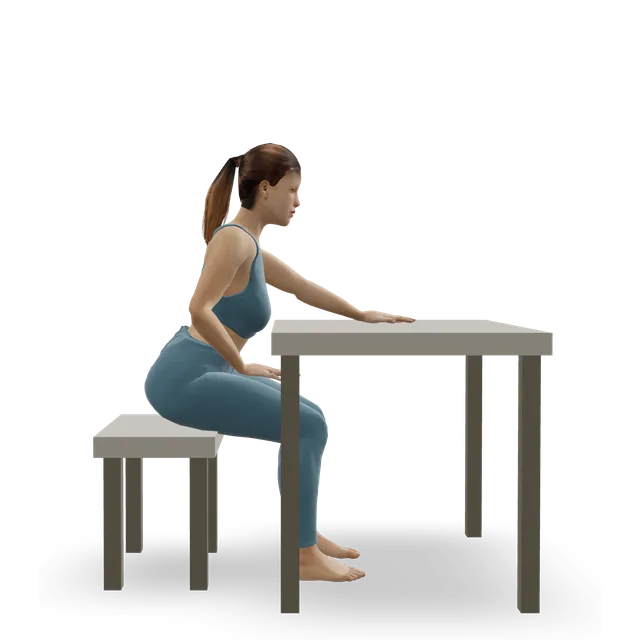
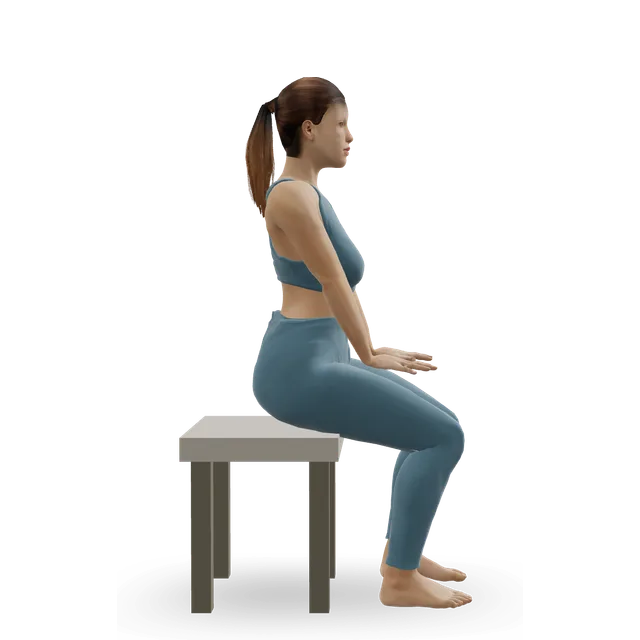
On a sturdy chair, ideally with arms. Slow breathing: 2 minutes, in about 4 and out about 6 (our seated chair yoga class). Seated march: 1 to 2 minutes (the move's page). Breath reach: 5 breaths (our chair yoga for seniors class). Shoulder circles: 10 slow circles each way (our Pilates for plus-size bodies class).

Seated spine

Cat-cow, seated: 6 to 8 slow waves (our seated chair yoga class). Thoracic rotation: 5 each side, holding 5 seconds, a twist that doesn't need belly room (our seated chair yoga class). Side bend from the chair: 10 to 20 seconds, 2 or 3 times each side (the move's page). Table slide: 6 to 8 slow reps with your feet wide (our seated chair yoga class).

Standing, with a chair or wall

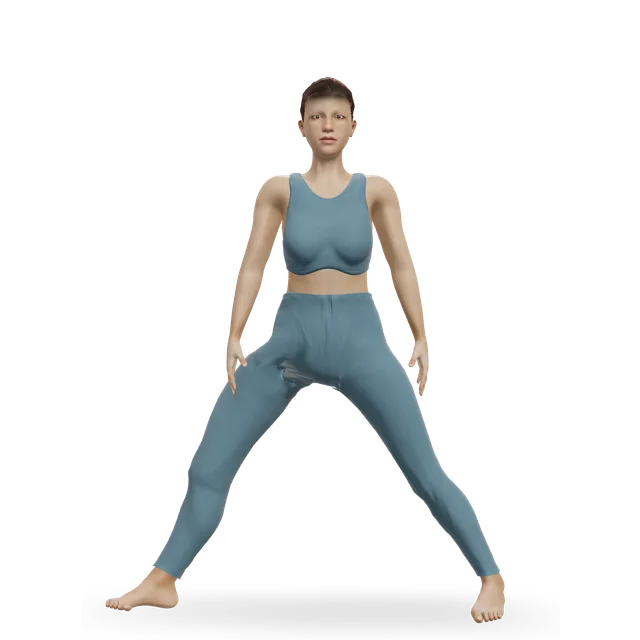
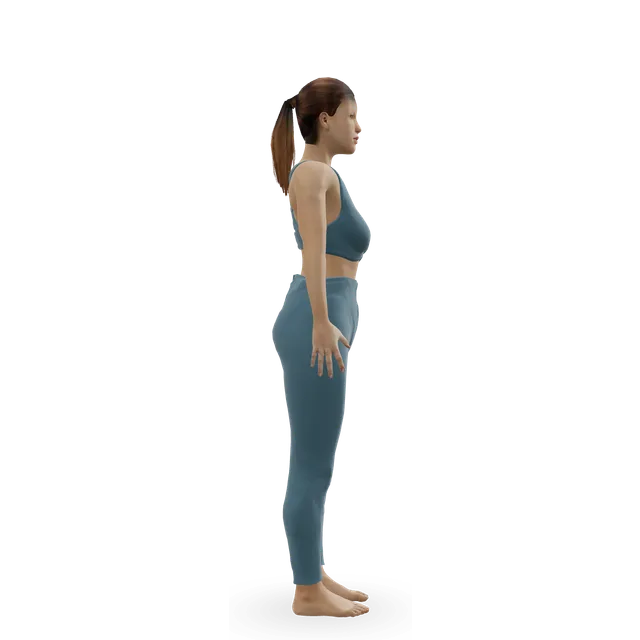
Sit to stand: 2 sets of 8 to 10, pushing on the arms or your thighs if you need to (our Pilates for plus-size bodies class), or 5 to 8 pushing on your thighs (our chair yoga for seniors class). Mountain pose: 5 to 10 slow breaths, 2 or 3 times, feet hip-width or wider (the move's page). Chair pose: 2 holds of 3 to 5 breaths, shallow (our gentle yoga for beginners class). Warrior II: 3 to 5 breaths each side (our yoga with props class). Triangle: 2 holds of 20 to 30 seconds, back to a wall, hand on a block or the chair seat (our wall yoga and props classes). Tree: 3 breaths each side, heel at your ankle (our chair yoga for seniors class). Half dog at a wall: 2 holds of 3 to 5 breaths (our wall yoga class). Wall push-up: 2 sets of 10 (our Pilates for plus-size bodies class).

On the mat (optional) and rest

Getting down and up: 5 to 8 slow cycles, with a chair in front (the move's page). Pelvic tilts into a bridge: 8 slow reps, head and shoulders on a cushion, feet wider than hips (our Pilates for plus-size bodies class). Strap hamstring stretch: 30 seconds each leg (our Pilates for plus-size bodies class). Child's pose: 30 to 60 seconds, knees wide, cushions under your chest (our gentle yoga for beginners class). Reclining bound angle: 2 to 5 minutes, propped (the move's page). Corpse pose: at least 5 minutes, up to 10 (the move's page), propped, on your side or sitting.

Poses to swap, or leave until later

Long holds flat on your backEmerging evidence

If they make you breathless, prop your head and shoulders up, or lie on your side.

Sources 8, 9

Floor downward dog, planks and chaturanga

Your wrists take your body weight here. Start with half dog at a wall, a wall push-up, or planks on your forearms or knees, and use fists or forearms if your wrists ache (our suggestion).

Deep forward folds with the feet together

Widen your feet, bend your knees, bring the floor up with a chair or blocks, and fold from your hips (our suggestion).

Deep kneeling and cross-legged sitting

Hero pose, lotus and half lotus: sit on a chair or a raised cushion instead, and pad your knees (our yoga for knee pain guide).

Headstands, shoulder stands and plough

The neck takes your body weight, and US health advice is for beginners to avoid them. With glaucoma, keep any head-down pose brief: downward dog raised eye pressure by about three-quarters in a lab study.

Sources 27, 49

Hot yoga

Hot yoga carries risks of overheating and dehydration. Start in a normal-temperature room.

Source 27

Jumping in flows

Step back instead. European obesity experts advise high-intensity interval training only after a check of your heart risk, and with supervision.

Source 21

Our yoga class for bigger bodies and other workouts

Our 30-minute chair-to-mat class starts seated, moves to the chair and wall, and makes the floor optional, with a chair-only version in its tips. Pilates for plus-size bodies is its Pilates twin. Chair yoga, seated chair yoga and wall yoga need no floor at all; the props and gentle beginners' classes add floor work (prop your head). The low-impact cardio workout counts towards your 150 minutes.

Chair-to-mat yoga for bigger bodies: a 30-minute class seated, standing at a chair and wall, and on the mat, with a chair-only option

A 30-minute yoga class for plus-size and bigger bodies: seated, then standing with a chair and wall, then an optional mat block, with a chair-only option.

30 minBeginner21 movesA bench or box, A step

Chair-to-mat Pilates for bigger bodies: a 30-minute class standing, at a chair and on the mat, with a chair-only option

A 30-minute Pilates class for bigger bodies: a standing warm-up, wall and chair strength, a supported way down to the mat and up, mat moves and a seated cool-down.

30 minBeginner18 movesA bench or box, A wall

Chair yoga for seniors

A free 20-minute chair yoga class for older adults: slow breathing, gentle seated stretches and twists, standing poses holding the chair, and a calm finish.

20 minBeginner18 movesA bench or box, Something with weight

Seated chair yoga: 15 minutes, no standing

A 15-minute chair yoga routine done entirely sitting: slow breathing, neck, shoulder and wrist stretches, seated twists and side bends, and a calm finish.

15 minBeginner16 movesA bench or box

Wall yoga for beginners: a 20-minute routine at the wall

Twenty minutes of yoga with a wall for support: standing poses with your back to it, one-leg balances, a wall sit and push-ups, then bridges and legs up the wall.

20 minBeginner13 movesA wall, A step

Yoga with props for beginners: a 40-minute standing-poses-first sequence

A 40-minute beginners' yoga sequence with props: standing poses at a wall, seated poses on a blanket, two supported poses held for 5 minutes and a long rest.

40 minBeginner11 movesA step, Firm cushion

Gentle yoga for beginners

A 25-minute gentle yoga class for complete beginners and over-50s: slow breathing, a warm-up, supported standing poses, floor poses and a closing rest.

25 minBeginner14 movesNo equipment

Restorative yoga sequence: 45 minutes of supported rest

A 45-minute restorative yoga sequence: five fully supported poses held for 4 to 10 minutes each, with slow breathing and a long final rest.

45 minBeginner6 movesFirm cushion, A wall

Low-impact cardio workout (no jumping)

A 25-minute standing cardio circuit with no jumping: marching, step jacks, sit-to-stands, punches, step-ups and wall push-ups, with a seated option for most moves.

25 minBeginner9 movesA bench or box, A step

Plan

The walking plan builds to 150 minutes a week, alongside yoga.

Before you start, and warning signs

These match our Pilates guide for bigger bodies, with the diabetes wording from our yoga for diabetes guide. This is general information, not a diagnosis. In the US, call 911 where this page says 999.

Before you start

The NHS advises getting advice from a healthcare professional first if you have a health problem, an injury or symptoms, or have recently had a heart attack or an operation.

Chest pain or fainting: call 999

Call 999 if:

  • You get sudden pain or discomfort in your chest that doesn't go away; it can feel like squeezing or pressure, burning or indigestion.
  • The pain spreads to your left or right arm, or your neck, jaw, stomach or back.
  • You have chest pain and feel sweaty, sick, light-headed or short of breath.
  • Someone faints while exercising, can't be woken within 1 minute, or has chest pain or a pounding, fluttering or irregular heartbeat.

Sources 50, 51

Unusual breathlessness

Call 999 or go to A&E (accident and emergency) straight away for severe difficulty breathing (gasping, choking or not able to get words out), a chest that feels tight or heavy, pain that spreads to your arms, back, neck and jaw, lips or skin turning very pale, blue or grey, or sudden confusion. If you're more short of breath than usual, or your heart is racing, fluttering or skipping beats, contact NHS 111.

Source 9

Breathless when you lie down

Prop your head and shoulders on cushions or a wedge, or use side-lying, seated and standing versions. The NHS says to see a GP if "your shortness of breath gets worse when you've been doing your normal activities, or when you lie down", and, with symptoms of heart failure, to ask for an urgent GP appointment or get help from NHS 111 if "you feel breathless when lying down or from everyday activity". Breathlessness that's sudden, severe or comes with chest pain is a 999 call.

Sources 9, 33

High blood pressure

From our yoga for high blood pressure guide:

Blood Pressure UK: from 140/90 to 179/99 it should be safe to increase your activity; from 180/100 to 199/109, speak to your doctor or nurse first; at 200/110 or above, don't start any new activity.

Diabetes

From our yoga for diabetes guide, if you take insulin or a medicine that can cause hypos:

Check your blood sugar before and after, keep hypo treatment by your mat, and don't start if it's 4 mmol/L or lower. Never change a diabetes medicine yourself because you've started yoga: your team can help you adjust it.

Yoga is usually done barefoot. With numb feet, the international foot guideline advises against walking barefoot, so our suggestion is shoes for standing poses, or chair yoga.

New joint pain or swelling

Some pain when you start is common and isn't a sign of harm if it settles. A hot, swollen joint is different: rest it from strengthening.

Get help the same day for a hot, swollen joint with a fever, or severe pain and swelling that came on suddenly in one joint.

Source 30

A painful, swollen leg

Same day (urgent GP appointment or NHS 111): throbbing pain in one leg (rarely both), usually the calf or thigh; swelling in one leg (rarely both); red, blue or darkened skin around the painful area, which may be harder to see on brown or black skin; or swollen veins. This can be a deep vein thrombosis (DVT). It is more likely after surgery, a hospital stay, 3 or more days in bed, a journey of over 4 hours, pregnancy or a recent birth, cancer, a previous clot, or contraception or hormone replacement therapy (HRT) that contains oestrogen.

The NHS adds that a clot is more likely if you're living with overweight or obesity. Call 999 if leg pain and swelling come with breathlessness or chest pain.

Source 52

Hot classes

Leave the room at the first sign of dizziness, a headache or feeling sick. Our hot yoga guide gives the NHS signs of heat exhaustion and heatstroke.

Source 27

Signs of an eating disorder: see a GP

From our yoga for weight loss guide: the NHS lists signs such as spending a lot of time worrying about your weight and body shape, eating very little food, exercising too much, and having very strict habits or routines around food. If you think you may have an eating disorder, see a GP as soon as you can. In the UK you can also talk in confidence to the eating disorder charity Beat: 0808 801 0677 (England), 0808 801 0432 (Scotland), 0808 801 0433 (Wales) or 0808 801 0434 (Northern Ireland), 3pm to 8pm, Monday to Friday.

Help and support

A GP can give advice and refer you to weight management services if you want them, and can help with any condition affecting your weight.

Source 12

Myths

"Yoga isn't for bigger bodies"Emerging evidence

Trials have run yoga safely in people living with overweight or obesity, every pose has a chair, wall or prop version, and NICE encourages activity at any weight.

Sources 2, 6, 1

"You need to lose weight before you start"Strong evidence

NICE: be more active "even if they do not lose weight as a result".

Source 1

"Yoga is a good way to lose weight"Mixed evidence

No overall effect in 30 trials, about 2.3 kg against no exercise and no better than other exercise, and no clear change in people living with obesity. Our yoga for weight loss guide has the detail.

Sources 6, 22, 14

"If the scales don't move, yoga isn't working"Strong evidence

Blood pressure, waist, fitness and deep belly fat can change without weight loss, and fitness goes with much lower risk at every size.

Sources 5, 2, 20, 19, 4

"Bigger bodies shouldn't do floor work"Mixed evidence

The floor is fine with props and a practised way down and up, but it's optional: chair and wall yoga count too.

Sources 36, 37, 3

"Twists and some poses burn belly fat"

Training one area doesn't take fat off it, and yoga burns about as much as a slow walk (our weight loss guide).

"You have to be flexible first"Strong evidence

Flexibility is something yoga builds. Props, bent knees and wider stances make poses fit (our yoga for beginners guide).

Source 7

Questions people ask

Can you do yoga if you're plus-size or overweight?

Yes. Trials have included people living with overweight or obesity safely, and every pose has a chair, wall or prop version. NICE encourages activity whatever happens to your weight.

Is yoga good for plus-size beginners?

It's low-impact, adjustable and counts as strengthening activity if you work hard enough to need a short rest. Start with 15 to 20 minutes, 2 or 3 times a week, and build: long sessions were a barrier in one trial.

Do I need to lose weight before I start yoga?

No. NICE asks for people to be encouraged to be more active even if they don't lose weight, and fitness goes with lower health risks at every size.

Will yoga help me lose weight?

Not much on its own: pooled trials found no clear effect, or about 2 kg. It can lower blood pressure a little and build strength, balance and comfort in your body; our yoga for weight loss guide covers the rest.

What props help in a bigger body?

A sturdy chair rated for your weight, ideally with arms, a wall, blocks or books, a strap, cushions or a wedge, and a thick mat or padding for your knees. Widen your feet so your belly has room in folds and twists.

What if lying on my back makes me breathless?

Prop your head and shoulders up, or do the pose on your side or sitting: extra weight around the tummy raises the pressure your breathing muscles work against. See a GP if breathlessness lying down is new or getting worse, and call 999 if it's sudden, severe or comes with chest pain.

I find it hard to get down to the floor. What can I do?

Skip it: chair and wall yoga still count. Or practise getting down and up with a chair in front of you, which helped in two small trials in older adults.

Will yoga hurt my knees or wrists?

It shouldn't if you choose versions that fit: pad your knees, sit on a chair instead of kneeling, and use fists, forearms or a wall instead of flat hands. Some aching that settles is normal at first. A hot, swollen joint needs rest from strengthening, and help the same day if you have a fever.

How do I find a plus-size friendly yoga class?

Look for beginner or all-bodies classes, a teacher who offers options to everyone, chairs and props, and no weighing or before-and-after talk. Weight stigma keeps many people away from exercise, so it's fine to start at home.

What should I check before I start?

Get advice first if you have chest pain or unusual breathlessness when you exert yourself, very high blood pressure, or diabetes treated with insulin or tablets that can cause hypos. Our yoga for diabetes and high blood pressure guides have the exact checks.

Is chair yoga real yoga?

Yes: breathing, stretches, twists and relaxation done seated, with standing poses at the chair when you're ready. Seated work doesn't train balance, so add standing poses when you can.

Sources

  1. NICE · Overweight and obesity management: physical activity and diet (NG246, guideline, 2025, updated January 2026)
  2. Cramer 2016 · Yoga for women with abdominal obesity: 60 women (randomised trial, Dtsch Arztebl Int)
  3. NHS · Physical activity guidelines for adults aged 19 to 64
  4. Weeldreyer 2025 · Fitness, BMI and risk of death: 20 studies, 398,716 observations (systematic review and meta-analysis, Br J Sports Med)
  5. Wasityastuti 2026 · Yoga and heart and metabolic health in adults with overweight or obesity: 30 trials, 2,689 people (systematic review and meta-analysis, PLOS Glob Public Health)
  6. Lauche 2016 · Yoga and weight: 30 trials, 2,173 people (systematic review and meta-analysis, Prev Med)
  7. Jahani 2025 · Props and yoga poses: 220 students (quasi-experimental study, J Bodyw Mov Ther)
  8. Steier 2014 · Obesity and lung volumes, sitting and lying: 18 adults (observational study, Thorax)
  9. NHS · Shortness of breath
  10. Jakicic 2021 · Restorative or vinyasa yoga in a weight programme: 50 adults with obesity (randomised trial, Obesity)
  11. NICE · Overweight and obesity management: general principles of care (NG246, guideline, 2025, updated January 2026)
  12. NHS · Overweight and obesity in adults: treatment
  13. Hinz 2021 · Who appears in yoga videos on Instagram: 400 women (content analysis, Body Image)
  14. Asiah 2023 · Yoga in people with obesity or central obesity: 15 trials, 1,161 people (systematic review and meta-analysis, Complement Ther Med)
  15. Batrakoulis 2022 · What yoga changes in people with overweight or obesity: 22 studies, 1,178 people (topical review, Diseases)
  16. UK Chief Medical Officers · Physical activity guidelines (updated July 2026; full text read)
  17. Barry 2014 · Fitness, fatness and risk of death: 10 studies (meta-analysis, Prog Cardiovasc Dis)
  18. Gaesser 2021 · Weight loss compared with fitness and activity for health (review, iScience)
  19. Verheggen 2016 · Exercise or diet and deep belly fat: 117 studies (systematic review and meta-analysis, Obes Rev)
  20. Shaw 2006 · Exercise for overweight or obesity: 43 studies (Cochrane review)
  21. Oppert 2021 · Exercise for overweight and obesity in adults: European Association for the Study of Obesity recommendations (Obes Rev)
  22. Chu 2016 · Yoga and heart and metabolic risk factors: 37 trials (systematic review and meta-analysis, Eur J Prev Cardiol)
  23. Widjaja 2021 · Thai yoga, mobility and leg strength: 22 older women with overweight or obesity (randomised pilot trial, Complement Ther Clin Pract)
  24. Suwannakul 2025 · Sun salutation yoga, stress and fitness: 44 young women with overweight or obesity (randomised trial, Hong Kong Physiother J)
  25. Kolasinski 2005 · Iyengar yoga for knee arthritis: 7 people, 6 living with obesity (pilot study without a comparison group, J Altern Complement Med)
  26. Unick 2022 · Yoga after a weight-loss programme: 60 women (randomised trial, PLoS One)
  27. NCCIH (US National Center for Complementary and Integrative Health) · Yoga: effectiveness and safety (updated August 2023)
  28. Yang 2016 · Yoga as a step towards a more active life: 14 adults with overweight (pilot study, Health Promot Int)
  29. Caldwell 2022 · Yoga, eating and activity in adults with overweight or obesity: 10 studies (systematic review, Obes Sci Pract)
  30. NICE · Osteoarthritis in over 16s (NG226, guideline, 2022)
  31. Messier 2005 · Weight loss and knee forces: 142 adults with knee arthritis (trial cohort analysis, Arthritis Rheum)
  32. Messier 2013 · Diet, exercise or both for knee arthritis: 454 adults (randomised trial, JAMA)
  33. NHS · Heart failure: symptoms
  34. NHS · Breathing exercises for stress
  35. Nivethitha 2021 · Heart rate and blood pressure during different yoga breathing techniques: 20 adults (lab study, Int J Yoga)
  36. Hofmeyer 2002 · Training older adults to get up from the floor: 35 people (randomised trial, J Am Geriatr Soc)
  37. Seeley 2026 · Practising getting up from the floor: 61 older adults (cluster randomised pilot trial, Age Ageing)
  38. Brito 2014 · Sitting down to and rising from the floor and survival: 2,002 adults aged 51 to 80 (cohort study, Eur J Prev Cardiol)
  39. Rubino 2020 · Joint international consensus statement for ending stigma of obesity (consensus statement, Nat Med)
  40. Pearl 2021 · Weight stigma and physical activity: 38 studies (systematic review, Obesity)
  41. Vartanian 2011 · Weight stigma and avoiding exercise: 111 adults (survey, Obesity)
  42. Thedinga 2021 · Weight stigma and staying away from sport and exercise: 30 adults (interview study, BMC Public Health)
  43. Panza 2018 · Weight bias among exercise and nutrition professionals: 31 studies (systematic review, Obes Rev)
  44. Olson 2021 · Internalised weight bias and how hard exercise feels: 59 adults (lab study, Obes Sci Pract)
  45. Pickett 2017 · How body-inclusive yoga teachers make classes welcoming: 9 teachers (interview study, Res Q Exerc Sport)
  46. Neumark-Sztainer 2025 · Yoga, body image, internalised weight stigma and disordered eating: 994 young adults (cohort study, Body Image)
  47. Rupani 2024 · Yoga and body image in adults: 29 studies (systematic review, Body Image)
  48. Braun 2021 · Internalised weight stigma during a mindful yoga programme: 78 adults (study without a comparison group, Health Psychol Behav Med)
  49. Jasien 2015 · Eye pressure in four yoga poses: 20 people (lab study, PLoS One)
  50. NHS · Chest pain (past its review date: reviewed August 2023, review due August 2026)
  51. NHS · Fainting
  52. NHS · DVT (deep vein thrombosis)

Exercise education, not a personal prescription, and clinical review of these guides is pending. If you are pregnant, have a health condition such as glaucoma, high blood pressure or osteoporosis, or have had recent surgery, check with a doctor, midwife or physiotherapist before starting, and stop for sharp or increasing pain. Health disclaimer.