Pain guide · Back pain

Back pain in pregnancy: why it happens in each trimester, what helps, and the signs to call about

Back pain is one of the commonest parts of pregnancy: more than two-thirds of pregnant women have low back pain at some point, and it can start in any trimester. It usually comes from the back and pelvis adapting to a growing bump, not from anything wrong with your baby, and gentle, regular exercise makes it less severe. Pain lower down, at the back of the pelvis or over the pubic bone, is pelvic girdle pain, which has its own guide.

A few signs need a call. The National Health Service (NHS) asks you to contact your general practitioner (GP) or midwife urgently for back pain in your second or third trimester, or with a fever, bleeding, pain when you pee or pain under your ribs, because it can occasionally be early labour or an infection, and to call 999 or go to accident and emergency (A&E) if you lose feeling in your legs, bottom or genitals. Your maternity unit, or the NHS's 111 line (NHS 111), can advise whenever you're unsure. This guide covers what's common and what's rare in each trimester and after the birth, sleeping, lifting and carrying, what the evidence says about exercise, belts and painkillers, and a four-stage plan with 3D demos.

When to get help first

Exercise is for pain that has been checked or is clearly mild and settling.

Get urgent medical help if

  • Call 999 or go to A&E: loss of feeling or numbness around the genitals or bottom, new trouble peeing or controlling your bladder or bowels, changes in genital sensation during sex or problems with erections or orgasm, or pain, tingling, weakness or numbness in both legs. These are signs of cauda equina syndrome, which needs treating in hospital urgently. Don't drive yourself.
  • Contact your GP or midwife urgently: back pain in the second or third trimester of pregnancy, or back pain in pregnancy with a fever, vaginal bleeding, pain when you pee, or pain in one or more of your sides (under your ribs). It could be early labour or an infection.
  • Call your midwife or maternity unit if you're less than 37 weeks pregnant and you have regular contractions or tightenings, period-type pains, a gush or trickle of fluid from your vagina, or backache that's not usual for you. You can also call if you're unsure or worried about anything.
  • Call your midwife or maternity unit straight away for vaginal bleeding, fluid leaking from the vagina, regular painful tightenings, a change in your baby's movements, a high temperature, a severe headache, problems with your vision, or sudden swelling of your face, hands or feet.
  • Get urgent medical help: you're pregnant or have given birth in the last few weeks and have symptoms of pre-eclampsia, such as pain below the ribs, a severe headache that does not go away with simple painkillers, vision problems such as blurred vision or seeing flashing lights, sudden swelling of the face, hands or feet, heartburn that does not go away with heartburn medicines, being sick, or feeling very unwell. If you're pregnant, call your maternity unit if you have the number; if you've recently given birth or cannot call your maternity unit, call 111.
  • Call 999 if you're pregnant and bleeding and you have severe pain in your tummy, pain in your shoulder, you feel sick, faint or dizzy or pass out, or the bleeding is heavy (soaking a period pad soon after putting it on).
  • Call your maternity unit immediately if you have tummy pain with lower back pain, regular cramping or tightenings, bleeding or spotting, unusual discharge or fluid leaking, pain when you pee or pee that looks cloudy, pink, red or brown, or tummy pain that is severe or doesn't go away after 30 to 60 minutes' rest. If your maternity unit isn't available, call 111.
  • Ask for an urgent GP appointment or get help from NHS 111 if you think you may have a kidney infection (often pain in your lower back or side, with burning or stinging when you pee or needing to pee more often) and you have a very high temperature or feel hot, cold or shivery, a temperature below 36C, pain in the lower tummy or in the back just under the ribs, blood in your pee, you feel or are sick, you haven't had a pee all day, or you're pregnant. Call 999 or go to A&E if you're confused, drowsy or have difficulty speaking.
  • Same day (urgent GP appointment or NHS 111): throbbing pain in one leg (rarely both), usually the calf or thigh; swelling in one leg (rarely both); red, blue or darkened skin around the painful area, which may be harder to see on brown or black skin; or swollen veins. This can be a deep vein thrombosis (DVT). It is more likely after surgery, a hospital stay, 3 or more days in bed, a journey of over 4 hours, pregnancy or a recent birth, cancer, a previous clot, or contraception or hormone replacement therapy (HRT) that contains oestrogen.
  • Call 999 or go to A&E if breathing suddenly becomes difficult, if pain in your chest or upper back comes on suddenly with breathlessness or a very fast heartbeat, or if someone passes out. These are the NHS's signs of a blood clot in the lungs (a pulmonary embolism) or another serious condition. Don't drive yourself.
  • Call 999 or go to A&E: back pain with chest pain, or back pain that started after a serious accident, such as a car crash.
  • Same day (GP or NHS 111): back pain and you feel hot, cold, shivery or generally unwell, or severe pain that starts suddenly or is getting worse quickly.
  • Sudden, severe hip or groin pain, or being unable to put weight on a leg, especially late in pregnancy: get help the same day. A rare thinning of the hip bone in pregnancy (transient osteoporosis) or a fracture needs a scan.
  • After the birth: severe pain at the pubic bone that started during the birth or in the first days after it, especially if you can't walk or take weight, the pelvis feels as if it's giving way, or you have trouble peeing. Tell your midwife or maternity team the same day: rarely, the joint at the front separates.

See a doctor or physiotherapist if

  • Backache that is very painful: talk to your GP or midwife. They may be able to refer you to an obstetric physiotherapist at your hospital, who can give you advice and helpful exercises.
  • Call your midwife or GP if you have pelvic pain and it's hard for you to move around, it hurts to get out of a car or turn over in bed, or it's painful going up or down stairs.
  • Pain, tingling or numbness spreading below the knee that isn't settling after a few weeks, is getting worse or stops your normal activities: see a GP.
  • Pain that is causing you a lot of distress, or low mood: tell your midwife or GP.
  • Pelvic or low back pain still there 6 weeks after the birth: see your GP, health visitor or a pelvic health physiotherapist.
  • Neck, shoulder or back pain since having a baby that is bothering you: ask a GP or health visitor at any time, or raise it at your 6 to 8 week postnatal check.
  • Sudden, severe low back or buttock pain when you stand or walk in the first weeks after the birth: get it checked. A stress fracture at the base of the spine (the sacrum) is rare, but it shows on a scan.
  • Sudden, severe back pain late in pregnancy or in the months after the birth, especially while breastfeeding, sometimes after a minor strain or a cough: see a GP. It is rare, but it can be a spinal fracture from thinning of the bones linked to pregnancy and breastfeeding (our suggestion).
  • Your stomach muscles still have an obvious gap down the middle 8 weeks after the birth: contact your GP, as the NHS says you may be at risk of back problems.
  • Back pain that hasn't improved after a few weeks of looking after it at home, stops you doing day-to-day activities, worries you, or you're struggling to cope.

Where does it hurt?

Location narrows the likely causes; it does not diagnose.

A dull ache across the low back, above the pelvis, worse after standing, sitting or lifting for long

Usually pregnancy low back pain: the back adapting to the bump. It eases with moving, a change of position and rest, and this guide's plan covers it.

Deep in the buttock, at the back of the pelvis or over the pubic bone, worse walking, on stairs, turning in bed or moving your legs apart

Usually pelvic girdle pain, which affects up to 1 in 5 pregnant women and isn't harmful to your baby.

Read: Pelvic girdle pain (SPD) →
The hip, the groin or the outer thigh

Our hip pain in pregnancy guide covers the outer hip at night, the groin and a numb outer thigh.

Read: Hip pain in pregnancy →
Down one leg below the knee, in a band, with tingling or numbness

Sciatica, an irritated nerve. True sciatica is less common in pregnancy than pelvic pain felt in the buttock and thigh.

Read: Sciatica →
Between the shoulder blades or across the upper back, worse late in the day

Usually the upper back muscles; feeding and carrying a baby after the birth add to it.

Read: Upper back pain →
Just under the ribs at the side, later in pregnancy

Common as the baby pushes up. Bad or persistent pain under the ribs, especially on the right, with a headache, vision problems or sudden swelling needs urgent help (pre-eclampsia).

Read: Rib pain in pregnancy →
The middle of the back

Usually the muscles and joints, but one side under the ribs with a fever, shivering or pain when you pee can be a kidney infection: see the warning signs.

Read: Middle back pain →
Waves of back pain with tightenings, or backache that isn't like your usual one, before 37 weeks

Possibly labour starting early: call your midwife or maternity unit (the warning signs).

Low on one side, by the dimple at the back of the pelvis

Often the sacroiliac (SI) joint, which is part of pelvic girdle pain in pregnancy.

Read: SI joint pain →
Right at the base of the spine, after the birth

Often tailbone pain (coccydynia), which can follow childbirth and is usually worse sitting.

Read: Tailbone pain →
A catch in the back when you sneeze or cough

Our sneezing guide covers it, including in pregnancy.

Read: Back pain when sneezing →
Back pain with periods, before you knew you were pregnant, or around the menopause

Our lower back pain in women guide covers back pain at each stage of life.

Read: Lower back pain in women →
After the birth: a stiff, sore back from lifting, feeding and carrying

Usually the extra load of caring for a baby. The after-the-birth stages below and the written steps cover it.

Sudden, severe back pain late in pregnancy or while breastfeeding, sometimes after a minor strain

Rarely, a spinal fracture from thinning of the bones linked to pregnancy and breastfeeding: see a GP (the warning signs).

Understand it

Common in every trimesterStrong evidence

More than two-thirds of pregnant women have low back pain and almost one in five have pelvic pain, a Cochrane review says, and both typically increase as pregnancy goes on. Single studies range from 39.5% of 1,835 Australian women asked about back pain to 68.5% of 950 women in US antenatal clinics and 72% of 891 Swedish women asked about low back and pelvic pain together, because the questions differ. In 1,158 Spanish women at around 35 weeks, 71.3% had had low back pain and 64.7% pelvic girdle pain in the previous 4 weeks.

Most of it is moderate, but it matters: in the US survey, back pain disturbed sleep for 58% and daily life for 57%, nearly 30% stopped at least one daily activity, and only 32% told their antenatal team. Severe disability affects about 8%, a review estimates.

Sources 1, 2, 3, 4, 5, 6

When it starts: any trimester, often worse laterMixed evidence

The NHS says backache is very common in pregnancy, "especially in the early stages". The cohort studies show it at a similar level from about 12 weeks onwards: in 855 Swedish women followed every 2 weeks, 22% already had back pain at 12 weeks and 22% to 28% had it at any one time from then until the birth, and in a survey of 950 US women it was as common early in pregnancy as late.

What tends to rise later is how bad it gets. Pelvic girdle pain often starts around 18 weeks and is worst between 24 and 36 weeks, a review says, and back pain intensity increased through the second half of pregnancy in a Swedish trial of 258 women. So the honest answer to "which trimester is worst?" is that it can start at any point and often gets more intense later.

Sources 7, 8, 3, 6, 9

Low back pain, pelvic girdle pain, or bothStrong evidence

About half of pregnancy back and pelvic pain is pelvic girdle pain, a third is low back pain and a sixth is both, a review estimates; in 313 Swedish women, those with both had the worst health and function. Low back pain sits in the spine above the pelvis, often as a dull ache. Pelvic girdle pain sits at the back of the pelvis, in the buttock or over the pubic bone, sometimes between the vagina and anus or into the thighs, and is brought on by walking, stairs, standing on one leg, turning in bed and moving the legs apart.

Pelvic girdle pain affects up to 1 in 5 pregnant women and isn't harmful to the baby, the NHS and the Royal College of Obstetricians and Gynaecologists (RCOG) say; it has its own guide. True sciatica, pain down a leg in a nerve's pattern, affected 10 of 855 women (1%) in the Swedish cohort: most buttock and thigh pain in pregnancy comes from the pelvis instead.

Sources 6, 10, 11, 12, 8

Why it happens is only partly knownMixed evidence

The NHS says the ligaments soften and stretch to prepare for labour, which can strain the joints of the lower back and pelvis, and the UK's pelvic health physiotherapists (Pelvic, Obstetric and Gynaecological Physiotherapy, POGP) add the changes in posture and in your centre of gravity as the bump grows.

The evidence for the usual explanations is thinner than it sounds. The hormone relaxin didn't match who got pelvic girdle pain in 3 of 4 good studies, and in 35 women, joint looseness didn't track hormone levels or joint pain. Posture changes in pregnancy, but in different directions in different women: 11 of 15 pregnant women had a flatter, not more curved, low back, and in 12 women the curve and back pain both rose without being related. A review of 50 studies found back pain wasn't clearly linked with the spinal changes.

Sources 7, 13, 14, 15, 16, 17, 18

Who is more likely to get itEmerging evidence

Back pain before pregnancy, with periods or in an earlier pregnancy was the clearest predictor, along with younger age; more previous births and very flexible joints went with low back and pelvic pain in a Swedish study. Higher body weight went with low back and pelvic pain in one study, and with pelvic girdle pain but not low back pain in another. These are links in observational studies, not causes, and exercise helps at every size.

Work matters too. Physical and psychological work factors raised the risk in the Swedish cohort, and across 16 studies, frequently lifting heavy loads at work (often 10 kg or more) went with pelvic girdle pain that limits what you can do, with limited but consistent evidence.

Sources 3, 4, 5, 8, 19

The causes that aren't the back, and how rare they areStrong evidence

A few causes of back pain in pregnancy aren't the back, and each has its own clues. About 8 in 100 babies are born early, and before 37 weeks, regular tightenings, period-type pains, a gush or trickle of fluid or backache that isn't usual for you need a call; backache is also a normal sign that labour has begun at term. Pre-eclampsia is most likely from 20 weeks and can follow the birth; it complicates 2% to 8% of pregnancies worldwide, is not severe in most cases, and fewer than 1 in a million women giving birth in the UK now die from it.

A kidney infection brings pain in the back or side with a fever, shivering or pain when you pee, and complicated 0.5% of 543,430 US pregnancies. Placental abruption, where the placenta starts to come away from the wall of the womb, usually causes bleeding and pain that comes and goes like a contraction or is constant; it affects about 0.4% to 1% of pregnancies. Blood clots affect about 1 to 2 in 1,000 pregnancies, most often just after the birth.

Rarer still: a slipped disc pressing on a nerve was found in about 1 in 10,000 births in one hospital, and cauda equina syndrome in pregnancy is known from case reports. Pregnancy and lactation associated osteoporosis, thinning of the bones that can cause spinal fractures late in pregnancy or while breastfeeding, is rare, and a third of those affected have a family history of osteoporosis.

Sources 20, 21, 22, 23, 24, 25, 26, 27, 28, 29, 30, 31, 32, 33

When a scan or test helpsStrong evidence

Back pain and pelvic girdle pain in pregnancy are recognised from the story and an examination, and no scan is needed for them. Tests answer specific questions: a urine test for a suspected urine or kidney infection; blood pressure and pee checks at every antenatal appointment, and hospital tests if pre-eclampsia is suspected; monitoring of contractions and the baby's heartbeat for suspected labour; and an ultrasound scan of the leg within 24 hours for a suspected clot.

For the rare disc or nerve emergency, a magnetic resonance imaging (MRI) scan, which uses no X-rays, shows the problem, and surgery during pregnancy is possible when it's needed; reviews of about 50 reported cases each found good outcomes in most. After the birth, a scan can find a stress fracture at the base of the spine or a pregnancy-related spinal fracture.

Sources 25, 34, 22, 20, 35, 30, 31, 36, 32

How it usually goes, in pregnancy and after the birthMixed evidence

In pregnancy it often lasts weeks to months, and pelvic girdle pain tends to build towards 24 to 36 weeks; exercise makes it less severe. Most women improve after the birth, but how many still have pain depends on how it's counted: about 25% still have back or pelvic pain after the birth, about 7% seriously, in a review, while 43.1% of Swedish women who had pain in pregnancy still had some at 6 months. The definitions differ, so the figures aren't directly comparable.

In 341 Danish women with confirmed pelvic joint pain, 62.5% were pain-free within a month of the birth and 8.6% still had pain at 2 years. By 3 months after the birth, 72% with low back pain and 66% with pelvic girdle pain had recovered, against 33% of those with both. Of the Swedish women with pain at 6 months, most had pain that came and went at about 14 months. NHS inform and the RCOG say around 1 in 10 have ongoing pelvic pain. No one can promise a timescale.

Sources 6, 37, 38, 39, 40, 41, 29, 12

What helps, and how strong the evidence is

Exercise eases it and cuts sick leaveStrong evidence

In a Cochrane review, exercise on land eased pregnancy low back pain by a moderate amount (7 trials, 645 women; low-quality evidence), an 8 to 12 week exercise programme cut the number of women reporting low back and pelvic pain by about a third (4 trials, 1,176 women; moderate quality), and exercise cut sick leave for back and pelvic pain by about a quarter (2 trials, 1,062 women). When side effects were reported, they were minor and short-lived, with none serious for mother or baby.

Across 32 studies of 52,297 women, exercise in pregnancy didn't change how many women got low back, pelvic girdle or lumbopelvic pain, but it made the pain less severe during pregnancy and soon after the birth; a 2026 review of 31 trials found exercise better than standard care at 6 to 12 weeks. So exercise is a treatment for how bad it gets, not a guarantee it won't start.

Sources 1, 37, 42

Water exerciseEmerging evidence

In 258 Swedish women, water exercise once a week in the second half of pregnancy lowered back pain intensity, and after 32 to 33 weeks, 7 women in the water group were on sick leave for back pain against 17 in the control group. In 390 Swedish women, water aerobics eased low back pain more than a land programme. The Cochrane review rates the water evidence as low quality, from single trials.

Sources 9, 43, 1

Exercise is safe for your babyStrong evidence

Across 23 studies of 7,125 women, exercise in pregnancy wasn't linked with miscarriage (odds ratio 0.88), and across 13 studies of 6,837 women it wasn't linked with the baby's death around the birth (odds ratio 0.86). The evidence is very low quality but consistent, and the NHS, the World Health Organization (WHO), the UK Chief Medical Officers and Canadian and US guidelines all recommend exercise in pregnancy: "There is no evidence of harm", in the Chief Medical Officers' words.

Sources 44, 45, 46, 47, 48, 49

Support belts help pelvic girdle pain more than low back painMixed evidence

For low back pain in pregnancy, one low-quality trial compared two support garments and found no difference, and a review found too little evidence to recommend maternity belts, with side effects such as more pain and skin irritation. For pelvic girdle pain, the National Institute for Health and Care Excellence (NICE) suggests physiotherapy for exercise advice, a non-rigid pelvic support belt, or both; a trial of 105 women favoured a belt with information, but a 2025 review of 7 studies was uncertain (low to very low certainty).

Sources 1, 50, 51, 52, 53

Acupuncture and hands-on treatmentEmerging evidence

In single studies, acupuncture or craniosacral therapy eased pelvic pain more than usual care, osteopathic manipulation helped against usual care but not against a placebo treatment, and a combined programme of manual therapy, exercise and education helped in one trial (moderate quality). In 386 women with pelvic girdle pain, acupuncture eased evening pain more than stabilising exercises. None is a substitute for staying active.

Sources 1, 54

Pillows and mattresses: a little evidenceEmerging evidence

No trial has tested sleeping positions for back pain in pregnancy. A wedge pillow supporting the bump while lying on the side eased late-pregnancy backache in 92 women in a crossover study, and a memory-foam mattress and pillow eased night-time pelvic girdle pain by 16.5 points on a 100-point scale in a trial in which 35% stopped using them.

Sources 55, 56

Painkillers in pregnancy: paracetamol, not ibuprofenStrong evidence

Paracetamol is usually the best painkiller in pregnancy and doesn't harm the baby, the NHS says; take it to ease back pain unless your GP or midwife says not to, following the packet. Avoid ibuprofen in pregnancy unless a doctor or pharmacist advises it. While breastfeeding, paracetamol is usually best, but ibuprofen can often be used.

Sources 57, 58, 7

After the birth: exercise helps, and an epidural isn't to blameStrong evidence

Exercise after the birth that included trunk strengthening reduced back and pelvic pain by about 2 points out of 10 (4 trials, 210 women; moderate certainty). An epidural in labour made no difference to long-term backache (2 trials, 814 women; moderate quality).

A gap between the tummy muscles is common, in 60% of 300 first-time mothers at 6 weeks and 32.6% at 12 months, and women with and without one reported the same low back and pelvic pain; a review of 12 studies found no link with that pain either (weak evidence). The NHS still asks you to contact your GP if a gap is obvious 8 weeks after the birth.

Sources 59, 60, 61, 62, 63

Lifting at workEmerging evidence

Frequent heavy lifting at work went with pelvic girdle pain that limits what you can do and with more time off before the birth, across 16 studies (limited but consistent evidence). Once you tell your employer you're pregnant, they must assess the risks of your work, including lifting and carrying heavy loads, the Health and Safety Executive (HSE) says. At home and at work, the NHS's advice is to bend your knees, keep your back straight and avoid lifting heavy objects.

Sources 19, 64, 7

Running and jumping after the birth: expert guidanceEmerging evidence

UK guidance written by pelvic health physiotherapists advises against running before about 3 months after the birth, starting light deadlift practice at 6 to 8 weeks with no more than the weight of a baby in a car seat (about 15 kg), and squats, lunges and bridges from about 2 to 4 weeks in line with everyday tasks. It is graded as expert opinion. POGP adds swimming once you've had 7 days clear of bleeding.

Sources 65, 66

How much pain is OK while you exercise?

In pregnancy, no rise in pain and no worse the next morning; after the birth, up to about 5 out of 10Emerging evidence

In pregnancy (our pelvic girdle pain guide's rule, which is our reading of the sources): an exercise is fine if your back or pelvic pain doesn't rise during it and isn't worse later that day or the next morning. Ordinary muscle tiredness is fine. If pain rises, shrink the range, slow down or swap the move, rather than stopping exercise altogether. This follows POGP ("Stop any activity that produces pain, especially in the back or pelvis"), the NHS (listen to your body and don't push yourself too hard) and the UK Chief Medical Officers ("Listen to your body and adapt").

After the birth (our back pain guide's rule): some discomfort is fine, up to about 5 out of 10, settling within an hour or so and no worse the next morning; if it's worse, do less next time, not nothing. Stop for heaviness or dragging in the vagina, or leaking, which mean you're not ready for that load yet, UK expert guidance says, and ease off if your bleeding gets heavier or turns red again (our postpartum page's rule).

The warning signs aren't a pain-rule question: stop exercising and call your midwife or maternity unit for bleeding, fluid leaking, regular painful tightenings, chest pain, dizziness, or pain or swelling in a calf. Pain, tingling or numbness that spreads down a leg means stop or shrink the movement. No trial has tested a pain rule in pregnancy, so this is expert and health-service advice.

Sources 13, 45, 46, 65

The exercise plan: 4 stages

Start at the first stage. Each move opens a full guide with a 3D demo.

Stage 1

Keep moving and settle it

Any trimester, most days. Stay active within comfort, use the everyday changes in the written steps below, and learn the back exercise, the deep tummy hold and the pelvic floor squeeze that the NHS and POGP teach. With pelvic girdle pain, our pelvic girdle pain guide's plan comes first, and with sciatica, our sciatica guide's. With any warning sign, get checked first. No trial has tested this plan as a whole.

Treadmill walking demonstrated on the 3D figure3D demoTreadmill walkingBeginner · Cardio machine

About 10 minutes a day to start, building towards 30 minutes on most days if it stays comfortable · The NHS's starting point and its 150 minutes a week; walking outdoors counts the same, and swimming or an aquanatal class can replace it

Harder: Treadmill jogging

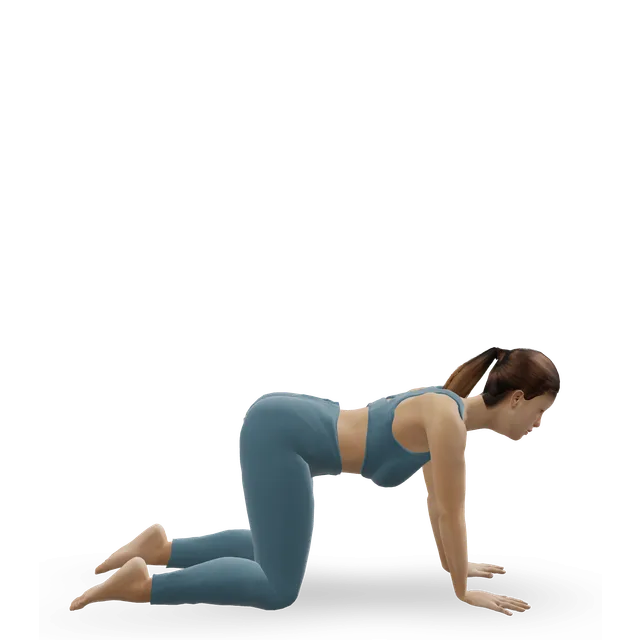
Cat stretch (rounded-back hold) demonstrated on the 3D figure3D demoCat stretch (rounded-back hold)Beginner · No equipment

10 slow rounds: draw in your tummy, round your back up, hold for a few seconds, then return to a flat back without letting it sag · The NHS's back exercise for pregnancy and its dose, not the move page's

Harder: Overhead lat stretch at a bench (elbows on the bench)

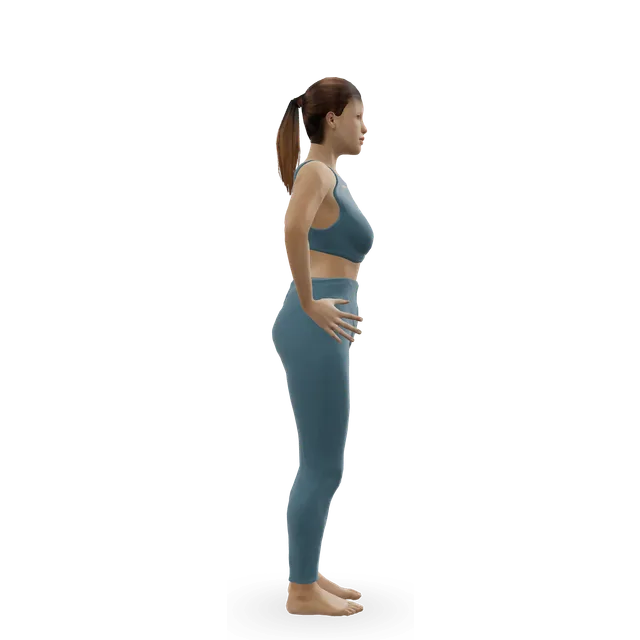
Standing pelvic tilt demonstrated on the 3D figure3D demoStanding pelvic tiltBeginner · No equipment

5 to 10 slow tilts, up to 3 times a day · The move page's dose; a good break from standing or sitting

Harder: Half lord of the fishes (Ardha Matsyendrasana)

Side-lying tummy draw-in demonstrated on the 3D figure3D demoSide-lying tummy draw-inBeginner · No equipment

Draw in your lower tummy as you breathe out and keep it for 2 or 3 breaths, then relax fully; a few times, once or twice a day · POGP's hold for pregnancy, lying on your side or propped up; the repeats are editorial

Harder: Bird dog, one limb at a time

Pelvic floor exercise (Kegel) demonstrated on the 3D figure3D demoPelvic floor exercise (Kegel)Beginner · No equipment

10 long squeezes held for up to 10 seconds, with 10 seconds' rest, then 10 quick squeezes, at least 3 times a day · POGP's dose; start lying or sitting. The move page starts at 8 of each and builds to 10

Child's Pose (Balasana) demonstrated on the 3D figure3D demoChild's Pose (Balasana)Beginner · No equipment

Hold 1 to 3 minutes as a rest, knees wide · The move page's dose; take the knees wide so your bump has room, as the move page says

Harder: Extended puppy pose (Uttana Shishosana)

Move on when: Daily activities are no more painful and the next morning is no worse (our pelvic girdle pain guide's check, editorial). Stages 1 and 2 can run side by side.

Follow along: a timer, a cue and the next move, one step at a time.
Stage 2

Strength in positions that suit your bump

Two or three times a week, until the birth. Keep your legs, hips, trunk and upper body strong for lifting, carrying and the weeks after the birth, within the pain rule. The doses are our exercise in pregnancy page's editorial starting points (2 to 3 sets of 8 to 12, twice a week, stopping with a few reps to spare), inside the 150 minutes a week of activity the guidelines suggest. After the first trimester, keep any move on your back to a few minutes, as the move pages say.

Sit to stand from a chair demonstrated on the 3D figure3D demoSit to stand from a chairBeginner · A bench or box

2 to 3 sets of 8 to 12, feet hip-width apart · As in our exercise in pregnancy page (editorial)

Easier: Sit to stand, pushing on the thighs · Harder: Bodyweight squat

Bird dog, one limb at a time demonstrated on the 3D figure3D demoBird dog, one limb at a timeBeginner · No equipment

5 to 8 each side, with a 3 to 5 second hold · As in our exercise in pregnancy page (editorial)

Easier: Side-lying tummy draw-in · Harder: Bird dog

Band row demonstrated on the 3D figure3D demoBand rowBeginner · A band + An anchor point

3 sets of 10 to 15, stopping 2 to 3 reps short of failure · The move page's dose (editorial)

Harder: Supported single-arm dumbbell row

Wall push-up demonstrated on the 3D figure3D demoWall push-upBeginner · A wall

2 to 3 sets of 8 to 12 · As in our exercise in pregnancy page (editorial)

Harder: Push-up

Clamshell demonstrated on the 3D figure3D demoClamshellBeginner · No equipment

2 sets of 10 to 15 each side, with a pillow under your bump · As in our exercise in pregnancy page (editorial); leave it out if opening the knee brings on pain at the pubic bone

Easier: Supine isometric hip abduction (belt press) · Harder: Lateral band walk

Half-kneeling Pallof press demonstrated on the 3D figure3D demoHalf-kneeling Pallof pressBeginner · A band + An anchor point

2 sets of 8 to 10 each side · As in our exercise in pregnancy page (editorial); stand in a split stance if kneeling is uncomfortable, as the move page says

Harder: Pallof press

Move on when: Carry on until the birth. Drop back to stage 1 during a flare, and stop for any warning sign.

Follow along: a timer, a cue and the next move, one step at a time.
Stage 3

After the birth: the first weeks

From the first days, as you feel able. Pelvic floor and deep tummy muscles first, with walking, as POGP and the NHS teach. After a caesarean, a tear or a complicated birth, go at your own pace and follow your team's advice; our caesarean guide has the timings.

Pelvic floor exercise (Kegel) demonstrated on the 3D figure3D demoPelvic floor exercise (Kegel)Beginner · No equipment

10 long squeezes held for up to 10 seconds, then 10 short squeezes, at least 3 times a day · POGP's dose after the birth. With a urinary catheter, start once it's out and you're passing urine normally, as the move page says

Side-lying tummy draw-in demonstrated on the 3D figure3D demoSide-lying tummy draw-inBeginner · No equipment

Hold for up to 10 seconds, breathing normally, up to 10 times · The move page's dose, which is the NHS's after the birth

Harder: Bird dog, one limb at a time

Pelvic tilt into bridge demonstrated on the 3D figure3D demoPelvic tilt into bridgeBeginner · No equipment

The tilt first, held for 3 seconds, building up to 10 repetitions 3 times a day; roll up into a bridge once that is easy · POGP's dose

Harder: Glute bridge

Knee fold demonstrated on the 3D figure3D demoKnee foldBeginner · No equipment

2 sets of 5 to 10 each side, every other day · The move page's dose, from POGP

Easier: Supine heel slide · Harder: Dead bug heel taps

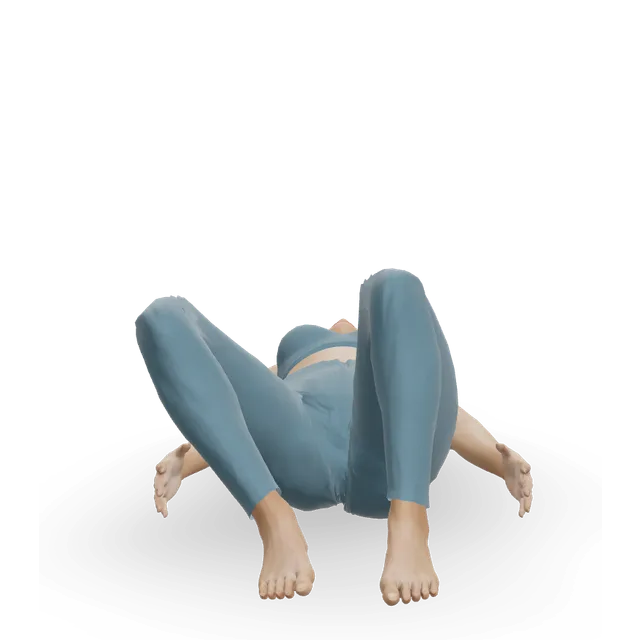
Bent-knee fall-out demonstrated on the 3D figure3D demoBent-knee fall-outBeginner · No equipment

2 sets of 5 to 10 each side, every other day · The move page's dose, from POGP

Easier: Supine heel slide · Harder: Dead bug heel taps

Treadmill walking demonstrated on the 3D figure3D demoTreadmill walkingBeginner · Cardio machine

A walk every day, gradually increasing the time and pace over the first 6 weeks · POGP's advice; a buggy walk counts

Harder: Treadmill jogging

Move on when: Daily life with your baby is comfortable, and nothing brings on heaviness, leaking or more bleeding: usually from about 6 weeks after a straightforward birth, later after a caesarean (POGP and UK expert guidance).

Follow along: a timer, a cue and the next move, one step at a time.
Stage 4

Lifting, carrying and your usual activity

From about 6 weeks, 2 or 3 sessions a week. Strength for lifting a car seat, a buggy and a growing baby, and a gradual return to your usual exercise. Squats, lunges and bridges can start earlier, from about 2 to 4 weeks, in line with everyday tasks (UK expert guidance). Running and jumping come back from about 3 months, and only when walking, hopping and jogging on the spot cause no pain, heaviness or leaking (the same guidance, graded as expert opinion); our postpartum guide has the readiness checks.

Glute bridge demonstrated on the 3D figure3D demoGlute bridgeBeginner · No equipment

2 to 3 sets of 10 · As in our back pain guide (editorial)

Easier: Pelvic tilt into bridge · Harder: Single-leg glute bridge

Bird dog demonstrated on the 3D figure3D demoBird dogBeginner · No equipment

2 to 3 sets of 6 to 8 each side, with 3 to 5 second holds · As in our back pain guide (editorial)

Easier: Bird dog, one limb at a time · Harder: Bear crawl

Dead bug heel taps demonstrated on the 3D figure3D demoDead bug heel tapsBeginner · No equipment

2 sets of 6 to 8 each side · As in our back pain guide (editorial); the NHS suggests avoiding sit-ups and planks to start with

Easier: Bent-knee fall-out · Harder: Forearm plank

Dumbbell goblet squat demonstrated on the 3D figure3D demoDumbbell goblet squatIntermediate · A dumbbell

2 to 3 sets of 8 to 12 · Editorial: practice for lifting your baby and the car seat from low down

Easier: Bodyweight squat · Harder: Barbell front squat

Kettlebell deadlift demonstrated on the 3D figure3D demoKettlebell deadliftBeginner · A kettlebell

3 sets of 8 to 10, starting no heavier than your baby in a car seat (about 15 kg) from 6 to 8 weeks, and building gradually · The starting load is UK expert guidance; the sets are editorial. After a caesarean, lift nothing heavier than your baby for about 6 weeks, as the move page says

Easier: Hip-hinge practice · Harder: Dumbbell Romanian deadlift

Farmer's carry demonstrated on the 3D figure3D demoFarmer's carryIntermediate · A dumbbell + A kettlebell

2 walks of 20 to 30 m with a light weight in each hand · Editorial: practice for shopping bags and a car seat

Harder: Suitcase carry

Move on when: Our suggestion: your usual week of activity passes the pain rule. Keep two strength sessions a week, because back pain that started in pregnancy often comes and goes for a year or more, and strength work eased it after the birth in trials.

Follow along: a timer, a cue and the next move, one step at a time.

What to change for now

Sleeping, lying down and getting up (written steps)

Our 3D figure can't show these. Each step names its source.

  • 1. From 28 weeks, go to sleep on your side, either side. Support your bump with pillows and put a pillow between your knees. If you wake up on your back, don't worry: turn onto your side and go back to sleep (the NHS).
  • 2. Earlier in pregnancy, resting and sleeping in any comfortable position is safe (POGP). With pelvic pain, lie on your less painful side (NHS inform).
  • 3. To get out of bed, roll onto your side with your knees bent, push up with your hands into sitting as your legs go over the edge, sit for a moment, then lean forward and push up to stand. To lie down, sit on the edge, lower yourself sideways onto the pillow and lift both legs up together, knees bent (POGP).
  • 4. In later pregnancy, keep any exercise lying flat on your back to a few minutes, because it can make you feel dizzy and isn't good for your baby (the NHS). Use propped-up, side-lying, all-fours, sitting or standing versions instead.

Sources 67, 13, 29, 66, 45

Sitting, standing, lifting and carrying in pregnancy (written steps)

None of these changes has been tested as a treatment on its own; they are the consistent advice of the NHS, NHS inform and the UK's pelvic health physiotherapists.

  • 1. To lift, bend your knees and keep your back straight, avoid heavy objects, and move your feet when you turn rather than twisting your spine (the NHS). Ask someone else to lift heavy things (NHS inform).
  • 2. Balance shopping between 2 bags (the NHS). Carry a toddler in front of you rather than on one hip, or swap hips if you must (POGP).
  • 3. Sit with your back straight and well supported, perhaps with a maternity support pillow (the NHS). Sit rather than stand for jobs such as ironing or preparing food, at a surface of the right height (POGP).
  • 4. Change position at least every 30 minutes (the RCOG and NHS inform).
  • 5. To get into a car, sit down first, then bring your legs in together; to get out, put both feet out and push up with your arms (POGP).
  • 6. Wear flat shoes to spread your weight evenly, get enough rest, especially later in pregnancy, try a massage or a warm bath, and use a mattress that supports you properly (the NHS).
  • 7. At work, once you've told your employer you're pregnant, ask for the risk assessment they must do, including lifting, carrying and long spells of sitting or standing, and for it to be reviewed as your pregnancy goes on (the HSE).

Sources 7, 13, 12, 29, 68, 64

Exercise choices in pregnancy (written steps)

These come from the NHS, POGP and the UK Chief Medical Officers.

  • 1. Aim for 150 minutes of moderate activity a week, with strength work twice a week; if you're new to exercise, start with about 10 minutes a day. Any activity is better than none (the NHS).
  • 2. POGP's start for newcomers is 15 minutes of continuous activity 3 times a week, building to 30 minutes at least 4 times a week.
  • 3. Swimming takes pressure off your joints, and aquanatal classes and prenatal yoga with a qualified instructor can help your back (the NHS).
  • 4. Don't start a new vigorous activity such as running, and avoid sports with a risk of falling or bumping your tummy, such as hockey, rugby or mountain biking (the NHS). "Do not bump the bump" (the UK Chief Medical Officers).

Sources 45, 13, 46

Painkillers and getting help

Paracetamol is usually the best painkiller in pregnancy; take it unless your GP or midwife says not to, and avoid ibuprofen unless a doctor or pharmacist advises it (the NHS). If your backache is very painful, your GP or midwife may refer you to an obstetric physiotherapist. For pelvic girdle pain, NICE suggests physiotherapy for exercise advice, a non-rigid support belt, or both.

Sources 57, 58, 7, 51

Looking after your back after the birth (written steps)

These come from the NHS and POGP.

  • 1. Feed your baby sitting with your back well supported and straight, with a small cushion behind your waist and your feet on the floor (the NHS).
  • 2. Kneel or squat for jobs near the floor, such as picking up toys or bathing your baby, and change nappies on a raised surface or kneeling beside a sofa or bed, never leaving your baby unattended up high (the NHS).
  • 3. Keep your back straight and bend your knees when you lift. Keep the car seat, buggy or toddler close in front of you, and breathe out as you lift (the NHS and POGP).
  • 4. Push the pram or buggy with your back straight and the handles at a height that keeps your elbows bent at right angles, so you don't bend forward or reach up, or carry your baby in a well-fitting sling (the NHS and POGP).
  • 5. Avoid sit-ups, planks and high-impact exercise to start with, and avoid heavy lifting and straining on the toilet (the NHS).

Sources 63, 66, 69

Positions to swap, and why

Habit or positionWhy it mattersInstead
Glute bridges and other exercises flat on your back, for long spells in later pregnancyThe NHS says it can make you dizzy and isn't good for your baby; POGP says short periods are fine.Side-lying, propped-up and all-fours versions.Try: Side-lying tummy draw-in
Going to sleep on your back from 28 weeksNICE and the NHS advise going to sleep on your side.Either side, with pillows under your bump and between your knees.
Resting until it stops hurtingExercise eases pregnancy back pain, and the NHS says any activity is better than none.Short daily walks and the stage 1 moves.Try: Treadmill walking
Lifting heavy things, or lifting from the floor with straight legsThe NHS says avoid lifting heavy objects, and bend your knees with your back straight.Bend your knees, keep the load close, and ask for help with heavy things.Try: Sit to stand from a chair
Carrying a toddler on one hip, or all your shopping in one handPOGP and the NHS advise carrying in front, or balancing the weight.Carry in front, or split the load between 2 bags.
Split squats, lunges, wide stances and standing on one leg with pelvic girdle painThese bring on pelvic girdle pain, and the move page says skip it or keep the stance narrow.Sit to dress; sit-to-stands with your feet hip-width apart.Try: Sit to stand from a chair
Sit-ups on your back after the first trimester, or in the first weeks after the birthOur pregnancy page moves trunk work off your back after the first trimester, and the NHS suggests avoiding sit-ups and planks to start with after the birth.The side-lying tummy draw-in and the one-limb bird dog.Try: Bird dog, one limb at a time
Taking up running or another new vigorous sportThe NHS doesn't recommend starting a new vigorous activity in pregnancy.Brisk walking, swimming or an aquanatal class.
Sports with a risk of falling or bumping your tummyThe NHS names hockey, rugby and mountain biking.Swimming, walking or a pregnancy class.
A maternity belt instead of exercise for low back painThe evidence for belts in pregnancy low back pain is too thin, and a review lists side effects.The stage 2 strength work; for pelvic girdle pain, a belt fitted with a physiotherapist's advice.
Ibuprofen in pregnancyThe NHS says avoid it unless a doctor or pharmacist advises it.Paracetamol, unless your GP or midwife says not to.
Sitting or standing in one position for a long timeThe RCOG and NHS inform suggest changing position at least every 30 minutes.A short walk or a few pelvic tilts.Try: Standing pelvic tilt
Kettlebell deadlifts or other lifts heavier than your baby in the first 6 weeks after a caesareanThe move page says lift nothing heavier than your baby for about 6 weeks.Walking and the first-weeks moves.Try: Pelvic floor exercise (Kegel)
Jump squats, running and other jumping before about 3 months after the birthUK expert guidance advises waiting, and longer with pelvic floor symptoms.Brisk walking, a static bike, and swimming once you've had 7 days clear of bleeding.

Routines to follow

Pregnancy strength workout (no lying on your back)

A 30-minute strength workout for any trimester with dumbbells and a band: squats, rows, hinges, presses and side-lying hip work, none on your back.

30 minBeginner14 movesA dumbbell, A bench or box

Pregnancy Pilates workout (no lying on your back)

A 20-minute Pilates workout for any trimester: seated, standing, all-fours and side-lying moves, with no lying on your back or front and no jumping.

20 minBeginner15 movesA wall, A bench or box

Prenatal yoga workout (no lying on your back)

A 20-minute prenatal yoga workout for any trimester: seated breathing, all-fours and kneeling poses, supported standing poses and rest, none flat on your back.

20 minBeginner15 movesA step, A wall

Daily pelvic floor workout

A 5-minute daily pelvic floor workout for women and men: slow holds and quick squeezes, three times a day, with how to find the right muscles.

5 minBeginner2 movesNo equipment

Postnatal exercises

A gentle 25-minute routine for the first weeks after birth: pelvic floor, breathing, tummy and hip exercises on the floor, sit-to-stands and a walk.

25 minBeginner12 movesA bench or box, Cardio machine

Postnatal strength workout (from about 6 weeks)

A 25-minute strength workout from about 6 weeks after birth: sit-to-stands, deadlift practice, push-ups, rows, bridges and tummy work, with the knack.

25 minBeginner14 movesA bench or box, A kettlebell

Easy cardio workout

A steady 30 to 45 minute cardio session at talk-but-not-sing pace: walk, cycle, row or cross-train, counting toward weekly activity guidelines.

40 minBeginner3 movesCardio machine, A wall

More moves for this area

Questions people ask

Is back pain normal in pregnancy?

Yes: more than two-thirds of pregnant women have low back pain, and it's usually the back and pelvis adapting rather than a problem with the baby. Contact your GP or midwife urgently if it's in your second or third trimester, or comes with a fever, bleeding, pain when you pee or pain under your ribs, because it can occasionally be early labour or an infection.

When should I worry about back pain in pregnancy?

Before 37 weeks, call your midwife or maternity unit for regular tightenings, period-type pains, fluid leaking or backache that isn't usual for you, and get urgent help for pain below the ribs with a severe headache, vision problems or sudden swelling, which can be pre-eclampsia. Call 999 if you lose feeling in your legs, bottom or genitals. These are uncommon, and the NHS says to call whenever you're unsure or worried.

Can back pain in pregnancy harm my baby?

Back pain itself doesn't harm your baby, and the NHS says pelvic girdle pain isn't harmful to the baby either. What matters is noticing the few signs that aren't the back, such as regular tightenings or a fever, and calling about them.

Is back pain worse in the first, second or third trimester?

It can start at any point: about 1 in 5 women in one study already had it at 12 weeks, and the NHS says backache is very common in the early stages. What often rises later is how bad it gets: pelvic girdle pain tends to build from about 18 weeks and peak between 24 and 36 weeks.

Is it my back, my pelvis or sciatica?

Low back pain sits above the pelvis, usually as a dull ache, while pelvic girdle pain sits at the back of the pelvis or over the pubic bone and comes on with walking, stairs and turning in bed. Pain down a leg below the knee with tingling is sciatica, which affected about 1 in 100 pregnant women in one study. Our sciatica and pelvic girdle pain guides go further.

What can I take for back pain when pregnant?

Paracetamol is usually the best painkiller in pregnancy and doesn't harm the baby; take it unless your GP or midwife says not to, following the packet. Avoid ibuprofen unless a doctor or pharmacist advises it.

What exercises help back pain in pregnancy?

Gentle, regular exercise: walking, swimming or aquanatal classes, the NHS's all-fours back exercise done slowly 10 times, and strength work twice a week. In trials, exercise made pregnancy back pain less severe and cut sick leave.

What's the best sleeping position for back pain in pregnancy?

No trial has tested sleeping positions for back pain, but from 28 weeks the NHS advises going to sleep on your side, either side, with pillows under your bump and between your knees, which many women find eases the back too. If you wake up on your back, don't worry: turn onto your side.

Do pregnancy support belts help back pain?

For pelvic girdle pain, NICE suggests a non-rigid belt alongside physiotherapy. For low back pain in pregnancy there isn't good evidence either way, so use one only if it makes you more comfortable, alongside exercise.

How can I lift and carry safely while pregnant?

Bend your knees and keep your back straight, keep the load close, move your feet rather than twisting, split shopping between 2 bags, and ask for help with heavy things. At work, your employer must assess the risks of lifting and carrying once you've told them you're pregnant.

Why does my back hurt after giving birth, and was it the epidural?

Lifting, feeding and carrying a baby add load, and about a quarter of women still have some back or pelvic pain after the birth. An epidural made no difference to long-term backache in trials. A gap in your tummy muscles on its own isn't known to cause back pain, though the NHS asks you to see your GP if it's still obvious at 8 weeks.

How long does back pain last after pregnancy, and when can I exercise?

Most women improve in the weeks and months after the birth, though some still have pain at 6 months or longer. Pelvic floor and gentle tummy exercises and walking can start in the first days, strength work builds from about 6 weeks, and running waits until about 3 months; exercise that included trunk strengthening eased back pain after the birth in trials.

Related exercise guides

Other pain guides

Sources

  1. Liddle 2015 · Interventions for low back and pelvic pain in pregnancy (Cochrane review)
  2. Sibbritt 2016 · Back, neck and pelvic pain in 1,835 pregnant women in Australia (cohort study, Int J Clin Pract)
  3. Wang 2004 · Low back pain in pregnancy: how common, risk factors and effects (survey of 950 women, Obstet Gynecol)
  4. Mogren 2005 · Low back and pelvic pain in pregnancy: how common and risk factors (survey of 891 women, Spine)
  5. Kovacs 2012 · Low back pain and pelvic girdle pain in 1,158 pregnant women in Spain (cross-sectional study, Spine)
  6. Wu 2004 · Pregnancy-related pelvic girdle pain: terms, symptoms and how common it is (systematic review, Eur Spine J)
  7. NHS · Back pain in pregnancy
  8. Ostgaard 1991 · How common back pain is in pregnancy (cohort of 855 women, Spine)
  9. Kihlstrand 1999 · Water exercise and back pain in pregnancy (randomised trial of 258 women, Acta Obstet Gynecol Scand)
  10. Gutke 2006 · Pelvic girdle pain and lumbar pain in pregnancy (cohort of 313, Spine)
  11. NHS · Pelvic pain in pregnancy (past its review date: reviewed December 2022, review due December 2025)
  12. RCOG · Pelvic girdle pain and pregnancy (patient information, 2015)
  13. POGP · Fit for Pregnancy: exercises and advice to stay fit and healthy during pregnancy (leaflet, 2021)
  14. Aldabe 2012 · Relaxin levels and pelvic girdle pain in pregnancy (systematic review, Eur Spine J)
  15. Marnach 2003 · Joint looseness and hormone levels through pregnancy (cohort study, Obstet Gynecol)
  16. Franklin 1998 · Posture and back pain in the first and third trimesters (study of 12 women, J Orthop Sports Phys Ther)
  17. Okanishi 2012 · Spinal curves and posture changes in pregnant women (study of 15 women, Acta Obstet Gynecol Scand)
  18. Conder 2019 · The biomechanics of pregnancy (systematic review, J Funct Morphol Kinesiol)
  19. MacDonald 2024 · Physical job demands in pregnancy and muscle and joint health (systematic review, Am J Obstet Gynecol)
  20. NHS · Premature labour and birth
  21. NHS · Signs that labour has begun
  22. NHS · Pre-eclampsia
  23. Duley 2009 · The global impact of pre-eclampsia and eclampsia (review, Semin Perinatol)
  24. NICE NG133 · Hypertension in pregnancy: diagnosis and management (2019, updated 2023)
  25. NHS · Kidney infection
  26. Wing 2014 · Kidney infection in pregnancy over 18 years (retrospective study of 543,430 pregnancies, Am J Obstet Gynecol)
  27. NHS · Stomach pain in pregnancy
  28. Tikkanen 2011 · Placental abruption: how common, risk factors and consequences (review, Acta Obstet Gynecol Scand)
  29. NHS inform · Pelvic girdle pain
  30. LaBan 1983 · Pregnancy and the slipped lumbar disc (hospital case series, Arch Phys Med Rehabil)
  31. Hussein 2024 · Slipped disc and cauda equina syndrome in pregnancy (systematic review, Acta Neurochir)
  32. Issa 2026 · Pregnancy and lactation associated osteoporosis (systematic review, Calcif Tissue Int)
  33. Hadji 2026 · Pregnancy- and lactation-associated osteoporosis (position statement, Int J Gynaecol Obstet)
  34. NHS · Urinary tract infections (UTIs)
  35. NHS · Deep vein thrombosis (DVT)
  36. Whiles 2020 · Managing a slipped disc with symptoms in pregnancy (systematic review, Global Spine J)
  37. Davenport 2019 · Exercise for low back, pelvic girdle and lumbopelvic pain in pregnancy (meta-analysis, BJSM)
  38. Albert 2001 · How four patterns of pregnancy-related pelvic pain recover (cohort, Acta Obstet Gynecol Scand)
  39. Gutke 2008 · Predicting persistent low back pain after pregnancy (cohort, Spine)
  40. Mogren 2006 · What predicts lasting low back and pelvic pain after pregnancy (cohort, Eur Spine J)
  41. Bergstrom 2014 · Low back and pelvic girdle pain about 14 months after pregnancy (follow-up study, BMC Pregnancy Childbirth)
  42. Mladenovic 2026 · Physiotherapy for pregnancy-related lumbopelvic pain (meta-analysis of 31 trials, Braz J Phys Ther)
  43. Granath 2006 · Water aerobics and sick leave for low back pain in pregnancy (trial of 390 women, J Obstet Gynecol Neonatal Nurs)
  44. Davenport 2019 · Exercise in pregnancy and miscarriage or loss of the baby (systematic review and meta-analysis, BJSM)
  45. NHS · Exercise in pregnancy
  46. Department of Health and Social Care 2026 · Physical activity guidelines: pregnancy and after childbirth (the UK Chief Medical Officers' infographics)
  47. Bull 2020 · World Health Organization guidelines on physical activity and sedentary behaviour (guideline, BJSM)
  48. Mottola 2018 · 2019 Canadian guideline for physical activity throughout pregnancy (guideline, BJSM)
  49. ACOG 2020 · Physical activity and exercise during pregnancy and the postpartum period (Committee Opinion 804)
  50. Ho 2009 · Maternity support belts for low back pain in pregnancy (review, J Clin Nurs)
  51. NICE NG201 · Antenatal care (2021)
  52. Kordi 2013 · A pelvic belt vs home stabilising exercises for pelvic girdle pain in pregnancy (RCT of 105, J Back Musculoskelet Rehabil)
  53. Lauridsen 2025 · Pelvic belts for low back and pelvic pain in pregnancy (meta-analysis of 7 studies, Midwifery)
  54. Elden 2005 · Acupuncture or stabilising exercises added to standard care for pelvic girdle pain in pregnancy (RCT of 386, BMJ)
  55. Thomas 1989 · A maternity cushion for backache and poor sleep in late pregnancy (crossover study of 92 women, Aust N Z J Obstet Gynaecol)
  56. Feldthusen 2021 · A memory-foam mattress and pillow for nightly pelvic girdle pain in pregnancy (RCT of 66, Int J Womens Health)
  57. NHS · Paracetamol for adults: pregnancy and paracetamol
  58. NHS · Ibuprofen for adults: pregnancy and ibuprofen
  59. Ruchat 2025 · Exercise for muscle and joint pain after giving birth (meta-analysis of 37 studies, BJSM)
  60. Anim-Somuah 2018 · Epidural or no epidural for pain in labour (Cochrane review of 40 trials)
  61. Sperstad 2016 · A gap in the tummy muscles in pregnancy and 12 months after the birth (cohort of 300 first-time mothers, BJSM)
  62. Benjamin 2019 · A gap in the tummy muscles and pain, function and quality of life (systematic review, Physiotherapy)
  63. NHS · Your post-pregnancy body
  64. Health and Safety Executive · Pregnant workers and new mothers: your health and safety
  65. Goom 2019 · Returning to running postnatal: UK guidelines for medical, health and fitness professionals
  66. POGP · Fit for the Future: advice and exercises after childbirth (leaflet, 2024)
  67. NHS · Tiredness and sleep problems in pregnancy
  68. NHS inform · Common problems in pregnancy
  69. NHS · Keeping fit and healthy with a baby
  70. NHS · Vaginal bleeding in pregnancy
  71. NHS · Pregnancy symptoms you need to get help for
  72. NHS · Pulmonary embolism

Exercise education, not a diagnosis or treatment plan. It is written from the guidelines and studies listed above; review by a clinician is pending. If your pain follows an injury, is severe, is getting worse, or comes with any warning sign listed on this page, get it assessed. Health disclaimer.