Pain guide · Back pain

Tailbone pain (coccydynia): what helps, what the evidence shows, and when to get it checked

Tailbone pain (coccydynia) is pain and tenderness at the very base of the spine, usually worse when you sit, lean back or get up from a chair. It often follows a fall onto your bottom, childbirth or long spells of sitting, and it usually improves over a few weeks, though for some people it lasts much longer.

A good cushion, shorter spells of sitting and simple painkillers come first; physiotherapy and injections are the next steps. Exercise hasn't been shown to cure it, and this page says so: the gentle plan here keeps you moving and comfortable while it settles. Start with the warning signs.

When to get help first

Exercise is for pain that has been checked or is clearly mild and settling.

Get urgent medical help if

  • Call 999 or go to A&E: loss of feeling or numbness around the genitals or bottom, new trouble peeing or controlling your bladder or bowels, changes in genital sensation during sex or problems with erections or orgasm, or pain, tingling, weakness or numbness in both legs. These are signs of cauda equina syndrome, which needs treating in hospital urgently. Don't drive yourself.
  • Call 999: after a fall, you may have hurt your head, neck, back or hip, or you cannot get up.
  • Same day (GP or NHS 111): back pain and you feel hot, cold, shivery or generally unwell, or severe pain that starts suddenly or is getting worse quickly.
  • A painful lump at the top of your bottom, between the buttocks, that is bleeding or leaking pus: ask for an urgent GP appointment or contact NHS 111. It can be an infected pilonidal sinus.
  • Same day: you have or have had cancer, and new back pain that is severe and doesn't let up, is getting steadily worse, is worse at night and disturbs your sleep, is worse when you cough, sneeze or strain, or comes with tenderness over the spine. Contact your cancer team or GP urgently. With cancer, new weakness, difficulty walking, numbness or bladder or bowel problems are an emergency.
  • Same day (GP or NHS 111): back pain in the second or third trimester of pregnancy, or back pain in pregnancy with a fever, vaginal bleeding or pain when you pee. It could be early labour or an infection.

See a doctor or physiotherapist if

  • Tailbone pain that hasn't improved after a few weeks of treating it at home, is affecting your daily activities, or comes with a high temperature and pain somewhere else, such as your tummy or lower back: see a GP. In many areas you can refer yourself to NHS physiotherapy.
  • Unexplained weight loss, or a lump, swelling or change in the shape of your back.
  • Pain that doesn't ease with rest, or is worse at night.

Understand it

What it is

Tailbone pain (coccydynia) is pain and tenderness in the coccyx, the small bone at the base of the spine, near the top of your bottom. It is often a dull ache with occasional sharp pains, worse while sitting, when you sit down or stand up, when you bend forward or when you open your bowels, and it can disturb sleep.

The coccyx is one leg of the tripod you sit on, with your two sitting bones, and leaning back while you sit puts more weight through it.

Sources 1, 2

Who gets it, and why

The NHS lists pregnancy and childbirth, a fall onto the coccyx, long or repeated sitting such as driving or cycling, poor posture, being overweight or underweight, and a coccyx joint that moves too much or too little; sometimes no cause is found. Women are affected about five times as often as men.

In 208 people examined with X-rays standing and sitting, body weight shaped what went wrong: in people with obesity the coccyx most often slipped backwards when they sat, in thin people a bony spur was more common, and a fall in the month before the pain began made an unstable coccyx more likely. At one specialist clinic, childbirth caused 7.3% of the cases in women, and half of those births were forceps deliveries.

Uncommon causes to rule out include an infection such as a pilonidal sinus (an infected channel in the skin at the top of the buttocks), a growth, and pain coming from the spine.

Sources 1, 2, 3, 4, 5

How it's recognised

Usually from the story and tenderness over the coccyx, and the NHS describes treatment without routine scans. When it doesn't settle, X-rays or MRI (magnetic resonance imaging) can look for a break, a growth or abnormal movement; specialist clinics compare X-rays taken sitting and standing, which found the problem in 69% of cases in one series.

Sources 3, 2, 1

How long it lastsMixed evidence

The NHS says it may improve after a few weeks but can last longer, and a review says most cases resolve within weeks to months, with or without treatment.

Long-standing pain is a different picture. In 115 people treated at a French specialist service after more than 2 months of pain (18 months on average), pain eased by about 1.5 points out of 10 at 6 months and 2.8 points at 3 years, but half still had pain above 3 out of 10, or had had surgery, at 3 years. The longer the pain had lasted, the worse the outlook.

Sources 1, 2, 6

What helps, and how strong the evidence is

A cushion and less sitting come firstEmerging evidence

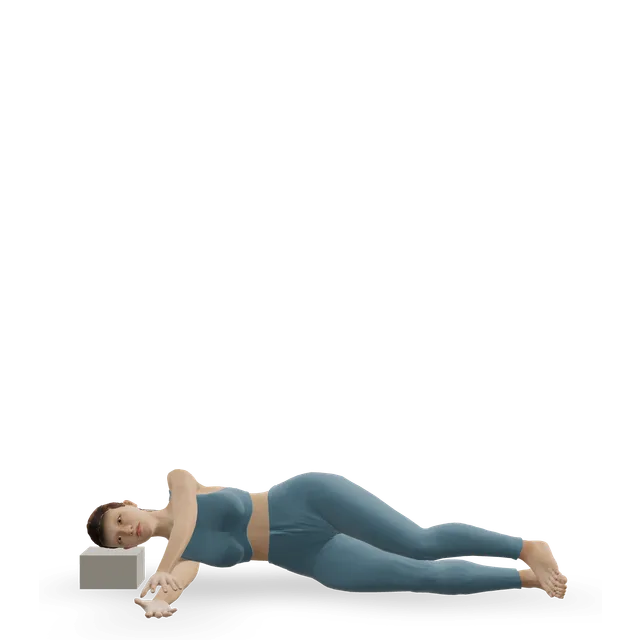
The NHS's first steps: sit with your lower back supported, use a coccyx cushion, lie on your side, try pelvic floor exercises, use an ice pack for 20 to 30 minutes or a heat pack for longer, take an anti-inflammatory such as ibuprofen, use a laxative if pooing hurts, and don't sit for long. A review adds that a wedge-shaped or cut-out coccyx cushion takes pressure off the coccyx, while a ring (doughnut) cushion can press on it. We found no trials of cushions: this is sensible advice, not tested treatment.

Sources 1, 2

Manual therapy helps some people, modestlyMixed evidence

The NHS lists physiotherapy, in which the muscles around the coccyx are manipulated, among the first further treatments. In a trial of 102 people with long-standing tailbone pain, 3 sessions of internal manipulation (through the back passage) gave good results about twice as often as low-power external physiotherapy at 1 month (36% against 20%) and 6 months (22% against 12%), though the differences could have been chance. In a smaller study, about 1 in 4 had a satisfactory result at 6 months and at 2 years. A 2025 review found manual therapy worked best in recent pain, and its effect faded with time.

Sources 1, 7, 8, 9

Shockwave therapy did better than other physical treatments in small trialsEmerging evidence

A 2025 review of 9 trials (532 people) found shockwave therapy reduced pain and improved function, sometimes for up to 6 months, though the trials had a moderate to high risk of bias. In one of them, 41 people had 4 weeks of shockwave or other physical treatments, and pain fell more with shockwave.

Sources 9, 10

Pelvic floor work: relaxing matters more than squeezingMixed evidence

The NHS suggests pelvic floor exercises. The trials and case series used relaxation. Adding a reverse Kegel (relaxing the pelvic floor on the in-breath, 5 s at a time, 3 sets of 10) to usual care helped in a small trial. In a series of 124 people with no comparison group, relaxation-focused pelvic floor physiotherapy over about 9 sessions cut average pain from 5.1 to 1.9 out of 10. In 60 women with tailbone pain after childbirth, light therapy plus pelvic floor exercise did best.

If your pelvic floor feels tight, sex is painful or you struggle to empty your bowels, relaxing it comes before squeezing it, as the site's pelvic floor guide says.

Sources 1, 11, 12, 13

Exercise helps you cope, but hasn't been shown to cure itMixed evidence

No trial has tested an exercise programme on its own. A 2013 review couldn't recommend any non-surgical treatment over another. A 2022 review of 64 studies (1,980 people, only 5 of them randomised trials) found the smallest average improvements with stretching or manipulation (about 2 points out of 10) and with usual care, against 4 to 5 points for injections, shockwave and surgery, in mostly uncontrolled studies. A 2025 review found short-term benefits from several physical treatments and called for better trials.

Two small trials included exercise. In 48 people, 3 weeks of piriformis and hip flexor (iliopsoas) stretching raised pain thresholds and how long people could sit without pain. In 42 people with tailbone pain after a colonoscopy, piriformis and hip flexor stretches, clamshells and a seat cushion, 3 times a week for 4 weeks, cut pain from 7.3 to 5.7 out of 10; adding tape or reverse Kegels did better. So the plan on this page helps you stay active and comfortable; it isn't a cure.

Sources 14, 15, 16, 9, 17, 11

Injections help many people, in studies without a comparison groupEmerging evidence

The NHS lists corticosteroid and local anaesthetic injections into the joint between the coccyx and the spine among the first further treatments. In a 1991 study of 120 people, 60% responded to injections and about 85% to an injection with manipulation, while physiotherapy helped little. In the French cohort, an injection was the usual first treatment, and pain fell only modestly overall. Nerve blocks in front of the coccyx (ganglion impar blocks) eased pain across 17 studies (625 people), on very low-certainty evidence.

Sources 1, 18, 6, 19

Surgery is a last resortMixed evidence

The NHS says surgery to remove part or all of the coccyx may be recommended if physiotherapy and injections don't help. In 21 mostly retrospective studies (826 people), pain fell by about 5 points out of 10 and stayed down beyond 3 years, but 8% had complications, mostly wound infections, and 3% needed another operation. In 37 people with an unstable coccyx on sitting X-rays, 34 had good or excellent results at 2 years, though improvement took 4 to 8 months. A 2014 review still called the operation generally not recommended because of its complications, so it is for carefully chosen people with stubborn pain.

Sources 1, 20, 21, 2

How much pain is OK while you exercise?

Mild to moderate pain that settles, and judge sitting by time

Some discomfort during these exercises is fine. Aim for no more than about 5 out of 10, settling within an hour or so, and no worse the next morning; if it is worse, do less next time, not nothing. The 5 out of 10 figure matches this site's other pain guides and hasn't been tested for tailbone pain.

Judge sitting by time, not by pain: sit on your cushion for as long as you comfortably can, stand up and move before the pain builds, and stretch the time by a few minutes every few days. That's our suggestion; the NHS advises not sitting for long.

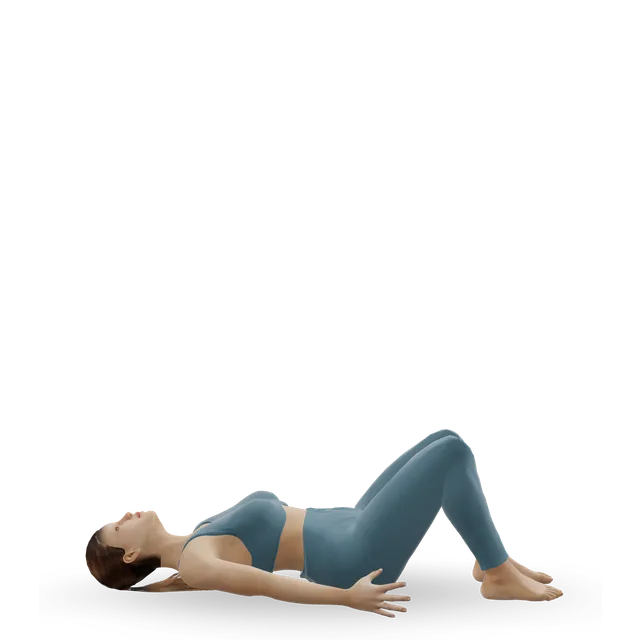
If lying on your back for floor exercises presses on the tailbone, use a softer surface or a folded blanket under the pelvis, or choose the side-lying and all-fours moves. Numbness around your bottom, weakness in your legs or bladder or bowel changes are not a pain-rule question: see the warning signs.

Sources 1, 22

The exercise plan: 3 stages

Start at the first stage. Each move opens a full guide with a 3D demo.

Stage 1

Take the pressure off and keep moving

The first 2 weeks, or during a flare. Use a wedge or cut-out coccyx cushion, sit in short spells, sit upright or lean slightly forward rather than back, lie on your side to rest, try ice or heat, and use a laxative if pooing hurts. Walk instead of sitting where you can. The doses are editorial unless marked.

Treadmill walking demonstrated on the 3D figure3D demoTreadmill walkingBeginner · Cardio machine

10 to 20 min most days, or walk outdoors · The NHS advises not sitting for long

Harder: Treadmill jogging

Slow breathing (6 breaths a minute) demonstrated on the 3D figure3D demoSlow breathing (6 breaths a minute)Beginner · No equipment

5 min, once or twice a day · Let your belly and pelvic floor soften as you breathe in. The move's own dose

Easier: Breath reach · Harder: Crocodile Breathing (prone diaphragmatic breathing)

Pelvic floor exercise (Kegel) demonstrated on the 3D figure3D demoPelvic floor exercise (Kegel)Beginner · No equipment

8 slow holds of up to 10 s and 8 quick squeezes, 3 times a day, relaxing fully after each · The NHS suggests pelvic floor exercises. If squeezing hurts, or the pelvic floor feels tight, switch to the pelvic floor relaxation routine

Child's Pose (Balasana) demonstrated on the 3D figure3D demoChild's Pose (Balasana)Beginner · No equipment

1 to 3 min, breathing slowly · Knees wide. The move's own dose

Harder: Extended puppy pose (Uttana Shishosana)

Move on when: Sitting and standing up are getting easier, and the pain settles between sessions.

Follow along: a timer, a cue and the next move, one step at a time.
Stage 2

Stretch and strengthen round the pelvis

About weeks 2 to 6. The stretch and clamshell doses come from a small trial in which stretches, clamshells and a seat cushion, 3 times a week for 4 weeks, eased pain, and relaxing the pelvic floor or adding tape helped more. If lying on your back presses on the tailbone, put a folded blanket under your pelvis or use a softer surface.

Half-kneeling hip flexor stretch demonstrated on the 3D figure3D demoHalf-kneeling hip flexor stretchBeginner · No equipment

Hold 30 s each side, 3 times a week · The trial's hold for its hip flexor stretch, which it did lying on a table

Harder: Couch stretch

Clamshell demonstrated on the 3D figure3D demoClamshellBeginner · No equipment

3 sets of 10 each side, 3 times a week · The trial's dose

Harder: Lateral band walk

Sit to stand from a chair demonstrated on the 3D figure3D demoSit to stand from a chairBeginner · A bench or box

2 sets of 8 to 10, leaning forward over your feet · Getting up from a chair is often the painful moment. Editorial dose

Harder: Bodyweight squat

Move on when: These are comfortable and you can sit a little longer each week.

Follow along: a timer, a cue and the next move, one step at a time.
Stage 3

Build sitting time and get back to activity

From about week 6. Stretch your sitting time by a few minutes every few days with your cushion, and go back to cycling with short rides and a well-fitted saddle. The doses are editorial.

Move on when: Normal activity is comfortable. If the pain hasn't improved after a few weeks, or is stopping your daily life, see a GP about physiotherapy or an injection.

Follow along: a timer, a cue and the next move, one step at a time.

What to change for now

Sitting

Sit with your lower back supported, on a wedge or cut-out coccyx cushion rather than a ring, and avoid leaning back, which puts more weight through the coccyx. Get up and move often, and lie on your side to rest.

Sources 1, 2

Pain relief and the toilet

An ice pack wrapped in a towel for 20 to 30 minutes, or a heat pack for longer; an anti-inflammatory painkiller such as ibuprofen if it suits you; and if pooing hurts, a laxative to soften your poo (ask a pharmacist which one).

Source 1

In pregnancy and after birth

After birth, tailbone pain often follows a difficult or forceps delivery. Use a cushion, avoid long sitting, and see your GP, midwife or a pelvic health physiotherapist if it doesn't settle. In pregnancy, back pain in the second or third trimester, or with a fever, bleeding or pain when you pee, needs an urgent check. Pain round the back of the pelvis in pregnancy (pelvic girdle pain) has its own guide.

Sources 4, 23

Positions to swap, and why

Habit or positionWhy it mattersInstead
Sitting for long spellsThe NHS advises not sitting for a long time.Stand and move every 20 to 30 minutes (our suggestion), and walk.
A ring (doughnut) cushionIt can press on the coccyx.A wedge or cut-out coccyx cushion.
Slumping back when you sitLeaning back puts more weight through the coccyx.Sit upright with your lower back supported, or lean slightly forward.
Straining on the toiletPain is often worse when you poo.A laxative to soften your poo, as a pharmacist advises.
Hard squeezing of the pelvic floor when it hurtsWith pelvic pain, more squeezing may not help; relaxation comes first, as the site's pelvic floor guide says.Slow breathing that lets the pelvic floor soften, and the pelvic floor relaxation routine.
Sit-ups, rolling Pilates moves and rocking on your backRolling presses on the tailbone, and the site's Pilates moves already say skip them with a sore tailbone.Moves on your side or on all fours.
Long rides on a hard saddleCycling is one of the causes the NHS lists.Shorter rides and a well-fitted saddle (our suggestion).

Routines to follow

More moves for this area

Questions people ask

What causes tailbone pain?

The usual causes are a fall onto your bottom, pregnancy and childbirth, long or repeated sitting such as driving or cycling, and being overweight or underweight. Sometimes there's no clear cause, and women get it about five times as often as men.

How long does tailbone pain last?

It often improves within a few weeks to months. Pain that has lasted more than a few months can be stubborn: at one specialist service, half still had significant pain 3 years later, so get help if it isn't settling.

How can I sit with tailbone pain?

Use a wedge or cut-out coccyx cushion, sit upright with your lower back supported or lean slightly forward, and get up often. A ring cushion can press on the coccyx.

What exercises help tailbone pain?

Walking, gentle stretches for the hips and buttocks, clamshells and pelvic floor relaxation were part of care in small trials and may help you sit and move more comfortably. No exercise programme has been shown to cure tailbone pain on its own. If it isn't improving, physiotherapy and injections are the next steps.

Should I do pelvic floor exercises for tailbone pain?

The NHS suggests them. If your pelvic floor feels tight, sex is painful or pooing is hard, focus on relaxing it rather than squeezing; a pelvic health physiotherapist can help.

Is my tailbone broken?

It might be bruised, cracked or moving more than it should, but the first treatment is the same. Get it checked if the pain is severe, isn't improving after a few weeks, or comes with any warning sign.

What can a doctor do for tailbone pain?

Physiotherapy, including manual therapy of the muscles around the coccyx, and a steroid and local anaesthetic injection are the usual next steps; surgery to remove the coccyx is for pain that hasn't responded. In one trial, good results were about twice as common after internal manipulation as after low-power physiotherapy, though the difference could have been chance.

Do injections work for tailbone pain?

Many people improve after a steroid and local anaesthetic injection, but the studies had no comparison group. Nerve blocks in front of the coccyx also eased pain, on very low-certainty evidence.

Is surgery worth it?

For carefully chosen people with stubborn pain, removing the coccyx cut pain by about 5 points out of 10, with complications, mostly wound infections, in about 8%. It's a last resort.

Why does my tailbone hurt after giving birth?

Childbirth, especially a difficult or forceps delivery, can strain or shift the coccyx. Use a cushion, avoid long sitting, and see your GP or a pelvic health physiotherapist if it doesn't settle; the postnatal exercises are a gentle place to start.

When should I worry about tailbone pain?

Call 999 for numbness around your genitals or bottom, new bladder or bowel problems, or numbness or weakness in both legs. Get an urgent GP appointment or call NHS 111 for a fever or feeling unwell, or a painful lump between your buttocks leaking pus. If you have had cancer and the pain is new and severe, contact your cancer team or GP the same day, and see a GP soon for weight loss or pain that's worse at night.

Other pain guides

Sources

  1. NHS · Tailbone (coccyx) pain
  2. Lirette 2014 · Coccydynia: anatomy, causes and treatment of tailbone pain (review, Ochsner J)
  3. Maigne 2000 · Causes and mechanisms of common coccydynia: body weight and injury (208 patients, Spine)
  4. Maigne 2012 · Tailbone pain after childbirth: 57 women (case series, Eur J Phys Rehabil Med)
  5. NHS · Pilonidal sinus
  6. Charrière 2021 · Treatment without surgery for chronic coccydynia over 36 months (cohort of 115, Eur Spine J)
  7. Maigne 2006 · Internal manipulation for chronic coccydynia (RCT of 102, Spine)
  8. Maigne 2001 · Three manual treatments for coccydynia (pilot study, Spine)
  9. Blanco-Diaz 2025 · Physiotherapy for coccydynia (systematic review of 9 trials, BMC Musculoskelet Disord)
  10. Lin 2015 · Shockwave therapy for coccydynia (RCT of 41, PLoS One)
  11. Mosaad 2023 · Taping or pelvic floor exercise added to usual care for coccydynia after colonoscopy (RCT of 42, Afr Health Sci)
  12. Scott 2017 · Pelvic floor physiotherapy for chronic coccydynia (case series of 124, PM R)
  13. Abdoelmagd 2025 · Light therapy with pelvic floor exercise for tailbone pain after childbirth (RCT of 60, Photobiomodul Photomed Laser Surg)
  14. Howard 2013 · Conservative treatments for coccydynia (systematic review, J Man Manip Ther)
  15. Andersen 2022 · Treatments for coccydynia (systematic review of 64 studies, Global Spine J)
  16. Sidiq 2025 · Physical therapy for coccydynia (systematic review, Arch Physiother)
  17. Mohanty 2017 · Piriformis and iliopsoas stretching in coccydynia (trial of 48, J Bodyw Mov Ther)
  18. Wray 1991 · Coccydynia: causes and treatment in 120 patients (JBJS Br)
  19. Jevotovsky 2026 · Ganglion impar blocks for coccydynia (meta-analysis of 17 studies, Reg Anesth Pain Med)
  20. Sagoo 2022 · Coccygectomy for stubborn tailbone pain (meta-analysis of 21 studies, Eur Spine J)
  21. Maigne 2000 · Instability of the coccyx in coccydynia, and surgery for it (JBJS Br)
  22. NHS · Back pain
  23. NHS · Back pain in pregnancy
  24. NHS · Falls
  25. NICE NG234 · Spinal metastases and metastatic spinal cord compression (2023)

Exercise education, not a diagnosis or treatment plan. It is written from the guidelines and studies listed above; review by a clinician is pending. If your pain follows an injury, is severe, is getting worse, or comes with any warning sign listed on this page, get it assessed. Health disclaimer.