Pain guide · Back pain

Rib pain in pregnancy: the bump, kicks and heartburn, what helps, and the pain to check the same day

Rib pain is common later in pregnancy, often on one side just under the breast or at the side of the chest, from about 27 or 28 weeks. It usually comes from the growing bump pushing up under the ribs as your lower rib cage widens, from your baby's kicks and position, and from heartburn, not from anything wrong with you or your baby. Sitting tall, stretching up, a well-fitting bra and eating little and often can all help. No study has measured exactly how common it is, and most of what helps is advice from maternity physiotherapists rather than trials, which this guide says plainly.

A few signs need a call. Pain below the ribs that is bad or doesn't go away, especially on the right, can be a sign of pre-eclampsia, as can a severe headache, vision problems, sudden swelling, being sick, feeling very unwell or heartburn that heartburn medicines don't ease: the National Health Service (NHS) asks you to call your maternity unit, or its 111 line (NHS 111) if you can't. Very itchy palms or soles need urgent help too. Sudden chest pain that doesn't go away, or sudden breathlessness, needs 999 or accident and emergency (A&E), and pain under the ribs at your side or back with a fever or pain when you pee needs an urgent call to your general practitioner (GP) or midwife, or NHS 111. This guide covers what's common and what's rare at each stage of pregnancy, how to tell them apart, sitting, bras, breathing room and sleep, what the evidence says about heartburn medicines and painkillers, and a four-stage plan with 3D demos through pregnancy and after the birth.

When to get help first

Exercise is for pain that has been checked or is clearly mild and settling.

Get urgent medical help if

  • Call 999: sudden pain or discomfort in your chest that does not go away (it can feel like squeezing or pressure, burning or indigestion); pain that spreads to your left or right arm, or your neck, jaw, shoulder, stomach or back; or chest pain and you feel sweaty, sick, light-headed or short of breath. It could be a heart attack. Don't drive yourself to A&E.
  • Call 999 or go to A&E if breathing suddenly becomes difficult, if pain in your chest or upper back comes on suddenly with breathlessness or a very fast heartbeat, or if someone passes out. These are the NHS's signs of a blood clot in the lungs (a pulmonary embolism) or another serious condition. Don't drive yourself.
  • Call 999: sudden chest or back pain that can feel like something being torn inside, with shortness of breath and problems walking, seeing or speaking.
  • Get urgent medical help: you're pregnant or have given birth in the last few weeks and have symptoms of pre-eclampsia, such as pain below the ribs, a severe headache that does not go away with simple painkillers, vision problems such as blurred vision or seeing flashing lights, sudden swelling of the face, hands or feet, heartburn that does not go away with heartburn medicines, being sick, or feeling very unwell. If you're pregnant, call your maternity unit if you have the number; if you've recently given birth or cannot call your maternity unit, call 111.
  • Get urgent medical help now: you're pregnant and you have very itchy skin (for example, it keeps you awake at night), the palms of your hands or soles of your feet are itchy, or the itching is worse at night. It could be intrahepatic cholestasis of pregnancy (ICP), which needs urgent treatment. Call your maternity unit if you have the number; if you cannot contact your maternity unit, call 111.
  • Call your maternity unit immediately if you have tummy pain with lower back pain, regular cramping or tightenings, bleeding or spotting, unusual discharge or fluid leaking, pain when you pee or pee that looks cloudy, pink, red or brown, or tummy pain that is severe or doesn't go away after 30 to 60 minutes' rest. If your maternity unit isn't available, call 111.
  • Call 999 or go to A&E: you have sudden, severe pain in your tummy; pain that spreads from your tummy to your back, and you're being sick; your temperature is very high, or you feel hot, cold or shivery; or your skin or the white part of your eyes looks yellow. These can be signs of a problem with gallstones.
  • Call your midwife or maternity unit straight away for vaginal bleeding, fluid leaking from the vagina, regular painful tightenings, a change in your baby's movements, a high temperature, a severe headache, problems with your vision, or sudden swelling of your face, hands or feet.
  • Get help straight away: breathlessness that comes on suddenly, that comes on when you lie down, or that comes with chest pain or dizziness. Feeling out of breath is common in pregnancy, but these need checking immediately.
  • Contact your GP or midwife urgently: back pain in the second or third trimester of pregnancy, or back pain in pregnancy with a fever, vaginal bleeding, pain when you pee, or pain in one or more of your sides (under your ribs). It could be early labour or an infection.
  • Ask for an urgent GP appointment or get help from NHS 111 if you think you may have a kidney infection (often pain in your lower back or side, with burning or stinging when you pee or needing to pee more often) and you have a very high temperature or feel hot, cold or shivery, a temperature below 36C, pain in the lower tummy or in the back just under the ribs, blood in your pee, you feel or are sick, you haven't had a pee all day, or you're pregnant. Call 999 or go to A&E if you're confused, drowsy or have difficulty speaking.
  • Same day (urgent GP appointment or NHS 111): throbbing pain in one leg (rarely both), usually the calf or thigh; swelling in one leg (rarely both); red, blue or darkened skin around the painful area, which may be harder to see on brown or black skin; or swollen veins. This can be a deep vein thrombosis (DVT). It is more likely after surgery, a hospital stay, 3 or more days in bed, a journey of over 4 hours, pregnancy or a recent birth, cancer, a previous clot, or contraception or hormone replacement therapy (HRT) that contains oestrogen.
  • Ask for an urgent GP appointment or get help from NHS 111: you have sharp chest pain that comes and goes, or only happens when breathing or coughing; sharp chest pain that has not got better after a few days; you've coughed up a few small spots, flecks or streaks of blood, or noticed blood in your phlegm; or you're feeling short of breath regularly. It can be pleurisy or a chest infection.
  • Ask for an urgent GP appointment or get help from NHS 111: you have symptoms of shingles and you're pregnant, the rash is on your eye or nose, you have changes to your vision, or you have a severely weakened immune system.
  • Call 999 or go to A&E: a rib injury caused by a serious accident, such as a car accident. Don't drive yourself: ask someone to drive you or call 999.
  • After a fall or a knock to your bump, even if you feel fine, call your maternity unit: they may want to check you and your baby. If you hit your head, call your GP or NHS 111 as well. This is our suggestion, from NHS Greater Glasgow and Clyde's and NHS Wales's maternity advice: the NHS website gives no tier for a fall in pregnancy.
  • Call 999 or go to A&E: if you are or could be pregnant, shoulder tip pain (where the shoulder ends and the arm begins) with sudden severe tummy pain, dizziness or fainting. It can mean bleeding from an ectopic pregnancy.
  • Same day (urgent GP appointment or NHS 111): a hot, swollen or red, very tender spot over a rib joint beside the breastbone, especially with a high temperature or feeling generally unwell (our suggestion, from the NHS septic arthritis page's urgent advice for a hot, swollen joint). It is rare, but it can be an infection.

See a doctor or physiotherapist if

  • See a GP if you're pregnant and itchy skin is affecting your daily life, doesn't get better after treatment from a pharmacist or keeps coming back, you have eczema, or you have a new rash, lump or swelling.
  • See your midwife or GP if heartburn or indigestion isn't helped by changing what and when you eat, or comes with difficulty swallowing, a hoarse voice, a cough that keeps coming back, swollen glands on each side of your neck, weight loss, or pain or swelling in your stomach. Heartburn that doesn't go away with heartburn medicines can be a sign of pre-eclampsia: call your maternity unit (above).
  • Rib pain that isn't getting better with the advice and exercises here, or that is affecting your sleep or daily life: speak to your midwife or GP, who can refer you to a women's health physiotherapist.
  • A sudden, sharp rib pain that started after a long bout of coughing: see your GP or midwife (our suggestion, from case reports and an NHS trust leaflet). Rarely, a rib cracks, and pain relief is the usual treatment. Breathlessness, coughing up blood or chest pain needs the urgent lines above.
  • A burning or stabbing band along one rib, with one very tender spot between two ribs, that isn't settling, especially if a kidney infection has been ruled out: ask your GP or midwife (our suggestion, from one hospital's case series). Rarely, it's an irritated nerve, which a nerve block can treat.
  • See a GP if you have chest pain that comes and goes, or that goes away quickly but still worries you.
  • Neck, shoulder or back pain since having a baby that is bothering you: ask a GP or health visitor at any time, or raise it at your 6 to 8 week postnatal check.

Where does it hurt?

Location narrows the likely causes; it does not diagnose.

One side, just under the breast or at the side of the chest, later in pregnancy, worse sitting slumped

Usually the growing bump pushing the ribs up and out, which is common and not serious. This guide's plan covers it.

Sharp jabs under the ribs when the baby moves or kicks

Usually your baby's movements or position. Changing position and stretching up can help; never try to stop the movements, and call your maternity unit if they slow down or change.

Burning behind the breastbone or under the ribs after eating or lying down

Usually heartburn, which is common in pregnancy, more so later on. Heartburn that doesn't go away with heartburn medicines can be a sign of pre-eclampsia: see the warning signs. Our acid reflux and heartburn exercise guide covers staying active with it.

The back of the ribs or between the shoulder blades, stiff after sitting

Usually the upper back. Our back pain in pregnancy guide covers it, with a plan.

Read: Back pain in pregnancy →
Beside the breastbone, sore to press

Often costochondritis, once the heart and lungs have been thought about.

Read: Costochondritis →
A burning band along one rib with one very tender spot between two ribs

Rarely an irritated nerve between the ribs: see your GP or midwife. Our rib pain guide covers the other causes of rib pain.

Read: Rib pain →
Sudden, sharp pain after a long coughing fit

Rarely a cracked rib: see your GP or midwife. Breathlessness or coughing up blood is urgent.

Read: Rib injury →
Pain below the ribs that is bad or won't go away, often on the right, or with a headache, vision problems, sudden swelling, being sick or feeling very unwell

Possibly pre-eclampsia, which is most likely from 20 weeks and can start after the birth: call your maternity unit, or 111 if you can't (the warning signs).

Severe, constant pain under the right ribs or in the middle of the tummy for more than 30 minutes

Possibly gallstones, though pre-eclampsia can cause pain there too: call your maternity unit. Call 999 for sudden, severe pain, pain spreading into your back while you're being sick, a very high temperature or shivering, or yellowing skin or eyes (the warning signs).

Itching, especially of the palms and soles, worse at night

Possibly obstetric cholestasis, a liver condition of pregnancy: get urgent help from your maternity unit (the warning signs).

Pain in the side or back under the ribs with a fever, shivering or pain when you pee

Possibly a kidney infection: get help the same day. Our one-sided back pain guide shows how kidney pain and back pain differ.

Read: Lower back pain on one side →
Sudden breathlessness, or chest or upper back pain with a fast heartbeat

Possibly a clot in the lungs: call 999.

Chest pain that feels tight or heavy, or spreads to an arm, the neck, jaw or back

The heart, rarely in pregnancy: call 999.

After the birth: sore ribs and upper back from feeding and carrying

Usually the extra load of caring for a baby: this guide's stages 3 and 4 and our back pain in pregnancy guide cover it.

Read: Back pain in pregnancy →
Lower ribs that stick out during or after pregnancy, without pain

The shape of the rib cage: our rib flare page covers it.

Understand it

Common later in pregnancy, but never countedEmerging evidence

The NHS says pain just under the ribs is common in later pregnancy, because the growing baby and womb push up under the ribs. Two NHS trust physiotherapy leaflets for pregnancy call rib pain "very common": often on one side, though it can be both, just under the breast or at the side of the chest, sometimes spreading to the back. The Royal Berkshire leaflet says it usually starts around 27 weeks, and the Calderdale and Huddersfield leaflet that it is most common from 28 weeks. A Dublin maternity hospital calls upper back and rib pain common, especially in the third trimester, and the UK's pelvic health physiotherapists (Pelvic, Obstetric and Gynaecological Physiotherapy, POGP) say muscle and joint symptoms in pregnancy are most likely then.

No study has measured how common it is. A German hospital team searching the main research databases for a 2025 paper found no more than "a couple of results" on rib pain and nerve pain between the ribs in pregnancy, many of them old case reports. The nearest studies asked about the back in general: in 184 Turkish women asked at each trimester's visit, pain in the "back" region of a body chart, separate from the low back, was reported most in the third trimester, and in an Israeli survey of 589 pregnant and 1,062 non-pregnant women, upper back pain was common in both groups and the difference disappeared once age, weight, work and health were taken into account. Neither asked about the ribs, so this guide gives no percentage.

Sources 1, 2, 3, 4, 5, 6, 7, 8

Why it happens: the rib cage changes shapeStrong evidence

As the womb grows, the lower rib cage widens. The angle where the lower ribs meet under the breastbone opens from about 68.5 degrees early in pregnancy to 103.5 degrees by the end of it, and the resting diaphragm sits about 5 cm higher, figures from older studies that a 2015 review quotes; the lower rib cage is wider in the third trimester than after the birth. In two small studies of 18 women each, the rib cage changed shape but not volume, the lungs weren't squashed, and the breathing muscles kept their strength. A 2022 review adds that hormones drive these chest wall changes most in the first weeks of pregnancy, and the growing womb most in the last trimester.

Feeling out of breath is common too: 70% of healthy pregnant women report it, starting in the first trimester, before the bump could explain it, the 2015 review says. The NHS says it's common, but breathlessness that comes on suddenly, when you lie down, or with chest pain or dizziness needs checking immediately. POGP calls the discomfort over the lower ribs "ribflare", from "your growing baby pushing your ribs away from their normal position", and an NHS obstetric physiotherapy service lists rib flare among the problems it treats. Our rib flare page uses the term for the shape of the lower ribs instead.

Sources 9, 10, 11, 12, 13, 14, 15

The baby, your breasts, slumped sitting and heartburnEmerging evidence

The leaflets name the baby's kicks and changes of position, which press on the ribs; a breech baby's head wedged under the ribs, felt on that side just below the breast or at bra-strap level at the back (the Dublin leaflet); growing breasts, whose weight, and the rounded shoulders that can come with them, strain the rib cage; and hormones that soften the ligaments, so the rib joints may move a little more. Sitting, especially slumped or leaning forward, shortens the distance between your pelvis and rib cage and can make rib pain worse, the leaflets say (the Royal Berkshire leaflet adds heartburn), while standing lengthens the trunk. None of these explanations has been tested, and our research found no study of kicks or a breech baby and rib pain.

Heartburn is common in pregnancy, more so from 12 weeks onwards and in the later stages, the NHS says: a burning feeling or pain in the chest, often behind the breastbone, with fullness, burping or bringing food up, usually soon after eating. The leaflets say it is sometimes felt as rib pain. In 263 pregnant women followed through pregnancy, new reflux symptoms began in about a quarter in each trimester (25.8%, 24.3% and 25.5%).

Sources 2, 3, 4, 14, 16, 17, 18

Less common: the upper back, costochondritis, a nerve, a cracked rib or shinglesEmerging evidence

Pain at the back of the ribs or between the shoulder blades is usually the upper back: a stiff ache after long sitting that eases as you move, which the Dublin leaflet covers alongside rib pain and our back pain in pregnancy guide covers in full. Costochondritis causes chest pain beside the breastbone that gets worse when you move, lie down, breathe deeply or press on your ribs, and it can last a few weeks to several months, the NHS says; the Royal Berkshire leaflet names it among the causes in pregnancy, but there are no figures for how often.

An irritated nerve between two ribs (intercostal neuralgia) is uncommon: one German university hospital treated 17 pregnant women for it over about 7 years, at an average of 31 weeks, 10 of them on the right and 13 below the lowest three ribs. It was diagnosed when pressing one spot between two ribs brought on the worst of the pain, and the paper describes the pain as stabbing, shooting or burning. Five of the women had first been treated for a suspected kidney infection. A rib cracked by a long coughing fit, or with no clear injury, is rare and known only from case reports; an X-ray isn't always needed, and pain relief is the usual treatment. Shingles can start as a tingling or painful patch of skin on one side a few days before the rash, and rarely comes without one.

Sources 4, 19, 2, 6, 20, 21, 22

Pre-eclampsia: uncommon, and the reason pain under the ribs gets a callStrong evidence

The NHS says pain just under the ribs is common later in pregnancy, but if it is bad or persistent, particularly on the right, it can be a sign of pre-eclampsia, a pregnancy condition that causes high blood pressure. The NHS's full list of its symptoms is a severe headache that doesn't go away with simple painkillers, vision problems such as blurred vision or seeing flashing lights, pain below the ribs, sudden swelling of the face, hands or feet, feeling very unwell, heartburn that doesn't go away with heartburn medicines, and being sick; the National Institute for Health and Care Excellence (NICE) words the rib sign as "severe pain just below the ribs". Pre-eclampsia is most likely from 20 weeks, though it can happen at any point in pregnancy, and it can develop in the days or weeks after the birth. Any of these symptoms needs checking immediately: if you're pregnant, call your maternity unit, and if you've recently given birth or can't reach the unit, call 111.

Pre-eclampsia complicates 2% to 8% of pregnancies worldwide, and high blood pressure in pregnancy affects about 8% to 10% of pregnant women. "In most cases pre-eclampsia is not severe", the NHS says, and fewer than 1 in a million women giving birth in the UK now die from it, NICE says. HELLP syndrome (haemolysis, elevated liver enzymes and low platelets), which the NHS calls a rare liver and blood disorder, affects 0.5% to 0.9% of pregnancies and 10% to 20% of women with severe pre-eclampsia. About 70% of cases start before the birth, mostly between 27 and 37 weeks, and the rest within 48 hours after it. Its pain is in the right upper tummy or the upper middle, can come and go like colic, often with feeling or being sick, and many women have felt generally unwell for some days before, a review says.

Sources 1, 23, 24, 25, 26, 27

Gallstones and the liver: itching is the clueStrong evidence

Gallstone pain is severe and constant, lasts more than 30 minutes and can last several hours, sits in the middle of the tummy or just under the right ribs, can make you feel or be sick, and is sometimes set off by fatty food. In 3,254 women scanned through pregnancy at one military hospital, new gallbladder sludge or stones appeared in 5.1% by the second trimester, 7.9% by the third and 10.2% by 4 to 6 weeks after the birth; many cleared again, and 0.8% had the gallbladder removed within a year. In one community hospital, 220 of 228 pregnant women with gallbladder disease were treated without an operation; symptoms came back after the birth in 77%, mostly leading to surgery then, with no complications for mother or baby in either group.

Obstetric cholestasis, or intrahepatic cholestasis of pregnancy (ICP), is a liver condition of pregnancy that shows as itching rather than pain: itching with no rash, which may include the palms and soles, tends to be worse at night and usually starts after 28 weeks. It affects about 7 in 1,000 pregnant women in the UK, and up to 15 in 1,000 of Indian-Asian or Pakistani-Asian origin, while itching itself affects about 25 in 100 pregnant women, most of whom don't have ICP. Neither the NHS nor the Royal College of Obstetricians and Gynaecologists (RCOG) lists pain as a symptom. Severe ICP carries a small risk of stillbirth (around 3 in 100 women with severe ICP after 36 weeks, the RCOG says), which is why it needs urgent help, extra checks and sometimes an earlier birth; most women with ICP make a full recovery and have a healthy birth, the NHS says. Acute fatty liver of pregnancy is very rare: 5.0 per 100,000 women giving birth in a UK national study.

Sources 28, 29, 30, 31, 32, 33, 34

A kidney infection, clots and the heart: rare, with their own signsStrong evidence

A kidney infection brings pain in your back or side under the ribs with a high temperature, shivering or pain when you pee, and the NHS asks pregnant women with its symptoms to get an urgent GP appointment or help from NHS 111; in pregnancy, antibiotics may be given through a drip in hospital. It complicated 0.5% of 543,430 pregnancies in one US health system and 1.4% of pregnancies in one hospital, and in a Jamaican hospital series, 96% of women had pain in the loin (the side of the back below the ribs), more often on the right (67%).

Blood clots are uncommon, affecting 1 to 2 in 1,000 women in pregnancy or the first 6 weeks after the birth, with the highest risk just after the birth, and a clot in the lungs before the birth affects about 1.3 in 10,000 women giving birth in the UK. A heart attack in pregnancy or the week after the birth is very rare, 0.7 per 100,000 women giving birth in the UK (25 women in 2005 to 2010), and a tear in the main artery (aortic dissection) is rarer still, 5.5 per million in pregnancy and the 3 months after in US data. They matter because, although maternal deaths are rare (about 13 in every 100,000 women giving birth in the UK in 2022 to 2024), clots (42 women) and heart disease (39 women) were the two commonest causes. A heart attack can feel like indigestion, so sudden chest pain or discomfort that doesn't go away, or that spreads to an arm, the neck, jaw or back, needs a 999 call.

Sources 35, 36, 37, 38, 39, 40, 41, 42, 43, 44, 45, 46

When a scan or test helpsStrong evidence

Rib pain from the bump, the baby and the upper back changes with position and posture, eases when you sit tall or stretch up, and comes with nothing else. It is recognised from the story and an examination, without a scan: NHS Borders asks its clinicians to point women to rib pain information first rather than refer straight to physiotherapy, and even a rib cracked by coughing often doesn't need an X-ray when the signs are clear. The Royal Berkshire leaflet's own summary is fair: the serious conditions "are rare, and most pregnancy related rib pain is common and not serious".

Tests answer specific questions: blood pressure and pee checks at your routine antenatal appointments, and, if pre-eclampsia is suspected, hospital tests that can include a blood test and scans of your baby's growth; blood tests for HELLP syndrome; blood tests of liver function and bile acids for itching that could be ICP; an ultrasound scan of the gallbladder, which uses no X-rays, for suspected gallstones; a urine test for a suspected urine or kidney infection; and an ultrasound scan of the leg within 24 hours for a suspected clot. A suspected heart problem or clot in the lungs is checked in hospital, after a 999 call. Nerve pain between the ribs is diagnosed only after a kidney infection, pre-eclampsia and heart problems have been ruled out as needed.

Sources 2, 14, 47, 20, 23, 27, 33, 48, 28, 30, 35, 49, 50, 41, 46, 6

Stage by stage, and how it usually goesEmerging evidence

First trimester (to about 12 weeks): rib pain is less typical this early, as the leaflets place it from about 27 or 28 weeks. Feeling out of breath can start now, and indigestion becomes more common from 12 weeks. Pain in the tip of the shoulder with sudden severe tummy pain, dizziness or fainting can be an ectopic pregnancy, which affects about 1 in 90 pregnancies in the UK, usually with symptoms between 4 and 12 weeks: that is a 999 call.

Second trimester (about 13 to 27 weeks): rib pain often starts towards the end, around 27 weeks, as the lower rib cage keeps widening. Kidney infections were most common in the second trimester in one hospital (53% of 440 cases), and pre-eclampsia is most likely from 20 weeks.

Third trimester (28 weeks to the birth): the most rib pain, with the largest bump, the diaphragm higher and the rib cage at its widest; kicks, a breech baby's head under the ribs and heartburn add to it. Around 95% of babies are head down by 37 weeks. The itching of ICP usually starts after 28 weeks, and HELLP syndrome peaks between 27 and 37 weeks. Appendicitis is rare at any stage, 1 in 1,493 pregnancies in one hospital, and even in the third trimester pain low on the right was the commonest symptom it started with (10 of 13 women). Studies disagree on whether the appendix moves up towards the ribs late in pregnancy: two scan studies and one study at surgery found it higher, while two studies at caesarean or surgery found it in its usual place in most women.

Rib pain often lasts to the end of pregnancy. One maternity hospital says relief usually comes after about 36 weeks, when the baby drops into the pelvis, but the NHS names only heartburn, indigestion and needing to pee as symptoms that may ease then, and some babies don't move down until labour starts. After the birth, the lower rib cage narrows again, POGP says most pregnancy muscle and joint symptoms improve, and heartburn often goes, though it can continue. Pre-eclampsia can still develop in the days or weeks after the birth, about 30% of HELLP syndrome starts within 48 hours of it (our arithmetic from the review's 70% before), and clots are most likely just after the birth. Feeding, lifting and carrying can keep the upper back sore. No study has followed rib pain after the birth, and no one can promise a timescale.

Sources 2, 3, 9, 16, 51, 37, 23, 4, 52, 33, 27, 53, 54, 55, 56, 57, 58, 5, 59, 60, 39

What helps, and how strong the evidence is

What to change now: sit tall and make room for your ribsEmerging evidence

No trial has tested any treatment for rib pain in pregnancy. What helps is the consistent advice of two NHS trust physiotherapy teams, a Dublin maternity hospital and POGP. Sit tall rather than slumped, with a rolled-up towel at your lower back to help you stay upright, the Royal Berkshire leaflet says, in almost the same words as Calderdale and Huddersfield's; avoid low chairs and positions that bring your ribs close to your pelvis, and change position frequently (POGP); and get up and move around every 30 minutes, since any position held for long becomes uncomfortable (the Dublin leaflet).

For quick relief, POGP suggests "lifting your arm on the affected side and bending sideways away from the ache". Calderdale and Huddersfield add side stretches in sitting, in a pain-free range, and the Dublin leaflet an overhead reach held for about 10 seconds, "lifting each rib up away from the lower one". These are easy to try and unlikely to harm, but how much they help has never been measured.

Sources 6, 2, 3, 14, 4

The leaflets' stretches and breathingEmerging evidence

The only exercise doses written for rib pain in pregnancy come from leaflets. The Royal Berkshire leaflet's six are a side stretch in sitting held for 30 seconds, 3 times; a seated side bend with the arm overhead, 3 times; a turn on all fours, reaching one arm under the other and then up towards the ceiling, 5 times; a turn lying on your side, 5 times; rounding and arching your back on all fours, 10 times; and breathing in sitting, letting your rib cage expand sideways and forwards. Calderdale and Huddersfield give pelvic tilts sitting on a chair or ball, a cat on all fours, side stretches and a rest position kneeling over a ball or chair, without numbers, and the Dublin leaflet adds an arm opening lying on your side, cat and cow, child's pose held for 30 seconds, and stretches and turns sitting on a ball. The plan below uses the moves in our library that match them. None has been tested in a trial.

Sources 2, 3, 4

A supportive bra, heat or ice, and what about beltsEmerging evidence

Both NHS trust leaflets and POGP advise a well-fitting, supportive bra through pregnancy and after the birth, and the Dublin leaflet loose-fitting clothes. No study has tested bras for rib pain, so getting refitted when the band digs in as your size changes is our suggestion. Heat or ice for about 10 to 15 minutes at a time can ease the pain (Calderdale and Huddersfield; the Royal Berkshire leaflet says about 10 minutes, the Dublin leaflet 15), with a layer between it and your skin and never directly over the bump, and not if you have poor skin sensation or poor circulation, if you have diabetes, or over an infection.

We found no study of maternity belts, rib belts or kinesiology tape for rib pain in pregnancy, and a belt round the lower ribs would press where it hurts (our suggestion).

Sources 2, 3, 5, 4

Heartburn: food and sleep changes first, then an antacid or alginateStrong evidence

Heartburn medicines are the only treatment here tested in trials, for heartburn rather than rib pain. In a Cochrane review of 9 small trials (725 women, of whom 358 in 4 trials gave usable data), medicines gave complete relief of heartburn almost twice as often as placebo or no treatment (2 trials, 256 women, one of them testing an antacid; moderate-quality evidence), with no clear difference in side effects, though there are no large trials. NICE's antenatal care guideline asks for information on diet and lifestyle changes first, then suggests considering a trial of an antacid or alginate.

The NHS's steps: eat small meals often rather than 3 large ones, don't eat within 3 hours of going to bed, sit up straight while you eat and just after, cut down on caffeine and on rich, spicy or fatty food, prop your head and shoulders up in bed, and try sleeping on your left side. Tell the pharmacist you're pregnant, because some antacids aren't suitable, and don't take antacids within 2 hours of iron or folic acid; if they don't help, your GP can prescribe a medicine to reduce acid. NHS inform adds: eat little, often and slowly, and speak to your midwife or pharmacist before taking antacids.

Sources 61, 62, 16, 17

Painkillers in pregnancy: paracetamol, not ibuprofenStrong evidence

Paracetamol is usually the best painkiller in pregnancy and doesn't harm your baby, the NHS says. Avoid ibuprofen in pregnancy unless a doctor or pharmacist advises it. The NHS costochondritis page mentions anti-inflammatory painkillers such as ibuprofen for costochondritis in general; in pregnancy, the ibuprofen advice comes first.

Sources 63, 64, 19

Exercise in pregnancy is safe and recommended, though untested for rib painStrong evidence

No trial has tested exercise for rib pain in pregnancy, but exercise in pregnancy itself is recommended. The NHS suggests 150 minutes of moderate activity a week, including 2 sessions of muscle strengthening, starting with about 10 minutes a day if you're new to it, and the UK Chief Medical Officers say "There is no evidence of harm". For women not used to exercising, POGP's start is 15 minutes of continuous activity 3 times a week, building to 30 minutes at least 4 times a week. Swimming relieves pressure on your muscles and joints, the NHS says.

Positions matter more as the bump grows. In later pregnancy, avoid lying flat on your back for more than a few minutes, because it can make you feel dizzy and isn't good for your baby (the NHS); after 19 weeks, POGP says time on your back should be short. Lying face down becomes uncomfortable as the bump grows, as the move pages say. So the plan uses sitting, side-lying, all-fours and standing moves.

Sources 6, 65, 66, 14

Sleeping on your side, with pillowsStrong evidence

From 28 weeks, go to sleep on your side, either left or right, the NHS and NICE say. Support your bump with pillows and put one between your knees, and if you wake up on your back, don't worry: turn onto your side. No trial has tested sleeping positions for rib pain itself. If heartburn is part of it, prop your head and shoulders up and try your left side (the NHS), and the Dublin leaflet suggests lying on the less painful side.

Sources 67, 62, 16, 4

Physiotherapy, and a nerve block for the rare nerve painEmerging evidence

If rib pain isn't easing with the advice and exercises, your GP or midwife can refer you to a women's health physiotherapist, the Calderdale and Huddersfield leaflet and POGP say. POGP adds that these problems are common but "should not be 'put up with' in silence", and an NHS obstetric physiotherapy service in Southampton lists rib flare among the problems it treats.

For the rare nerve pain between the ribs, an ultrasound-guided nerve block relieved all 17 women in the German series straight away, with 2 needing a second injection. It is a specialist treatment once other causes are ruled out, and the series had no comparison group.

Sources 3, 5, 15, 6

After the birthEmerging evidence

No study has followed rib pain after the birth. The lower rib cage is narrower after the birth than late in pregnancy, POGP says most pregnancy muscle and joint symptoms improve after you give birth, and heartburn often goes once the baby is born, though it can continue (Guts UK). Pelvic floor exercises can start in the first days, with walks that build up over the first 6 weeks (POGP). POGP says try not to lift anything heavier than your baby for at least 6 weeks, and the NHS suggests avoiding sit-ups, planks and high-impact exercise to start with. Feeding your baby with your back well supported and straight may help an aching back, the NHS says.

Sources 9, 5, 59, 68, 60

How much pain is OK while you exercise?

In pregnancy, no rise in rib pain during or after, and no worse the next morning; after the birth, up to about 5 out of 10Emerging evidence

In pregnancy (our pelvic girdle pain guide's rule, as our back pain in pregnancy guide uses it, which is our reading of the sources): a stretch, breathing exercise or strength move is fine if your rib pain doesn't rise during it and isn't worse later that day or the next morning, and breathing and stretching moves should leave your ribs easier, not sorer. Ordinary muscle tiredness is fine. If pain rises, shrink the range, slow down, sit taller or swap the move, rather than stopping exercise altogether. This follows the rib pain leaflets ("in a pain free range"; "Do not force it"), POGP ("Stop any activity that produces pain") and the NHS (stop if you feel uncomfortable, too hot or unwell).

After the birth (our rib pain guide's rule for strength work, from our back pain guide; editorial): some discomfort is fine, up to about 5 out of 10, settling within an hour and no worse the next morning; if it's worse, do less next time, not nothing. POGP says don't overdo it, listen to your body and pace yourself, and see a women's or pelvic health physiotherapist for leaking, sudden vaginal discomfort or a bulging of your tummy muscles.

The warning signs aren't a pain-rule question: stop and call for chest pain, sudden breathlessness, pain below the ribs that is bad or won't go away, or comes with a headache, vision change, sudden swelling, being sick or feeling very unwell, itching of the palms or soles, a fever, or a change in your baby's movements. In pregnancy, also stop and roll onto your side if you feel dizzy lying on your back. No trial has tested a pain rule for rib pain or in pregnancy, so this is leaflet, professional-body and health-service advice.

Sources 3, 4, 14, 65, 68, 23, 32, 13, 69

The exercise plan: 4 stages

Start at the first stage. Each move opens a full guide with a 3D demo.

Stage 1

Breathe and make room

Any trimester, most days, and little and often when your ribs ache. Ease the pressure under the ribs by sitting tall, breathing into the sides of your ribs, side-bending and turning, and keep walking, within the pain rule. The written steps below cover sitting, bras, heat or ice, heartburn and sleep. With any warning sign, get checked first. No trial has tested this plan or any exercise for rib pain in pregnancy: it follows the leaflets' exercises, in positions that suit a bump.

Lateral breathing (Pilates breathing) demonstrated on the 3D figure3D demoLateral breathing (Pilates breathing)Beginner · No equipment

5 to 8 slow breaths into the sides of your ribs, sitting tall, at the start of each session · The move page's dose (a suggested starting point); after the first trimester use the sitting version, as the move page says. It is the closest move to the Royal Berkshire leaflet's breathing in sitting; doing it again whenever your ribs feel tight is our suggestion

Harder: Roll-up (Pilates)

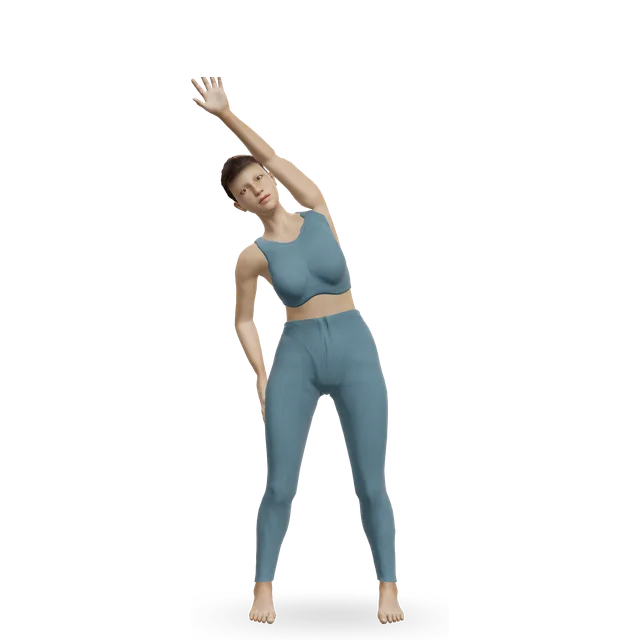
Overhead side bend demonstrated on the 3D figure3D demoOverhead side bendBeginner · No equipment

3 slow bends each side, breathing out into each, bending away from the sore side · The move page's dose, standing as the move page shows or sitting tall; the Royal Berkshire leaflet's seated side bend with the arm overhead is done 3 times, and POGP suggests lifting the arm on the sore side and bending away from the ache

Easier: Seated overhead side bend · Harder: Overhead lat stretch at a bench (elbows on the bench)

Thoracic rotation demonstrated on the 3D figure3D demoThoracic rotationBeginner · No equipment

6 slow turns each side, sitting tall with your arms out wide at shoulder height, moving with the breath · The move page's dose. Keep your hips facing forward and turn only as far as is comfortable

Easier: Side-lying open book · Harder: World's greatest stretch

Cat-cow demonstrated on the 3D figure3D demoCat-cowBeginner · No equipment

8 slow waves on all fours, rounding your back as you breathe out and coming back to a flat back without letting it sag · The move page's dose; coming back to a flat back rather than letting it sag follows the NHS's all-fours back exercise for pregnancy. The Royal Berkshire leaflet repeats its round-and-arch exercise 10 times

Harder: Half lord of the fishes (Ardha Matsyendrasana)

Child's Pose (Balasana) demonstrated on the 3D figure3D demoChild's Pose (Balasana)Beginner · No equipment

Hold 1 to 3 minutes as a rest, knees wide, breathing into your back ribs · The move page's dose; in later pregnancy take your knees wide so your bump has room, as the move page says. Calderdale and Huddersfield's rest position, kneeling with your chest or arms resting forward on a ball or chair, also takes pressure off the ribs

Harder: Extended puppy pose (Uttana Shishosana)

Treadmill walking demonstrated on the 3D figure3D demoTreadmill walkingBeginner · Cardio machine

About 10 minutes a day to start, building towards 30 minutes on most days if it stays comfortable · The NHS's starting point and its 150 minutes a week; walking outdoors counts the same, and swimming can replace it

Harder: Treadmill jogging

Move on when: The moves leave your ribs easier, not sorer, and the next morning is no worse (the pain rule, editorial). Stages 1 and 2 can run side by side.

Follow along: a timer, a cue and the next move, one step at a time.
Stage 2

Upper back strength and turning, in positions that suit your bump

Two or three times a week, until the birth. Keep the upper back and shoulder-blade muscles strong for sitting tall, feeding and carrying, and keep the rib cage turning, within the pain rule. The strength doses are editorial starting points, from our exercise in pregnancy page or the move page where it gives one, inside the NHS's 150 minutes a week. After the first trimester, nothing here is done flat on your back, and nothing face down.

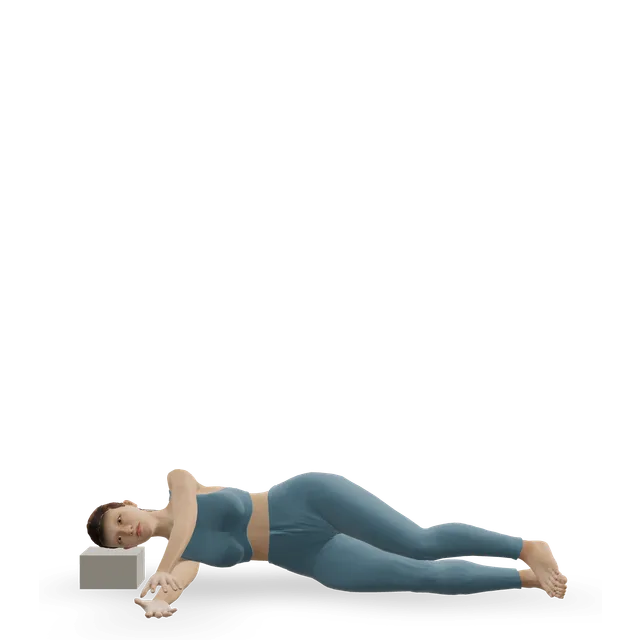
Side-lying open book demonstrated on the 3D figure3D demoSide-lying open bookBeginner · No equipment

5 slow openings each side to start, building to 8 to 10, pausing 2 seconds at the end, with a pillow under your head and another between your knees · The start is the Royal Berkshire leaflet's side-lying turn (5 times); the build is the move page's dose, an editorial starting point. Lying on the less sore side first, so the sore side opens, is our suggestion

Harder: Thoracic rotation

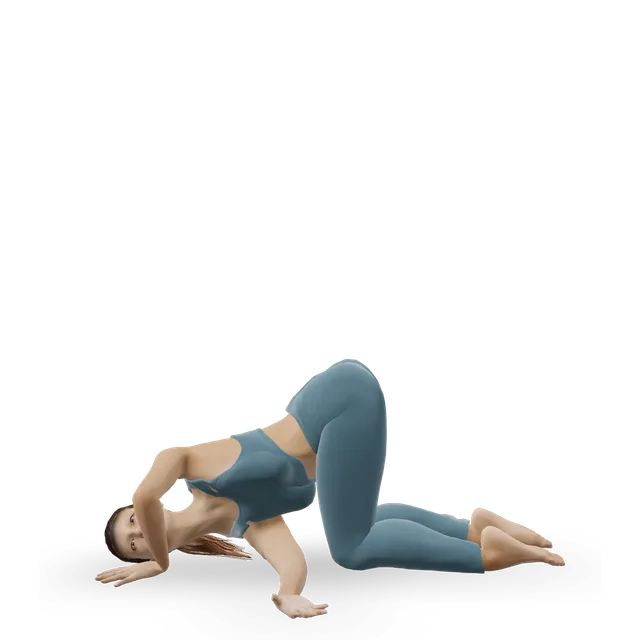
Thread the needle (Parivrtta Balasana) demonstrated on the 3D figure3D demoThread the needle (Parivrtta Balasana)Beginner · No equipment

5 slow threads each side: slide one arm under the other and back, moving with your breath rather than holding · The Royal Berkshire leaflet's dose, not the move page's, which holds the stretch for 30 to 60 seconds; the leaflet then reaches the arm up towards the ceiling, which you can add if it's comfortable. Take your knees a little wider if your bump needs the room (editorial), and ease off if it presses into the shoulder underneath, as the move page says

Easier: Side-lying open book · Harder: World's greatest stretch

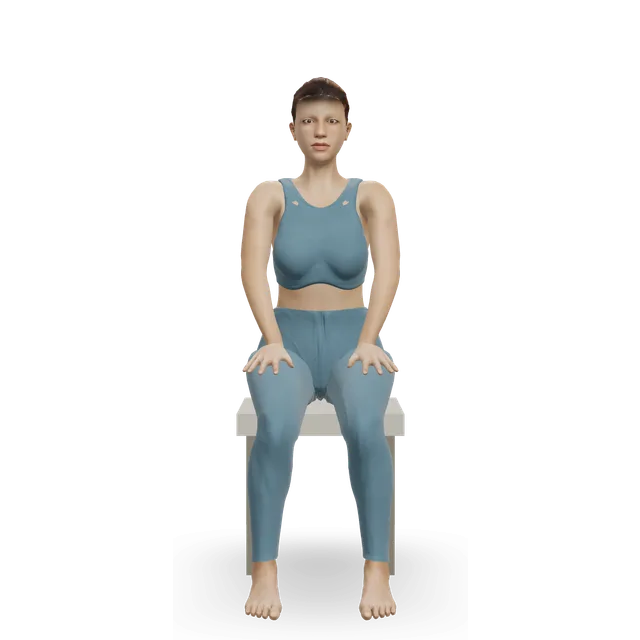
Seated upper-back lift (sit tall, shoulders back) demonstrated on the 3D figure3D demoSeated upper-back lift (sit tall, shoulders back)Beginner · A bench or box

3 to 5 repetitions, each held 3 to 5 seconds, sitting tall with your shoulders gently back · The move page's dose, from the 2022 UK osteoporosis consensus, at least twice a week; here it practises the sitting-tall posture the leaflets advise. Stop if it brings on sharp pain or pain that spreads round the ribs, as the move page says

Easier: Elbows back · Harder: Prone Y-T-W raises

Band row demonstrated on the 3D figure3D demoBand rowBeginner · A band + An anchor point

3 sets of 10 to 15, stopping 2 to 3 reps short of failure, sitting or standing tall · The move page's dose (editorial). The Dublin leaflet suggests upper body strengthening with small weights or a tin of beans

Harder: Supported single-arm dumbbell row

Wall push-up demonstrated on the 3D figure3D demoWall push-upBeginner · A wall

2 to 3 sets of 8 to 12 · As in our exercise in pregnancy page (editorial)

Harder: Push-up

Bird dog, one limb at a time demonstrated on the 3D figure3D demoBird dog, one limb at a timeBeginner · No equipment

5 to 8 each side, with a 3 to 5 second hold · As in our exercise in pregnancy page (editorial)

Easier: Side-lying tummy draw-in · Harder: Bird dog

Move on when: Carry on until the birth. Drop back to stage 1 for a few days during a flare, and stop for any warning sign.

Follow along: a timer, a cue and the next move, one step at a time.
Stage 3

After the birth: the first weeks

From the first days, as you feel able. Pelvic floor and deep tummy muscles first, with walking, as POGP and the NHS teach, and ease the upper back and ribs while you feed and carry your baby. After a caesarean, a tear or a complicated birth, go at your own pace and follow your team's advice; our caesarean guide has the timings.

Pelvic floor exercise (Kegel) demonstrated on the 3D figure3D demoPelvic floor exercise (Kegel)Beginner · No equipment

10 long squeezes held for 10 seconds, with 10 seconds' rest, then 10 short squeezes, at least 3 times a day, starting lying or sitting · POGP's dose after the birth; start with fewer if that's all you can manage. With a urinary catheter, start once it's out and you're passing urine normally, as the move page says

Side-lying tummy draw-in demonstrated on the 3D figure3D demoSide-lying tummy draw-inBeginner · No equipment

Hold for up to 10 seconds, breathing normally, up to 10 times · The move page's dose, which is the NHS's after the birth

Harder: Bird dog, one limb at a time

Breath reach demonstrated on the 3D figure3D demoBreath reachBeginner · No equipment

5 slow breaths, breathing out for longer than you breathe in, reaching only as high as is comfortable · The move page's dose; sitting or standing, between feeds

Harder: Slow breathing (6 breaths a minute)

Thoracic rotation demonstrated on the 3D figure3D demoThoracic rotationBeginner · No equipment

6 slow turns each side, sitting tall, moving with the breath · The move page's dose; between feeds

Easier: Side-lying open book · Harder: World's greatest stretch

Seated upper-back lift (sit tall, shoulders back) demonstrated on the 3D figure3D demoSeated upper-back lift (sit tall, shoulders back)Beginner · A bench or box

3 to 5 repetitions, each held 3 to 5 seconds · The move page's dose; it practises the supported, upright feeding posture the NHS describes

Easier: Elbows back · Harder: Prone Y-T-W raises

Treadmill walking demonstrated on the 3D figure3D demoTreadmill walkingBeginner · Cardio machine

A walk every day, gradually increasing the time and pace during the first 6 weeks · POGP's advice; a buggy walk counts

Harder: Treadmill jogging

Move on when: Daily life with your baby is comfortable, and nothing brings on leaking, sudden vaginal discomfort or a bulge in your tummy muscles, which are POGP's reasons to see a pelvic health physiotherapist: usually from about 6 weeks after a straightforward birth, later after a caesarean (our suggestion, in line with POGP's 6-week lifting advice).

Follow along: a timer, a cue and the next move, one step at a time.
Stage 4

Lifting, carrying and your usual exercise

From about 6 weeks, 2 or 3 sessions a week. Strength for lifting a car seat, a buggy and a growing baby, and a gradual return to your usual exercise in full, one activity at a time (editorial). POGP says try not to lift anything heavier than your baby for at least 6 weeks, and the NHS suggests avoiding sit-ups, planks and high-impact exercise to start with, so build up to them gradually (editorial).

Band row demonstrated on the 3D figure3D demoBand rowBeginner · A band + An anchor point

3 sets of 10 to 15, stopping 2 to 3 reps short of failure · The move page's dose (editorial)

Harder: Supported single-arm dumbbell row

Incline push-up demonstrated on the 3D figure3D demoIncline push-upBeginner · A bench or box

3 sets of 8 to 12, once 12 wall push-ups are easy · As in our costochondritis guide (editorial)

Easier: Wall push-up · Harder: Push-up

Half-kneeling Pallof press demonstrated on the 3D figure3D demoHalf-kneeling Pallof pressBeginner · A band + An anchor point

2 to 3 sets of 8 each side, with a 3 second hold · As in our rib pain guide (editorial): trunk control before lifting and twisting

Harder: Pallof press

Knee side plank demonstrated on the 3D figure3D demoKnee side plankBeginner · No equipment

3 holds of 10 to 20 seconds each side, once there's no leaking, heaviness or bulging · As in our rib pain guide (editorial); the NHS suggests leaving planks out to start with after the birth

Harder: Side plank

Dumbbell goblet squat demonstrated on the 3D figure3D demoDumbbell goblet squatIntermediate · A dumbbell

2 to 3 sets of 8 to 12, holding a light weight close to your chest · As in our back pain in pregnancy guide (editorial); practice for lifting a car seat. After a caesarean, lift nothing heavier than your baby for about 6 weeks, as the move page says

Easier: Bodyweight squat · Harder: Barbell front squat

Farmer's carry demonstrated on the 3D figure3D demoFarmer's carryIntermediate · A dumbbell + A kettlebell

2 walks of 20 to 30 m with a light weight in each hand · Editorial, as in our back pain in pregnancy guide: practice for shopping bags and a car seat

Harder: Suitcase carry

Move on when: Our suggestion: your usual exercise and sport come back one at a time, at a little less than before at first, adding a little every week or two while your ribs and back pass the pain rule (editorial). Running and jumping follow our postpartum guide's readiness checks. Keep two strength sessions a week, as the NHS suggests in pregnancy and for all adults.

Follow along: a timer, a cue and the next move, one step at a time.

What to change for now

Sitting, posture and room to breathe (written steps)

Our 3D figure can't show these. Each step names its source; none has been tested in a trial.

  • 1. Sit tall rather than slumped, with a rolled-up towel at your lower back to help you stay upright (the Royal Berkshire and Calderdale and Huddersfield leaflets).
  • 2. Avoid low chairs and positions that bring your ribs close to your pelvis, and change position often (POGP).
  • 3. Get up and move around every 30 minutes, and try not to spend long spells slouched on the sofa; prop yourself up with pillows instead (the Dublin leaflet).
  • 4. For quick relief, lift your arm on the sore side and bend sideways away from the ache (POGP), or try side stretches in sitting, in a pain-free range (Calderdale and Huddersfield).
  • 5. Standing up lengthens your trunk (the Dublin leaflet), which is one reason to get up regularly.
  • 6. If you sit at work all day, ask your employer about a workplace assessment and back supports (the Dublin leaflet).

Sources 2, 3, 14, 4

Bras, clothes, heat and ice (written steps)

From both NHS trust leaflets, POGP and the Dublin leaflet.

  • 1. Wear a well-fitting, supportive bra through pregnancy and after the birth (both NHS trust leaflets and POGP), and loose-fitting clothes (the Dublin leaflet).
  • 2. If the band digs into the sore spot as your size changes, get refitted (our suggestion; no study has tested bras for rib pain).
  • 3. Use heat or ice for 10 to 15 minutes at a time, wrapped in a towel so there's a layer between it and your skin, and not directly over your bump; you can repeat it after 2 hours, and take it off straight away if it burns or feels uncomfortable (Calderdale and Huddersfield).
  • 4. Don't use heat or ice if you have poor skin sensation or poor circulation, if you have diabetes, or over an infection (Calderdale and Huddersfield).
  • 5. A warm shower on your back, not too hot, can help an aching upper back (the Dublin leaflet).

Sources 2, 3, 5, 4

Eating and heartburn (written steps)

From the NHS, NHS inform, NICE and the Royal Berkshire leaflet.

  • 1. Eat small meals often rather than 3 large ones, and don't eat within 3 hours of going to bed (the NHS). Eat little, often and slowly (NHS inform), especially if heartburn is part of your rib pain (the Royal Berkshire leaflet).
  • 2. Sit up straight while you eat and just after, and cut down on caffeine and on rich, spicy or fatty food (the NHS).
  • 3. Prop your head and shoulders up in bed, and try sleeping on your left side (the NHS).
  • 4. Ask a pharmacist about an antacid or alginate and tell them you're pregnant, as some antacids aren't suitable; don't take antacids within 2 hours of iron or folic acid (the NHS). Speak to your midwife or pharmacist before taking anything (NHS inform); NICE asks for diet and lifestyle advice first, then a trial of an antacid or alginate.
  • 5. See your midwife or GP if these changes don't help; your GP can prescribe a medicine to reduce acid (the NHS). Heartburn that doesn't go away with heartburn medicines can be a sign of pre-eclampsia: call your maternity unit (the NHS).

Sources 16, 17, 2, 62, 23

Sleeping and lying down (written steps)

From the NHS, NICE, POGP and the Dublin leaflet.

  • 1. From 28 weeks, go to sleep on your side, either side, with pillows under your bump and between your knees. If you wake up on your back, don't worry: turn onto your side and go back to sleep (the NHS and NICE).
  • 2. Lie on the less painful side, and try a pillow under your waist, all the way through so you lie over it rather than just propping your bump; a pillow between the knees helps some people but not all (the Dublin leaflet).
  • 3. Earlier in pregnancy, resting and sleeping in any comfortable position is safe; after 19 weeks, keep time lying on your back short (POGP). In later pregnancy, avoid exercise flat on your back for more than a few minutes (the NHS).

Sources 67, 62, 4, 14, 65

Driving, travel and your baby's kicks (written steps)

From the NHS, GOV.UK and the leaflets.

  • 1. Wear your seat belt with the cross strap between your breasts and the lap strap across your pelvis under your bump, not across it (the NHS's travel page, past its review date).
  • 2. You must wear a seat belt in pregnancy unless your doctor says you don't need to for medical reasons (GOV.UK).
  • 3. Avoid long car journeys if you can; if you can't, stop regularly and get out of the car to stretch and move around (the NHS).
  • 4. No source tests a way to stop kicks hurting; changing position and the stretches above are what the leaflets offer for rib pain in general (our reading).
  • 5. Never try to reduce your baby's movements. If they slow down, stop or change, call your midwife or maternity unit immediately, even in the middle of the night (the NHS).

Sources 70, 71, 2, 3, 69

After the birth (written steps)

From the NHS and POGP.

  • 1. Feed your baby sitting with your back well supported and straight, a small cushion behind your waist and your feet reaching the floor (the NHS).
  • 2. Kneel or squat, rather than bending your back, for jobs near the floor such as bathing your baby (the NHS).
  • 3. Try not to lift anything heavier than your baby for at least 6 weeks, and let a toddler climb up to you when you're sitting rather than bending to lift them (POGP).
  • 4. Keep wearing a supportive bra (POGP).
  • 5. Avoid sit-ups, planks and high-impact exercise to start with, and avoid heavy lifting and straining on the toilet (the NHS).

Sources 60, 68, 5

Painkillers and getting help

Paracetamol is usually the best painkiller in pregnancy and doesn't harm your baby. Avoid ibuprofen unless a doctor or pharmacist advises it, even though the NHS costochondritis page mentions it for costochondritis in general (the NHS). If the advice and exercises don't help, or the pain is affecting your sleep or daily life, ask your midwife or GP to refer you to a women's health physiotherapist (Calderdale and Huddersfield and POGP).

Sources 63, 64, 19, 3, 5

Positions to swap, and why

Habit or positionWhy it mattersInstead
Sitting slumped, or on a low sofa, for long spellsThe Royal Berkshire leaflet says slumping restricts how the rib cage moves and could make rib pain and heartburn worse, and POGP says avoid low chairs and positions that bring your ribs close to your pelvis.Sit tall on a firm chair with a rolled-up towel behind your lower back, and get up every 30 minutes.Try: Seated upper-back lift (sit tall, shoulders back)
Dead bugs and other exercises flat on your back, for long spells in later pregnancyThe NHS says it can make you dizzy and isn't good for your baby, and the move page keeps it to a few minutes after the first trimester.Sitting, side-lying and all-fours versions.Try: Side-lying open book
Crocodile breathing or other moves lying face down once your bump growsThe move page says skip lying face down late in pregnancy or with active reflux.Breathe into the sides of your ribs sitting up, as the move page suggests.Try: Lateral breathing (Pilates breathing)
Binding or strapping your ribs, or a tight band round themNo source supports it in pregnancy, and our rib pain guide explains why strapping is advised against even for broken ribs: it stops the lungs expanding.A well-fitting, supportive bra, and room to breathe and stretch.Try: Overhead side bend
Big meals, or eating within 3 hours of bedYou're more likely to get heartburn when you're very full, and the NHS advises not eating within 3 hours of going to bed.Small meals often, and sit up straight while you eat and just after.
Ibuprofen for rib pain or costochondritis in pregnancyThe NHS says avoid it in pregnancy unless a doctor or pharmacist advises it.Paracetamol, which the NHS says is usually the best painkiller in pregnancy.
Waiting to see whether bad or lasting pain below the ribs settles, or pain with a headache, vision change, sudden swelling or being sick, or heartburn that medicines don't helpThese are NHS signs of pre-eclampsia.Call your maternity unit, or 111 if you can't.
Pushing on your bump to stop the kicksNo source supports it, and the NHS asks you to call your maternity unit if your baby's movements slow down, stop or change.Change position, and stretch up and away from the sore side.Try: Overhead side bend
Long car journeys without breaksThe NHS says avoid long car journeys if you can, and stop regularly to stretch and move around.Stop, get out and reach up with a slow breath.Try: Breath reach
Sit-ups and planks in the first weeks after the birthThe NHS suggests avoiding sit-ups, planks and high-impact exercise to start with.The side-lying tummy draw-in.Try: Side-lying tummy draw-in
Kettlebell deadlifts, or lifting anything heavier than your baby, in the first 6 weeks after the birthPOGP says try not to for at least 6 weeks, and the move page says the same after a caesarean.Walking and the stage 3 moves.Try: Pelvic floor exercise (Kegel)
Crunches to "close" your ribs after the birthThe lower rib cage narrows on its own after the birth, and our rib flare page found no trial showing that breathing or tummy exercises move the ribs.Breathing and upper back moves, for comfort.Try: Lateral breathing (Pilates breathing)

Routines to follow

Pregnancy strength workout (no lying on your back)

A 30-minute strength workout for any trimester with dumbbells and a band: squats, rows, hinges, presses and side-lying hip work, none on your back.

30 minBeginner14 movesA dumbbell, A bench or box

Pregnancy Pilates workout (no lying on your back)

A 20-minute Pilates workout for any trimester: seated, standing, all-fours and side-lying moves, with no lying on your back or front and no jumping.

20 minBeginner15 movesA wall, A bench or box

Prenatal yoga workout (no lying on your back)

A 20-minute prenatal yoga workout for any trimester: seated breathing, all-fours and kneeling poses, supported standing poses and rest, none flat on your back.

20 minBeginner15 movesA step, A wall

Breathing exercises to relax

A 6-minute breathing routine: slow breathing, crocodile breathing, alternate nostril breathing, box breathing and 4-7-8 breathing.

6 minBeginner5 movesNo equipment

Upper back mobility routine

A 12-minute routine for a stiff upper back and rounded shoulders: chin tucks, wall angels, Y-T-W raises and open books.

12 minBeginner8 movesA foam roller, A wall

Postnatal exercises

A gentle 25-minute routine for the first weeks after birth: pelvic floor, breathing, tummy and hip exercises on the floor, sit-to-stands and a walk.

25 minBeginner12 movesA bench or box, Cardio machine

Postnatal strength workout (from about 6 weeks)

A 25-minute strength workout from about 6 weeks after birth: sit-to-stands, deadlift practice, push-ups, rows, bridges and tummy work, with the knack.

25 minBeginner14 movesA bench or box, A kettlebell

More moves for this area

Questions people ask

Is rib pain normal in pregnancy?

Yes, it's common later in pregnancy: the NHS says pain just under the ribs is common as the growing baby and womb push up under them, and NHS trust leaflets call it very common from about 27 or 28 weeks. It's less typical early on, so it isn't a usual early sign of being pregnant. No study has counted exactly how many women get it, and most of it isn't serious.

Why do my ribs hurt in pregnancy?

Usually the bump pushing up as your lower rib cage widens (the angle under your breastbone opens from about 68.5 to 103.5 degrees by the end of pregnancy), your baby's kicks and position, heartburn, growing breasts and sitting slumped. It's often on one side, under the breast or at the side of your chest, and can spread to your back. A few rarer causes are serious, and the warning signs list them.

Is rib pain on the right side a sign of pre-eclampsia?

Usually not, but it can be: the NHS says pain under the ribs that is bad or persistent, particularly on the right, can be a sign of pre-eclampsia. Its other signs are a severe headache that doesn't go away with simple painkillers, vision problems, sudden swelling of the face, hands or feet, feeling very unwell, heartburn that doesn't go away with heartburn medicines, and being sick. Call your maternity unit if you have any of them, or 111 if you can't reach it; pre-eclampsia is most likely from 20 weeks and is not severe in most cases.

When should I worry about rib pain in pregnancy?

Call 999 for sudden chest pain that doesn't go away or spreads, or sudden breathlessness. Call your maternity unit for the pre-eclampsia signs, very itchy palms or soles, or tummy pain that is severe or doesn't settle after 30 to 60 minutes' rest, and get an urgent GP appointment or NHS 111 for pain in your side with a fever or pain when you pee. These are uncommon, and most rib pain in pregnancy isn't serious.

Can my baby's kicks hurt or crack my ribs?

Kicks can certainly hurt, and a breech baby's head can press under the ribs on one side, hospital leaflets say. A cracked rib in pregnancy is rare: the few reported cases followed a coughing fit or happened with no clear injury, and pain relief is the usual treatment. See your GP or midwife for sudden, sharp rib pain after a coughing fit.

How can I stop my baby kicking my ribs?

No method has been tested. Changing position, sitting tall, and lifting your arm and bending away from the sore side are what the leaflets suggest for rib pain. Never try to reduce your baby's movements: if they slow down, stop or change, call your midwife or maternity unit straight away, even at night.

What helps rib pain in pregnancy?

Sit tall with a rolled-up towel at your lower back, change position every 30 minutes, lift your arm and bend away from the ache, wear a well-fitting supportive bra, use heat or ice for 10 to 15 minutes, and eat little and often. None has been tested in a trial; they are the advice of maternity physiotherapists, and the stretches in the plan are the leaflets' own.

Can my bra cause rib pain in pregnancy?

A bra isn't a known cause on its own, but a band that digs into a sore spot can make it worse. Maternity physiotherapy leaflets advise a well-fitting, supportive bra through pregnancy and after the birth, and getting refitted as your size changes is our suggestion.

What can I take for rib pain or heartburn when pregnant?

Paracetamol is usually the best painkiller in pregnancy; avoid ibuprofen unless a doctor or pharmacist advises it. For heartburn, a pharmacist can suggest an antacid or alginate (tell them you're pregnant), and in trials, heartburn medicines gave complete relief more often than placebo. If heartburn doesn't go away with heartburn medicines, call your maternity unit, as it can be a sign of pre-eclampsia.

What's the best sleeping position for rib pain in pregnancy?

From 28 weeks, go to sleep on your side, either side, with pillows under your bump and between your knees; if you wake on your back, turn onto your side. If heartburn is part of it, prop your head and shoulders up and try your left side, and lie on the less painful side if one side hurts. No trial has tested sleeping positions for rib pain itself.

Will rib pain stop when the baby drops, or after the birth?

One maternity hospital says it often eases when the baby moves down into the pelvis after about 36 weeks, but the NHS names only heartburn, indigestion and needing to pee as symptoms that may ease then, and some babies don't drop until labour. After the birth the lower rib cage narrows and most pregnancy aches improve, though no one can promise when. Feeding, lifting and carrying can keep the upper back sore for a while, and stages 3 and 4 of the plan cover that.

Is itching a sign of a liver problem in pregnancy?

Usually not: itching affects about a quarter of pregnant women and most don't have a liver problem. But very itchy skin, itchy palms or soles, or itching that's worse at night can be obstetric cholestasis (ICP), which affects about 7 in 1,000 pregnancies in the UK and needs urgent help from your maternity unit, or 111. It shows as itching, not rib pain.

Related exercise guides

Other pain guides

Sources

  1. NHS · Stomach pain in pregnancy
  2. Royal Berkshire NHS Foundation Trust · Rib pain in pregnancy (maternity physiotherapy leaflet; past its review date: reviewed July 2024, review due July 2026)
  3. Calderdale and Huddersfield NHS Foundation Trust · Rib pain in pregnancy (physiotherapy leaflet, review date May 2027)
  4. National Maternity Hospital, Dublin · Managing upper back and rib pain in pregnancy (physiotherapy leaflet, 2026)
  5. POGP · Other musculoskeletal symptoms in pregnancy (web page, 2020)
  6. Tascón Padrón 2025 · A nerve block for nerve pain between the ribs in 17 pregnant women (case series and literature review, Int J Gynaecol Obstet)
  7. Kesikburun 2018 · Muscle and joint pain and symptoms in pregnancy (descriptive study of 184 women, Ther Adv Musculoskelet Dis)
  8. Mhajne 2026 · Muscle and joint pain in pregnant and non-pregnant women compared (cross-sectional survey of 1,651 women, Musculoskelet Sci Pract)
  9. LoMauro 2015 · Respiratory physiology of pregnancy (review, Breathe)
  10. LoMauro 2019 · How the lungs, chest wall and breathing muscles adapt in pregnancy: 18 women (cohort study, J Appl Physiol)
  11. Contreras 1991 · Breathing drive and breathing muscle function in 18 pregnant women (cohort study, Am Rev Respir Dis)
  12. LoMauro 2022 · How breathing and the chest wall change in pregnancy (review, Best Pract Res Clin Obstet Gynaecol)
  13. NHS · Pregnancy symptoms you need to get help for
  14. Pelvic, Obstetric and Gynaecological Physiotherapy (POGP) · Fit for Pregnancy: exercises and advice to stay fit and healthy during pregnancy (leaflet, 2021; past its review date: review due 2025)
  15. University Hospital Southampton NHS Foundation Trust · Obstetric physiotherapy department (service page, undated)
  16. NHS · Indigestion and heartburn in pregnancy
  17. NHS inform · Common problems in pregnancy (Ready Steady Baby)
  18. Rey 2007 · Reflux symptoms in each trimester and after the birth in 263 women (longitudinal study, Am J Gastroenterol)
  19. NHS · Costochondritis
  20. Pouwels 2017 · A rib stress fracture after coughing in pregnancy (case report and literature review, Clin Exp Obstet Gynecol)
  21. Baitner 2000 · A rib fracture with no injury in pregnancy (case report and literature review, Bull Hosp Jt Dis)
  22. NHS · Shingles
  23. NHS · Pre-eclampsia
  24. NICE NG133 · Hypertension in pregnancy: diagnosis and management (2019, updated 2023): recommendations
  25. Duley 2009 · The global impact of pre-eclampsia and eclampsia (review, Semin Perinatol)
  26. NICE NG133 · Hypertension in pregnancy: diagnosis and management (2019, updated 2023): context
  27. Haram 2009 · HELLP syndrome: clinical issues and management (review, BMC Pregnancy Childbirth)
  28. NHS · Gallstones
  29. NHS inform · Gallstones
  30. Ko 2005 · Gallbladder sludge and stones during and after pregnancy in 3,254 women (cohort study, Hepatology)
  31. Hassanesfahani 2025 · Gallbladder disease in 228 pregnant women, with or without an operation (case series, Langenbecks Arch Surg)
  32. NHS · Itching in pregnancy (including intrahepatic cholestasis of pregnancy)
  33. Royal College of Obstetricians and Gynaecologists (RCOG) · Intrahepatic cholestasis of pregnancy (patient information, 2022, updated April 2026)
  34. Knight 2008 · Acute fatty liver of pregnancy in the UK (national population study, Gut)
  35. NHS · Kidney infection
  36. Wing 2014 · Kidney infection in pregnancy over 18 years (retrospective study of 543,430 pregnancies, Am J Obstet Gynecol)
  37. Hill 2005 · Kidney infection in pregnancy: 440 cases in one hospital (longitudinal study, Obstet Gynecol)
  38. Dawkins 2012 · Kidney infection in pregnancy: 102 cases in a Jamaican hospital (retrospective study, ISRN Obstet Gynecol)
  39. Royal College of Obstetricians and Gynaecologists (RCOG) · Reducing the risk of venous thrombosis in pregnancy and after birth (patient information, 2015)
  40. Royal College of Obstetricians and Gynaecologists (RCOG) · Reducing the risk of venous thromboembolism during pregnancy and the puerperium (Green-top Guideline No. 37a, 2015)
  41. NHS · Pulmonary embolism
  42. Bush 2013 · Heart attacks in pregnancy and just after the birth in the UK (national population study, Eur J Prev Cardiol)
  43. Kamel 2016 · Pregnancy and the risk of a tear or rupture of the aorta in 6.6 million pregnancies (cohort-crossover study, Circulation)
  44. MBRRACE-UK · Saving Lives, Improving Mothers' Care 2026: maternal deaths in the UK and Ireland, 2022 to 2024 (lay summary and State of the Nation report, 2026)
  45. NHS · Heart attack
  46. NHS · Angina
  47. NHS Borders · Antenatal and postnatal musculoskeletal conditions: physiotherapy referral guidance (Right Decisions toolkit, reviewed October 2025)
  48. Royal College of Obstetricians and Gynaecologists (RCOG) · Intrahepatic cholestasis of pregnancy (Green-top Guideline No. 43: guideline page and summary, 2022; next review due 2026)
  49. NHS · Urinary tract infections (UTIs)
  50. NHS · DVT (deep vein thrombosis)
  51. NHS · Ectopic pregnancy (past its review date: reviewed August 2022, review due August 2025)
  52. NHS · Pregnancy week by week: 37 weeks
  53. Mourad 2000 · Appendicitis in pregnancy among 66,993 births (retrospective study, Am J Obstet Gynecol)
  54. Oto 2006 · Where the appendix lies in pregnancy on magnetic resonance scans (imaging study, AJR Am J Roentgenol)
  55. House 2014 · Where the appendix lies in pregnancy on emergency scans (retrospective study, J Emerg Med)
  56. Erkek 2015 · Where the appendix lies in the third trimester, measured at surgery (comparative study, J Obstet Gynaecol)
  57. Hodjati 2003 · Where the appendix lies in pregnancy, seen at caesarean or surgery (prospective study, Int J Gynaecol Obstet)
  58. Ishaq 2018 · Where the appendix lies at full term, seen at 77 caesareans (cross-sectional study, Clin Exp Gastroenterol)
  59. Guts UK · Heartburn and reflux (leaflet, 2025)
  60. NHS · Your post-pregnancy body
  61. Phupong 2015 · Treatments for heartburn in pregnancy (Cochrane review)
  62. NICE NG201 · Antenatal care (2021)
  63. NHS · Paracetamol for adults (Pregnancy and paracetamol)
  64. NHS · Ibuprofen for adults
  65. NHS · Exercise in pregnancy
  66. Department of Health and Social Care 2026 · Physical activity guidelines: pregnancy and after childbirth (the UK Chief Medical Officers' infographics)
  67. NHS · Tiredness and sleep problems in pregnancy
  68. Pelvic, Obstetric and Gynaecological Physiotherapy (POGP) · Fit for the Future: advice and exercises after childbirth (leaflet, 2024)
  69. NHS · Your baby's movements
  70. NHS · Travelling in pregnancy (past its review date: reviewed August 2022, review due August 2025)
  71. GOV.UK · Seat belts and the law: when you don't need to wear a seat belt, including in pregnancy (guidance page, undated)
  72. NHS · Back pain in pregnancy
  73. NHS · Pleurisy
  74. NHS · Broken or bruised ribs
  75. NHS Greater Glasgow and Clyde · Abdominal trauma or a fall in pregnancy (maternity clinical guideline, reviewed 2024)
  76. Aneurin Bevan University Health Board (Healthier Together, NHS Wales) · Fainting: worried you are unwell during pregnancy (patient information, no date shown)
  77. NHS · Septic arthritis
  78. NHS · Chest pain (past its review date: reviewed August 2023, review due August 2026)

Exercise education, not a diagnosis or treatment plan. It is written from the guidelines and studies listed above; review by a clinician is pending. If your pain follows an injury, is severe, is getting worse, or comes with any warning sign listed on this page, get it assessed. Health disclaimer.