Thread the needle (Parivrtta Balasana)
From all fours, you slide one arm under the other until that shoulder and the side of your head rest on the floor, so the upper back turns while the hips stay over the knees. Unlike the side-lying open book, you turn with your weight on your knees and one hand. Yoga International's article on spinal stenosis lists it among the twists that keep the low back neutral, and in a small 2-week study an all-fours rotation drill increased upper-back rotation as much as a standing one.
Movement guide
Thread the needle (Parivrtta Balasana)
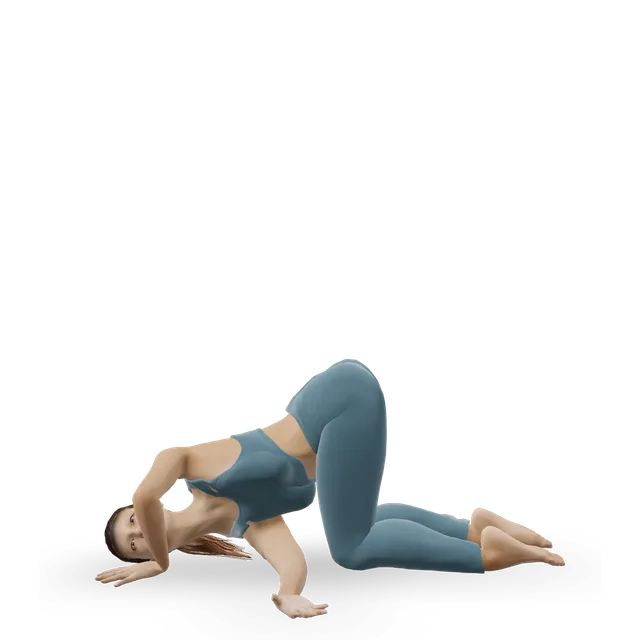
Loading the 3D figure…
Make it easier or harder
Choose a version that fits your control and comfort.
Easier option
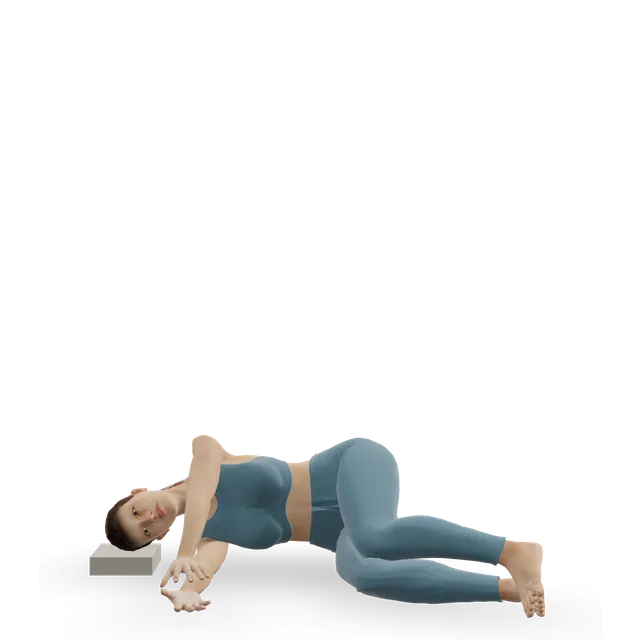 3D demoSide-lying open bookBeginner · No equipment
Suggested next step, beginner grade.
Harder option
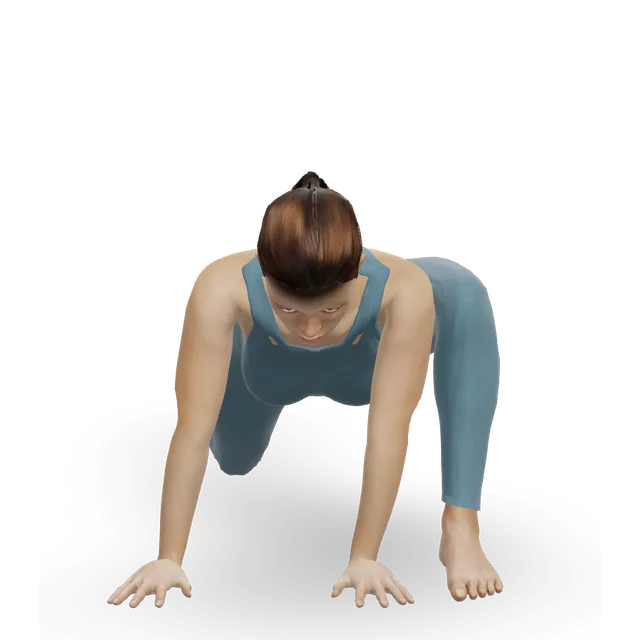 3D demoWorld's greatest stretchIntermediate · No equipment
Suggested next step, intermediate grade.
Source-researched guide.
How to move
- Start on all fours, hands under your shoulders and knees under your hips.
- Slide your right hand, palm up, along the floor under your left arm, reaching it out to the left.
- Lower your right shoulder and the right side of your head to the floor, keeping your hips stacked over your knees. Your left hand stays on the floor for support.
- Breathe into the space between your shoulder blades and hold.
- To come out, press into your left hand, slide your right arm back and return to all fours, then change sides.
Form cues
- Keep your hips over your knees so the turn happens in the upper back.
- Let your head rest rather than pressing it into the floor.
- Avoid: dropping your weight onto the shoulder underneath.
Practice and cautions
Hold 30 to 60 seconds, about 5 to 10 slow breaths, each side, 2 rounds (our editorial starting point). The ACSM suggests about 60 seconds of stretching in all per exercise, on at least 2 days a week.
Ease off if it presses painfully into the shoulder you are lying on, or if your neck is currently irritable. This is movement education, not an assessment or treatment prescription. Stop for sharp or increasing pain, dizziness, numbness or tingling; seek individual guidance for symptoms, injury or restrictions.
Sources and review status
Sources support the educational description; they do not establish that this exercise is suitable for you.
- Yoga International · Three alternatives to downward dog (thread the needle: one arm slides under the other, the shoulder and head rest on the mat) ↗
- Yoga International · Adapting yoga for lumbar spinal stenosis (a physical therapist lists thread the needle, or revolved child's pose, among twists that keep the low back neutral) ↗
- Murofushi 2024 · An all-fours thoracic rotation drill raised upper-back rotation over 2 weeks as much as a standing one (39 adults, no untreated group; Acta Med Okayama) ↗
- Garber 2011 · ACSM position stand: flexibility exercise for each major muscle group, about 60 seconds in all per exercise, on 2 or more days a week (Med Sci Sports Exerc) ↗
No variation is labeled clinically validated.
What it works
Muscles
Main: Back. Also: Shoulders.
Anatomy: Latissimus dorsi, Teres major, Trapezius, Rhomboids, Erector spinae, Multifidus.
Equipment
None: body weight and floor space.
Level
Beginner. See the easier and harder options above.
Workouts that use it
- Yoga for neck pain: a 20-minute gentle sequence · 20 min
- Yoga for posture: a 25-minute back-strengthening practice · 25 min
- Yoga for mobility: a 20-minute flow for range you can control · 20 min
- Yoga for cyclists: 25 minutes after a ride or on a rest day · 25 min
- Yoga for golfers: a 25-minute rotation, hip and balance class for non-golf days · 25 min
- Yoga for arms: a 20-minute arm and shoulder class with a band row · 20 min
- Lifters' yoga: a 25-minute class for squat, hinge and overhead positions, after lifting or on a rest day · 25 min
- Après-ski yoga: a 25-minute class for after the slopes or a rest day, with a 10-minute version · 25 min
Show all 18 workoutsShow fewer workouts
- Recovery-day yoga for rugby players: a 25-minute class for the neck, upper back, hips and hamstrings · 25 min
- Martial arts yoga: a 25-minute active-range class for hips, kicks, balance and breathing · 25 min
- Both-sides yoga for tennis players: a 25-minute class for rotation, shoulders, hips and balance · 25 min
- Yoga for spinal stenosis: a 25-minute bend-forward class, from chair to mat to counter, with no backbends · 25 min
- Yoga for boxers: a 25-minute recovery class for shoulders, upper back, hips, hands and breathing, with no weight on your knuckles · 25 min
- Yoga for triathletes: a 25-minute class for the swim, bike and run on an easy day · 25 min
- Yoga for wrestlers: a 25-minute room-temperature class for the upper back and shoulders, hips out of the stance, back endurance and slow breathing, with nothing on the head · 25 min
- Yoga for firefighters: a 25-minute room-temperature class for the upper back and shoulders, hips and legs, trunk endurance and a slow wind-down, for rest days and after shifts · 25 min
- Yoga for your shoulders: a 25-minute class for the shoulder blades, the rotator cuff, weight on your hands in steps and reach overhead · 25 min
- Yoga for opening the chest: a 25-minute class for the chest, shoulders and upper back · 25 min
Pain guides that use it
Part of a staged plan, with when to get help first.
Guides that use it
- Yin yoga guide
- Yoga for men guide
- Yoga for neck pain guide
- Yoga for shoulder pain guide
- Yoga for posture guide
- Yoga for mobility guide
- Yoga for upper back pain guide
- Yoga for athletes guide
Show all 52 guidesShow fewer guides
- Yoga for cyclists guide
- Yoga for golfers guide
- Yoga for swimmers guide
- Yoga for arms guide
- Yoga for weightlifters guide
- Yoga for skiers guide
- Yoga for rugby players guide
- Yoga for martial arts guide
- Yoga for kyphosis guide
- Yoga for tennis players guide
- Yoga for a herniated disc guide
- Yoga for spinal stenosis guide
- Yoga for basketball players guide
- Yoga for boxers guide
- Yoga for the rotator cuff guide
- Yoga for surfers guide
- Yoga for baseball players guide
- Yoga for volleyball players guide
- Yoga for degenerative disc disease guide
- Yoga for cervical spondylosis guide
- Yoga for whiplash guide
- Yoga for shoulder impingement guide
- Yoga for triathletes guide
- Yoga for cricketers guide
- Yoga for hockey players guide
- Yoga for gymnasts guide
- Yoga for CrossFit guide
- Yoga for wrestlers guide
- Yoga for firefighters guide
- Yoga for breast cancer guide
- Yoga for rounded shoulders guide
- Yoga for your shoulders guide
- Yoga for back fat guide
- Yoga for the upper body guide
- Yoga for spine health guide
- Yoga for opening the chest guide
- Yoga for men over 40 guide
- Yoga for the neck and shoulders guide
- Yoga for shoulder mobility guide
- Upper back guide
- Ribs guide
- Yoga for fascia guide
- Shoulders guide
- Thoracic mobility guide
Similar moves
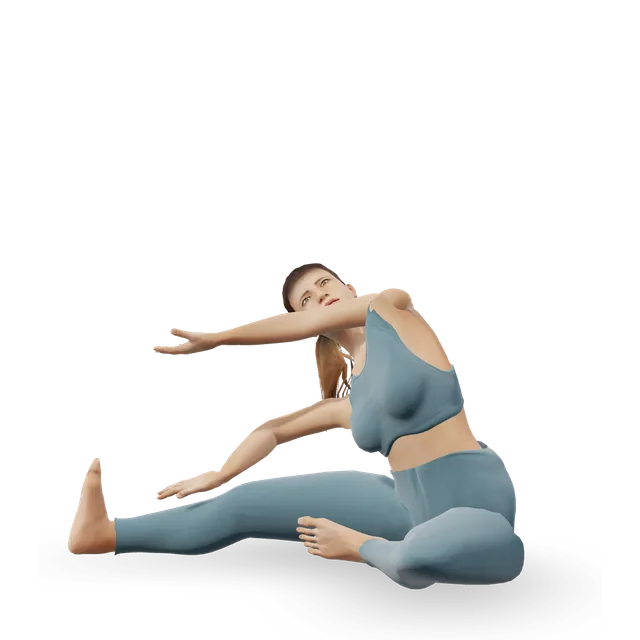 3D demoRevolved head-to-knee pose (Parivrtta Janu Sirsasana)Intermediate · No equipment
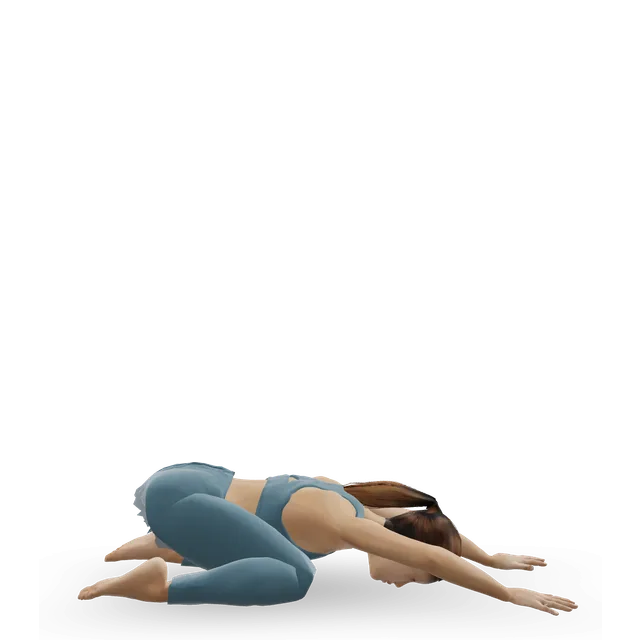 3D demoChild's Pose (Balasana)Beginner · No equipment
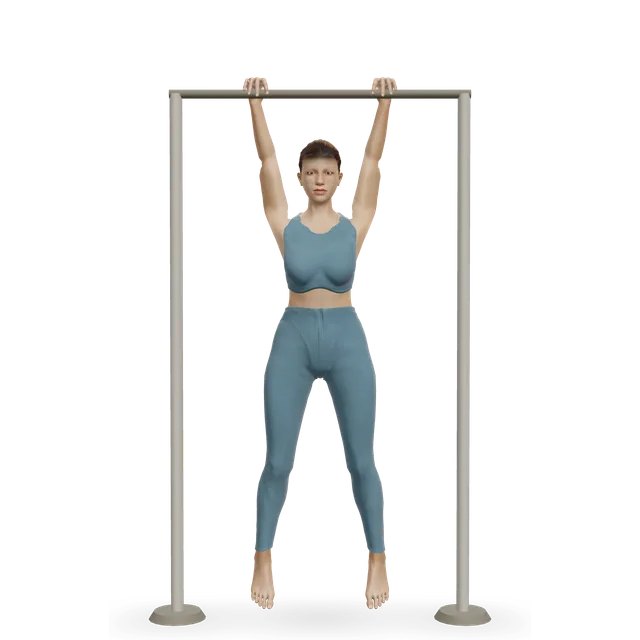 3D demoBar hangIntermediate · Pull-up bar + A step
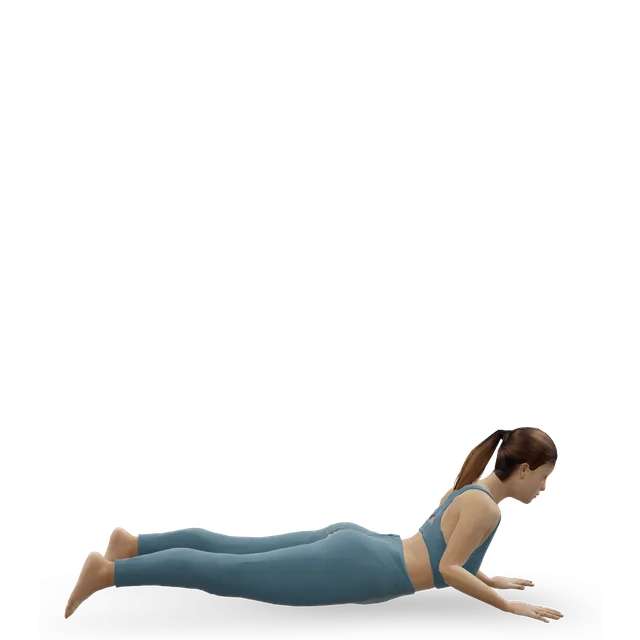 3D demoCobra pose (Bhujangasana)Intermediate · No equipment
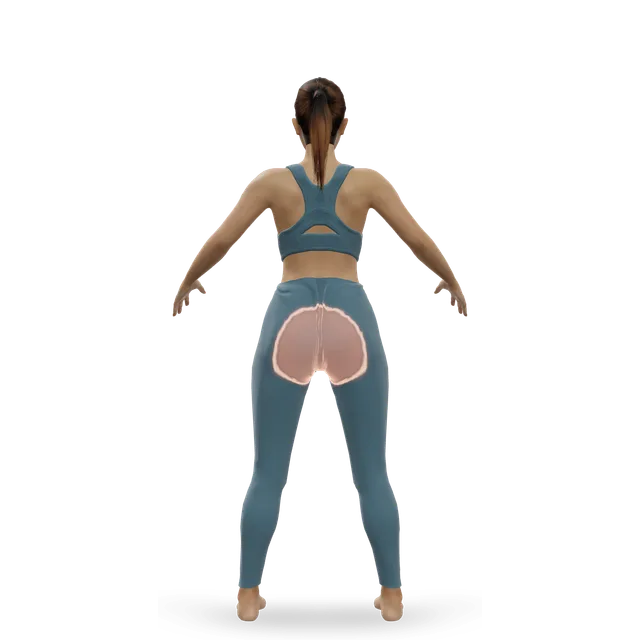 Compass pose (Parivrtta Surya Yantrasana)Advanced · No equipment
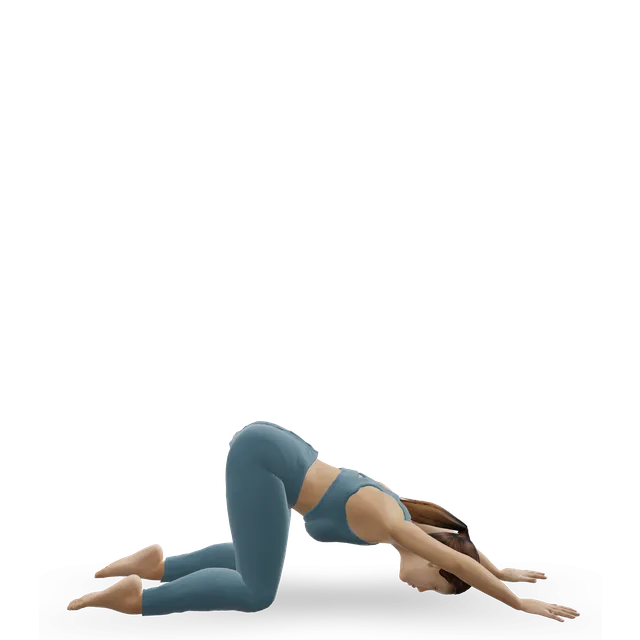 3D demoExtended puppy pose (Uttana Shishosana)Beginner · No equipment
Browse more
Questions people ask
What muscles does the Thread the needle (Parivrtta Balasana) work?
Mainly the back, with help from the shoulders.
What equipment do I need for the Thread the needle (Parivrtta Balasana)?
No equipment: your body weight and a little floor space.
Is the Thread the needle (Parivrtta Balasana) good for beginners?
It is graded beginner, so it suits most people starting out. When it feels easy, try the World's greatest stretch.
What is an easier alternative to the Thread the needle (Parivrtta Balasana)?
Try the Side-lying open book. It is the suggested step down from this move.
How do I make the Thread the needle (Parivrtta Balasana) harder?
Progress to the World's greatest stretch. Follow that guide’s technique and any stated timing.