Common, and usually harmless
In 88 healthy adults, 66% to 73% had a rounded shoulder, and in 275 teenagers 58% had forward-set shoulders. How rounded people were wasn't related to how bad or how frequent their pain was.
Yoga guide
Rounded shoulders, where the shoulder blades sit forward and the shoulders look hunched, are very common: in one study about 7 in 10 healthy adults had them, and how rounded they were wasn't related to pain. They often come with a forward head and a rounder upper back, but each can happen on its own. No trial has tested yoga for rounded shoulders; in exercise trials, what changed shoulder angles a little was strengthening the upper back, while stretching the chest didn't change posture.
So the yoga that fits is the strengthening kind: face-down back lifts such as locust with the arms reaching forward, low cobra and sphinx, all-fours poses, and a few shoulder-blade moves borrowed from strength training, with chest openers for comfort.
This guide covers what rounded shoulders are and how they relate to neck and shoulder pain, what the evidence shows, the poses to do and the ones to change, forward head posture, desk habits, how long changes take, a 25-minute class, and when a hunch needs a GP. Our rounded shoulders guide has the full strength programme.
In 88 healthy adults, 66% to 73% had a rounded shoulder, and in 275 teenagers 58% had forward-set shoulders. How rounded people were wasn't related to how bad or how frequent their pain was.
Upper-back rounding didn't differ between people with and without shoulder pain. Adults with neck pain hold the head a few degrees further forward in snapshot studies, but sitting posture at 17 didn't predict neck pain at 22, and bending the neck over a phone didn't predict new neck pain over a year.
Across 23 trials, stretching had no effect on posture while strengthening improved the upper back and neck. Across 28 trials of corrective exercise, mostly 6 to 12 weeks of three sessions a week, head and shoulder angles improved, but pain and function didn't consistently.
Our searches found no trial. A registered trial comparing yoga with Pilates finished in 2023 with no results posted, and a 2025 study of cyclic yoga in 42 women reported a difference in rounded shoulders without giving any numbers.
Our reading of one lab study of muscle activity in 20 women: locust with the arms reaching forward worked the middle and lower trapezius hardest of 15 poses. That measured muscle activity, not posture, so pair the back lifts with prone raises, wall angels and rows, and keep chest stretches for comfort.
A new or increasing hunch or height loss in an older adult can be a spinal fracture, and a stiff curve in a teenager that doesn't straighten when standing tall isn't a slouch. The warning signs are below.
The shoulder blades sit further forward around the ribcage, so the shoulders look hunched from the side. They often come with a head that pokes forward and a rounder upper back, but "Forward head posture, rounded shoulders, and increased thoracic kyphosis can exist alone or in any combination", and in 160 people aged 17 to 83, "a forward head was not associated with increased thoracic curvature".
It names a forward head, rounded shoulders and a rounded upper back together, explained as tight muscles at the front and weak ones at the back. Trials use it to choose who takes part; treat it as a description, not a diagnosis (our reading).
Source 8
In 88 healthy adults aged 20 to 50, a forward head was found in 66%, a rounded right shoulder in 73% and a rounded left shoulder in 66%, and "No relationship was found between the severity of postural abnormality and the severity and frequency of pain". In 275 teenagers, 68% had a forward head and 58% forward-set shoulders. In healthy women aged 65 and over, the head sat further forward in each older age group: a normal change with age.
A phone app measuring the head-neck angle was repeatable, but "The minimum detectable change was 4.96° for intra-rater and 5.52° for inter-rater reliability", so smaller changes can be measurement noise. Photographs have the strongest evidence among methods that don't use X-rays. Tape and wall measures of the shoulders give the same answer when repeated but haven't been checked against X-rays. A mirror isn't a measurement.
A slouch is flexible and straightens when you stand tall. Scheuermann's kyphosis is a stiff curve with wedge-shaped bones in the spine that "will not passively correct with extension", and in older adults a growing curve can come with spinal fractures. Our yoga for kyphosis guide covers the curve.
"There is a moderate level of evidence of no significant difference in thoracic kyphosis between groups with and without shoulder pain" (10 studies). In 56 volleyball players, forward shoulder angle didn't differ between those with and without shoulder pain.
In 10 snapshot studies, adults with neck pain had a slightly more forward head (about 5 degrees on average), but teenagers didn't, and age confused the link; a 2023 review of 26 studies found about 3 degrees on one measure and no difference on two others. Differences this size are near the error of the measuring tools, and snapshot studies can't show which came first. In 1,108 Australian 17-year-olds, "There was no significant difference in the odds of neck pain or headache across the clusters" of posture.
Followed from 17 to 22, sitting posture didn't predict persistent neck pain, and young women who sat slumped had lower odds than those who sat upright; the authors wrote that "generic public health messages to sit up straight to prevent neck pain needs rethinking". In 396 adults followed for a year, neck bending while texting didn't raise the odds of new neck pain, while poor sleep and too little physical activity did. On X-ray in people over 45, the neck curve didn't differ with and without neck pain.
You can lift your arm further when sitting upright than when slumped, in the moment. Taping people with shoulder impingement into a more upright posture raised the point where the arm hurt, but not how much it hurt, and in pain-free people a forward head and rounded shoulders changed how the shoulder blades moved. These are short-term mechanics, not proof that posture causes pain.
A 2019 viewpoint notes that "Despite the absence of strong evidence to support these common beliefs, a large posture industry has flourished".
Source 28
The posture trials are small, mostly short and varied, and none tested yoga.
Across 23 controlled trials in 969 people, stretching programmes had no effect on posture, while strengthening was "effective in the thoracic and cervical spine" (moderate certainty). A 2025 consensus of 20 stretching researchers agreed that stretch training doesn't improve posture.
Across 28 trials (901 people), corrective exercise improved forward head, forward shoulder and upper-back measures, with results that varied a lot between trials (rated moderate certainty for posture), but neck pain didn't change significantly and "the effects on muscle activation, function, balance, and pain were inconclusive". Most trials were small, and an earlier review relied partly on studies found only through Google Scholar; another found most of 22 trials at high risk of bias.
In 10 trials (550 people), 3 to 8 weeks of exercise improved the head-neck angle by 3.4 degrees (moderate certainty) and pain by about 1.4 points out of 10 (low certainty). A second 2026 review of 13 trials rated its evidence low to very low. A 3-degree average is less than the 5-degree change one phone app can reliably detect.
In 130 teenagers, 16 and 32 weeks of strength and stretching added to PE lessons improved head and shoulder angles, but "For the shoulder pain scores in both groups, there were no significant changes". The posture gains were still there 16 weeks after the programme stopped: the authors found the break "was not sufficient to reduce the overall training effects". In 28 elite swimmers, 8 weeks of exercise reduced forward head and shoulder measures.
Our PubMed search for yoga with rounded or forward shoulders, forward head posture, the head-neck angle or upper crossed syndrome found 2 records, neither a trial. A registered trial in 30 women compared 6 Pilates exercises with 6 yoga poses (warrior I, triangle, child's pose, cow face, bound angle and half bow); it was completed in June 2023 with no results posted. A study of cyclic yoga in 42 middle-aged women reported a difference in rounded shoulders against a control group, but its summary gives no numbers, measuring method or details of how women were allocated, so it can't be weighed.
In 118 adults aged 60 and over with a rounded upper back, hour-long classes 3 times a week for 24 weeks didn't change the main measure of the curve, while a secondary measure improved by 4.4% (under 2 degrees). Half the yoga group came to at least 80% of classes, and the authors called it "developmental, not definitive". A follow-up of 21 people from the yoga group, with no comparison group, found the shoulder blades sat 2.9% less far forward; it appeared in a journal from a publisher widely criticised as predatory.
In 20 women with yoga experience, "locust arms forward" produced the highest activity of 15 poses in the trapezius muscles between and below the shoulder blades, while dancer's pose, reverse tabletop and warrior II produced little. Outside yoga, the push-up plus works the serratus anterior hardest. These studies measured muscle activity, not posture: choosing these poses for posture is our reading, alongside the strengthening trials above.
For long-lasting neck pain, yoga eased pain and disability more than usual care in 3 small trials (188 people), short term only, and a review of 10 trials drew "a very cautious conclusion". In 150 office workers, hatha yoga was "tentatively found to be non-inferior to stretching exercise". For office workers, strengthening the neck, shoulder and shoulder-blade muscles eased neck pain at low certainty. None of these measured posture; our yoga for neck pain guide covers the pain.
The Health and Safety Executive (HSE): "Take short breaks often, rather than longer ones less often", and breaks "should allow users to get up from their workstations and move around, or at least stretch and change posture". The Chartered Society of Physiotherapy: "There is no perfect posture or right or wrong desk set up", and "The key is to keep moving. Your best posture is your next posture".
The HSE suggests the "Top of screen level with eyes, about an arm's length away". In Cochrane reviews, workstation adjustment and sit-stand desks "did not have an effect on upper limb pain or discomfort" in single trials, extra breaks reduced neck discomfort a little at very low quality, and ergonomic changes "may result in little to no difference in pain". In office workers followed over time, low task variety and a keyboard close to the body were among the risk factors for new neck pain.
Chin tucks, upper-back turns, the seated upper-back lift and a few breaths with your arms reaching up fit a short break. Our desk yoga guide has a 10-minute routine (our suggestion).
Source 43
Our editorial starting point: the 25-minute yoga for posture class 2 or 3 times a week, with the upper back routine on other days, for at least 8 weeks. Most corrective programmes ran three sessions a week. The UK osteoporosis consensus says "Yoga and Pilates and similar exercise programmes should be considered to help with posture and pain", and suggests repeating back-strengthening exercises 3 to 5 times, held for 3 to 5 seconds, at least twice a week.
Trials ran from 3 weeks to 8 months and changes were a few degrees. In the teenage trial the gains held for 16 weeks after the programme stopped, but no trial has followed people for longer, so keep some of the work in your week, as with any strength (our suggestion).
Stretching on its own didn't change posture in the trials. Keep the chest stretches you enjoy, in the middle of your range, and pair them with upper-back strength.
Source 7
Locust: 3 to 5 lifts, held 3 to 5 seconds, arms by your sides at first, then reaching forward; low cobra: 5 lifts, held 3 to 5 seconds; sphinx: 2 holds of 3 to 5 breaths; bird dog one limb at a time: 5 each arm and leg, holding 3 to 5 seconds (our yoga for posture class). Prone Y-T-W raises: 5 of each letter; wall angels: 8 slow slides (our upper back routine). Prone swimmers: "4 or 5 slow circles, 2 rounds, resting between rounds"; seated upper-back lift: "3 to 5 repetitions, each held 3 to 5 seconds, at least twice a week" (the move pages' doses). Keep your neck long and your eyes down.
 3D demoLocust pose (Salabhasana)Beginner · No equipment
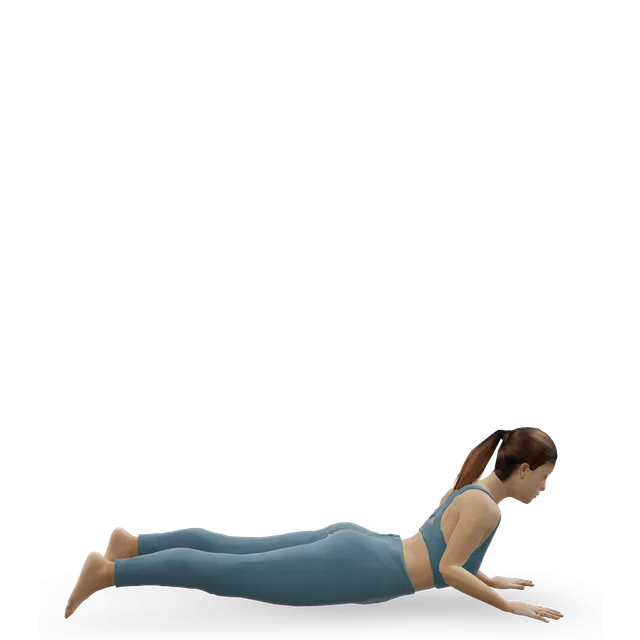 3D demoLow cobra (Bhujangasana)Beginner · No equipment
 3D demoSphinx pose (Salamba Bhujangasana)Beginner · No equipment
 3D demoProne Y-T-W raisesBeginner · No equipment
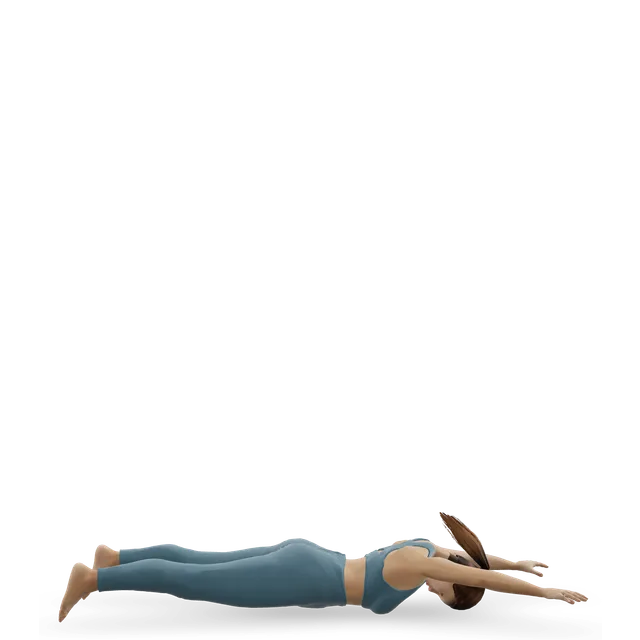 3D demoProne swimmersAdvanced · No equipment
 3D demoBird dog, one limb at a timeBeginner · No equipment
 3D demoSeated upper-back lift (sit tall, shoulders back)Beginner · A bench or box
 3D demoWall angelBeginner · A wall
Band row: "3 sets of 10 to 15, stopping 2 to 3 reps short of failure, with 60 to 90 seconds' rest" (the move page's dose). Band pull-apart: 15 reps, palms up, a light band (our upper back routine). Push-up plus on a bench before the floor: 2 to 3 sets of 10 (our editorial starting point, as on our rounded shoulders guide).
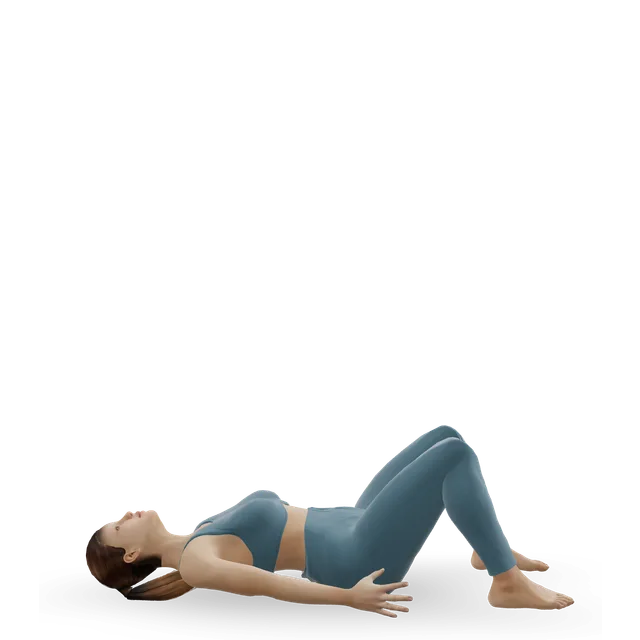
Lying chin tuck: 5 holds of up to 10 seconds, head resting (our yoga for posture class). Chin tuck sitting or standing: 10 reps, gliding the head back, not down (our upper back routine). Our forward head posture guide has more.
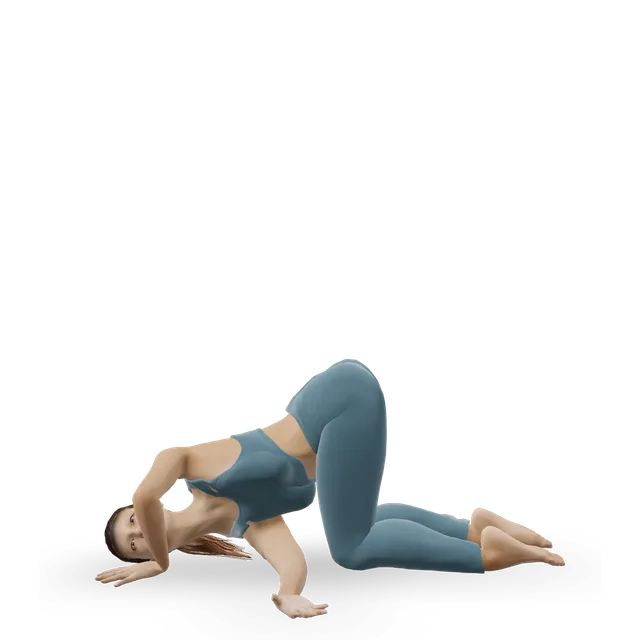
Cat-cow: "8 waves, slower than feels natural"; thread the needle: "Hold 30 to 60 seconds, about 5 to 10 slow breaths, each side, 2 rounds"; thoracic rotation: "6 rotations per side, moving with the breath"; open book: "8 to 10 slow openings each side, pausing 2 seconds at the end"; breath reach: "5 breaths, exhale longer than inhale"; mountain pose: "Stand for 5 to 10 slow breaths, 2 or 3 times" (the move pages' doses). No need to pin your shoulders back in mountain pose.
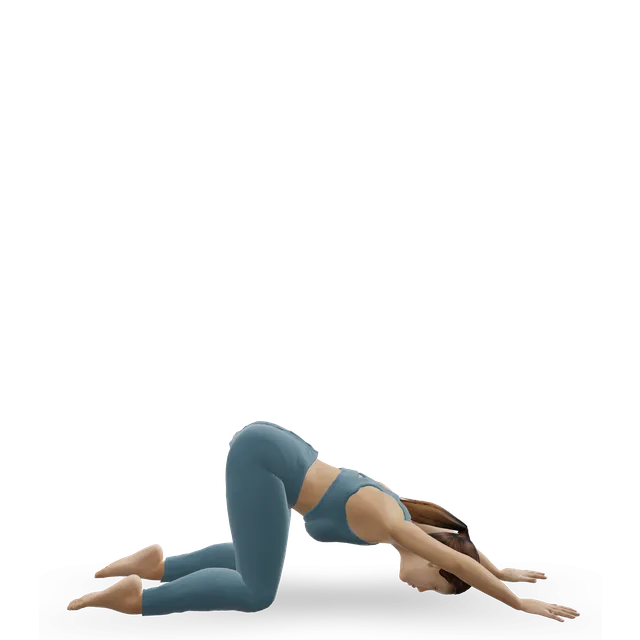
Doorway stretch: 3 holds of 30 seconds each side, one arm at a time with the elbow at shoulder height, starting low after a past dislocation (our editorial starting point, as on our rounded shoulders guide). Extended puppy pose: 3 to 5 slow breaths, walking your hands back if your lower back sags; it's head-down, so keep it brief with glaucoma (our suggestion).
Poses that drop your head back or put weight on it (fish, camel, wheel, headstand, shoulder stand, plough) aren't needed for this goal and carry neck, dizziness and blood pressure cautions on their pages. Dolphin and arm balances load the shoulders overhead and are head-down: clear dolphin first with a shoulder impingement or a recent rotator cuff problem, as its page says. Our suggestion, from the moves' cautions.
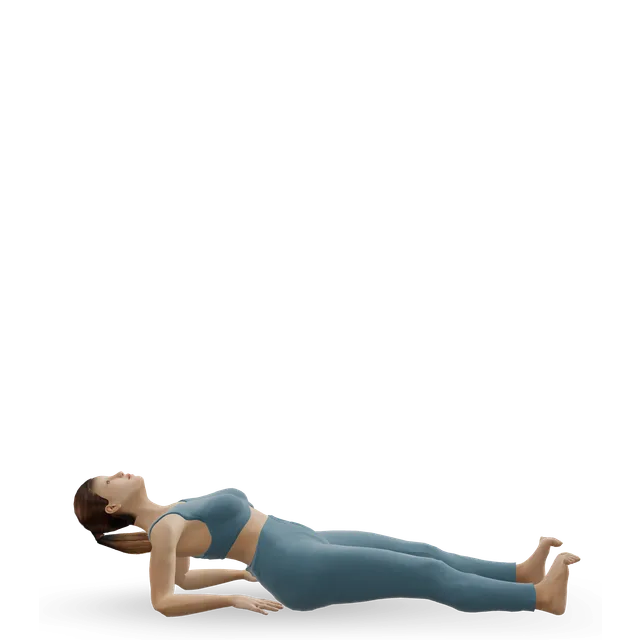 3D demoFish pose (Matsyasana)Intermediate · No equipment
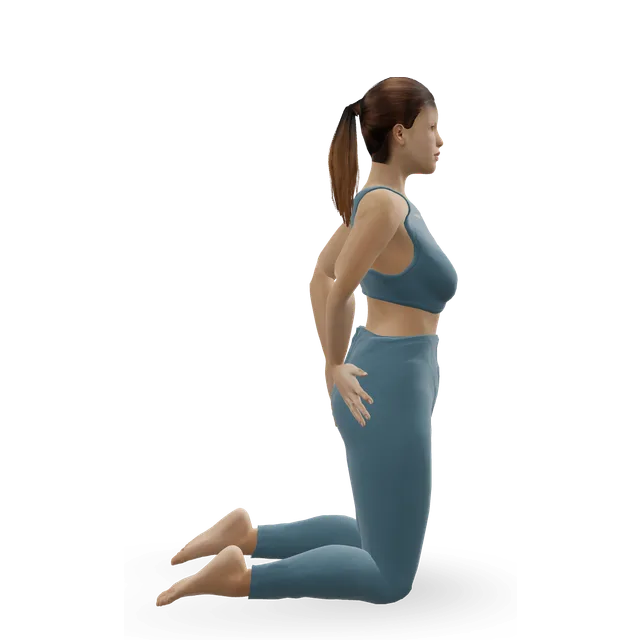 3D demoCamel pose (Ustrasana)Intermediate · No equipment
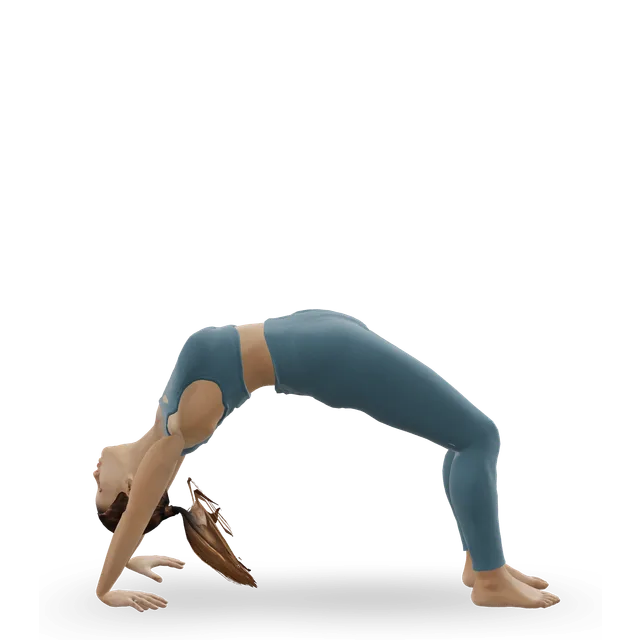 3D demoWheel pose (Urdhva Dhanurasana)Advanced · No equipment
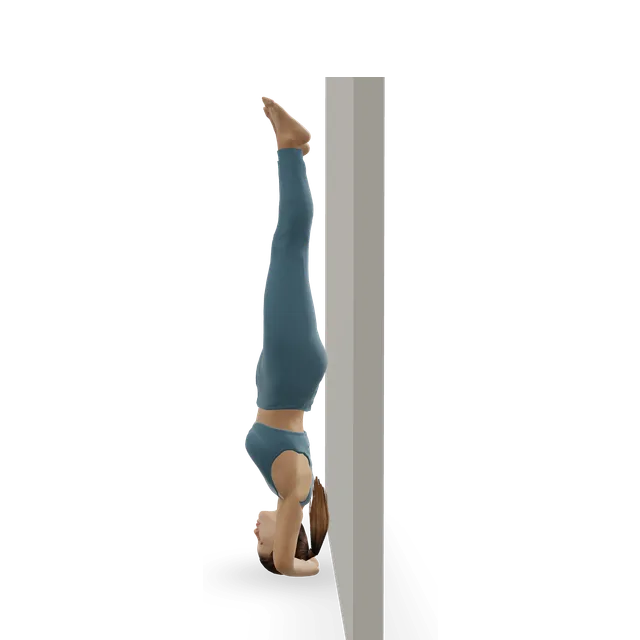 3D demoSupported headstand (Salamba Sirsasana)Expert · A wall
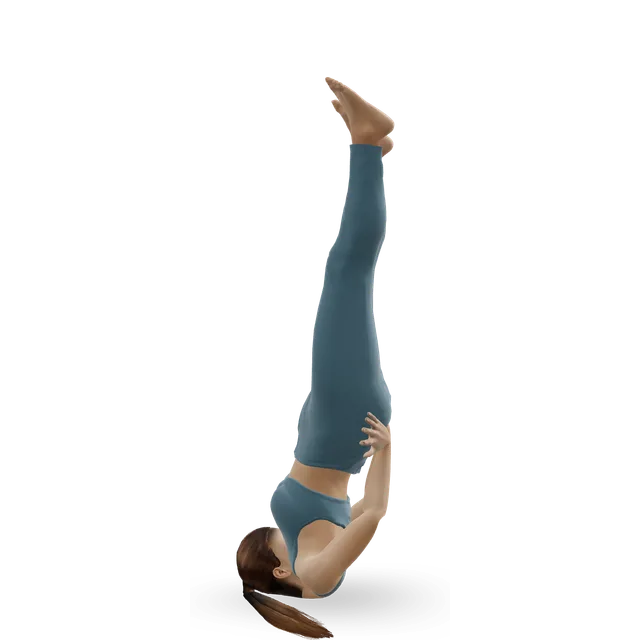 3D demoSupported shoulderstand (Salamba Sarvangasana)Advanced · No equipment
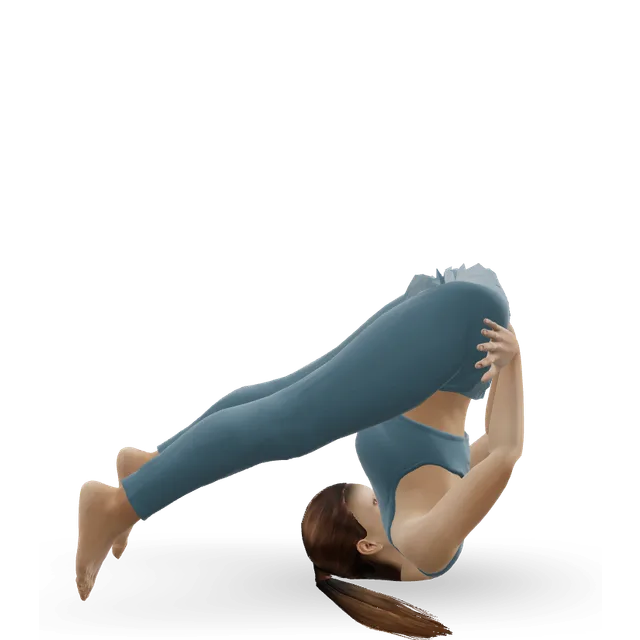 3D demoPlow pose (Halasana)Advanced · No equipment
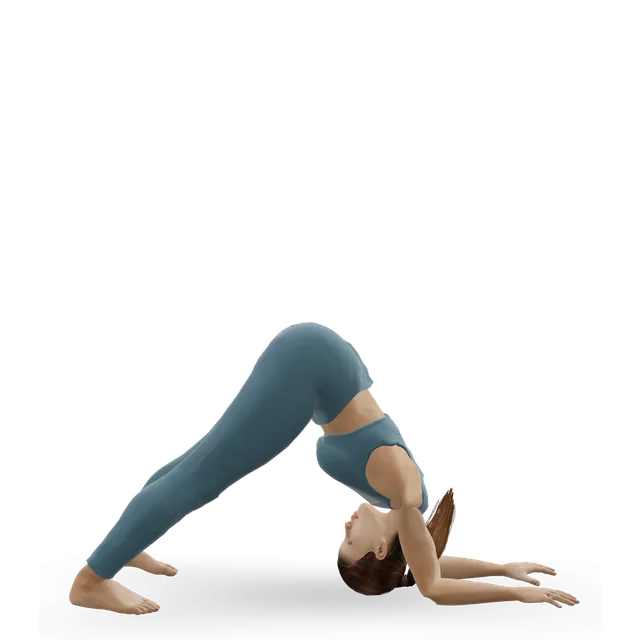 3D demoDolphin pose (Ardha Pincha Mayurasana)Intermediate · No equipment
Our 25-minute yoga for posture class puts the back-strengthening poses together: do it 2 or 3 times a week. The upper back routine adds prone raises, wall angels and band pull-aparts on other days, and the neck and shoulder strength routine suits anyone with neck pain too. The desk yoga routine fits a working day, and the chair yoga class suits anyone who can't get down to the floor.
Twenty-five minutes of back-strengthening yoga for posture: arm and leg reaches, face-down back lifts and standing poses with the arms raised.
25 minBeginner15 movesNo equipmentA 12-minute routine for a stiff upper back and rounded shoulders: chin tucks, wall angels, Y-T-W raises and open books.
12 minBeginner8 movesFoam roller, wallDeep neck holds and shoulder-blade strength in under 20 minutes: one of the best-supported kinds of exercise for a stiff, sore neck.
18 minBeginner11 movesBand, anchor pointTen minutes of yoga at your desk, no mat needed: slow breathing, neck, shoulder, wrist and spine moves in your chair, then standing poses with a hand on the desk.
10 minBeginner13 movesBench or box, wallA free 20-minute chair yoga class for older adults: slow breathing, gentle seated stretches and twists, standing poses holding the chair, and a calm finish.
20 minBeginner18 movesBench or box, something with weightA 30-minute routine for a rounded upper back in later life, built from the SHEAF trial: floor back-strengthening, posture practice and gentle mobility.
30 minBeginner13 movesBench or box, wallStrength, balance and walking across the week, with room for yoga.
Rounded shoulders on their own aren't a reason to see anyone. These are the warning signs from our neck, shoulder and kyphosis guides, word for word. This is general information, not a diagnosis. A&E means accident and emergency; in the US, call 911 for 999.
Call 999: shoulder or arm pain with chest pain that feels tight or squeezing, or chest pain that spreads to your arms, neck or jaw, especially with shortness of breath, sweating or feeling sick. It could be a heart attack.
Call 999 or go to A&E: new problems walking, loss of bladder or bowel control, or a sudden loss of coordination, such as difficulty doing up buttons. These can be signs of pressure on the spinal cord.
Same day (urgent GP appointment or NHS 111): severe neck pain that starts suddenly or gets worse quickly; heaviness or weakness in the arms or legs; pins and needles in an arm along with neck or arm pain; or pain between the shoulder blades.
Same day: clumsiness in your hands, or numbness, pins and needles or weakness in one or both arms, that is getting worse; problems with balance or walking since the neck pain started; or neck pain with a severe headache.
Same day (GP or NHS 111): sudden or very bad shoulder pain; you cannot move your arm; the arm or shoulder is badly swollen or has changed shape; pins and needles that do not go away; no feeling in the arm; the arm is hot or cold to the touch; pain that started after an injury such as a fall; or severe pain in both shoulders.
Same day (GP or NHS 111): the shoulder or arm is hot, swollen or red, or you have a high temperature (although not everyone has one) or feel unwell. A joint infection needs same-day care.
See a GP if you think your child might have kyphosis. A curve can get worse until growth stops, and a stiff, sharp or painful curve that doesn't straighten when standing tall isn't a simple slouch. Rarely, a curve that keeps growing causes weakness, numbness or tingling in the legs, bladder or bowel changes, or difficulty breathing.
Back pain and stiffness that persists in a teenager or young adult. Ankylosing spondylitis tends to start at that age and can affect the whole spine.
NHS inform's neck exercise advice: rate your pain from 0 to 10. During exercise, 0 to 3 is minimal and 4 to 5 is acceptable; 6 or more is too much. If it goes higher, do fewer repetitions, move more slowly or rest longer between movements.
Exercise should not make your neck worse overall. Soreness from a new exercise should ease quickly, and your neck should be no worse the next morning. Stop any exercise that makes your symptoms worse or causes new pain.
Arm symptoms are the exception. If an exercise sends pain, tingling or numbness further down your arm, or the extra symptoms last more than an hour afterwards, make the movement smaller or leave it out. (A hospital leaflet on nerve glides allows a short-lived rise in symptoms but not one lasting over an hour; the rest of this rule is this site's suggestion.)
Stop and get checked for dizziness, double vision, slurred speech, trouble swallowing or any of the warning signs above.
A joint pain that is sharp, gets worse during a session, lingers into the next day or changes how you move is a reason to use an easier version, and to see a GP or physiotherapist if it keeps happening (the rule in our plans). Muscle soreness for a day or two after something new is normal. In a hot class, stop if you feel dizzy, sick or unwell; our hot yoga guide lists the signs of heat illness.
You can say no to any hands-on adjustment, and a teacher registered with Yoga Alliance must get your explicit consent each time.
Call 999 if:
Call 999 or go to A&E (accident and emergency) straight away for severe difficulty breathing (gasping, choking or not able to get words out), a chest that feels tight or heavy, pain that spreads to your arms, back, neck and jaw, lips or skin turning very pale, blue or grey, or sudden confusion. If you're more short of breath than usual, or your heart is racing, fluttering or skipping beats, contact NHS 111.
Source 62
With glaucoma, or high blood pressure that isn't under control, skip headstands, shoulder stands and long head-down holds. With osteoporosis, swap deep forward folds for a flat-back hinge from the hips, and twist smoothly. In pregnancy, our yoga in pregnancy guide covers the changes. NCCIH advises beginners to avoid headstands, shoulder stands, the lotus position and forceful breathing.
The NHS advises getting advice from a healthcare professional first if you have a health problem, an injury or symptoms, or have recently had a heart attack or an operation.
Upper-back rounding didn't differ in people with and without shoulder pain, the severity of posture wasn't related to pain in healthy adults, and posture at 17 didn't predict neck pain at 22.
Stretching programmes didn't change posture in 23 trials, and stretching researchers agree. Strengthening the upper back is what changed shoulder angles.
No yoga trial has tested it. Strength programmes changed measured posture a little, but pain and function didn't consistently improve.
Young women who sat slumped at 17 had lower odds of neck pain at 22 than those who sat upright. The Chartered Society of Physiotherapy says "There is no perfect posture or right or wrong desk set up".
Trials ran from 3 weeks to 8 months and changes were a few degrees. Gains held for 16 weeks after stopping in one trial of teenagers, and none followed people for longer.
They weren't part of the yoga kyphosis trial, which used gentle back lifts and standing poses, and some load the neck or are head-down. The poses that work the upper-back muscles hardest are gentle face-down lifts.
No trial has tested it, so nobody can promise it. Strengthening programmes changed shoulder angles a little in trials, so yoga's back-strengthening poses are the part most likely to help, alongside prone raises and rows. Rounded shoulders are common and usually harmless, so there may be nothing to fix.
Yes, if it includes face-down back lifts, all-fours work and upper-back strength, not just chest openers. It also gets you moving and changing position, which matters more than holding one posture.
Locust with the arms reaching forward, low cobra, sphinx and bird dog, plus prone Y-T-W raises and wall angels. In one lab study, locust with the arms forward worked the muscles between and below the shoulder blades hardest of 15 poses, though it measured muscle activity, not posture. Thread the needle, the open book and cat-cow keep the upper back moving.
It's optional. Stretching programmes didn't change posture in 23 trials, so do a doorway stretch for comfort, not correction, and pair it with upper-back strength.
Probably not on their own: upper-back rounding didn't differ in people with and without shoulder pain, and posture at 17 didn't predict neck pain at 22. Yoga and strength work can still ease neck pain, though not necessarily by changing posture.
Trials ran from 3 weeks to 8 months, most often about 8 weeks of three sessions a week, and changes were a few degrees. In one trial of teenagers the gains held for 16 weeks after stopping, but no trial has followed people for longer, so keep some of the work going.
No yoga trial has tested it. Exercise programmes improved the head-neck angle by about 3 degrees in people with neck pain, which is close to what the measuring tools can detect. Our forward head posture guide has the targeted exercises, such as lying chin tucks.
Rounded shoulders is about where the shoulder blades sit; kyphosis is the curve of the upper back, and they can happen separately. A curve that doesn't straighten when you stand tall, or a new hunch in an older adult, needs a GP, and our yoga for kyphosis guide covers the curve.
A label for a forward head, rounded shoulders and a rounded upper back together, explained as tight muscles at the front and weak ones at the back. Programmes built on it improve posture measures but not reliably pain or function, so treat it as a description, not a diagnosis.
Changing workstations made little difference to neck and shoulder pain in Cochrane reviews. Take short breaks often to move and change position, as the Health and Safety Executive advises, and add strength work for your upper back.
Neither has been shown to fix them: a registered trial comparing the two finished in 2023 but has posted no results. Choose the one you'll keep doing and add shoulder-blade strength.
Yes, and back-strengthening suits it: the UK osteoporosis consensus says yoga and Pilates should be considered to help with posture and pain. Avoid loaded or end-of-range bending, and leave out deep forward folds, the plough and shoulder stands, as our yoga for osteoporosis guide says.
Exercise education, not a personal prescription, and clinical review of these guides is pending. If you are pregnant, have a health condition such as glaucoma, high blood pressure or osteoporosis, or have had recent surgery, check with a doctor, midwife or physiotherapist before starting, and stop for sharp or increasing pain. Health disclaimer.