Pilates alone hasn't been shown to move them
In three small trials that measured it in people with rounded shoulders, Pilates didn't change shoulder position, or changed it no more than standard posture exercise.
Pilates guide
No trial shows that Pilates on its own moves rounded shoulders back: in three small trials it didn't change shoulder position, or did no better than standard posture exercise. What changed posture measures in trials was strengthening the muscles around the shoulder blades and upper back, for about 8 weeks; stretching programmes didn't. And rounded shoulders are very common and usually harmless: in one study about 7 in 10 healthy adults had them, and shoulder position doesn't reliably explain shoulder or neck pain.
So use Pilates as the frame and add that strength work: the swan and swimming, prone Y, T and W raises, band rows and the push-up plus. A new hunch in an older adult is different: see the warning signs below.
This guide covers what rounded shoulders are and how they're measured, how much posture matters for pain, what the trials show, the moves to add and the ones to keep optional, how long it takes, desk work, the reformer, the warning signs, and the classes to follow.
In three small trials that measured it in people with rounded shoulders, Pilates didn't change shoulder position, or changed it no more than standard posture exercise.
In one study, 73% of healthy adults had a rounded right shoulder and 66% a rounded left one. Shoulder-blade position doesn't reliably explain shoulder or neck pain.
Across 23 controlled trials, strengthening improved posture and stretching didn't. A 2026 review found corrective programmes built on rows, reverse flys and prone raises improved forward-shoulder angles over about 8 weeks, though pain and function didn't consistently improve; most of its trials were small and from one country.
The swan and swimming, plus prone Y, T and W raises, band rows and pull-aparts and the push-up plus, 3 days a week for at least 8 weeks. Chest stretches are optional.
The usual tests give the same answer when one person repeats them, but have no validated normal value, and the old rule that a shoulder "more than 1 inch" off the table is rounded couldn't tell people with shoulder symptoms from people without.
See a GP for "A new or increasing hunch, or height loss.", which in older adults can be a sign of a spinal fracture. Call 999 for "shoulder or arm pain with chest pain that feels tight or squeezing". The full list is below.
Rounded shoulders (forward shoulder posture) means the shoulder blades sit further forward around the ribcage, tipped forward and turned in. They often come with a forward head and a rounded upper back, but "Forward head posture, rounded shoulders, and increased thoracic kyphosis can exist alone or in any combination". "Upper crossed syndrome" is a label for all three together, which trials use to choose who takes part; it isn't a diagnosis. Our rounded shoulders guide has the full explanation.
In 88 healthy adults aged 20 to 50, 73% had a rounded right shoulder and 66% a rounded left one, judged against a plumb line. It's a common shape, not a disorder.
Source 4
Lying on your back, the distance from the back of the shoulder to the table is reliable, but averaged about 6 cm in people with and without shoulder symptoms and ranged from 3 to 9.5 cm in people without. The textbook "more than 1 inch" rule flagged everyone without symptoms as well as everyone with them. The measures are reliable when the same person repeats them, and trials define their photo angles differently, so numbers can't be compared from one study to the next. Use a measure to track your own change, not to diagnose yourself.
In 50 people without shoulder pain, those with a short pec minor had more upper-back rounding and inward-turned shoulder blades, and moved them in a way seen in shoulder impingement. But in 144 people, pec minor length wasn't linked to shoulder pain or disability.
The upper-back curve grows with age, faster in women, and a large curve is linked with low bone mass and spinal fractures. The NHS says some older people develop a stooped posture, which happens "when the bones in the spine have broken", so a new hunch in an older adult belongs in the warning signs below, not in a posture class. Our Pilates for kyphosis guide covers the curve.
In shoulder impingement, shoulder-blade position was inconsistent across 10 studies, and the authors said rehabilitation to an "idealised normal posture is currently not supported". There was moderate evidence of no difference in upper-back rounding between people with and without shoulder pain.
In office workers, "shoulder posture was not correlated with neck pain", and in 1,108 Australian 17-year-olds, posture types weren't linked to neck pain or headache. A forward head goes with neck pain in adults in snapshot studies, which can't show cause.
Sitting upright lets you lift your arm higher straight away. Taping 60 people with shoulder impingement into a more upright posture raised the point at which the arm hurt, but not how much it hurt.
Physiotherapists still rate upright sitting as best "despite a lack of strong evidence", and a "large posture industry has flourished", as one viewpoint puts it.
Across 23 controlled trials in 969 healthy people, stretching programmes had no effect on posture, while strengthening programmes made large improvements, most in the upper back and neck. The authors rate the evidence against stretching as moderate certainty.
Source 8
Khorramroo 2026 (28 trials, 901 people with upper crossed syndrome) found corrective exercise improved the forward-shoulder angle across 18 trials, with strengthening programmes doing about as well, but effects on pain, function and balance were inconclusive. Most programmes ran 8 weeks, 3 times a week. The authors rate the certainty for posture as moderate, but most trials were small and from one country (Iran), and results varied widely between them. An earlier review of 22 studies agreed.
In 28 elite swimmers, 8 weeks of exercise reduced forward head and shoulder measures. In 130 teenagers, 16 weeks of strength and stretching in PE lessons improved head and shoulder angles, with no change in shoulder pain. In 39 young swimmers, 6 weeks of stretching and back-of-shoulder strengthening reduced the shoulder-to-wall distance by 9.6 mm, against 2.0 mm. In 60 young women, adding lower trapezius strengthening to pec minor stretching did better than stretching alone.
In 45 girls aged 13 to 16 with upper crossed syndrome, 6 weeks of Pilates, 3 times a week, didn't change the rounded shoulder angle (62.5 to 61.9 degrees), while corrective exercise and the Alexander technique did. In 26 students, 12 weeks of Pilates improved head and upper-back angles but made no difference to the forward shoulder angle, a result the trial's summary leaves out. In 40 young women, rounded shoulders improved by a similar amount with Pilates and with standard posture exercise over 4 weeks.
All three were small: the first had unblinded assessors and was registered after it ran, and the third reports some results inconsistently. A registered trial comparing Pilates with yoga for rounded shoulders in 30 women finished in 2023 but has posted no results.
In 74 women, 6 months of Pilates improved shoulder levelness seen from the front, not rounding. Pilates improved head angles in some small trials, but not shoulder position against home exercise in 46 people. A 2024 review found very low to low certainty evidence that Pilates improves a "shoulder angle" in adults; we couldn't check which angle it means.
Barely studied. In 24 men, an 8-week programme cut the forward shoulder angle from 54.4 to 45.5 degrees, and it was 46.5 degrees 4 weeks after they stopped.
Source 40
A one-arm doorway stretch lengthened the pec minor most in a single session, but 6 weeks of daily stretching didn't change its resting length, and adding it to a 12-week shoulder programme gave no extra benefit in 80 people.
Shoulder-blade strength doesn't match resting shoulder-blade position, and in one trial the upper back became more upright after 6 weeks but "Resting scapular posture did not change". Exercise helps shoulder pain, but not by changing how the shoulder blades move.
Three days a week with a rest day between (our rounded shoulders guide's editorial starting points, so the two pages agree): prone Y-T-W raises, 5 to 8 of each letter for 2 rounds; band pull-aparts with your palms up, and face pulls, 2 to 3 sets of 12 to 15; push-up plus on a bench before the floor, 2 to 3 sets of 10; band external rotation, 2 to 3 sets of 12 to 15; wall angels, 8 slow slides. Band row: 3 sets of 10 to 15, stopping 2 to 3 reps short of failure, with 60 to 90 seconds' rest (the move's page).
 3D demoProne Y-T-W raisesBeginner · No equipment
 3D demoBand pull-apartIntermediate · A band
 3D demoBand rowBeginner · A band + An anchor point
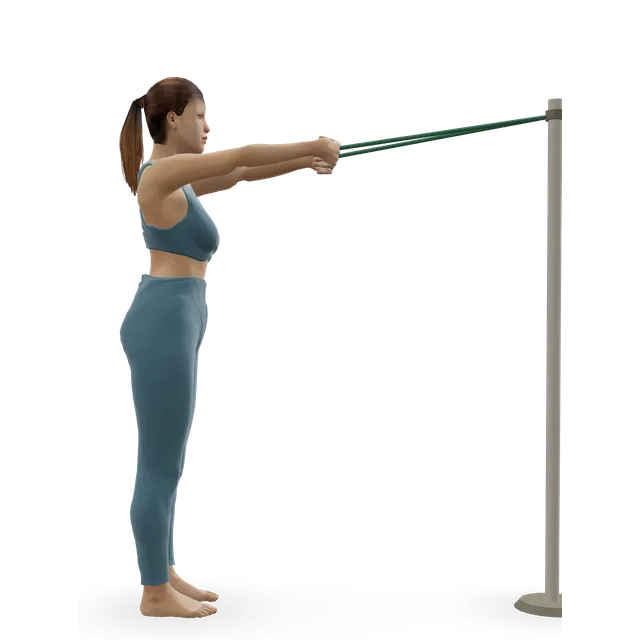 3D demoFace pullIntermediate · A band
 3D demoScapular push-up (push-up plus)Beginner · No equipment
 3D demoStanding band external rotationBeginner · A band + An anchor point
 3D demoWall angelBeginner · A wall
Prop yourself on your forearms in the single-leg kick with your breastbone lifting forward, and hold a towel behind you in the double-leg kick if the hand clasp hurts your shoulders (our suggestion). From the moves' pages: swan, 5 to 6 reps; swimming, 2 to 3 sets of 20 to 30 seconds; single-leg kick, 6 to 8 each leg; double-leg kick, 4 to 5 each side; prone swimmers, 4 or 5 slow circles, 2 rounds, resting between rounds; seated upper-back lift, for a chair class or with osteoporosis, 3 to 5 repetitions, each held 3 to 5 seconds, at least twice a week.
 3D demoSwan (Pilates swan dive)Intermediate · No equipment
 3D demoSwimming (Pilates)Intermediate · No equipment
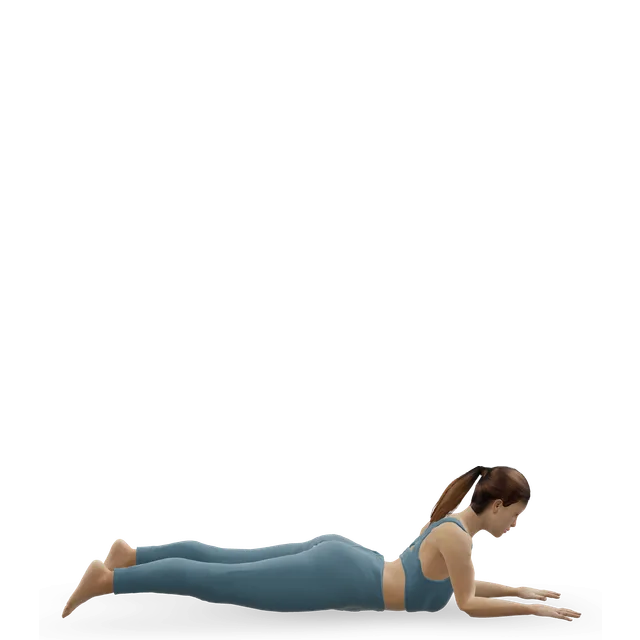 3D demoSingle-leg kick (Pilates one leg kick)Beginner · No equipment
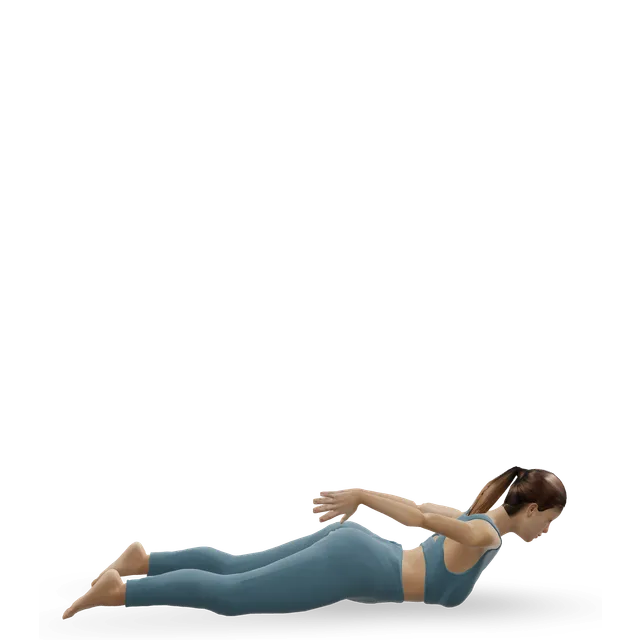 3D demoDouble-leg kick (Pilates double kick)Intermediate · No equipment
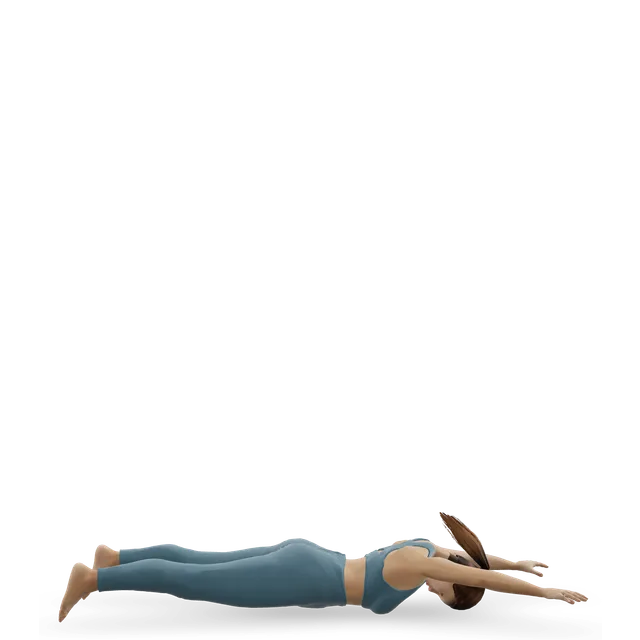 3D demoProne swimmersAdvanced · No equipment
 3D demoSeated upper-back lift (sit tall, shoulders back)Beginner · A bench or box
From the moves' pages: the hundred, 50 beats to start, building to 100; knee hover, 3 holds of 15 to 30 seconds, pressing the floor away; open book, 8 to 10 slow openings each side, pausing 2 seconds at the end; thoracic rotation, 6 rotations per side, moving with the breath; foam roller extension, 5 to 8 slow breaths at each of 3 or 4 spots along the upper back; mermaid, 3 each direction, each side. Bird dog, 6 each side, and chin tucks, 8 slow reps held 3 to 5 seconds (our Pilates for posture class). Doorway stretch with one arm, elbow at shoulder height, for comfort rather than correction: 3 holds of 30 seconds each side (our rounded shoulders guide).
 3D demoHundred (Pilates)Intermediate · No equipment
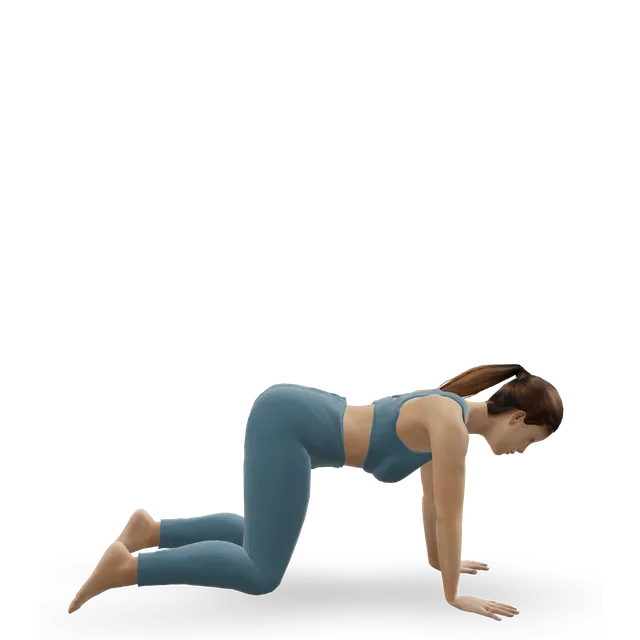 3D demoKnee hover (Pilates tabletop hover)Beginner · No equipment
 3D demoBird dogBeginner · No equipment
 3D demoSide-lying open bookBeginner · No equipment
 3D demoThoracic rotationBeginner · No equipment
 3D demoFoam roller thoracic extensionBeginner · A foam roller
 3D demoMermaid (Pilates seated side bend)Beginner · No equipment
 3D demoDoorway chest openerBeginner · A wall
 3D demoChin tuckBeginner · No equipment
Most programmes that changed shoulder angles ran 8 weeks, 3 sessions a week, and 6 to 12 weeks did about as well as each other. Do the shoulder-blade moves on 3 days a week, inside a Pilates class or on their own (our suggestion).
Only one trial checked whether the change lasted, and it held 4 weeks after stopping. Treat it like any strength: keep some of the work in your week (our suggestion).
Source 40
Two Cochrane reviews found workstation changes made little difference to arm, neck and shoulder pain, while strengthening the neck, shoulder and shoulder-blade muscles eased office workers' neck pain, at low certainty. Our Pilates for office workers guide has a 15-minute class by your desk.
The rowing series, pulling straps, chest expansion and backstroke work the same muscles as the band moves. Start with a light spring, and arms below shoulder height if a shoulder is sore (our suggestion). The only reformer posture study had 22 office workers and no comparison group.
Source 50
These follow the moves' own cautions and our posture guides.
The roll-down and curl-up moves' caution: "With osteoporosis, a UK consensus suggests, as a precaution, alternatives to the Pilates roll-down and curl-up; people who already move comfortably and smoothly can continue." Our Pilates for posture guide adds "With osteoporosis and a high fracture risk, leave out the spine twist and the mermaid." Back extension (the swan, swimming and the seated upper-back lift) stays in.
Source 23
With back pain or spinal stenosis, keep the swan small, as its caution says, and leave out the swan dive and rocking.
Keep chest stretches in the middle of the range rather than hanging in them (our suggestion, from our Pilates for hypermobility guide).
The roll-over, jack knife and open-leg rocker don't undo anything, but they shouldn't be the centre of a class about posture; keep them for strong, healthy backs (our suggestion).
There's no new class for rounded shoulders: these cover every move with evidence. Start with our Pilates for posture class, use the Pilates for swimmers class for more shoulder-blade strength, and the upper-back posture routine on other days. For an older adult with a rounded upper back, the kyphosis class for seniors.
A 20-minute Pilates routine for posture: breathing, head and shoulder-blade control, back strength and upper-back mobility, with no loaded rounding.
20 minBeginner13 movesA wall, A bandA 25-minute dryland Pilates class for swimmers: shoulder-blade control, trunk endurance, back extension, hips and rotation, built for loose shoulders.
25 minBeginner16 movesA wallA 12-minute routine for a stiff upper back and rounded shoulders: chin tucks, wall angels, Y-T-W raises and open books.
12 minBeginner8 movesA foam roller, A wallA 15-minute office Pilates class with no floor work: seated breathing and upper-back lifts, band and wall strength, standing legs and hips, and an unwind.
15 minBeginner15 movesA bench or box, A bandDeep neck holds and shoulder-blade strength in under 20 minutes: one of the best-supported kinds of exercise for a stiff, sore neck.
18 minBeginner11 movesA band, An anchor pointA 30-minute routine for a rounded upper back in later life, built from the SHEAF trial: floor back-strengthening, posture practice and gentle mobility.
30 minBeginner13 movesA bench or box, A wallThese are the same warning signs as our shoulder, neck and kyphosis guides, word for word. This is general information, not a diagnosis. A&E means accident and emergency; in the US, call 911 for 999, and use your doctor's urgent line or urgent care for NHS 111.
Get help from NHS 111: pain or tightness in your chest, neck, shoulders, jaw or arms that comes and goes, often brought on by exercise, stress, emotion or cold and easing after a few minutes' rest. It can be angina, a sign of a heart problem. If you've been diagnosed with angina, get help from NHS 111 too if it feels worse than before, is happening more often, lasts longer or happens when you're resting.
Source 52
Source 52
See a GP if you think your child might have kyphosis. A curve can get worse until growth stops, and a stiff, sharp or painful curve that doesn't straighten when standing tall isn't a simple slouch. Rarely, a curve that keeps growing causes weakness, numbness or tingling in the legs, bladder or bowel changes, or difficulty breathing.
Source 14
Call 999 if:
Call 999 or go to A&E (accident and emergency) straight away for severe difficulty breathing (gasping, choking or not able to get words out), a chest that feels tight or heavy, pain that spreads to your arms, back, neck and jaw, lips or skin turning very pale, blue or grey, or sudden confusion. If you're more short of breath than usual, or your heart is racing, fluttering or skipping beats, contact NHS 111.
You feel any pain or become unwell, as the NHS advises for its Pilates videos, and especially for chest pain or pressure, unusual breathlessness, dizziness or fainting. If you have a health problem, an injury or any symptoms, get advice from a healthcare professional, such as a GP, before you start.
Source 53
The NHS advises getting advice from a healthcare professional first if you have a health problem, an injury or symptoms, or have recently had a heart attack or an operation.
Source 53
Shoulder-blade position in shoulder impingement is inconsistent, upper-back rounding doesn't differ with or without shoulder pain, and shoulder position wasn't linked with neck pain in office workers.
Trials ran 6 to 16 weeks, mostly 8, and only one checked whether the change lasted (4 weeks after stopping).
In three small trials, Pilates didn't change shoulder position or did no better than standard posture exercise. Strengthening programmes did change it.
Stretching programmes didn't change posture, and 6 weeks of daily pec minor stretching didn't lengthen it.
No validated normal value exists, the common table test flags people without symptoms too, and the upright sitting that physiotherapists rate as optimal lacks strong evidence.
The only reformer posture study had 22 people and no comparison group, and the trials that changed shoulder angles used bands, dumbbells and body weight.
It can help as part of the strengthening that changes posture, but Pilates alone hasn't been shown to move the shoulders back: in three small trials it didn't change shoulder position, or did no better than standard posture exercise. Add prone raises, band rows and the push-up plus, which are in the programmes that worked.
Not on its own, as far as trials show. Strength programmes improved measured shoulder angles over about 8 weeks, though pain and function didn't consistently improve, and rounded shoulders are common in people without any pain.
The back-extension moves (the swan, swimming and single-leg kick) plus prone Y, T and W raises, wall angels, band rows and pull-aparts, and the push-up plus. Prone raises work the lower trapezius hardest, and the push-up plus works the serratus anterior with little upper trapezius.
It can be: the rowing series, pulling straps and chest expansion work the same muscles as band rows. No study has tested the reformer for rounded shoulders, and the only reformer posture study had no comparison group. A mat and a band do the same job.
Trials ran 6 to 16 weeks, most often 8 weeks of 3 sessions a week. Expect weeks rather than days, and keep training: in the one trial that checked, the change held 4 weeks after stopping.
Probably not on their own: reviews found no consistent link between shoulder-blade position and shoulder pain, and shoulder posture wasn't linked with neck pain in office workers. Shoulder-blade exercise still helps shoulder pain, though not by changing posture; our Pilates for shoulder pain guide covers it.
It's optional. A one-arm doorway stretch lengthens the pec minor most in the moment, but 6 weeks of daily stretching didn't change its length, and stretching programmes didn't change posture.
Rounded shoulders is about where the shoulder blades sit; kyphosis is the curve of the upper back. They often go together but can occur alone. See a GP for "A new or increasing hunch, or height loss.", especially if you're older; our Pilates for kyphosis guide covers the curve.
A label for a forward head, rounded shoulders and a rounded upper back together, explained as tight muscles at the front and weak ones at the back. Programmes built on it improve posture measures but not reliably pain or function, so treat it as a description, not a diagnosis.
Less than you'd think: changing workstations made little difference to arm, neck and shoulder pain in Cochrane reviews. Strengthening the neck and shoulder muscles helped office workers' neck pain more; our Pilates for office workers guide has a 15-minute class you can do by your desk.
Yes, and back-extension work suits it: the swan, swimming and the seated upper-back lift strengthen the upper back. As a precaution, a UK consensus suggests alternatives to the Pilates roll-down and curl-up. See a GP for "A new or increasing hunch, or height loss."; our Pilates for osteoporosis guide has the swaps.
Neither has been shown to fix them: one registered trial compared them but has posted no results, and our yoga for posture guide found no yoga trial for rounded shoulders. Choose the one you'll keep doing, and add shoulder-blade strength.
Exercise education, not a personal prescription, and clinical review of these guides is pending. If you are pregnant, have a health condition or have had recent surgery, check with a doctor, midwife or physiotherapist before starting, and stop for sharp or increasing pain. Health disclaimer.





