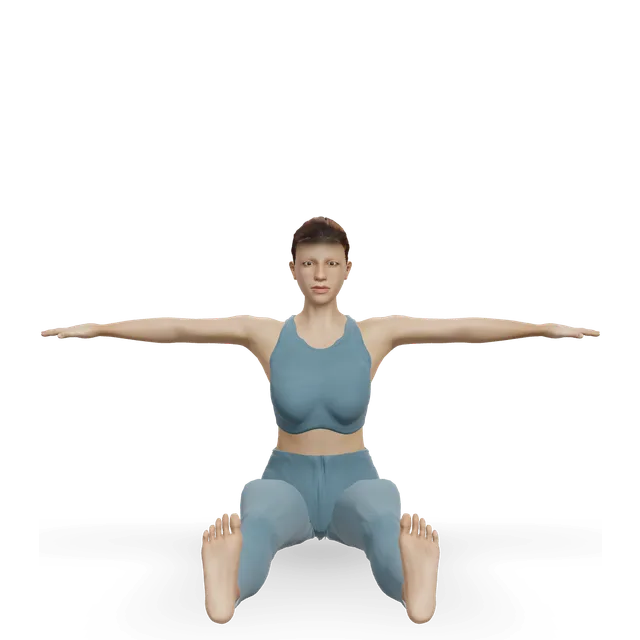
Pilates guide

Pilates for upper back pain: posture and desk work, the shoulder blades and ribs, what the trials show, and moves to start with

Pilates can help upper back pain by building back and shoulder-blade strength, keeping the spine moving and breaking up long spells of sitting. We found no randomised trial of Pilates for upper back pain itself, but in neck pain trials it helped about as much as other exercise, and it trains the things that help.

First, the warning signs: the NHS asks you to see a GP about pain between your shoulders, and chest pain or sudden breathlessness with it needs 999. Pilates sits beside your GP and physiotherapist, not in place of them. This guide covers posture and desk work (what the evidence does and doesn't show), the shoulder blades and ribs, the trials, how much to do and moves to start with, with a 20-minute class and 3D demos.

The short version

Common, and usually not serious, but check the warning signs

In population studies, 15% to 28% of people had upper back pain over a year. The NHS asks you to see a GP about back pain between your shoulders, because the heart, lungs or bones can occasionally cause it.

Sources 1, 2

Posture is a weak explanation

Reviews find no agreement that posture causes back pain, and in one study, girls who sat upright at 17 had more neck pain at 22 than those who slumped. Physiotherapists say there's no perfect posture: the key is to keep moving.

Sources 3, 4, 5

Desk changes alone do little

In a 2026 Cochrane review, workstation changes made little or no difference to pain in neck, shoulder and arm complaints. The Health and Safety Executive suggests short, frequent breaks: 5 to 10 minutes every hour beats 20 minutes every 2 hours.

Sources 6, 7

No trial of Pilates for upper back pain itself

We found no randomised trial of Pilates for upper back pain. In chronic neck pain, Pilates beat no treatment and helped about as much as other exercise; at work, it reduced disability, though not pain significantly.

Sources 8, 9, 10

Strength beats stretching alone

Shoulder-blade and upper-body strengthening eased neck pain in trials, while stretching alone didn't, and just 2 minutes a day of band exercises helped workers with neck and shoulder pain. Strengthening also changed upper-back posture; stretching didn't.

Sources 11, 12, 13

A starting point

Our 20-minute Pilates for posture class 2 or 3 times a week, back-strengthening moves 3 to 5 times held 3 to 5 seconds, and a movement break every hour you sit (our editorial starting point, with the UK osteoporosis consensus dose for back exercises).

Sources 14, 7

Warning signs: check these first

These are the warning signs from our upper back pain guides, in the NHS's words. A&E means accident and emergency. In the US, call 911 for 999, and use your doctor's urgent line or urgent care for NHS 111.

Call 999

Get emergency help for any of these:

  • Call 999: sudden pain or discomfort in your chest that does not go away (it can feel like squeezing or pressure, burning or indigestion); pain that spreads to your left or right arm, or your neck, jaw, stomach or back; or chest pain and you feel sweaty, sick, light-headed or short of breath. It could be a heart attack. Don't drive yourself to A&E.
  • Call 999 or go to A&E if breathing suddenly becomes difficult, if pain in your chest or upper back comes on suddenly with breathlessness or a very fast heartbeat, or if someone passes out. These are the NHS's signs of a blood clot in the lungs (a pulmonary embolism) or another serious condition. Don't drive yourself.
  • Call 999 or go to A&E: back pain with chest pain, or back pain that started after a serious accident, such as a car crash.
  • Call 999 or go to A&E: back pain with pain, tingling, weakness or numbness in both legs, a loss of feeling around your genitals or anus, or changes in your bladder or bowels.
  • Call 999: sudden, severe pain in the tummy or back, which can come with breathlessness, pale or grey skin, or collapse. It can be a burst abdominal aortic aneurysm, most common in men aged 65 or over and in people who smoke or used to smoke.

Sources 15, 16, 17, 2

Get help the same day

Ask for an urgent GP appointment or contact NHS 111 if you have back pain and you feel hot, cold, shivery or generally unwell, or severe pain that starts suddenly or is getting worse quickly.

Same day: you have or have had cancer, and new back pain that is severe and doesn't let up, is getting steadily worse, is worse at night and disturbs your sleep, is worse when you cough, sneeze or strain, or comes with tenderness over the spine. Contact your cancer team or GP urgently. With cancer, new weakness, difficulty walking, numbness or bladder or bowel problems are an emergency.

Sources 2, 18

See a GP soon

In many areas you can refer yourself to NHS physiotherapy without seeing a GP.

  • Pain at the top of the back, between the shoulders, rather than in the lower back.
  • Back pain that hasn't improved after a few weeks of looking after it at home, stops you doing day-to-day activities, worries you, or you're struggling to cope.
  • Pain that doesn't improve with rest or is worse at night, or pain that is worse when you sneeze, cough or poo.
  • Unexplained weight loss, or a lump, swelling or change in the shape of your back.
  • Chest pain that comes and goes, or goes away quickly but still worries you.
  • Pins and needles or a cold arm alongside neck pain.
  • New hunching or loss of height, especially with back pain you can't explain: osteoporosis can cause spinal fractures that change the shape of the spine.
  • Unexplained back pain with muscle spasms, loss of height, or a curved spine or change in posture: a possible osteoporotic spinal fracture, more likely with older age or long-term steroid tablets.
  • Back pain and stiffness that persists in a teenager or young adult. Ankylosing spondylitis tends to start at that age and can affect the whole spine.

Sources 2, 15, 19

Unusual breathlessness

Call 999 or go to A&E (accident and emergency) straight away for severe difficulty breathing (gasping, choking or not able to get words out), a chest that feels tight or heavy, pain that spreads to your arms, back, neck and jaw, lips or skin turning very pale, blue or grey, or sudden confusion. If you're more short of breath than usual, or your heart is racing, fluttering or skipping beats, contact NHS 111.

Source 20

During Pilates: the back pain rule

Some discomfort during exercise is fine, and it does not mean you are doing damage: the WHO counts "hurt does not necessarily mean harm" among the messages people with back pain need. Aim for pain you would call mild to moderate, no more than about 5 out of 10. It should settle within an hour or so, and your back should be no worse the next morning. If it is worse, do less next time (fewer reps, a smaller range, a lighter load), not nothing.

Stop or shrink any move that sends pain, pins and needles or numbness into an arm (our suggestion).

Source 2

Why the warning signs matter more hereStrong evidence

The heart, the lungs, a spinal fracture, inflammatory arthritis and, rarely, cancer can show up as upper back pain. An international framework for spotting serious spinal problems notes that most single warning signs have little evidence for how well they predict them, so clinicians look at the whole picture.

Sources 21, 2

What upper back pain is

Between the neck and the bottom of the shoulder blades

The upper (thoracic) spine has 12 vertebrae, each joined to a pair of ribs. Upper back pain sits between the base of the neck and the lower tips of the shoulder blades; lower down is middle back pain. Even clinicians use the terms loosely, and see upper back pain as "more than biomechanics".

Source 22

How common it isEmerging evidence

Across 33 studies, 15% to 28% of people had upper back pain over a year, more often children, teenagers and women. In adults, few new cases start in any month, and nobody has studied how adults recover. 28% of office workers reported upper back symptoms in a year, and among high school students it was linked with being female, older, mental health problems and long device use.

Sources 1, 23, 24, 25

What drives itMixed evidence

Usually muscles, joints and the ribs, with links to other pain, stress and low mood, backpacks and posture, but the evidence for any single cause is limited.

Sources 1, 22

The shoulder blades and ribsMixed evidence

The shoulder blades glide on the back of the ribcage, steadied by the rhomboids, trapezius and serratus anterior. People with long-lasting neck pain more often show changed shoulder-blade movement, but the evidence is very low certainty. Breathing exercises eased persistent neck pain a little in 5 small trials.

Sources 26, 27

Posture, desk work and pain: what the evidence shows

No agreement that posture causes back painStrong evidence

An umbrella review of 41 reviews found "no consensus regarding causality" between spine postures, sitting or physical work and back pain. Researchers point out that a large posture industry has grown up without strong evidence behind it.

Sources 3, 28

Head and upper back posture: weak and mixed linksEmerging evidence

Adults with neck pain had slightly more forward head posture on average, teenagers didn't, and in 686 young people followed from 17 to 22, girls who sat upright had more persistent neck pain than slumped sitters. Upper back curve didn't differ between people with and without shoulder pain.

Sources 29, 4, 30

Workstation changes do little for painStrong evidence

In a 2026 Cochrane review of 20 studies, workstation and ergonomic changes made little or no difference to pain in work-related neck, shoulder and arm complaints (low certainty). For preventing problems in office workers, most changes had inconsistent or low-quality evidence, and extra breaks reduced neck discomfort a little.

Sources 6, 31

Set up comfortably, then keep movingStrong evidence

The Health and Safety Executive's standard set-up: "Top of screen level with eyes, about an arm's length away", relaxed shoulders, the keyboard just below elbow height, and the screen in front of you so you don't twist. It says to "Take short breaks often", and breaks should let you get up and move. The Chartered Society of Physiotherapy: "There is no perfect posture or right or wrong desk set up ... The key is to keep moving. Your best posture is your next posture!"

Sources 32, 7, 5

What the trials show

We found no randomised trial of Pilates for upper (thoracic) back pain, and only a handful of exercise trials of any kind in it. The evidence below comes from neck pain, workplace pain and posture trials, most of them small.

Pilates for neck painEmerging evidence

In 8 trials with 439 people with long-lasting neck pain, Pilates eased pain more than no treatment (about 1.5 points out of 10 straight after, very low certainty; 2.5 points at follow-up, moderate certainty) and reduced disability. Other exercise did slightly better straight after. A network meta-analysis put yoga, Pilates, tai chi and qigong among the three types of exercise that helped.

Sources 9, 33

Pilates at workEmerging evidence

In 12 trials of workplace Pilates, disability improved by a moderate amount but pain didn't change significantly, and results varied a lot. In 30 office workers with neck pain, 8 weeks of supervised Pilates improved pain, disability, neck movement and strength.

Sources 10, 34, 35

Exercise in upper back pain itselfMixed evidence

A 6-week, 18-session exercise programme cut the share of workers reporting neck and upper back pain (from 75% to 45% in hospital staff, 54% to 25% in office staff). In 60 people with muscular upper back pain, adding rehabilitation exercise to usual care helped a little more. In 143 people, spinal manipulation, instrument massage and a sham did equally well, and everyone improved over time.

Sources 8, 36, 37, 38

Strengthening, especially the shoulder bladesEmerging evidence

A Cochrane review found neck, shoulder and shoulder-blade strengthening eased chronic neck pain, while stretching alone may not. In women with work-related neck muscle pain, specific strength training cut pain far more than cycling, and 2 or 12 minutes a day of band training cut neck and shoulder pain by about 1.4 points out of 10 in 198 workers. Adding shoulder-blade exercises to neck exercises eased pain in 5 small trials.

Sources 11, 39, 12, 40, 41

Posture exercises change posture more than painEmerging evidence

Across 28 trials, posture-correcting exercise changed head and shoulder angles a lot, but effects on pain and function were inconsistent. Strengthening improved upper-back and neck posture; stretching didn't. In small trials of office workers and students, Pilates improved head and upper-back angles, and 30-minute sessions worked as well as 60.

Sources 42, 13, 43, 44

Not clearly better than other exerciseMixed evidence

Pilates offers what helps (strength, rotation, breathing and regular movement) in a form many people enjoy, but it hasn't been shown to beat other strengthening exercise.

Sources 9, 33

A rounded upper back

Exercise changes it a littleEmerging evidence

In adults with a rounded upper back, exercise reduced the curve a little (24 studies, moderate certainty) and pain a little (low certainty). Spine strengthening and posture training 3 times a week for 6 months reduced the curve by 3 degrees in 99 older adults.

Sources 45, 46, 47

Pilates in teenagers and older adultsEmerging evidence

In 103 teenagers with a marked curve, 15 minutes of Pilates twice a week for 9 months reduced it by 5.6 degrees. In adults, the studies are small, water-based or without a control group. A review rated the evidence moderate in children and teenagers and low or very low in adults.

Sources 48, 49, 50, 51, 52

Breathing and the curveMixed evidence

Adding breathing techniques to exercise helped teenagers more than older adults in 5 studies. The NHS says physiotherapy exercises can ease pain and stiffness but won't change a structural curve. Our Pilates for posture guide has more.

Sources 53, 54

With osteoporosis or after a spinal fracture

Strengthen your back, twist smoothlyStrong evidence

The UK consensus recommends back-strengthening exercises "repeated 3 to 5 times and held for 3 to 5 s at least twice a week", says "Rotation (twisting) movements should be safe if performed smoothly and comfortably", and suggests alternatives to the Pilates roll-down and curl-up as a precaution.

Source 14

Exercise is safe after a spinal fractureEmerging evidence

Across 19 studies, exercise after an osteoporotic spinal fracture improved function, strength, pain and quality of life, with a low risk of harms, though it didn't change upper-back posture. The Royal Osteoporosis Society says movement doesn't affect healing, and most fractures heal within about 3 months.

Sources 55, 19

How much, and how often

A starting point

Our 20-minute Pilates for posture class 2 or 3 times a week; back-strengthening moves 3 to 5 repetitions held 3 to 5 seconds, at least twice a week (the UK osteoporosis consensus dose); a short movement break every hour you sit; and, if you like, 2 minutes of band rows a day, the dose that helped in a workplace trial (our editorial starting point). Give it 6 to 12 weeks, the length of most trials.

Sources 14, 7, 12, 9

Clicks and cracks

Painless clicks during rotations are usually harmless. The pop during spinal manipulation isn't linked with better pain relief, and for upper back pain manipulation did no better than a sham.

Sources 56, 38

Breathe into your ribs

Lateral breathing, 5 to 8 breaths (the move's page); crocodile breathing, 5 minutes of easy nose breathing, about 4 seconds in and 6 out (the move's page, editorial).

Rotate and extend your upper back

Side-lying open book, 8 to 10 slow openings each side; thoracic rotation, 6 each side with the breath; spine twist, 3 to 4 each side; cat-cow, 8 slow waves; mermaid, 3 each direction, each side (the moves' pages).

Strengthen your back and shoulder blades

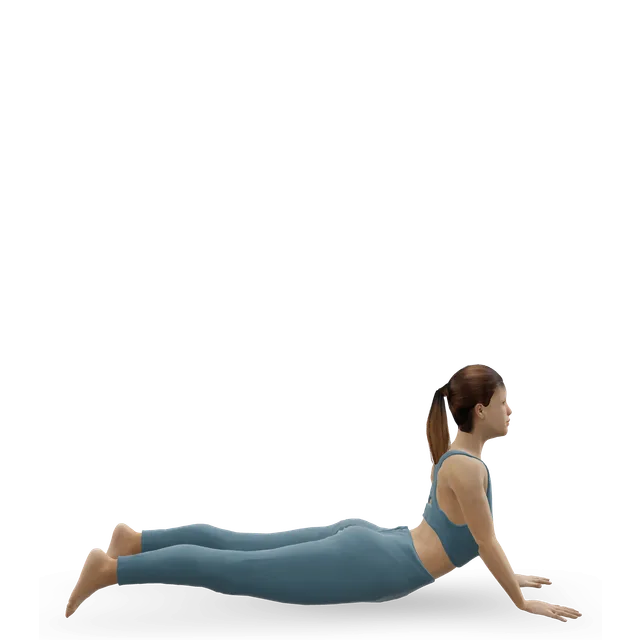
Swan, 5 to 6 reps, and swimming, 2 to 3 sets of 20 to 30 seconds (the moves' pages); prone Y-T-W raises, 5 of each shape (our neck pain class); seated upper-back lift, 3 to 5 repetitions held 3 to 5 seconds (the move's page, from the UK consensus); wall angels, 8 slow reps, and bird dog, 6 each side, and band pull-aparts, 2 sets of 12 to 15 (our posture class); band rows, 3 sets of 10 to 15 (the move's page).

Head and neck

Chin tucks, 8 slow reps held 3 to 5 seconds (our posture class).

At your desk, once an hour

From our 3-minute desk break: thoracic rotation, 3 slow turns each side; sit to stand, about 8 to 10 slow reps in 40 seconds; chin tucks, 5 slow reps. Add the seated upper-back lift, 5 holds of 3 to 5 seconds (our chair Pilates class).

Moves to change or leave out

With osteoporosis or a spinal fracture

Leave out loaded forward bending, the roll-down and roll-up, and use the swan and seated back lifts instead. Twist smoothly and only as far as is comfortable. Clear the foam roller with a physiotherapist first, and after a recent fracture move only as far as is comfortable.

Sources 14, 19

Neck pain or tingling in an arm

Keep your head down in curl-ups and leave out moves that put weight on the neck, such as the rollover and jack knife. Our Pilates for neck pain guide has more.

If arching pinches, or your shoulder hurts

Keep the swan small or swap swimming for the bird dog; keep your arms by your sides in swimming and the range small in wall angels.

Our class and other workouts

Start with our 20-minute Pilates for posture class: its breathing, shoulder-blade, back-strengthening and rotation moves suit most upper back pain. The neck pain class keeps your head supported; the desk break and seated chair class fit a working day; the strength routine adds bands.

Pilates for posture: upper back, shoulders and neck

A 20-minute Pilates routine for posture: breathing, head and shoulder-blade control, back strength and upper-back mobility, with no loaded rounding.

20 minBeginner13 movesA wall, A band

Pilates for neck pain: a 20-minute head-supported class

A 20-minute Pilates class for neck pain: head-supported core work, upper-back and shoulder-blade strength, gentle neck movement and slow breathing.

20 minBeginner15 movesA wall

Upper back mobility routine

A 12-minute routine for a stiff upper back and rounded shoulders: chin tucks, wall angels, Y-T-W raises and open books.

12 minBeginner8 movesA foam roller, A wall

3-minute desk movement break

A 3-minute standing break to repeat every 30 to 60 minutes at your desk: sit-to-stands, calf raises, marching, an upper-back turn and chin tucks.

3 minBeginner5 movesA bench or box, A wall

Seated chair Pilates: 15 minutes, no standing

A 15-minute chair Pilates class done entirely sitting down, in a chair or wheelchair: breathing, spine moves, and leg and arm strength with water bottles.

15 minBeginner13 movesA bench or box, Something with weight

Neck and shoulder strength routine

Deep neck holds and shoulder-blade strength in under 20 minutes: one of the best-supported kinds of exercise for a stiff, sore neck.

18 minBeginner11 movesA band, An anchor point

Pilates for osteoporosis: a mat class with safe swaps

A 25-minute Pilates workout for osteoporosis and osteopenia: the Royal Osteoporosis Society's swaps for rounding moves, plus back strength and balance.

25 minBeginner16 movesA wall, A bench or box

Myths

"Bad posture causes upper back pain"Emerging evidence

Reviews find no agreement that posture causes back pain, links between head posture and neck pain are modest, and upright-sitting girls had more neck pain later than slumped sitters.

Sources 3, 29, 4, 30

"You must sit up straight"Strong evidence

"There is no perfect posture", physiotherapists say: the key is to keep moving and change position often.

Sources 5, 28, 7

"A better desk set-up will fix it"Strong evidence

Workstation changes made little or no difference to pain in a 2026 Cochrane review. Set up comfortably, then take breaks and get stronger.

Source 6

"A rounded upper back can't change"Emerging evidence

Exercise reduces it a little, about 3 degrees in older adults and more in teenagers. Aim for strength and comfort, not an angle.

Sources 46, 45, 48

"Stretch your chest and the pain will go"Emerging evidence

Stretching alone may not ease neck and upper back pain; strengthening does more, and it's what changed posture in trials.

Sources 11, 13

"Something is out of place and needs cracking"Emerging evidence

Manipulation did no better than a sham for upper back pain, and the pop doesn't predict relief.

Sources 38, 56

Questions people ask

Is Pilates good for upper back pain?

Probably, but we found no trial of Pilates for upper back pain itself. In neck pain trials it beat no treatment and helped about as much as other exercise, and it trains what helps: back and shoulder-blade strength, rotation and breathing.

Which Pilates exercises help upper back pain?

Rotations such as the open book and spine twist, back extensions such as the swan and swimming, shoulder-blade work such as Y-T-W raises, rows and wall angels, and lateral breathing. Our Pilates for posture class puts them together in 20 minutes.

Is bad posture causing my upper back pain?

Probably not on its own: reviews find no agreement that posture causes back pain, and studies of posture and neck pain disagree. Moving often and getting stronger matter more than holding one correct position.

I work at a desk. What helps?

Take short, frequent breaks: the Health and Safety Executive says 5 to 10 minutes every hour beats 20 minutes every 2 hours. Workstation changes alone did little for pain in trials, so add a few minutes of strengthening most days.

Should I see a doctor about upper back pain?

The NHS asks you to see a GP about back pain between your shoulders, because the heart, lungs or bones can occasionally cause it. Call 999 for chest pain or sudden breathlessness with it, and check the other warning signs on this page.

Can Pilates fix a hunched upper back?

It can help a little: exercise reduced the curve by about 3 degrees in older adults, and Pilates by 5.6 degrees in teenagers with a marked curve. Aim for strength and comfort rather than an angle; our Pilates for posture guide has more.

Is reformer Pilates good for upper back pain?

No trial has compared reformer and mat Pilates for it. The reformer's springs can support back extension and arm work, but mat Pilates and simple band work cover the same ground.

Why does my upper back hurt after Pilates?

Often new muscle work, such as back extensions or arm work, which should settle within a day or two. Use the back pain rule: no more than about 5 out of 10, settled by the next morning. Pain that's sharp, spreads or keeps getting worse needs the move made smaller, or checking.

How often should I do Pilates for upper back pain?

Two or three times a week, plus a movement break every hour you sit. Back-strengthening moves 3 to 5 times, held 3 to 5 seconds, twice a week is the UK osteoporosis consensus dose, and it suits most people.

Is Pilates good for upper back and neck pain together?

Yes, it's best studied for neck pain. Keep your head supported and your neck long, and see our Pilates for neck pain guide for a head-supported class.

Is Pilates safe for upper back pain with osteoporosis?

Yes, with changes: back-strengthening is recommended, smooth twisting is safe, and loaded forward bending such as the roll-down is best swapped. New upper back pain with height loss needs checking for a spinal fracture.

Will stretching or cracking my back help?

Stretching on its own may not ease neck and upper back pain; strengthening does more. Spinal manipulation did no better than a sham for upper back pain, and the pop doesn't predict relief.


Sources

  1. Briggs 2009 · Upper (thoracic) back pain in the general population: 33 studies (systematic review, BMC Musculoskelet Disord)
  2. NHS · Back pain
  3. Swain 2020 · Spine posture, physical work and back pain: 41 reviews (umbrella review, J Biomech)
  4. Richards 2021 · Sitting posture at 17 and neck pain at 22 in 686 young people (cohort study, Phys Ther)
  5. Chartered Society of Physiotherapy · Desk-based exercises (reviewed May 2019)
  6. Mehta 2026 · Workstation and ergonomic changes for work-related arm, neck and shoulder complaints: 20 studies (Cochrane review)
  7. Health and Safety Executive · Working safely with display screen equipment: work routine and breaks
  8. Europe PMC · Our searches for trials of Pilates, and of exercise, for upper (thoracic) back pain (October 2026)
  9. Lazoura 2025 · Pilates for chronic neck pain: 8 trials, 439 people (systematic review and meta-analysis, BMC Musculoskelet Disord)
  10. Tsartsapakis 2026 · Pilates at work: 12 trials (systematic review and meta-analysis, J Funct Morphol Kinesiol)
  11. Gross 2015 · Exercises for neck pain: 27 trials (Cochrane review)
  12. Andersen 2011 · 2 or 12 minutes a day of band training for neck and shoulder pain: 198 workers (randomised trial, Pain)
  13. Warneke 2024 · Stretching or strengthening for spine and pelvis posture: 23 studies (systematic review and meta-analysis, Sports Med Open)
  14. Brooke-Wavell 2022 · Strong, steady and straight: UK consensus statement on exercise for osteoporosis (consensus, Br J Sports Med; read in full)
  15. NHS · Chest pain (past its review date: reviewed August 2023, review due August 2026)
  16. NHS · Heart attack
  17. NHS · Pulmonary embolism
  18. NICE NG234 · Spinal metastases and metastatic spinal cord compression (guideline, 2023)
  19. Royal Osteoporosis Society · Spinal fractures (vertebral fractures)
  20. NHS · Shortness of breath
  21. Finucane 2020 · International framework for red flags for serious spinal problems (IFOMPT framework, J Orthop Sports Phys Ther)
  22. Kovanur Sampath 2026 · How physiotherapists and osteopaths think about upper back pain: 17 clinicians (qualitative study, BMJ Open)
  23. Johansson 2017 · How often mid-back pain starts and how it goes: 7 studies (systematic review, Eur J Pain)
  24. Janwantanakul 2008 · Aches and pains in 1,185 office workers (survey, Occup Med)
  25. De Vitta 2023 · Upper back pain in high school students over a year (cohort study, Healthcare)
  26. Javdaneh 2025 · Neck pain and shoulder-blade movement: 19 studies (systematic review, BMC Musculoskelet Disord)
  27. Cefalì 2025 · Breathing exercises for neck pain: 5 trials (systematic review and meta-analysis, J Clin Med)
  28. Slater 2019 · "Sit up straight": time to re-evaluate (viewpoint, J Orthop Sports Phys Ther)
  29. Mahmoud 2019 · Forward head posture and neck pain: 15 studies (systematic review and meta-analysis, Curr Rev Musculoskelet Med)
  30. Barrett 2016 · Upper back posture and shoulder pain: 10 studies (systematic review, Man Ther)
  31. Hoe 2018 · Ergonomic changes to prevent neck and arm problems in office workers: 15 trials (Cochrane review)
  32. Health and Safety Executive · Working safely with display screen equipment: good posture
  33. de Zoete 2020 · Exercise types for chronic neck pain: 40 trials (network meta-analysis, Br J Sports Med)
  34. Trigonis 2026 · Pilates for workers' health: 23 studies (systematic review, Healthcare)
  35. Göz 2026 · Pilates, with or without taping, for neck pain in 30 office workers (randomised trial, Pain Res Manag)
  36. Beneka 2024 · A 6-week exercise programme for work-related neck and upper back pain: 138 workers (randomised trial, Medicina)
  37. Rahman 2023 · Rehabilitation exercise for muscular upper back pain: 60 people (trial, Mymensingh Med J)
  38. Crothers 2016 · Spinal manipulation, instrument massage or a sham for upper back pain: 143 people (randomised trial, Chiropr Man Therap)
  39. Andersen 2008 · Strength training or cycling for work-related neck muscle pain: 48 women (randomised trial, Arthritis Rheum)
  40. Prakash 2024 · Shoulder-blade exercises for neck pain: 5 trials, 116 people (systematic review and meta-analysis, Spine Surg Relat Res)
  41. Prakash 2026 · Shoulder-blade or neck exercises for neck pain: 108 people (randomised trial, Pain Res Manag)
  42. Khorramroo 2026 · Posture-correcting exercise for upper crossed syndrome: 28 trials (systematic review and meta-analysis, BMC Sports Sci Med Rehabil)
  43. Jiang 2025 · Pilates with or without massage for upper crossed syndrome in 34 office workers (randomised trial, Healthcare)
  44. Mun 2024 · 30 or 60 minutes of Pilates for upper crossed syndrome in 26 students (randomised trial, J Clin Med)
  45. Ponzano 2021 · Exercise for a rounded upper back with age: 24 studies (systematic review and meta-analysis, Arch Osteoporos)
  46. Katzman 2017 · Spine strengthening and posture training for a rounded upper back: 99 older adults (randomised trial, Osteoporos Int)
  47. Jenkins 2021 · Treatments for a rounded upper back: 28 trials (systematic review and meta-analysis, Musculoskelet Sci Pract)
  48. González-Gálvez 2023 · Pilates for teenagers with a rounded upper back: 103 adolescents (randomised trial, Postgrad Med J)
  49. Roque 2024 · Pilates and posture: 18 studies (systematic review and meta-analysis, Musculoskeletal Care)
  50. Passa 2026 · Water Pilates in 20 women aged 55 to 65 with a rounded upper back (randomised study, J Funct Morphol Kinesiol)
  51. Kuo 2009 · Spine posture after Pilates in 34 healthy older adults (repeated-measures study, Spine)
  52. Emery 2010 · Pilates, upper back posture and shoulder movement in 19 adults (controlled study, Clin Biomech)
  53. Kirkbir 2026 · Exercise with breathing techniques for a rounded upper back: 5 studies (systematic review and meta-analysis, Healthcare)
  54. NHS · Kyphosis
  55. Fernández-González 2026 · Exercise and education after osteoporotic spinal fractures: 19 studies (systematic review and meta-analysis, Osteoporos Int)
  56. Moorman 2022 · Does the pop during spinal manipulation matter for pain? 5 studies (systematic review, Chiropr Man Therap)

Exercise education, not a personal prescription, and clinical review of these guides is pending. If you are pregnant, have a health condition or have had recent surgery, check with a doctor, midwife or physiotherapist before starting, and stop for sharp or increasing pain. Health disclaimer.