Pilates
Seated chair Pilates: 15 minutes, no standing
Everything in this class is done sitting down, so it suits anyone who can't stand to exercise, including wheelchair users (put the brakes on). Use a solid chair without wheels, sit near the front of the seat with your feet flat and your knees at right angles, and keep two filled water bottles nearby. It follows the NHS sitting exercises and the chair-based exercise experts' advice: a warm-up, strength work you make harder over time, and a cool-down. Seated exercise builds strength and sitting balance; standing balance needs standing practice, so add standing moves when you can.
Warm up
- Lateral breathing (Pilates breathing)5 to 8 breathsBeginner · Abs · 3D demoHands on your lower ribs; breathe into the sides and back of your ribsHarder: Roll-up (Pilates)
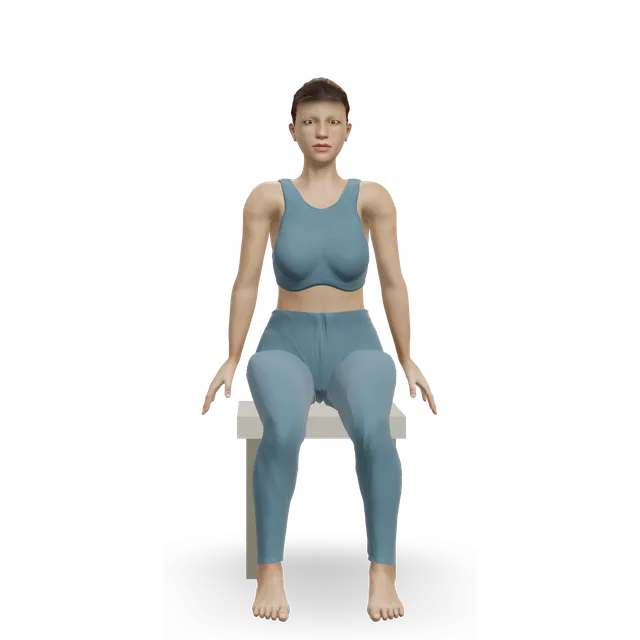
- Seated march1 minBeginner · Hip flexors, Quads, Abs · 3D demoHold the sides of the seat and lift each knee in turn as far as is comfortable; keep the lift low after a recent hip replacementHarder: Standing march
- Shoulder rolls10 slow circles each wayBeginner · Shoulders, Back, Neck · 3D demoSmall circles if a shoulder is soreHarder: Shoulder CARs (controlled articular rotations)



Spine
- Thoracic rotation5 each side, 5 s holdBeginner · 3D demoSeated, arms crossed on your chest, hips facing forward; turn only as far as is comfortable (the demo shows it standing)Easier: Side-lying open bookHarder: World's greatest stretch
- Seated overhead side bend2 each side, 10 to 20 s holdBeginner · Back, Abs · 3D demoReach one arm up and over, both sitting bones on the seat. With osteoporosis and a high risk of fracture, keep it small or leave it outHarder: Overhead lat stretch at a bench (elbows on the bench)
- Seated upper-back lift (sit tall, shoulders back)5 holds of 3 to 5 sBeginner · Back, Shoulders, Neck · 3D demoSit tall, draw your shoulder blades back and lift your breastboneEasier: Elbows backHarder: Prone Y-T-W raises



Legs
- Seated knee extension (chair)8 each legBeginner · Quads · 3D demoStraighten one knee for a slow count of 3, lower it for 5. Later, do up to 10, then 2 setsEasier: Quad set (static quads)Harder: Leg extension
- Chair leg extension and sweep5 each legBeginner · Hamstrings, Calves, Adductors · 3D demoStraighten the leg, sweep it out to the side and back to the middle; after a hip replacement, don't cross the middleHarder: Contract-relax hamstring stretch (PNF)
- Seated bent-knee calf raise (soleus raise)10 to 15 slowBeginner · Calves · 3D demoLift both heels as high as you can, pause, lower slowlyHarder: Slow calf raise


Arms
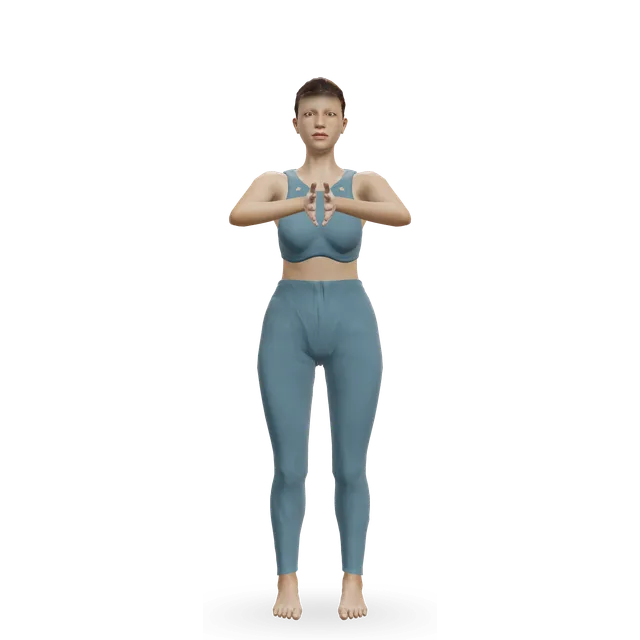
- Isometric chest squeeze (palm press)6 holds of 5 sBeginner · Chest, Shoulders, Triceps · 3D demoPalms together at chest height, or a cushion or Pilates ring between them. Press, keep breathing, then rest as long as you heldHarder: Machine chest fly (pec deck)
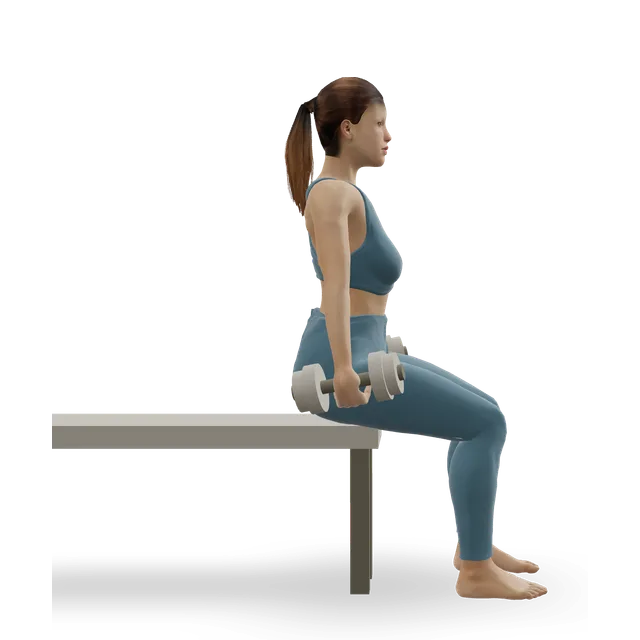
- Seated dumbbell curl2 sets of 5 each armBeginner · Biceps, Forearms · 3D demoFilled water bottles or light weights, elbows by your sides, lower slowly. Build up to the NHS's 3 setsHarder: Dumbbell biceps curl
Cool down
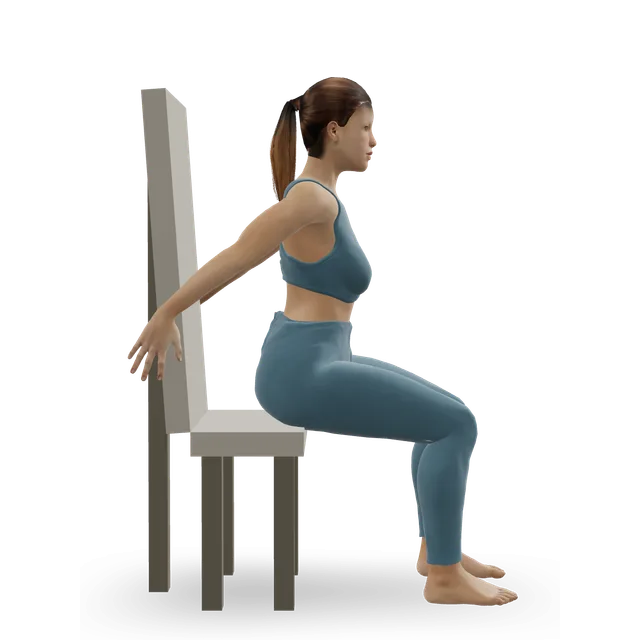
- Chair chest and shoulder stretch2 holds of 15 to 20 sBeginner · Shoulders, Biceps, Chest · 3D demoHold the backrest behind you and bring your chest forward and up; ease off if the front of a shoulder pinches. Can't reach the backrest? Hold your arms out to the side and lift your chest insteadHarder: Behind-the-back stick shoulder stretch
- Breath reach5 breathsBeginner · 3D demoArms rise as you breathe in and lower as you breathe out, only as high as is comfortable (the demo shows it standing)Harder: Slow breathing (6 breaths a minute)

Tips
- Do it at least twice a week, as the NHS suggests for its sitting exercises, and make it a little harder every week or two: more repetitions, a slower lowering or heavier bottles.
- Seated exercise builds strength and sitting balance but not standing balance. When you can, move on to the 20-minute chair Pilates workout, which finishes standing at the chair, and add the balance exercises routine on other days.
- Stop and sit still if you feel sick, dizzy, very short of breath, clammy, or have chest tightness or any pain. Call 999 (911 in the US) for chest pain that feels tight or spreads to your arms, neck or jaw.
- After a hip replacement, use the chair your team recommends and follow their precautions while you recover.
- In a wheelchair, put the brakes on, and keep arm work at or below shoulder height if your shoulders hurt.
The doses are suggested starting points, not a prescription. Choose a range you can control and stop for sharp or increasing pain, numbness or tingling. Get individual advice after an injury or surgery, or if you are pregnant or managing a health condition.
Guides that recommend it
Find more moves like these
More pilates




Beginner Pilates workout
A 20-minute mat Pilates workout for complete beginners. It covers breathing, spine position and the foundation moves, each with an easier option.
20 minBeginner13 movesNo equipment

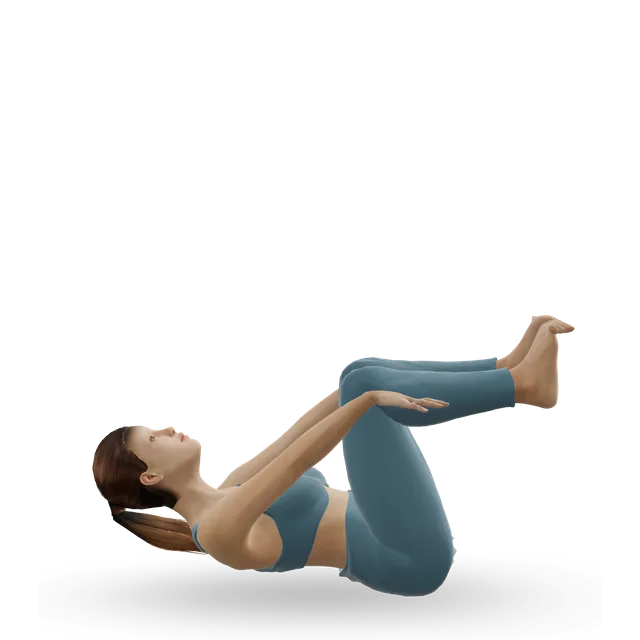
10-minute Pilates abs
Ten minutes of the classic Pilates abdominal series: the hundred, the roll-up and the series of five, with a plank to finish.
10 minIntermediate11 movesNo equipment
Full-body mat Pilates workout
A 30-minute intermediate mat Pilates class that follows the classical order, from the hundred to the push-up, with prep versions of the hardest moves.
30 minIntermediate22 movesNo equipmentQuestions people ask
How long does the seated chair pilates: 15 minutes, no standing take?
About 15 minutes, including any warm-up and cool-down listed. Shorten it by doing fewer rounds; lengthen it by adding one.
What equipment do I need?
You need: A bench or box, Something with weight, A dumbbell. Each move links to its guide, where you can find an alternative if you are missing something.
Is it suitable for beginners?
It is written for beginners. 3 of its 13 moves have an easier option listed beside them if you need one.
How do I make it easier or harder?
Use the easier or harder option listed under each move, change the number of rounds, or adjust the rest. Progress one change at a time.