Pilates guide

Chair Pilates: who it suits, what it can do, and the moves to start with

Chair Pilates is Pilates-based exercise done sitting on a chair, or standing and holding it for support. It suits anyone who finds the floor difficult or can't stand for long: older adults, people with arthritis, multiple sclerosis (MS) or a wheelchair, people recovering from illness, and desk workers.

Chair Pilates itself has barely been tested, but chair-based exercise in general builds some strength and flexibility. What sitting can't do is train your standing balance, so use the chair as a starting point and add standing moves, holding the chair, as soon as you can.

This guide covers what chair Pilates is (and the other kind of "chair" class), what the studies show, how to choose a chair, the moves to start with and when to stop. There's a 15-minute class done entirely sitting down, and a 20-minute class that finishes standing.

The short version

Two kinds of chair class

Usually it means Pilates-based moves on an ordinary chair: the NHS's 30-minute chair-based Pilates video is for people who find it hard to get down to the floor, and some of it is done seated only. In a studio, a chair class can mean the Wunda chair, a spring-loaded box with a pedal that Joseph Pilates designed, which is a different and harder workout.

Sources 1, 2, 3

Chair Pilates itself has barely been tested

We found no trial of chair Pilates in older adults. The only seated Pilates studies are two small ones in people with MS, and neither had a group that didn't do Pilates.

Sources 4, 5, 6

Chair-based exercise builds some strength

Across 25 studies of adults over 50, chair-based exercise improved grip strength by about 2 kg, and people managed about 3 more arm curls and 2 more chair stands in 30 seconds than comparison groups. In older women, arm and leg endurance and flexibility improved.

Sources 7, 8

It doesn't train standing balance

Seated exercise had "no effect on balance or mobility" in 14 trials. Fewer falls come from standing exercise that challenges your balance, 3 or more times a week.

Sources 9, 7, 10, 11

Sit, then stand

Experts agree chair-based exercise should be "a starting point to progress to standing programmes" where possible. Finish your session standing, holding the back of the chair, as soon as you can.

Sources 12, 13

Gentle on the heart and lungs

Pilates uses about as much energy as walking slowly, so walk or wheel on other days too: the UK guidelines pair strength and balance work on 2 days a week with 150 minutes of moderate activity.

Sources 14, 15, 16, 17

What chair Pilates is

Pilates on an ordinary chair

Pilates-based exercises done sitting, or standing with the chair for support. The NHS video calls itself "suitable for people who have difficulty getting down on the floor and prefer the support of a chair", and some of its exercises are "solely chair-based", for people unable to stand. By 2006, STOTT PILATES, one of the large teacher-training schools, had an "Armchair Pilates" programme that modifies the moves for people with balance and stability challenges.

A typical class starts with breathing and sitting tall, then works the spine (side bends, twists, a hip hinge and back-strengthening lifts), then the legs and arms, and ends standing, holding the chair. Experts on chair-based exercise want a warm-up, strength work that gets harder over time, stretches and a cool-down.

Sources 1, 18, 12

The Wunda chair is something else

The Wunda chair is one of the pieces of apparatus Joseph Pilates designed. The Pilates Method Alliance describes it as "a small bench or box with a pedal on one side, attached with springs" that "challenges balance, stability, and strength". Lab studies in women found its exercises worked the trunk muscles at moderate intensity, and that one chair session improved flexibility less than one reformer session. This guide is about the ordinary chair; our reformer guide covers studio apparatus.

Sources 2, 3, 19, 20

Who it suits

People who find the floor difficult or can't stand to exercise; older adults with an activity limitation or recovering from an illness, for whom experts see chair-based exercise as part of a progressive falls exercise pathway; care home residents, including some who can't walk; people with MS or who use a wheelchair; and desk workers breaking up long periods of sitting.

Sources 1, 12, 21, 6, 16

What sitting changes

Sitting gives you a large, stable base. Seated moves train sitting balance and trunk control, and the arms and the front of the thighs can be worked well. But the hip and ankle muscles you use for standing balance get less work, and sitting takes the load off your bones.

Sources 9, 7, 22, 23

It still counts as being active

The UK guidelines say sitting still doesn't include "being active while in a sitting or reclining posture, for example, wheeling, chair exercises or seated gym work".

Source 16

What the evidence says

Chair Pilates itself: barely testedMixed evidence

We found no trial of chair or seated Pilates in older adults or care homes. In a pilot of online, seated group Pilates twice a week for 12 weeks in MS, 16 of 22 people finished and balance scores rose by 10%, but there was no group without Pilates. In 15 wheelchair users with MS, 12 weeks of Pilates improved sitting balance, posture and shoulder and back pain, with no comparison group; a review of shoulder pain treatments for wheelchair users found it was the only Pilates study.

Sources 4, 5, 6, 24

Chair-based exercise builds some strength and flexibilityEmerging evidence

In 25 studies of 1,388 adults over 50, grip strength rose by about 2 kg, and people managed about 3 more arm curls and 2 more chair stands in 30 seconds; seven of the studies were chair yoga and none was Pilates. In 10 trials of women after the menopause, arm and leg endurance and flexibility improved, and band training from a chair helped daily activities and grip in care homes. In nursing homes, chair-based exercise was feasible and safe. An earlier review found only 6 low-quality studies in frail older people.

Sources 7, 8, 25, 21, 26

Standing balance and walking don't changeEmerging evidence

Across 14 trials, seated exercise had "no effect on balance or mobility" and did no better than weight-bearing, functional exercise. Across 25 studies, balance scores, the timed up and go test (standing up, walking 3 metres, turning and sitting down) and walking speed didn't change.

Sources 9, 7

One small, uncertain gain in older womenMixed evidence

In women after the menopause, the timed up and go test was 0.69 seconds faster across 6 studies, while static balance didn't change. That result comes from a fixed-effect model, which assumes every study measured the same effect, and the paper reports the effect inconsistently, so treat it as uncertain.

Source 8

Sitting balance can improveEmerging evidence

After a stroke, seated programmes built on reaching beyond arm's length and trunk tasks improved balance and mobility (7 trials, 337 people), though most trials had some risk of bias. Chair Pilates moves that reach and turn challenge your sitting balance in a similar way; that's our reasoning, not a chair Pilates result.

Source 22

Standing balance work prevents fallsStrong evidence

For people living at home, balance and functional exercise cut the rate of falls by 24% (39 studies, 7,920 people, high certainty), and the world falls guidelines recommend it 3 or more times a week for at least 12 weeks. The National Institute for Health and Care Excellence (NICE) asks for programmes that focus on balance, coordination, strength and power. In care homes, exercise probably cut falls while it continued, with no lasting effect once it stopped, and the Cochrane review counted seated flexibility programmes as usual care.

Sources 10, 11, 27, 28

Desk workers: full classes, not desk breaksEmerging evidence

In 12 workplace trials, Pilates reduced disability from muscle and joint problems, but pooled pain scores didn't fall clearly, and the programmes were full classes, mostly supervised. No trial has tested short Pilates breaks at a desk. The UK guidelines advise breaking up long periods of sitting with at least light activity.

Sources 29, 30, 16

Chair yoga has more trials, but no head-to-headEmerging evidence

No trial has compared chair Pilates with chair yoga. In 131 older adults with knee or hip arthritis who couldn't do standing exercise, 8 weeks of chair yoga eased how much pain interfered with life, still 3 months later. In 454 adults over 65 with several long-term conditions, weekly chair yoga was safe but didn't improve quality of life over a year.

Sources 31, 32, 33

How much, and how to build up

How often and how long

Experts on chair-based exercise suggest at least once a week, sessions of at least 10 minutes and no more than an hour, and strength work that gets harder over time. The NHS suggests its sitting exercises at least twice a week, building up the repetitions. The trials most often used 45-minute sessions twice a week for 12 weeks.

Sources 12, 34, 7

Doses from the NHS

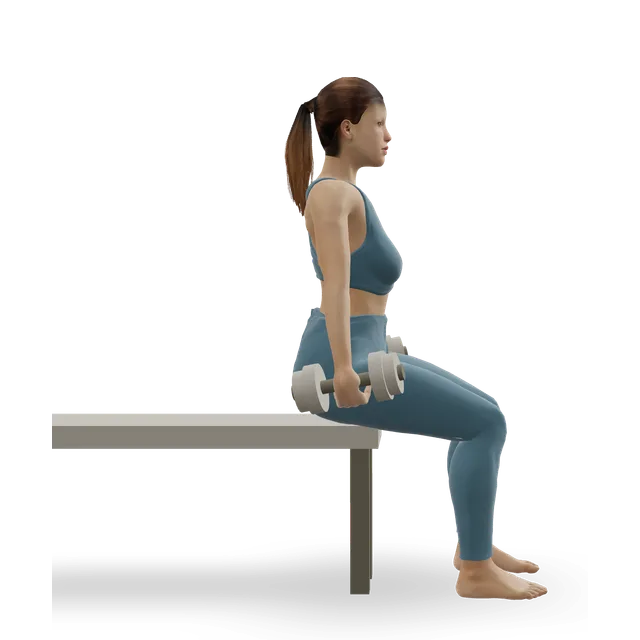
The NHS sitting exercises: an upper-body twist held for 5 seconds, 5 times each side; hip marching, 5 lifts each leg; a chest stretch held for 5 to 10 seconds, 5 times. Its strength routine: sit to stand 5 times, "The slower the repetitions, the better", and biceps curls with filled water bottles, which "can also be carried out while sitting", 3 sets of 5 with each arm. Its balance routine: a one-leg stand held for 5 to 10 seconds, 3 times each side, near a wall or a stable chair.

Sources 34, 35, 13

Our editorial starting point

Two or three chair Pilates sessions a week of 15 to 30 minutes, finishing standing at the chair whenever you can, with walking or wheeling on other days. If falls are a worry, add standing balance work 3 times a week.

Sources 34, 12, 11, 16

Make it harder in steps

More repetitions, a slower lowering, heavier bottles or a band; then the standing moves holding the chair; then fewer fingers on the chair. That follows the experts' advice to progress strength work and the NHS's to build up slowly; the order is our suggestion.

Sources 12, 34

If even light activity is hard

For people becoming frail who find light activity difficult, the UK guidelines note "emerging evidence that short periods of standing repeated hourly" help physical function.

Source 16

Choosing a chair

A solid chair without wheels

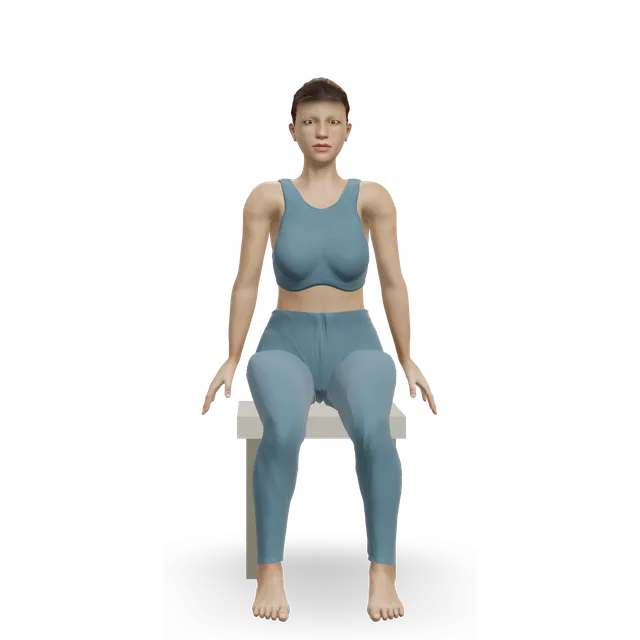
The NHS asks for "a solid, stable chair that does not have wheels", one "that will not slip on the surface it is on", where you can sit with your feet flat on the floor and your knees bent at right angles. It suggests a chair without arms, which would restrict your movement; its Pilates video asks for a flat, firm seat and backrest.

Sources 34, 35, 1

After a hip replacement

While you recover, the NHS says not to sit in a low chair or a chair without arms, not to bend your hip more than 90 degrees, not to bend down to touch your feet or ankles and not to sit with your legs crossed. Use the chair your team suggests.

Source 36

In a wheelchair

Put the brakes on. The UK guidelines note that some wheelchair users who do a lot of upper-limb or overhead activity are at risk of rotator cuff tears, so keep reaches at or below shoulder height if your shoulders hurt. Our guide to exercise for wheelchair users covers protecting your shoulders.

Source 16

Chair Pilates, chair yoga and mat Pilates

Chair yoga

They overlap a lot: breathing, sitting tall, twisting and side bending. Pilates puts more weight on trunk control and strength, and yoga on poses, breathing and relaxation. No trial has compared them, so choose the one you'll keep doing; our chair yoga guide covers the yoga version.

Sources 31, 33

Standing and mat Pilates

No trial has compared chair and mat Pilates either. Seated exercise did no better than standing, weight-bearing exercise, and the experts see the chair as a stage on the way to standing. Moving from the chair to standing work, then to the mat if getting down and up is safe for you, is a sensible ladder (our suggestion); our seniors guide covers mat and standing Pilates for older adults.

Sources 9, 12

The NHS sitting exercises

Chair Pilates includes the same kinds of moves (a seated twist, marching, a chest stretch), with more attention to breathing and trunk control.

Source 34

Weight, bones and other goals

Weight

Chair Pilates uses little energy. Pilates averages 2.8 METs (metabolic equivalents: multiples of the energy you use at rest) and seated or stretching video workouts 2.5, against 4.8 for brisk walking. The Older Adult Compendium has no Pilates entry; it lists chair yoga at 2.8 and chair-based conditioning classes at 3.8 on its scale for people over 60. Chair Pilates won't drive weight loss on its own; our Pilates for weight loss guide covers what helps.

Sources 14, 15, 37

Bones

Chair Pilates won't build bone: the UK consensus recommends resistance and impact exercise for bone, with back-strengthening and balance work for posture and falls. With osteoporosis, avoid rounding forward under load, use a hip hinge with a long back instead, and do back-strengthening lifts 3 to 5 times, held for 3 to 5 seconds. "Generally, Pilates is very safe and won't cause a spinal fracture", the Royal Osteoporosis Society says. Our Pilates for osteoporosis guide has every swap.

Sources 23, 38

Back pain, arthritis and MS

Our Pilates guides for back pain, arthritis and MS have the evidence for each. The two seated Pilates studies were both in people with MS.

Sources 5, 6

Seated moves to start with

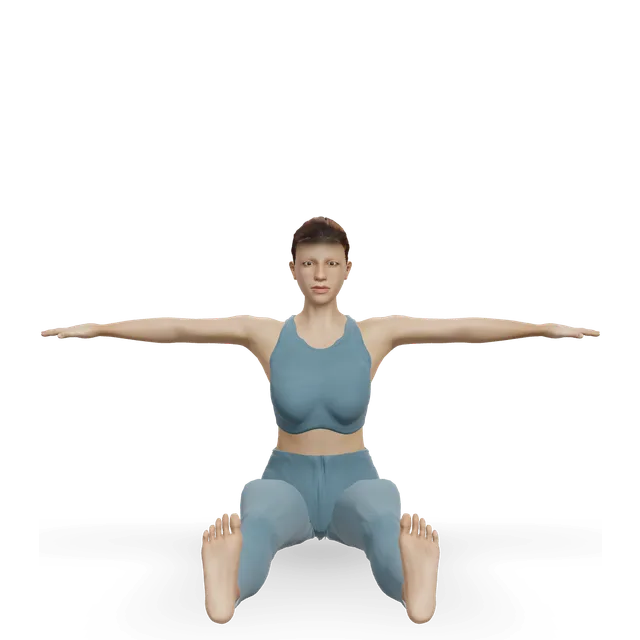
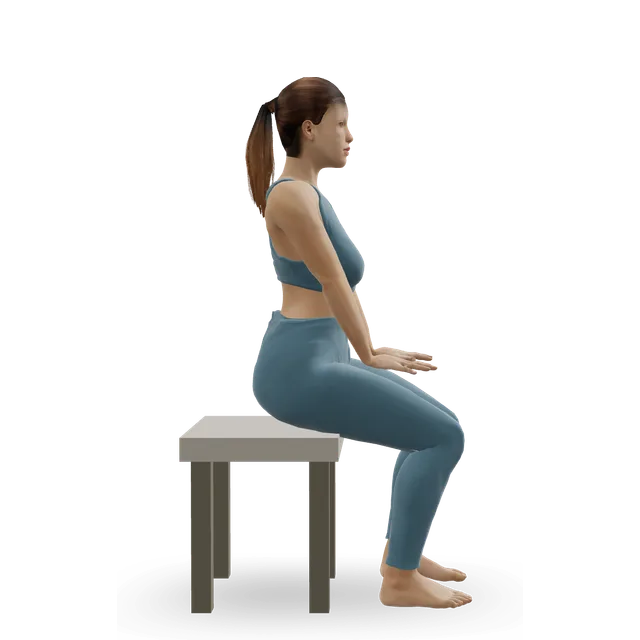
Sit near the front of a solid chair with your feet flat, and do the chin tuck, twist and breath reach seated even though the demos show them standing; our 15-minute seated class gives a starting dose for most of them.

Standing, holding the chair

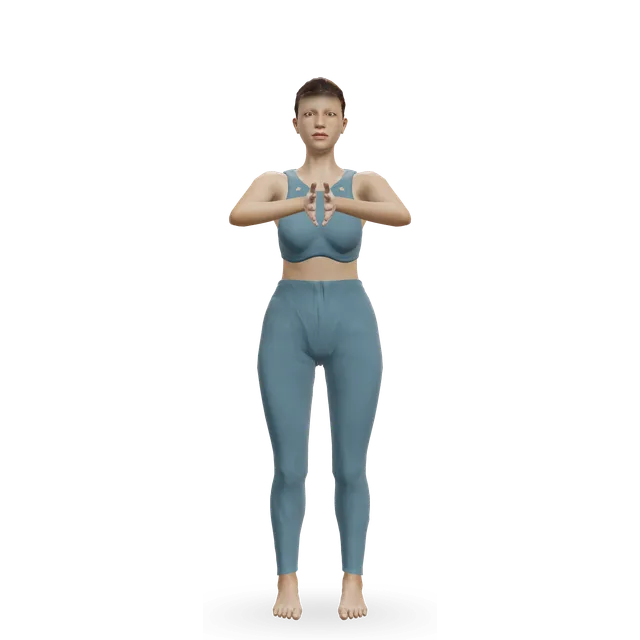
These are the moves that train standing balance: hold the back of a sturdy chair, start with the NHS doses (5 slow sit-to-stands, 5 calf raises, 5 side leg lifts each leg, one-leg stands of 5 to 10 seconds), and use fewer fingers on the chair as they get easier.

What to change or leave out

With osteoporosis

Swap seated forward folds that round your back under load for the table slide, a hinge from the hips with a long back. Smooth, comfortable twisting is fine, the UK consensus says. Each move's page has its osteoporosis caution.

Sources 23, 38

After a hip replacement

While you recover, keep the hip bend below a right angle, don't cross your legs, and skip moves that fold you forward towards your feet. In the leg sweep, don't cross the middle (our suggestion).

Source 36

With a sore shoulder

Keep reaches at or below shoulder height, and leave out overhead presses with weights: the NHS advises against making up strenuous exercises or using heavy gym equipment with shoulder pain. Our Pilates for shoulder pain guide has more.

Source 39

Dizziness and glaucoma

If you get dizzy when you stand up, or have glaucoma, skip head-down folds towards the floor and come up slowly (our suggestion, in line with the moves' own cautions).

Classes to follow

Start with the 15-minute seated class if you can't stand to exercise, or the 20-minute chair Pilates workout, which finishes standing, and add the balance routine on other days when you can.

Seated chair Pilates: 15 minutes, no standing

A 15-minute chair Pilates class done entirely sitting down, in a chair or wheelchair: breathing, spine moves, and leg and arm strength with water bottles.

15 minBeginner13 movesA bench or box, Something with weight

Chair Pilates workout

A 20-minute chair Pilates workout for beginners and older adults: breathing, sitting tall, gentle spine and leg moves, and a standing finish at the chair.

20 minBeginner14 movesA bench or box, Something with weight

Chair exercises for seniors: a seated workout

A 20-minute seated workout for older adults who cannot stand for long: marching, leg and arm strength, posture, and sit-to-stands that lead back to standing.

20 minBeginner11 movesA bench or box, Something with weight

Seated chair yoga: 15 minutes, no standing

A 15-minute chair yoga routine done entirely sitting: slow breathing, neck, shoulder and wrist stretches, seated twists and side bends, and a calm finish.

15 minBeginner16 movesA bench or box

Seated workout for MS: cardio, strength and stretches from a chair or wheelchair

A 25-minute workout done sitting, in a chair or wheelchair: seated cardio intervals, light strength work, posture and stretches, with pacing and cooling built in.

25 minBeginner14 movesA bench or box, A dumbbell

Wheelchair workout: seated cardio and shoulder-protecting strength

A 30-minute workout in your wheelchair: a warm-up, seated cardio, four shoulder exercises from a trial programme, and stretches for the front of the shoulders.

30 minBeginner14 movesA bench or box, A band

3-minute desk movement break

A 3-minute standing break to repeat every 30 to 60 minutes at your desk: sit-to-stands, calf raises, marching, an upper-back turn and chin tucks.

3 minBeginner5 movesA bench or box, A wall

Balance exercises routine

Balance practice in 10 minutes: tandem stance, single-leg stands, marches, heel walks, tree pose and floor transfers.

10 minBeginner7 movesA wall, A bench or box

A weekly plan

Walking, strength and balance across the week, built up gradually.

When to stop and get help

Stop and sit still if you feel

The Royal Osteoporosis Society's list for stopping exercise; call 111, or 999 in an emergency (911 in the US). The NHS video pages add: if symptoms worry you or don't go away, get help from 111 online or call 111.

  • sick
  • dizzy or light-headed
  • severely short of breath
  • clammy or sweaty
  • tightness in your chest
  • any pain

Sources 40, 1

Call 999 if

In the US, call 911.

  • You have chest pain that feels tight or like squeezing, or chest pain that spreads to your arms, neck or jaw, especially with shortness of breath, sweating or feeling sick: it could be a heart attack. Don't drive yourself to A&E.
  • Someone's face has dropped on one side, they can't lift both arms and keep them there, or their speech is slurred or confused: these are signs of a stroke. Call even if the signs stop.

Sources 41, 42

Dizzy when you stand up

Stand up slowly, sit back down if it happens, and tell your GP if it keeps happening: unexplained dizziness and falls need checking (our suggestion).

If you fall

Don't rush to get up. Lying on the floor for a long time causes harm, and up to 80% of people over 90 can't get up from the floor after a fall, so keep a phone or alarm within reach when you exercise alone. If you fall repeatedly, or have started avoiding activity because you're worried about falling, ask your GP about a falls service; NICE offers a falls assessment to people at higher risk.

Sources 11, 23, 27

Start with supervision if

You're frail, have moderate to severe dementia, have had a spinal fracture or fall regularly: the UK guidelines suggest starting with a trained professional. Experts on chair-based exercise also suggest a health check before starting a programme, and a leader trained to work with frail older people.

Sources 16, 12

Myths

"Chair Pilates is too easy to help"Emerging evidence

Chair-based exercise built strength in trials: about 2 kg more grip, 3 more arm curls and 2 more chair stands in 30 seconds across 25 studies, and better arm and leg endurance in older women. Make it harder over time so it keeps helping.

Sources 7, 8, 12

"Chair Pilates improves balance and prevents falls"Emerging evidence

Seated exercise didn't change standing balance or walking speed in trials. Fewer falls come from standing exercise that challenges balance, and a Cochrane review counted seated flexibility programmes as usual care.

Sources 9, 7, 10, 28

"Chair Pilates builds bone"Mixed evidence

No chair Pilates study has measured bone, and sitting takes the load off your bones. The UK consensus recommends resistance and impact exercise for bone.

Sources 4, 23

"Chair Pilates is only for older people"

The NHS video is for anyone who finds the floor difficult, the seated Pilates studies were in people with MS, and the UK guidelines count chair exercise as being active, not as sitting still.

Sources 1, 6, 16

"Chair Pilates burns lots of calories"Strong evidence

Pilates averages 2.8 METs and seated video workouts 2.5, about the same as walking slowly; brisk walking is 4.8.

Sources 14, 15

Questions people ask

What is chair Pilates?

Pilates-based exercise done sitting on a chair, or standing and holding it for support, for people who find getting down to the floor hard or can't stand for long. In a studio, a "chair" class can instead mean the Wunda chair, a spring-loaded box with a pedal that Joseph Pilates designed, which is a harder workout. Check which one a class means before you book.

Is chair Pilates good for seniors?

It's a good way in, especially if the floor is difficult, and chair-based exercise builds some strength: across 25 studies of adults over 50, grip strength rose by about 2 kg, with more arm curls and chair stands. It didn't improve standing balance or walking speed, so add standing moves, holding the chair, as soon as you can. Our seniors guide covers Pilates for older adults more widely.

Does chair Pilates work?

For strength and flexibility, chair-based exercise in general does: in older women it improved arm and leg endurance and flexibility across 10 trials. Chair Pilates itself has barely been tested: one small online pilot in MS and one study of 15 wheelchair users, neither with a group that didn't do Pilates. Experts also expect it to help mood, coordination and some daily activities.

Can chair Pilates improve balance or prevent falls?

It can improve sitting balance, but not standing balance on its own: seated exercise had "no effect on balance or mobility" in 14 trials, while seated reaching helped balance after a stroke. Fewer falls come from standing exercise that challenges your balance, 3 or more times a week. Finish at the back of the chair, and ask your GP about a falls service if you fall repeatedly.

Is chair Pilates good for weight loss?

Not on its own: Pilates uses about 2.8 METs and seated video workouts 2.5, the same as walking slowly, against 4.8 for brisk walking. It can build strength and make everyday movement easier. Our Pilates for weight loss guide covers what helps.

Is chair Pilates good for osteoporosis?

Yes, as long as it avoids rounding forward under load. The UK consensus recommends back-strengthening exercises held for 3 to 5 seconds and repeated 3 to 5 times, and alternatives to the Pilates roll-down and curl-up, such as a hip hinge with a long back. It won't build bone, which needs resistance and impact exercise; our osteoporosis guide has more.

Is chair Pilates or chair yoga better?

No trial has compared them. They overlap a lot; Pilates puts more weight on trunk control and strength, and yoga on poses, breathing and relaxation. Chair yoga has more trials, including a UK trial of 454 older adults in which it was safe but didn't improve quality of life, so pick the one you'll keep doing.

What kind of chair do I need for chair Pilates?

A solid, stable chair without wheels that won't slip, where you can sit with your feet flat and your knees at right angles; the NHS suggests one without arms so they don't restrict your movement. After a hip replacement, use a chair with arms while you recover. In a wheelchair, put the brakes on.

Can I do chair Pilates in a wheelchair?

Yes: in 15 wheelchair users with MS, 12 weeks of Pilates improved sitting balance, posture and shoulder and back pain, though there was no comparison group. Put the brakes on, and keep reaches at or below shoulder height if your shoulders hurt. Our guide to exercise for wheelchair users covers protecting your shoulders, which carry a lot of load.

Can I do chair Pilates at my desk?

Short seated moves are a good way to break up long periods of sitting, which the UK guidelines recommend. Workplace Pilates trials used full classes, not desk breaks: pooled, they reduced disability, but the drop in pain wasn't clear. Our 3-minute desk movement break is a quick option.

How often should I do chair Pilates?

At least twice a week, as the NHS suggests for its sitting exercises, building up the repetitions over time. Experts suggest sessions of at least 10 minutes and no more than an hour, with strength work that gets harder. Walk or wheel on other days too, because chair Pilates is gentle on the heart and lungs.

Is chair Pilates safe?

Chair-based exercise was feasible and safe in care homes, and a large chair yoga trial had no serious related harms. Stop and sit still if you feel sick, dizzy, very short of breath, clammy, or have chest tightness or any pain, and call 999 for chest pain that feels tight or spreads to your arms, neck or jaw. Start with a trained professional if you're frail, have had a spinal fracture or fall regularly.


Sources

  1. NHS · Chair-based Pilates video workout (past its review date: reviewed August 2022, review due August 2025)
  2. Pilates Method Alliance · Pilates history
  3. Pilates Method Alliance · Beginner's guide to Pilates equipment, from the reformer to the Cadillac
  4. PubMed · Our search for studies of chair or seated Pilates, wheelchairs and care homes (25 October 2026)
  5. Adamson 2025 · Online seated Pilates in multiple sclerosis: 22 people (pilot trial, Adapt Phys Activ Q)
  6. van der Linden 2014 · Pilates for 15 wheelchair users with multiple sclerosis (uncontrolled study, Disabil Rehabil)
  7. Klempel 2021 · Chair-based exercise and physical function in adults over 50: 25 studies (systematic review and meta-analysis, Int J Environ Res Public Health; read in full)
  8. Gao 2025 · Chair-based exercise in women after the menopause: 10 trials (meta-analysis, BMC Geriatr; read in full)
  9. Sexton 2019 · Seated exercise for older adults: 14 trials (systematic review and meta-analysis, Australas J Ageing)
  10. Sherrington 2019 · Exercise for preventing falls in older people living at home (Cochrane systematic review)
  11. Montero-Odasso 2022 · World guidelines for falls prevention and management for older adults (guideline, Age Ageing; exercise sections read in full)
  12. Robinson 2014 · Principles of chair-based exercise for older people: 16 experts (Delphi consensus, BMC Geriatr; read in full)
  13. NHS · Balance exercises
  14. Compendium of Physical Activities · 2024 Adult Compendium: conditioning exercise, including Pilates (energy costs)
  15. Compendium of Physical Activities · 2024 Adult Compendium: walking (energy costs)
  16. UK Chief Medical Officers · Physical activity guidelines (Department of Health and Social Care, updated July 2026)
  17. NHS · Physical activity guidelines for older adults
  18. Eichenberger-Archer 2006 · Chair Pilates offers alternative for older adults: STOTT PILATES' Armchair Pilates (IDEA Health & Fitness Association)
  19. Panhan 2021 · Trunk muscle activity in Wunda chair exercises (lab study, J Bodyw Mov Ther)
  20. Güngör 2026 · One session on the reformer, Cadillac or Wunda chair in 15 women (crossover trial, Healthcare)
  21. Cordes 2021 · Chair-based exercise in nursing homes: 10 studies (systematic review, J Am Med Dir Assoc)
  22. Mackie 2023 · Seated exercise and balance after a stroke: 7 trials (systematic review and meta-analysis, Clin Rehabil; read in full)
  23. Brooke-Wavell 2022 · Strong, steady and straight: UK consensus on exercise for osteoporosis (Br J Sports Med; recommendations read in full)
  24. Mason 2020 · Treatments for shoulder pain in manual wheelchair users: 21 studies (scoping review, Clin Rehabil; results and discussion read in full)
  25. Efendi 2023 · Chair-based band exercise in long-term care: 9 trials (systematic review and meta-analysis, Int J Nurs Sci)
  26. Anthony 2013 · Chair-based exercise for frail older people: 6 studies (systematic review, Biomed Res Int)
  27. NICE NG249 · Falls: assessment and prevention in older people and in people 50 and over at higher risk (guideline, 2025)
  28. Dyer 2025 · Ways to prevent falls in older people in care homes (Cochrane systematic review; read in part)
  29. Trigonis 2026 · Pilates at work: 23 studies of workers (systematic review, Healthcare; read in full)
  30. Tsartsapakis 2026 · Pilates in the workplace: 12 trials (meta-analysis, J Funct Morphol Kinesiol)
  31. PubMed · Our search for studies comparing Pilates and chair yoga (25 October 2026)
  32. Park 2017 · Chair yoga for 131 older adults with knee or hip arthritis (RCT, J Am Geriatr Soc)
  33. Tew 2024 · Chair-based yoga for 454 older adults with several long-term conditions (RCT, Health Technol Assess)
  34. NHS · Sitting exercises
  35. NHS · Strength exercises
  36. NHS · Recovering from a hip replacement
  37. Compendium of Physical Activities · Older Adult Compendium: energy costs for adults aged 60 and over (activity list, 2024)
  38. Royal Osteoporosis Society · Pilates and osteoporosis (past its review date: reviewed February 2019, review due February 2022)
  39. NHS · Shoulder pain (past its review date: reviewed May 2023, review due May 2026)
  40. Royal Osteoporosis Society · How to exercise safely for bones
  41. NHS · Heart attack
  42. NHS · Symptoms of a stroke

Exercise education, not a personal prescription, and clinical review of these guides is pending. If you are pregnant, have a health condition or have had recent surgery, check with a doctor, midwife or physiotherapist before starting, and stop for sharp or increasing pain. Health disclaimer.