Strength at home
Wheelchair workout: seated cardio and shoulder-protecting strength
Everything is done sitting, in your wheelchair with the brakes on or on a sturdy chair. You need a light resistance band, something solid to anchor it to, and a light dumbbell or a filled water bottle. The strength block uses the four strengthening exercises from STOMPS, a home programme of shoulder strengthening and stretching that cut long-standing shoulder pain to about a third in a randomised trial of manual wheelchair users with paraplegia. Taught to people without shoulder pain, it was followed by fewer new cases than in an earlier group of patients, though that comparison wasn't randomised. The cardio and the rest of the session are our editorial suggestion, using the spinal cord injury exercise guidelines. If your injury is at the sixth thoracic level (T6) or above, empty your bladder first, and stop if you get a pounding headache or flushing above your injury.
Warm-up (about 4 minutes)
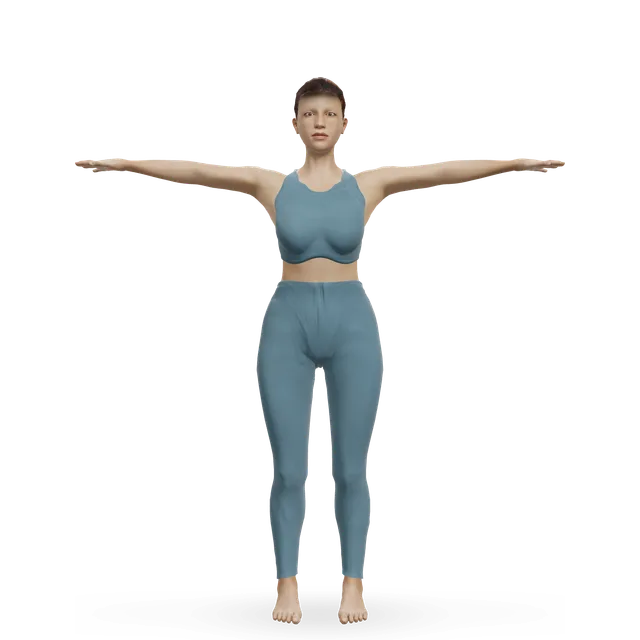
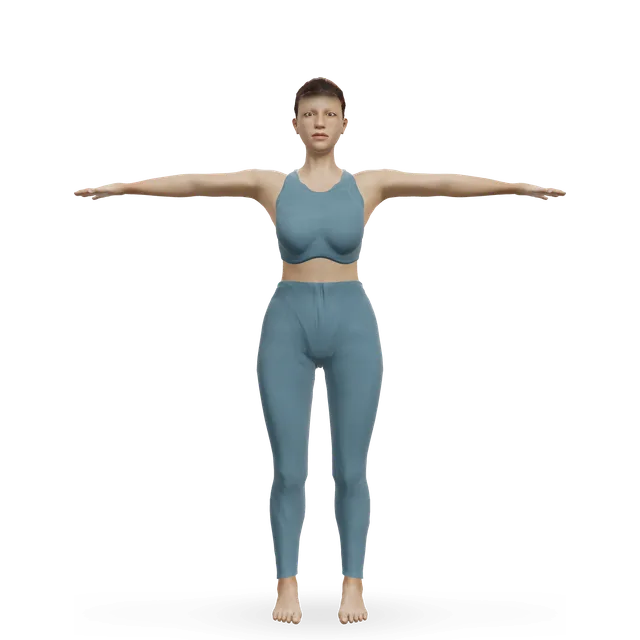
- Seated march2 minBeginner · Hip flexors, Quads, Abs · 3D demoSwing your arms as you march. If your legs don't move, swing the arms only, or wheel forwards and backwards insteadHarder: Standing march
- Shoulder rolls10 each wayBeginner · Shoulders, Back, Neck · 3D demoHarder: Shoulder CARs (controlled articular rotations)
- Arm circles10 each wayBeginner · Shoulders, Back · 3D demoSmall circles; lower your arms if the shoulder pinchesHarder: Shoulder CARs (controlled articular rotations)


Seated cardio intervals (about 8 minutes)
3 rounds · Rest 30 to 60 s of easy breathing between rounds
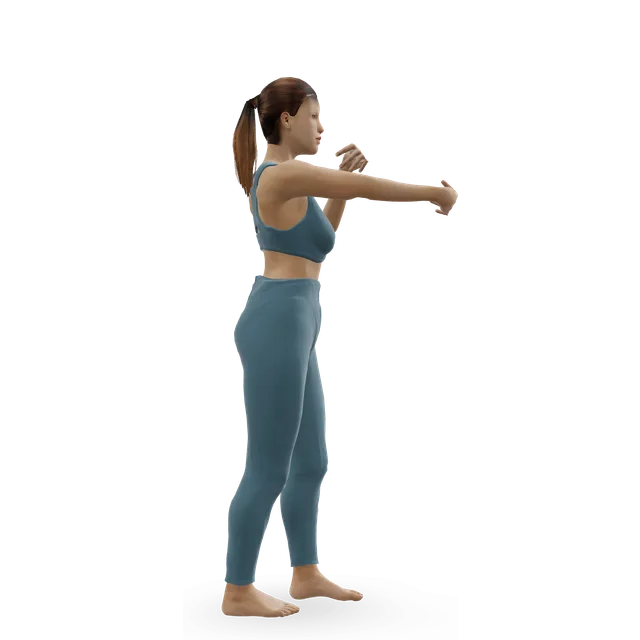
- Beginner · Shoulders, Triceps, Chest · 3D demoSeated: punch forwards at chest height, at a talk-but-not-sing effortHarder: Step jack (low-impact jumping jack)
- Seated march1 minBeginner · Hip flexors, Quads, Abs · 3D demoPump the arms as if running; arms only if your legs don't moveHarder: Standing march
Shoulder strength (about 12 minutes)
3 rounds · Rest 60 s between rounds
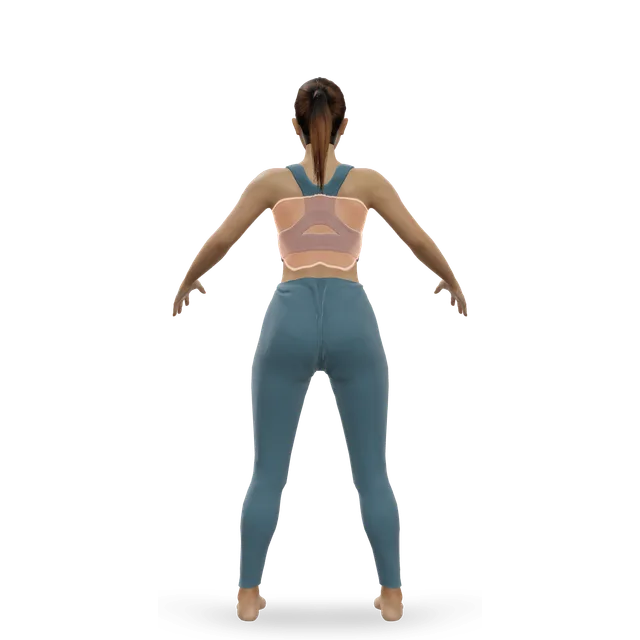
- Band row15Beginner · Back, Biceps, Shoulders · 3D demoBand anchored at chest height in front of you; draw your shoulder blades back, elbows close to your sidesHarder: Supported single-arm dumbbell row
- Standing band external rotation8 each armBeginner · Shoulders, Back · 3D demoSit side-on to the anchor at elbow height, elbow tucked at your side and bent to a right angle; turn the forearm outHarder: Side-lying external rotation
- Beginner · Back, Chest, TricepsBand anchored above you; start with straight arms at shoulder height and pull down to your sidesHarder: Band pull-apart
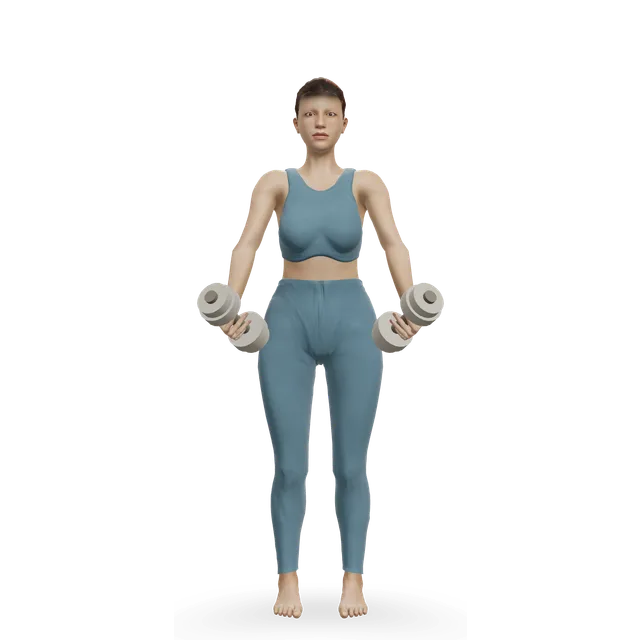
- Beginner · Shoulders, Chest · 3D demoA light weight; thumbs up, arms slightly forward of sideways, no higher than your shouldersEasier: Band lateral raiseHarder: Smith machine upright row
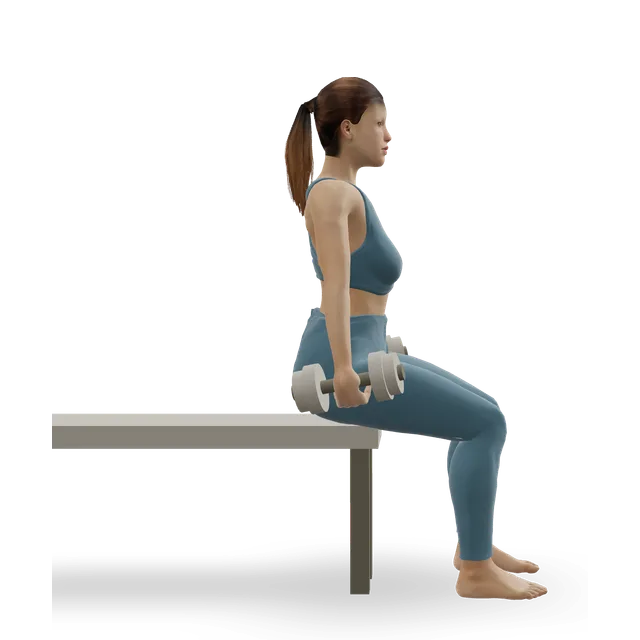
- Beginner · Biceps, Forearms · 3D demoOptional. Light dumbbells or filled water bottlesHarder: Dumbbell biceps curl


Stretches (about 5 minutes)
- Doorway chest opener30 s each sideBeginner · Chest, Shoulders · 3D demoWheel side-on into a doorway, forearm on the frame with the elbow at or below shoulder height, and turn your chest awayEasier: Elbows backHarder: Fish pose (Matsyasana)
- Cross-body shoulder stretch30 s each sideBeginner · Shoulders, Back · 3D demoHarder: Sleeper stretch
- Thoracic rotation5 each sideBeginner · 3D demoArms crossed; keep a hand on the wheel or armrest if your trunk balance is limitedEasier: Side-lying open bookHarder: World's greatest stretch




Tips
- Do the strength block 3 times a week with a rest day between. In the prevention study, people who did the exercises about 3 times a week in the first months were more likely to stay free of shoulder pain than those who did them about twice.
- Start with 2 rounds and a light band. Over 2 to 4 weeks, build to 3 rounds, then choose a band or weight that makes the last couple of reps hard.
- The exercises shouldn't hurt. If one brings on shoulder pain, leave it out and ask a physiotherapist to look at your shoulder, your transfers and how you push.
- Check the band for nicks, anchor it on the hinge side of a closed door or to something that can't move, and tug-test it before each set.
- If you have an arm bike, you can swap the cardio block for 10 minutes on it. For your heart and fitness, aim for 20 minutes of seated cardio twice a week, building to 30 minutes 3 times a week: an arm bike, hand bike, wheeling or swimming all count.
- If your injury is at T6 or above, empty your bladder, check your catheter isn't kinked and the bag isn't full, loosen anything tight, and keep cool with a fan, water spray and cold drinks. Stop and sit upright if you get a pounding headache, flushing or sweating above your injury, or a stuffy nose, and look for the cause.
- Lean forwards or to the side every so often to take the pressure off your skin, and check your skin afterwards.
- Call 999 if dysreflexia doesn't settle once you've dealt with the cause, or for chest pain that feels tight or spreads to your arms, neck or jaw.
The doses are suggested starting points, not a prescription. Choose a range you can control and stop for sharp or increasing pain, numbness or tingling. Get individual advice after an injury or surgery, or if you are pregnant or managing a health condition.
Guides that recommend it
Find more moves like these
More strength at home




Beginner bodyweight workout
A 20-minute full-body workout with no equipment: squats, knee push-ups, bridges, lunges and planks.
20 minBeginner10 movesNo equipment


Full-body bodyweight workout
An intermediate no-equipment workout: push-ups, split squats, single-leg bridges, pike push-ups and core work.
30 minIntermediate11 movesNo equipment


Full-body dumbbell workout
A 35-minute full-body strength workout with dumbbells: goblet squats, presses, rows, Romanian deadlifts and carries.
35 minIntermediate9 movesA band, A dumbbellQuestions people ask
How long does the wheelchair workout: seated cardio and shoulder-protecting strength take?
About 30 minutes, including any warm-up and cool-down listed. Shorten it by doing fewer rounds; lengthen it by adding one.
What equipment do I need?
You need: A bench or box, A band, An anchor point, A dumbbell, A wall. Each move links to its guide, where you can find an alternative if you are missing something.
Is it suitable for beginners?
It is written for beginners. 3 of its 14 moves have an easier option listed beside them if you need one.
How do I make it easier or harder?
Use the easier or harder option listed under each move, change the number of rounds, or adjust the rest. Progress one change at a time.