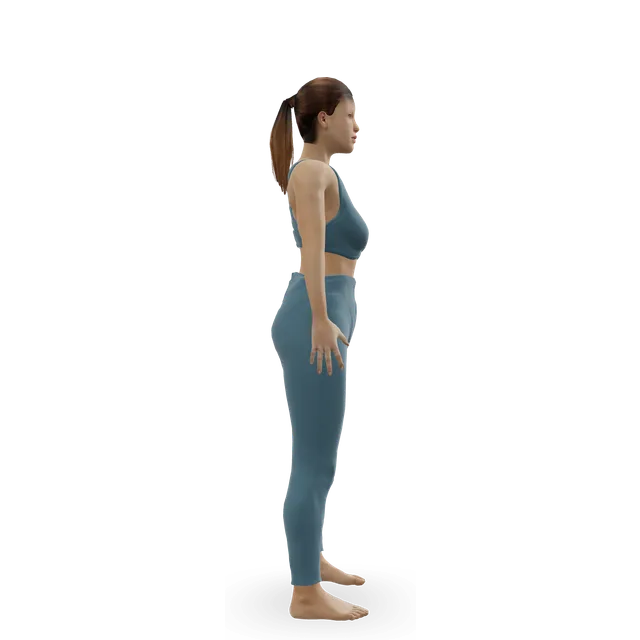
Pilates for kyphosis: a rounded upper back, back-extension strength, posture with age, osteoporosis swaps and the classes to follow
Kyphosis is the forward curve of your upper back; when it's bigger than usual, your back looks rounded or hunched. Pilates has a family of moves that strengthen the muscles along your spine, and that kind of exercise reduced an age-related curve by about 3 degrees in the best trial. It won't reshape bones that have fractured or grown wedge-shaped, and in the only mat Pilates trial in older women, the curve didn't change more than in women who didn't do Pilates.
Pilates sits beside care from your GP, and your osteoporosis team if your bones are fragile, never in place of it. This guide covers the kinds of kyphosis and when a new hunch needs a GP, what the trials show in teenagers and older adults, the moves to build on, the swaps if you have osteoporosis or have had a spinal fracture, and which of our classes to follow.
A curve over about 40 degrees is called hyperkyphosis, and 20% to 40% of older adults have one. The NHS describes three main kinds: postural (a slouch, most often in teenagers), Scheuermann's (wedge-shaped bones in the spine) and congenital (rare).
A hunch isn't always osteoporosis: only about a third of older adults with the most curved backs had spinal fractures. But height loss of 4 cm or more, a curved back, or sudden back pain with risk factors are reasons to check for them.
In the best trial, 6 months of back-strengthening and posture classes 3 times a week reduced the curve by 3 degrees, about the change one spinal fracture causes, and some of it was lost after the classes stopped. Across 24 studies, exercise reduced the curve by a small amount.
The NHS says physiotherapy exercises can help back pain and stiffness, "But they will not improve the curve in your spine or stop it getting worse". Aim for strength, comfort and function rather than an angle.
In teenagers with a rounded upper back, short Pilates sessions in physical education (PE) lessons reduced the curve by 5.6 degrees against a control group. In the only mat Pilates trial in older women, the curve fell within the Pilates group, but not by more than in the control group.
With osteoporosis, strengthen your back and don't load the rounding
A UK consensus recommends back-strengthening exercises, 3 to 5 repetitions held for 3 to 5 seconds at least twice a week, and modifying or avoiding sustained, repeated or deep rounding, including alternatives to the Pilates roll-down and curl-up.
The upper back's curve averages 20 to 29 degrees up to your late twenties. An angle "greater than 40°, which is the 95th percentile of normal for young adults, is defined as hyperkyphosis", though there's no agreed cut-off for older adults; a 2020 review suggests 50 degrees or more on a standing X-ray.
The curve grows after 40, faster in women: from an average of 43 degrees at 55 to 60 to 52 degrees at 76 to 80. In later life it comes from disc wear, weaker back muscles and spinal fractures; each new compression fracture adds about 4 degrees.
Postural kyphosis "often affects teenagers. It's the most common type". In Scheuermann's kyphosis, the back of the bones in the spine grow quicker than the front, which "makes the vertebrae wedge-shaped". Congenital kyphosis, from a spine that doesn't develop properly before birth, is rare. The NHS says "Do not self-diagnose".
A postural curve straightens when you stand tall or lie down; a structural one doesn't, which is one reason a stiff or sharp curve needs a GP. Our kyphosis guide covers how a curve is measured and two self-checks.
What Pilates offers
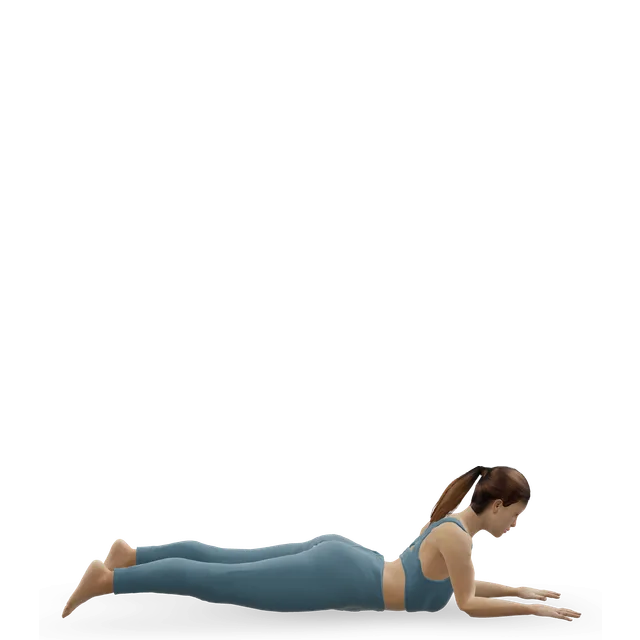
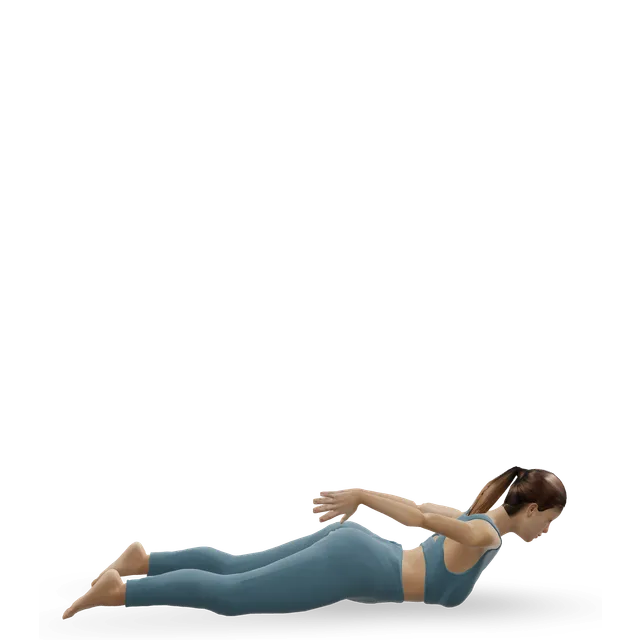
The Pilates mat order has a family of back-extension moves (the swan, single-leg kick, double-leg kick and swimming), and teacher-training schools such as STOTT PILATES teach breathing into the back and sides of the ribs, rib and shoulder-blade position and head position. It also has many rounding moves (the roll-up, roll-over, rolling like a ball, spine stretch and saw) that the UK consensus asks people with osteoporosis to change.
In 1,407 adults aged 50 to 96, only about 36% to 37% of those with the most curved backs had spinal fractures; disc wear was more common. The authors still advised checking people with a marked curve for an osteoporotic fracture.
The UK osteoporosis guideline says most spinal fractures "do not currently come to medical attention". It recommends checking for them in women after the menopause and men aged 50 or over with 4 cm or more of height loss, kyphosis, long-term steroid tablets, or sudden back pain with risk factors for osteoporosis. The Royal Osteoporosis Society says spinal fractures sometimes "don't cause the pain you'd expect from a broken bone".
The Royal Osteoporosis Society says "spinal fractures caused by osteoporosis do not cause paralysis". They heal in 6 to 12 weeks in their new compressed shape, and several can cause an outward curve at the top of the spine, breathlessness and a squashed, bloated feeling in the stomach.
If you notice a new or increasing hunch, height loss or back pain you can't explain, see your GP. Osteoporosis medicines reduce the risk of further fractures; Pilates sits alongside them, not in place of them.
Exercise reduces an age-related curve a littleEmerging evidence
Across 24 studies in adults aged 45 and over with a curve of 40 degrees or more, exercise reduced kyphosis by a small amount (moderate certainty), with small gains in quality of life and pain; falls weren't reduced, and there were no serious side effects. A 2025 analysis of 19 studies (1,084 people) found a small to moderate effect, at low certainty.
The best trial: about 3 degrees in 6 monthsEmerging evidence
In the SHEAF trial (Study of Hyperkyphosis, Exercise and Function), 99 adults aged 60 to 88 with a curve of 40 degrees or more did physiotherapist-led group classes of spine strengthening, posture training and mobility, 1 hour 3 times a week for 6 months. Their curve fell 3 degrees more than in a health education group, "approximating the magnitude of change from an incident vertebral fracture", and their self-image improved; physical function didn't change. People with calcified spinal ligaments (diffuse idiopathic skeletal hyperostosis, or DISH) didn't improve, and in the 6 months after classes stopped the curve crept back by 1.6 degrees. There were no serious side effects.
One review of 28 trials found short programmes helped younger people much more than older people, and judged longer programmes ineffective in older adults. Strengthening the back seems to matter more than stretching the chest. Adding breathing techniques helped teenagers more than older adults, in 5 small studies.
In 236 pupils, 15 minutes of Pilates twice a week in PE for 9 months stopped the upper-back curve increasing as it did in their classmates. In 103 teenagers with a rounded upper back, the same kind of programme for 38 weeks reduced the curve by 5.6 degrees against a control group. Both trials come from one research group; a 2024 review rated the evidence in children and teenagers moderate.
In the only mat Pilates trial in older women with a rounded upper back (31 women aged 60 to 75, twice a week for 8 weeks), the Pilates group's curve fell by 6 degrees, but the paper reports no difference against the control group (p = 0.723). We read that from the paper's text, as its results table is an image. In 20 women aged 55 to 65, water-based Pilates reduced the curve by about 2 degrees against no exercise, in a trial registered after it ran. Other studies are small and had no control group, and a trial of reformer Pilates is still recruiting.
Back strength and later fracturesEmerging evidence
In a small follow-up of 50 women, those who had done 2 years of back-strengthening exercise had fewer spinal fractures 8 years later (1.6% of vertebrae against 4.3%).
In 1,883 older adults, a hyperkyphotic posture went with more injurious falls, and in 72 people followed for a year, a bigger curve went with more falls. Most, but not all, studies agree. These are links, not proof that the curve causes falls; balance and strength training are what reduce falls.
Older women with hyperkyphosis have a 70% higher risk of a future fracture, whatever their age or past fractures, and in 1,353 older adults a hyperkyphotic posture went with earlier death. Again, these are associations.
The NHS says a severe curve can cause "very bad back pain and difficulty breathing", and the UK consensus recommends breathing exercises for symptoms made worse by a severe curve.
With osteoporosis: 3 to 5 repetitions held for 3 to 5 seconds, at least twice a week (the UK consensus). Without osteoporosis or past fractures, build over about 6 weeks towards the SHEAF trial's "somewhat hard" effort.
SHEAF's classes ran 3 times a week for 6 months, and some of the change faded when they stopped. Our editorial starting point is 2 or 3 sessions a week, kept up.
The UK osteoporosis guideline recommends regular weight-bearing and muscle-strengthening exercise. Pilates covers back and trunk strength and some balance; walking and leg strength work add the rest.
Seated upper-back lift, 3 to 5 repetitions held 3 to 5 seconds, at least twice a week (the move's page, from the UK consensus); chin tuck, 5 holds of 3 to 5 seconds; wall angel, 8 slow slides, in a small range if your back is very curved (our kyphosis exercises for seniors routine).
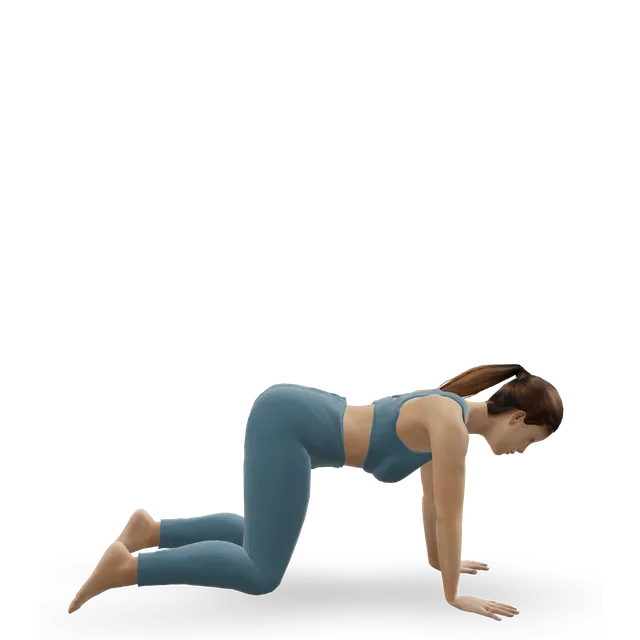
With osteoporosis, swan and swimming as small, slow lifts, 3 to 5 each held 3 to 5 seconds (our Pilates for osteoporosis class); without it, swan 5 to 6 repetitions, swimming 2 to 3 sets of 20 to 30 seconds and the single-leg kick 6 to 8 each leg (the moves' pages). Low cobra, 5 lifts held 3 to 5 seconds; prone Y-T-W, 5 of each letter; bird dog, 8 each arm and leg, then the full move (our kyphosis exercises for seniors routine). The double-leg kick, 4 to 5 each side (the move's page), only without osteoporosis or past spinal fractures.
Band row, 3 sets of 10 to 15; knee hover, 3 holds of 15 to 30 seconds (the moves' pages); band pull-apart, 2 sets of 12 to 15 (our Pilates for posture class).
Side-lying open book, 8 to 10 slow openings each side; thoracic rotation, 6 each side; cat-cow, 8 slow waves (the moves' pages); doorway chest opener, 2 holds of 30 seconds each side (our Pilates for posture class). The foam roller, 5 to 8 slow breaths at each of 3 or 4 spots (the move's page), only without osteoporosis or spinal fractures.
Sit to stand, 8 to 10 slow reps; hip hinge, 8 slow reps; single-leg stand, 2 holds of 20 to 30 seconds each leg beside a wall (our Pilates for osteoporosis class).
"Movements or exercise that involve sustained, repeated or end-range flexion should be modified or avoided." "As a precaution, alternatives to exercises such as the 'roll down' and 'curl up' in Pilates should be considered", though people who move comfortably and smoothly can continue. "Rotation (twisting) movements should be safe if performed smoothly and comfortably." After a spinal fracture, "Yoga and Pilates and similar exercise programmes should be considered to help with posture and pain", led by an instructor trained to work with older people or osteoporosis.
The UK osteoporosis guideline recommends back-extensor strengthening after a spinal fracture and, when you're in pain, starting "in an unloaded position", such as lying on your back. In trials after a spinal fracture, exercise made standing up and walking a short distance about 1 second quicker; effects on fractures and falls are very uncertain.
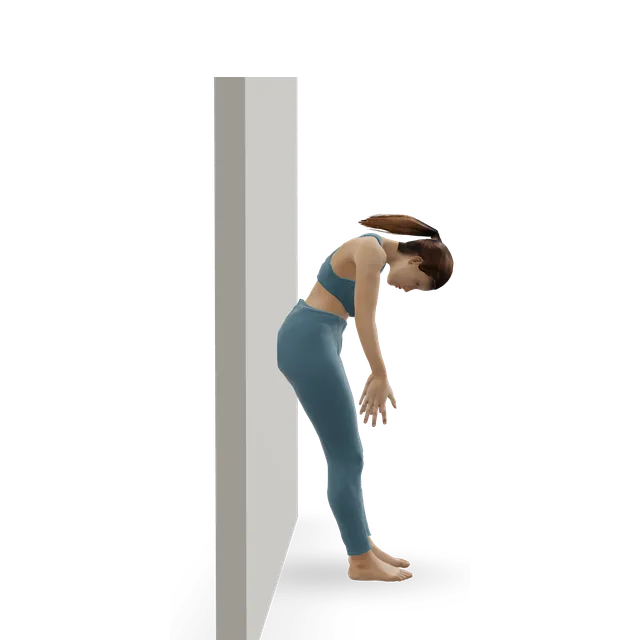
The roll-down at a wall with your hands on your thighs, or the cat; knee folds instead of the hundred, roll-up and leg stretches; hip rolls with your feet down; no roll-over; a hip hinge instead of the spine stretch and saw; and a spine curl that stops short of a full shoulder bridge.
With osteoporosis, a UK consensus suggests, as a precaution, alternatives to the Pilates roll-down and curl-up; people who already move comfortably and smoothly can continue.
With osteoporosis, a UK consensus suggests, as a precaution, considering alternatives to Pilates curl-ups like this one, such as a dead bug with the head down; people who already move comfortably and smoothly can continue.
Smooth, comfortable twisting should be safe. At a high risk of fracture, Osteoporosis Canada says to avoid or change forward bending, side bending and twisting in Pilates, so keep the spine twist and mermaid small or leave them out.
In a small 1984 study, 89% of women with spinal osteoporosis taught bending-forward exercises had new spinal fractures, against 16% of those taught back-extension exercises. The groups weren't randomised, so treat it as a warning rather than proof; the UK guideline asks for repeated forced forward bending to be done with care.
The Royal Osteoporosis Society suggests advice before you start if you:
have spinal fractures that are causing pain and other symptoms
have broken many bones
are recovering from a broken bone
are having problems exercising because of other medical conditions
have had many falls
Teenagers and Scheuermann's
A slouch or Scheuermann's?
A teenage slouch is usually postural kyphosis, which straightens when they stand tall. Scheuermann's is a stiff curve from wedge-shaped bones. The NHS says a child's curve "may get worse until they've stopped growing", and a specialist may suggest a brace for mild to moderate Scheuermann's.
Short Pilates sessions in PE lessons kept the curve from increasing in 236 pupils and reduced it by 5.6 degrees in 103 teenagers with a rounded upper back. Our Pilates for teenagers guide covers classes for this age.
The only exercise trial we found compared Schroth exercises with general exercises in 50 young adults with Scheuermann's over a year, with a small advantage for Schroth on the curve. No trial has tested Pilates. Follow your specialist's plan; Pilates can be general strength and mobility alongside it.
Without osteoporosis, start with Pilates for posture (20 minutes), which has back extension and no loaded rounding. In later life, the kyphosis routine follows the SHEAF trial's mix, 3 times a week. With osteoporosis, use Pilates for osteoporosis, which has the Royal Osteoporosis Society's swaps. If getting down to the floor is hard, use chair Pilates.
These are the warning signs from our kyphosis, Pilates for posture and Pilates for osteoporosis guides, word for word. This is general information, not a diagnosis. A&E means accident and emergency; in the US, call 911 for 999.
Call 999 or go to A&E (911 in the US)
Get emergency help for back pain with any of these:
Pain, tingling, weakness or numbness in both legs.
Numbness or loss of feeling around your genitals or bottom.
Changes in bladder or bowel control, or in sexual sensation or function.
Call 999 or go to A&E: new problems walking, loss of bladder or bowel control, or a sudden loss of coordination, such as difficulty doing up buttons. These can be signs of pressure on the spinal cord.
Get an urgent GP appointment or call NHS 111
Get advice soon (in the US, your doctor or urgent care) for back pain with any of these:
You feel hot, cold, shivery or generally unwell.
Severe pain that starts suddenly or gets worse quickly.
See your doctor about unexplained back pain, especially in the upper back, or a change in body shape such as losing height or a more curved back. These can be signs of a spinal fracture, though not all spinal fractures hurt.
Unexplained back pain with muscle spasms, loss of height, or a curved spine or change in posture: a possible osteoporotic spinal fracture, more likely with older age or long-term steroid tablets.
Nerve problems with a spinal fracture need urgent specialist care.
See a GP if you think your child might have kyphosis. A curve can get worse until growth stops, and a stiff, sharp or painful curve that doesn't straighten when standing tall isn't a simple slouch. Rarely, a curve that keeps growing causes weakness, numbness or tingling in the legs, bladder or bowel changes, or difficulty breathing.
The NHS advises getting advice from a healthcare professional first if you have a health problem, an injury or symptoms, or have recently had a heart attack or an operation.
Myths
"Kyphosis can't change after 50"Emerging evidence
In adults aged 60 to 88, 6 months of classes reduced the curve by 3 degrees, and 24 studies agree on a small effect.
"Pilates will straighten a hunched back"Strong evidence
The NHS says exercise won't improve the curve itself, the best trial found 3 degrees, the only mat Pilates trial in older women found no difference against control, and fractured bones heal in their compressed shape.
"You can't do Pilates with osteoporosis"Strong evidence
The UK consensus suggests Pilates even after a spinal fracture, with alternatives to roll-downs and curl-ups, and the Royal Osteoporosis Society gives the swaps.
It can strengthen your back and help comfort and posture, but it won't reverse a fixed curve. In older adults, back-strengthening classes reduced the curve by about 3 degrees in 6 months, and the only mat Pilates trial in older women found no difference against a control group. In teenagers with a rounded upper back, Pilates reduced the curve by 5.6 degrees.
Can Pilates fix a hunched back?
Not fully. The NHS says exercises help pain and stiffness but won't improve the curve or stop it getting worse. A flexible slouch straightens when you stand tall; a curve from wedge-shaped or fractured bones doesn't. See a GP about a new or growing hunch.
What are the best Pilates exercises for kyphosis?
Back-extension moves such as the swan, swimming and single-leg kick, shoulder-blade work, chin tucks, wall angels and upper-back rotation, plus leg strength and balance: the mix used in the best kyphosis trial. With osteoporosis, keep back lifts to 3 to 5 holds of 3 to 5 seconds.
Which Pilates exercises should I avoid with kyphosis and osteoporosis?
Sustained, repeated or deep rounding: roll-ups, unsupported roll-downs, curl-ups, the roll-over, rolling like a ball and the teaser. The UK consensus suggests alternatives to roll-downs and curl-ups, and the Royal Osteoporosis Society gives the swaps.
Is reformer Pilates good for kyphosis?
No trial has reported reformer results for kyphosis; one is still recruiting. The reformer's arm and back-extension work can strengthen the upper back, but avoid loaded rounding if you have osteoporosis.
How long until I see a difference?
In the best trial, classes 3 times a week for 6 months reduced the curve by 3 degrees, and some was lost in the 6 months after they stopped. Expect gains in strength and comfort before any change in shape, and keep going.
Is a hunched back a sign of osteoporosis?
Sometimes. Only about a third of older adults with the most curved backs had spinal fractures, but a new hunch, height loss of 4 cm or more, or sudden back pain needs a check. Spinal fractures from osteoporosis don't cause paralysis.
Can Pilates help Scheuermann's kyphosis?
No trial has tested Pilates in Scheuermann's. In one trial in young adults, specific exercises improved the curve a little, and a specialist decides on bracing in a growing teenager. Pilates can be general strength and mobility work alongside that.
Can Pilates help a dowager's hump?
A rounded upper back with osteoporosis is kyphosis, and the advice on this page applies. A soft hump at the base of the neck is a different thing; our neck hump guide covers both.
What about kyphosis with a hollow lower back?
Pilates teaches control of both curves, but the trials measured the upper-back curve. In one review, exercise changed the lower-back curve less clearly than the upper.
Does breathing work help kyphosis?
With a severe curve, the UK consensus recommends breathing exercises for related symptoms, and adding breathing to exercise helped teenagers more than older adults in small studies. Pilates breathing into the back and sides of the ribs fits.
Exercise education, not a personal prescription, and clinical review of these guides is pending. If you are pregnant, have a health condition or have had recent surgery, check with a doctor, midwife or physiotherapist before starting, and stop for sharp or increasing pain. Health disclaimer.