Pilates for office workers: sitting, the neck, back and hips, desk breaks, what the trials show, and a routine for the working day
Long hours at a desk are linked with worse health and with neck and back aches, but posture is a weaker explanation than most people think, and a better chair on its own does little for pain. What helps most is moving often and getting stronger. In workplace trials, Pilates helped people manage better at work, though it didn't clearly reduce pain, and no trial has tested short Pilates breaks at a desk.
Pilates sits beside your employer's display screen assessment and your GP or physiotherapist, never in place of them. This guide covers what sitting does and doesn't do, desk aches and posture, what workplace exercise and Pilates trials found, breaks and standing desks, moves for your desk and for a full class, and warning signs. Our 15-minute office class needs no floor and no change of clothes.
Long sitting matters, but your whole day matters more
In more than a million people, sitting over 8 hours a day with little activity was linked with a higher risk of early death, and about 60 to 75 minutes a day of moderate activity removed that extra risk. The UK guidelines say to break up long sitting with at least light activity. Sitting isn't "the new smoking": smoking's risk is far larger.
Desk aches are common, and posture explains less than you'd think
In 1,185 office workers, 63% had aches they put down to work over a year, most often the neck. But reviews find no agreement that posture causes back pain, and time spent sitting didn't predict a new bout of back pain. Physiotherapists say there's no perfect posture: your best posture is your next one.
Two minutes a day of band exercises eased neck and shoulder pain in workers, and workplace exercise roughly halved new neck and back pain in office workers over a year. Desk and workstation changes on their own made little or no difference to pain.
In 12 workplace trials, Pilates helped people manage their work better by a moderate amount, but pain didn't clearly fall, and the trials were small. No trial has tested short Pilates breaks at a desk: the trials used full classes.
The Health and Safety Executive (HSE) says "5 to 10 minutes every hour is better than 20 minutes every 2 hours". Whether extra breaks prevent aches is very uncertain, but activity breaks lower blood sugar after meals and short breaks lift energy.
Our editorial starting point: a full Pilates class once or twice a week (it counts as strength work), our 15-minute office class on other days, and 2 to 5 minutes of movement every 30 to 60 minutes you sit, with walking towards 150 minutes a week.
The NHS says many adults spend more than 7 hours a day sitting down, and that you can hit your weekly activity target but still be at risk of ill health if you spend the rest of the time sitting or lying down.
Long sitting and early death: activity offsets itStrong evidence
In over a million people, those who sat more than 8 hours a day and were least active were about 59% more likely to die early than active people who sat under 4 hours. For the most active, sitting over 8 hours carried almost no extra risk. With activity measured by devices, risk rose more steeply above about 9.5 hours a day of sitting. These studies show links, not proof that sitting itself causes harm.
The UK guidelines: adults should "minimise the amount of time spent being sedentary" and break up long periods of inactivity "with at least light physical activity". Neither they nor the World Health Organization set a time limit, because the evidence can't yet. The NHS adds strength on at least 2 days and 150 minutes of moderate activity a week.
A 2026 analysis estimated that sitting 30 minutes less a day might prevent about 3% of deaths in the least active people and 7% across everyone. These are modelled estimates from observational data, not trial results.
In a survey of 1,185 office workers, 63% had aches they linked to work over a year: the neck or head 42%, the lower back 34% and the upper back 28%. "Office syndrome", a term used mainly in Southeast Asia, describes these aches; it isn't a medical diagnosis.
In studies that followed office workers, being female and having had neck pain before predicted new neck pain. Other reviews found a keyboard close to the body, little variety in tasks and low satisfaction with the workplace. Posture wasn't among the risk factors.
A review of 41 reviews found "no consensus" that spine postures or physical exposures cause low back pain. Time spent sitting didn't predict a new bout of back pain in 9 cohort studies. In 1,108 teenagers, neck pain didn't differ between sitting posture groups. Physiotherapists write that a large posture industry has grown "despite the absence of strong evidence".
The Chartered Society of Physiotherapy: "There is no perfect posture or right or wrong desk set up", and "Your best posture is your next posture!" Set your desk up comfortably (our sitting posture guide covers it, and the HSE's display screen rules ask employers to assess workstations for people who use screens daily for an hour or more at a time), then keep moving.
Strength for the upper back, shoulder blades, hips and trunk; movement into the ranges a desk day doesn't use, such as twisting, back extension and straightening the hips; and a reason to stand up. It can be done standing, at a wall or on a chair, so a short session needs no change of clothes.
Short daily strength work eases neck and shoulder painEmerging evidence
In 198 workers with frequent neck and shoulder pain, elastic band exercises for 2 minutes a day, 5 days a week, cut pain by 1.4 points out of 10 over 10 weeks (12 minutes a day: 1.9 points). Reviews find strengthening and endurance exercise help office workers' neck pain, though the trials are mostly small and at risk of bias.
Workplace exercise cut new neck and back painEmerging evidence
In two year-long trials of about 560 Thai office workers each, daily stretching plus endurance exercise twice a week cut new neck pain (12.1% against 26.7%) and new low back pain (8.8% against 19.7%). Both come from one research group.
Across 12 trials in 582 workers (office staff, health workers and others), Pilates improved how well people managed at work by a moderate amount (low certainty), but pooled pain scores didn't fall significantly (very low certainty), and results varied a lot.
In 30 office workers with neck pain, 8 weeks of supervised Pilates improved pain and disability with or without tape, but there was no group that skipped Pilates. In 34, Pilates did better with massage added. A reformer study in 22 had no comparison group. A narrative review of 23 studies is more upbeat, but has no pooled analysis and misreports some trials.
Desk set-up on its own does little for painEmerging evidence
In a 2026 Cochrane review of 20 studies, workstation and ergonomic changes made little or no difference to pain in work-related arm, neck and shoulder complaints (low certainty). For preventing problems, only arm support with a different mouse helped, in an earlier review.
For back pain flare-ups, group exerciseStrong evidence
NICE suggests considering a group exercise programme, "biomechanical, aerobic, mind-body or a combination", for a flare-up of low back pain. Pilates fits that description, and the NHS has a back pain Pilates video.
The HSE: "There is no legal guidance about how long and how often breaks should be for DSE work" (DSE means display screen equipment), but "5 to 10 minutes every hour is better than 20 minutes every 2 hours", and breaks should let you get up and move around, or at least stretch and change posture. Its leaflet adds: change activity before you get tired.
A 2025 Cochrane review of 9 trials (626 workers) found extra breaks may make little or no difference to aches in healthy workers, at very low certainty. One trial in 193 office workers in Bangkok found prompted active breaks cut new neck and back pain a lot, but it hasn't been repeated.
Across 39 trials, breaking up sitting with activity lowered blood sugar after meals, most with breaks every 15 to 20 minutes and with walking. Short micro-breaks lifted energy and eased tiredness, though they didn't clearly improve work performance.
Sit-stand desks cut sitting at work by about 100 minutes a day at first and about an hour a day at 3 to 12 months (low-quality evidence). In an NHS trial of 146 office workers, they cut sitting by 83 minutes a working day at a year, without changing how many had aches overall. They eased low back discomfort slightly, but standing more than 4 hours a day is linked with low back symptoms. Switch between the two.
The workplace Pilates trials ran 2 or 3 sessions a week for 8 to 12 weeks. Our editorial starting point is a full class once or twice a week, which counts towards the NHS's 2 strength days, plus our 15-minute office class on other days, and walking towards 150 minutes a week.
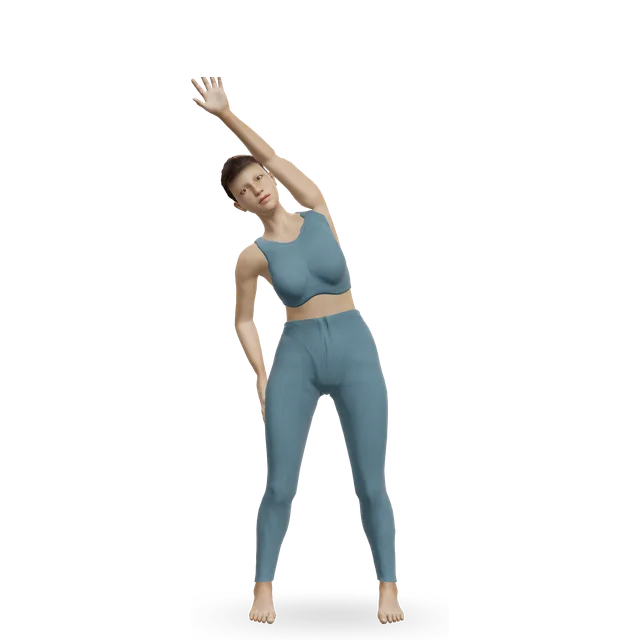
From our 3-minute desk break: sit to stand, about 8 to 10 slow reps in 40 seconds, on a firm chair that can't roll; standing march, 40 seconds; calf raises, 12 to 15; chin tucks, 5 slow reps. Thoracic rotation, 6 each side; breath reach, 5 breaths; overhead side bend, 3 slow bends each side (the moves' pages).
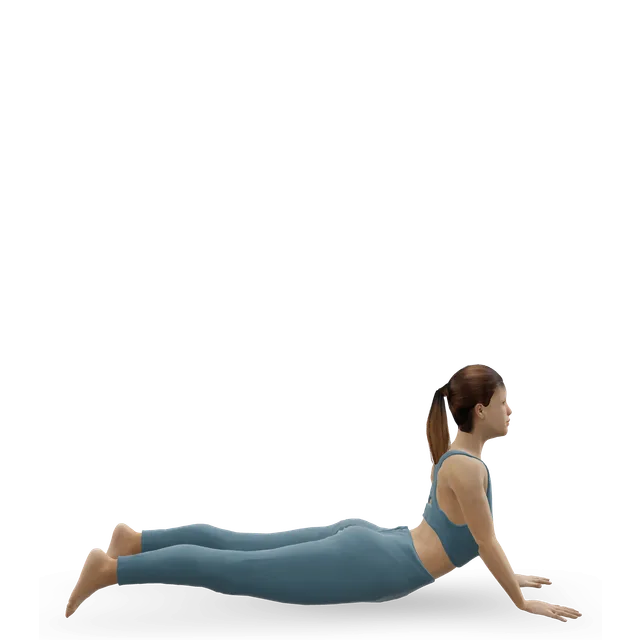
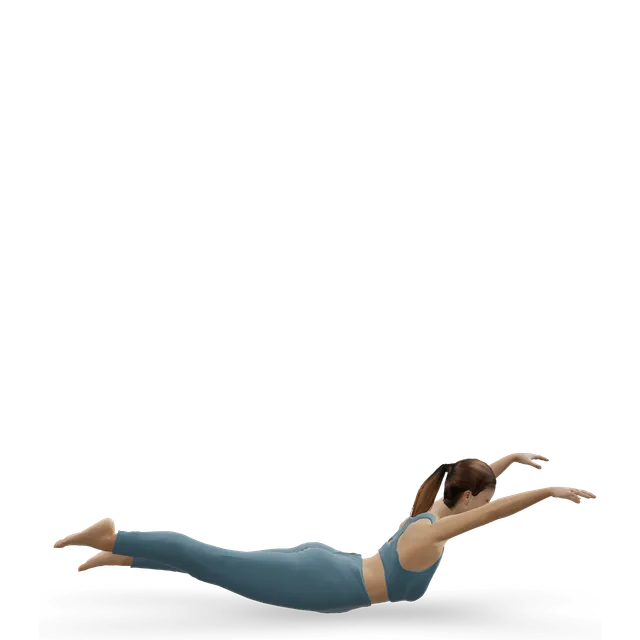
Band rows, 2 sets of 10 to 15 (our neck and shoulder strength routine); band pull-aparts, 2 sets of 12 to 15, and wall angels, 8 slow reps (our posture class); prone Y-T-W raises, 5 of each shape (our neck pain class); swan, 5 to 6 reps, and swimming, 2 to 3 sets of 20 to 30 seconds (the moves' pages); wall push-ups, 2 sets of 8 to 10 (our editorial starting point).
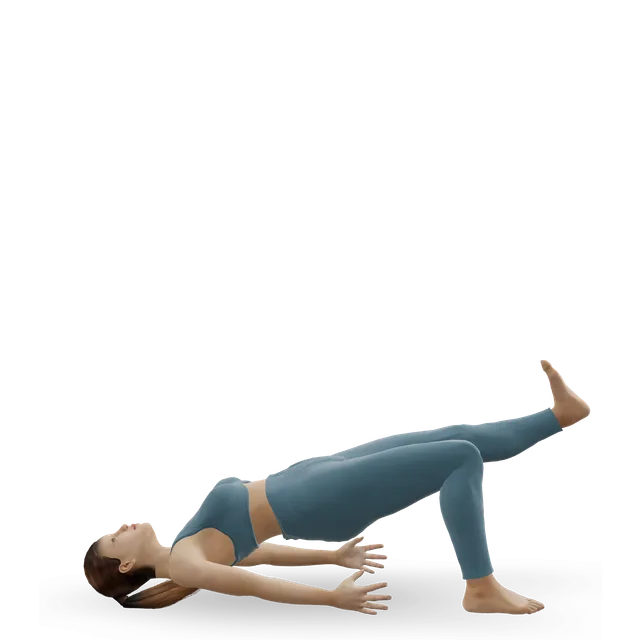
Shoulder bridge, 3 to 5 kicks each leg; single-leg stretch, 6 to 10 each side; standing quad stretch, 20 to 30 seconds, 2 to 4 times each side; wall side leg lift, 10 to 12 each side (the moves' pages); glute bridge, 10 to 15 (our arthritis exercise routine); dead bug, 6 each side, and the kneeling hip flexor stretch, 30 seconds each side (our footballers' class); bird dog, 6 each side (our posture class).
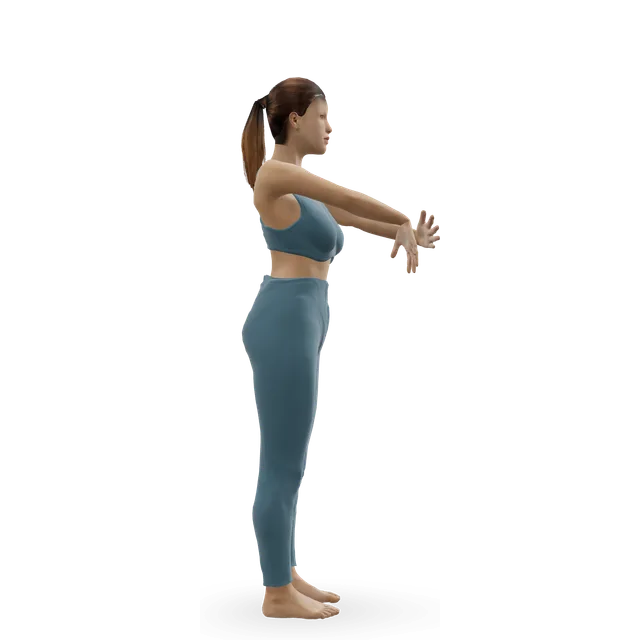
Wrist flexor stretch, 30 seconds each side (our desk stretches); wrist extensor stretch, 3 holds of 30 seconds; tendon glides, 4 to 6 of each position held 5 seconds (the moves' pages).
No floor moves in work clothes, and never stand on, or do sit-to-stands from, a wheeled office chair: use a firm chair that can't roll.
Neck pain or tingling in an arm
Arm symptoms are the exception. If an exercise sends pain, tingling or numbness further down your arm, or the extra symptoms last more than an hour afterwards, make the movement smaller or leave it out. (A hospital leaflet on nerve glides allows a short-lived rise in symptoms but not one lasting over an hour; the rest of this rule is this site's suggestion.)
Use head-supported versions, such as our Pilates for neck pain class.
Use fists or forearms on the wall for wall push-ups. With osteoporosis, keep your hands on your thighs in the wall roll-down and avoid loaded rounding. With hypermobility, stretch in the middle of your range, as the move pages say.
Classes to follow
Our 15-minute office Pilates class needs no floor: seated breathing and upper-back work, band and wall strength, standing legs and hips, and an unwind. Use the 3-minute desk break between, and the posture class on the mat once or twice a week.
These are the warning signs from our back pain, neck pain and sitting guides, in the NHS's words where it gives them. A&E means accident and emergency. In the US, call 911 for 999, and use your doctor's urgent line or urgent care for NHS 111.
Chest pain or fainting: call 999
Call 999 if:
You get sudden pain or discomfort in your chest that doesn't go away; it can feel like squeezing or pressure, burning or indigestion.
The pain spreads to your left or right arm, or your neck, jaw, stomach or back.
You have chest pain and feel sweaty, sick, light-headed or short of breath.
Someone faints while exercising, can't be woken within 1 minute, or has chest pain or a pounding, fluttering or irregular heartbeat.
Call 999 or go to A&E (accident and emergency) straight away for severe difficulty breathing (gasping, choking or not able to get words out), a chest that feels tight or heavy, pain that spreads to your arms, back, neck and jaw, lips or skin turning very pale, blue or grey, or sudden confusion. If you're more short of breath than usual, or your heart is racing, fluttering or skipping beats, contact NHS 111.
Call 999 or go to A&E: loss of feeling or numbness around the genitals or bottom, new trouble peeing or controlling your bladder or bowels, changes in genital sensation during sex or problems with erections or orgasm, or pain, tingling, weakness or numbness in both legs. These are signs of cauda equina syndrome, which needs treating in hospital urgently. Don't drive yourself.
Call 999 or go to A&E: back pain with chest pain, or back pain that started after a serious accident, such as a car crash.
Call 999: sudden, severe pain in the tummy or back, which can come with breathlessness, pale or grey skin, or collapse. It can be a burst abdominal aortic aneurysm, most common in men aged 65 or over and in people who smoke or used to smoke.
Call 999 or go to A&E: pain spreading from the tummy to the back, with vomiting.
Same day (GP or NHS 111): back pain and you feel hot, cold, shivery or generally unwell, or severe pain that starts suddenly or is getting worse quickly.
Same day: you have or have had cancer, and new back pain that is severe and doesn't let up, is getting steadily worse, is worse at night and disturbs your sleep, is worse when you cough, sneeze or strain, or comes with tenderness over the spine. Contact your cancer team or GP urgently. With cancer, new weakness, difficulty walking, numbness or bladder or bowel problems are an emergency.
Back pain that hasn't improved after a few weeks of looking after it at home, stops you doing day-to-day activities, worries you, or you're struggling to cope.
Unexplained weight loss, or a lump, swelling or change in the shape of your back.
Pain that doesn't improve with rest or is worse at night, or pain that is worse when you sneeze, cough or poo.
Pain at the top of the back, between the shoulders, rather than in the lower back.
Unexplained back pain with muscle spasms, loss of height, or a curved spine or change in posture: a possible osteoporotic spinal fracture, more likely with older age or long-term steroid tablets.
Call 999 or go to A&E: a headache that came on suddenly and is extremely painful; numbness or weakness in the face or body; a drooping face, or being unable to lift both arms and keep them up; difficulty speaking, swallowing, balancing, walking or remembering; double vision or loss of vision; drowsiness or confusion. A torn neck artery often starts with headache and neck pain, sometimes with dizziness or tingling, so head or neck pain unlike any you have had before needs checking.
Call 999 or go to A&E: new problems walking, loss of bladder or bowel control, or a sudden loss of coordination, such as difficulty doing up buttons. These can be signs of pressure on the spinal cord.
Call 999: chest pain that spreads to your arm, neck or jaw, especially with breathlessness, sweating or feeling sick. It could be a heart attack.
Same day (urgent GP appointment or NHS 111): severe neck pain that starts suddenly or gets worse quickly; heaviness or weakness in the arms or legs; pins and needles in an arm along with neck or arm pain; or pain between the shoulder blades.
Same day: clumsiness in your hands, or numbness, pins and needles or weakness in one or both arms, that is getting worse; problems with balance or walking since the neck pain started; or neck pain with a severe headache.
Neck pain or stiffness that has not eased after a few weeks, or after 8 weeks of looking after it yourself; painkillers are not helping; or you are worried. In many areas you can refer yourself to NHS physiotherapy.
Severe pain that is constant or disturbs your sleep, a fever or unexplained weight loss, or a history of cancer, inflammatory arthritis, tuberculosis (TB), a weakened immune system, neck surgery or a violent injury. Serious causes are very rare, but these need checking.
Sitting still for long spells, such as on journeys of more than 4 hours, raises the risk of a deep vein thrombosis (DVT), a blood clot in a leg vein. The NHS advises against sitting still for long periods: get up and move around every hour or so.
Pain and swelling in a leg with breathlessness or chest pain: a blood clot may have travelled to the lungs.
Throbbing pain and swelling in one leg, usually the calf or thigh, with red, blue or darkened skin or swollen veins: a possible blood clot (DVT).
Some discomfort during exercise is fine, and it does not mean you are doing damage: the WHO counts "hurt does not necessarily mean harm" among the messages people with back pain need. Aim for pain you would call mild to moderate, no more than about 5 out of 10. It should settle within an hour or so, and your back should be no worse the next morning. If it is worse, do less next time (fewer reps, a smaller range, a lighter load), not nothing.
Leg symptoms are the exception: stop or shrink any movement that sends pain, pins and needles or numbness further down your leg. If leg symptoms move back towards your spine, that is a good sign, even if your back aches a little more for a while.
The NHS advises getting advice from a healthcare professional first if you have a health problem, an injury or symptoms, or have recently had a heart attack or an operation.
For the heaviest smokers, excess deaths were "more than 2000" per 100,000 people a year, against "190" for the most against the least sitting. About an hour a day of moderate activity offset long sitting in a million people.
Yes, as part of a week that also includes walking and breaks. In 12 workplace trials, Pilates helped people manage their work better, though pain scores didn't clearly fall, so pair it with strength work and moving often.
Can I do Pilates at my desk?
Some of it: seated breathing, twists and back lifts, and standing moves by the desk. No trial has tested short Pilates breaks, but the HSE advises short, frequent breaks, and our 15-minute office class needs no floor.
How often should I get up from my desk?
The HSE says 5 to 10 minutes every hour is better than 20 minutes every 2 hours. Our suggestion is 2 to 5 minutes of movement every 30 to 60 minutes you sit.
Will Pilates fix my posture?
It can make you stronger and more aware of how you sit, but posture is a weak explanation for desk pain. Physiotherapists say your best posture is your next one, so change position often.
What's best for a stiff neck at work?
Strength: 2 minutes a day of band exercises eased neck and shoulder pain in a trial of workers. Add chin tucks and upper-back moves, and see our Pilates for neck pain guide if it's persistent.
Is sitting as bad as smoking?
No. The extra risk linked with sitting is far smaller than smoking's, and about an hour a day of moderate activity offset it in a million people.
Should I get a standing desk?
It cuts sitting by about an hour or more a day and may ease back discomfort a little. But standing more than 4 hours a day has its own link with back symptoms, so switch between sitting and standing.
What is office syndrome?
A term used mainly in Southeast Asia for the neck, shoulder, back and wrist aches of desk work. It isn't a medical diagnosis, and the advice is the same: move often and build strength.
Is reformer Pilates good for office workers?
The only reformer study in office workers had 22 people and no comparison group, so we can't say. Mat, chair and wall Pilates cover the same ground.
Does Pilates count as exercise for the guidelines?
Yes, as muscle strengthening: aim for 2 days a week, plus 150 minutes of moderate activity such as brisk walking.
Can sitting all day cause blood clots?
The NHS advises not sitting still for long periods and getting up every hour or so, especially on journeys of more than 4 hours. Get help the same day for a throbbing, swollen leg, and call 999 if you're also breathless or have chest pain.
When should I see someone about desk pain?
If it hasn't eased after a few weeks, stops you working or worries you, or comes with warning signs such as weakness in an arm or leg. In many areas you can refer yourself to NHS physiotherapy.
Exercise education, not a personal prescription, and clinical review of these guides is pending. If you are pregnant, have a health condition or have had recent surgery, check with a doctor, midwife or physiotherapist before starting, and stop for sharp or increasing pain. Health disclaimer.