Pilates
No-floor office Pilates: a 15-minute class by your desk, with a chair, a wall and an optional band
A 15-minute Pilates class for a working day, done sitting on a firm chair and standing by a wall, so you don't need the floor or a change of clothes. It's longer than our 3-minute desk movement break and, unlike our chair Pilates class, it includes the kind of upper-back and shoulder strength work that eased neck and shoulder pain in workplace trials. No trial has tested short Pilates sessions at a desk, so the structure is ours. You need a firm chair that can't roll, a clear bit of wall and, if you have one, a resistance band anchored to something fixed.
Sit tall and breathe
- Beginner · Abs · 3D demoSit near the front of a firm chair, hands on your lower ribs; breathe into the sides and back of your ribsHarder: Roll-up (Pilates)
- Chin tuck5 reps, 3 s holdBeginner · Neck · 3D demoSlide your head straight back, as if making a double chin, without tipping your nose downEasier: Lying chin tuckHarder: Isometric neck holds (four-way)
- Thoracic rotation5 each sideBeginner · 3D demoSeated, arms crossed on your chest, hips facing forward; turn only as far as is comfortable (the demo shows it standing)Easier: Side-lying open bookHarder: World's greatest stretch
- Seated upper-back lift (sit tall, shoulders back)5 holds of 3 to 5 sBeginner · Back, Shoulders, Neck · 3D demoSit tall, draw your shoulder blades back and lift your breastboneEasier: Elbows backHarder: Prone Y-T-W raises




Upper back and arms (standing)
- Band row2 sets of 10 to 15Beginner · Back, Biceps, Shoulders · 3D demoOptional: anchor the band to something fixed, never a door handle that can open; squeeze your shoulder blades back. No band? Do two more sets of wall angelsHarder: Supported single-arm dumbbell row
- Wall angel8 slow repsBeginner · Back, Shoulders · 3D demoBack of your head, upper back and hips near the wall; slide your arms only as high as you can keep contactEasier: Table slide (seated forward reach)Harder: Prone Y-T-W raises
- Wall push-up2 sets of 8 to 10Beginner · Chest, Triceps, Shoulders · 3D demoHands on the wall at shoulder height, body in one line; fists or forearms if your wrists complainHarder: Push-up



Legs and hips (standing)
- Sit to stand from a chair2 sets of 8 to 10Beginner · Quads, Glutes, Hamstrings · 3D demoA firm chair that can't roll, not a wheeled office chair; stand up tall and squeeze your buttocksEasier: Sit to stand, pushing on the thighsHarder: Bodyweight squat
- Slow calf raise12 to 15Beginner · Calves · 3D demoA hand on the desk; rise and lower slowlyEasier: Seated bent-knee calf raise (soleus raise)Harder: Standing dumbbell calf raise
- Beginner · Hip abductors, Glutes, Abs · 3D demoHand on the wall; lift the leg out to the side without leaningHarder: Lateral band walk, band at the feet
- Standing march1 minBeginner · Hip flexors, Abs, Glutes · 3D demoLift each knee as high as is comfortable, arms swingingEasier: Seated marchHarder: Standing band hip flexion




Unwind (standing)
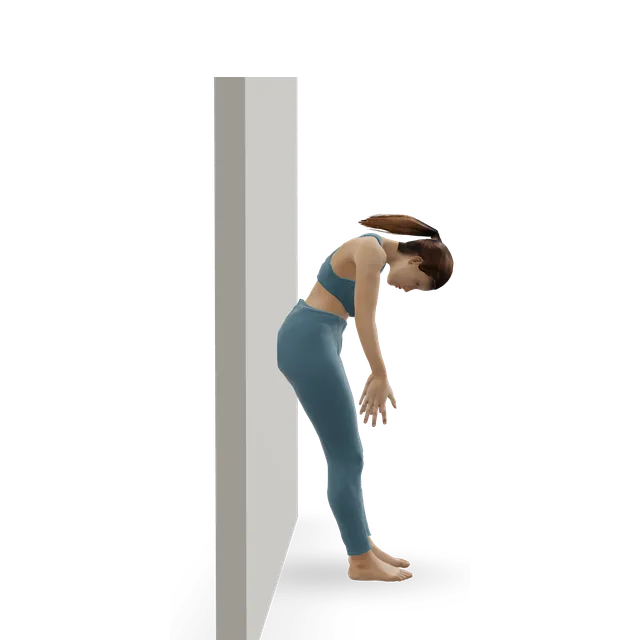
- Wall roll-down (wall Pilates)3 slow repsBeginner · Abs, Back, Hamstrings · 3D demoBack against the wall, roll down only as far as is comfortable. With osteoporosis, keep your hands on your thighs, or skip itHarder: Roll-up (Pilates)
- Standing quad stretch30 s each sideBeginner · Quads, Hip flexors · 3D demoHold the desk, tuck your tailbone under and keep your knees togetherEasier: Side-lying quad stretch with a strapHarder: Couch stretch
- Wrist flexor stretch30 s each sideBeginner · Forearms · 3D demoGentle; ease off if you feel tinglingEasier: Wrist circlesHarder: Quadruped wrist rocks
- Breath reach5 breathsBeginner · 3D demoArms rise as you breathe in and lower as you breathe out, breathing out for longerHarder: Slow breathing (6 breaths a minute)



Tips
- Twice a week at lunchtime or after work, with our 3-minute desk movement break every 30 to 60 minutes of sitting on other days (our suggestion; the Health and Safety Executive says short, frequent breaks are better than long, rare ones).
- Walking towards 150 minutes a week still matters: this class is strength and mobility, not much of a workout for your heart.
- With neck pain or tingling in an arm, keep the moves small and stop any that send symptoms down your arm. With back pain, aim for discomfort no higher than about 5 out of 10 that settles within an hour.
- Skip the roll-down if bending forward brings on leg pain, and stop and get help for any of the warning signs on our Pilates for office workers guide.
The doses are suggested starting points, not a prescription. Choose a range you can control and stop for sharp or increasing pain, numbness or tingling. Get individual advice after an injury or surgery, or if you are pregnant or managing a health condition.
Guides that recommend it
Find more moves like these
More pilates




Beginner Pilates workout
A 20-minute mat Pilates workout for complete beginners. It covers breathing, spine position and the foundation moves, each with an easier option.
20 minBeginner13 movesNo equipment

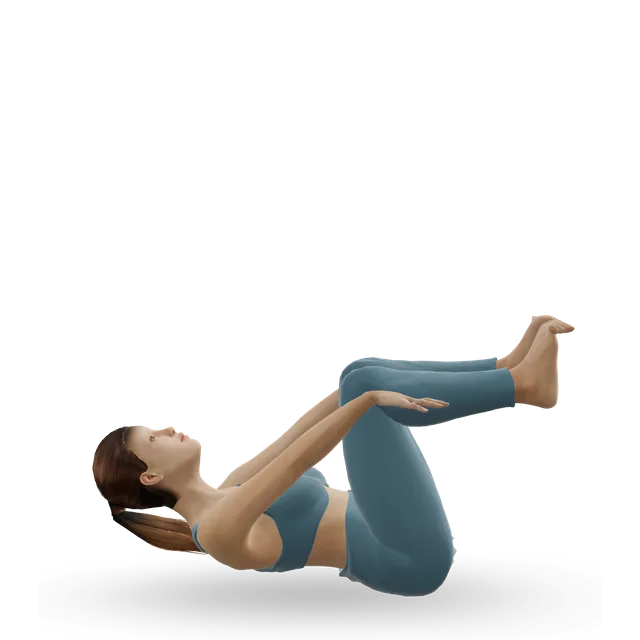
10-minute Pilates abs
Ten minutes of the classic Pilates abdominal series: the hundred, the roll-up and the series of five, with a plank to finish.
10 minIntermediate11 movesNo equipment
Full-body mat Pilates workout
A 30-minute intermediate mat Pilates class that follows the classical order, from the hundred to the push-up, with prep versions of the hardest moves.
30 minIntermediate22 movesNo equipmentQuestions people ask
How long does the no-floor office pilates: a 15-minute class by your desk, with a chair, a wall and an optional band take?
About 15 minutes, including any warm-up and cool-down listed. Shorten it by doing fewer rounds; lengthen it by adding one.
What equipment do I need?
You need: A bench or box, A band, An anchor point, A wall. Each move links to its guide, where you can find an alternative if you are missing something.
Is it suitable for beginners?
It is written for beginners. 9 of its 15 moves have an easier option listed beside them if you need one.
How do I make it easier or harder?
Use the easier or harder option listed under each move, change the number of rounds, or adjust the rest. Progress one change at a time.