No peer-reviewed Pilates trial in swimmers
We found none. A 2025 preprint, not yet peer reviewed, reported better flexibility and figure scores after 8 weeks of Pilates in 18 young artistic swimmers.
Pilates guide
Swimming loads your shoulders thousands of times a session, and many swimmers' shoulders are loose rather than tight. Pilates suits swimmers when it builds control rather than more stretch: shoulder-blade and back-of-shoulder endurance, a strong streamlined trunk, and hips that work both ways for your kick. In trials in young swimmers, core training made 50 m sprints about a second faster, but no peer-reviewed trial has tested Pilates itself in swimmers.
So use it as one part of your dryland work, alongside strength training and a shoulder routine.
This guide covers what swimming asks of your shoulders, trunk, back and knees, swimmer's shoulder and loose joints, what the core training trials found, how Pilates fits with dryland strength work, the moves to start with and change, and a 25-minute dryland class.
We found none. A 2025 preprint, not yet peer reviewed, reported better flexibility and figure scores after 8 weeks of Pilates in 18 young artistic swimmers.
Across 11 studies of swimmers aged 11 to 20, core training made 50 m freestyle about 1 second faster, but the effect on 100 m was unclear, and one 8-week trial found no difference. Whether it carries over to adults is our reading, not tested.
Most young elite swimmers had shoulder pain, and it tracked how much they swam. Sudden jumps in training and weak endurance at the back of the shoulder predicted pain.
Shoulder looseness is a risk factor, hypermobile athletes had about 3 times the odds of shoulder injury, and stretching aggravated painful shoulders in a survey of swimmers.
The cross-body stretch restored about 20 degrees of lost inward turning in a small trial. Skip it if your shoulder feels loose.
Source 11
Adding strength training to swimming improved performance by about 2% to 2.5%. Pilates is one part of dryland work, not all of it.
Your arms do most of the work, so the shoulder takes thousands of strokes a session, and the front of the shoulder can be pinched as the hand enters the water. All strokes hold the lower back arched for streamlining, more in breaststroke and butterfly, and the breaststroke kick strains the inside of the knee.
91% of 80 young elite swimmers had had shoulder pain, and about 1 in 5 female swimmers aged 8 to 77 had pain that limited them. The links with moderate certainty are shoulder looseness and instability, rotation range, past pain and competitive level; a later review found shoulder strength endurance the most important link you can change.
Shoulder-blade control lying face down and on your hands, trunk endurance in a streamlined line, hip control for your kick, and upper-back rotation for breathing. Elite swimmers' shoulders are often loose already, so Pilates for swimmers should stop short of end-range stretches. Links between core stability and arm injuries are thin, and Pilates doesn't replace heavier dryland strength work.
Our searches found no peer-reviewed trial of Pilates in swimmers. In a preprint, 18 artistic swimmers aged 13 to 15 who did two 60-minute Pilates classes a week for 8 weeks gained more flexibility and scored better on two figures than those who did their usual gym routine. It hasn't been peer reviewed, and loose-shouldered swimmers may not need more flexibility.
A 2025 review of 11 studies in 218 swimmers aged 11 to 20 found core training made 50 m freestyle 1.06 seconds faster (moderate certainty); the effect on 100 m was unclear (low certainty). A second review of 16 trials in 438 youth swimmers found the clearest effect for 50 m and backstroke, with programmes of about 8 weeks, up to 3 sessions a week. In one trial, 12 weeks of core training cut national-level juniors' 50 m times by about 2%.
In 32 swimmers, 8 weeks of extra core training twice a week made no difference between groups, and the effect on longer distances is unknown. All these trials were in young swimmers; that masters swimmers would gain the same is our reading.
Across 27 studies, swimming plus strength training beat swimming alone, by about 2% to 2.5%. In a network of 36 trials, water plus dryland resistance training ranked first, and core and power training helped 25 m sprints and starts.
In young elite swimmers, the overloaded tendon showed up more with more hours and distance swum. In 201 youth swimmers followed for 2 seasons, sudden jumps in training load and weaker endurance at the back of the shoulder predicted pain.
In 30 competitive swimmers, five shoulder and shoulder-blade exercises twice a week for 12 weeks limited the season's loss of rotator cuff strength. In elite swimmers, an exercise programme reduced forward head and rounded shoulder posture. Neither trial counted injuries.
Prone shoulder-blade work, scapular push-ups and trunk endurance train what swimming wears down. No programme has been shown to prevent swimmer's shoulder, so pair Pilates with the shoulder care routine and build your swimming gradually (our reading).
Shoulder looseness and instability were among the risk factors with moderate certainty across 29 studies. Athletes with hypermobile joints had about 3 times the odds of a shoulder injury, and 8 times with a hypermobile shoulder, on low-quality evidence. Elite swimmers had looser shoulders than recreational swimmers.
In a survey of 1,262 US swimmers with a painful shoulder, stretching was among the activities that aggravated it. The NHS says "do not overextend your joints just because you can".
In 54 adults (not swimmers), the cross-body stretch, 5 holds of 30 seconds once a day for 4 weeks, restored about 20 degrees of inward turning on the stiffer side; the sleeper stretch's 12 degrees wasn't significant. Use it only if one shoulder is clearly stiffer turning in, and skip it if your shoulder feels loose.
Source 11
Core training helped 50 m sprints in young swimmers, and dryland strength training helped more broadly. Pilates trunk work is a reasonable way to do core training, but the trials' core programmes weren't Pilates by name (our reading). For speed, keep heavier dryland strength and jump work, as our swimming page sets out.
In 341 elite swimmers, butterfly went with 2.5 times the risk of low back pain and the 200 to 400 m breaststroke with 5 times the risk of knee pain. Keep back extension small if arching hurts, and work your hips both ways for the breaststroke kick; with inner knee pain, skip deep kneeling and side-sitting (our reading).
Across 10 trials, Pilates eased long-lasting back pain about as much as other exercise. It hasn't been tested in swimmers.
Source 24
Our editorial plan, built on the trials:
Swimmers' bone density is similar to that of people who don't exercise, and mat Pilates isn't impact work. Add jumps or impact on land.
Source 25
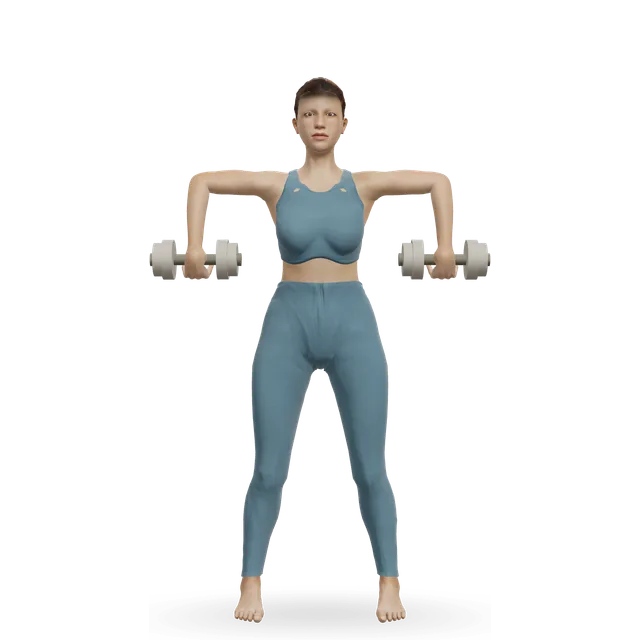
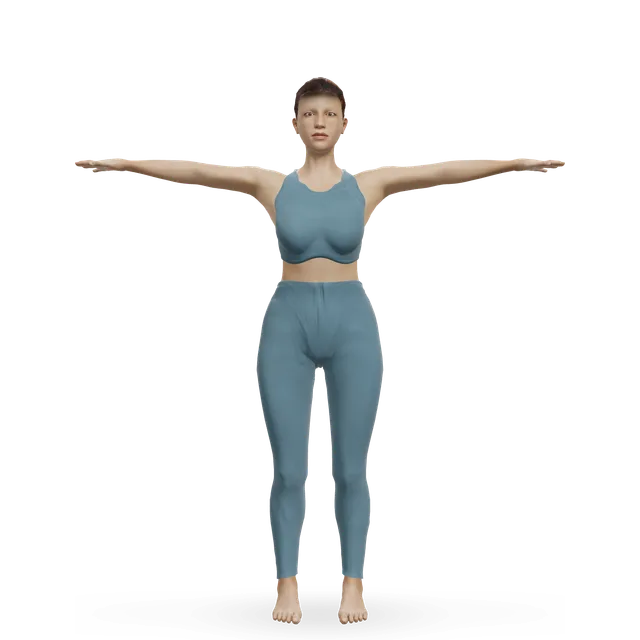
6 thoracic rotations and 8 to 10 open books each side are the move pages' doses; 8 wall angels, 2 sets of 10 T's and Y's and 2 sets of 10 scapular push-ups are from our shoulder care routine for swimmers.
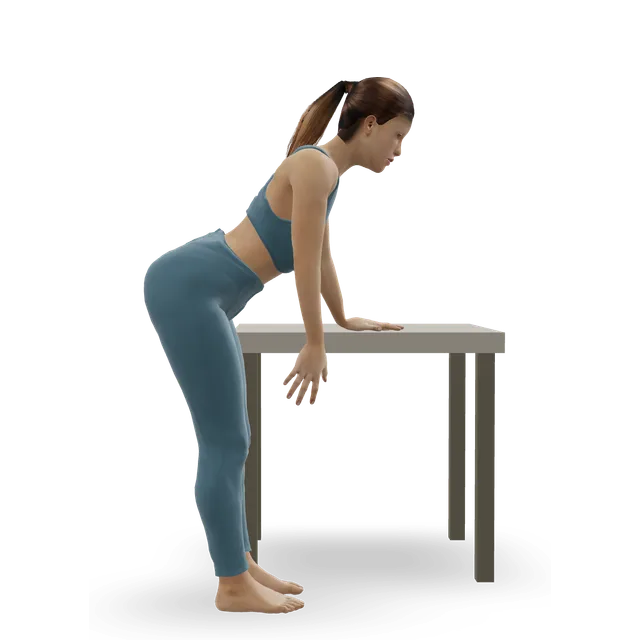
Start with the hundred's 50 beats and 6 to 10 single-leg stretches each side (the move pages' doses), 2 sets of 8 dead bugs each side (our dryland workout for swimmers) and two 20-second side planks on your knees (our editorial starting point).
Keep back extension small; the Pilates moves' pages give their doses, and 10 clams each side is our editorial starting point.
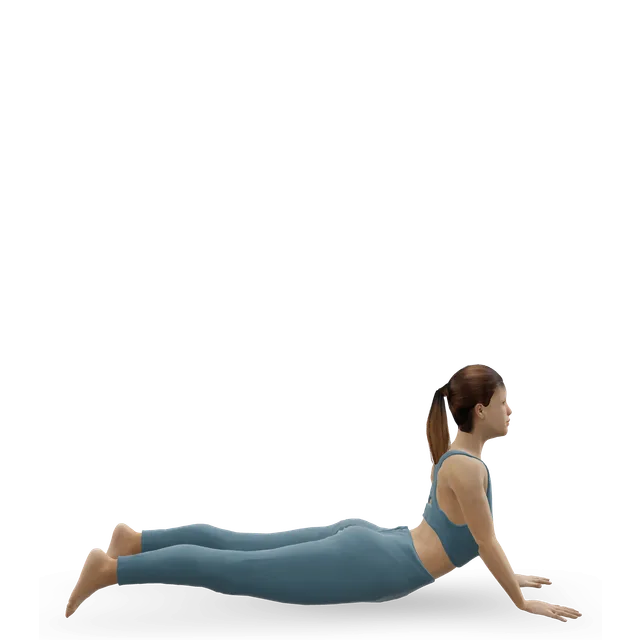 3D demoSwan (Pilates swan dive)Intermediate · No equipment
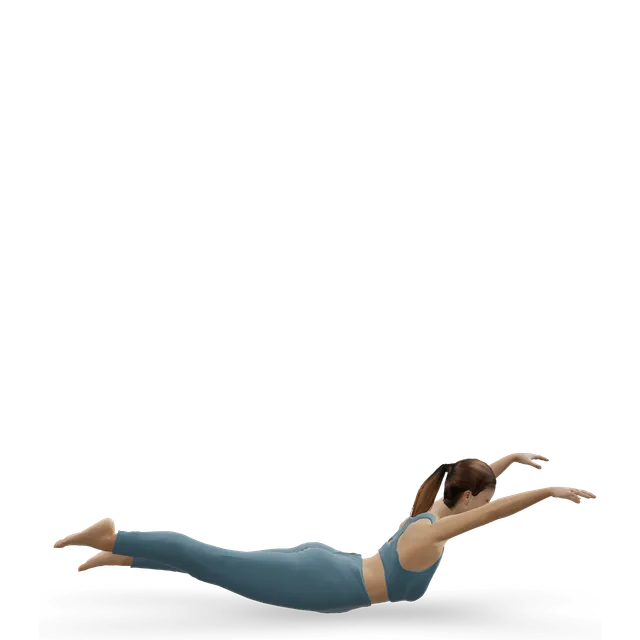 3D demoSwimming (Pilates)Intermediate · No equipment
 3D demoSide kick (Pilates side kick series)Beginner · No equipment
 3D demoClamshellBeginner · No equipment
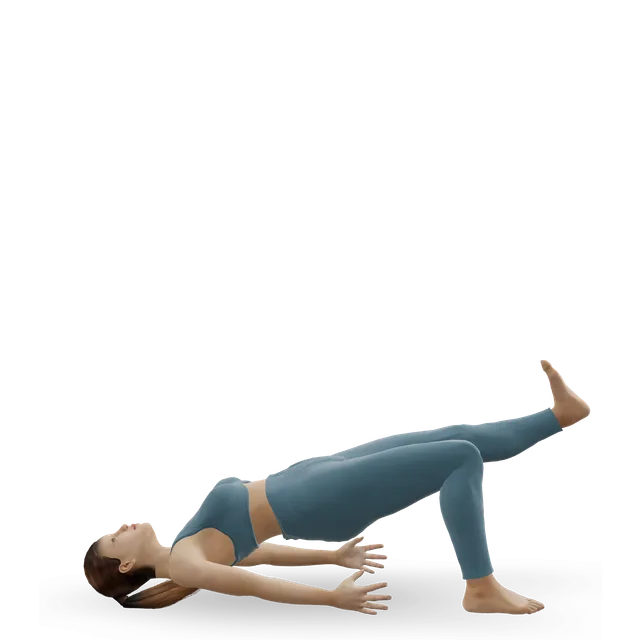 3D demoShoulder bridge (Pilates)Intermediate · No equipment
 3D demo90/90 switchIntermediate · No equipment
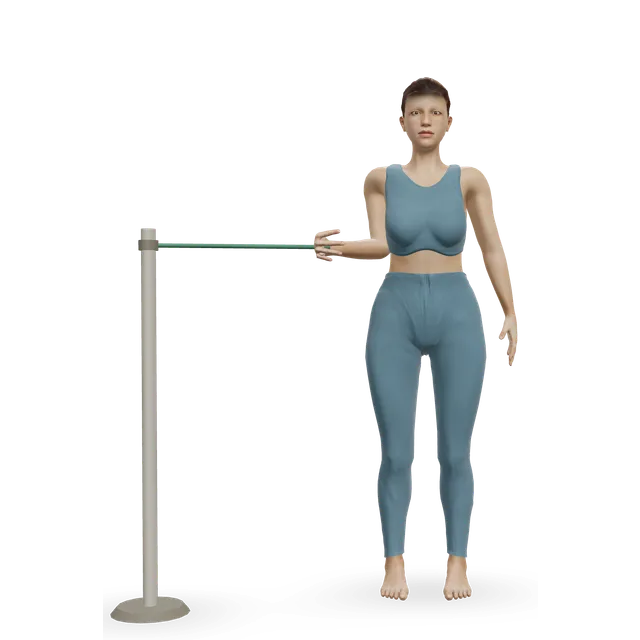
5 holds of 30 seconds on the stiffer side, once a day, as in the trial; skip it if your shoulder feels loose or has dislocated.
With a painful or loose shoulder, swap the leg pull front, push-up and side bend for wall push-ups or the knee hover, keep your elbows soft, and skip the leg pull front while your shoulder hurts.
Skip rocking with pain at the front of the shoulder, and hold a towel between your hands for the double-leg kick.
With a sore shoulder, reach forward rather than overhead in the roll-up and double-leg stretch, and keep your arms by your sides in the swimming exercise.
Skip long doorway stretches, hanging and the sleeper stretch, especially if your shoulders are loose.
With breaststroke knee pain, skip kneeling side kicks and side-sitting, and do the mermaid on a chair.
Do the 25-minute Pilates class once or twice a week, the shoulder care routine twice a week and the dryland workout for strength. With a sore shoulder now, start with the step-by-step class for a sore shoulder.
A 25-minute dryland Pilates class for swimmers: shoulder-blade control, trunk endurance, back extension, hips and rotation, built for loose shoulders.
25 minBeginner16 movesA wallA 20-minute rotator cuff and shoulder-blade routine for swimmers, from a 12-week trial in competitive swimmers, plus a daily cross-body stretch.
20 minBeginner9 movesA wall, A dumbbellA 45-minute dryland session for swimmers: jumps for starts and turns, heavy pulls, leg strength and trunk work, twice a week alongside the pool.
45 minIntermediate14 movesA band, A bench or boxA 25-minute dryland yoga class for swimmers: upper-back turns, shoulder-blade and trunk holds, hips for kicking and slow breathing, safe for loose shoulders.
25 minBeginner16 movesA wallA 20-minute Pilates class for a sore shoulder: gentle range first, then shoulder-blade and rotator cuff strength, then light weight on the arms, in steps.
20 minBeginner15 movesA bench or box, Other / check instructionsA 20-minute Pilates class for hypermobile joints, HSD and hEDS: supported positions first, mid-range control, slow changes and steady breathing.
20 minBeginner17 movesOther / check instructions, A bandEach plan gives you strength days to fit around the pool; add a Pilates class on one of the other days.
Two full-body strength sessions a week: the minimum that meets health guidelines, with every set, rep and rest, and an 8-week progression.
2 training days45 minBeginner3 days a weekA 12-week calisthenics plan for beginners: three bodyweight sessions a week with push-up, pull-up, squat and dip ladders, and a bar if you have one.
3 training days40 minBeginnerCall 999 or go to A&E (accident and emergency) if, after a fall or injury, your shoulder looks out of place or has changed shape, you cannot move your arm, or your shoulder is painful, bruised or swollen. Do not drive yourself, and do not try to put it back in yourself.
Source 26
Call 999 for shoulder or arm pain with chest pain that feels tight or squeezing, or chest pain that spreads to your arms, neck or jaw, especially with shortness of breath, sweating or feeling sick. It could be a heart attack.
Source 27
Sudden or very bad shoulder pain; you cannot move your arm; the arm or shoulder is badly swollen or has changed shape; pins and needles that do not go away; no feeling in the arm; the arm is hot or cold to the touch; pain that started after an injury such as a fall; or severe pain in both shoulders.
Source 28
Pain that is getting worse or has not improved after 2 weeks of looking after it yourself, or it is very hard to move your arm; in many areas you can refer yourself to physiotherapy. Also if your shoulder has partly or fully come out of joint, or you worry it might, and for a child or teenager whose shoulder pain lasts more than 2 weeks, keeps coming back or stops them training (our suggestion).
Source 28
A teenager's low back pain that lasts and is worse arching backwards, as in butterfly, breaststroke or push-offs, may be a stress fracture of the spine: get it checked.
Call 999 or go to A&E (accident and emergency) if you have back pain with pain, tingling, weakness or numbness in both legs, a loss of feeling around your genitals or bottom, or changes in your bladder or bowels. These can be signs of cauda equina syndrome, which needs treating in hospital urgently. Don't drive yourself.
Source 29
Call 999 if someone faints while exercising, can't be woken within 1 minute, or has chest pain or a pounding, fluttering or irregular heartbeat.
Source 30
With a loose shoulder, stop an exercise or shrink its range if you feel the shoulder is about to slip. Discomfort up to about 5 out of 10 that settles by the next session is fine; sharp, pinching or worsening pain isn't.
The NHS advises getting advice from a healthcare professional first if you have a health problem, an injury or symptoms, or have recently had an operation.
Source 31
Shoulder looseness is a risk factor, hypermobile athletes had more shoulder injuries, and stretching aggravated painful shoulders in a survey. Stretch only a measured stiffness, such as lost inward turning.
Partly. Core training made 50 m freestyle about 1 second faster in young swimmers, but the effect on 100 m was unclear, one trial found nothing, and adults have barely been studied.
Untested. No programme has been shown to prevent it in swimmers; shoulder strength endurance is the target with most support.
It's a mat exercise lying face down with alternating arm and leg lifts. It trains back and glute endurance, not your stroke.
Swimmers' bone density is similar to that of people who don't exercise. Add impact work on land.
Source 25
It's a sensible way to build shoulder-blade and trunk control, and in young swimmers core training made 50 m sprints about a second faster. No peer-reviewed trial has tested Pilates itself in swimmers. Use it alongside dryland strength work.
Maybe a little over short distances: core training helped 50 m freestyle in young swimmers, but the effect on 100 m was unclear and one 8-week trial found no difference. Strength training added to swimming improved performance by about 2% to 2.5%.
It hasn't been tested. Swimmer's shoulder is mostly an overloaded tendon that tracks how much you swim, so building your training gradually and keeping the back of your shoulder strong have the most support.
Only a clear stiffness. Loose shoulders are a risk factor, and stretching aggravated painful shoulders in a survey of swimmers. The cross-body stretch, 5 holds of 30 seconds once a day, restored lost inward turning in a small trial; skip it if your shoulder feels loose.
Shoulder-blade work lying face down and against a wall, the hundred, dead bugs and leg stretches for a streamlined trunk, a small swan and swimming, side kicks and clams for your kick, and upper-back rotation. Our 25-minute class puts them together.
Yes, if you work in the middle of your range: keep your elbows soft, build weight on your hands gradually, starting at a wall, and skip end-range stretches and hanging. Our Pilates for hypermobility guide has more.
It can be: the springs add resistance to pulling-type and leg work. No study has tested it in swimmers.
Neither has been tested for injuries in swimmers. Both can train trunk control; if your shoulders are loose, choose classes that build strength and control rather than flexibility, as our yoga for swimmers guide also says.
It's a face-down mat exercise that trains back and glute endurance with alternating arm and leg lifts; it doesn't train your stroke. Keep your arms by your sides if your shoulder is sore.
It may help back pain in general, but keep back extension small if arching hurts: butterfly went with more low back pain in elite swimmers. A teenager's lasting back pain that's worse arching backwards needs checking.
Once or twice a week, after easier pool sessions or on separate days, for at least 8 weeks, the length of most core training trials. Keep your dryland strength sessions and the shoulder routine as well.
Go to A&E for a shoulder that looks out of place or can't move after an injury. Get same-day help for sudden or very bad shoulder pain or pins and needles that don't go away, and see a GP if pain isn't better after 2 weeks.
Exercise education, not a personal prescription, and clinical review of these guides is pending. If you are pregnant, have a health condition or have had recent surgery, check with a doctor, midwife or physiotherapist before starting, and stop for sharp or increasing pain. Health disclaimer.