Pain guide · Knee pain

Knee pain when swimming (breaststroker's knee): the kick, the inner knee and how to build back

Knee pain in swimmers is usually on the inside of the knee and comes from the breaststroke whip kick, which is why it's called breaststroker's knee. The kick pushes the knee inwards and twists the shin outwards thousands of times a session, loading the medial collateral ligament (MCL) on the inside of the knee, the inner edge of the kneecap and the lining of the joint, and more breaststroke and a short warm-up make it more likely.

Most swimmers keep swimming: cut the breaststroke kick, swim front crawl or backstroke or use a pull buoy, leave the fins out and push off gently while it settles, then bring the kick back in short, pain-free drills. A knee that locks, gives way or swells after a twist needs checking first, and the National Health Service (NHS) says to use NHS 111 for it or to see a general practitioner (GP) if knee pain isn't improving. This guide covers those warning signs, how to tell the causes apart, the kick, how much pain is fine, and a three-stage plan with a 3D demo of every move. The studies are old and small, and no trial has tested treatment in swimmers, so the page says how strong each piece of evidence is.

When to get help first

Exercise is for pain that has been checked or is clearly mild and settling.

Get urgent medical help if

  • Same day: a pop or tearing feeling at the front of the knee after a fall, stumble, jump or landing, then you can't straighten the knee or lift the straight leg off the bed, there's a dent above or below the kneecap, or the kneecap sits higher or lower than on the other side. Go to A&E or an urgent treatment centre, or get help from NHS 111. A torn quadriceps or patellar tendon does best when it's repaired soon.
  • You cannot move the knee or put any weight on it, or it is very painful, badly swollen or has changed shape.
  • The knee locks, gives way or clicks painfully. Painless clicking is normal.
  • A hot, red or swollen knee with sudden severe pain, a very high temperature, or feeling hot, cold or shivery. This can be a joint infection.
  • You hurt your knee and cannot take 4 steps, or you are 55 or over and hurt it in a fall: get it checked the same day for a broken bone.
  • Throbbing pain and swelling in one calf or thigh with red or darkened skin or swollen veins, or sudden worse pain and swelling around a lump at the back of the knee (a possible clot or a burst Baker's cyst).
  • Leg pain or swelling with breathlessness or chest pain: call 999 or go to A&E, and do not drive yourself. It can be a blood clot that has reached the lungs.
  • Back or leg symptoms with numbness around the genitals or bottom, new trouble controlling your bladder or bowels, or severe or worsening weakness or numbness in both legs.

See a doctor or physiotherapist if

  • Knee pain that has not improved within a few weeks of looking after it at home. Many areas offer NHS physiotherapy without a GP referral.
  • Numbness, tingling or weakness that travels down the leg from the back. That points to a nerve (sciatica) rather than the knee.
  • After a twist or a blow, a knee that still feels loose or gives way at about 6 weeks: ask for an orthopaedic opinion. Looseness that persists beyond about 6 weeks is when surgeons consider an operation.
  • Tendon pain above or below the kneecap and you take steroid tablets or have steroid injections, use anabolic steroids, have kidney disease, gout, rheumatoid arthritis, lupus or diabetes, or have recently taken a fluoroquinolone antibiotic: tell your GP or physiotherapist and build up more gradually. These can weaken the tendon.
  • A child or teenager with pain at a bump just below the kneecap or at its lower tip, worse with squats, jumps and kneeling: see our Osgood-Schlatter and Sinding-Larsen-Johansson guides, and get it checked if it is getting worse.
  • Inner knee pain that comes back every time you build your breaststroke up, despite cutting the kick, warming up longer and changing your kick: our suggestion is to see a physiotherapist, ideally one who knows swimming, and to ask a coach to look at your kick.

Where does it hurt?

Location narrows the likely causes; it does not diagnose.

The inner joint line, or just above or below it, worst at the end of the whip kick

Tender along the ligament on the inside of the knee: the MCL strained by the kick. Our MCL sprain guide covers a sprain after a twist or a blow; this guide covers the swimming overuse pattern.

Read: MCL sprain →
The inner edge of the kneecap, or under it

Worse with the kick and later on stairs and squats: the inner side of the kneecap joint, where most painful breaststrokers were tender in one series.

Read: Runner's knee →
A tender, cord-like band on the inner edge of the kneecap that clicks or catches

A thickened fold of joint lining (a medial plica), found in nearly half of breaststrokers with weekly knee pain in one series.

Read: Plica syndrome →
The inner shin a few centimetres below the joint

Pes anserine pain, which the breaststroke kick can bring on.

Read: Pes anserine pain →
The front of the kneecap with hard push-offs, starts, or the flutter or dolphin kick

Overload of the joint behind the kneecap, reviews say.

Read: Runner's knee →
One spot just below the kneecap, worse with starts, jumps and dryland jumping

Patellar tendon pain.

Read: Jumper's knee →
The joint line with catching, locking or swelling, especially after a twist

On a push-off or the poolside: a possible meniscus tear.

Read: Meniscus tear →
The inner thigh close to the groin, with the kick

An adductor strain, which happens in breaststrokers.

Read: Groin strain →
Behind the knee, with a lump, or the calf cramping on a hard kick set

A Baker's cyst, or a cramp. A swollen, throbbing calf needs the clot check in the warning signs.

Read: Baker's cyst →
Both knees stiff and achy from mid-life, easier once warm

Possibly knee arthritis. Swimming is usually comfortable.

Read: Knee arthritis →
A teenager with a tender bump below the kneecap

Osgood-Schlatter disease, more often from land sports than from swimming.

Read: Osgood-Schlatter →
Knee or thigh pain with a limp in a child or teenager, the knee looking normal

The hip can cause it (a slipped upper femoral epiphysis): get it checked the same day.

Read: SUFE (slipped hip growth plate) →

Understand it

Who gets itEmerging evidence

Knee pain is second only to the shoulder in competitive swimmers, mostly on the inside of the knee and mostly in breaststrokers, though any stroke can bring it on. In 36 competitive breaststrokers, 86% had had breaststroke knee pain and 47% had it every week; in a survey of 391 competitive swimmers, 73% of breaststroke specialists and 48% of other swimmers reported knee pain; and among 341 elite swimmers, 200 to 400 m breaststrokers had 5 times the risk of knee pain, while front crawl swimmers had half the risk. Masters swimmers report it less: 10% had knee pain lasting more than 10 days in a year in a survey of 88.

More frequent pain went with older age, more years of competitive swimming, more breaststroke distance and a shorter warm-up, and swimming more than 4 times a week went with twice the knee overuse risk. These studies are old and small: of 28 risk factors for swimmers' injuries outside the shoulder, only 2, both at the knee, reached moderate certainty in a review.


Sources 1, 2, 3, 4, 5, 6, 7

Why the kick loads the inner kneeEmerging evidence

The whip kick bends the knees, turns the feet out and then straightens the knees fast while the lower legs sweep round, pushing the knee towards knock-kneed and twisting the shin outwards. At keyhole surgery, 7 of 9 painful breaststrokers had inflamed joint lining on the inner side and no other damage, and the authors called it an overuse problem; their kick was fast, but no different from 3 swimmers without pain. In another series of 23, where it hurt related to how the kick was done, and swimmers without pain kicked consistently differently.

Sources 8, 9, 10, 2

What hurtsEmerging evidence

The kneecap matters as much as the ligament. In 23 breaststrokers with painful knees, 18 were tender under the inner side of the kneecap and 10 along the MCL. A survey of 391 swimmers implicated both, a review calls the MCL the commonest source, and 47% of breaststrokers with weekly pain had a thickened, tender medial plica.

In the series of 23, pain began within 3 years of starting breaststroke, was felt only in the kick at first, and spread to other activities in swimmers who kept kicking through it.

Sources 9, 4, 10, 3

When a scan helps, and what it can't tell youEmerging evidence

Breaststroker's knee is diagnosed from the story and an examination. In 13 young elite swimmers with no knee pain, 69% of knees showed changes on magnetic resonance imaging (MRI), more than in non-swimmers, and in people aged 50 to 90, meniscus tears were found in 19% to 56%, and 61% of those with a tear had had no knee symptoms in the past month.

A scan is for a knee that locks, gives way, swelled within hours of a twist, or isn't settling despite the changes and a good exercise programme.

Sources 11, 12, 13

How it usually goesEmerging evidence

No study has followed swimmers' knee pain over time, so no one can promise a date. Cutting breaststroke distance was the recommended first step in the original series, and in another, swimmers who kept kicking through pain went on to have pain in other activities, which is why the kick comes back only once it's pain-free. For a sprain after a twist, the MCL sprain guide's timings apply.

Sources 3, 9

What helps, and how strong the evidence is

Cut the kick, keep swimming: expert adviceEmerging evidence

The original series advised cutting or stopping breaststroke distance as the first step, with ice, changes to the kick and hip rotation stretches, building breaststroke distance very gradually early in the season, and a proper warm-up. A swimming medicine review adds that usually only the breaststroke load needs controlling, and that swimmers can usually keep swimming the other strokes if they're pain-free. Front crawl carried half the knee pain risk in elite swimmers, and a return-to-swim protocol lists knee pain as a reason not to use fins. None of this has been tested in a trial.

Sources 3, 10, 5, 14

Exercise is borrowed from kneecap painEmerging evidence

No trial has tested exercise for breaststroker's knee. For kneecap pain in general, exercise reduced pain during activity by about 1.5 points out of 10 against no exercise, across 31 trials of 1,690 people (very low-quality but consistent evidence), and an international consensus recommends hip and knee exercises together. An NHS hospital leaflet starts with 3 sets of 8 to 12 of bridges, clams, straight-leg raises and mini squats, and suggests swimming as a gentler option for kneecap pain.

Swimming reviews add quadriceps strength, balanced leg strength, trunk work and hip range for breaststrokers. These are borrowed from kneecap pain and expert advice, not tested in swimmers.

Sources 15, 16, 17, 10, 2

Hip rotationEmerging evidence

In the original series, breaststrokers with frequent knee pain had less inward rotation at the hip than those with occasional or no pain, and reviews suggest restoring hip rotation if it's restricted or uneven. It's an association in a small series, not a tested treatment, so the plan includes hip rotation work as a sensible extra.

Sources 3, 10, 2

The kick itself: differing adviceMixed evidence

Swim England teaches knees just a little over hip-width apart, feet turned out and flexed, and heels drawn towards your bottom rather than knees pulled up to your chest. A swimming medicine review suggests keeping the knees closer together for a while, agreed with your coach. In the old series, the way swimmers kicked related to where it hurt, and correcting the kick early was the recommended treatment, but no trial has tested a kick change.

Sources 18, 10, 9

How much pain is OK while you exercise?

0 to 2 is safe, up to 5 is acceptable, and the kick comes back pain-freeEmerging evidence

For the exercises, this guide uses the knee hub's rule. Rate your knee pain from 0 to 10 during and after exercise. In the pain-monitoring model used in knee trials, 0 to 2 counts as safe, up to 5 as acceptable and above 5 as too much. Aim for 0 to 3 most of the time.

By the next morning your knee should be back to its usual level. If it is not, drop back one step next time (fewer sets, a shallower range, a lower step), not to nothing. Over the weeks pain should hold steady or ease; that last check is our suggestion rather than a tested rule. Some knee programmes say you should feel no pain at all. The trials allowed some, and a meta-analysis found exercising into some pain did no worse than pain-free exercise.

Sharp, catching or giving-way pain, or new swelling, is a reason to stop and get it checked.

The breaststroke kick is the exception (our suggestion): bring it back only when it's pain-free in short drills, and stop the kick, not the swim, at the first inner knee pain. In one series, breaststrokers who kept kicking through pain went on to have pain in other activities.

In the pool, this guide's rule is adapted from one expert commentary written for competitive swimmers coming back after shoulder surgery, so treat it as a sensible guide rather than a tested rule. If the sore area is back to its usual level by the next morning, the next swim can be the same or a little longer.

Soreness that lasts more than an hour after swimming, or into the next day: take a day off swimming, then repeat your last session rather than adding to it. Sore in the warm-up but gone within the first few hundred metres: repeat the same session, and if it comes back during that swim, stop, take 2 days off and come back a little shorter (the protocol cuts 300 yards, about 275 m). Sore in the warm-up and still sore after the first few hundred metres: stop for the day, take 2 days off and come back a little shorter.

Sources 19, 20, 9, 14

The exercise plan: 3 stages

Start at the first stage. Each move opens a full guide with a 3D demo.

Stage 1

Settle: rest the kick, load the thigh and hip

About weeks 0 to 2. No breaststroke kick for now: swim front crawl or backstroke, or breaststroke arms with a pull buoy, without fins, and push off gently. Strength work 2 to 3 days a week. Doses name their source or are editorial.

Quad set (static quads) demonstrated on the 3D figure3D demoQuad set (static quads)Beginner · No equipment

Hold 5 s, 10 times, little and often · As in the MCL sprain guide. Heel on a rolled towel, letting the knee sag straight between squeezes

Harder: Straight-leg raise

Straight-leg raise demonstrated on the 3D figure3D demoStraight-leg raiseBeginner · No equipment

3 sets of 8 to 12 · An NHS leaflet's dose for kneecap pain

Easier: Quad set (static quads) · Harder: Leg extension

Glute bridge demonstrated on the 3D figure3D demoGlute bridgeBeginner · No equipment

3 sets of 8 to 12 · The same NHS leaflet's dose

Easier: Pelvic tilt into bridge · Harder: Single-leg glute bridge

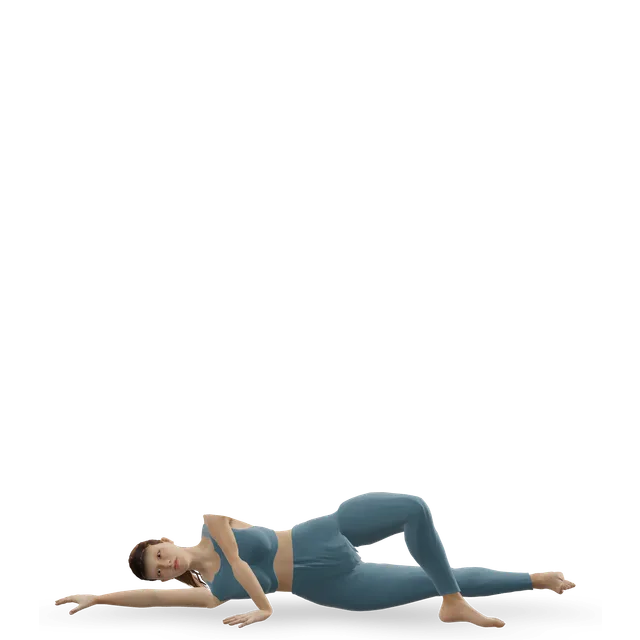
Clamshell demonstrated on the 3D figure3D demoClamshellBeginner · No equipment

3 sets of 8 to 12 each side · The same NHS leaflet's dose

Easier: Supine isometric hip abduction (belt press) · Harder: Lateral band walk

Seated knee extension (chair) demonstrated on the 3D figure3D demoSeated knee extension (chair)Beginner · A bench or box + Something with weight

3 sets of 10 to 15 each leg, 2 to 3 days a week · The move page's dose. If the full range hurts, work from 90° to about 45° only, as the move page says

Easier: Quad set (static quads) · Harder: Leg extension

Sit squat (partial squat) demonstrated on the 3D figure3D demoSit squat (partial squat)Beginner · No equipment

3 sets of 8 to 12, to less than 30° of knee bend at first · The NHS leaflet's dose and depth for mini squats

Harder: Bodyweight squat

Move on when: Daily activities and these moves stay within the pain rule, and swimming without the breaststroke kick leaves the knee no worse the next morning, for about a week (our suggestion).

Follow along: a timer, a cue and the next move, one step at a time.
Stage 2

Build: hip and knee strength, and hip rotation

About weeks 2 to 6, 2 to 3 days a week: the hip and knee work recommended for kneecap pain, hip rotation for breaststrokers, and inner-thigh strength for the kick's squeeze (our reasoning: adductor strains happen in breaststrokers). Doses are editorial unless a source is named.

Lateral band walk demonstrated on the 3D figure3D demoLateral band walkBeginner · A band

3 sets of 12 steps each way · As in the knee pain when cycling guide

Easier: Hip abduction machine · Harder: Lateral band walk, band at the feet

Step-up demonstrated on the 3D figure3D demoStep-upBeginner · A step

3 sets of 10 each leg, low step then medium, knee over the middle toes · As in the knee pain when cycling guide

Easier: Low step-up · Harder: Dumbbell step-up

Split squat demonstrated on the 3D figure3D demoSplit squatIntermediate · No equipment

3 sets of 8 to 10 each leg, to a depth within the pain rule · As in the knee pain when cycling guide

Easier: Bodyweight squat · Harder: Reverse lunge

90/90 switch demonstrated on the 3D figure3D demo90/90 switchIntermediate · No equipment

10 slow switches, pausing at the ends · The move page's dose. For hip rotation; skip it if it presses on the sore inner knee (our caution)

Easier: Reclined figure four (eye of the needle, Sucirandhrasana) · Harder: 90/90 hip lift-off

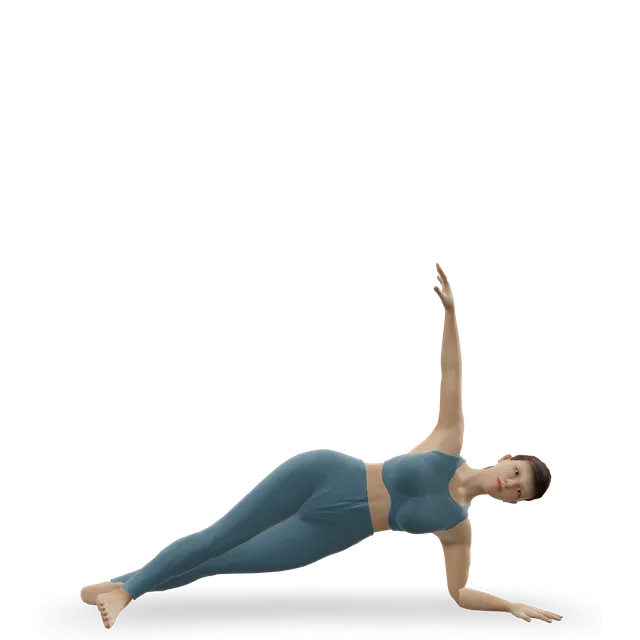
Knee side plank demonstrated on the 3D figure3D demoKnee side plankBeginner · No equipment

3 holds of 20 to 30 s each side · As in the knee pain when cycling guide

Harder: Side plank

Move on when: These stay within the pain rule, 30 to 45 minutes of swimming with a flutter or dolphin kick leaves the knee no worse the next morning, and one length of gentle breaststroke kick, holding a float, is pain-free (our suggestion).

Follow along: a timer, a cue and the next move, one step at a time.
Stage 3

Back to the breaststroke kick, and keep strong

From about week 6, then twice a week: single-leg and inner-thigh strength while the breaststroke kick comes back by the written steps below. Deep squats and lunges come back last, as a swimming review advises avoiding them while the inner knee is sore.

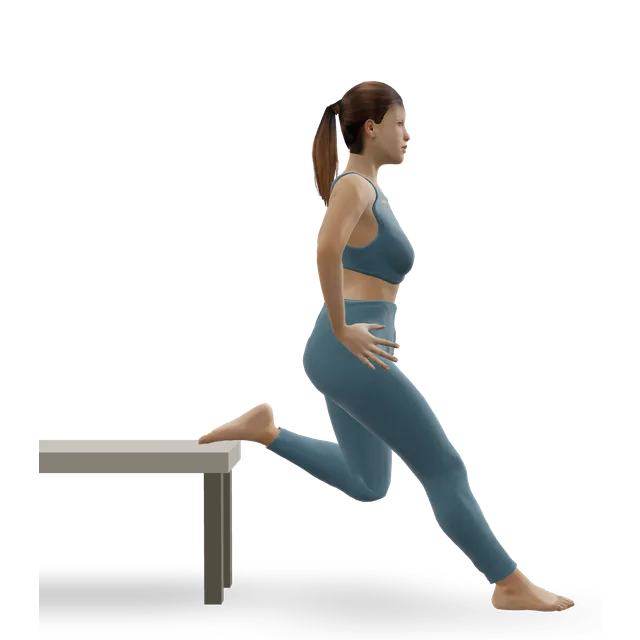
Rear-foot-elevated split squat (Bulgarian split squat) demonstrated on the 3D figure3D demoRear-foot-elevated split squat (Bulgarian split squat)Intermediate · A bench or box

3 sets of 6 to 8 each leg · As in the knee pain when cycling guide

Easier: Reverse lunge · Harder: Split squat jump

Single-leg Romanian deadlift demonstrated on the 3D figure3D demoSingle-leg Romanian deadliftAdvanced · A dumbbell

3 sets of 8 each leg · As in the knee pain when cycling guide. Fingertips on a wall at first

Easier: Dumbbell Romanian deadlift

Single-leg glute bridge demonstrated on the 3D figure3D demoSingle-leg glute bridgeIntermediate · No equipment

3 sets of 10 each leg · As in the knee pain when cycling guide

Easier: Glute bridge · Harder: Barbell hip thrust

Side plank with leg lift demonstrated on the 3D figure3D demoSide plank with leg liftAdvanced · No equipment

3 sets of 8 to 10 each side · As in the knee pain when cycling guide, once a side plank on your feet is steady, as the move page says

Easier: Side plank · Harder: Copenhagen plank

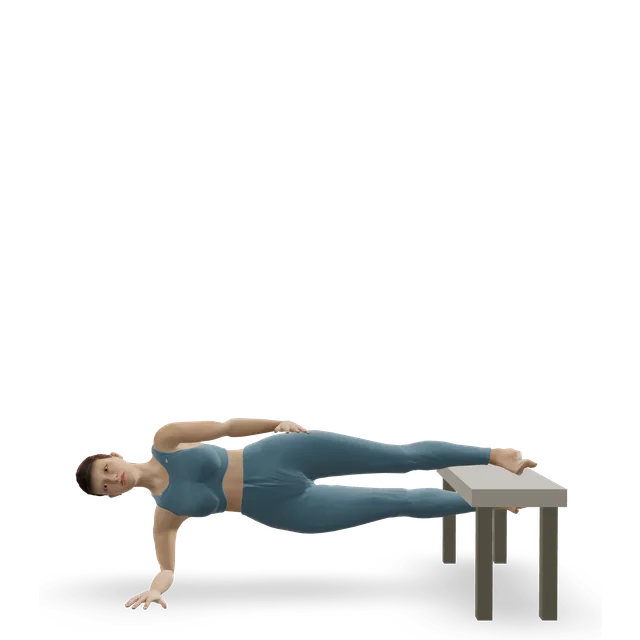
Copenhagen plank demonstrated on the 3D figure3D demoCopenhagen plankAdvanced · A bench or box

Short lever (the top knee on the bench), small sets, 3 times a week, then once a week · As in our groin strain guide. The short lever keeps the bench's push off the inner knee (our reasoning). Once a 30-second side plank is steady, and not during acute groin pain, as the move page says

Easier: Hip adduction machine

Dumbbell goblet squat demonstrated on the 3D figure3D demoDumbbell goblet squatIntermediate · A dumbbell

3 sets of 6 to 8, to a depth within the pain rule · As in our dryland workout for swimmers. Full depth comes back last

Easier: Bodyweight squat · Harder: Barbell front squat

Move on when: Our suggestion: the breaststroke kick comes back in short drills first, then distance, about 10% a week, mixed with other strokes, then hard push-offs, fins and fast breaststroke last, one at a time. Stop kicking breaststroke for that session (not the swim) at the first inner knee pain.

Follow along: a timer, a cue and the next move, one step at a time.

What to change for now

What to change in the pool today (written steps)

Our 3D figure can't show these changes. They come from small, old studies and expert reviews, not trials, and where a step is our suggestion, it says so.

  • 1. Cut the breaststroke kick first, as the original series advised. Keep swimming front crawl and backstroke, or breaststroke arms with a pull buoy or a flutter kick (our suggestion for the last); a review says the other strokes can usually carry on if they're pain-free.
  • 2. Leave fins out while the knee is sore: a return-to-swim protocol lists knee pain as a reason not to use them.
  • 3. Push off the wall gently, with less knee bend, or use open turns for now (our suggestion). Reviews describe forceful push-offs with the knee deeply bent loading the kneecap.
  • 4. If the front of the kneecap hurts, keep your flutter kick small and steady, with the legs close together, as Swim England teaches.
  • 5. Warm up for longer before any breaststroke, and early in each season build breaststroke distance very gradually: a shorter warm-up and more breaststroke distance went with more frequent pain.
  • 6. When the kick comes back, the advice differs. Swim England teaches knees just a little over hip-width apart, feet turned out and flexed, and heels drawn towards your bottom rather than knees to your chest; a swimming medicine review suggests keeping the knees closer together for a while. Agree any change with a coach: no trial has tested either.
  • 7. Water polo: shorter eggbeater blocks while the knee settles (our suggestion). With fatigue, the hips and ankles turned in more in a lab study of the eggbeater kick, which its authors link with kneecap pain.

Sources 3, 10, 2, 14, 21, 18, 22

The breaststroke kick comes back (written steps)

No trial has tested a return to the breaststroke kick. The order follows the old series' and a review's advice; the amounts are our suggestion.

  • 1. Stages 1 and 2: front crawl, backstroke and breaststroke arms with a pull buoy or a flutter kick, at about half your usual distance at first, with no fins and gentle push-offs.
  • 2. Start the breaststroke kick in short drills, one length at a time, after a long, easy warm-up, holding a float or on your back.
  • 3. Swim a similar session 3 or 4 times without inner knee pain before adding anything; then add breaststroke kick distance, about 10% a week, mixed with other strokes, before speed.
  • 4. Bring back hard push-offs, fins, kick sets with a board and fast or race-pace breaststroke last, one at a time.
  • 5. If the inner knee hurts during the kick, stop kicking breaststroke for that session and drop back a step. Ask a coach to check your kick if the pain keeps coming back.

Sources 3, 9, 10

Braces, ice, injections and surgery

We found no study of knee braces or taping in swimmers, and an international panel was uncertain about taping and bracing for kneecap pain. The old series and a review used ice and anti-inflammatory painkillers early on; ask a pharmacist whether they suit you (our suggestion). Injections and surgery are rarely needed, and a plica that doesn't settle has its own guide.

Sources 16, 3, 10

Positions to swap, and why

Habit or positionWhy it mattersInstead
Kicking breaststroke through inner knee painBreaststrokers who kept kicking through pain went on to have pain in other activities too, and cutting breaststroke is the first step.Front crawl, backstroke, or breaststroke arms with a pull buoy or a flutter kick.
Breaststroke kick sets and race-pace breaststrokeThe 200 to 400 m breaststroke carried 5 times the risk of knee pain in elite swimmers, and more breaststroke distance went with more frequent pain.Short, easy kick drills, brought back by the steps on this page.
Fins while the knee is soreA return-to-swim protocol lists knee pain as a reason not to use them.A gentle flutter kick without fins.
Hard push-offs from a deep knee bendReviews describe forceful push-offs with the knee deeply bent overloading the kneecap.Gentle push-offs with less knee bend, or open turns (our suggestion).
Going straight into breaststroke after a short warm-upA shorter warm-up went with more frequent knee pain in breaststrokers.A long, easy warm-up before any breaststroke.
Jump squats and box jumps in the dryland workout while the knee is soreA swimming medicine review advises avoiding land work that pushes the knee inwards, such as running, jumping, deep squats and lunges, while the inner knee is sore.Step-ups to a low step, knee over the middle toes.Try: Step-up
Walking lunges and deep squats where the knee drops inwardsThe same review advises avoiding them while the inner knee is sore.Mini squats to less than 30° of knee bend, then split squats to a depth within the pain rule.Try: Sit squat (partial squat)
Heel-elevated deep squats with a sore kneecapRaised heels tip the shins forward and give the knee more of the work, as our knee pain when cycling guide explains.Split squats to a depth within the pain rule; deep squats come back last.Try: Split squat
Reverse Nordics while the kneecap or inner knee is soreThey load the knee deeply bent under your body weight (our suggestion).Seated knee extensions, from 90° to about 45° if the full range hurts.Try: Seated knee extension (chair)
Long eggbeater blocks in water poloWith fatigue, the hips and ankles turned in more in a lab study, which its authors link with kneecap pain.Shorter blocks while the knee settles (our suggestion).
A knee brace or strap to swim through itThere's no study in swimmers, and an international panel was uncertain about taping and bracing for kneecap pain.The pool changes and the strength plan.

Routines to follow

More moves for this area

Questions people ask

What is breaststroker's knee?

Pain on the inside of the knee from the breaststroke whip kick: an overuse problem rather than one injury. It can come from the medial collateral ligament, the inner side of the kneecap, a thickened fold of joint lining (a plica), the joint lining itself or the pes anserine just below the knee. It's common in competitive breaststrokers: 86% of 36 had had it.

Why does my knee hurt when I swim breaststroke?

The kick bends the knee, turns the feet out and then straightens fast while the lower legs sweep round, pushing the knee inwards and twisting the shin outwards thousands of times a session. More breaststroke distance, more years of breaststroke, a short warm-up and less inward rotation at the hip went with more frequent pain.

Can I keep swimming with breaststroker's knee?

Usually: cut the breaststroke kick first and swim front crawl, backstroke or breaststroke arms with a pull buoy while it settles. A review says swimmers can usually keep swimming the other strokes if they're pain-free. The kick comes back last, in short, easy drills.

How should I kick breaststroke to protect my knees?

The advice differs. Swim England teaches knees just a little over hip-width apart, feet turned out and flexed, and heels drawn towards your bottom rather than knees pulled up to your chest; a swimming medicine review suggests keeping the knees closer together for a while. No trial has tested a kick change, so agree it with a coach.

Is it my MCL?

Sometimes: in 23 painful breaststrokers, 10 were tender along the MCL, but 18 were tender under the inner side of the kneecap. Pain under the inner kneecap that later hurts on stairs and squats points to the kneecap, and a sprain after a twist or a blow belongs to the MCL sprain guide.

Can front crawl hurt my knees?

Less often: front crawl carried half the knee pain risk of other events in elite swimmers. But forceful push-offs with the knee deeply bent, and a big flutter kick, can load the kneecap, reviews say, so keep the kick small and push off gently while it's sore.

Should I use fins?

Not while the knee is sore: a return-to-swim protocol lists knee pain as a reason not to use them. Bring them back once the knee has settled, in short sets (our suggestion).

What exercises help breaststroker's knee?

No trial has tested exercise for it. For kneecap pain in general, exercise eased pain by about 1.5 points out of 10, and hip and knee exercises together are recommended; an NHS leaflet starts with 3 sets of 8 to 12 of bridges, clams, straight-leg raises and mini squats. Swimming reviews add quadriceps strength and hip rotation range.

Is breaststroke bad for your knees?

Not for most people. The high rates come from competitive breaststroke specialists swimming big distances, and an NHS leaflet suggests swimming as a gentler option for kneecap pain. If breaststroke hurts, change the kick or the stroke rather than stopping swimming.

Do I need a scan?

Rarely. The knees of young elite swimmers without pain showed MRI changes in 69%, and meniscus tears are common without symptoms from mid-life. A scan is for a knee that locks, gives way, swelled within hours of a twist, or isn't settling despite the changes.

How long does breaststroker's knee last?

No study has followed it, so no one can promise a date. In one series, pain began within 3 years of starting breaststroke and spread to other activities in swimmers who kept kicking through it, which is why the kick comes back only once it's pain-free.

When is knee pain from swimming serious?

Get help from NHS 111 for a knee that locks, gives way or swelled after a twist on the poolside or a push-off, one you can't move or put weight on, or a hot, red, swollen knee with a high temperature. A pop at the front of the knee with a knee you can't straighten needs checking the same day.

Related exercise guides

Other pain guides

Sources

  1. Rodeo 1999 · Knee pain in competitive swimming (review, Clin Sports Med)
  2. Wanivenhaus 2012 · Injuries and prevention strategies in competitive swimmers (review, Sports Health)
  3. Rovere 1985 · Breaststroker's knee in 36 competitive swimmers (clinical series, Am J Sports Med)
  4. Vizsolyi 1987 · Breaststroker's knee: a survey of 391 swimmers and a film study (Am J Sports Med)
  5. Knobloch 2008 · Breaststroke events and knee overuse injuries in 341 elite swimmers (cohort, Sportverletz Sportschaden; German, English abstract)
  6. Atilla 2020 · Musculoskeletal injuries in 88 masters swimmers in Turkey (survey, Cureus)
  7. Hill 2022 · Injuries outside the shoulder in swimming (systematic review, Clin J Sport Med)
  8. Keskinen 1980 · Breaststroker's knee: keyhole surgery and film study of 9 swimmers (clinical series, Am J Sports Med)
  9. Stulberg 1980 · Breaststroker's knee in 23 swimmers: pathology, cause and treatment (clinical series, Am J Sports Med)
  10. Van Dorssen 2015 · The knee and back in swimming (review, Aspetar Sports Med J)
  11. Soder 2012 · Knee MRI in young swimmers without symptoms (case-control study, Br J Sports Med)
  12. Englund 2008 · Meniscal tears on MRI in middle-aged and older adults (population study, N Engl J Med)
  13. NHS · Knee pain
  14. Spigelman 2014 · A return to swimming protocol for competitive swimmers (clinical commentary with one case, Int J Sports Phys Ther)
  15. van der Heijden 2015 · Exercise for patellofemoral pain (Cochrane review)
  16. Collins 2018 · Exercise and physical treatments for patellofemoral pain (consensus statement, Br J Sports Med)
  17. Sherwood Forest Hospitals NHS Foundation Trust · Patellofemoral pain syndrome (patient leaflet, revised 2025)
  18. Swim England · Improving your breaststroke technique (2018)
  19. Thomeé 1997 · Pain monitoring in 40 young women with patellofemoral pain (RCT, Phys Ther)
  20. Smith 2017 · Should exercise be painful in chronic musculoskeletal pain? (meta-analysis, Br J Sports Med)
  21. Swim England · Improving your front crawl technique (2018)
  22. Oliveira 2016 · Fatigue and the eggbeater kick in water polo (lab study, Int J Sports Physiol Perform)

Exercise education, not a diagnosis or treatment plan. It is written from the guidelines and studies listed above; review by a clinician is pending. If your pain follows an injury, is severe, is getting worse, or comes with any warning sign listed on this page, get it assessed. Health disclaimer.