Pain guide · Neck pain

Neck pain when swimming (swimmer's neck): breathing, head position and how to build back

Neck pain in swimmers usually comes from turning the head too far to breathe, swimming with the head lifted to look forward, head-up breaststroke or lifting the head to sight in open water, and from swimming more than usual. It's common in masters swimmers, though the swimming evidence is thin: one small video study of 61 masters swimmers. The National Health Service (NHS) says most neck pain lasts a few weeks.

Small changes help: breathe with your body roll, keep one side of your face in the water, swim breaststroke face-in, and use backstroke or a snorkel while turning hurts (our suggestions, untested). Any neck injury from a dive or a fall is an emergency, so never dive into shallow water, and arm weakness or a sudden severe headache needs a 999 call, accident and emergency (A&E) or a same-day general practitioner (GP) appointment, as the warning signs say. This guide covers those signs, what to change in the pool, how much pain is fine and a three-stage plan with a 3D demo of every move.

When to get help first

Exercise is for pain that has been checked or is clearly mild and settling.

Get urgent medical help if

  • Call 999 or go to A&E after a neck injury if the person is unresponsive, has severe neck pain or cannot move their head, or fell from a height such as 5 or more stairs. Do not drive yourself. Being 65 or over, a dangerous fall or crash (from more than 1 metre or 5 steps, diving, a high-speed or rollover crash, being thrown from a vehicle, or a bike or horse-riding accident), or tingling in the arms or legs after an injury puts you at high risk of a broken neck: get checked.
  • Never dive head first into water whose depth you haven't checked, or into the shallow end of a pool. The Royal Life Saving Society UK allows a dive only into water at least 1.5 m deep with 7.6 m clear in front, from a standing start, and in open water the depth changes with the tide and you can't always see what's under the surface. If someone hits their head or neck on the bottom, call 999.
  • Same day after a neck injury: tingling or weakness in the arms or legs, clumsy hands (dropping things, trouble with buttons or zips), changes in bladder or bowel control, changed feeling around the bottom or genitals, a history of osteoporosis or rheumatoid arthritis, or feeling generally unwell.
  • Call 999 or go to A&E: a stiff neck with a fever, especially if bright light hurts your eyes, you have a rash that does not fade when you press a glass on it, or a very high or very low temperature with shivering. These can be signs of meningitis.
  • Call 999 or go to A&E: a headache that came on suddenly and is extremely painful; numbness or weakness in the face or body; a drooping face, or being unable to lift both arms and keep them up; difficulty speaking, swallowing, balancing, walking or remembering; double vision or loss of vision; drowsiness or confusion. A torn neck artery often starts with headache and neck pain, sometimes with dizziness or tingling, so head or neck pain unlike any you have had before needs checking.
  • Call 999 or go to A&E: new problems walking, loss of bladder or bowel control, or a sudden loss of coordination, such as difficulty doing up buttons. These can be signs of pressure on the spinal cord.
  • Call 999: chest pain that spreads to your arm, neck or jaw, especially with breathlessness, sweating or feeling sick. It could be a heart attack.
  • Same day (urgent GP appointment or NHS 111): severe neck pain that starts suddenly or gets worse quickly; heaviness or weakness in the arms or legs; pins and needles in an arm along with neck or arm pain; or pain between the shoulder blades.
  • Same day: clumsiness, numbness, pins and needles or weakness in one or both arms that is getting worse; problems with balance or walking since the neck pain started; or neck pain with a severe headache.

See a doctor or physiotherapist if

  • Neck pain or stiffness that has not eased after a few weeks, or after 8 weeks of looking after it yourself; painkillers are not helping; or you are worried. In many areas you can refer yourself to NHS physiotherapy.
  • Pins and needles or a cold arm alongside neck pain, or a new loss of strength or feeling in the arm that you cannot explain (a possible nerve problem).
  • Neck pain with feeling generally unwell, or that started while you were ill with another condition such as rheumatoid arthritis or cancer; or neck pain with blurred vision, ringing in the ears or dizziness.
  • Severe pain that is constant or disturbs your sleep, a fever or unexplained weight loss, or a history of cancer, inflammatory arthritis, tuberculosis (TB), a weakened immune system, neck surgery or a violent injury. Serious causes are very rare, but these need checking.
  • You are over 50 and your shoulders and neck stay stiff for more than 45 minutes each morning (possible polymyalgia rheumatica).
  • You can't turn your head far enough to breathe comfortably in front crawl or to look around you in open water: swim backstroke or not at all until you can, and see a GP if it doesn't ease within a few weeks (our suggestion, following the NHS advice not to drive or cycle while you can't move your neck).
  • After hitting your head on the wall, the floor or another swimmer, with any sign of concussion: stop swimming, and follow our concussion guide.

Where does it hurt?

Location narrows the likely causes; it does not diagnose.

The back or side of the neck, aching after swims, worse turning to breathe or with the head up

Ordinary neck pain from holding and turning the head. This guide covers it, and our neck pain guide goes further.

Read: Neck pain →
Stiff and sore to turn, often on waking, so you can't turn to breathe

A stiff (wry) neck. Don't swim front crawl until you can turn.

Read: Stiff neck and wry neck →
Across the tops of the shoulders and up into the neck, worse after long sets

The upper trapezius and levator scapulae muscles.

Read: Tech neck →
Down one arm, with tingling, numbness or weakness

Changing as you move your neck: a pinched nerve in the neck.

Read: Pinched nerve in the neck →
Aching, tingling or heaviness in the arm, worse with the arm overhead

Possibly thoracic outlet syndrome; the NHS lists lots of swimming among its causes.

Read: Thoracic outlet syndrome →
A headache starting at the back of the head after swimming, with a stiff neck

A headache from the neck. A sudden, severe headache is a 999 call.

Read: Headaches from the neck →
A headache across the forehead or temples after swimming, with tight goggles

Goggle pressure (our note): loosen or change them.

A stiff, achy neck from mid-life, worse looking up

Neck arthritis.

Read: Neck arthritis →
After hitting the bottom, the wall or another swimmer

A possible neck injury: the warning signs come first, then our whiplash guide.

Read: Whiplash →
The shoulder, made worse by the stroke rather than by moving your neck

Our shoulder pain when swimming guide covers it.

Read: Shoulder pain when swimming →
Between the shoulder blades

Upper back pain. The NHS asks for a GP check for pain between the shoulders.

Read: Upper and mid back pain →

Understand it

Who gets itEmerging evidence

In 61 masters front crawl swimmers, 55 recalled occasional or frequent neck pain over 5 years, more often in those who swam further each week. In 88 masters swimmers, 22% had neck pain lasting more than 10 days in a year; butterfly carried 4 times the risk of a neck injury in 341 elite swimmers; and 48% of triathletes in a survey had had neck pain. Neck pain is common in everyone, and the video study's authors note that some of it would happen anyway.

Sources 1, 2, 3, 4

What lies behind it, on thin evidenceEmerging evidence

The swimming evidence is one small video study: all 4 masters swimmers who over-rolled to breathe, and 4 of 5 who swam with the head extended to look forward, had neck pain. No trial has tested changing how you breathe or hold your head.

Swim England's advice is a head in line with the body, eyes forward and down, the head joining the shoulders' rotation only to breathe with one side of the face in the water, and in breaststroke the head rising with the shoulders and the eyes down in the glide. It warns that head-up breaststroke can strain the neck and back over time. In college swimmers, an eyes-forward head position went with other stroke faults, and swimmers' necks turn about 5 degrees further to their breathing side, an adaptation rather than a fault.

Sources 1, 5, 6, 7, 8, 9

Diving into shallow waterStrong evidence

A head-first dive into water that's too shallow can break the neck. In 160 people treated after shallow-water dives in northern Germany, 97.5% were men, average age 24; two-thirds were completely paralysed on admission, and 17% could walk by the end of their treatment. In 34 people hurt diving into swimming pools, 70% of the fractures were low in the neck.

The National Institute for Health and Care Excellence (NICE) counts diving among the dangerous ways to injure the neck. The Royal Life Saving Society UK allows a dive only into water at least 1.5 m deep with 7.6 m clear ahead, from a standing start, and RoSPA (the Royal Society for the Prevention of Accidents) warns that open-water depths change with the tide and that you can't always see what's under the surface. A review of the spine in swimming notes that the catastrophic neck injuries come from diving into shallow pools.

Sources 10, 11, 12, 13, 14, 15

When a scan helpsStrong evidence

Not without warning signs: 87.6% of 1,211 adults without symptoms had disc bulges on neck magnetic resonance imaging (MRI), including most people in their 20s. After a dive, a fall or a collision, health professionals use set rules to decide who needs imaging, and NHS inform's lists say who should call 999.

Sources 16, 12, 17

How it usually goesStrong evidence

The NHS says most neck pain lasts a few weeks, and NHS inform expects most new neck problems to improve within 8 weeks, with the biggest change in the first couple of weeks; if yours hasn't, it suggests talking to a healthcare professional. No study has followed swimmers' neck pain, and no one can promise a date.

Sources 18, 19

What helps, and how strong the evidence is

Strengthening helps long-lasting neck pain, in office workersEmerging evidence

For neck pain that lasts, a Cochrane review of 27 trials found moderate-quality evidence that strength training for the neck, shoulder blades and arms reduces pain by a moderate to large amount, while stretching alone may not help. In 48 women with long-lasting trapezius pain, 10 weeks of strength training for that muscle cut their worst pain by about 79%, while leg cycling gave only a small, short-lived drop. In 198 workers, 2 minutes a day of band training, 5 days a week, cut neck and shoulder pain by 1.4 points out of 10 at 10 weeks, and in 180 women office workers, neck training with head lifts and dumbbell shoulder work reduced pain over a year.

None of these trials was in swimmers, and general exercise wasn't a substitute for the specific strength work.

Sources 21, 22, 23, 24

Changing how you breathe and hold your head: advice, not trialsEmerging evidence

Swim England's technique advice (breathe with the body roll, one side of the face in the water, face-in breaststroke) fits the one video study, where over-rolling to breathe and swimming with the head extended went with neck pain. In a lab study of 18 elite swimmers, breathing to one side gave the most uneven hip roll and a centre-mounted snorkel the most even. No trial has tested any of these changes for neck pain, so the snorkel, backstroke and breathing to your comfortable side are untested suggestions.

Sources 1, 5, 6, 7, 25

Keep it movingStrong evidence

The NHS advises against a collar and says to keep the neck moving. NHS inform's exercise advice starts with 2 to 3 repetitions, little and often, adding 1 or 2 every few days towards about 10.

Sources 18, 20

How much pain is OK while you exercise?

The 5 out of 10 rule, the arm-symptom exception, and turning only as far as is comfortableEmerging evidence

For the exercises, this guide uses the neck hub's rule, from NHS inform's neck exercise advice: rate your pain from 0 to 10. During exercise, 0 to 3 is minimal and 4 to 5 is acceptable; 6 or more is too much. If it goes higher, do fewer repetitions, move more slowly or rest longer between movements.

Exercise should not make your neck worse overall. Soreness from a new exercise should ease quickly, and your neck should be no worse the next morning. Stop any exercise that makes your symptoms worse or causes new pain.

Arm symptoms are the exception, as in our neck pain guide: if an exercise sends pain, tingling or numbness further down your arm, or the extra symptoms last more than an hour afterwards, make the movement smaller or leave it out. Stop and get checked for dizziness, double vision, slurred speech, trouble swallowing or any of the warning signs.

In the pool (our suggestion): turn to breathe only as far as is comfortable, using more body roll, and swim backstroke or use a snorkel if you need to.

In the pool, this guide's rule is adapted from one expert commentary written for competitive swimmers coming back after shoulder surgery, so treat it as a sensible guide rather than a tested rule. If the sore area is back to its usual level by the next morning, the next swim can be the same or a little longer.

Soreness that lasts more than an hour after swimming, or into the next day: take a day off swimming, then repeat your last session rather than adding to it. Sore in the warm-up but gone within the first few hundred metres: repeat the same session, and if it comes back during that swim, stop, take 2 days off and come back a little shorter (the protocol cuts 300 yards, about 275 m). Sore in the warm-up and still sore after the first few hundred metres: stop for the day, take 2 days off and come back a little shorter.

Sources 20, 26

The exercise plan: 3 stages

Start at the first stage. Each move opens a full guide with a 3D demo.

Stage 1

Settle: keep it moving

The first days to about 2 weeks. Keep the neck moving little and often, as NHS inform advises. Swim only if you can turn your head comfortably, and then backstroke, breaststroke with your face in, or front crawl breathing to your comfortable side or with a snorkel (our suggestions). The doses are the neck hub's unless a source is named.

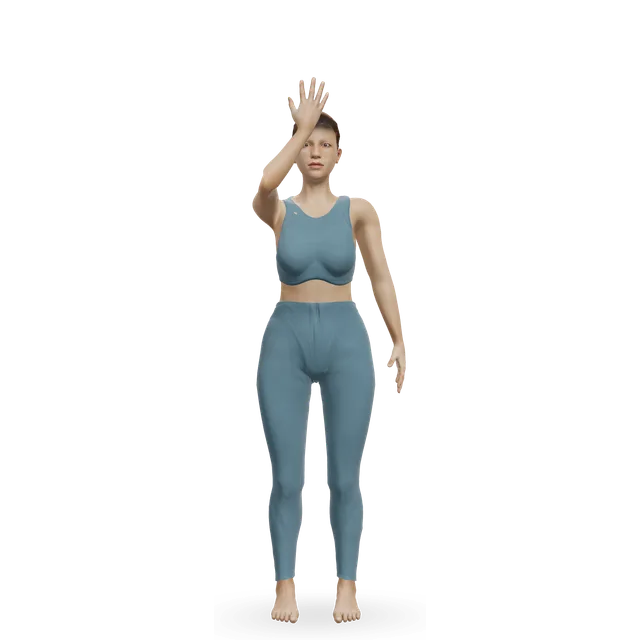
Neck CARs (controlled articular rotations) demonstrated on the 3D figure3D demoNeck CARs (controlled articular rotations)Beginner · No equipment

2 to 3 slow reps each direction, every hour or two, building towards about 10 · NHS inform's dose, as our neck pain when cycling guide uses it. Separate turns, tilts and nods before full circles, as the move page says

Harder: Rabbit pose (Sasangasana)

Chin tuck demonstrated on the 3D figure3D demoChin tuckBeginner · No equipment

5 to 10 slow reps with a 5 s hold, 2 to 3 times a day

Easier: Lying chin tuck · Harder: Isometric neck holds (four-way)

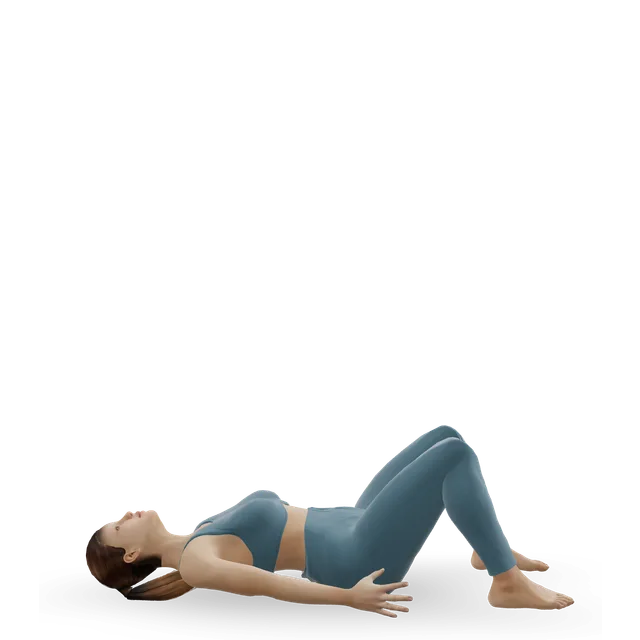
Lying chin tuck demonstrated on the 3D figure3D demoLying chin tuckBeginner · No equipment

5 to 10 gentle holds of up to 10 s, once or twice a day · As in the neck pain when cycling guide

Harder: Chin tuck

Thoracic rotation demonstrated on the 3D figure3D demoThoracic rotationBeginner · No equipment

6 rotations per side, moving with the breath · The move page's dose. Breathing in front crawl comes from rolling the body, not just turning the neck (our reasoning)

Easier: Side-lying open book · Harder: World's greatest stretch

Shoulder rolls demonstrated on the 3D figure3D demoShoulder rollsBeginner · No equipment

10 to 15 slow circles each way, once or twice through · The move page's dose

Harder: Shoulder CARs (controlled articular rotations)

Move on when: You can turn your head comfortably both ways, these stay within the pain rule, and 20 minutes of swimming in the changed way leaves your neck no worse the next morning.

Follow along: a timer, a cue and the next move, one step at a time.
Stage 2

Build: endurance for holding and turning the head

About weeks 2 to 6: endurance in the neck and shoulder-blade muscles, as in the neck trials, with upper-back rotation for breathing. The doses are the neck hub's unless a trial or the move page is named.

Isometric neck holds (four-way) demonstrated on the 3D figure3D demoIsometric neck holds (four-way)Beginner · No equipment

3 to 5 holds of 5 to 10 s each direction, light effort · Build towards 5 holds of 10 s at about half effort

Easier: Chin tuck · Harder: Chin tuck with head lift

Chin tuck with head lift demonstrated on the 3D figure3D demoChin tuck with head liftIntermediate · No equipment

3 to 5 holds of 5 s, building to 10 holds of 10 s · Head lifts were the endurance exercise in a 12-month neck pain trial

Easier: Chin tuck

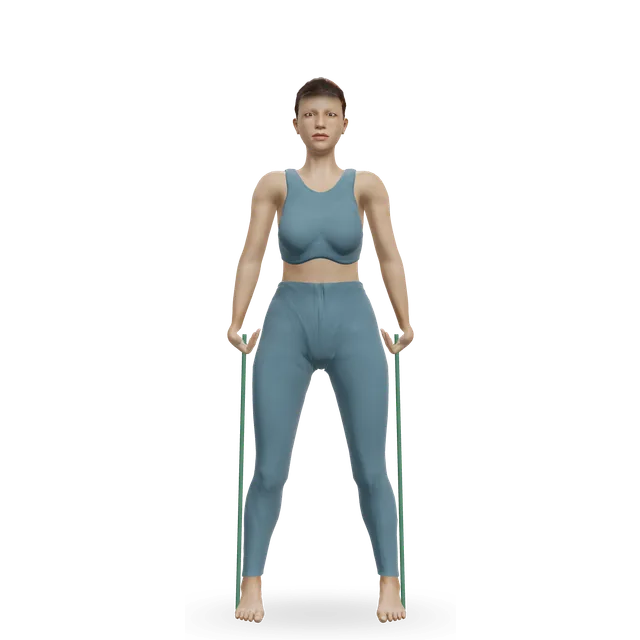
Band row demonstrated on the 3D figure3D demoBand rowBeginner · A band + An anchor point

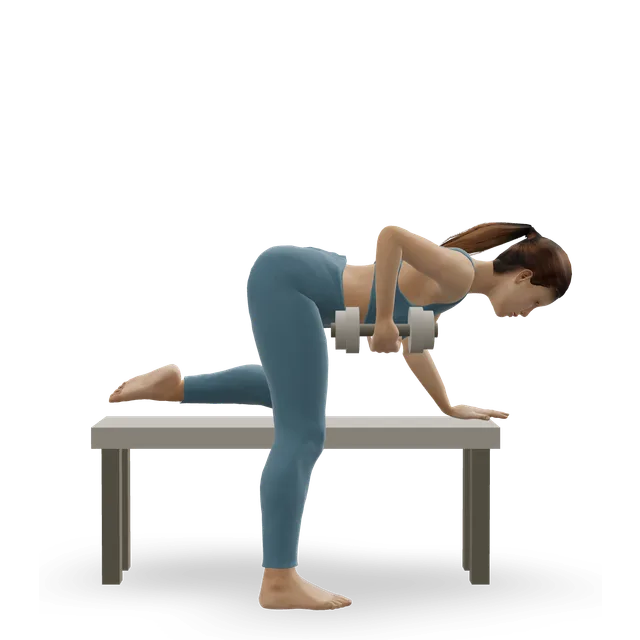
3 sets of 10 to 15, stopping 2 to 3 reps short of failure · The move page's dose

Harder: Supported single-arm dumbbell row

Band lateral raise demonstrated on the 3D figure3D demoBand lateral raiseBeginner · A band

2 minutes a day, 5 days a week, progressing the band · The trial dose in workers with neck and shoulder pain, as our neck pain when cycling guide uses it

Harder: Dumbbell lateral raise

Prone Y-T-W raises demonstrated on the 3D figure3D demoProne Y-T-W raisesBeginner · No equipment

5 to 8 of each shape, 2 rounds · As in the neck pain when cycling guide. Keep the neck long, as the move page says

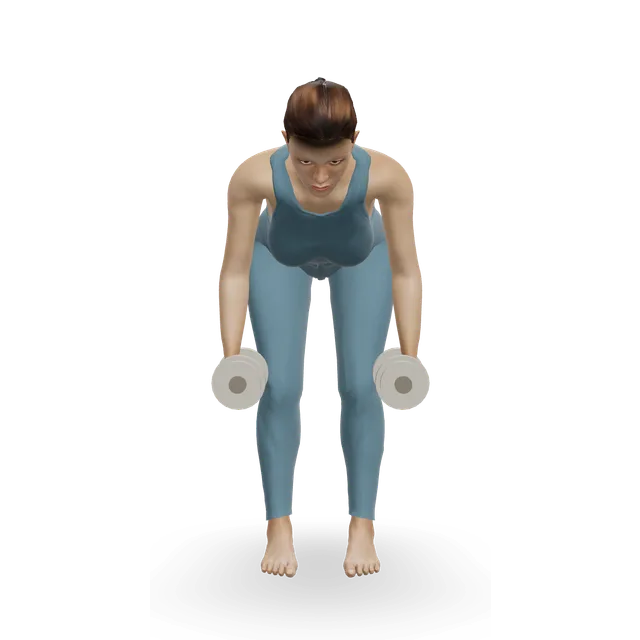
Easier: Wall angel · Harder: Bent-over reverse fly

Side-lying open book demonstrated on the 3D figure3D demoSide-lying open bookBeginner · No equipment

8 to 10 slow openings each side, pausing 2 s at the end · The move page's dose

Harder: Thoracic rotation

Move on when: 30 minutes of front crawl breathing to your comfortable side leaves your neck no worse the next morning.

Follow along: a timer, a cue and the next move, one step at a time.
Stage 3

Strength, and back to full swimming

From about week 6, two or three days a week, then ongoing: neck and upper-body strength, following the exercises our neck pain guide takes from a trial in women with trapezius muscle pain, while two-sided breathing and the other strokes come back by the written steps below.

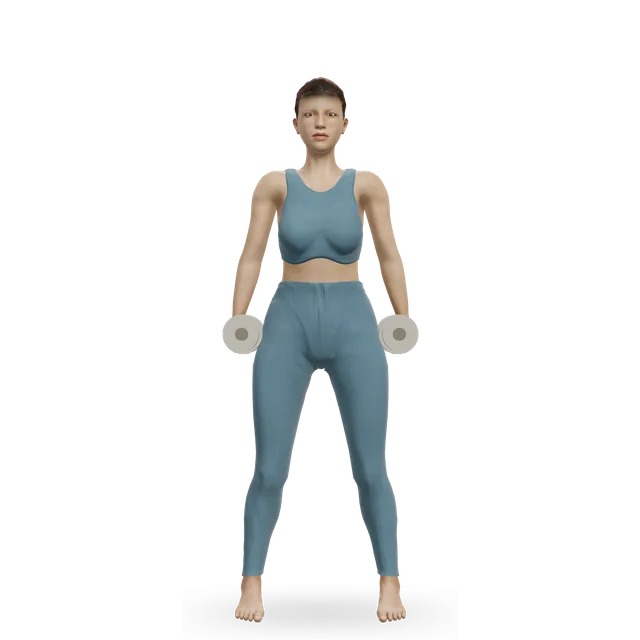
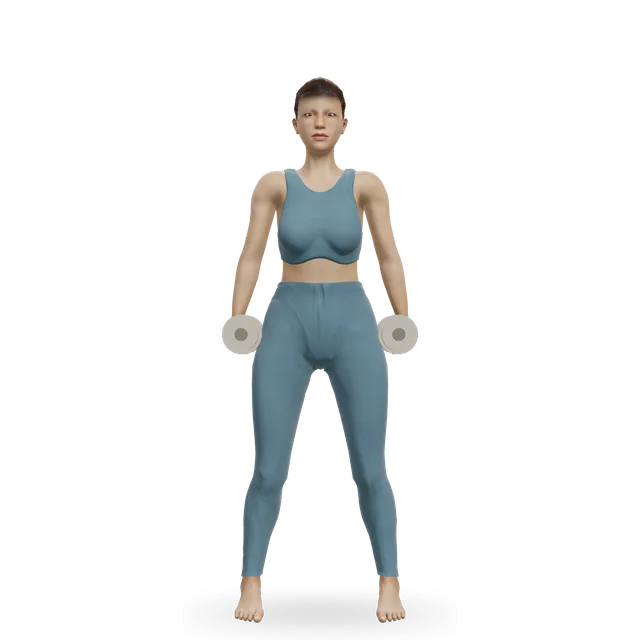
Dumbbell shrug demonstrated on the 3D figure3D demoDumbbell shrugBeginner · A dumbbell

3 sets of 8 to 12, pausing a second at the top · The neck hub's sets and reps, as in the neck pain when cycling guide, with the move page's pause

Harder: Snatch shrug

Isometric neck holds (four-way) demonstrated on the 3D figure3D demoIsometric neck holds (four-way)Beginner · No equipment

3 holds of 10 s each direction at moderate effort

Easier: Chin tuck · Harder: Chin tuck with head lift

Move on when: Our suggestion: keep adding distance, about 10% a week, while the pain rule holds; then two-sided breathing in short sets; then longer sighting practice in open water. Butterfly and head-up drills come back last, if at all.

Follow along: a timer, a cue and the next move, one step at a time.

What to change for now

What to change in the pool today (written steps)

Our 3D figure can't show these changes. Swim England's technique advice and one small video study are the evidence; the rest are our suggestions, untested for neck pain.

  • 1. Swim only when you can turn your head comfortably (our suggestion, following the NHS advice not to drive or cycle while you can't move your neck).
  • 2. In front crawl, turn your head as your body rolls, keep one side of your face in the water, and don't lift your head: Swim England's advice.
  • 3. While it's sore, breathe to your comfortable side; once it settles, add two-sided breathing (every 3 strokes), Swim England's standard technique, in short sets (our suggestion for the order).
  • 4. Swim breaststroke with your face in the water, letting your head rise with your shoulders to breathe and looking down in the glide. Swim England warns that head-up breaststroke can strain the neck and back over time, and suggests prescription goggles if you lift your head to see.
  • 5. Try backstroke, or a centre-mounted swim snorkel, for some lengths: neither needs a turn to breathe (our suggestion, untested for neck pain).
  • 6. In open water, lift your eyes rather than your whole head to sight, every 6 to 10 strokes, as our front crawl guide suggests, and practise in the pool first.
  • 7. Leave butterfly out for now: it carried 4 times the risk of a neck injury in elite swimmers.
  • 8. A tight goggle strap can cause a headache across the forehead; that isn't the neck (our note).

Sources 5, 6, 7, 1, 25, 18, 3

Swimming comes back (written steps)

No trial has tested a return after neck pain in swimmers. These steps are our suggestion.

  • 1. Front crawl breathing to your comfortable side, with the body roll; backstroke and face-in breaststroke; a snorkel for some lengths if turning is still sore.
  • 2. Swim a similar session 3 or 4 times within the pain rule before adding anything; then add distance, about 10% a week.
  • 3. Add two-sided breathing in short sets, then longer.
  • 4. In open water, build up your sighting time gradually.
  • 5. Butterfly and head-up drills last, if at all.

Sources 5, 6, 25

Collars, cracking and stretching

The NHS says don't wear a collar unless a doctor tells you to. Stretching alone may not help long-lasting neck pain. A torn neck artery is rare, but one was reported in a young professional swimmer after stretching on land: forcing your neck to crack, or stretching it hard to the end of its range, isn't needed.

Sources 18, 21, 27

Positions to swap, and why

Habit or positionWhy it mattersInstead
Front crawl while you can't turn your head to breatheThe NHS says not to drive or cycle while you can't move your neck; forcing the turn to breathe is the same problem (our suggestion).Backstroke, or front crawl with a centre-mounted snorkel, until you can turn comfortably.
Turning the head on its own to breathe, or lifting it to look forwardIn one small video study, swimmers who over-rolled to breathe or swam with the head extended had neck pain, and Swim England says the head should join the shoulders' rotation only to breathe.Breathe with the body roll, one side of your face in the water, eyes down.
Head-up breaststroke and heads-up drillsSwim England warns that head-up breaststroke can strain the neck and back over time.Your face in the water and eyes down in the glide; prescription goggles if you lift your head to see.
Lifting your whole head to sight every few strokes in open waterIt tips the neck back more than you need (our reasoning; untested).Lift your eyes just above the surface every 6 to 10 strokes, then turn to breathe.
Butterfly while the neck is soreButterfly carried 4 times the risk of a neck injury in elite swimmers.Other strokes within the pain rule.
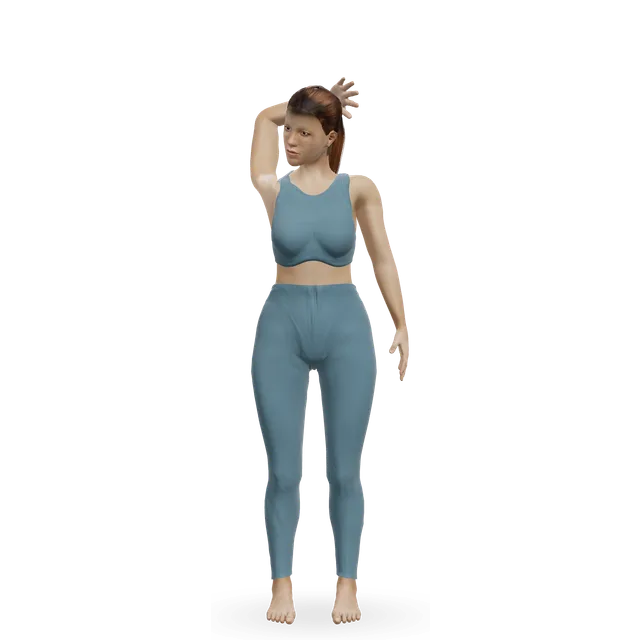
Pulling your head into a stretchPulling on the head at the end of the range is a lot for a sore neck or an irritated nerve, as our neck pain guide explains.Let the head's weight do the work, as in the upper trap release.Try: Upper trap release
The doorway chest stretch with tingling in the armOur neck pain guide lists arm tingling with the arm out to the side as a reason for care with this stretch.Shoulder-blade strength with the arms low.Try: Band row
Behind-the-neck pulldownsA cautious swap while the neck is sore, as our neck pain guide says.Pull down to the front.Try: Lat pulldown
Cracking your own neck, or forcing stretches to the end of the rangeForcing a crack isn't a treatment, and a torn neck artery was reported in a young swimmer after stretching on land.Gentle movement within comfort.
A soft collarThe NHS says don't wear a collar unless a doctor tells you to: it's better to keep your neck moving.Gentle movement, little and often.
Diving head first into water whose depth you haven't checkedShallow-water dives break necks and can paralyse, mostly in young men.Go in feet first; dive only into water at least 1.5 m deep with 7.6 m clear ahead.

Routines to follow

More moves for this area

Questions people ask

Why does my neck hurt when I swim?

Usually from turning your head too far to breathe, swimming with your head lifted, head-up breaststroke or lots of sighting in open water, and from swimming more than usual. In one small video study of masters swimmers, those who over-rolled to breathe or swam with the head extended had neck pain. Neck pain is common anyway, so the pool isn't always the cause.

Why does my neck hurt after front crawl?

Breathing turns the head to one side again and again. Swim England's advice is to let the head join the shoulders' rotation, keep one side of your face in the water and not lift your head. While it's sore, breathe to the comfortable side, use more body roll, or try backstroke or a snorkel for some lengths (our suggestions).

Why does breaststroke hurt my neck?

Swimming with the head held up keeps the neck tipped back for the whole swim, and Swim England says head-up breaststroke can strain the neck and back over time. Put your face in the water, let your head rise with your shoulders to breathe and look down in the glide; prescription goggles help if you swim head-up to see.

Should I breathe to both sides?

Once the neck has settled, some two-sided breathing evens out your body roll and is Swim England's standard technique. While it's sore, breathe to the comfortable side. No trial has tested breathing changes for neck pain.

Can I swim with a stiff neck?

Not front crawl until you can turn your head comfortably: the NHS says not to drive or cycle while you can't move your neck, and the same goes for turning to breathe (our suggestion). Backstroke, or front crawl with a snorkel, may be comfortable sooner.

Does a snorkel help neck pain?

It can: a centre-mounted swim snorkel lets you swim front crawl without turning your head, and gave the most even body roll in a lab study. It hasn't been tested for neck pain, so treat it as a short-term option (our suggestion).

Is swimming good for neck pain?

It can be, if you can breathe without forcing your neck. But strengthening has better evidence: neck and shoulder-blade strength training reduced long-lasting neck pain by a moderate to large amount, while general exercise barely changed neck muscle pain in a trial.

What exercises help a swimmer's neck?

Gentle movement little and often to start, then neck and shoulder-blade strength and endurance: head lifts, 2 minutes a day of band work and dumbbell shoulder exercises all helped in trials in office workers. The plan adds upper-back rotation, so you breathe with your body rather than your neck.

How long does neck pain from swimming last?

The NHS says most neck pain lasts a few weeks, and NHS inform expects most new neck problems to improve within 8 weeks, suggesting you talk to a healthcare professional if yours hasn't. No study has followed swimmers' neck pain, so no one can promise a date.

Do I need a scan?

Not without warning signs: 87.6% of adults without symptoms had disc bulges on neck MRI. After a dive, a fall or a collision, health professionals use set rules to decide who needs imaging.

Is it safe to dive into the shallow end?

No. Head-first dives into shallow water break necks, mostly in young men: in one series, two-thirds were completely paralysed on admission and 17% walked again. The Royal Life Saving Society UK allows a dive only into water at least 1.5 m deep with 7.6 m clear ahead, from a standing start.

When is neck pain after swimming serious?

After hitting the bottom, the wall or another swimmer, call 999 if the person is unresponsive, has severe neck pain or can't move their head, and get tingling in the arms or legs checked. A sudden, extremely painful headache, or a stiff neck with a fever and a rash, is a 999 call. Pins and needles or weakness in an arm needs a GP soon, or the same day if it's getting worse.

Related exercise guides

Other pain guides

Sources

  1. Rinonapoli 2023 · Shoulder and neck pain and front crawl technique in 61 masters swimmers (video and questionnaire study, Healthcare)
  2. Atilla 2020 · Musculoskeletal injuries in 88 masters swimmers in Turkey (survey, Cureus)
  3. Knobloch 2008 · Breaststroke events and knee overuse injuries in 341 elite swimmers (cohort, Sportverletz Sportschaden; German, English abstract)
  4. Villavicencio 2006 · Back and neck pain in triathletes (survey, Neurosurg Focus)
  5. Swim England · Improving your front crawl technique (2018)
  6. Swim England · Improving your breaststroke technique (2018)
  7. Swim England · Breaststroke basics: keeping your head down (2014)
  8. Virag 2014 · Freestyle stroke errors in 31 college swimmers (cross-sectional study, Sports Health)
  9. Guth 1995 · Neck rotation in 40 adolescent swimmers and 40 non-swimmers (comparative study, J Orthop Sports Phys Ther)
  10. Stuhr 2023 · Shallow-water diving spinal injuries in 160 people in northern Germany (retrospective series, Injury)
  11. Borius 2010 · Neck injuries from diving into swimming pools in 34 people (case series, Eur Spine J)
  12. NICE NG41 · Spinal injury: assessment and initial management (2016)
  13. Royal Life Saving Society UK · Guidance on diving (2023, updated 2024)
  14. RoSPA · Tombstoning
  15. Ferrell 1999 · The spine in swimming (review, Clin Sports Med)
  16. Nakashima 2015 · Neck MRI findings in 1,211 people without symptoms (cross-sectional study, Spine)
  17. NHS inform · Neck injury
  18. NHS · Neck pain and stiff neck (past its review date: reviewed April 2023, review due April 2026)
  19. NHS inform · Neck problems
  20. NHS inform · Exercises for neck problems
  21. Gross 2015 · Exercises for neck disorders (Cochrane review)
  22. Andersen 2008 · Specific strength training or leg cycling for trapezius muscle pain (RCT, Arthritis Rheum)
  23. Andersen 2011 · 2 minutes a day of band training for neck and shoulder pain in 198 workers (RCT, Pain)
  24. Ylinen 2003 · Neck muscle training in women with chronic neck pain (RCT, JAMA)
  25. Barden 2022 · Breathing side, a snorkel and hip roll in front crawl (lab study, Sensors)
  26. Spigelman 2014 · A return to swimming protocol for competitive swimmers (clinical commentary with one case, Int J Sports Phys Ther)
  27. Mohaghegh 2015 · A torn neck artery and stroke in a young swimmer (case report, Asian J Sports Med)
  28. NHS · Heart attack
  29. NHS · Thoracic outlet syndrome

Exercise education, not a diagnosis or treatment plan. It is written from the guidelines and studies listed above; review by a clinician is pending. If your pain follows an injury, is severe, is getting worse, or comes with any warning sign listed on this page, get it assessed. Health disclaimer.