Pain guide · Hip pain

Slipped upper femoral epiphysis (SUFE or SCFE): an urgent teenage hip problem, surgery and sport

A slipped upper femoral epiphysis (SUFE), called slipped capital femoral epiphysis (SCFE) in North America, is when the ball at the top of the thigh bone slips at its growth plate, usually during the growth spurt. It causes groin, hip, thigh or knee pain, often for weeks, and a limp, sometimes with the foot turned out; some teenagers only have knee pain. It is an emergency: a teenager with these signs needs to be seen the same day and shouldn't walk on the leg, because a delay lets the slip get worse.

The treatment is an operation, usually a single screw that holds the ball in place, within a day or two. Then come crutches, exercises and, after several months, sport, all as your team allows. This guide is for teenagers and parents: the warning signs, why it's so often missed, what surgery involves, the other hip, and a staged plan with 3D demos from the first days after surgery back to running and sport.

When to get help first

Exercise is for pain that has been checked or is clearly mild and settling.

Get urgent medical help if

  • Ask for an urgent GP appointment or get help from NHS 111 the same day if your child or teenager has pain in the hip, groin, thigh or knee and is limping, or can't put any weight on 1 leg. Hip problems can sometimes be felt in the thigh or knee, and some children with a slipped growth plate only have knee pain. Don't let them walk, run or play sport on it while you wait.
  • Go to A&E if they suddenly can't walk or put any weight on the leg, even with crutches, after a fall or twist or for no clear reason, or the leg is turned outwards and looks shorter. Carry them or use a wheelchair; don't let them walk on it. This can be an unstable slip, which needs urgent surgery.
  • Ask for an urgent GP appointment or get help from NHS 111 for severe pain in 1 joint that started suddenly, swelling around a joint, skin over a joint that has changed colour, or difficulty moving a joint, especially with a high temperature or feeling hot, cold or shivery: it could be a joint infection.
  • Call 999 or go to A&E if your child seems seriously unwell and you think it could be sepsis: they're breathing very fast or having difficulty breathing; have blue, grey, pale or blotchy skin, lips or tongue; have a rash that does not fade when you press it; are confused, not responding like they normally do, difficult to wake or more sleepy than usual; feel very hot or cold to the touch or are shivery; or, if they're under 5, haven't had a pee for 12 hours.
  • After an operation on the hip: a wound that is red, swollen, smelly or leaking, a high temperature or feeling hot, cold or shivery, or pain that is getting worse. Contact the surgical team the same day, or NHS 111 out of hours.
  • In a cast, boot or splint: pain that is getting worse, toes that are numb, tingling, swollen, blue or white, a cast that feels too tight, or a bad smell from under it. Contact the team the same day, or NHS 111 out of hours.
  • Same day (GP or NHS 111): throbbing pain and swelling in one leg, usually the calf or thigh, with red, blue or darker skin or swollen veins. It could be a blood clot (deep vein thrombosis, DVT), which is more likely while you're moving about much less than usual or after a hospital stay.
  • Pain and swelling in your hip or leg with breathlessness or chest pain: call 999 or go to A&E, and do not drive yourself. It can be a blood clot that has reached the lungs.
  • New pain in the other hip, groin, thigh or knee, or a new limp, in the months or years after a slipped growth plate: get it seen the same day. In a UK study, about 1 in 9 children whose other hip wasn't fixed needed surgery on that side within 2 years.

See a doctor or physiotherapist if

  • A teenager with weeks of groin, thigh or knee pain that comes and goes with activity, or who walks or runs with the foot turned out, even without a limp: ask the GP to examine the hip and arrange a hip X-ray, and say you're worried about a slipped growth plate. Once there is a limp, the same-day line above applies.
  • A slipped growth plate in a child under 10 or over 16, or in a child who is short or underweight for their age: ask about blood tests for a hormone or kidney cause.
  • After surgery: pain that is getting worse over days, a limp that isn't improving, or difficulty with the exercises. Contact the team or your physiotherapist.

Understand it

What it is

The growth plate at the top of the thigh bone is weaker than the bone around it. In SUFE, the ball (the epiphysis) slips backwards and downwards off the neck of the bone through the growth plate, a bit like a scoop of ice cream slipping off a cone. It usually happens in the growth spurt around puberty.

It usually develops gradually over weeks or months, but it can happen suddenly, sometimes after a minor fall. The UK name is slipped upper femoral epiphysis (SUFE); in North America it is slipped capital femoral epiphysis (SCFE).

Sources 1, 2, 3, 4

Who gets itStrong evidence

In a UK national study, 486 children (513 hips) were newly treated in Great Britain over 18 months: about 3 in every 100,000 children aged 6 to 18 each year. The median age was 12.7, with slightly more boys, and a US orthopaedic society gives 12 to 16 for boys and 10 to 14 for girls.

Being very overweight (obesity) is the main risk factor: it was recorded in 26% of the UK children. An underactive thyroid (1.9%) and other hormone conditions (1.5%), Down's syndrome (0.9%) and previous radiotherapy are rarer causes. But it isn't only a weight problem: in a US series of 193 children, a third linked the start of their symptoms to sport, most often basketball, and their weight was slightly lower than the others'.

Sources 5, 1, 6

How it shows: knee pain can be the only signEmerging evidence

Pain in the groin, hip, thigh or knee, often for weeks, worse with activity; a limp; a foot that turns outwards; and less movement at the hip, especially turning it inwards. Children may feel as if they've pulled a muscle.

Some children only have knee pain. In 106 US children, 15% first had pain in the knee or lower thigh, and they were more often misdiagnosed, had more unhelpful X-rays and had worse slips. In other US studies, knee pain went with longer delays, and in a matched comparison of 290 children, those with knee pain waited on average about 92 days longer for a hip X-ray and 82 days longer for surgery, and later needed more hip operations. A GP referral guide says to always examine the hip in any child or teenager with knee pain, and a US review says a groin strain is rare at this age.

Sources 1, 7, 8, 9, 10, 11, 12, 13, 14, 15

Delays are common, and they make it worseStrong evidence

In the UK study, 344 of 486 children waited more than a week from their first symptoms to treatment. Of 311 descriptions of the delay, 98 were families not seeking help yet, 96 were repeat visits with a first diagnosis such as a groin sprain or growing pains, 28 were X-rays first thought to be normal, and 26 were slips referred without urgency. In stable slips, the longer the wait, the worse the slip: a median of 1 month to diagnosis for mild slips, 2 for moderate and 3 for severe.

It's the same elsewhere: in Melbourne the diagnosis was missed at the first visit in 60% of 103 stable slips, and in 481 US children symptoms had lasted 17 weeks on average before diagnosis, with no improvement over a decade.

Sources 5, 16, 17

Stable and unstable slips, and what the X-rays show

Doctors call a slip stable if the child can put weight on the leg, with or without crutches, and unstable if they can't, even with crutches. Most are stable; 21% were unstable in the UK study. An unstable slip usually comes on suddenly with severe pain and a leg turned outwards, and it is much more likely to damage the blood supply to the ball.

X-rays of both hips confirm it, and a side view with the legs in a frog position picks up mild slips that a front view can miss. If the X-rays look normal but the symptoms fit, an MRI (magnetic resonance imaging) scan can catch a very early slip.

Sources 1, 5, 2, 15, 18

What happens after treatmentStrong evidence

The main worry is avascular necrosis: loss of the blood supply to the ball, which can make it collapse. Within 2 years in the UK study, it affected 7.1% of hips overall, 23% of unstable hips, 11.8% of stable hips that had open surgery to reposition the ball, and 1.8% of stable hips fixed where they lay. It may not show on X-ray for 12 to 18 months.

Other problems were rarer: rapid loss of the joint cartilage in 0.8%, a wound infection in 0.9%, and a screw entering the joint or working loose in about 1% each. By 2 years, 16% had had further surgery, and 2.5% had had or were waiting for a hip replacement.

Sources 5, 1

The other hipStrong evidence

In the UK study, 33 of 286 other hips that weren't fixed (11.5%) were operated on for a slip within 2 years, and being younger, under about 12.5, was the only predictor. A second slip happened in 10.8% of a US series, and in 43 of 201 hips under regular follow-up in Sweden. If the other side slips, it is usually within 18 months.

Sources 5, 17, 19, 1

What helps, and how strong the evidence is

Surgery is the treatment, usually within a day or twoStrong evidence

Every source agrees that a slipped growth plate is treated with surgery, to stop it slipping further. Before the operation the child is kept off the leg, usually admitted to hospital, and operated on within 24 to 48 hours in most cases. In the UK study, 85% of hips were fixed with a single screw through a small cut.

For some severe or unstable slips, surgeons reposition the ball in a bigger operation. In the UK study it carried 7.5 times the odds of avascular necrosis, and NICE (the National Institute for Health and Care Excellence) asks for special arrangements for consent and audit when it is done. No randomised trial supports any one operation, and a UK trial (Big BOSS) is comparing a screw with correcting the slip in 192 children aged 8 to 15 with severe stable slips. This guide doesn't advise on the choice of operation.

Sources 1, 8, 9, 5, 20, 21

Fixing the other hip too: a judgement callEmerging evidence

Some surgeons fix the unaffected hip at the same time, particularly in younger children or those with a hormone condition. In the UK study, 30% of unaffected hips were fixed: none of them slipped, but there were some complications, while 11.5% of the unfixed hips slipped within 2 years. Swedish surgeons judged fixing the other hip safe when done with the correct technique. Ask your surgeon what they advise for your child.

Sources 5, 1, 19

No exercise plan before a diagnosisEmerging evidence

Physiotherapy, massage or manipulation don't treat a slip. An 11-year-old referred to physical therapy for worsening knee pain turned out to have a slipped growth plate and was operated on the day it was found. Hip, thigh or knee pain with a limp in a 10 to 16 year old needs the hip examined and X-rayed first.

Sources 22, 10, 14

After surgery: crutches, exercises and a gradual return, as your team allowsEmerging evidence

Hospitals differ, depending on the operation: some ask for no weight on the leg for 6 weeks or more, others allow some weight sooner. After the bigger operation to reposition the ball, one NHS trust describes about 12 weeks without weight on the leg. A children's hospital in Birmingham says it depends on the surgeon and the operation, and gives a home exercise programme from the ward, which stages 1 and 2 of this plan follow. Your team's instructions come first.

Rehabilitation after SUFE surgery is poorly described in research. A US review suggests a step-by-step plan borrowed from hip arthroscopy, with crutches going once walking is normal and pain-free and a side-lying straight-leg lift is pain-free. In a US survey of 43 teenagers after a screw, 67% had used crutches for 4 weeks or less and 67% were back to full activities, including sport, by 6 months, with no complications; that is one small survey, not a timeline.

Sources 3, 23, 4, 24, 8, 9, 25, 26, 15

Back to sport: several months, and the surgeon decidesEmerging evidence

NHS leaflets say no PE or sport until the hip is well healed and strength has come back, which takes several months, and that the surgeon advises on sport, usually after about 3 months in one trust; after the bigger operation, another trust's leaflet allows no impact activity until the surgeon clears it. An Australian children's hospital keeps contact sport until the growth plate has healed, and a US review brings back running and then contact sport after the growth plate closes. Check-ups with X-rays continue every 3 to 4 months until the growth plate closes, usually 18 to 24 months.

In a European series of 32 teenagers, age, the size of the slip and whether it was stable didn't predict who returned to their previous activity. So the timeline is your surgeon's, not a fixed number.

Sources 3, 4, 25, 8, 15, 1, 27

Long term: mild and moderate slips usually do wellMixed evidence

In 61 Dutch patients followed for a mean of 18 years after a screw, 2% of mild slips, 11% of moderate and 75% of severe slips had severe arthritis. Groups treated decades ago show more problems: 34% of 93 Norwegian hips had been replaced at a mean of 52 years, and 37% of 172 Finnish hips at a median of 49 years. A review puts hip replacement at about 5% at 20 years, mostly after avascular necrosis.

The size of the slip drives the long-term result, which is why diagnosing it early matters.

Sources 28, 29, 30, 31

Weight and health: support, without promisesEmerging evidence

Obesity is the main risk factor, and a review suggests support with weight, blood pressure and lifestyle when SUFE is diagnosed. Children's health sites encourage a healthy weight and activity, with help from the team. No study has shown that losing weight prevents a slip on the other side, so the guide doesn't suggest it does.

Sources 5, 31, 2, 32

How much pain is OK while you exercise?

The surgical team's limits first; then 3 out of 10 or less, settling within an hour (borrowed from our hip arthroscopy guide)Emerging evidence

Before surgery there is no pain rule and no exercise plan: keep weight off the leg and get it seen the same day.

After surgery, the surgical team's limits come first: how much weight goes through the leg, crutches, how far to bend the hip, and PE and sport.

Within those limits, keep pain at 3 out of 10 or less during the exercises, settling within an hour, and no worse that night or the next morning. This rule is borrowed from our hip arthroscopy guide, where it is our suggestion built on NHS leaflets; it hasn't been tested after SUFE surgery. A US review's plan for SUFE rehabilitation is itself borrowed from hip arthroscopy.

A sharp pinch in the groin when bending, pain that builds over days, a new limp, or pain in the other hip or knee isn't covered by the rule: stop that movement and contact the team.

Sources 3, 15

The exercise plan: 4 stages

Start at the first stage. Each move opens a full guide with a 3D demo.

Stage 1

Protect the hip and keep it moving (the first weeks after surgery, as your team allows)

Crutches as your team instructs, and the home programme a Birmingham children's hospital teaches on the ward, done a few times a day (the frequency is editorial; follow your physiotherapist). No PE or sport.

Quad set (static quads) demonstrated on the 3D figure3D demoQuad set (static quads)Beginner · No equipment

Push the knee down and pull the toes up, hold 5 s, 10 times · Birmingham's programme

Harder: Straight-leg raise

Supine heel slide demonstrated on the 3D figure3D demoSupine heel slideBeginner · No equipment

Bend and straighten the operated leg 10 times · Birmingham's programme. Stay within the range your team allows

Harder: Hip windshield wipers

Seated knee extension (chair) demonstrated on the 3D figure3D demoSeated knee extension (chair)Beginner · A bench or box + Something with weight

Straighten the knee and hold 5 s, 10 times · Birmingham's programme, with no weight on the ankle

Easier: Quad set (static quads) · Harder: Leg extension

Ankle circles demonstrated on the 3D figure3D demoAnkle circlesBeginner · No equipment

10 slow circles each way, several times a day · The move page's dose; it keeps the blood moving while you're less active. Editorial frequency

Harder: Ankle CARs (controlled articular rotations)

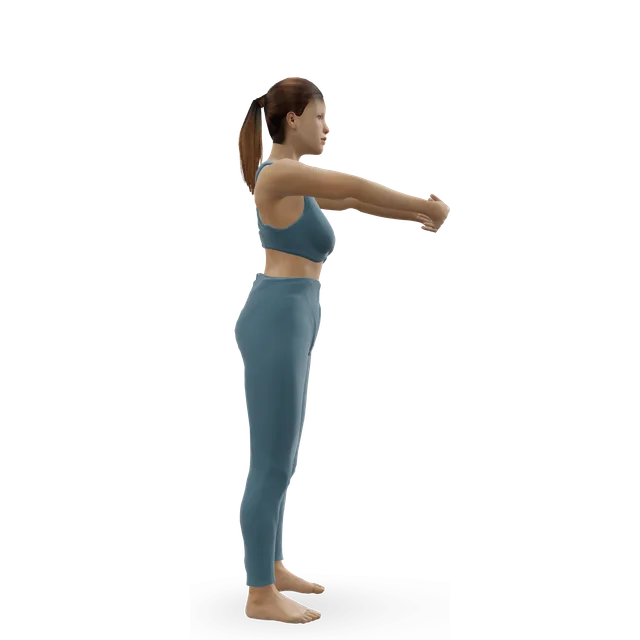
Supine isometric hip abduction (belt press) demonstrated on the 3D figure3D demoSupine isometric hip abduction (belt press)Beginner · A band

3 to 5 holds of 5 to 10 s at a light effort, twice a day · The move page's dose, from an adult hip trial's programme. Only if your team allows

Harder: Lateral band walk

Move on when: Your team allows more weight through the leg, walking on crutches is comfortable, and these exercises are easy.

Follow along: a timer, a cue and the next move, one step at a time.
Stage 2

Walk well, then off crutches (as your team allows)

The standing exercises from Birmingham's programme, holding a support, once your team allows weight through the leg, with outpatient physiotherapy to build your walking. Crutches can go when your walking is normal and pain-free and the side-lying leg lift is pain-free, and your team agrees.

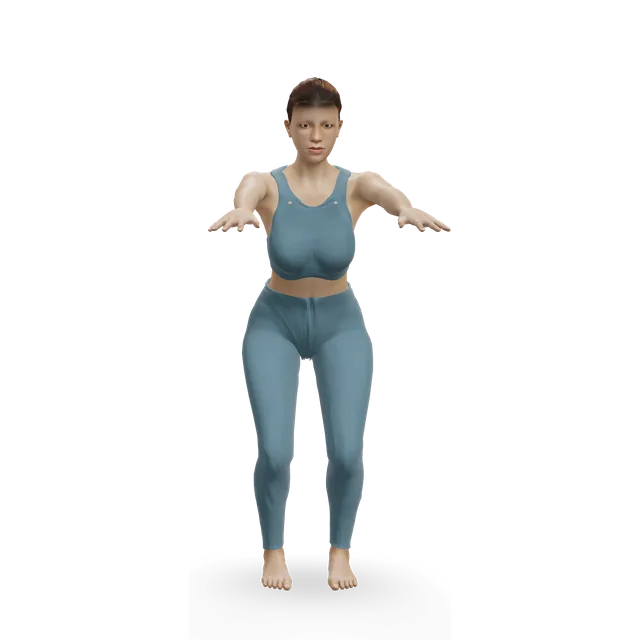
Sit squat (partial squat) demonstrated on the 3D figure3D demoSit squat (partial squat)Beginner · No equipment

10 slow mini knee bends, holding a table or chair · Birmingham's programme: heels down, back straight

Harder: Bodyweight squat

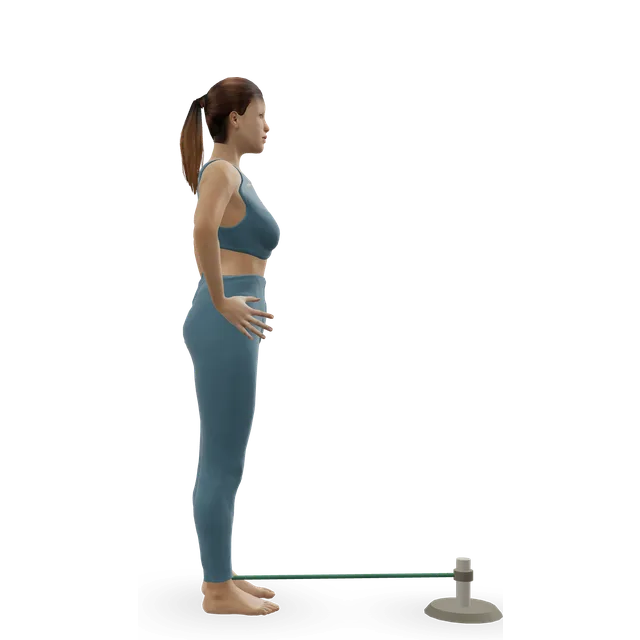
Standing band hip extension demonstrated on the 3D figure3D demoStanding band hip extensionBeginner · A band + An anchor point

Without a band at first: leg back with the knee straight, 10 times · Birmingham's programme, holding a support. Don't lean forwards; stop where the low back starts to arch

Harder: Back extension on a 45-degree bench

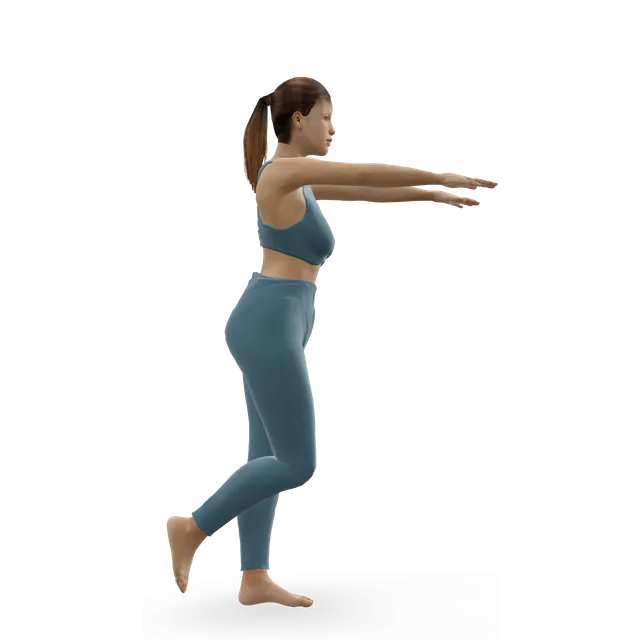
Wall side leg lift (standing side kick at the wall) demonstrated on the 3D figure3D demoWall side leg lift (standing side kick at the wall)Beginner · A wall

10 to 12 each side, holding the wall · The move page's dose; Birmingham's programme lifts the leg sideways 10 times

Harder: Lateral band walk, band at the feet

Slow calf raise demonstrated on the 3D figure3D demoSlow calf raiseBeginner · A wall

Up onto the toes 10 times, holding a support · Birmingham's programme

Easier: Seated bent-knee calf raise (soleus raise) · Harder: Standing dumbbell calf raise

Side-lying leg raise demonstrated on the 3D figure3D demoSide-lying leg raiseBeginner · No equipment

2 sets of 10 each side · Editorial. A pain-free lift is one of the checks before crutches go

Easier: Lateral band walk · Harder: Lateral band walk, band at the feet

Move on when: You walk without crutches or a limp, the side-lying lift is pain-free, and your team agrees.

Follow along: a timer, a cue and the next move, one step at a time.
Stage 3

Strength and fitness (as your team allows)

Strength for the hip and thigh 2 to 3 times a week, plus fitness that is easy on the hip (editorial). No PE or sport yet.

Glute bridge demonstrated on the 3D figure3D demoGlute bridgeBeginner · No equipment

Hold 5 s, 10 times, then 2 to 3 sets of 10 · Editorial

Easier: Pelvic tilt into bridge · Harder: Single-leg glute bridge

Step-up demonstrated on the 3D figure3D demoStep-upBeginner · A step

2 to 3 sets of 8 to 10 each leg, low step first · Editorial

Easier: Low step-up · Harder: Dumbbell step-up

Split squat demonstrated on the 3D figure3D demoSplit squatIntermediate · No equipment

2 to 3 sets of 8 each leg, holding a support · Editorial. Shorten the range rather than push through pain

Easier: Bodyweight squat · Harder: Reverse lunge

Single-leg stand demonstrated on the 3D figure3D demoSingle-leg standBeginner · A wall

3 holds of 30 s on each leg, pelvis level · Editorial

Easier: Tandem stance and heel-to-toe walk · Harder: Single-leg reach matrix

Elliptical trainer demonstrated on the 3D figure3D demoElliptical trainerBeginner · Cardio machine

10 to 20 min at a moderate effort, building towards 30 · The move page's dose. A bike is fine instead

Harder: Stair-stepper machine

Move on when: Strength and control are close to the other side (a level pelvis on one leg for 30 seconds, and step-ups without the knee drifting in), and your surgeon has cleared you for running. These checks are editorial, borrowed from our hip arthroscopy guide.

Follow along: a timer, a cue and the next move, one step at a time.
Stage 4

Back to running and sport (only when your surgeon clears it)

Sport usually waits several months, and some teams keep contact sport until the growth plate has closed. Straight-line running first, then changes of direction, then your sport (an editorial order, as in a US review's plan).

Treadmill jogging demonstrated on the 3D figure3D demoTreadmill joggingIntermediate · Cardio machine

Walk-jog intervals every other day, building time before speed · Editorial

Easier: Treadmill walking · Harder: Sprint intervals

Ankle bounces (mini pogo) demonstrated on the 3D figure3D demoAnkle bounces (mini pogo)Beginner · No equipment

2 sets of 20 quiet bounces · Editorial

Harder: Pogo hops

Single-leg hop and stick demonstrated on the 3D figure3D demoSingle-leg hop and stickIntermediate · No equipment

2 to 3 sets of 5 on each leg, small hops in one direction first · Editorial

Easier: Standing broad jump with stuck landing · Harder: Alternate-leg bounding

Lateral cone hops demonstrated on the 3D figure3D demoLateral cone hopsIntermediate · Other / check instructions

2 sets of 10 side to side, for sports with cutting and turning · Editorial

Easier: Lateral bound (skater jump) · Harder: Single-leg cone hops

Move on when: Your surgeon clears sport, and you can run, hop, land and change direction without pain or a limp. Keep the strength work going twice a week. Any new pain in either hip, groin, thigh or knee: stop, and get it seen the same day.

Follow along: a timer, a cue and the next move, one step at a time.

What to change for now

Before surgery: no exercise, and no walking on it

Until the hip has been seen and treated, keep weight off the leg: rest, use a wheelchair or crutches, or be carried. Don't exercise, stretch or play sport on it. Most teams admit the child to hospital and operate within a day or two.

Sources 8, 9, 1, 18

Early exercises the figure can't show (Birmingham's programme)

From a Birmingham children's hospital's home programme, done from the ward. Follow your own physiotherapist's version if it differs.

  • 1. Buttock squeezes: lying on your back, squeeze your buttocks together, hold about 5 seconds and relax. Repeat 10 times.
  • 2. Leg out to the side: lying on your back, slide the operated leg out to the side and back to the middle. Repeat 10 times.
  • 3. Inner-range quads: with a rolled-up towel under the operated knee, pull the toes up, tighten the thigh and straighten the knee, keeping it on the towel. Hold about 5 seconds and relax. Repeat 10 times.
  • 4. Lying on your front, to stretch the front of the hip: relax there for about 20 minutes. If lying on your tummy is too hard at first, lie flat on your back with a pillow under your hips.
  • 5. Stairs on crutches, holding the rail: going up, the good leg first, then the operated leg, then the crutch; going down, the crutch first, then the operated leg, then the good leg. One step at a time.

Source 3

Crutches and weight: hospitals differ

Some hospitals ask for no weight on the leg for 6 weeks or more; others allow some weight sooner, depending on the operation. After the bigger operation to reposition the ball, one NHS trust describes about 12 weeks without weight on the leg and a boot in bed for part of that time. Your team's instructions come first, and they may change at each check-up.

Sources 23, 4, 24, 3, 8, 9, 25

School, ice and pain relief

Most teenagers go back to school once they're comfortable and safe on crutches, though some schools won't allow crutches, and some surgeons advise 6 weeks off, so talk to school early. Ice wrapped in a damp towel for 10 to 15 minutes, every 3 to 4 hours, can ease pain and swelling; keep the dressing dry. Take painkillers regularly in the first days, as the team advises, so you can move and do the exercises.

Sources 3, 25

Follow-up, and the other hip

Expect check-ups with X-rays every 3 to 4 months until the growth plates close, usually 18 to 24 months, watching both hips. Any new pain in the other hip, groin, thigh or knee needs the same-day route.

Sources 1, 19

Positions to swap, and why

Habit or positionWhy it mattersInstead
Walking, running or sport on a painful hip with a limp while waiting to be seenIt can make the slip worse; keep weight off the leg until it has been treated.Crutches, a wheelchair or being carried, and a same-day assessment.
Treating weeks of groin, thigh or knee pain as a strain or growing painsIn the UK study, 96 of 311 accounts of delay involved repeat visits with labels like these, and longer delays meant worse slips.A same-day GP or NHS 111 appointment, and a hip X-ray.
Physiotherapy, massage or manipulation for knee or hip pain with a limp before a hip X-rayIt doesn't treat a slip, and knee pain can be the only sign.Ask for the hip to be examined and X-rayed.
Mini squats with your full weight before your team allows itHow much weight the leg can take after surgery depends on the operation.The lying exercises from stage 1.Try: Quad set (static quads)
Jogging, PE or sport before your surgeon clears youSport usually waits several months, and some teams keep contact sport until the growth plate has closed.Stage 3 strength work and the cross-trainer.Try: Elliptical trainer
Deep squats or forcing the hip to bend early after surgeryYour team may limit how far the hip bends for a while (our reasoning).Stay within the range your team allows.
Ignoring new pain in the other hip, groin, thigh or kneeAbout 1 in 9 hips that weren't fixed slipped within 2 years in the UK study.A same-day check.

Routines to follow

More moves for this area

Questions people ask

What is a slipped upper femoral epiphysis (SUFE)?

The ball at the top of the thigh bone slips at its growth plate, usually during the growth spurt. It's also called a slipped capital femoral epiphysis (SCFE), or a slipped hip growth plate.

What are the symptoms?

Pain in the groin, hip, thigh or knee, often for weeks and worse with activity, a limp, and a foot that turns outwards. Some children only have knee pain, so a hip problem is easy to miss.

Is it an emergency?

Yes. A teenager with hip, thigh or knee pain and a limp, or who can't put weight on the leg, should be seen the same day and shouldn't walk on it while waiting. Delays let the slip get worse.

Who gets it?

Mostly 10 to 16 year olds, about 3 in every 100,000 a year in the UK. Being very overweight is the main risk factor, but active children of any build can get it, and a third of slips in one series started with sport.

How is it treated?

With surgery, almost always a screw across the growth plate to stop it slipping further, usually within a day or two. Some severe slips need a bigger operation to reposition the ball.

Will the other hip need a screw too?

Sometimes. In a UK study, about 1 in 9 children whose other hip wasn't fixed needed surgery on it within 2 years, more often if they were under about 12 and a half. Some surgeons fix both hips at the first operation.

How long are crutches needed?

It depends on the operation and the hospital: some hospitals ask for no weight on the leg for 6 weeks or more, and others allow some weight sooner. Your surgeon's instructions come first.

What exercises help after surgery?

Gentle bed and chair exercises from the start (tightening the thigh, bending the leg, buttock squeezes), then standing exercises holding a support, then strength work, as your team allows. Crutches usually go once walking is normal and pain-free.

When can I go back to school, PE and sport?

School once you're comfortable and safe on crutches, or as your surgeon advises. PE and sport usually wait several months, until the hip has healed and your strength is back, and some teams wait for the growth plate to close before contact sport.

Will my hip be normal afterwards?

Most mild and moderate slips do well for decades: in one study, 2% of mild and 11% of moderate slips had severe arthritis about 18 years later, against 75% of severe slips. That's why early diagnosis matters.

What follow-up is needed?

Check-ups with X-rays every few months until the growth plates close, usually 18 to 24 months, watching both hips. New pain on either side needs a same-day check.

Can adults get it?

No: it needs an open growth plate. Adults who had SUFE as children can later get hip impingement or arthritis, which have their own guides.

Related exercise guides

Other pain guides

Sources

  1. AAOS OrthoInfo · Slipped capital femoral epiphysis (SCFE)
  2. Nemours KidsHealth · Slipped capital femoral epiphysis (SCFE) (for parents)
  3. Birmingham Women's and Children's NHS · Slipped upper femoral epiphysis (SUFE): information for young people (2025)
  4. University Hospitals of Leicester NHS · Treatment for your child's SUFE hip condition (patient leaflet, 2019)
  5. Perry 2022 · Slipped capital femoral epiphysis in Great Britain: 486 children followed for 2 years (national cohort, Bone Joint J)
  6. Loder 2023 · Slipped capital femoral epiphysis that started with sport: 193 children (case series, Sports Health)
  7. East Sussex Healthcare NHS · Slipped capital femoral epiphysis (physiotherapy leaflet, 2022)
  8. Royal Children's Hospital Melbourne · Slipped upper femoral epiphysis (SUFE) (Kids Health Info, 2025)
  9. KidsHealth NZ · Slipped upper femoral epiphysis (SUFE)
  10. Matava 1999 · Knee pain as the first symptom of a slipped capital femoral epiphysis: 106 children (cohort, J Pediatr Orthop)
  11. Kocher 2004 · Delay in diagnosis of slipped capital femoral epiphysis: 196 children (cohort, Pediatrics)
  12. Hosseinzadeh 2017 · Delay in diagnosing stable slipped capital femoral epiphysis: 149 children (cohort, J Pediatr Orthop)
  13. Momtaz 2025 · Hip or knee pain first, and time to X-ray and surgery for a slipped capital femoral epiphysis (matched cohort, J Pediatr Orthop)
  14. Coventry and Rugby GP Referral Gateway · Paediatric orthopaedics (referral guidance, reviewed 2024)
  15. Peck 2017 · Slipped capital femoral epiphysis: diagnosis and management (review, Am Fam Physician)
  16. Weigall 2010 · Delays in diagnosing slipped upper femoral epiphysis in 103 stable slips (audit, Aust Fam Physician)
  17. Schur 2016 · Continuing delay in diagnosing slipped capital femoral epiphysis: 481 children (cohort, J Pediatr)
  18. Truong 2022 · Slipped upper femoral epiphysis: an important cause of hip pain in children (case report, Aust J Gen Pract)
  19. Herngren 2018 · Outcomes after a slipped capital femoral epiphysis: 379 Swedish children (national cohort, J Child Orthop)
  20. NICE HTG365 · Open reduction of slipped capital femoral epiphysis (interventional procedures guidance, 2015)
  21. Health Research Authority · The Big BOSS Study: surgery for severe stable slips (trial summary, ISRCTN59719122)
  22. Greene 2008 · A slipped capital femoral epiphysis in a child referred to physical therapy for knee pain (case report, J Orthop Sports Phys Ther)
  23. West Suffolk NHS · Slipped upper femoral epiphysis (SUFE) (patient leaflet, 2021)
  24. Swansea Bay University Health Board · Slipped upper femoral epiphysis (physiotherapy leaflet, reviewed 2020)
  25. Royal Berkshire NHS · Modified Dunn's procedure for slipped upper femoral epiphysis in children (patient leaflet, 2024)
  26. Anand 2007 · Crutches and activity after pinning for a slipped capital femoral epiphysis: 43 patients (survey, Am J Orthop)
  27. Giovanoulis 2023 · Return to physical activity after surgery for a slipped capital femoral epiphysis: 32 adolescents (cohort, Maedica)
  28. de Poorter 2016 · Long-term outcomes of in situ pinning for a slipped capital femoral epiphysis: 61 patients (cohort, J Child Orthop)
  29. Terjesen 2025 · In situ fixation for mild and moderate slips: 93 hips followed for 50 years (cohort, JBJS Open Access)
  30. Schlenzka 2023 · Hip replacement after in situ fixation: 172 hips followed for a median of 49 years (cohort, Bone Joint J)
  31. Mathew 2019 · Natural history of slipped capital femoral epiphysis (review, J Pediatr Orthop)
  32. Steps Charity Worldwide · Slipped upper femoral epiphysis (SUFE)
  33. NHS · Hip pain in children (irritable hip)
  34. NHS · Septic arthritis
  35. NHS · Sepsis

Exercise education, not a diagnosis or treatment plan. It is written from the guidelines and studies listed above; review by a clinician is pending. If your pain follows an injury, is severe, is getting worse, or comes with any warning sign listed on this page, get it assessed. Health disclaimer.