Pain guide · Hip pain

Irritable hip (transient synovitis): a young child's sudden limp, and telling it from infection

Irritable hip, or transient synovitis, is a short-lived inflammation of the lining of the hip joint. It is the commonest cause of a sudden limp and hip pain in children, usually aged 3 to 8, often after a cold, and the pain can be felt in the groin, thigh or knee. It usually gets better in 1 or 2 weeks without lasting problems, but a limp should always be checked, because a joint infection can look the same at first.

This guide is for parents: the signs that need help the same day, how doctors tell irritable hip from infection, what helps at home, when your child can go back to nursery, school and sport, when to go back to the doctor, and gentle ways back to normal play.

When to get help first

Exercise is for pain that has been checked or is clearly mild and settling.

Get urgent medical help if

  • Ask for an urgent GP appointment or get help from NHS 111 the same day if your child gets sudden pain in their hip, thigh or knee, or is limping or can't put any weight on 1 leg. Hip problems can sometimes be felt in the thigh or knee.
  • Call 999 or go to A&E if a baby or child under 5 is breathing very fast or having difficulty breathing; has blue, grey, pale or blotchy skin, lips or tongue; has a rash that does not fade when pressed; has a very high temperature (38°C or more under 3 months, 39°C or more at 3 to 6 months) or a very low one (under 36°C, or feels cold or shivery); has a weak, high-pitched or continuous cry; is not responding normally, not feeding, difficult to wake or more sleepy than usual; or hasn't had a pee for 12 hours. These can be signs of sepsis.
  • If your child has been diagnosed with irritable hip, go back to A&E the same day if they become unwell or develop a high temperature (38°C or more), the pain is getting worse or isn't controlled by children's painkillers, they can't put any weight at all on the leg, a joint becomes red, hot or swollen, they have pain at night or night sweats, bruising without an injury, or weakness, pins and needles or numbness in the legs.
  • Take your child back to the GP urgently if their hip pain is getting worse or has not improved; they get a high temperature, or feel hot, cold or shivery; they're still in pain after 2 weeks; or their hip pain went away but has come back.
  • Pain, swelling, redness and warmth over a bone, or a very high temperature with feeling generally unwell: ask for an urgent GP appointment or contact NHS 111. It could be a bone infection. Take your child to a GP if they don't want to use a leg and seem irritable: young children don't always get a high temperature with a bone infection.
  • Ask for an urgent GP appointment or get help from NHS 111 for severe pain in 1 joint that started suddenly, swelling around a joint, skin over a joint that has changed colour, or difficulty moving a joint, especially with a high temperature or feeling hot, cold or shivery: it could be a joint infection.

See a doctor or physiotherapist if

  • Your child isn't improving after about 5 to 7 days, isn't back to normal by 2 weeks, or keeps having episodes: see a GP. A limp that lasts or keeps coming back needs checking for Perthes disease.
  • In a child under 3, any limp without a clear cause needs checking: irritable hip is less common at this age, and infection more likely.
  • See a GP if your child has a rash, swelling or unusual bruising on the legs, leg pain and a high temperature, is unusually tired or sleepy a lot of the time, or doesn't want to eat or is losing weight.
  • See a GP for bone pain or tenderness, particularly if it's worse at night, or a lump or swelling that is growing.

Understand it

What it is

A short-lived inflammation of the lining of the hip joint, with extra fluid in the joint, that causes pain and a limp. The NHS calls it the most common cause of hip pain in children.

Nobody knows the cause. It often follows a viral illness, such as a cold, a sore throat or diarrhoea and vomiting, or a minor injury, but that isn't proven: a Merseyside study found no seasonal pattern, which casts some doubt on the virus theory, and a Glasgow department saw different seasonal peaks in two years. A child with irritable hip usually holds the hip bent and turned outwards, the position the extra fluid makes most comfortable.

Sources 1, 2, 3, 4, 5, 6, 7

Who gets itStrong evidence

Usually children aged about 3 to 8, most often around 5 or 6, and boys 2 to 3 times as often as girls. In Merseyside it was diagnosed in about 25 in every 100,000 children aged 0 to 14 each year, at an average age of 5.4. A Glasgow children's emergency department diagnosed about 360 a year, at an average age of 3.3. In a Swedish study about 0.2% of children were diagnosed each year, a 3% chance of at least one episode in childhood, and Dutch GPs recorded about 1 in 1,000 children a year.

Under 3, doctors are extra careful, because infection and non-accidental injury are more likely causes of a limp at that age.

Sources 7, 5, 6, 8, 9, 10

How it shows

A limp, or not wanting to walk, crawl or stand, usually on one side; pain in the hip, groin, thigh or knee; and at most a mild temperature, in a child who is otherwise well.

Sources 3, 4, 11, 2, 12

How it's told apart from infection, and what tests meanStrong evidence

The NHS says hip pain in children should always be checked, because it could be a sign of something serious. A doctor examines the hip and may arrange an X-ray, blood tests or an ultrasound scan. The worry is septic arthritis, a bacterial infection of the joint, which can damage it quickly and needs surgery to wash it out, ideally within 24 hours of diagnosis.

The best-studied clues are four: a history of fever, refusing to put weight on the leg, a raised erythrocyte sedimentation rate (ESR, a blood test for inflammation) and a raised white blood cell count. In the original US study, the chance of infection was under 0.2% with none of them and 99.6% with all four; in a new group of 154 children the same four signs held, with somewhat lower accuracy. In another study of 48 children, a temperature over 38.5°C and a raised C-reactive protein (CRP, another inflammation test) were the strongest signs, but in a 2024 review of 11 studies (1,810 children), fever, not bearing weight, the ESR and the white cell count stood out and CRP didn't. NICE (the National Institute for Health and Care Excellence) asks doctors to consider a joint or bone infection in a child under 5 with a fever who has a swollen limb or joint, or won't use a limb or bear weight.

An ultrasound shows fluid in the hip, which is there in irritable hip too, so on its own it can't tell irritable hip from infection, and a British Orthopaedic Association standard says no single set of tests is completely reliable. An X-ray is normal in irritable hip; it is used to look for Perthes disease, a slipped growth plate or a break. Routine repeat X-rays at 3 months found little in a Swedish study.

Sources 1, 13, 14, 15, 16, 17, 18, 19, 8

How it usually goesEmerging evidence

The NHS says it usually gets better in 1 or 2 weeks and doesn't cause lasting problems; one NHS trust says between about 3 days and 2 weeks, and another that some cases take up to 4 weeks. In a review of 25 studies, almost all children were free of symptoms at 2 weeks, and symptoms lasted more than a month in 3% to 8%.

It can come back: in about 0% to 18% in the better studies (up to 26% in others), mostly in the first 6 months, and sometimes in the other hip. In 39 children who had repeated episodes, none developed Perthes disease or another hip problem over about 4 years, though 3 were later diagnosed with an inflammatory condition. In a UK emergency department, no serious problem had been missed when 80 children were reviewed 7 years later.

Sources 1, 2, 4, 7, 20, 21

Perthes disease found later: about 3 in 100Emerging evidence

In a review of 19 studies of mixed quality, about 3 in 100 children first diagnosed with irritable hip (2.7%) were later found to have Perthes disease, rising to about a third of those whose symptoms lasted or kept coming back. In a Swedish study, Perthes disease was found 1 to 5 months later in 3.4%, and most of those children had small signs of it on their first X-ray.

Irritable hip doesn't seem to cause Perthes disease: the overlap is mostly early Perthes disease first labelled as irritable hip. That is why a limp that lasts, or keeps coming back, is checked again.

Sources 22, 8, 7

What helps, and how strong the evidence is

Rest, comfort and children's painkillers: NHS advice, and one small trialEmerging evidence

The NHS advises resting the leg until your child feels better, keeping them off nursery or school until they have recovered, and children's ibuprofen or paracetamol for the pain. Some NHS trusts suggest giving them regularly for the first days.

In a trial of 36 children diagnosed in an emergency department, ibuprofen for 5 days shortened the symptoms (a median of 2 days, against 4.5 days on a dummy medicine), though over 80% in both groups were better by day 7, and side effects were minor. It is one small trial. Give the dose on the bottle for your child's age, or ask a pharmacist.

Sources 1, 23, 4, 24, 25

No sport for at least 2 weeks: NHS advice, untestedEmerging evidence

The NHS says not to let your child do anything that could put a lot of strain on the hip for at least 2 weeks, then to return to normal activities gradually once they're feeling better, and that swimming is a good way to get the joint moving again. NHS trust leaflets agree: no sport or strenuous activity for 2 weeks, and a full return once completely better. No study has tested the 2 weeks.

Sources 1, 4, 26, 11

Most children are looked after at homeEmerging evidence

In a Glasgow children's emergency department, 93% of children with irritable hip were managed there alone and 70% needed no follow-up, and no child diagnosed with irritable hip turned out to have a joint infection. A UK emergency department's protocol sent 60 of 103 children home, and no serious problem was missed over 7 years. In a 1994 review of 509 hospital admissions, two or more of severe muscle spasm, tenderness, a temperature of 38°C or more and a raised ESR picked out infection with 95% sensitivity.

Sources 6, 21, 27, 12

When to go back: the NHS and trusts agree on the signs, not the dayEmerging evidence

The NHS says take your child back to the GP if the pain is getting worse or not improving, they get a high temperature or feel hot, cold or shivery, they're still in pain after 2 weeks, or the pain went away and came back. Hospitals differ on routine reviews: one sees children again at 2 to 3 days, another if there is no improvement after 3 to 5 days, another after 5 to 7 days, and a New Zealand children's site after 3 days.

A review of 25 studies suggests following children for at least 6 months so that Perthes disease isn't missed; the NHS advice to go back if the pain returns covers this.

Sources 1, 26, 3, 4, 12, 7

What isn't neededStrong evidence

Antibiotics, because irritable hip isn't a bacterial infection; physiotherapy, which an NHS leaflet says isn't usually needed; and routine repeat X-rays. None of the NHS leaflets we read suggests crutches for a young child with irritable hip.

Sources 12, 11, 8

How much pain is OK while you exercise?

Comfort leads, and no play that brings the limp back

While it's sore, let your child rest in whatever position is comfortable, with children's painkillers; no exercises are needed.

Coming back to play: the limp and the pain are the guide. If a game brings the limp back or makes the hip sore, stop and go back to quieter play for a day or two (our suggestion, from the NHS advice to return gradually once they're feeling better).

Sport waits at least 2 weeks (NHS advice), and until your child is completely better.

A high temperature, a child who seems unwell, not putting weight on the leg, or pain that is getting worse isn't covered by this rule: see the warning signs.

Sources 1, 11, 4

The exercise plan: 3 stages

Start at the first stage. Each move opens a full guide with a 3D demo.

Stage 1

Rest and comfort (from the first day until walking is comfortable)

Rest, comfort and children's painkillers, and keep your child off nursery or school until they've recovered. Let them choose how to lie and move. If they want to move the leg, these are gentle, optional ways; the doses are editorial.

Reclining bound angle pose (Supta Baddha Konasana) demonstrated on the 3D figure3D demoReclining bound angle pose (Supta Baddha Konasana)Beginner · Firm cushion

As long as it's comfortable, with cushions under both thighs · Editorial. The bent, turned-out hip is the position the joint fluid makes most comfortable

Harder: Wide-angle seated forward fold (Upavistha Konasana)

Supine heel slide demonstrated on the 3D figure3D demoSupine heel slideBeginner · No equipment

5 to 10 slow slides of each heel, only if it doesn't hurt · Editorial: fewer than the move page's dose

Harder: Hip windshield wipers

Hip windshield wipers demonstrated on the 3D figure3D demoHip windshield wipersBeginner · No equipment

5 to 10 small, slow passes, only as far as is comfortable · Editorial

Easier: Supine heel slide · Harder: 90/90 switch

Move on when: Walking without a limp, or with a slight one that is getting better each day, and no pain at rest. If there's no improvement after a few days, see the warning signs.

Follow along: a timer, a cue and the next move, one step at a time.
Stage 2

Back to normal play, gently (once walking comfortably)

Gentle everyday play and walking, and swimming once your child feels better (NHS advice). No sport, trampolines or energetic games yet.

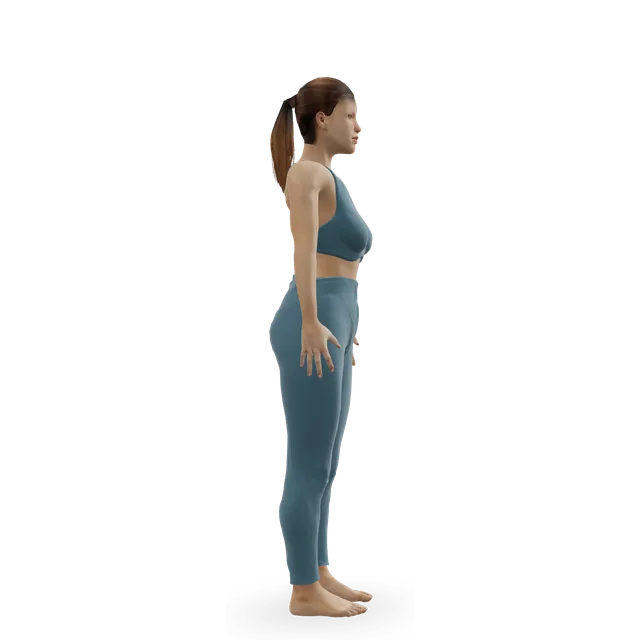
Standing march demonstrated on the 3D figure3D demoStanding marchBeginner · No equipment

1 minute, marching like soldiers · The animal moves workout's dose

Easier: Seated march · Harder: Standing band hip flexion

Single-leg stand demonstrated on the 3D figure3D demoSingle-leg standBeginner · A wall

20 s on each leg, near a support: the flamingo · The animal moves workout's dose

Easier: Tandem stance and heel-to-toe walk · Harder: Single-leg reach matrix

Glute bridge demonstrated on the 3D figure3D demoGlute bridgeBeginner · No equipment

10 bridges, high enough for a toy car to drive under · The animal moves workout's dose

Easier: Pelvic tilt into bridge · Harder: Single-leg glute bridge

Stationary cycling demonstrated on the 3D figure3D demoStationary cyclingBeginner · Cardio machine

A gentle bike or scooter ride, 10 to 20 min · Editorial

Easier: Recumbent exercise bike · Harder: Air bike intervals

Move on when: At least 2 weeks have passed (NHS advice), and your child has been walking and running normally without pain for a few days (editorial).

Follow along: a timer, a cue and the next move, one step at a time.
Stage 3

Back to sport and energetic play (after at least 2 weeks, once completely better)

The usual sport and active play. The animal moves workout is a fun way back.

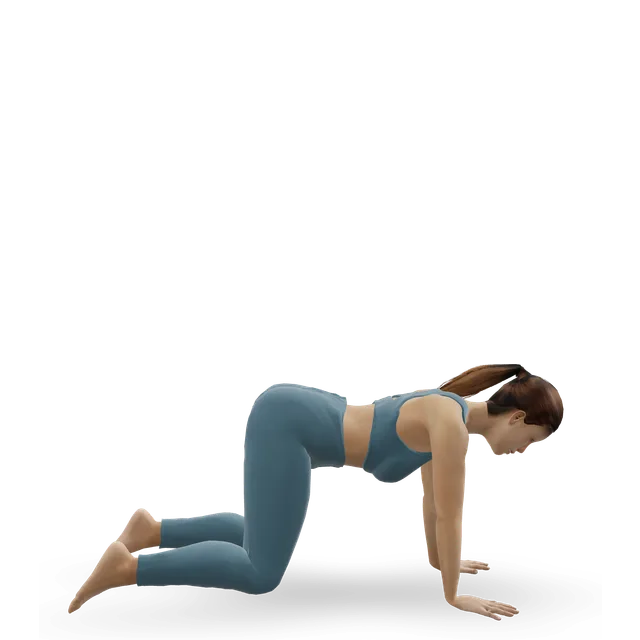
Bear crawl demonstrated on the 3D figure3D demoBear crawlIntermediate · No equipment

Across the room and back, twice · The animal moves workout's dose

Easier: Knee hover (Pilates tabletop hover) · Harder: Spider crawl (low push-up knee drive)

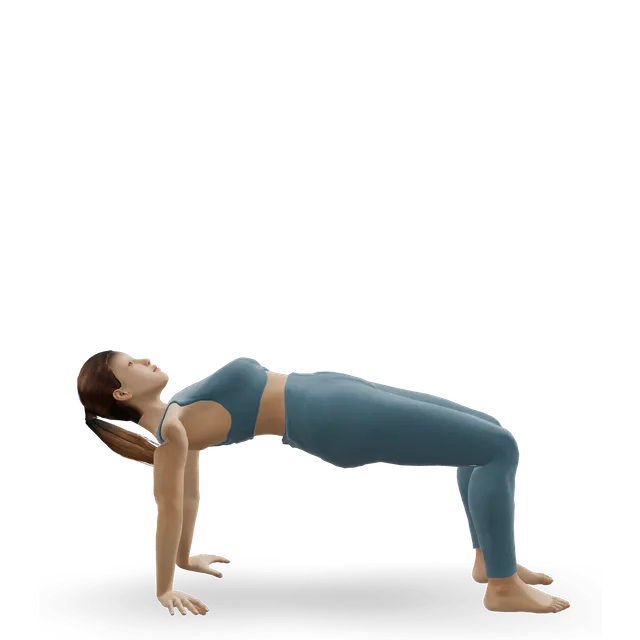
Crab walk demonstrated on the 3D figure3D demoCrab walkIntermediate · No equipment

Across the room and back, twice · The animal moves workout's dose

Easier: Elastic wall bounce · Harder: Alternate-leg bounding

Ankle bounces (mini pogo) demonstrated on the 3D figure3D demoAnkle bounces (mini pogo)Beginner · No equipment

15 bunny hops · The animal moves workout's dose

Harder: Pogo hops

Standing broad jump with stuck landing demonstrated on the 3D figure3D demoStanding broad jump with stuck landingIntermediate · No equipment

4 frog leaps, freezing on landing · The animal moves workout's dose

Easier: Snapdown to athletic landing · Harder: Single-leg hop and stick

Move on when: Back to normal. If the limp or pain comes back, stop and see a GP: irritable hip can come back, and a limp that keeps returning needs checking.

Follow along: a timer, a cue and the next move, one step at a time.

What to change for now

Swimming

Once your child feels better, splashing, kicking and gentle swimming are a good way to get the hip moving again, as the NHS suggests. Leave out diving and jumping in for the first 2 weeks (our suggestion).

Source 1

Painkillers

Children's ibuprofen or paracetamol can ease the pain. Follow the dose on the bottle for your child's age, and ask a pharmacist if you're unsure; some hospitals suggest regular doses for the first days, then cutting down as your child improves. Don't give aspirin to a child under 16 unless a doctor prescribes it.

Sources 1, 4, 12, 28

Nursery, school and younger children

Keep your child off nursery or school until they've recovered. In a child under 3, take any limp without a clear cause seriously: doctors are more cautious at this age, because irritable hip is less common and infection more likely.

Sources 1, 10

Positions to swap, and why

Habit or positionWhy it mattersInstead
Bunny hops, trampolines and energetic play in the first 2 weeksThe NHS advises no activities that put a lot of strain on the hip for at least 2 weeks.Quiet play, then swimming once they feel better.
Making a sore child walk or stand to test the hipChildren choose the most comfortable position themselves (our reasoning).Rest in a comfortable position, such as lying with cushions under the thighs.Try: Reclining bound angle pose (Supta Baddha Konasana)
Waiting it out with a high temperature, a child who is unwell, or one who won't take any weightThese can mean a joint infection, which needs urgent treatment.An urgent GP appointment or NHS 111, or A&E if they're very unwell or won't put any weight on the leg.
Asking for antibioticsIrritable hip isn't a bacterial infection.Rest and children's painkillers.
AspirinNot for children under 16 unless a doctor prescribes it.Children's ibuprofen or paracetamol at the dose on the bottle.
Ignoring a limp that comes back or lasts more than 2 weeksIrritable hip can come back, and a limp that lasts or returns is checked for Perthes disease.See a GP.

Routines to follow

More moves for this area

Questions people ask

What is irritable hip?

A short-lived inflammation of the lining of the hip joint that causes pain and a limp. It is the most common cause of hip pain in children, and it usually gets better on its own.

What causes it?

Nobody knows. It often follows a cold or another viral illness, or a minor injury, but that isn't proven.

Who gets it?

Usually children aged 3 to 8, and boys 2 to 3 times as often as girls. In a child under 3, doctors are more cautious, because infection is more likely at that age.

How long does it last?

Usually 1 or 2 weeks, often starting to improve within a few days. Almost all children are back to normal by 2 weeks.

How do doctors know it isn't an infection?

They check your child's temperature, whether they'll put weight on the leg, and sometimes blood tests, an X-ray or an ultrasound scan. A fever, not bearing weight and raised blood tests together make an infection much more likely, and a joint infection needs urgent treatment.

What can I do at home?

Let your child rest until they feel better, keep them off nursery or school until they've recovered, and give children's ibuprofen or paracetamol. In a small trial, ibuprofen shortened the symptoms by a couple of days.

When can they go back to sport?

Not for at least 2 weeks, the NHS says, and only once they're completely better. Swimming is a good way to get the hip moving again before that.

When should we go back to the doctor?

Urgently if your child gets a high temperature or feels hot, cold or shivery, the pain gets worse, or they can't put any weight on the leg. See a GP if they're still in pain after 2 weeks, or the pain comes back.

Can it come back?

Yes: in up to about 1 in 5 children in the better studies, usually within 6 months, and repeated episodes are usually harmless. A limp that keeps coming back should be checked.

Can irritable hip lead to Perthes disease?

It doesn't seem to cause it, but in a review of 19 studies of mixed quality, about 3 in 100 children first diagnosed with irritable hip turned out to have Perthes disease, more often when symptoms lasted or kept returning. That's why a limp that lasts is checked again.

Do adults get irritable hip?

The name is used for children, and the research here is about children. An adult with a painful hip can use our hip pain guide, and an adult with a hot, swollen joint or a fever needs urgent care.

Related exercise guides

Other pain guides

Sources

  1. NHS · Hip pain in children (irritable hip)
  2. Royal United Hospitals Bath NHS · Irritable hip in children (patient leaflet, 2020)
  3. Norfolk and Norwich University Hospitals NHS · Irritable hip (children's emergency department discharge leaflet, 2024)
  4. Leeds Teaching Hospitals NHS · Limping child (patient leaflet, 2026)
  5. Harrison 2014 · Transient synovitis in Merseyside: 259 children (population study, J Child Orthop)
  6. Irfan 2020 · Irritable hip in a Glasgow children's emergency department over 2 years (cohort, Cureus)
  7. Asche 2013 · The course of transient synovitis in children: 25 studies (systematic review, Chiropr Man Therap)
  8. Landin 1987 · Transient synovitis of the hip and its relation to Perthes' disease: 275 children (prospective study, J Bone Joint Surg Br)
  9. Vijlbrief 1992 · Transient synovitis of the hip in Dutch general practice (national survey, Br J Gen Pract)
  10. Worcestershire Acute Hospitals NHS · Limping child (clinical guideline, 2021)
  11. University Hospitals Sussex NHS · Limping in children (children's emergency department leaflet, 2024)
  12. KidsHealth NZ · Irritable hip in children
  13. British Orthopaedic Association · BOAST: the management of children with acute musculoskeletal infection (standard, 2022)
  14. Kocher 1999 · Telling septic arthritis from transient synovitis of the hip in children (clinical prediction rule, J Bone Joint Surg Am)
  15. Kocher 2004 · The prediction rule tested in 154 more children (validation study, J Bone Joint Surg Am)
  16. Caird 2006 · Signs separating septic arthritis from transient synovitis in 48 children (prospective study, J Bone Joint Surg Am)
  17. QingSong 2024 · Clinical signs separating septic arthritis from transient synovitis: 11 studies, 1,810 children (meta-analysis, BMC Infect Dis)
  18. NICE NG143 · Fever in under 5s: assessment and initial management (2019, updated 2021)
  19. Norfolk and Norwich University Hospitals NHS · The limping child with no history of injury (clinical guideline, 2024)
  20. Uziel 2006 · Recurrent transient synovitis of the hip: 39 children (case series, J Rheumatol)
  21. Mattick 1999 · Irritable hip: 103 children managed under an emergency department protocol, followed for 7 years (cohort, J Accid Emerg Med)
  22. Xinling 2024 · Perthes disease found after transient synovitis: 19 studies, 2,617 children (meta-analysis, J Orthop Surg Res)
  23. NHS 111 Wales · Irritable hip (hip pain in children)
  24. Hull University Teaching Hospitals NHS · Irritable hip (transient synovitis) (patient leaflet, 2025)
  25. Kermond 2002 · Ibuprofen for transient synovitis of the hip: 36 children (randomised trial, Ann Emerg Med)
  26. South Tees Hospitals NHS · Limping child (children's emergency department leaflet, 2021)
  27. Taylor 1994 · Hospital admission for irritable hip: 509 children (review of admissions, Arch Dis Child)
  28. NHS · Growing pains
  29. NHS · Sepsis
  30. NHS · Septic arthritis
  31. NHS · Osteomyelitis
  32. Oxford University Hospitals NHS · Limping child (leaflet for parents and carers, 2024)

Exercise education, not a diagnosis or treatment plan. It is written from the guidelines and studies listed above; review by a clinician is pending. If your pain follows an injury, is severe, is getting worse, or comes with any warning sign listed on this page, get it assessed. Health disclaimer.