Pes anserine bursitis: inner knee pain below the joint, and what helps
Pes anserine pain is felt on the inner side of the knee, a few centimetres below the joint, where three tendons attach to the shin over a small fluid-filled sac (a bursa). It's typically worse on stairs and getting up from a chair, and it's most common in middle-aged and older women, often alongside knee arthritis.
Despite the name, scans rarely show a swollen bursa, and it usually settles without surgery. This guide explains how it differs from a meniscus tear or a medial collateral ligament (MCL) sprain, what injection and shockwave trials found, and a staged plan for the thigh and hip muscles with 3D demos. No trial has tested exercise for pes anserine pain itself, so the plan is our suggestion, built from expert advice and the evidence in knee arthritis.
Exercise is for pain that has been checked or is clearly mild and settling.
Get urgent medical help if
Leg pain or swelling with breathlessness or chest pain: call 999 or go to A&E, and do not drive yourself. It can be a blood clot that has reached the lungs.
A hot, red or swollen knee with sudden severe pain, a very high temperature, or feeling hot, cold or shivery. This can be a joint infection.
You cannot move the knee or put any weight on it, or it is very painful, badly swollen or has changed shape.
Throbbing pain and swelling in one calf or thigh with red or darkened skin or swollen veins, or sudden worse pain and swelling around a lump at the back of the knee (a possible clot or a burst Baker's cyst).
The knee locks, gives way or clicks painfully. Painless clicking is normal.
See a doctor or physiotherapist if
Bursitis symptoms that haven't improved, or are getting worse, after 1 to 2 weeks of looking after it yourself, or very severe, sharp or shooting pain: see a GP.
Knee pain that has not improved within a few weeks of looking after it at home. Many areas offer NHS physiotherapy without a GP referral.
A hard lump on the inner shin, or bone pain that is constant or worse at night, especially with unexplained weight loss, fever or tiredness, or a past history of cancer: see a GP soon. An X-ray can rule out a bony lump or a stress fracture.
Inner knee pain that started with a blow or a twist, especially with swelling: get it assessed, as a ligament or meniscus injury is more likely.
Understand it
What it isStrong evidence
Pes anserinus means goose's foot: the joined tendons of three muscles, the sartorius, gracilis and semitendinosus, which attach to the inner front of the shin just below the knee, with a small bursa underneath. Pes anserine bursitis means that bursa is inflamed.
Because the tendons and the bursa are hard to tell apart, and are treated the same way, many clinicians use the wider name pes anserine pain syndrome. The textbook three-tendon arrangement was found in only 62% of specimens in a review of anatomy studies.
Mostly middle-aged and older women, often overweight, and frequently with knee osteoarthritis. On ultrasound it was found in 20% of 170 knees with osteoarthritis, more often in women, older people and worse arthritis. In 94 people with type 2 diabetes, 36% had it on examination, 91% of them women. In another 48 people with type 2 diabetes, 14 had it on examination but only 4 showed tendon changes on ultrasound, and their other knee findings suggested the arthritic knee contributes.
In the only case-control study (22 women with new pes anserine pain and 38 without), knock knees raised the odds about 5-fold, while diabetes, osteoarthritis and obesity didn't differ. So the links with diabetes and weight are inconsistent and may not be causes. Runners and swimmers (from the breaststroke kick) get it too, and it can cause inner knee pain after a knee replacement.
Pain and tenderness on the inner shin a few centimetres below the joint line, typically with stairs and getting up from a chair, sometimes at night or with morning stiffness, and often coming and going for months before people seek help. No single examination test is reliable; a 2026 review suggests combining several, with an anaesthetic injection when it's unclear. In 156 people, a clinical diagnosis matched MRI (magnetic resonance imaging) poorly: it picked up 41% of cases and correctly ruled it out in 60% of those without it.
Imaging is for ruling out other causes, not for proving this one. Ultrasound found tendon or bursa changes in only 3 of 35 painful knees diagnosed by examination at one clinic, and in 2 patients (8.7%) in a knee arthritis study. MRI showed pes anserine bursitis in 2.5% of 509 scans of painful knees, and its commonest pattern was pain along the inner joint line that looked like a meniscus tear. The 2026 review reports fluid in the bursa in about 5% of knees without symptoms.
So a normal scan doesn't rule it out, and fluid in the bursa doesn't prove it. X-rays help rule out arthritis, a stress fracture at the top of the shin, or a bony lump.
Reviews describe it as generally settling without surgery, though it can come back, and in knee osteoarthritis, tenderness at this spot has been linked with a worse course of the arthritis. Surgery is rarely needed. No study has followed untreated pes anserine pain over time.
An MCL sprain follows a blow or a twist and hurts along the ligament across the joint; pes anserine pain usually comes on without an injury and sits lower, on the shin. A meniscus tear hurts on the inner joint line, sometimes with catching or locking, and pes anserine pain can mimic it. Knee arthritis is often present as well, and its plan applies to the whole knee. Pain at the back of the knee (a Baker's cyst) or at the front (runner's knee or jumper's knee) has its own guide.
No exercise trial yet: the plan borrows from expert advice and knee arthritisEmerging evidence
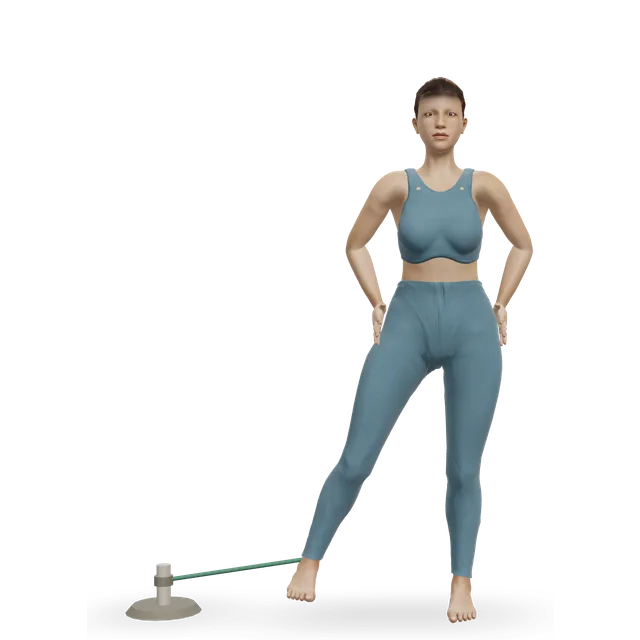
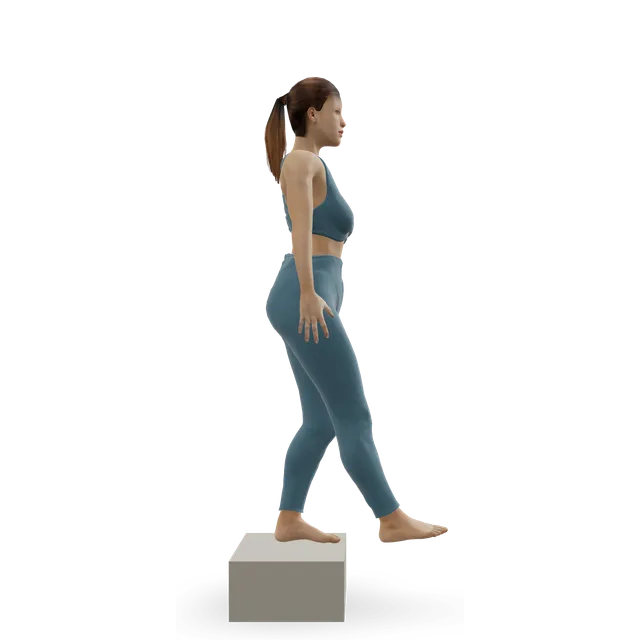
No trial has tested exercise for pes anserine pain itself. A 2026 review calls physiotherapy the standard of care and advises strengthening the thigh muscles, especially for the last 30 degrees of straightening the knee, and the hip muscles that stop the knee falling inwards, with gentle stretching of the hamstrings and inner thigh if they're tight. A clinical summary describes it as generally responding to exercise and stretching programmes.
Most people with this pain also have knee osteoarthritis. For that, the UK's National Institute for Health and Care Excellence (NICE) recommends therapeutic exercise for everyone: local muscle strengthening and general aerobic fitness, with weight management where relevant. The plan on this page is built from both, so its evidence is indirect.
The physiotherapy that was tested was passive, not exerciseEmerging evidence
In 60 people with knee osteoarthritis and pes anserine pain, allocated by appointment date rather than at random, a steroid injection and 2 weeks of hot packs, therapeutic ultrasound and TENS (transcutaneous electrical nerve stimulation) both eased pain and improved function at 8 weeks, with no difference between them. That physiotherapy was passive treatment, not exercise.
Steroid injections: often quick relief, short follow-upMixed evidence
In a chart review of people with knee osteoarthritis, 11 of 12 who had a steroid injection improved, against 7 of 17 who didn't. In 26 people, pain fell from 73 to 51 out of 100 after an injection, but only 8 of 17 rated the result good or better, and the 2 best responders were the only ones with bursitis on ultrasound.
For knee osteoarthritis, NICE says steroid injections give 2 to 10 weeks of relief and should support exercise, not replace it. In a cadaver study, ultrasound guidance placed the needle in the bursa in 11 of 12 attempts, against 2 of 12 by feel. The review advises no more than 3 injections a year, at least a month apart, because of risks such as skin thinning and tendon damage.
Other injections and shockwave: single small trials that disagreeMixed evidence
In 72 people, a steroid injection gave the most relief at 1 week, but dextrose (prolotherapy) and oxygen-ozone injections did better at 8 weeks. In 180 people with long-standing pain, steroid beat platelet-rich plasma and shockwave at 1 and 8 weeks. In 60 people, shockwave and an ultrasound-guided steroid injection both helped, with mixed differences between them. In 40 people whose pain had lasted more than 3 months, shockwave eased pain more than a sham at 3 and 8 weeks.
Each is a single trial, follow-up stopped at 8 weeks, and the results conflict.
0 to 2 is safe, up to 5 is acceptable (borrowed from knee arthritis)Emerging evidence
No exercise trial has been done for pes anserine pain itself, so this rule is borrowed from the knee arthritis guide.
Rate your knee pain from 0 to 10 during and after exercise. In the pain-monitoring model used in knee trials, 0 to 2 counts as safe, up to 5 as acceptable and above 5 as too much. Aim for 0 to 3 most of the time.
By the next morning your knee should be back to its usual level. If it is not, drop back one step next time (fewer sets, a shallower range, a lower step), not to nothing. Over the weeks pain should hold steady or ease; that last check is our suggestion rather than a tested rule.
Some knee programmes say you should feel no pain at all. The trials allowed some, and a meta-analysis found exercising into some pain did no worse than pain-free exercise. NICE says joint pain may rise when you start exercising with arthritis, and that regular exercise still helps in the long run.
Sharp, catching or giving-way pain, or new swelling, is a reason to stop and get it checked.
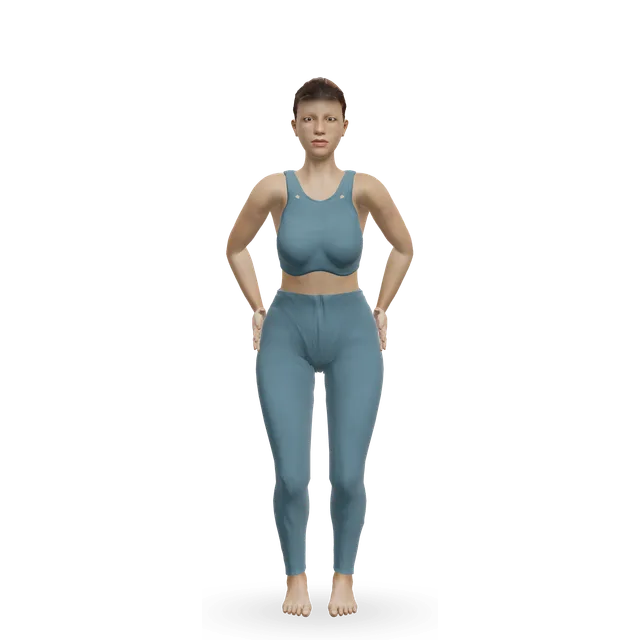
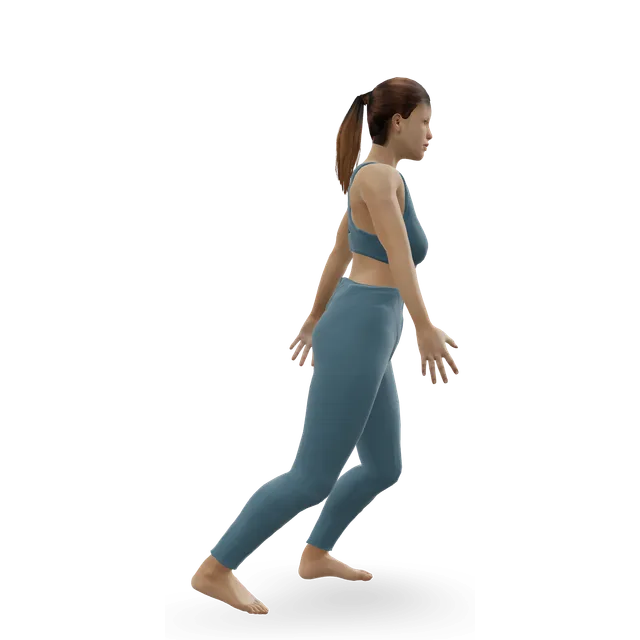
Start at the first stage. Each move opens a full guide with a 3D demo.
Stage 1
Settle: ease the inner knee and switch the thigh on (about weeks 0 to 2)
Cut back stairs, long walks and deep squats for now, without resting completely. Ice wrapped in a tea towel for about 10 minutes at a time can ease it, as the NHS advises for bursitis. Exercises daily. Doses follow the knee pain guide's plan (editorial starting points) unless marked.
Move on when: The tender spot is calmer, stairs and getting out of a chair hurt less, and pain settles by the next morning.
Follow along: a timer, a cue and the next move, one step at a time.
Stage 2
Build: thigh and hip strength with the knee over the foot (about weeks 2 to 6)
Strength 2 to 3 days a week, keeping the knee over the middle of the foot in every standing exercise, which is the hip control the review asks for. Doses follow the knee pain guide unless marked.
Move on when: 12 sit-to-stands and 10 step-ups on each leg are comfortable, and pain settles by the next morning.
Follow along: a timer, a cue and the next move, one step at a time.
Stage 3
Strengthen and stay strong (from about week 6)
Heavier and single-leg work 2 or 3 days a week, plus regular walking or cycling. If you have knee arthritis, carry on with the knee arthritis plan: NICE says sticking with exercise over the long term increases its benefit. Doses follow the knee pain guide unless marked.
Move on when: Keep going. If pain persists after 6 to 8 weeks of good rehab, ask a GP or physiotherapist about an injection, shockwave or a scan to check for other causes.
Follow along: a timer, a cue and the next move, one step at a time.
What to change for now
First steps for a sore inner knee
The NHS advice for bursitis: rest from the activities that press on or strain it (not total rest), hold an ice pack wrapped in a tea towel on it for about 10 minutes at a time, every few hours, and take painkillers such as paracetamol or ibuprofen if they suit you. Extra cushions around the knee can help at night. A 2026 review adds short courses of anti-inflammatory tablets if they suit you; we found no trial of them for pes anserine pain itself.
The breaststroke kick can bring on pain at this spot. Our suggestions: swim front crawl, or use a float between the legs, for a while; spread stairs and long walks through the day rather than doing them all at once; and put a pillow between your knees when you lie on your side.
Pes anserine pain is common in people with type 2 diabetes, though the link may not be a cause. Mention new or worsening knee pain at your diabetes review (our suggestion); our guide to exercise for type 2 diabetes covers staying active.
Pain on the inner knee a few centimetres below the joint, where three tendons (sartorius, gracilis and semitendinosus) attach to the shin over a small fluid-filled sac. The pain may come from the tendons, the bursa or both, so many clinicians call it pes anserine pain.
What are the symptoms?
Pain and tenderness on the inner shin just below the knee, worse on stairs and getting up from a chair, sometimes at night. It often comes and goes for months.
Who gets it?
Mostly middle-aged and older women, often with knee arthritis. It's also common in people with type 2 diabetes and in people with knock knees, though diabetes and weight may not be the cause.
How is it different from a meniscus tear or an MCL sprain?
A meniscus tear hurts on the joint line, sometimes with catching or locking, and an MCL sprain follows a blow or a twist. Pes anserine pain usually sits lower, on the shin, without an injury. They can be hard to tell apart, which is why an examination helps.
Do I need a scan?
Usually not. Scans often look normal in pes anserine pain and are mainly used to rule out other causes, such as a meniscus tear, a stress fracture or a bony lump.
What exercises help?
Strengthening the thigh muscles, especially for straightening the knee, and the hip muscles that stop the knee falling inwards, with gentle hamstring stretches. No trial has tested exercise for pes anserine pain itself, so the plan here is our suggestion, built from expert advice and the knee arthritis evidence.
Which exercises should I avoid?
For now, deep squats and lunges, lots of stairs, letting the knees fall inwards, and the breaststroke kick if you swim. Build them back gradually.
Do steroid injections work?
They can ease pain for a few weeks, and in trials steroid worked fastest, though dextrose and oxygen-ozone injections did better at 8 weeks in one. Results conflict, follow-up is short, and in knee arthritis NICE says injections should support exercise rather than replace it.
How long does it last?
It usually settles without surgery, though it can come back, and no study has tracked exactly how long it takes. If you also have knee arthritis, keeping up the exercise helps the whole knee.
Is it related to my knee arthritis?
Often. About 1 in 5 knees with arthritis showed it on ultrasound in one study, and treating the arthritis with exercise is part of the plan.
Exercise education, not a diagnosis or treatment plan. It is written from the guidelines and studies listed above; review by a clinician is pending. If your pain follows an injury, is severe, is getting worse, or comes with any warning sign listed on this page, get it assessed. Health disclaimer.