Wall sit
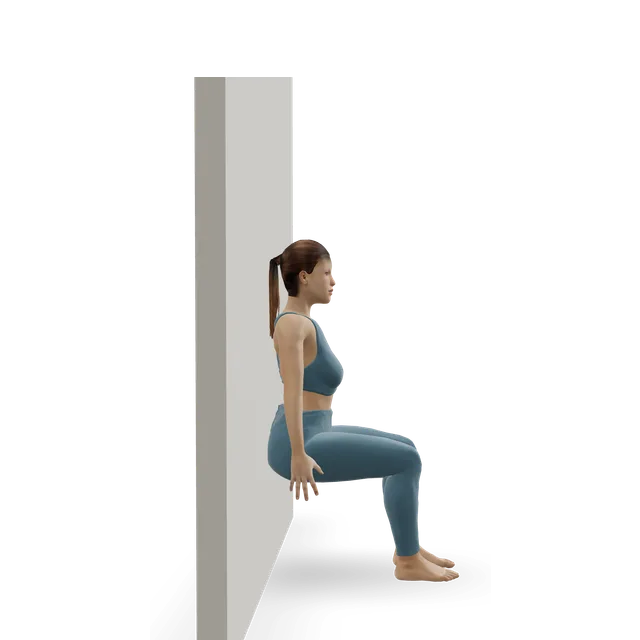
The back flat against a wall, the body slides down until the knees near a right angle and holds: the thigh works with the feet on the floor and the whole body weight, the wall taking the balance, and going lower makes it harder.
Quadriceps strength family
Wall sit
Loading the 3D figure…
Source-researched guide.
How to move
- Stand with the back and buttocks against a wall, the feet walked out in front about shoulder-width apart.
- Slide down the wall to a depth you can comfortably hold, at most with the knees at a right angle, the weight through the heels.
- Hold, then push back up the wall.
Form cues
- Keep the knees in line with the toes and no further forward than them.
- Start shallow; slide lower as it gets easier.
- With pain behind the kneecap, keep the bend small, up to about 50 degrees: kneecap load was lowest there in lab studies, and higher at deeper bends with the heels close to the wall. Those two studies (Escamilla 2009 and 2023, in the sources below) measured slow moving wall squats, not holds, so applying them to a held wall sit is our reading.
- Avoid: holding your breath; count out loud to keep breathing.
Practice and cautions
No universal dose is assigned. Choose a manageable amount for your current capacity, leave room for controlled repetitions, and allow recovery. A clinician’s individual plan takes priority.
With glaucoma, keep holds short and keep breathing: eye pressure rises while a leg hold lasts. Ask your eye team first if your glaucoma is advanced. Blood pressure climbs during the hold, so breathe normally throughout (count out loud) and never strain against a held breath. Ask your GP first if your blood pressure is 160/100 or higher and untreated, or if you have heart disease; skip it with Marfan syndrome, vascular Ehlers-Danlos syndrome (vascular EDS) or aortic disease. Go shallower, or use a handgrip squeeze instead, if your knees hurt in the hold. Stand up slowly afterwards, as blood pressure can dip. With unstable proliferative or severe diabetic retinopathy, avoid heavy lifting, overhead lifting, breath-holding and hard isometric holds; keep effort moderate and ask your eye team. This is movement education, not an assessment or treatment prescription. Stop for sharp or increasing pain, dizziness, numbness or tingling; seek individual guidance for symptoms, injury or restrictions.
Sources and review status
Sources support the educational description; they do not establish that this exercise is suitable for you.
- St George's University Hospitals NHS · Patello-femoral pain (the wall squat: slide down as far as is comfortable, progressed deeper or with a weight) ↗
- Edwards 2024 · Isometric exercise training and arterial hypertension: an updated review (Sports Medicine) ↗
- Cohen 2023 · Blood pressure falls achieved with three isometric sessions a week are kept with one a week (trial, Journal of Clinical Hypertension) ↗
- Lea 2024 · A home-based isometric wall squat programme set by perceived effort (pilot study, European Journal of Applied Physiology) ↗
- Li 2021 · Leg holds and eye pressure in healthy adults: 13 studies (meta-analysis, Journal Français d'Ophtalmologie) ↗
- Escamilla 2009 · Kneecap force in the wall squat and one-leg squat (higher between 60 and 90 degrees of knee bend, lowest up to about 50; MSSE) ↗
- Escamilla 2023 · Kneecap load in the wall squat with the heels near or far from the wall (higher with the heels close at 90 to 100 degrees of bend, the knees past the toes; MSSE) ↗
No variation is labeled clinically validated.
What it works
Muscles
Main: Quads. Also: Glutes.
Anatomy: Sartorius, Quadriceps, Rectus femoris, Vastus medialis, Vastus lateralis.
Equipment
A wall
Level
Beginner. See the easier and harder options above.
Workouts that use it
- Low-impact leg workout (no jumping) · 20 min
- Wall Pilates for beginners · 20 min
- Wall sit workout for blood pressure · 22 min
- Knee strengthening workout: from first steps to full range · 25 min
- Ski fitness workout · 40 min
- 7-minute workout: follow-along timer, 12 moves · 12 min
- Strength workout for horse riders: core endurance, hips, legs and back · 40 min
- Strength workout for trampolinists: isometric squats, calves, jumps, trunk shapes and pelvic floor · 45 min
Show all 21 workoutsShow fewer workouts
- Polymyalgia rheumatica exercises: daily stretches, then strength and balance · 15 min
- Sailing warm-up: safety checks, legs for hiking, back, shoulders and hands before you launch · 10 min
- Windsurf and kitesurf strength workout: landings, legs, pulling, grip and trunk · 50 min
- Barre strength workout: heavier lifts, pliés, pulses and holds, seat, arms and core · 45 min
- Beginner barre workout at home: pliés, rises, leg lifts and holds at a chair, then mat work · 25 min
- Pilates leg workout: a 25-minute mat and standing class for your thighs · 25 min
- Stepped wall Pilates class: standing moves, then feet on the wall · 20 min
- Wall yoga for beginners: a 20-minute routine at the wall · 20 min
- Pre-season Pilates for skiers: a 25-minute class for trunk, hips and single-leg balance · 25 min
- Knee release routine: roll, stretch, strengthen · 15 min
- Tendon-friendly Pilates for jumper's knee: a 25-minute class with the loading plan's holds built in, shallow knee bends and no jumping · 25 min
- Tendon-friendly yoga for jumper's knee: a 25-minute class with the loading plan's holds built in, shallow knee bends, no kneeling and no jumping · 25 min
- Hips-to-calves Pilates: a 30-minute lower body class with a harder option for every move · 30 min
Pain guides that use it
Part of a staged plan, with when to get help first.
- Exercises for knee pain: what helps, and a plan to follow
- Runner's knee (patellofemoral pain): exercises that help
- Exercises for knee arthritis (osteoarthritis)
- Jumper's knee (patellar tendinopathy): a loading plan
- Meniscus tear exercises: when exercise is the first treatment
- MCL sprain (inner knee ligament): recovery and exercises
- Osgood-Schlatter disease: knee pain in active children and teenagers
- Baker's cyst (a swelling behind the knee): what helps, and when it's urgent
Show all 57 pain guidesShow fewer pain guides
- Dislocated kneecap: what to do, exercises, and stopping it happening again
- Quad strain (pulled thigh muscle): exercises from the first days to kicking
- Pes anserine bursitis: inner knee pain below the joint, and what helps
- PCL injury (posterior cruciate ligament): recovery, bracing and exercises
- Exercises after meniscus surgery: recovery after a trim or a repair
- LCL sprain (outer knee ligament): recovery and exercises
- Knee bursitis (housemaid's knee): what helps, and when it's infected
- Torn kneecap tendons: patellar and quadriceps tendon ruptures, surgery and recovery
- Pelvic girdle pain (SPD) in pregnancy and after birth: what helps, exercises and when to get help
- Sinding-Larsen-Johansson syndrome: pain at the bottom of the kneecap in active children
- Quadriceps tendinopathy (quad tendonitis): pain above the kneecap, and a tendon loading plan
- Fat pad impingement (Hoffa's syndrome): pain below the kneecap when the knee straightens fully
- Knee OCD (osteochondritis dissecans): a damaged patch of bone and cartilage in children, teenagers and young adults
- Hyperextended knee: injuries when the knee bends backwards, and knees that bend back naturally
- Knee pain on stairs: going up or coming down, what it means, and how to build back
- Knee pain when kneeling: the kneecap, bursitis, knee replacements, knee pads and how to build back
- Knee pain at night: arthritis, bursitis, gout, sleeping positions and pillows, and the warning signs
- Knee pain when bending or straightening: the kneecap, the meniscus, behind the knee and what helps
- Inner knee pain: arthritis, the meniscus, an MCL sprain, pes anserine pain and how to build back
- Pain behind the knee: a Baker's cyst, a tendon, the meniscus or a clot, and how to build back
- Thigh pain: a strain or dead leg, the hip and back, a burning nerve, a clot and how to build back
- Front of knee pain: the kneecap, the tendons, growing knees or arthritis, and how to build back
- A swollen knee: an injury, arthritis, gout, bursitis, a Baker's cyst or infection, and what helps
- Knee pain when sitting or standing up: the kneecap, arthritis, the back of the knee and what helps
- Knee pain in children and teens: growing pains, Osgood-Schlatter, the kneecap, injuries and the hip
- Knee pain in women: kneecap pain, ACL injuries, arthritis, the menopause, loose joints and pregnancy
- Hip pain in pregnancy: pelvic girdle pain, the outer hip at night, sciatica, and the signs to act on
- Knee pain in men: twisting injuries in sport, the tendons, kneeling work, gout and arthritis
- Knee pain in pregnancy: the kneecap, weight and looser joints, swelling, exercise by trimester
- Knee pain when twisting: the meniscus, the ligaments, the kneecap, arthritis and what helps
- Knee pain when crossing your legs: the kneecap, the outer knee, the meniscus, a nerve and what helps
- Knee pain when jumping: the patellar tendon, the kneecap, growing knees, landing and what helps
- Knee pain when doing step-ups: the kneecap, the tendon, box height, knee path and stepping down
- Knee pain when doing wall sits: the kneecap, how deep you sit, where your feet go and how long
- Knee pain skiing: twisting falls, the ACL and MCL, kneecap pain, bindings and what helps
- Knee pain from pickleball: the meniscus, arthritis, kneecap pain, courts and shoes, and what helps
- Knee pain from golf: the lead knee, a worn meniscus, arthritis, walking the course and what helps
- Knee pain after yoga: lotus, kneeling, locked knees, the inner knee, what to change and a plan back
- Knee pain after Pilates: kneeling, reformer footwork, the kneecap, locked knees and what to change
- Knee pain when driving: the kneecap, the pedals, the back of the knee and driving after surgery
- Knee pain after dancing: jumps and landings, turns, deep pliés and turnout, heels and what helps
- Knee pain from bowling: the fast bowler's front knee, the ten-pin slide, lawn bowls and what helps
- Knee pain from basketball: jumper's knee, kneecap pain, growing knees, ACL tears and what helps
- Back pain from skiing: the stance, long days, falls and lifts, snowboarders' backs and what helps
- Knee pain from volleyball: jumper's knee, kneecap pain, landings, growing knees and what helps
- Knee pain from tennis: the kneecap, the meniscus, arthritis, courts and shoes, and what helps
- Knee pain after football (soccer): twists, tackles, ligaments, the meniscus, growing knees and help
- Knee pain after rugby: twists and tackles, the ACL and MCL, the meniscus, the kneecap and what helps
- Knee pain from netball: landings, the ACL, kneecap and tendon pain, growing knees and what helps
Guides that use it
- Pilates guide
- Wall Pilates guide
- Pilates for legs and thighs guide
- Pilates for horse riders guide
- Pilates for skiers guide
- Pilates for a meniscus tear guide
- Pilates for patellar tendinopathy guide
- Pilates for knee arthritis guide
Show all 43 guidesShow fewer guides
- Pilates for the lower body guide
- Pilates for the thighs guide
- Pilates for the quads guide
- Pilates for women over 50 guide
- Wall yoga guide
- Yoga for legs guide
- Yoga for patellar tendinopathy guide
- Yoga for the quads guide
- Yoga for the thighs guide
- Knee joint guide
- Kinesiology tape guide
- Knees guide
- Exercise in pregnancy
- Exercise for high blood pressure
- Exercise for polymyalgia rheumatica
- Exercise with haemophilia (hemophilia)
- Exercise with gestational diabetes
- Bow legs guide
- 7-minute workout guide
- Wall sit guide
- Step-downs guide
- Sled drags guide
- Strengthen your knees guide
- Muscular endurance guide
- Strengthen your legs guide
- Strengthen your quads guide
- Strengthen tendons and ligaments guide
- Chair stand test guide
- Wall sit test guide
- Skiing and snowboarding guide
- Horse riding guide
- Trampolining guide
- Sailing guide
- Windsurfing and kitesurfing guide
- Barre guide
Similar moves
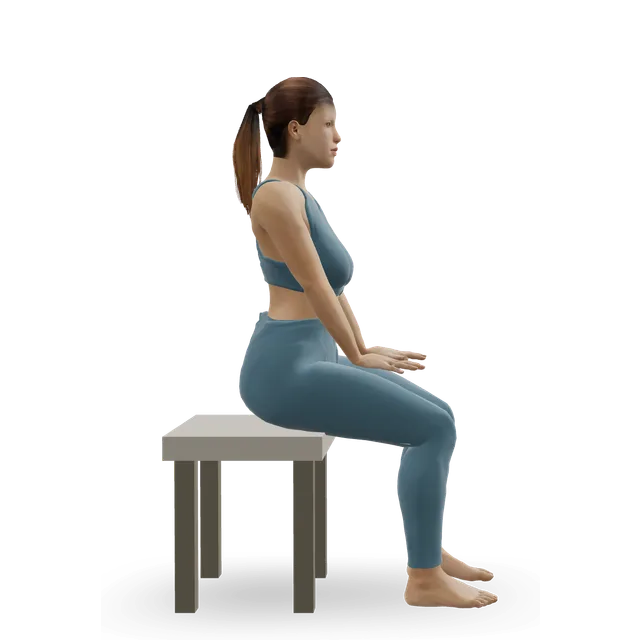 3D demoSit to stand from a chairBeginner · A bench or box
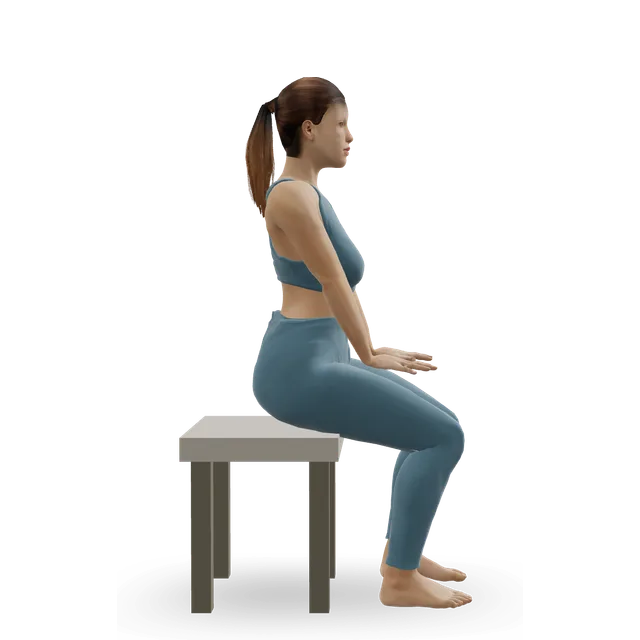 3D demoSit to stand, pushing on the thighsBeginner · A bench or box
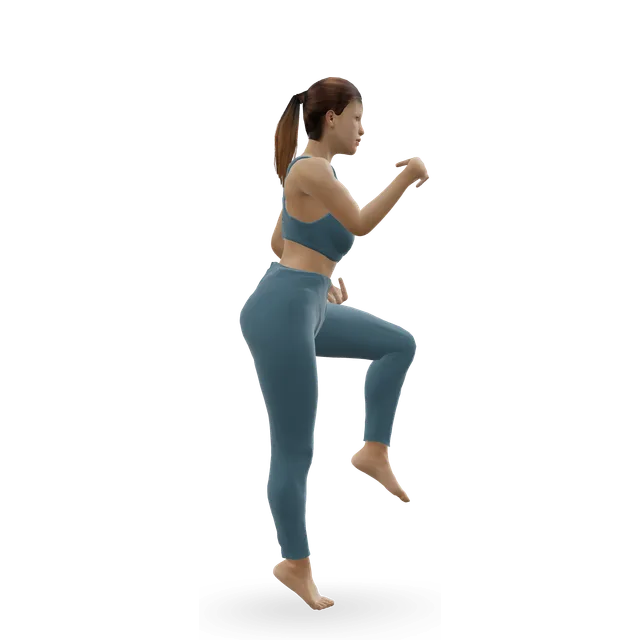 3D demoAlternate-leg boundingAdvanced · No equipment
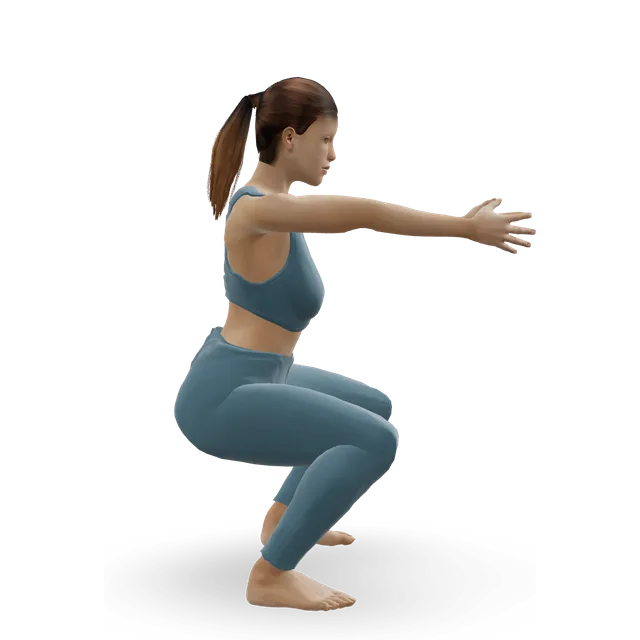 3D demoBodyweight squatBeginner · No equipment
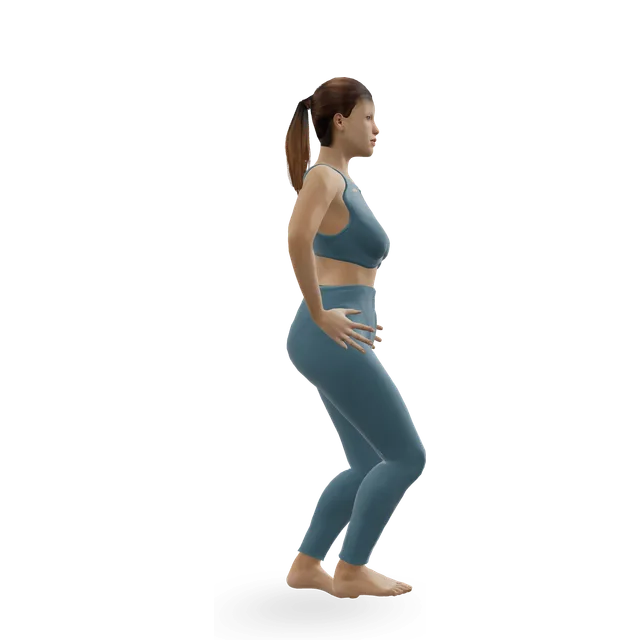 3D demoBodyweight walking lungeIntermediate · No equipment
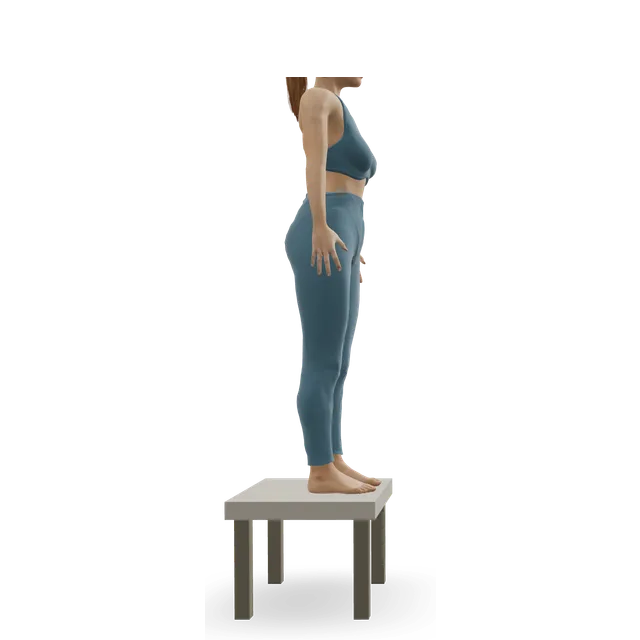 3D demoBox drop landingIntermediate · A step
Browse more
Questions people ask
What muscles does the Wall sit work?
Mainly the quads, with help from the glutes.
What equipment do I need for the Wall sit?
A wall.
Is the Wall sit good for beginners?
It is graded beginner, so it suits most people starting out. When it feels easy, try the Spanish squat (band squat hold).
What is an easier alternative to the Wall sit?
Try the Straight-leg raise or the Seated knee extension (chair). Both are written steps in the same progression.
How do I make the Wall sit harder?
Progress to the Spanish squat (band squat hold). Follow that guide’s technique and any stated timing.