Knee pain from tennis: the kneecap, the meniscus, arthritis, courts and shoes, and what helps

Knee pain from tennis usually comes from one of a few places. The front of the knee, the kneecap or the tendon just below it, takes the split steps, lunges, quick stops and the serve's leg drive; the meniscus, the cartilage cushion inside the knee, can tear when you twist on a planted foot, often in mid-life when it has worn a little with age; and an arthritic knee can ache and swell after a longer match than it's used to. In recreational players, most problems are overuse, and about half of the acute injuries seen in hospital are bruises and strains. Tennis is good for you, and for your thighs.

This guide starts with the signs that need help today, from accident and emergency (A&E) for a pop with fast swelling, and a 999 call for chest pain on court, to the National Health Service's 111 line (NHS 111) for a knee that locks, gives way or is hot and swollen, and a general practitioner (GP) or physiotherapist if it hasn't improved within a few weeks. It then sorts the causes by where it hurts, covers court surfaces, shoes, footwork and doubles, with the tennis bodies' and the NHS's advice in their own words, and gives a four-stage plan with a 3D demo of every move that ends back on court. It applies to padel too.

When to get help first

Exercise is for pain that has been checked or is clearly mild and settling.

Get urgent medical help if

  • Go to A&E (accident and emergency) if you've injured your knee and it has changed shape, it becomes very swollen very quickly, you felt a pop or snap, you can see bone sticking out, or it's bleeding heavily. Don't drive yourself: ask someone to take you, or call 999 if the pain means you can't move your leg to get there.
  • Signs of a torn ligament: you felt or heard a pop, the whole knee swelled within a few hours, or it gives way, feels loose or bends further back than the other knee. Get it assessed promptly, the same or the next day: our ACL, PCL and outer knee ligament (LCL) guides explain what happens next.
  • Get advice from NHS 111 now: you cannot move the knee or put any weight on it, or it is very painful, badly swollen or has changed shape.
  • You hurt your knee and cannot take 4 steps, or you are 55 or over and have injured it: get it checked the same day for a broken bone.
  • Get advice from NHS 111 now: the knee locks, gives way or clicks painfully. Painless clicking is normal.
  • Get advice from NHS 111 now: after a twist, your knee won't go fully straight, or something blocks the last part of straightening, even if you can still walk on it. A torn piece of meniscus caught in the joint can do this, and it needs checking promptly.
  • The knee is locked and you cannot fully straighten it.
  • Same day: a pop or tearing feeling at the front of the knee after a fall, stumble, jump, landing or a heavy squat, then you can't straighten the knee or lift the straight leg off the bed, there's a dent above or below the kneecap, or the kneecap sits higher or lower than on the other side. Go to A&E or an urgent treatment centre, or get help from NHS 111. A torn quadriceps or patellar tendon does best when it's repaired soon.
  • A sudden pop at the front of the knee, after which you cannot straighten the knee or lift the straight leg. This can be a torn patellar tendon: see our torn kneecap tendons guide.
  • Get help from NHS 111 if you've injured your knee and it's very painful, swollen or bruised, you can't stand up or move your knee, or you think your kneecap came out of place and went back.
  • Get advice from NHS 111 now: a hot, red or swollen knee with sudden severe pain, a very high temperature (although not everyone has one), or feeling hot, cold or shivery. This can be a joint infection.
  • Same day (urgent GP appointment or NHS 111): sudden, severe pain in one joint, with swelling, a change in skin colour or difficulty moving it, especially if you feel unwell, hot, cold or shivery or have a high temperature (although not everyone has one). It could be an infection in the joint, gout or calcium crystals (pseudogout), and only a sample of fluid from the joint can tell them apart.
  • Same day (urgent GP appointment or NHS 111): throbbing pain in one leg (rarely both), usually the calf or thigh; swelling in one leg (rarely both); red, blue or darkened skin; or swollen veins; or sudden worse pain and swelling around a lump at the back of the knee (a possible clot or a burst Baker's cyst).
  • Call 999 or go to A&E if breathing suddenly becomes difficult, if pain in your chest or upper back comes on suddenly with breathlessness or a very fast heartbeat, or if someone passes out. Do not drive yourself. It can be a blood clot that has reached the lungs.
  • Call 999 or go to A&E: severe hip pain after a fall or injury, or you cannot stand, walk or put weight on the leg. In an older adult this can be a broken hip; the leg may be at an odd angle or look shorter. Don't drive yourself.
  • After a fall, knee pain with pain in the hip, groin or upper leg, or trouble standing or putting weight on the leg: get help as for a broken hip above. A broken hip is occasionally felt mainly in the knee (our suggestion, from case reports).
  • After a recent knee replacement, ask for an urgent GP appointment or call NHS 111 for redness, tenderness, swelling or pain in your knee that isn't getting better or is getting worse, a high temperature or feeling hot, cold or shivery, throbbing or cramping pain in your leg, or oozing or pus from the wound. Call 999 or go to A&E for leg pain and swelling with difficulty breathing or chest pain.
  • Call 999: chest pain that feels tight or like squeezing on your chest; chest pain that's spreading to your arms, neck or jaw; severe difficulty breathing (you're gasping, choking or not able to get words out); lips or skin that are pale, blue or grey (on brown or black skin this may be easier to see on the palms of the hands); or someone who has passed out and is not responding normally. It could be a heart attack. Don't drive yourself to A&E.
  • Get help from NHS 111: pain or tightness in your chest, neck, shoulders, jaw or arms that comes and goes, often brought on by exercise, stress, emotion or cold and easing after a few minutes' rest. It can be angina, a sign of a heart problem. If you've been diagnosed with angina, get help from NHS 111 too if it feels worse than before, is happening more often, lasts longer or happens when you're resting.
  • Someone who faints while exercising, or who has fainted and can't be woken within a minute, has chest pain or a pounding, fluttering or irregular heartbeat, or hasn't fully recovered.
  • Call 999 or go to A&E: back or leg symptoms with numbness around the genitals or bottom, new trouble controlling your bladder or bowels, or severe or worsening weakness or numbness in both legs.

See a doctor or physiotherapist if

  • Knee pain that has not improved within a few weeks of looking after it at home. Many areas offer NHS physiotherapy without a GP referral.
  • A twisting or landing injury with a pop or snap, or a knee that changed shape or swelled very quickly, is the A&E sign above, in the NHS's words. If you didn't go at the time and the knee has since settled and you can walk on it, still get it assessed soon by your GP, an NHS physiotherapy service (many areas take self-referrals) or a fracture or sports injury clinic.
  • A knee that keeps giving way in daily life despite rehab: ask about surgery. Carrying on with an unstable knee risks further damage inside it.
  • A tear after a significant twisting injury, especially in a younger person.
  • A knee that keeps giving way.
  • Catching, locking or swelling at the joint line that hasn't settled after about 3 months of exercise and other non-surgical care: ask your GP or physiotherapist about a specialist review. A magnetic resonance imaging (MRI) scan may be considered then.
  • Sudden, severe and persistent knee pain, often on the inner side, that came on with little or no injury, especially if you're over 60: see a GP rather than assuming it's arthritis. Early X-rays are usually normal, and a magnetic resonance imaging (MRI) scan may be needed.
  • Kneecap pain that hasn't improved within 6 weeks of changing your activities and doing the exercises, or that gets worse: talk to a GP or physiotherapist.
  • Your knee has slowly stopped straightening as fully as it used to: see a GP or physiotherapist. A knee that suddenly locks, won't go fully straight after a twist, or gives way needs advice from NHS 111 now, as the urgent signs say.
  • Pain that started with a twist or a fall rather than building up with activity.
  • Pain building just below the kneecap with jumping or running: tendon pain weakens the tendon, so start our jumper's knee guide's plan early. Pain building just above it, worse with deep squats, jumping or kneeling, is quadriceps tendinopathy: start that guide's plan early.
  • Tendon pain above or below the kneecap and you take steroid tablets or have steroid injections, use anabolic steroids, have kidney disease, gout, rheumatoid arthritis, lupus or diabetes, or have recently taken a fluoroquinolone antibiotic: tell your GP or physiotherapist and build up more gradually. These can weaken the tendon. If you're taking a fluoroquinolone now, stop taking it and contact your doctor straight away, as the UK medicines regulator advises.
  • A knee that still feels loose or gives way at about 6 weeks: ask for an orthopaedic opinion. Looseness that persists beyond about 6 weeks is when surgeons consider an operation.
  • A child or teenager with pain on the inner side of the knee after an injury: get it checked, because the growth plate can be injured instead of the ligament.
  • A child or teenager with pain at a bump just below the kneecap or at its lower tip, worse with squats, jumps and kneeling: see our Osgood-Schlatter and Sinding-Larsen-Johansson guides, and get it checked if it is getting worse.
  • Your knee gives way when you walk, or you've had a fall: use a rail or a stick, and get it checked by a GP or physiotherapist. Asking about a walking aid and a falls check is our suggestion.
  • Any fall or near-fall, new unsteadiness, or a new fear of falling: ask about a falls assessment.
  • Symptoms of gout for the first time, or gout that your usual treatment isn't helping: see a GP.
  • Swelling in several joints, or morning stiffness that lasts more than 30 minutes: see a GP. It can be an inflammatory arthritis such as rheumatoid arthritis rather than osteoarthritis.
  • Bone pain that is constant or worse at night, especially with a lump, unexplained weight loss, fever or tiredness, or a past history of cancer.
  • Numbness, tingling or weakness that travels down the leg from the back. That points to a nerve (sciatica) rather than the knee.

Where does it hurt?

Location narrows the likely causes; it does not diagnose.

Around or behind the kneecap, worse on stairs, squats, lunges and after sitting

Kneecap (patellofemoral) pain, often called runner's knee; from mid-life, arthritis behind the kneecap. Common, and hip and knee strengthening helps.

Read: Runner's knee →

One point just below the kneecap, worse with the serve, split steps, quick starts and jumps, aching after play

The patellar tendon (jumper's knee). Progressive tendon loading helps.

Read: Jumper's knee →

The inner (or outer) joint line after a twist on a planted foot, with catching, clicking or swelling over a day or two

A meniscus tear, often in a meniscus worn with age. Common from mid-life, and exercise comes first.

Read: Meniscus tear →

A stiff, achy knee from your mid-40s, worse after a long match, stiff for under 30 minutes in the morning

Knee osteoarthritis. Common with age, and exercise is the first treatment.

Read: Knee arthritis →

A pop in a lunge, a net rush, a stop or a smash, swelling within hours, the knee later giving way

Possibly an anterior cruciate ligament (ACL) injury. Less common: go to A&E for a pop with fast swelling, as the warning signs say.

Read: ACL injury →

Along the inner side after a twist or a fall, sore over the ligament

A sprain of the inner knee ligament (the medial collateral ligament, or MCL). Less common.

Read: MCL sprain →

A tender spot on the inner shin a few centimetres below the joint, worse on stairs

Pes anserine pain, often alongside arthritis. Less common.

Read: Pes anserine pain →

The outside of the knee, building with long sessions or running

Often the iliotibial band. Less common in tennis.

Read: Outer knee pain →

A hot, red, swollen knee with sudden severe pain, without an injury

Gout, calcium crystals or, rarely, an infection: get advice from NHS 111 now, as the warning signs say.

Read: Swollen knee →

A lump behind the knee that swells after play

Often a Baker's cyst; a swollen, red, painful calf with it needs a same-day check.

Read: Baker's cyst →

After a fall onto the knee, pain over the kneecap or a knee you can't straighten

A broken kneecap or a torn tendon: get it checked the same day.

Read: Broken kneecap →

The calf rather than the knee, a sudden pain like a kick while lunging

Possibly tennis leg, a tear in the calf muscle, which our calf pain guide covers.

Read: Calf pain →

A junior player with pain at a bump just below the kneecap

Usually Osgood-Schlatter disease, a growing knee problem.

Read: Osgood-Schlatter →

The knee after a knee replacement

Your surgical team's advice comes first; our knee replacement guide covers the rehab.

Read: Knee replacement →

Understand it

Common, usually minor, and tennis is good for youEmerging evidence

A sore knee after tennis is common and usually settles; serious knee injuries are much less common. In a hospital series of 449 recreational players with acute tennis injuries (average age 43.6), "Harmless contusion or strains were the most common injury (49%)", and 88.7% of players aged 60 and over seen in US emergency departments for tennis injuries went home the same day. Nearly half of US high school players with a tennis injury "returned to play within a week of injury".

Tennis is good for you, and for your thighs: in a Copenhagen population study, tennis players' adjusted life expectancy was 9.7 years longer than sedentary people's, racket sport players had about half the risk of dying during a British study (a hazard ratio of 0.53), and senior players aged about 71 had thicker, stronger thigh muscles than their peers. These are associations, not proof.

Sources 1, 2, 3, 4, 5, 6

How often it is the knee: about 1 in 10 to 1 in 5 injuriesEmerging evidence

Estimates vary with who is counted. The knee was 10.4% of injuries in professional players at the French Open and 90 of 467 acute injuries (19%) in recreational players seen at an Austrian hospital, and an older expert review, from 1995, puts knee injuries at "about one fifth of all tennis injuries". The knee was the third commonest site at the US Open on hard courts, and "shoulder, knee and lumbar spine presentations are common" at Wimbledon on grass.

In junior players at one Swedish club, injuries ran at 1.7 per 1,000 hours of tennis in boys and 0.6 in girls, and most new injuries were at the knee. In padel, "The elbow was the most common anatomical site of injury, followed by the knee, shoulder and lower back". Sports Medicine Australia gives "five injuries per 1,000 hours of participation" for tennis overall (a 2008 sheet).

Sources 7, 1, 8, 9, 10, 11, 12, 13

Overuse first, and what tennis asks of the kneeEmerging evidence

In 3,656 recreational Dutch club players (average age 49), "Of these injuries, 3246 (80%) were overuse and 801 (20%) were acute", and the American Orthopaedic Society for Sports Medicine (AOSSM) says "Two-thirds of tennis injuries are due to overuse and the other one-third is due to a traumatic injury or acute event". Tennis Australia, in a summary on elite players: "Tennis injuries are typically attributed to a combination of training and match play loads, court surface, age, equipment, injury history and physical condition of the player".

Tennis is stop-start: a split step (a small hop as your opponent hits), quick first steps, lunges for wide balls, sudden stops and changes of direction, and a serve that bends and drives through the knees. "Knee motion is a significant contributor to serving effectiveness whatever the performance level", and Sports Medicine Australia says "Lower limb (ankle, knee, and thigh) injuries are most common and are caused by the sprinting, stopping, pivoting and pounding nature of tennis". No study has measured the knee's loads in the split step.

Sources 14, 15, 16, 17, 13

The front of the knee: kneecap pain and the patellar tendonEmerging evidence

An expert review: "In younger individuals, patellofemoral pain syndromes are the most frequent and intriguing problems". At the French Open, the patellar tendon was 24 of 207 tendon injuries and the kneecap joint 17 of 163 joint injuries. The International Tennis Federation (ITF) describes jumper's knee as common in tennis players, from the explosive sprinting, jumping and quick changes of direction, often with an ache after play.

No study has counted jumper's knee in tennis players: the two big studies of how common it is didn't include tennis.

Sources 8, 7, 18, 19, 20

The meniscus, from mid-lifeEmerging evidence

The NHS: "A meniscus tear usually happens when you twist your knee while playing sport". In the Austrian series, "Patients who needed surgical treatment for a meniscal tear showed an acute onset of pain after a knee twist on the tennis court", and they were 33 to 66 years old, so the authors suspect "an acute-on-chronic lesion" (a tear in a meniscus already worn with age). The American Academy of Orthopaedic Surgeons (AAOS): "An awkward twist when getting up from a chair may be enough to cause a tear in an aging meniscus".

Sources 21, 1, 22

Arthritis in older players: tennis isn't the causeEmerging evidence

An expert review says meniscus injuries and cartilage wear dominate in middle-aged and older recreational players. A stiff, achy knee from the mid-40s that is worse after a long match is often arthritis; the National Institute for Health and Care Excellence (NICE) says "Diagnose osteoarthritis clinically without imaging" in people 45 or over with activity-related joint pain and no morning stiffness, or stiffness that lasts no longer than 30 minutes.

Playing tennis isn't the cause: in Swedish men, tennis was linked with knee arthritis (odds ratio 2.0) until past knee injuries were counted, and "The sports-related increased risk for knee osteoarthritis was explained by knee injuries". Across studies, sport overall wasn't linked with knee arthritis (7.7% against 7.3%). Former elite women athletes had more X-ray changes than other women but "similar rates of symptom reporting", and only 14 of them were tennis players.

Sources 8, 23, 24, 25, 26

Ligament sprains, the ACL and fallsEmerging evidence

In Danish ACL register patients injured playing tennis, "Lunging, running forward to the net, and movements related to smashing were the most frequent activities leading to injury", and "A majority (72%) of injured players returned to tennis, while a smaller proportion (25%) achieved RTP" (RTP means back to the previous level). Players with an untreated ACL tear found landing after a smash and stopping and changing direction hardest. The inner knee ligament (the MCL) can sprain in a fall or a twist; ligament and meniscus tears were among the acute knee injuries in the Austrian series.

Falls cause most emergency visits by older tennis players, and leg injuries were 22.3% of tennis injuries in players 60 and over seen in US emergency departments. A fall onto the knee can break the kneecap, and a broken hip is occasionally felt mainly in the knee, as the warning signs say.

Sources 27, 28, 1, 2

Who gets it (our reading)

A sore knee from tennis is likeliest after a jump in playing time, such as a club tournament, a holiday or the switch from outdoor clay to indoor hard courts, which the ITF singles out; in players with arthritis or a past knee injury; in singles players who lunge and stop hard; and in worn or wrong shoes. That is our reading of the injury studies and the ITF's advice, not a tested risk model.

Sources 18, 14

When a scan or test mattersStrong evidence

After a fall or a sudden injury, clinicians use the Ottawa knee rule to decide on an X-ray; across 6 studies of 4,249 adults, "the pooled sensitivity was 98.5%" for fractures. For a mid-life knee with joint line pain, a magnetic resonance imaging (MRI) scan often finds a tear whether or not it is the cause: "The prevalence of a meniscal tear or of meniscal destruction in the right knee as detected on MRI ranged from 19% (95% confidence interval [CI], 15 to 24) among women 50 to 59 years of age to 56% (95% CI, 46 to 66) among men 70 to 90 years of age", and a guideline panel says "Meniscus tears are common, usually incidental findings, and unlikely to be the cause of knee pain, aching, or stiffness".

NICE diagnoses osteoarthritis clinically, without imaging. A scan matters for a knee that is locked, after a pop with fast swelling in a younger player, or when surgery is being considered.

Sources 29, 30, 31, 23

How it usually goesEmerging evidence

Bruises and strains settle in days to weeks: about half of acute tennis injuries seen in hospital were of this kind. The NHS says "A meniscus tear can get better on its own without treatment, but it can take a while to heal", and in 140 adults aged 35 to 60 with a worn inner meniscus tear, 12 weeks of supervised exercise did as well as keyhole surgery over 2 years.

Tendon pain is slower: the ITF says "With more serious injuries, training can usually be resumed after six weeks to three months". After an ACL tear, most tennis players returned to tennis, but only a quarter to their old level. No one can promise a date.

Sources 1, 3, 21, 32, 18, 27

When it isn't tennis: the causes the warning signs cover

Some knee pain has causes tennis didn't create, or needs more than a plan, and the warning signs follow the pages behind them. A knee that changed shape, swelled fast or went with a pop needs A&E, in the words of the NHS dislocated kneecap page, and the Ottawa knee rule, tested in emergency departments, picks out who needs an X-ray. A pop at the front of the knee with a knee you can't straighten can be a torn quadriceps or patellar tendon, as the AAOS describes; steroids and some antibiotics can weaken these tendons. A hot, swollen knee can be a joint infection, which the NHS septic arthritis page says is urgent, and gout can look the same, as the NHS gout page says.

A knee that is locked and won't straighten, a tear after a significant twist in a younger person, or a knee that keeps giving way needs to be seen: the NHS meniscus tear page, a BMJ guideline panel that makes an exception for a truly locked knee, two trials in adults up to 45 and a European consensus on repairing tears that can be stitched are behind those lines, and an NHS programme on knee keyhole surgery says when catching or locking that hasn't settled after about three months needs a specialist. The NHS page on why ACL surgery is done, a UK trial of reconstruction against rehab, a US ligament guideline and a review of inner knee ligament injuries say when a loose knee needs a surgeon. Sudden, severe inner knee pain with little or no injury in an older adult can be a small fracture under the joint surface, which the AAOS and a 2025 review describe.

After a fall, a broken hip is occasionally felt mainly in the knee: two case reports describe it, and the NHS hip pain and broken hip pages give the 999 signs. The NHS falls page, NICE's falls guideline and an Otago strength and balance booklet say a fall or near-fall needs a falls assessment, and after a knee replacement the NHS complications page lists the signs of an infection or a clot. A swollen, throbbing calf can be a blood clot or a burst Baker's cyst, and sudden breathlessness a clot in the lungs, as the NHS pages on deep vein thrombosis (DVT), Baker's cyst and pulmonary embolism explain; chest pain on court can be a heart attack or angina, and fainting while exercising needs a 999 call, as the NHS heart attack, angina and fainting pages say.

NHS inform's kneecap pain exercises say when kneecap pain needs a healthcare professional; tender bumps below a junior player's kneecap are usually Osgood-Schlatter or Sinding-Larsen-Johansson, as the AAOS and two NHS trusts describe; the NHS bone cancer page describes bone pain that is worse at night; and pain that travels down from the back is sciatica, in the NHS's words.

Sources 33, 59, 60, 61, 62, 63, 64, 65, 21, 31, 66, 67, 68, 69, 70, 71, 72, 73, 74, 75, 76, 77, 78, 79, 80, 81, 82, 83, 84, 85, 86, 87, 88, 89, 90, 91, 92, 93, 94, 95
What helps, and how strong the evidence is

Courts: surface made no overall difference, though switching and hard courts may matterEmerging evidence

The best study of recreational players, a repeated survey of 3,656 Dutch club players with an 18% response, found "no significant difference in the overall prevalence of injury on clay, hard court, sand-fill artificial grass and red-sand-fill artificial grass", but "a higher prevalence of lower limb overuse injuries when playing on hard court", and more injury in players who used several surfaces. Lab studies suggest why clay may feel kinder: on lower-friction clay, "Lower loading rates and greater sliding distances" spread the braking load over time, and players adapt their knees to the surface (in one small study they bent the knee more on hard court in a running forehand, in another more at the start of a turn on clay).

The ITF, for jumper's knee: "Try to play on clay courts as much as possible and avoid hard courts", because "The peak strain on the knee is less on a surface that allows some sliding than it is on surfaces where this is not possible", and "This is especially relevant in the change from summer season to winter season when clay courts are exchanged for the harder indoor courts". The AAOS advises avoiding hard courts with no give, "such as cement, asphalt, or synthetic courts". That is advice, not evidence: it rests on one low-response survey, small lab studies and the bodies' advice, and surface made no difference to injury overall. Clay or artificial grass, and staying on one surface, are a reasonable swap while a knee is sore, not a cure.

Sources 14, 34, 35, 36, 18, 37

Shoes: matched to the surface, and not the grippiestEmerging evidence

The ITF: "The shoes of the player need to suit the surface characteristics to reduce injury risk and to enhance performance", and "While sufficient friction to start and stop quickly is necessary when moving in a straight line, minimum friction is beneficial when pivoting"; shoes lose about 30% of their cushioning after about 500 miles, "so they should be replaced regularly". The Lawn Tennis Association (LTA) advises "trainers with a durable outsole, good grip and are properly worn in" in winter.

More grip isn't better for the knee: in a lab study of 13 athletes, a high-grip shoe raised the twisting and sideways loads on the knee with "no difference in performance", and in 555 high school American football players, non-contact leg injuries rose from 4.2 to 19.2 per 1,000 games as the shoes' twisting grip rose (another sport). No trial has tested tennis shoes for knee pain.

Sources 38, 39, 40, 41

Warm up, build up gradually, and adapt your gameEmerging evidence

The AOSSM: "The warm-up should include a slow jog, jumping jacks, or riding a bike at low intensity", and "The best stretches are moving stretches". The LTA: "A warm-up helps to prepare your body for more intense exercise or activity by gradually elevating your heart rate", finishing with walking lunges, and in winter "a warm up is even more essential than usual". In 317 adult recreational players followed for a year, "High compliance with Tennis 10+ was not associated with lower overall injury rates, except lower overuse injury rates at 12 months", so a warm-up is sensible, not a proven shield.

The medical chief of the United States Tennis Association (USTA): "The first thing is to make sure that your fitness level is appropriate for the level that you're playing", and preparation and recovery are "equally important to what you're doing on the court, especially as we get older"; its recovery booklet lists sessions over an hour, several matches a day and back-to-back days among the causes of fatigue. The ITF: "In the event of a mild injury, there is no need to stop playing tennis altogether, as long as you adapt your game to the restrictions imposed by the injury", and "If pain occurs do not play or train through the pain, because this will delay recovery".

Sources 15, 42, 39, 43, 44, 45, 18

Exercise treats the commonest causes (borrowed from other groups)Strong evidence

No trial has tested exercise for knee pain in tennis players, so this evidence is borrowed. Kneecap pain: "Combining hip and knee exercises is recommended to reduce pain and improve function in the short, medium and long term, and this combination should be used in preference to knee exercises alone", and in a lab study squats from about 45 degrees to straight loaded the kneecap least. The patellar tendon: in 76 people with patellar tendinopathy (average age 24), progressive tendon loading improved a tendon score more than eccentric exercise at 24 weeks (28 against 18 points), and the authors recommend it "as initial conservative treatment".

The meniscus: 12 weeks of supervised exercise did as well as surgery at 2 years, with better thigh strength, and "19% of the participants allocated to exercise therapy crossed over to surgery during the two year follow-up, with no additional benefit". Arthritis: across 139 trials (12,468 people), exercise improved function by about 11 points out of 100 against placebo (moderate certainty) and pain by about 9 (low certainty); NICE says to "offer therapeutic exercise tailored to their needs" to everyone with osteoarthritis, and "Knee joint loading exercise seems to not be harmful for articular cartilage" (low-quality evidence). The plan's doses come from the site's knee guides and racket sport workouts.

Sources 46, 47, 48, 32, 49, 23, 50

Braces, straps, injections and surgeryStrong evidence

NICE says "Do not routinely offer insoles, braces, tape, splints" for osteoarthritis unless specific criteria are met, and the kneecap pain consensus lists "patellar taping and bracing" among its "Key areas of uncertainty". No trial has tested a knee brace, sleeve or strap in tennis players. Sports Medicine Australia: "Players with a history of joint injury should seek professional advice about taping or bracing before play".

A guideline panel makes "a strong recommendation against arthroscopy for degenerative knee disease", and NICE says not to offer keyhole washing out or trimming of the knee for osteoarthritis. Steroid injections for arthritis, and surgery for a locked knee or an ACL tear in a younger player, are covered in our knee arthritis, meniscus tear and ACL injury guides.

Sources 23, 46, 13, 31

Doubles, walking tennis and replaced kneesEmerging evidence

Doubles is the usual first step after a knee replacement: European knee surgeons list "tennis doubles" among sports "recommended beyond 12 weeks", surgeons cleared singles in 70% and doubles in 87% of surveys, and the AAOS prefers "lower impact fitness activities such as golfing, bicycling, and pickleball" after a knee replacement. In 33 tennis players with a knee replacement (average age 64), most played singles and doubles about three times a week at 1 and 7 years, though only 7 of their 33 surgeons had approved it; they were keen, high-level players, so that may not apply to everyone.

If running hurts, the LTA's walking tennis keeps you playing: "Walking Tennis offers a slower format of the traditional game by introducing simple rules to make it less physically demanding, easier to learn, but just as much fun", and "Players can’t run or jump".

Sources 51, 52, 53, 54, 55

How much pain is OK while you exercise?

Up to 5 out of 10 for joint pain, 3 for tendon pain, and back to usual by the next morningEmerging evidence

Rate your knee pain from 0 to 10 during and after exercise. In the pain-monitoring model used in knee trials, 0 to 2 counts as safe, up to 5 as acceptable and above 5 as too much. Aim for 0 to 3. Up to 5 is fine for joint pain (arthritis, kneecap pain) if it passes the next check. For a painful tendon (jumper's knee), keep it to 3, the limit the largest patellar tendon trial used.

By the next morning your knee should be back to its usual level. If it is not, drop back one step next time (fewer sets, a shallower range, a lower step), not to nothing. Over the weeks pain should hold steady or ease; that last check is our suggestion rather than a tested rule.

Some knee programmes say you should feel no pain at all. The trials allowed some, and a meta-analysis found exercising into some pain did no worse than pain-free exercise. NICE says joint pain may rise when you start exercising with arthritis, and that regular exercise still helps in the long run.

Sharp, catching or giving-way pain, or new swelling, is a reason to stop and get it checked.

The largest patellar tendon trial kept exercise pain at 3 out of 10 or less, a lower ceiling than for joint pain. Keep the rest of your activity within the same limit, and expect the tendon to settle back to its usual level by the next morning.

The progress test from that trial: do one single-leg squat and rate the tendon pain. Move to the next stage when it is 3 or less and you have done at least a week at the current stage.

One NHS trust asks you to keep pain between 0 and 3 out of 10. If it goes higher, you're usually doing too much: cut the repetitions or the load.

Swelling is the other gauge: if the knee swells, you've done too much. The same trust suggests measuring round the middle of both knees with a soft tape. More than 1 cm bigger on the injured side may mean you're overdoing it, so let it settle before carrying on.

Chest discomfort that comes on with effort, such as brisk walking or stairs, and eases within a few minutes of rest, or feels tight, squeezing or heavy, or comes with breathlessness, sweating or feeling sick, is not a pain-rule question: that is how angina and heart attacks behave. Stop, and follow the warning signs.

For tennis (our suggestion, built on the rules above, the ITF's advice and the surface survey): judge a session by your knee during play, that evening and the next morning. With kneecap pain or arthritis, up to 5 out of 10 during play is acceptable if the knee is back to its usual level by the next morning without new swelling; with tendon pain just below the kneecap, keep it to 3. If the knee is worse the next morning or swells, play a shorter session, doubles only or on clay next time, not nothing. Singles, long matches, back-to-back days and a switch to indoor hard courts come back one at a time. A pop, catching that blocks straightening, giving way or a hot, swollen knee isn't a pain-rule question: stop and see the warning signs.

Sources 56, 18, 57, 23, 48, 96, 97, 98, 88, 99

The exercise plan: 4 stages

Start at the first stage. Each move opens a full guide with a 3D demo.

Stage 1

Settle: calm the knee and keep it moving

About the first 1 to 2 weeks: walking and stairs within the pain rule, the knee bending and straightening fully, the thigh switched on, and, for pain just below the kneecap, holds that ease tendon pain. Short, easy rallies can carry on if they are within the pain rule (our suggestion).

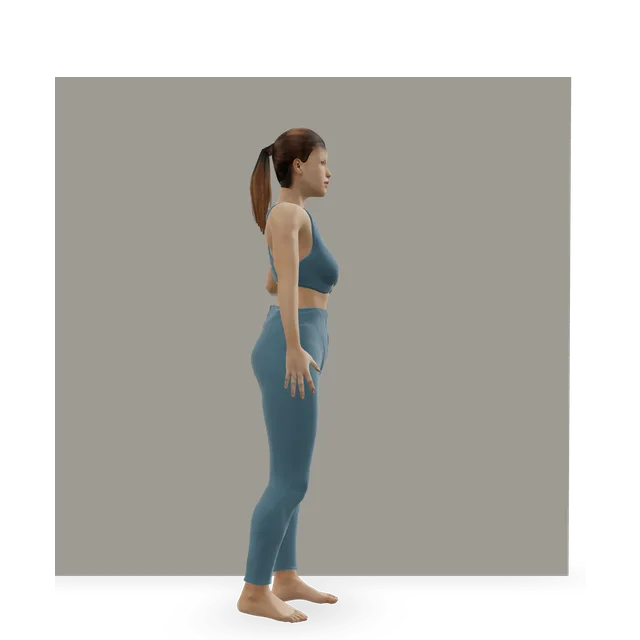
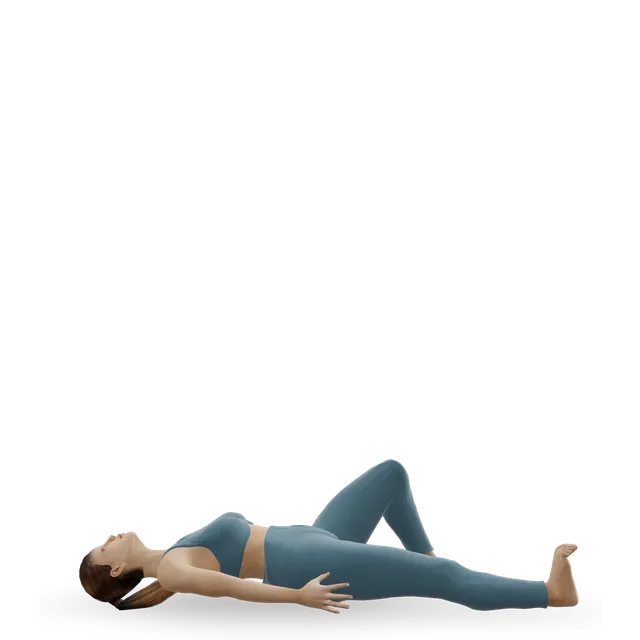
Quad set (static quads) demonstrated on the 3D figure3D demoQuad set (static quads)Beginner · No equipment

Hold 10 s, 10 times, 2 to 3 times a day · As in our pickleball knee guide (an NHS trust's meniscal tear leaflet)

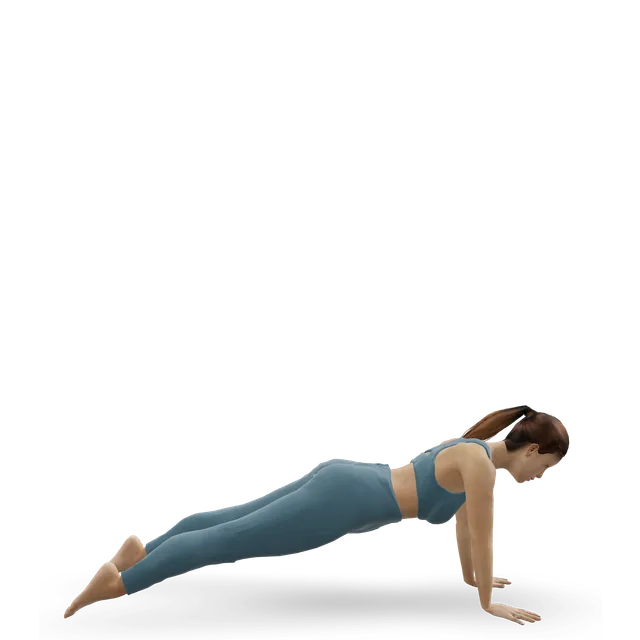
Harder: Straight-leg raise

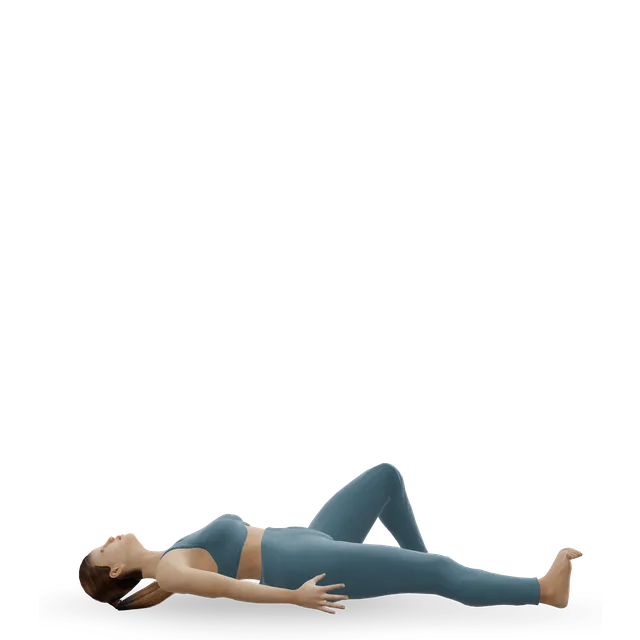
Straight-leg raise demonstrated on the 3D figure3D demoStraight-leg raiseBeginner · No equipment

Hold 10 s, 10 times, 2 to 3 times a day · As in our pickleball knee guide (an NHS trust's meniscal tear leaflet)

Easier: Quad set (static quads) · Harder: Leg extension

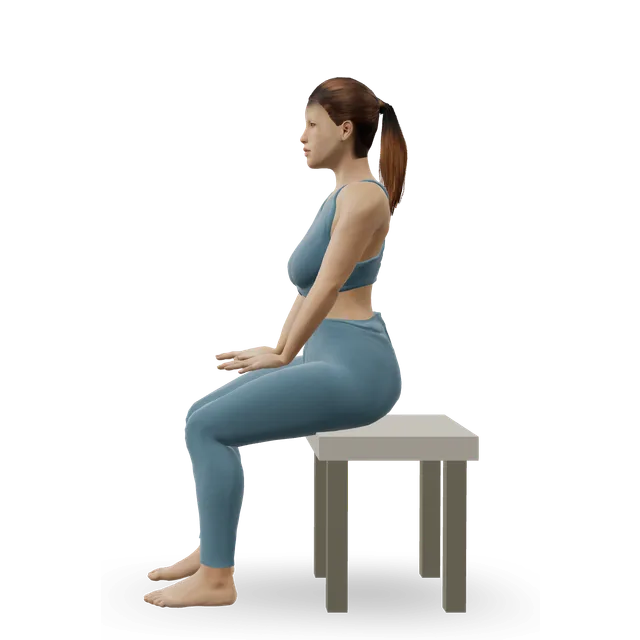
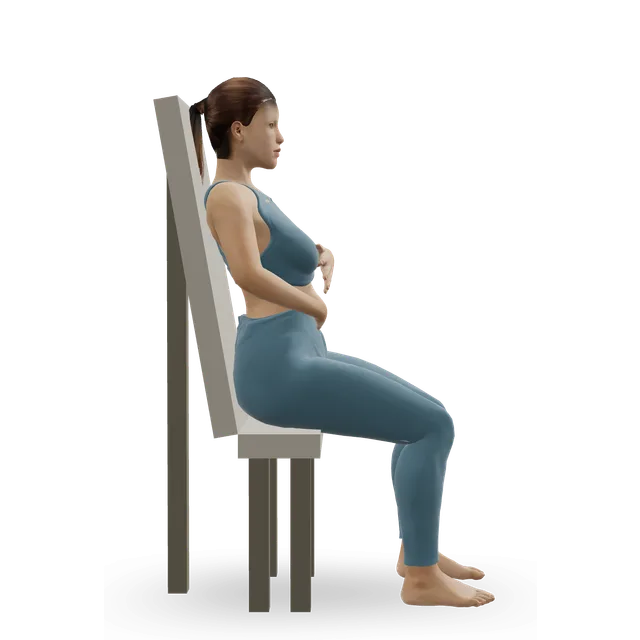
Seated knee extension (chair) demonstrated on the 3D figure3D demoSeated knee extension (chair)Beginner · A bench or box + Something with weight

3 sets of 10 to 15 each leg, 2 to 3 days a week. An editorial starting point: this exact move has not been tested on its own, though quadriceps-focused programmes showed larger effects in knee arthritis trials. · The move page's dose. From 90 to about 45 degrees if the front of the knee hurts, as the move page says

Easier: Quad set (static quads) · Harder: Leg extension

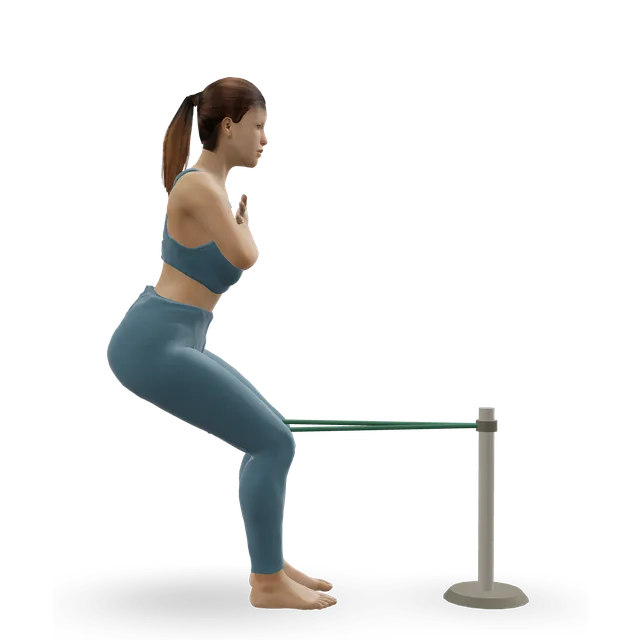
Spanish squat (band squat hold) demonstrated on the 3D figure3D demoSpanish squat (band squat hold)Intermediate · A band + An anchor point

4 to 5 holds of 30 to 45 seconds at a hard-but-OK effort, with 1 to 2 minutes' rest, once a day · From the move page's dose (modelled on the tendon trial's holds). For pain just below the kneecap; check the anchor every time, as the move page says

Easier: Straight-leg raise · Harder: Pistol squat

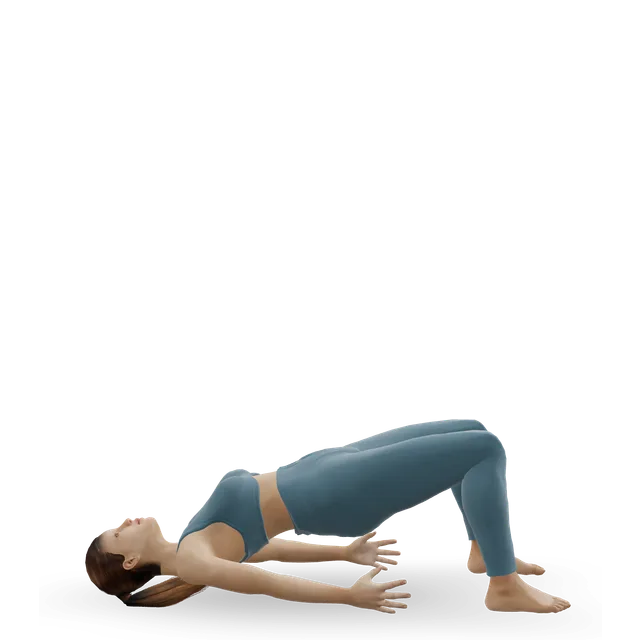
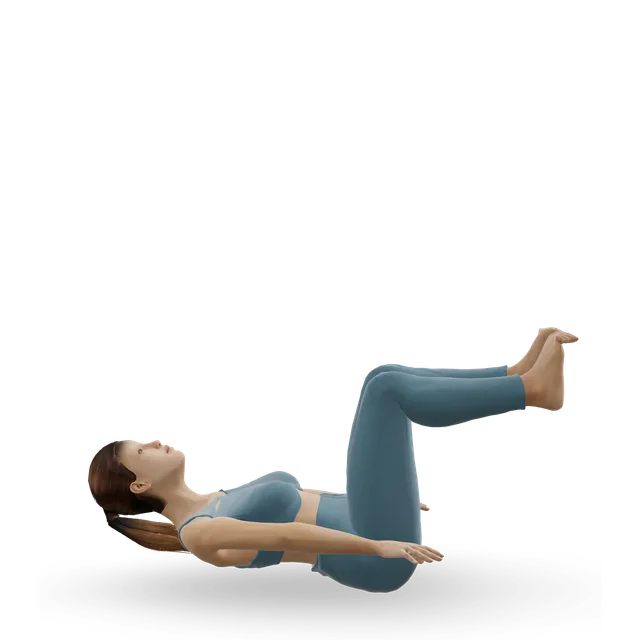
Glute bridge demonstrated on the 3D figure3D demoGlute bridgeBeginner · No equipment

Hold 5 to 10 s, 10 times · As in our pickleball knee guide (an NHS trust's meniscal tear leaflet)

Easier: Pelvic tilt into bridge · Harder: Single-leg glute bridge

Recumbent exercise bike demonstrated on the 3D figure3D demoRecumbent exercise bikeBeginner · Cardio machine

10 to 20 minutes at a moderate effort to start, building towards 30 (our editorial starting point). Moderate means you can talk but not sing, and those minutes count towards the 150 a week the NHS recommends. The resistance sets the effort: the Compendium rates stationary cycling from very light to very vigorous. · The move page's dose. Walking within the pain rule is the alternative

Harder: Stationary cycling

Move on when: Walking, stairs and getting up from a chair are within the pain rule, the knee straightens fully, and there's no new swelling the next morning (editorial).

Follow along: a timer, a cue and the next move, one step at a time.
Stage 2

Build: thigh, hip and calf strength

About weeks 2 to 6, 2 or 3 strength days a week: thigh, hip and calf strength and steady balance, working the hip and knee together, as kneecap pain treatment recommends.

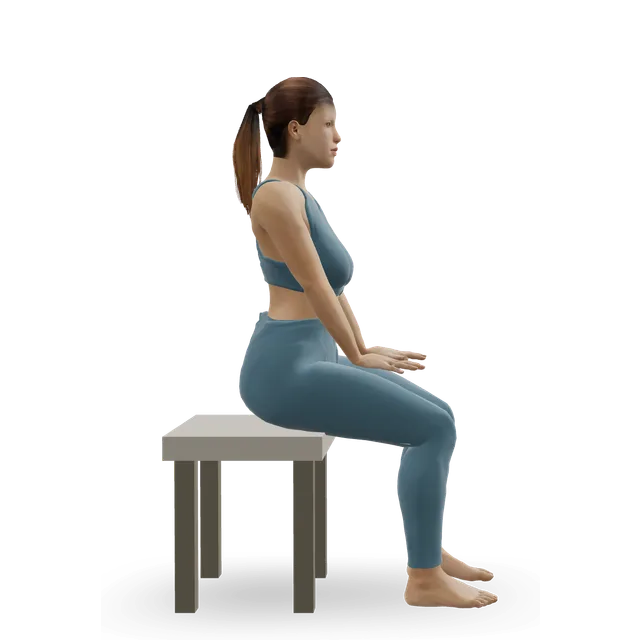
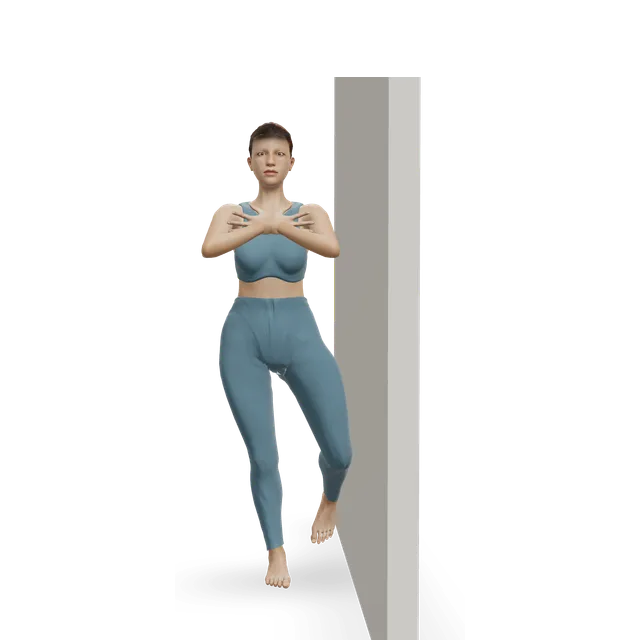
Sit to stand from a chair demonstrated on the 3D figure3D demoSit to stand from a chairBeginner · A bench or box

2 to 3 sets of 8 to 10, arms crossed when you can, lowering slowly · As in our pickleball knee guide (editorial)

Easier: Sit to stand, pushing on the thighs · Harder: Bodyweight squat

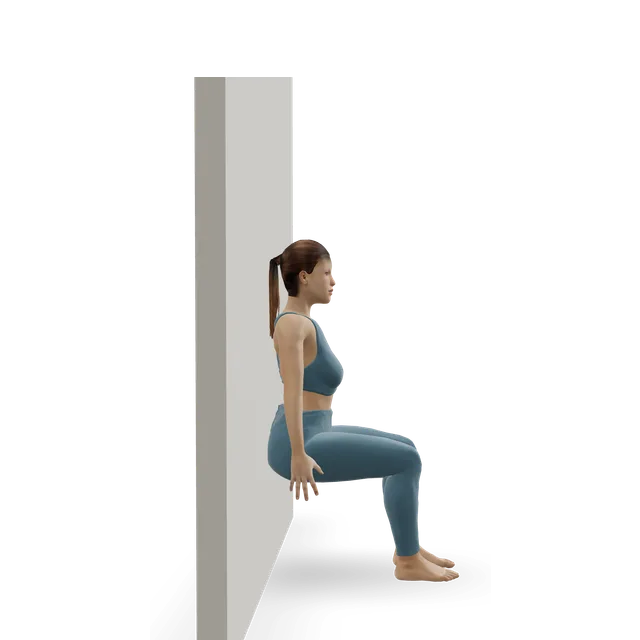
Wall sit demonstrated on the 3D figure3D demoWall sitBeginner · A wall

4 holds of 20 to 45 s at a comfortable depth, breathing normally · As in our pickleball knee guide (editorial). Shallower if the kneecap hurts; read the move page's blood pressure caution

Easier: Straight-leg raise · Harder: Spanish squat (band squat hold)

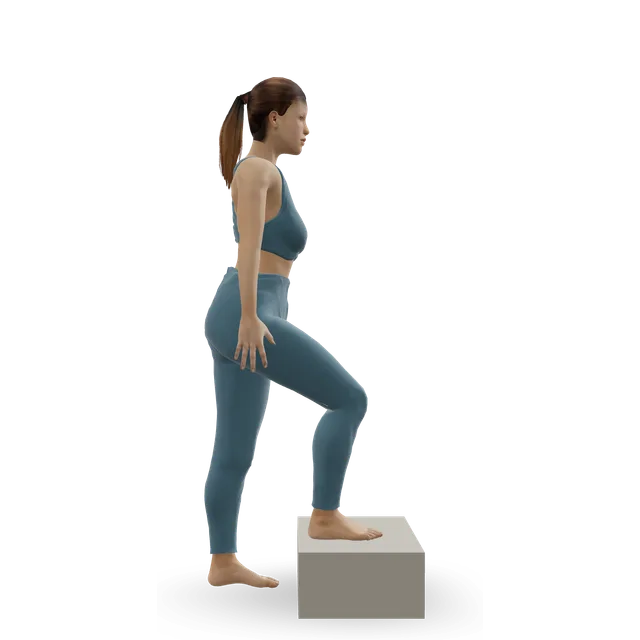
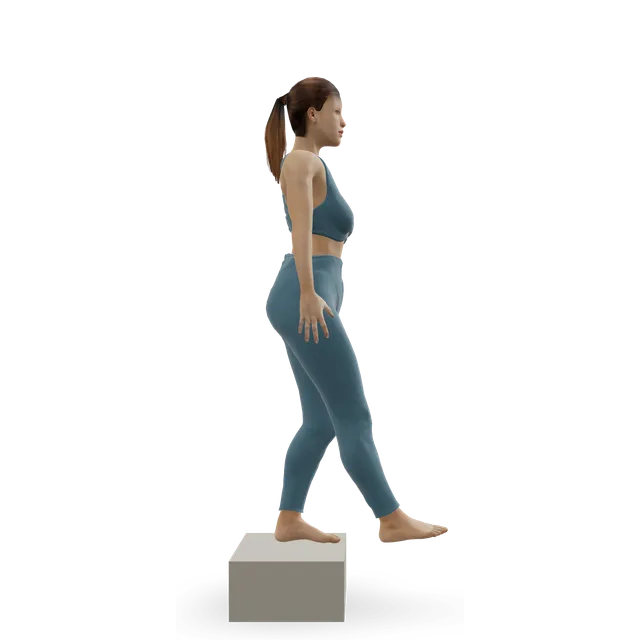
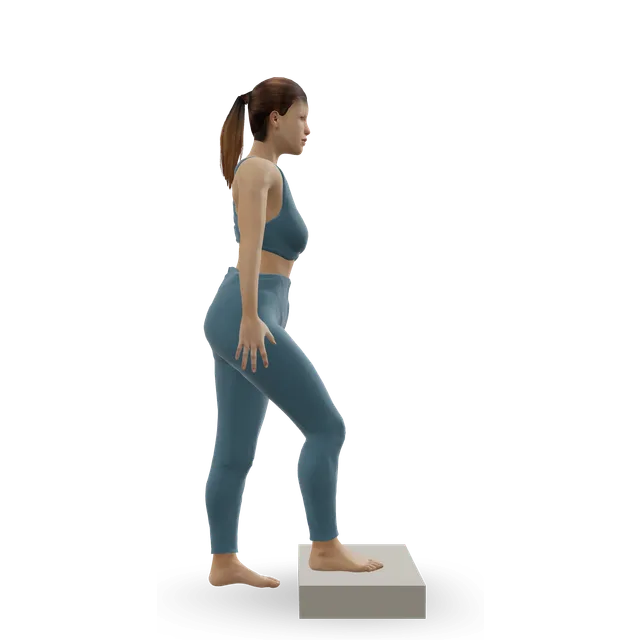
Step-up demonstrated on the 3D figure3D demoStep-upBeginner · A step

2 sets of 5 to 8 each leg, a rail or wall to hand · As in our pickleball knee guide (editorial). Low step first

Easier: Low step-up · Harder: Dumbbell step-up

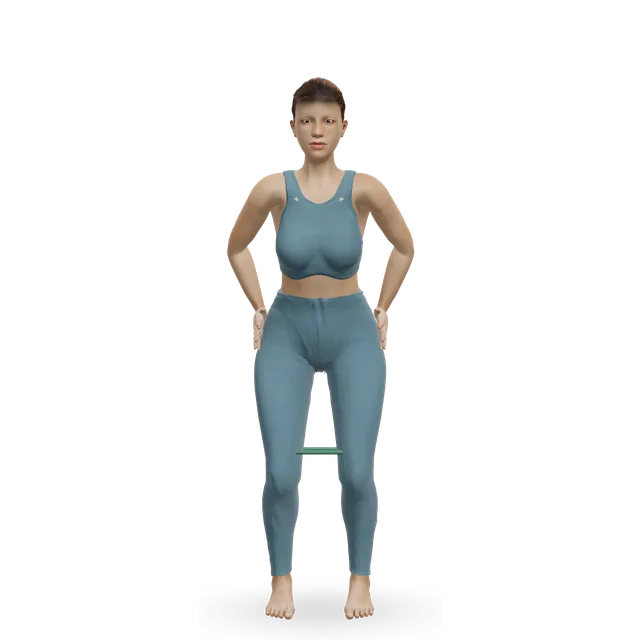
Lateral band walk demonstrated on the 3D figure3D demoLateral band walkBeginner · A band

3 sets of 10 to 15 steps each way · As in our pickleball knee guide (editorial). Hip strength for the side shuffle

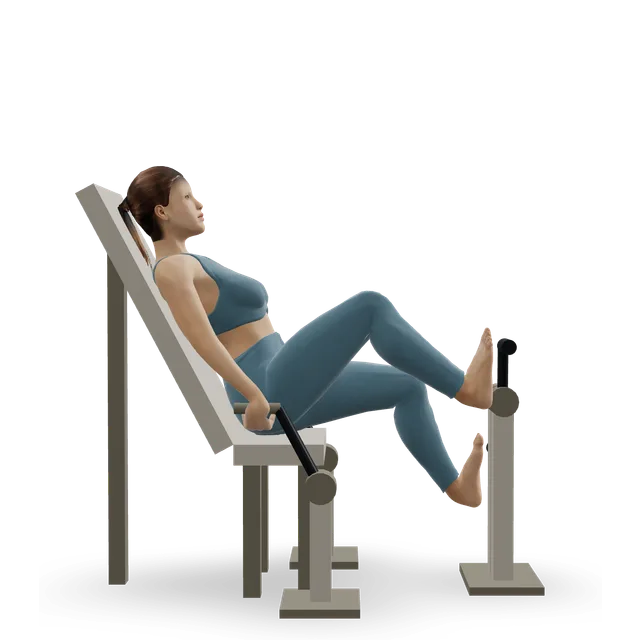
Easier: Hip abduction machine · Harder: Lateral band walk, band at the feet

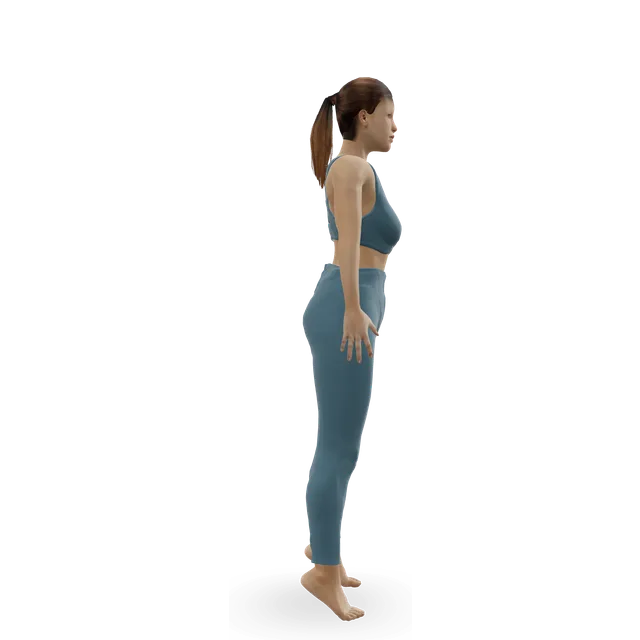
Slow calf raise demonstrated on the 3D figure3D demoSlow calf raiseBeginner · A wall

2 sets of 10 to 12, holding a support · As in our pickleball knee guide (editorial). Calves for push-off

Easier: Seated bent-knee calf raise (soleus raise) · Harder: Standing dumbbell calf raise

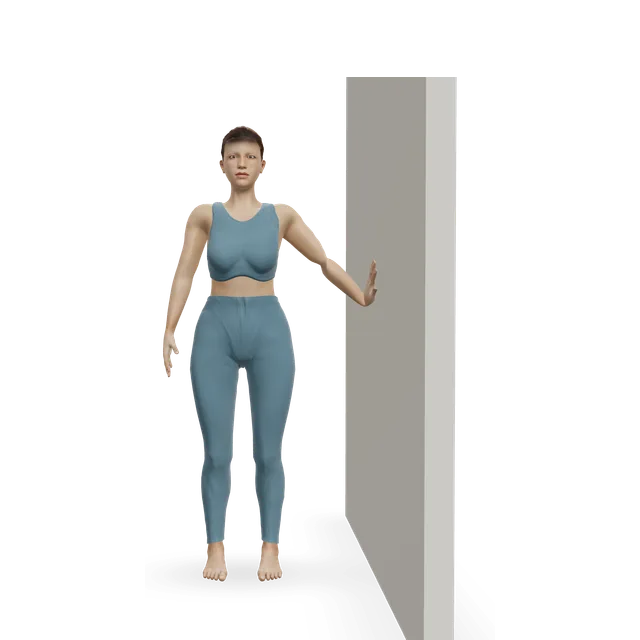
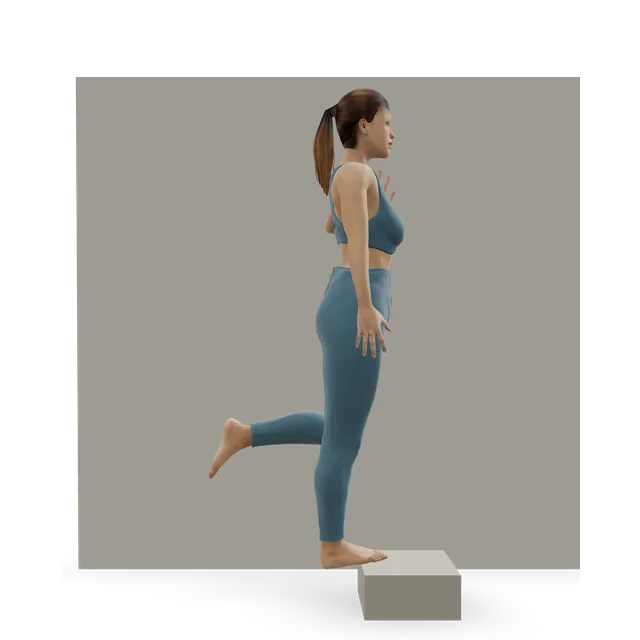
Single-leg stand demonstrated on the 3D figure3D demoSingle-leg standBeginner · A wall

3 holds of 20 to 30 s each leg · As in our knee pain guide (editorial). A hand on a wall

Easier: Tandem stance and heel-to-toe walk · Harder: Single-leg reach matrix

Move on when: 3 sets of 10 sit-to-stands without hands, and step-ups on each leg, are within the pain rule, with no swelling the next morning (editorial).

Follow along: a timer, a cue and the next move, one step at a time.
Stage 3

Court strength: lunges, single-leg control and calves

About weeks 6 to 12, 2 or 3 days a week: the lunge and recovery tennis asks for, single-leg control so the knee stays over the foot when you stop and turn, and calves for push-off.

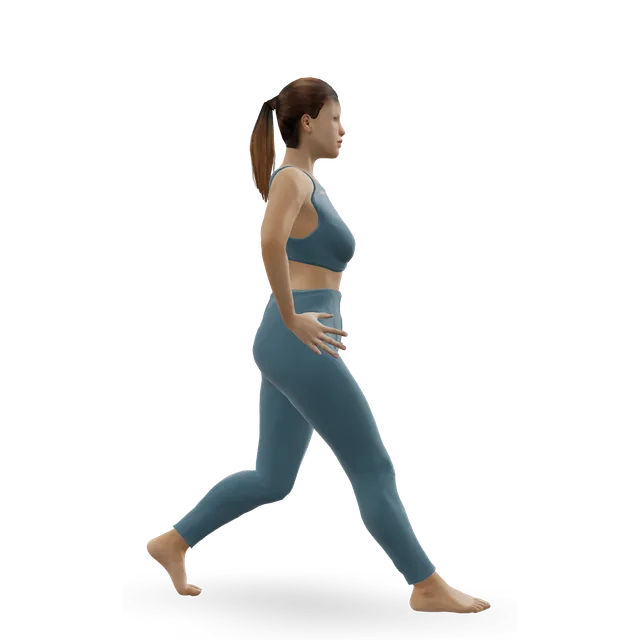
Reverse lunge demonstrated on the 3D figure3D demoReverse lungeIntermediate · No equipment

2 sets of 6 each leg, short steps, holding a support · As in our pickleball knee guide (editorial). Gentler on the front knee than forward lunges

Easier: Split squat · Harder: Split squat with dumbbells

Split squat demonstrated on the 3D figure3D demoSplit squatIntermediate · No equipment

3 sets of 8 to 12 each leg, holding a support at first · As in our pickleball knee guide (an NHS trust's ACL leaflet's strength dose)

Easier: Bodyweight squat · Harder: Reverse lunge

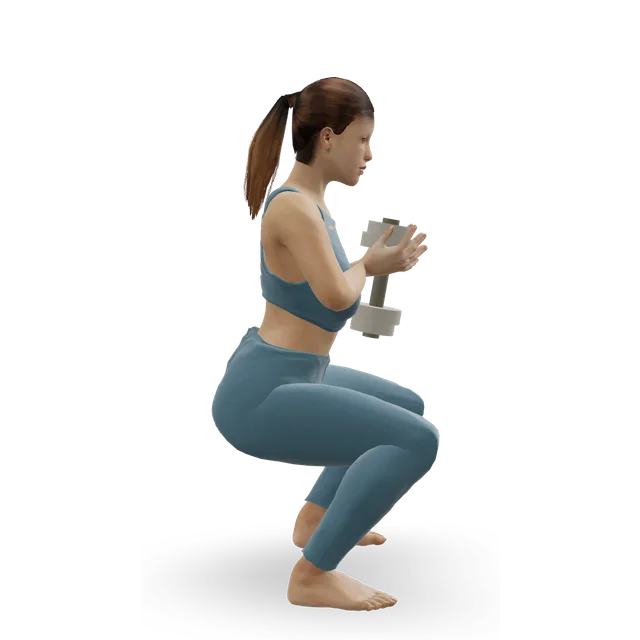
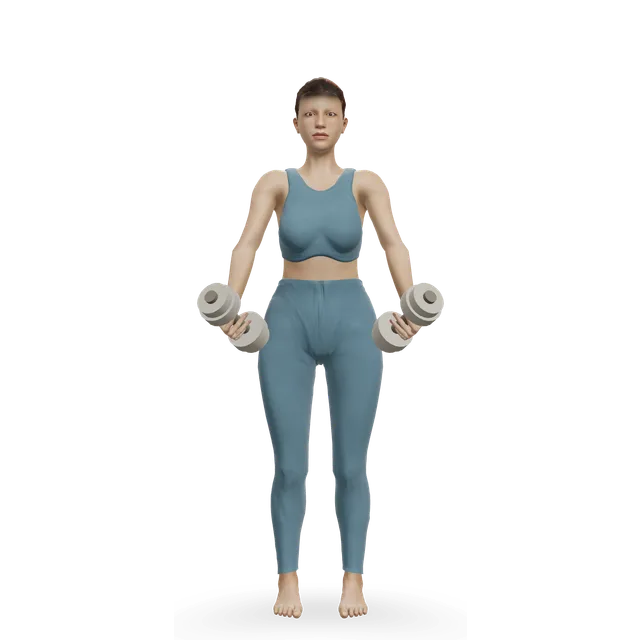
Dumbbell goblet squat demonstrated on the 3D figure3D demoDumbbell goblet squatIntermediate · A dumbbell

3 sets of 8 to 12 · As in our pickleball knee guide (editorial). Go deeper as the knee allows

Easier: Bodyweight squat · Harder: Barbell front squat

Patrick step-down demonstrated on the 3D figure3D demoPatrick step-downIntermediate · A step

3 sets of 8 to 10 each leg · As in our pickleball knee guide (editorial). From a low step first, as the move page says

Easier: Bodyweight squat · Harder: Skater squat

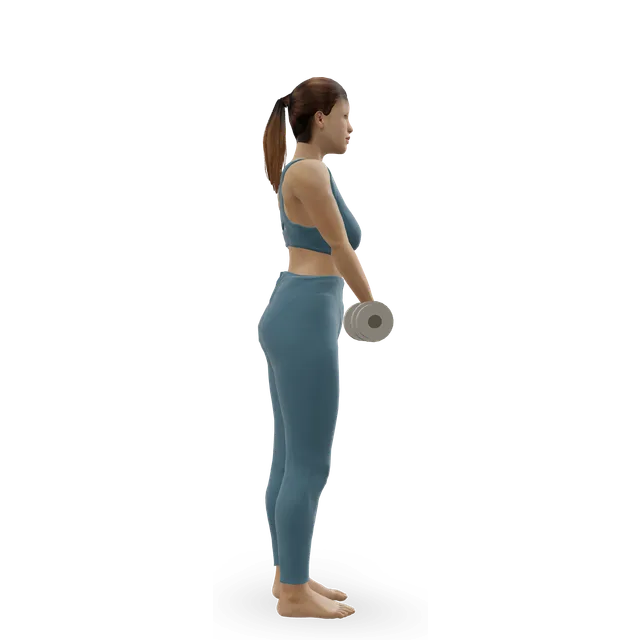
Single-leg Romanian deadlift demonstrated on the 3D figure3D demoSingle-leg Romanian deadliftAdvanced · A dumbbell

3 sets of 8 to 12 each leg, fingertips on a wall at first · As in our pickleball knee guide (an NHS trust's ACL leaflet's strength dose)

Easier: Dumbbell Romanian deadlift

Single-leg calf raise from a step demonstrated on the 3D figure3D demoSingle-leg calf raise from a stepIntermediate · A step + A wall

3 sets of 10 each leg, a hand on a rail · As in our pickleball knee guide (editorial)

Easier: Slow calf raise · Harder: Single-leg pogo hops

Move on when: Lunges and step-downs keep the knee over the middle of the foot within the pain rule, single-leg strength feels close to the other side, and for tendon pain the single-leg squat test is 3 or less (editorial).

Follow along: a timer, a cue and the next move, one step at a time.
Stage 4

Back on court: the racket sport warm-up, a soft split step and the steps back

From about weeks 8 to 12, then for good: our racket sport warm-up before every session, quick feet, stopping and changing direction under control, then rallying, doubles and full play by the written steps below. No study has tested a return to tennis after knee pain; the order is editorial, following the ITF's jumper's knee advice and our tennis and padel page.

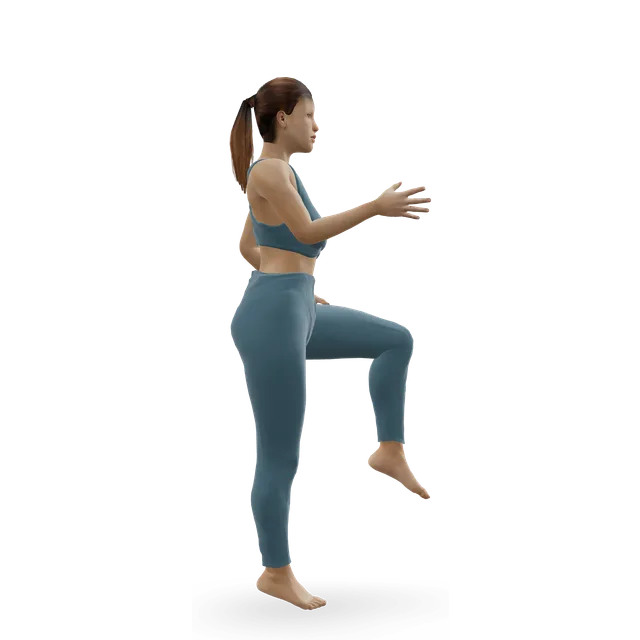
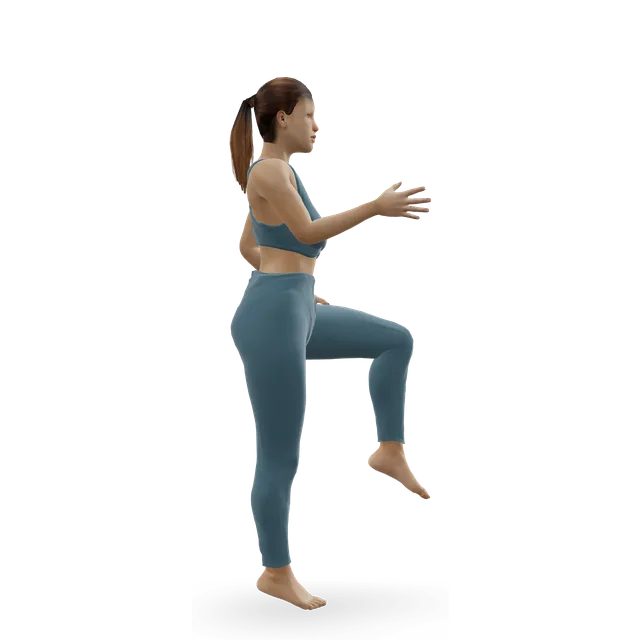
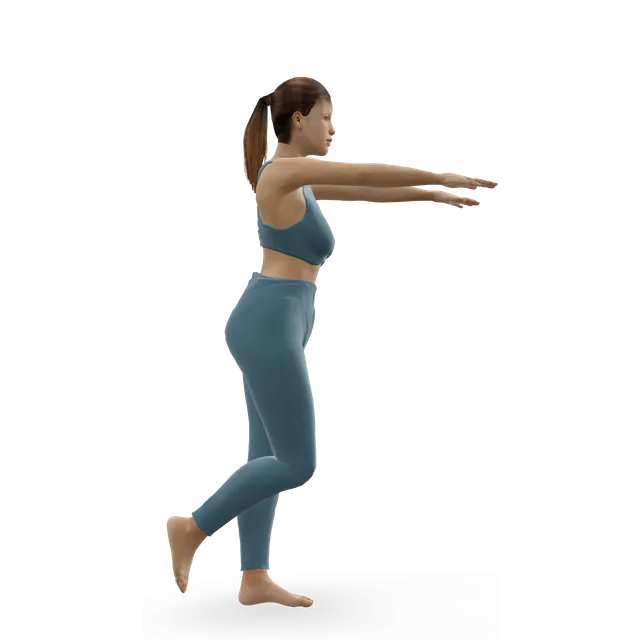
Skipping demonstrated on the 3D figure3D demoSkippingBeginner · No equipment

2 min of court widths · As in our racket sport warm-up (editorial). Mix skips, side steps and easy jogging

Easier: Ankle bounces (mini pogo) · Harder: Alternate-leg bounding

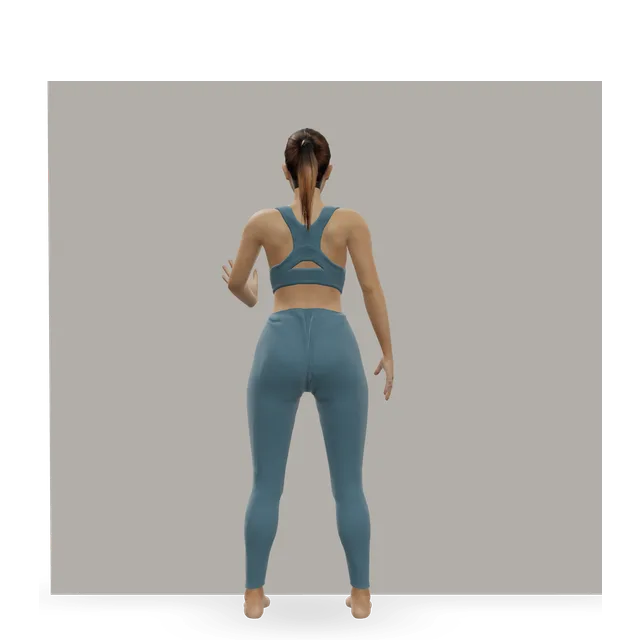
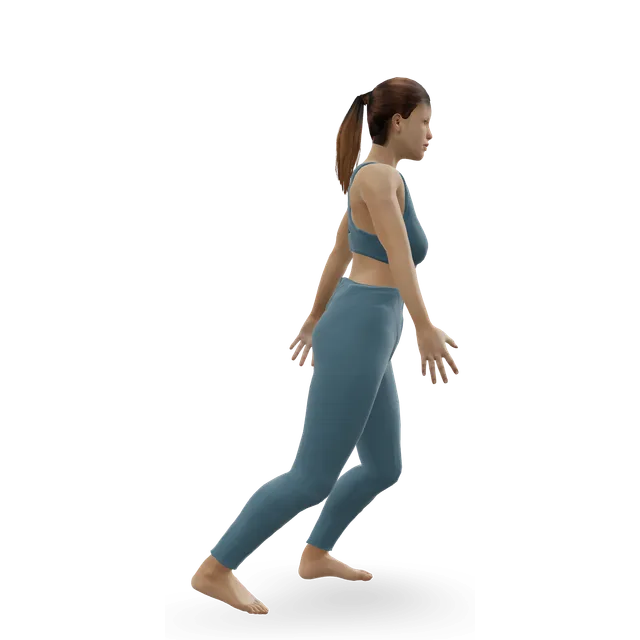
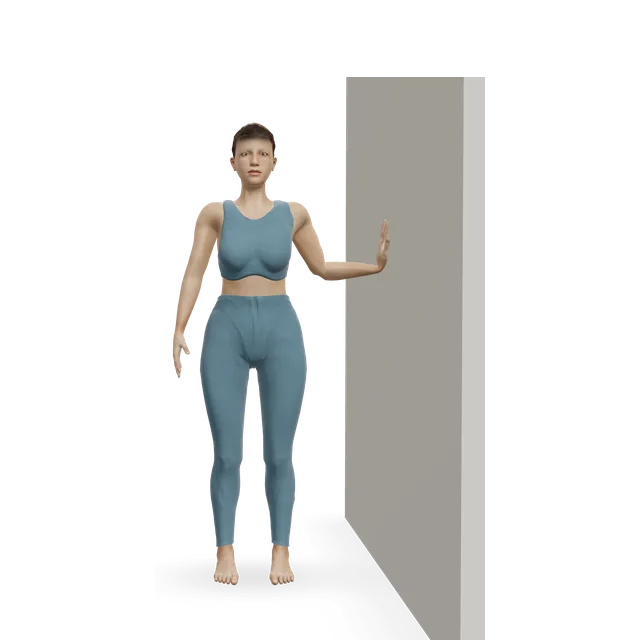
Side-stepping (sideways walking) demonstrated on the 3D figure3D demoSide-stepping (sideways walking)Beginner · A wall

2 × 20 s each way · As in our racket sport warm-up (editorial). Low and wide, quick feet

Harder: Lateral band walk

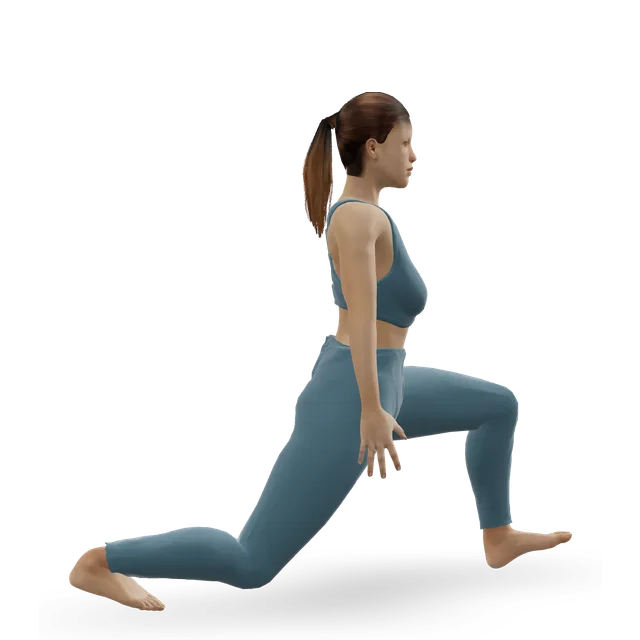
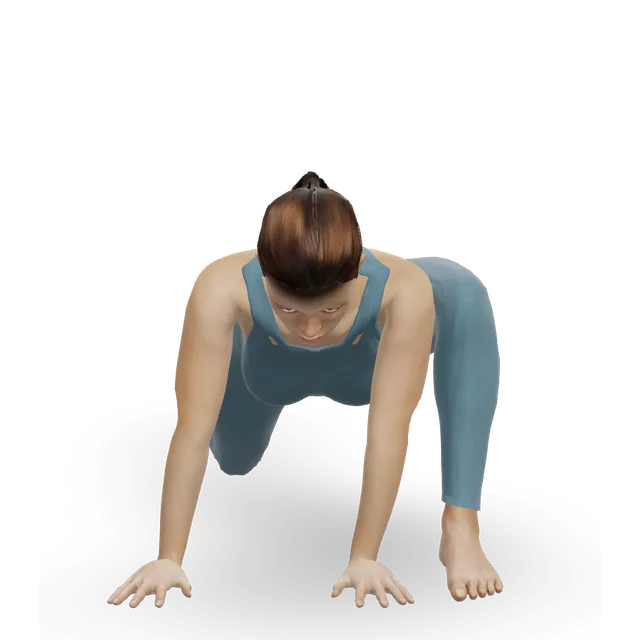
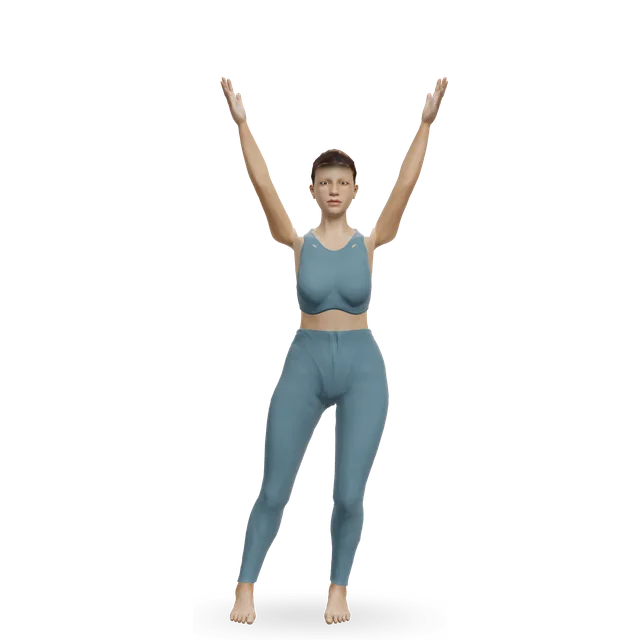
World's greatest stretch demonstrated on the 3D figure3D demoWorld's greatest stretchIntermediate · No equipment

3 each side · As in our racket sport warm-up (editorial). Reach up as you turn

Easier: Low lunge (Anjaneyasana) · Harder: Active pancake lift-off

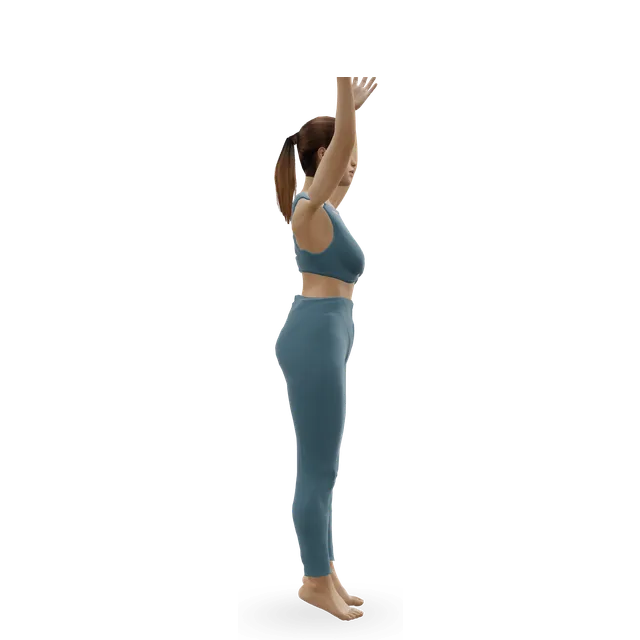
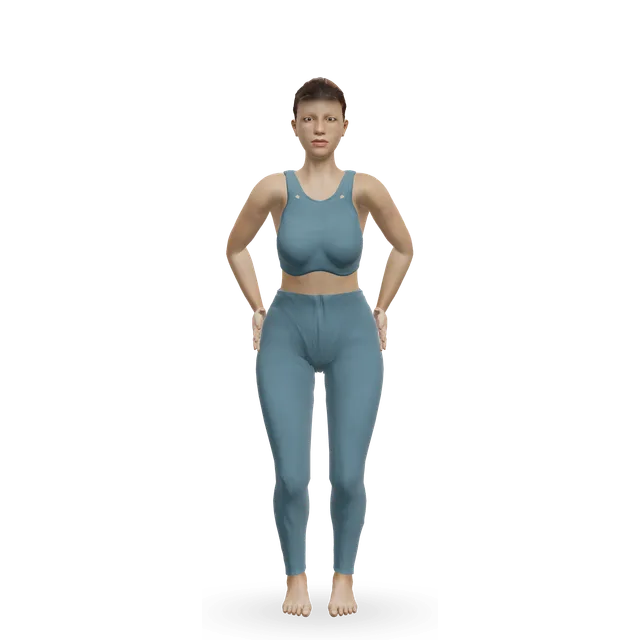
Snapdown to athletic landing demonstrated on the 3D figure3D demoSnapdown to athletic landingBeginner · No equipment

5 · As in our racket sport warm-up (editorial). It stands in for the split step: the figure shows the soft landing, not the split step itself. Land quietly, knees over your toes

Easier: Bodyweight squat · Harder: Box drop landing

Shuttle runs demonstrated on the 3D figure3D demoShuttle runsAdvanced · No equipment

2 to 3 short shuttles · As in our racket sport warm-up (editorial). Wide, easy turns first: sharp turns load the knee far more, as the move page says

Easier: Treadmill jogging

Single-leg hop and stick demonstrated on the 3D figure3D demoSingle-leg hop and stickIntermediate · No equipment

2 × 6 each leg · As in our tennis and padel injury prevention routine (editorial). Only once you're cleared after a knee injury, as the move page says; leave it out with arthritis if it flares the knee

Easier: Standing broad jump with stuck landing · Harder: Alternate-leg bounding

Move on when: A full session passes the pain rule with no swelling the next morning; then singles, longer matches and surface changes, one at a time (editorial). Keep two strength days a week (stages 2 and 3, or our tennis and padel injury prevention routine), as the NHS advises strength work on at least 2 days a week, and drop back a step for a few days after a flare rather than stopping.

Follow along: a timer, a cue and the next move, one step at a time.

What to change for now

What to do now (written steps)

Our 3D figure can't show these. They come from the NHS knee pain page, the ITF's jumper's knee sheet and NHS inform's knee exercises; where a step is our suggestion, it says so.

  • 1. For a new knee pain, the NHS suggests putting as little weight as possible on the knee at first, an ice pack wrapped in a tea towel for up to 20 minutes every 2 to 3 hours, and painkillers, and says "Knee pain can often be treated at home".
  • 2. Adapt, don't stop: the ITF says a mild injury doesn't mean stopping tennis altogether, as long as you adapt your game, but not to play or train through the pain. Our suggestion: shorter sessions, doubles before singles, rallying in a smaller area of the court, and serving at half pace.
  • 3. NHS inform's knee exercises say "Aim to keep your pain within a rating of 0 to 5", and "your pain should be no worse the morning after you’ve exercised"; the pain rule below uses the same band.
  • 4. A pop, fast swelling, catching that blocks straightening, giving way or a hot, swollen knee isn't an ordinary tennis ache: see the warning signs.

Sources 33, 18, 56

On court: surfaces, shoes and footwork (written steps)

The 3D figure can't show these. The tips are in the ITF's and the AAOS's own words; the surface advice rests on one low-response survey, small lab studies and the bodies' advice, none of it has been tested for knee pain, and where a step is our suggestion, it says so.

  • 1. Surfaces (our suggestion): play mostly on one surface while your knee is sore, clay or artificial grass if you can, and when you switch, especially to indoor hard courts in winter, cut your playing time for a week or two. The ITF advises clay while a jumper's knee settles, and the AAOS advises avoiding hard courts with no give; surface made no difference to injury overall in recreational players.
  • 2. Shoes: court shoes that suit the surface, replaced when the sole or cushioning is worn, as the ITF advises; not the grippiest sole you can find, as high grip raised the twisting loads on the knee in a lab study.
  • 3. Footwork (our suggestion): small adjusting steps and turning your whole body to the ball rather than lunging and twisting on a planted foot, as meniscus tears in one hospital series followed twists on court; land your split step softly on both feet with the knees bent; and let a ball go rather than lunging to full stretch while the knee is sore.
  • 4. Doubles before singles, and shorter matches, while the knee settles (our suggestion).

Sources 14, 18, 38, 37, 40, 1

Older players, arthritis and replaced knees (written steps)

Our suggestion, built on the LTA's walking tennis, the knee surgeons' surveys and the USTA's and the NHS's advice; no study has tested these steps for knee pain.

  • 1. With arthritis, play on the knee's better days, keep to doubles if singles swells it, and keep the strength work going.
  • 2. If running hurts, the LTA's walking tennis keeps you playing: players can't run or jump.
  • 3. After a knee replacement, doubles is the usual first step, often from about 3 months with your surgeon's agreement; singles is less certain.
  • 4. Preparation and recovery matter more as we get older, the USTA's medical chief says: keep two strength days a week, as the NHS advises strength work on at least 2 days a week.

Sources 55, 51, 52, 44, 58

Back on court (written steps)

Our suggestion, built on the ITF's jumper's knee advice, the surface survey and the AOSSM's and the LTA's warm-up advice; none has been tested as a return to tennis after knee pain. Move on when each step passes the pain rule.

  • 1. First sessions: the warm-up, then 15 to 20 minutes of rallying in the service boxes, on clay or artificial grass if you can; no serving at full pace.
  • 2. Build the rally: baseline rallies at an easy pace, adding about 10 minutes a session while the pain rule holds, with a day off between.
  • 3. Serves and overheads: half-pace serves, then full serves, a few at a time; the serve's leg drive loads the front of the knee.
  • 4. Doubles: a set, then a full match, before singles.
  • 5. Singles, long matches and tournaments: last, one at a time.
  • 6. Surfaces: stay on one surface while you rebuild; when you switch, especially to indoor hard courts in winter, shorten sessions for a week or two, as the ITF warns.
  • 7. Shoes: court shoes that suit the surface, replaced when the sole or cushioning is worn.
  • 8. With arthritis: play on the knee's better days, keep to doubles if singles swells it, and keep the strength work going; walking tennis is an option if running hurts.
  • 9. After an ACL tear, surgery or a knee replacement, your team decides when and how you play again; doubles first after a replacement.
  • 10. If it doesn't settle, or keeps coming back, see a physiotherapist, as the warning signs say.

Sources 18, 14, 15, 42, 17, 38, 55, 51

Positions to swap, and why

Habit or positionWhy it mattersInstead
Playing on after a pop, fast swelling, catching or giving wayThese are signs of a ligament or meniscus injury that needs checking.Stop, and follow the warning signs.
Playing through tendon pain above the rule's limitThe ITF says playing through the pain delays recovery.Shorter, easier sessions, and the Spanish squat holds.Try: Spanish squat (band squat hold)
Long singles matches or back-to-back days while it's soreOveruse makes up most injuries in recreational players.Doubles and shorter sessions with rest days.
Switching surfaces every week, or going straight to indoor hard courtsSwitching surfaces went with more injury, and hard court with more leg overuse, in a survey of recreational players, and the ITF warns about the switch to indoor courts.One surface for now, clay or artificial grass if you can.
Lunging and twisting on a planted foot for wide ballsMeniscus tears followed twists on court in a hospital series.Small steps and turning your whole body, practised with side steps.Try: Side-stepping (sideways walking)
Worn shoes, running shoes, or the grippiest sole you can findThe ITF advises shoes that suit the surface, replaced regularly, and high grip raised the twisting loads on the knee in a lab study.Court shoes matched to the surface.
Skipping the warm-upThe AOSSM and the LTA advise one.Our racket sport warm-up, with soft landings.Try: Snapdown to athletic landing
Resting completely for weeksExercise treats kneecap pain, tendon pain, worn meniscus tears and arthritis.The stage 1 moves and the bike.Try: Recumbent exercise bike
Relying on a knee brace or an MRI scanNeither is the treatment, and tears on scans are often chance findings.The strength plan, starting with sit-to-stands.Try: Sit to stand from a chair
Deep loaded lunges and squats while the kneecap hurtsDeeper bends press the kneecap harder.Shallower squats and reverse lunges.Try: Reverse lunge

Routines to follow

Racket sport warm-up

A 12-minute warm-up for tennis, padel, squash or badminton: skipping, leg swings, trunk turns, band shoulder work, forearm circles, shuttles and landings.

12 minBeginner10 movesWall, band

Tennis and padel injury prevention

A 25-minute routine for racket players: the five-part Shoulder Control programme from handball trials, band rotations, forearm lowering, hops and balance.

25 minBeginner12 movesDumbbell, cable machine

Knee strengthening workout: from first steps to full range

A 25-minute session for knees that don't currently hurt: thigh and hamstring strength, single-leg control, then an optional full-range block with knees over toes.

25 minBeginner14 movesBench or box, wall

Knee control warm-up

A 20-minute warm-up that trains your knees to track over your toes: side-hip strength, squats and lunges with alignment practice, balance and quiet landings.

20 minBeginner10 movesWall, band

Arthritis exercise routine: a joint-friendly circuit

A 30-minute joint-friendly circuit built like the GLA:D and ESCAPE-pain programmes: a gentle warm-up, chair, step and band strength moves, balance, then stretches.

30 minBeginner14 movesBench or box, step

Both-sides yoga for tennis players: a 25-minute class for rotation, shoulders, hips and balance

Twenty-five minutes of yoga for tennis and padel players: rotation both ways, shoulder blades, hips, one-leg balance and forearms, for non-match days.

25 minBeginner19 movesWall

Both-sides Pilates for tennis players: a 25-minute class for rotation, shoulder blades and hips

A 25-minute Pilates class for tennis and padel players: trunk endurance, rotation both ways, shoulder blades, hips and single-leg balance, on a mat.

25 minBeginner19 movesBand, anchor point

More moves for this area

Questions people ask

Why do my knees hurt after tennis?

Usually kneecap pain or the patellar tendon from split steps, lunges, quick stops and the serve's leg drive, an arthritic knee after a longer match than usual, or a meniscus after a twist. Where it hurts and whether it swells sort them.

Is tennis bad for your knees?

No. Knee injuries, not tennis itself, explained the link with arthritis in one study, tennis players live longer on average, and older players had stronger thighs than their peers. Build up gradually, wear court shoes and keep your legs strong.

Can I play tennis with knee arthritis?

Usually yes, and exercise is the first treatment for it. Play shorter sessions and doubles first, keep within the pain rule, and try clay, artificial grass or walking tennis if hard courts flare it.

Can I play tennis with a torn meniscus?

Often, once the knee doesn't catch, lock or swell, and after the strength stages: exercise did as well as surgery for worn tears in a trial. A knee that locks or won't straighten needs checking first.

What is tennis knee?

It isn't a diagnosis. Most often it means kneecap pain or the patellar tendon (jumper's knee) at the front of the knee, which the ITF describes as common in tennis players.

Why does the inside of my knee hurt after tennis?

From mid-life it is often a worn inner meniscus or arthritis; after a twist or a fall, it can be the inner ligament (the MCL). A tender spot a few centimetres below the joint is often pes anserine pain, and our inner knee pain guide maps the exact spot.

Which tennis court surface is best for the knees?

In recreational players, injury overall was the same on clay, hard court and artificial grass, but hard court went with more leg overuse and switching surfaces with more injury. That rests on one survey with a low response, so clay or artificial grass, and staying on one surface, are a sensible swap while a knee is sore, not a cure.

What shoes are best for knee pain in tennis?

Court shoes that suit the surface, as the ITF advises, replaced regularly as they wear. Extra grip isn't the aim: high-grip shoes raised the twisting loads on the knee in a lab study.

Should I wear a knee brace or strap for tennis?

It isn't the treatment: NICE doesn't routinely offer braces for arthritis, and bracing for kneecap pain is an area of uncertainty. A strap or sleeve may feel better while you play, but no trial has tested one in tennis players, and strength work does more.

Can I play tennis after a knee replacement?

Often, as doubles, once your surgical team agrees; European knee surgeons recommend doubles from beyond 12 weeks. Singles is less certain.

How do I prevent knee pain in tennis and padel?

Warm up with moving drills, build up playing time gradually, stay on one surface where you can, wear court shoes matched to the surface, and keep up leg strength twice a week. These are sensible but haven't been tested as knee pain prevention in tennis or padel.

When should I see a doctor?

Go to A&E for a knee that changed shape or swelled fast with a pop, and call 999 for chest pain on court. Get advice from NHS 111 for a knee that locks, gives way, won't take weight or is hot and swollen, and see a GP or physiotherapist if it hasn't improved within a few weeks. In the US, call 911 where this page says 999.

Related exercise guides

Other pain guides

Sources

  1. Kaiser 2021 · Acute injuries in 449 recreational tennis players at one Austrian hospital (case series, Orthop J Sports Med)
  2. Weiss 2021 · Pickleball and tennis injuries in players aged 60 and over in US emergency departments, 2010 to 2019 (national surveillance study, Inj Epidemiol)
  3. Llanes 2023 · Injuries in US high school tennis players, 2014 to 2018 (national surveillance study, Arthrosc Sports Med Rehabil)
  4. Schnohr 2018 · Leisure activities and life expectancy in 8,577 adults: the Copenhagen City Heart Study (cohort study, Mayo Clin Proc)
  5. Oja 2017 · Types of sport and exercise and the risk of death in 80,306 British adults (pooled cohort study, Br J Sports Med)
  6. Yoshiko 2022 · Thigh muscle size and strength in 38 older tennis players and 38 peers (cross-sectional study, J Aging Phys Act)
  7. Montalvan 2024 · Injuries at 12 French Opens, 2011 to 2022 (retrospective tournament study, Orthop J Sports Med)
  8. Renström 1995 · Knee pain in tennis players (narrative review, Clin Sports Med)
  9. Sell 2014 · Injuries at 16 US Opens, 1994 to 2009 (tournament records, Br J Sports Med)
  10. McCurdie 2017 · Injuries at Wimbledon, 2003 to 2012 (tournament records, Br J Sports Med)
  11. Hjelm 2010 · Injuries in 55 junior tennis players over 2 years (prospective cohort, Knee Surg Sports Traumatol Arthrosc)

  12. Dahmen 2023 · Injuries in padel: 8 studies, 2,022 players (systematic review, BMJ Open Sport Exerc Med)
  13. Sports Medicine Australia (SMA), Smartplay · Preventing tennis injuries (fact sheet, 2008)
  14. Pluim 2018 · Court surfaces and injuries in 3,656 Dutch recreational tennis players (repeated cross-sectional survey, Br J Sports Med)
  15. American Orthopaedic Society for Sports Medicine (AOSSM), STOP Sports Injuries · Tennis injuries tip sheet (reviewed October 2025)
  16. Tennis Australia · Injuries throughout the elite tennis pathway (summary, 2019)
  17. Girard 2007 · Restricted knee motion and the first serve in 30 players (lab study, J Strength Cond Res)
  18. International Tennis Federation (ITF) · Jumper's knee (player information sheet, 2019)
  19. Lian 2005 · How common jumper's knee is in 613 elite athletes from different sports (cross-sectional study, Am J Sports Med)
  20. Zwerver 2011 · Jumper's knee in 891 non-elite athletes from 7 sports (cross-sectional survey, Am J Sports Med)
  21. NHS · Meniscus tear (knee cartilage damage)
  22. AAOS OrthoInfo · Meniscus tears
  23. NICE NG226 · Osteoarthritis in over 16s: diagnosis and management (2022)
  24. Thelin 2006 · Knee injuries explain sport's link with knee osteoarthritis (population case-control study, Scand J Med Sci Sports)
  25. Driban 2017 · Is taking part in certain sports linked with knee osteoarthritis? (systematic review, J Athl Train)
  26. Spector 1996 · Hip and knee osteoarthritis on X-rays in 81 former elite women athletes and 977 other women (retrospective cohort, Arthritis Rheum)
  27. Holst-Christensen 2025 · ACL injuries in Danish tennis players: how they happen and return to sport (register-based questionnaire study, Scand J Med Sci Sports)
  28. Maquirriain 2006 · Tennis limitations in 16 players with an ACL-deficient knee (case-control study, Br J Sports Med)
  29. Bachmann 2004 · The Ottawa knee rule to rule out knee fractures: 6 studies, 4,249 adults (systematic review, Ann Intern Med)
  30. Englund 2008 · Meniscal tears on MRI in 991 adults aged 50 to 90 (population study, N Engl J Med)
  31. Siemieniuk 2017 · Arthroscopic surgery for degenerative knee disease and meniscal tears (BMJ Rapid Recommendation)
  32. Kise 2016 · Exercise or keyhole surgery for degenerative meniscal tears in 140 adults aged 35 to 60, 2-year follow-up (randomised trial, BMJ; one of two errata couldn't be read)
  33. NHS · Knee pain
  34. Starbuck 2017 · Clay court friction and how 16 players move (lab study, J Sci Med Sport)
  35. Damm 2013 · Surface grip, frictional demand and movement in 8 tennis players (lab study, Sports Biomech)
  36. Starbuck 2016 · Court surfaces, player perceptions and movement in 10 players (lab and court study, J Sports Sci)
  37. AAOS OrthoInfo · Tennis injury prevention
  38. International Tennis Federation (ITF) · Footwear (player information sheet, 2019)
  39. Lawn Tennis Association (LTA) · Top five tips for playing tennis in winter (2025)
  40. Wannop 2010 · Shoe grip and knee and ankle loads in 13 athletes (lab study, Am J Sports Med)
  41. Wannop 2013 · Shoe grip and non-contact leg injuries in 555 high school American football players (cohort study, Med Sci Sports Exerc)
  42. Lawn Tennis Association (LTA) · Three easy warm-up exercises to do before every tennis session
  43. Render 2026 · The Tennis 10+ warm-up and cool-down in 317 adult recreational players over a year (longitudinal cohort, Sports Health)
  44. United States Tennis Association (USTA) · Q&A: picking the right equipment and preventing injuries (interview with the US Open's chief medical officer, 2022)
  45. United States Tennis Association (USTA) Sport Science Committee · Recovery in tennis (booklet)
  46. Crossley 2016 · Patellofemoral pain consensus statement, part 2: recommended physical interventions (consensus statement, Br J Sports Med)
  47. Powers 2014 · Kneecap joint stress in squats and seated knee extensions in 10 healthy people (lab study, J Orthop Sports Phys Ther)
  48. Breda 2021 · Progressive tendon loading or eccentric exercise for patellar tendinopathy in 76 people (randomised trial, Br J Sports Med)
  49. Lawford 2024 · Exercise for osteoarthritis of the knee: 139 trials, 12,468 people (Cochrane review)
  50. Bricca 2019 · Knee-loading exercise and cartilage: 9 trials (systematic review, Br J Sports Med)
  51. Thaler 2021 · Sports recommended after knee replacement by 120 European knee surgeons (survey, Knee Surg Sports Traumatol Arthrosc)
  52. Kaiser 2025 · Joint replacement and tennis (narrative review, Orthop J Sports Med)
  53. Mont 2002 · Tennis after knee replacement in 33 players (questionnaire study, Am J Sports Med)
  54. AAOS OrthoInfo · Activities after knee replacement
  55. Lawn Tennis Association (LTA) · LTA Walking Tennis: a quick guide for coaches
  56. NHS inform · Exercises for knee problems
  57. Smith 2017 · Should exercises be painful in chronic musculoskeletal pain? (systematic review and meta-analysis, Br J Sports Med)
  58. NHS · Physical activity guidelines for older adults
  59. NHS · Dislocated kneecap
  60. Stiell 1995 · Derivation of the Ottawa knee rule for X-rays after knee injury (Ann Emerg Med)
  61. Stiell 1996 · Prospective validation of the Ottawa knee rule (JAMA)
  62. AAOS OrthoInfo · Quadriceps tendon tear
  63. AAOS OrthoInfo · Patellar tendon tear
  64. NHS · Septic arthritis
  65. NHS · Gout (past its review date: reviewed August 2023, review due August 2026)
  66. Skou 2022 · Early surgery or exercise and education for meniscal tears in 121 adults aged 18 to 40: DREAM (RCT, NEJM Evidence)
  67. van der Graaff 2022 · Keyhole surgery against physical therapy for traumatic meniscal tears in 100 adults aged 18 to 45: STARR (RCT, BJSM)
  68. Kopf 2020 · Management of traumatic meniscus tears: the 2019 ESSKA meniscus consensus (Knee Surg Sports Traumatol Arthrosc)
  69. Evidence-Based Interventions programme (Academy of Medical Royal Colleges) · Arthroscopic surgery for meniscal tears (reviewed 2024)
  70. NHS · ACL (anterior cruciate ligament) surgery: why it's done
  71. Beard 2022 · Reconstruction vs rehab for non-acute ACL injury: ACL SNNAP (RCT, Lancet)
  72. Logerstedt 2017 · Knee ligament sprain: clinical practice guideline (JOSPT)
  73. Chen 2008 · MCL injuries of the knee: current treatment concepts (review, Curr Rev Musculoskelet Med)
  74. American Academy of Orthopaedic Surgeons, OrthoInfo · Osteonecrosis of the knee
  75. Scott 2025 · Subchondral insufficiency fracture of the knee (review, Orthopadie)
  76. NHS · Hip pain in adults
  77. NHS · Broken hip
  78. Guss 1997 · A broken hip felt only as knee pain (case report, Ann Emerg Med)
  79. Hughes 2018 · A broken hip found in an outpatient clinic (case report, J Prim Health Care)
  80. NHS · Falls
  81. NICE 2025 · Falls: assessment and prevention in older people and in people 50 and over at higher risk (NG249)
  82. Later Life Training 2018 · Otago strength and balance home exercise programme: beginners (booklet)
  83. NHS · Knee replacement: complications
  84. NHS · Deep vein thrombosis (DVT)
  85. NHS · Baker's cyst
  86. NHS · Pulmonary embolism
  87. NHS · Heart attack
  88. NHS · Angina
  89. NHS · Fainting
  90. NHS inform · Exercises for patellofemoral knee pain
  91. American Academy of Orthopaedic Surgeons, OrthoInfo · Osgood-Schlatter disease (knee pain)
  92. Sherwood Forest Hospitals NHS Foundation Trust · Osgood Schlatter's disease (patient leaflet, 2025)
  93. Cambridge University Hospitals NHS Foundation Trust · Sinding-Larsen-Johansson syndrome (patient information, 2024)
  94. NHS · Symptoms of bone cancer
  95. NHS · Sciatica
  96. Thomeé 1997 · Treating patellofemoral pain in young women with a pain-monitoring model (Phys Ther)
  97. Ageberg 2010 · NEMEX-TJR neuromuscular training for severe hip or knee osteoarthritis, and its pain rule (BMC Musculoskelet Disord)
  98. Royal Berkshire NHS Foundation Trust · ACL injury: non-operative management (physiotherapy leaflet, 2024)
  99. National Institute for Health and Care Excellence (NICE) · Recent-onset chest pain of suspected cardiac origin: assessment and diagnosis (CG95, guideline)

Exercise education, not a diagnosis or treatment plan. It is written from the guidelines and studies listed above; review by a clinician is pending. If your pain follows an injury, is severe, is getting worse, or comes with any warning sign listed on this page, get it assessed. Health disclaimer.