Back pain from pickleball: bending for low balls, twisting, lunges, stenosis and what helps

A sore lower back after pickleball is common, and it usually settles within days to a few weeks. Bending low for dinks and drop shots, turning to reach across your body, quick lunges and stops, long sessions and a sudden jump in how often you play all ask more of your back than it may be used to. Most often it's ordinary back pain or a strain; pain down a leg is sciatica, leg ache on standing that eases when you sit or lean forward is spinal stenosis, and sudden pain in one spot after a fall can be a fracture, more likely with thin bones. Serious back injuries in pickleball are rare, and the game is good exercise.

This guide starts with the signs that need a 999 call or accident and emergency (A&E), such as numbness around the genitals or bottom, weakness in both legs or chest pain on court, and those that need a general practitioner (GP) or the National Health Service's 111 line (NHS 111). It then maps the causes by where it hurts, covers session length, bending for low balls, the warm-up and court shoes, with the NHS's advice and the pickleball and orthopaedic bodies' advice in their own words, and gives a four-stage plan with a 3D demo of every move, ending with our pickleball warm-up and a staged return to the court.

When to get help first

Exercise is for pain that has been checked or is clearly mild and settling.

Get urgent medical help if

  • Call 999 or go to A&E: loss of feeling or numbness around the genitals or bottom, new trouble peeing or controlling your bladder or bowels, changes in genital sensation during sex or problems with erections or orgasm, or pain, tingling, weakness or numbness in both legs. These are signs of cauda equina syndrome, which needs treating in hospital urgently. Don't drive yourself.
  • Call 999 or go to A&E: leg pain with numbness around the genitals or bottom, new trouble starting or controlling peeing, not knowing when you need to poo or losing control of it, sciatica in both legs, or weakness or numbness in both legs that is severe or getting worse. These can be signs of cauda equina syndrome, which needs treating in hospital as soon as possible.
  • Call 999 or go to A&E: back pain with chest pain, or back pain that started after a serious accident, such as a car crash.
  • Call 999: after a fall, you may have hurt your head, neck, back or hip, or you cannot get up.
  • Call 999 or go to A&E: severe hip pain after a fall or injury, or you cannot stand, walk or put weight on the leg. In an older adult this can be a broken hip; the leg may be at an odd angle or look shorter. Don't drive yourself.
  • Call 999: chest pain that feels tight or like squeezing on your chest; chest pain that's spreading to your arms, neck or jaw; severe difficulty breathing (you're gasping, choking or not able to get words out); lips or skin that are pale, blue or grey (on brown or black skin this may be easier to see on the palms of the hands); or someone who has passed out and is not responding normally. It could be a heart attack. Don't drive yourself to A&E.
  • Get help from NHS 111: pain or tightness in your chest, neck, shoulders, jaw or arms that comes and goes, often brought on by exercise, stress, emotion or cold and easing after a few minutes' rest. It can be angina, a sign of a heart problem. If you've been diagnosed with angina, get help from NHS 111 too if it feels worse than before, is happening more often, lasts longer or happens when you're resting.
  • Someone who faints while exercising, or who has fainted and can't be woken within a minute, has chest pain or a pounding, fluttering or irregular heartbeat, or hasn't fully recovered.
  • Call 999 or go to A&E if breathing suddenly becomes difficult, if pain in your chest or upper back comes on suddenly with breathlessness or a very fast heartbeat, or if someone passes out. Do not drive yourself. It can be a blood clot that has reached the lungs.
  • Call 999: sudden, severe pain in the tummy or back, which can come with breathlessness, pale or grey skin, or collapse. It can be a burst abdominal aortic aneurysm, most common in men aged 65 or over and in people who smoke or used to smoke.
  • Same day (GP or NHS 111): back pain and you feel hot, cold, shivery or generally unwell, or severe pain that starts suddenly or is getting worse quickly.
  • Ask for an urgent GP appointment or get help from NHS 111 if you think you may have a kidney infection (often pain in your lower back or side, with burning or stinging when you pee or needing to pee more often) and you have a very high temperature or feel hot, cold or shivery, a temperature below 36C, pain in the lower tummy or in the back just under the ribs, blood in your pee, you feel or are sick, you haven't had a pee all day, or you're pregnant. Call 999 or go to A&E if you're confused, drowsy or have difficulty speaking.
  • Same day: leg weakness that is getting worse; new leg pain with a history of cancer, HIV, TB or inflammatory arthritis; or leg pain with a fever, feeling unwell, loss of appetite, unexplained weight loss or night sweats.
  • Same day (urgent GP appointment or NHS 111): new difficulty lifting the front of your foot or toes (foot drop), or a foot that slaps down or catches as you walk, especially if it is getting worse. Weakness in both legs, or with numbness around the genitals or bottom or bladder or bowel changes, is the 999 emergency above.
  • Same day: you have or have had cancer, and new back pain that is severe and doesn't let up, is getting steadily worse, is worse at night and disturbs your sleep, is worse when you cough, sneeze or strain, or comes with tenderness over the spine. Contact your cancer team or GP urgently. With cancer, new weakness, difficulty walking, numbness or bladder or bowel problems are an emergency.
  • Same day: new numbness, pain or weakness in your legs after a spinal fracture. Very occasionally a piece of broken bone presses on the nerves, and an NHS trust says it needs to see you urgently if this happens. Contact your fracture team or GP, or call NHS 111.
  • Same day (urgent GP appointment or NHS 111): sudden, severe pain in one joint, with swelling, a change in skin colour or difficulty moving it, especially if you feel unwell, hot, cold or shivery or have a high temperature (although not everyone has one). It could be an infection in the joint, gout or calcium crystals (pseudogout), and only a sample of fluid from the joint can tell them apart.

See a doctor or physiotherapist if

  • Back pain that hasn't improved after a few weeks of looking after it at home, stops you doing day-to-day activities, worries you, or you're struggling to cope.
  • Pain, tingling or numbness spreading below the knee that isn't settling after a few weeks, is getting worse or stops your normal activities: see a GP.
  • Buttock or leg pain, heaviness or tingling that comes on when you stand or walk and only eases when you sit or bend forward, or the distance you can walk keeps shrinking: see a GP or physiotherapist (possible spinal stenosis). Leg weakness that is getting worse, or numbness around your genitals or bottom, is urgent (above).
  • Leg ache when you walk that goes after a few minutes' rest: possible peripheral arterial disease (narrowed leg arteries), especially if you smoke or have diabetes.
  • Sudden new back pain after a minor fall, lift, cough or sneeze, from 50 or past the menopause, or if you take long-term steroid tablets; or height loss, a curved spine or a change in posture: see a GP. It can be a spinal fracture.
  • Unexplained back pain with muscle spasms, loss of height, or a curved spine or change in posture: a possible osteoporotic spinal fracture, more likely with older age or long-term steroid tablets.
  • You're 50 or over, or past the menopause, and have broken a bone in a fall from standing height or less, or you take steroid tablets long term: ask your GP about a fracture risk assessment. NICE recommends offering a bone density (DXA) scan after a broken hip or spine from thin bones, or another major fragility fracture, such as a broken wrist or shoulder, in the last 2 years.
  • You've had a fall, or you're worried about your balance or getting about: see a GP.
  • Pain that doesn't improve with rest or is worse at night, or pain that is worse when you sneeze, cough or poo.
  • Unexplained weight loss, or a lump, swelling or change in the shape of your back.
  • Pain at the top of the back, between the shoulders, rather than in the lower back.
  • A strain that is getting worse, or isn't feeling better after looking after it yourself: see a GP or physiotherapist. In many areas you can refer yourself to physiotherapy.
  • A burning, tingling or painful patch of skin on one side of your back or chest, with or without a rash: get advice from a pharmacist or NHS 111 as soon as possible. Shingles can cause pain a few days before the rash appears, and rarely without one. Try to see a pharmacist within 3 days of the rash appearing.
  • Back pain that started before 45 and has lasted more than 3 months, especially if it started before 35, wakes you in the second half of the night, comes with buttock pain, gets better with movement or within 48 hours of anti-inflammatory painkillers, or you have or have had arthritis, pain where a tendon attaches to bone (enthesitis) or psoriasis, or a parent, brother, sister or child with spondyloarthritis. These can point to inflammatory back pain (axial spondyloarthritis, such as ankylosing spondylitis). The National Institute for Health and Care Excellence (NICE) asks GPs to refer people with 4 or more of these 9 features to a rheumatologist, and to do a blood test for the HLA-B27 gene marker if exactly 3 are present, referring if it is positive.

Where does it hurt?

Location narrows the likely causes; it does not diagnose.

An ache across the low back after a long session or the next morning, easing as you move

Ordinary back pain from more bending, turning and playing than your back is used to, the commonest cause. Shorter sessions with rest days, then the plan below; this guide covers it.

One side of the low back, catching on a reach across your body, a quick turn or picking up a ball

Ordinary back pain, often called a pulled muscle or strain. It's common and usually settles within weeks.

Read: Back pain when twisting →

Pain, tingling or numbness down one leg below the knee, often worse sitting or bending

Sciatica, often from a disc, the commonest complaint at one pickleball spine clinic. It usually gets better within weeks to a few months; symptoms in both legs are a 999 call.

Read: Sciatica →

Buttock or leg ache, heaviness or tingling when you stand or walk between games, easing when you sit or lean forward, usually from 50

Spinal stenosis, a narrowing around the nerves in the lower back. Sit between games, and see a GP or physiotherapist, as the warning signs say.

Read: Lumbar spinal stenosis →

Calf ache on walking that goes when you stand still for a few minutes

Narrowed leg arteries, which can look like stenosis: see a GP, as the warning signs say.

Read: Calf pain when walking →

Low on one side just below the belt, by the dimple, worse standing on one leg or on stairs

The sacroiliac (SI) joint. It's less common, and the plan below suits it.

Read: SI joint pain →

Low back pain that dislikes arching backwards, as when you reach up for an overhead, from mid-life

Ordinary back pain with a sore direction. The small joints at the back of the spine (facet joints) are one possible source, though no test can confirm it; play smaller overheads for now.

Read: Facet joint pain →

Sudden pain in one spot over the spine after a fall on court, or after a minor fall from 50 or with long-term steroid tablets

A possible spinal fracture. It's rare: see a GP, or call 999 if you can't get up, as the warning signs say.

Read: Spinal compression fracture →

The upper back or between the shoulder blades after overheads or a long session

Usually the upper back muscles. The NHS asks for a GP check for pain at the top of the back, between the shoulders.

Read: Upper back pain →

The hip, groin or buttock rather than the back

Our hip pain from pickleball guide covers these.

Read: Hip pain from pickleball →

Chest pain spreading to the back, arm or jaw while you play

Possibly the heart: call 999, as the warning signs say.

Understand it

Common, usually settles, and serious injury is rareEmerging evidence

A sore lower back after a pickleball session, a week of extra games or a tournament is common, and it usually settles. The NHS says back pain "usually improves within a few weeks but can sometimes last longer or keep coming back", and that "Very rarely, back pain can be a sign of a serious problem such as a broken bone, cancer or an infection". In people with a new episode of low back pain, average pain fell from 52 to 23 out of 100 within 6 weeks.

Serious back injuries in pickleball are rare. In one analysis of US emergency departments, 88.0% of injured pickleball players were treated and sent home, and most visits followed falls. Spine fractures were 16 of 397 pickleball fractures seen over 21 years. In players aged 55 and over, the trunk's share of injuries was much the same in pickleball (17.5%) as in tennis (17.8%), and about half that in golf (34.6%). Emergency data can't separate the back from the hip, though: the US records group the lower back, hip and pelvis together.

Sources 1, 2, 3, 4, 5, 6

How often players notice their backs: mostly one survey of older playersEmerging evidence

In a self-selected online survey of 1,758 US recreational players who play at least monthly (average age 62.7, 56% aged 65 or over), "the back (19.9%)" was among the commonest places players reported pain, ache or stiffness over a year, behind the knee, the leg and foot and the shoulder, in men and women alike; 68.5% reported some pain, ache or stiffness somewhere. In 232 younger Korean tournament players (average age 50.5), "Trunk injuries were less frequent, including the lower back (6.0%) and upper back (4.3%)".

The back figure comes from one survey of players who chose to answer, mostly older and from the US, recalling a year, so it shows how often players notice their backs, not what causes it or how likely a new player is to get it. At one US health system, back pain or sciatica was the second commonest pickleball problem after the rotator cuff (48 of 618 injuries); across another, trunk or spine problems were only 4.4% of pickleball presentations.

Sources 7, 8, 9, 10

Bending low, twisting and lungingEmerging evidence

Pickleball is played close to the net with short steps, low dinks and drop shots, reaches across the body and balls picked up from the ground. One US clinic's authors write that "Low back pain may occur with repeated twisting motion of the spine", and younger players' strains and sprains in emergency data came more often from "sudden stops and lunging". No study has measured how much the back bends or turns in pickleball, or whether a different technique protects the back.

The Chartered Society of Physiotherapy (CSP) says back pain "can be disabling and worrying but it is very common and rarely dangerous", and on bending: "Bending and lifting are often portrayed as causes of back pain and while an injury can occur if something is picked up in an awkward or unaccustomed way, it’s most likely to just be a sprain or strain".

Sources 11, 12, 13

Playing more, and being newer to the gameEmerging evidence

In the US survey, playing more each week (odds ratio 1.45), fewer than 5 years' experience (1.50) and paying little attention to injury prevention (2.02) went with injury, while the authors note that "Neither increased duration of play nor higher body mass index significantly increased the odds of injury". In Korean tournament players, each extra weekly hour went with slightly higher odds. These are associations from surveys, not proof that playing more causes back pain.

Back pain is common in sport generally: across 86 studies of athletes, about half reported low back pain over a year, and "Risk factors for LBP included history of a previous episode with a pooled OR of 3.5" (LBP is low back pain; an odds ratio of 3.5 means a past episode made it much more likely).

Sources 7, 14, 15

Who gets hurt, and the other racket sportsEmerging evidence

Pickleball's injuries follow its players: in US emergency departments the average injured player was 64 and falls caused 65.5% of injuries, and over 85% of injured players in another analysis were 60 or over, where "Patterns of senior tennis and pickleball injuries were mostly similar". Men had higher odds of trunk injuries (odds ratio 1.28) and of strains and sprains, and women's injuries were more often fractures.

In related racket sports, back pain was no more common in 388 adult tennis players than in 245 people who didn't play ("None of the differences between tennis players and controls were significant."), while in recreational padel the lower back is among the commonest sore spots, behind the elbow, in some surveys.

Sources 4, 16, 17, 18, 19, 20

Pain down a leg, and spinal stenosisEmerging evidence

At one US specialist centre, "Among 1,527 pickleball-related orthopaedic injuries, 135 (8.8%) involved the spine (77% women, median age: 62 ± 12.4 years)"; most involved the lower back, the commonest complaint was nerve root pain down a leg (63%), and "Most patients sought outpatient care (98%) and 10% required surgical intervention, primarily spinal decompression". At another academic clinic, half of 10 spine patients had nerve root pain and half spinal stenosis, and "90% were managed conservatively with rest/PT and oral medications" (PT is physiotherapy). These are selected clinic patients, so the surgery rate is far higher than among all players.

Spinal stenosis, a narrowing around the nerves in the lower back, gives buttock or leg ache, heaviness or tingling on standing and walking. A South Tees Hospitals NHS trust page says "LSS affects about 11% of the general population but it is very uncommon under the age of 50" (LSS is lumbar spinal stenosis), and a review in JAMA describes "back and lower extremity pain that is provoked by lumbar extension, relieved by lumbar flexion". The American Academy of Orthopaedic Surgeons (AAOS): "People with spinal stenosis often feel better when they lean forward or sit down" and "Standing up straight or walking usually make the pain worse". In our reading, pickleball's bent-forward ready position may suit a stenosis back, while standing and walking between games may bring the leg ache on.

Sources 21, 11, 22, 23, 24

A fall onto the back or bottom, and thin bonesEmerging evidence

Falls cause most pickleball emergency visits, mostly from lunging and moving backwards. Spinal fractures are rare: trunk fractures (the pelvis, ribs and spine) were 43 of 397 pickleball fractures, 16 of them in the spine, and 92% of all the fractures followed falls.

In a review of warning signs, a spinal fracture was more likely with older age, long-term steroid tablets, a hard fall and a bruise or graze over the spine, and "Probability of spinal fracture was higher when multiple red flags were present". Sudden back pain after a minor fall from 50, or with long-term steroid tablets, needs a GP check, as the warning signs say.

Sources 25, 4, 5, 26

When a scan or test mattersStrong evidence

Most back pain after pickleball needs no scan. The National Institute for Health and Care Excellence (NICE) says "Do not routinely offer imaging in a non-specialist setting for people with low back pain with or without sciatica". In 3,110 people without symptoms, "The prevalence of disk degeneration in asymptomatic individuals increased from 37% of 20-year-old individuals to 96% of 80-year-old individuals", and the CSP says the rare serious causes that need a scan account for "just two per cent of cases".

A scan matters after a fall with pain in one spot over the spine (an X-ray first), with leg weakness or the cauda equina signs (an urgent magnetic resonance imaging, or MRI, scan in hospital), and for stenosis that is severe enough for surgery to be considered: South Tees says "For a group of people with severely limiting LSS, scans may be needed for surgical planning". With thin bones, a GP may offer a fracture risk assessment and a bone density scan.

Sources 27, 28, 13, 22

How it usually goesEmerging evidence

In 33 groups of 11,166 people with a new episode of low back pain, average pain fell from 52 out of 100 to 23 at 6 weeks, 12 at 26 weeks and 6 at a year; the CSP says most people "recover reasonably quickly, and many do so without treatment". Sciatica "usually gets better in a few weeks to a few months but can last longer", the NHS says.

Stenosis changes slowly: "Up to 60% of people with mild to moderate symptoms experience rapid improvement in symptoms or remain the same over time", and in people followed for up to 3 years without surgery, about a third improved, half stayed the same and 10% to 20% got worse. Back pain often comes back, and a previous episode is the strongest known risk factor in athletes, which is a reason to keep the strength work going once you're back on court. No one can promise a date.

Sources 2, 13, 29, 22, 23, 15

When it isn't pickleball: the causes the warning signs cover

Some back pain has causes pickleball didn't create, and the warning signs follow the pages behind them. Numbness around the genitals or bottom, new bladder or bowel trouble or both legs weak can be cauda equina syndrome, a 999 call in the words of the NHS back pain and sciatica pages. A fall where you can't get up is a 999 call on the NHS falls page, and severe hip pain after a fall can be a broken hip, as the NHS hip pain and broken hip pages say.

Chest pain that spreads to the arms, neck or jaw can be a heart attack, and chest tightness that comes with effort and eases with rest can be angina, as the NHS heart attack and angina pages say; the NHS fainting page gives the 999 sign for fainting while exercising, and its pulmonary embolism and deep vein thrombosis (DVT) pages the signs of a clot in the lungs. A burst abdominal aortic aneurysm (a swelling of the body's main artery) can cause sudden, severe tummy or back pain, a 999 call on the NHS aneurysm page; the NHS kidney infection, foot drop and septic arthritis pages, a Leicestershire NHS leg pain leaflet and NICE's guideline on cancer that has spread to the spine give the same-day signs.

Leg ache on standing and walking that eases with sitting or bending forward points to stenosis, as a review of the clinical signs in older adults with leg pain, the JAMA review and South Tees describe, and calf ache that goes after a few minutes' rest points to narrowed leg arteries, as the NHS peripheral arterial disease page says. The Royal Osteoporosis Society, the AAOS, the UK's National Osteoporosis Guideline Group (NOGG) and NICE describe fractures from thin bones after a minor fall, and an Essex NHS trust leaflet says that very occasionally a piece of broken bone presses on the nerves. The NHS sprains and strains page says when a strain needs a GP, its shingles page says the pain can come a few days before the rash, and NICE's spondyloarthritis guideline lists the features of inflammatory back pain.

Sources 1, 29, 47, 48, 49, 50, 51, 52, 53, 54, 55, 56, 57, 58, 59, 60, 61, 62, 23, 22, 63, 64, 65, 66, 67, 68, 69, 70


What helps, and how strong the evidence is

Stay active, and play less for a week or two, not nothingEmerging evidence

The NHS says "Do stay active and try to continue with your daily activities", and to "do not stay in bed for long periods of time"; "Activities like walking, swimming, yoga and pilates may also help ease back pain". NICE asks for "encouragement to continue with normal activities", and the CSP says "Avoid bedrest, stay in work and gradually resume normal activities".

No study has tested a change to pickleball for back pain. More weekly play and being newer to the game went with injury in the US survey, so shorter doubles sessions with a day off between while your back settles are our suggestion, not a tested treatment.

Sources 1, 27, 13, 7

Bending for low balls: a comfortable option, not a proven protectionEmerging evidence

Bending at your hips and knees with your back long (the hip hinge), and taking a small step towards a low ball rather than reaching and twisting from the waist, is comfort advice while your back is sore. The Royal Osteoporosis Society advises the hinge for bending with osteoporosis: "For example, use the hip hinge to bend safely".

For everyone else no pickleball study has tested it, and the lifting evidence doesn't make back bending a risk factor: a review found "low-quality evidence that greater lumbar spine flexion during lifting was not a risk factor for LBP onset/persistence or a differentiator of people with and without LBP", and the CSP says "it’s perfectly normal for us to find our own technique for lifting".

Sources 30, 31, 13

The pickleball bodies' and surgeons' advice: warm up, court shoes, know your limitsEmerging evidence

USA Pickleball, the sport's national governing body in the US, says "Pickleball is gentler on the body than most other sports. However, like any sport, playing the game carries the risk of injury." It advises a warm-up and then stretching ("Following the warmup period, begin a stretching program."), strength and balance work ("By increasing muscle, you can prevent falls and other serious injuries."), court shoes ("Comfortable court shoes are also a must; sneakers or running shoes do not supply the right kind of support for the side-to-side action inherent in pickleball."), drinks and a cool-down.

The AAOS's pickleball tips say "Bad technique can lead to injuries", "Choose shoes designed for pickleball or tennis to ensure proper support and court traction" and "Do light calisthenics and stretches before you play", and warn against overdoing it. Pickleball Queensland, an Australian state association, publishes a club's advice: "Playing within your physical limits and prioritising balance, court awareness, and recovery time can go a long way toward maintaining long-term health and enjoyment of the game". Pickleball Canada stops tournament play in extreme heat, judged by a heat index. None of this has been tested for back pain.

The AAOS's tennis page adds "To prevent lower back injuries when playing tennis on hard surface courts, wear heel inserts to absorb the shock" and "When serving or hitting an overhead, do not arch your back unnecessarily". That is advice, not evidence: across 21 prevention trials, "back belts, and shoe insoles, do not appear to prevent LBP", so heel inserts are a comfort choice, not a protection.

Sources 32, 33, 34, 35, 36, 37

Exercise helps back pain (borrowed from back pain in general)Strong evidence

No trial has tested exercise for back pain in pickleball players, so this evidence is borrowed from back pain in general. Across 249 trials in long-lasting low back pain, exercise reduced pain by about 15 points out of 100 at first follow-up compared with no treatment, usual care or placebo, with moderate-certainty evidence, a clinically important difference. NICE suggests a group exercise programme for an episode or flare-up, and the CSP says "Exercise has been shown to be the most helpful treatment for back pain" and "No one type of exercise is proven to be more effective than others".

For prevention, a review of 21 trials (30,850 people) found moderate-quality evidence that "exercise combined with education reduces the risk of an episode of LBP" (a risk ratio of 0.55, about half the risk). The plan's doses come from the site's back guides and pickleball workouts.

Sources 38, 27, 39, 13, 37

Spinal stenosis: exercise and hands-on care help, and walking within limits is safeEmerging evidence

For stenosis, a review found "a multimodal approach which includes manual therapy and exercise, with or without education, is an effective treatment", and in 86 people supervised physiotherapy twice a week for 6 weeks did better than home exercise alone. South Tees says "It’s safe for people to continue walking with leg pain as long as symptoms remain acceptable", and the AAOS says some people "can ride a stationary bike or walk while leaning on a shopping cart".

The same review found that "epidural steroids are not effective for the management of LSS with neurogenic claudication" (leg pain on walking). Surgery is for leg pain that stays disabling; in a trial of 94 people, decompression helped by less than the minimum important difference on average, as the JAMA review reports. Our spinal stenosis guide covers it in full.

Sources 40, 41, 22, 24, 23

Thin bones (osteoporosis), and pickleball as exerciseEmerging evidence

"Most people with osteoporosis can exercise safely", the Royal Osteoporosis Society says, listing "playing tennis" among impact exercise, and adds "You should stay with low-impact exercise if you have had spinal fractures or many broken bones". With a spinal fracture, ask your team before playing again; falls are the main risk, so strength and balance work comes first.

Pickleball is real exercise for older adults: in players aged about 62, singles and doubles were "moderate- to vigorous-intensity activities".

Sources 42, 30, 43

Medicines, belts and surgeryStrong evidence

NICE suggests considering anti-inflammatory tablets (non-steroidal anti-inflammatory drugs, NSAIDs) for low back pain, taking into account the risks to the stomach, liver, heart and kidneys and the person's age, and says "Do not offer paracetamol alone for managing low back pain". It also says "Do not offer belts or corsets for managing low back pain with or without sciatica", and belts didn't prevent back pain in trials.

Injections and surgery are for sciatica or stenosis that stays disabling, and for fractures, as our sciatica, herniated disc, spinal stenosis and spinal compression fracture guides explain.

Sources 27, 37

How much pain is OK while you exercise?

Up to 5 out of 10, settled within an hour and no worse the next morningEmerging evidence

Some discomfort during exercise is fine, and it does not mean you are doing damage: the WHO counts "hurt does not necessarily mean harm" among the messages people with back pain need. Aim for pain you would call mild to moderate, no more than about 5 out of 10. It should settle within an hour or so, and your back should be no worse the next morning. If it is worse, do less next time (fewer reps, a smaller range, a lighter load), not nothing.

Leg symptoms are the exception: stop or shrink any movement that sends pain, pins and needles or numbness further down your leg. If leg symptoms move back towards your spine, that is a good sign, even if your back aches a little more for a while.

If pain climbs day after day, or you notice any warning sign, stop and get it checked. The 5 out of 10 figure matches this site's other pain guides and has not been tested in a back pain trial; in trials of long-lasting muscle and joint pain, exercise that allowed some pain did no harm.

Chest discomfort that comes on with effort, such as brisk walking or stairs, and eases within a few minutes of rest, or feels tight, squeezing or heavy, or comes with breathlessness, sweating or feeling sick, is not a pain-rule question: that is how angina and heart attacks behave. Stop, and follow the warning signs.

For pickleball (our suggestion, built on the rules above and the pickleball injury surveys): judge a session by your back during play, that evening and the next morning. Keep it at 5 out of 10 or less while you play and settled within an hour of stopping; if it is worse the next morning, play a shorter session, doubles only or fewer low balls next time, rather than stopping altogether. Singles, long drop-in sessions and back-to-back days come back only when shorter sessions pass the rule. Pain spreading down a leg, numbness, tingling or weakness, or sudden pain in one spot after a fall, are not pain-rule questions: stop and see the warning signs.

Sources 44, 45, 71, 72, 51, 73

The exercise plan: 4 stages

Start at the first stage. Each move opens a full guide with a 3D demo.

Stage 1

Settle: keep moving, play less

About the first 1 to 2 weeks: little and often, keep walking and move your back gently in every comfortable direction, as the NHS and NICE advise. Short doubles sessions at an easy pace can carry on if they are within the pain rule (our suggestion).

Treadmill walking demonstrated on the 3D figure3D demoTreadmill walkingBeginner · Cardio machine

5 to 10 min, several times a day · As in our back pain and tennis back guides (editorial). Walking outdoors or round the courts counts

Easier: Recumbent exercise bike · Harder: Treadmill jogging

Cat-cow demonstrated on the 3D figure3D demoCat-cowBeginner · No equipment

8 waves, slower than feels natural · The move page's dose. Gentle bending both ways

Harder: Half lord of the fishes (Ardha Matsyendrasana)

Hip windshield wipers demonstrated on the 3D figure3D demoHip windshield wipersBeginner · No equipment

10 slow passes side to side, 2 rounds · From the move page's dose (an editorial starting point). Small, easy turns low in the back

Easier: Supine heel slide · Harder: 90/90 switch

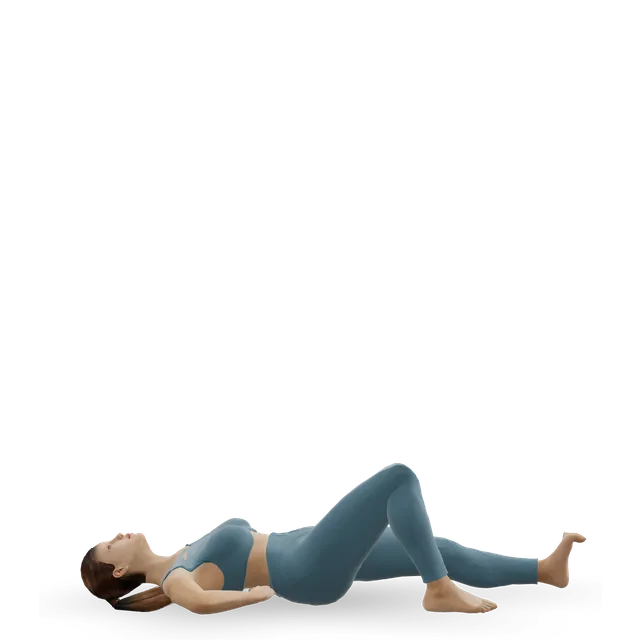
Pelvic tilt into bridge demonstrated on the 3D figure3D demoPelvic tilt into bridgeBeginner · No equipment

The tilt first: 2 to 3 at a time, adding 1 or 2 every few days · As in our tennis back guide: NHS inform's pelvic tilt, with its pacing

Harder: Glute bridge

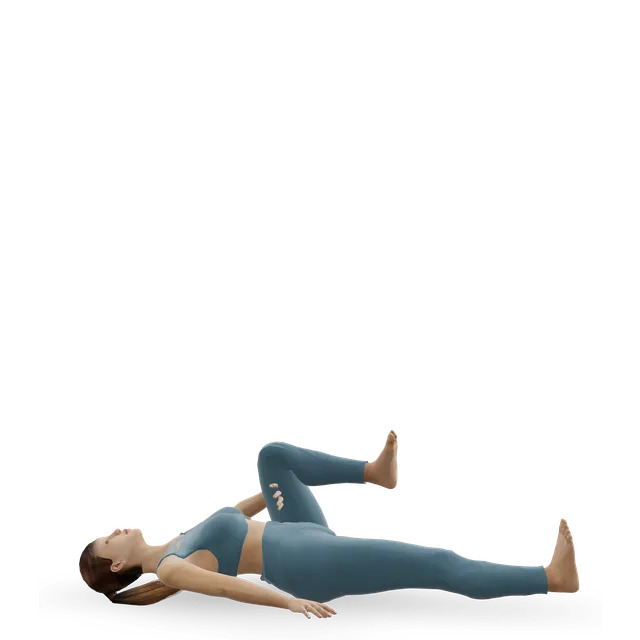
Single knee-to-chest stretch demonstrated on the 3D figure3D demoSingle knee-to-chest stretchBeginner · No equipment

3 holds of 20 to 30 s · As in our back pain guide (editorial): keep it only if it eases your pain. Bending forward often eases stenosis leg ache; leave it out if it sends pain down a leg, as the move page says

Harder: 90/90 hip lift-off

Thoracic rotation demonstrated on the 3D figure3D demoThoracic rotationBeginner · No equipment

6 rotations per side, moving with the breath · The move page's dose. Turning from the upper back, as for a backhand

Easier: Side-lying open book · Harder: World's greatest stretch

Move on when: You can walk for 15 to 20 minutes and get through daily tasks within the pain rule, and your back is no worse the next morning (the back hub's walking test).

Follow along: a timer, a cue and the next move, one step at a time.
Stage 2

Build: trunk endurance, hips and the hip hinge

About weeks 2 to 6, 2 or 3 sessions a week with walking on most days: the trunk and hip strength from the back hub's second stage, and the hip hinge for low balls.

Bird dog, one limb at a time demonstrated on the 3D figure3D demoBird dog, one limb at a timeBeginner · No equipment

3 sets of 6 to 8 each side, with 3 to 5 s holds; then the full bird dog · As in our tennis back guide (editorial)

Easier: Side-lying tummy draw-in · Harder: Bird dog

Dead bug heel taps demonstrated on the 3D figure3D demoDead bug heel tapsBeginner · No equipment

2 sets of 6 to 8 each side · As in our back pain guide (editorial)

Easier: Bent-knee fall-out · Harder: Forearm plank

Knee side plank demonstrated on the 3D figure3D demoKnee side plankBeginner · No equipment

3 holds of 15 to 20 s each side · As in our back pain guide (editorial)

Harder: Side plank

Glute bridge demonstrated on the 3D figure3D demoGlute bridgeBeginner · No equipment

2 to 3 sets of 10 · As in our back pain guide (editorial)

Easier: Pelvic tilt into bridge · Harder: Single-leg glute bridge

Hip-hinge practice demonstrated on the 3D figure3D demoHip-hinge practiceBeginner · No equipment

2 to 3 sets of 10 · As in our back pain guide (editorial). The bend for low balls: hips back, back long, as the Royal Osteoporosis Society teaches for bending safely

Harder: Kettlebell deadlift

Sit to stand from a chair demonstrated on the 3D figure3D demoSit to stand from a chairBeginner · A bench or box

3 sets of 8 to 10 · As in our back pain guide (editorial). Your legs, not only your back, take you low

Easier: Sit to stand, pushing on the thighs · Harder: Bodyweight squat

Move on when: Every set is controlled, an hour of easy doubles passes the pain rule, and your back is no worse the next morning (editorial).

Follow along: a timer, a cue and the next move, one step at a time.
Stage 3

Court strength: the low ready position, lunges and turning

About weeks 6 to 10, 2 or 3 sessions a week: legs that hold the low ready position at the kitchen line, a lunge you can recover from, a trunk that resists a turn as you reach across, and reaching low on one leg.

Dumbbell goblet squat demonstrated on the 3D figure3D demoDumbbell goblet squatIntermediate · A dumbbell

3 sets of 8 to 10 · As in our back pain guide (editorial). The low ready position at the kitchen line

Easier: Bodyweight squat · Harder: Barbell front squat

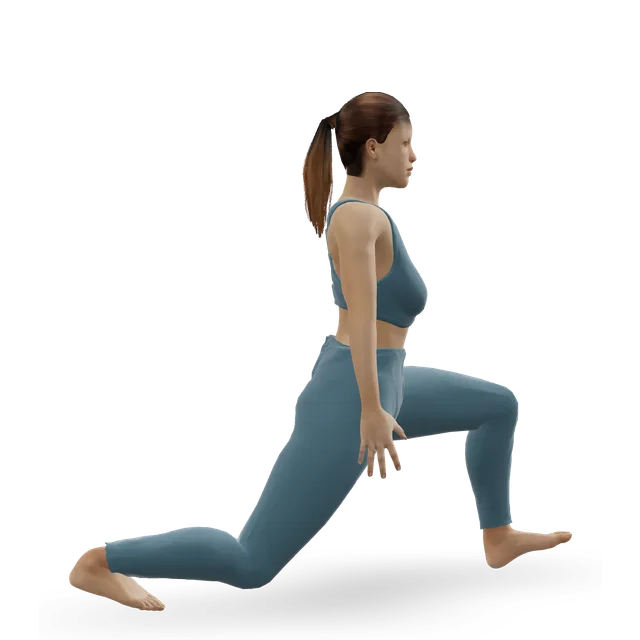
Reverse lunge demonstrated on the 3D figure3D demoReverse lungeIntermediate · No equipment

2 × 6 each leg · As in our pickleball strength and balance workout (editorial). Hold a support; short steps

Easier: Split squat · Harder: Split squat with dumbbells

Half-kneeling Pallof press demonstrated on the 3D figure3D demoHalf-kneeling Pallof pressBeginner · A band + An anchor point

2 to 3 sets of 8 to 10 each side · As in our back pain guide (editorial). Resisting a turn, as when you reach across for a dink

Harder: Pallof press

Suitcase carry demonstrated on the 3D figure3D demoSuitcase carryIntermediate · A dumbbell + A kettlebell

3 walks of 20 to 30 m each side · As in our back pain guide (editorial). If you can't stay level, the weight is too heavy, as the move page says

Easier: Farmer's carry · Harder: Overhead carry (waiter's walk)

Side plank demonstrated on the 3D figure3D demoSide plankIntermediate · No equipment

3 holds of 20 to 30 s each side · As in our back pain guide (editorial)

Easier: Knee side plank · Harder: Side plank with leg lift

Single-leg Romanian deadlift demonstrated on the 3D figure3D demoSingle-leg Romanian deadliftAdvanced · A dumbbell

3 sets of 8 each leg, fingertips on a wall at first · As in our tennis back guide (editorial). Reaching low on one leg, hinging at the hip

Easier: Dumbbell Romanian deadlift

Move on when: These are within the pain rule, and a 60 to 90 minute session of doubles leaves your back no worse the next morning, twice (editorial).

Follow along: a timer, a cue and the next move, one step at a time.
Stage 4

Back on court: the pickleball warm-up, then the steps back

From about weeks 6 to 10, as your back allows, then for good: our pickleball warm-up before every session, two strength days a week, and a staged return by the written steps below. No study has tested a return to pickleball after back pain; the order is editorial, following our pickleball page and our tennis back guide.

Standing march demonstrated on the 3D figure3D demoStanding marchBeginner · No equipment

2 min · As in our pickleball warm-up (editorial); or a brisk lap of the courts, arms swinging

Easier: Seated march · Harder: Standing band hip flexion

Side-stepping (sideways walking) demonstrated on the 3D figure3D demoSide-stepping (sideways walking)Beginner · A wall

10 steps each way, twice · As in our pickleball warm-up (editorial). Small, quick steps

Harder: Lateral band walk

Front-to-back leg swings demonstrated on the 3D figure3D demoFront-to-back leg swingsBeginner · A wall

8 swings each leg · As in our pickleball warm-up (editorial). Hold the fence or net post

Harder: Contract-relax hamstring stretch (PNF)

Thoracic rotation demonstrated on the 3D figure3D demoThoracic rotationBeginner · No equipment

6 each side · As in our pickleball warm-up (editorial). Turn from the ribs

Easier: Side-lying open book · Harder: World's greatest stretch

Reverse lunge demonstrated on the 3D figure3D demoReverse lungeIntermediate · No equipment

3 to 5 each leg · As in our pickleball warm-up (editorial). Short steps, as if reaching for a low ball, hinging at the hips

Easier: Split squat · Harder: Split squat with dumbbells

Single-leg stand demonstrated on the 3D figure3D demoSingle-leg standBeginner · A wall

3 × 5 to 10 s each leg · As in our pickleball warm-up (editorial). Fingertips on the fence if you need it

Easier: Tandem stance and heel-to-toe walk · Harder: Single-leg reach matrix

Move on when: Your usual sessions pass the pain rule for 2 weeks; then add longer sessions, singles and back-to-back days, one at a time (editorial). Keep two strength days a week (stages 2 and 3, or our pickleball strength and balance workout), as the NHS advises strength work on at least 2 days a week, and drop back a step for a few days after a flare rather than stopping.

Follow along: a timer, a cue and the next move, one step at a time.

What to change for now

What to do now (written steps)

Our 3D figure can't show these. They come from the NHS back pain page, NICE and NHS inform's back exercises; where a step is our suggestion, it says so.

  • 1. Stay active and try to carry on with your daily activities, the NHS says, and don't stay in bed for long periods. It adds that walking, swimming, yoga and Pilates may help ease back pain.
  • 2. Ibuprofen if it suits you, and an ice pack or a heat pack wrapped in a tea towel, as the NHS suggests. NICE doesn't offer belts or corsets.
  • 3. NHS inform's back exercises rate pain of 0 to 3 out of 10 as minimal and 4 to 5 as acceptable, and say "your pain should be no worse the morning after you’ve exercised"; the pain rule below uses the same band.
  • 4. Pain in one spot over the spine after a fall, pain spreading down a leg, or numbness or weakness isn't an ordinary pickleball ache: see the warning signs.

Sources 1, 27, 44

On court: sessions, low balls and shoes (written steps)

The 3D figure can't show these. The tips are in USA Pickleball's, the AAOS's and Pickleball Queensland's own words; none has been tested for back pain, and where a step is our suggestion, it says so.

  • 1. Play less, not nothing (our suggestion): shorter sessions, such as 30 to 60 minutes of doubles 2 or 3 times a week with a day off between, as in our pickleball knee guide; leave singles and long drop-in sessions until shorter sessions pass the pain rule.
  • 2. Low balls (our suggestion): bend at your hips and knees with your back long, and take a small step towards the ball rather than reaching and twisting from the waist. It's a comfortable option, the hinge the Royal Osteoporosis Society teaches for bending safely, not a proven protection.
  • 3. Picking up balls (our suggestion): scoop them up with the paddle and your foot, or use a ball retriever, rather than bending to the ground many times a session.
  • 4. Court shoes: the AAOS says "Choose shoes designed for pickleball or tennis to ensure proper support and court traction", and USA Pickleball says sneakers and running shoes don't give the support that side-to-side play needs.
  • 5. Warm up before you play, drink enough, stop before you're exhausted and play within your limits, as USA Pickleball, the AAOS and Pickleball Queensland advise.

Sources 7, 30, 33, 32, 34

With spinal stenosis or thin bones (written steps)

Our suggestion, built on South Tees' and the AAOS's stenosis advice, the Royal Osteoporosis Society's advice and a pickleball falls study; no study has tested these steps in pickleball.

  • 1. If your legs ache on standing and walking, sit between games, lean on the fence or your knees while you wait, and keep to doubles.
  • 2. Walking with leg pain is safe "as long as symptoms remain acceptable", South Tees says; see a GP or physiotherapist if the distance you can walk keeps shrinking.
  • 3. With osteoporosis, most people can exercise safely; after a spinal fracture, ask your team before you play again, and keep to low-impact exercise if they advise it.
  • 4. Falls are the main risk with thin bones, and lunging and moving backwards led falls in one study: turn and move to the ball rather than backpedalling, and keep up the strength and balance work.

Sources 22, 24, 42, 30, 25

Back on court (written steps)

Our suggestion, built on the NHS's advice to stay active, the pickleball surveys and the AAOS's tips; none has been tested as a return to pickleball after back pain. Move on when each step passes the pain rule.

  • 1. First sessions: the warm-up, then 5 minutes of gentle dinking, then 30 to 45 minutes of doubles; sit down between games.
  • 2. Low balls: bend at the hips and knees and step to the ball; pick balls up with the paddle or a retriever.
  • 3. Build time: add about 15 minutes a session while the pain rule holds, with a day off between sessions.
  • 4. Your usual sessions: once 90 minutes of doubles passes the rule twice.
  • 5. Singles, tournaments and back-to-back days: last, one at a time.
  • 6. Every session: warm up, stop before you're exhausted, and drink enough; the AAOS links dehydration with slower reactions.
  • 7. Strength: two days a week, as the NHS advises strength work on at least 2 days a week.
  • 8. After a spinal fracture or back surgery, your team decides when and how you play again.
  • 9. If it doesn't settle, or keeps coming back, see a physiotherapist, as the warning signs say.

Sources 1, 7, 33, 46

Positions to swap, and why

Habit or positionWhy it mattersInstead
Long sessions or several days in a row while your back is soreMore weekly play went with injury in a large survey of recreational players.Shorter doubles sessions with a day off between, and walking on other days.Try: Treadmill walking
Reaching and twisting from the waist for every low ballA sore back dislikes bending and turning at once (our reading).Step to the ball and bend at the hips and knees, practised with the hip hinge.Try: Hip-hinge practice
Bending to the ground for every ballMany extra bends a session (our reading).Scoop it up with the paddle and your foot, or use a retriever.
Standing still in a long queue for the court with stenosis leg acheStanding and walking bring stenosis leg ache on, and sitting or leaning forward eases it.Sit between games, and the knee to chest stretch if it eases you.Try: Single knee-to-chest stretch
Playing on after a fall with pain in one spot over the spineIt can be a spinal fracture, more likely from 50 or with steroid tablets.Stop and get it checked, as the warning signs say.
Backpedalling for lobsLunging and moving backwards led falls in a study of recreational players, and Pickleball Queensland warns against running backwards to chase difficult balls.Let it go, or turn and move to the ball.
Running shoes on courtThe AAOS advises shoes designed for pickleball or tennis, and USA Pickleball says running shoes lack side-to-side support.Court shoes.
Staying in bed or resting completely for daysThe NHS says don't stay in bed for long periods.Short walks and the stage 1 moves.Try: Cat-cow
A back belt or brace instead of a planNICE says don't offer belts or corsets for low back pain, and belts didn't prevent back pain in trials.Strength and walking, starting with the bird dog.Try: Bird dog, one limb at a time
Asking for a scan to find what's wrongNICE advises against routine imaging, and disc changes are common in people without pain.Get checked if a warning sign appears.
Skipping the warm-upUSA Pickleball and the AAOS advise one.Our pickleball warm-up, starting with side steps.Try: Side-stepping (sideways walking)

Routines to follow

Pickleball warm-up

A 10-minute pickleball warm-up: marching, side-steps, leg swings, calf raises, upper-back turns, shoulder and wrist circles, heel-to-toe and one-leg balance.

10 minBeginner10 movesWall

Pickleball strength and balance workout

A 30-minute session for older players: sit-to-stands, step-ups, calf raises, lunges, side-steps, heel-to-toe and one-leg balance, band work and floor get-ups.

30 minBeginner13 movesBench or box, step

McGill big 3 core routine

The McGill big three for the core: curl-ups, side planks and bird dogs, each held for 10 seconds at a time in falling sets of 5, 3 and 1 reps.

12 minBeginner3 movesNo equipment

Beginner core workout

A 15-minute beginner core workout on the floor: dead bugs, bird dogs, knee planks, side planks and curl-ups.

15 minBeginner6 movesNo equipment

Lower back strengthening workout: bird dogs to supermans, no equipment

A 20-minute floor workout for your back muscles: bird dogs and bridges, then a face-down ladder from the locust to the superman, with side planks and dead bugs.

20 minBeginner13 movesNo equipment

Spine mobility routine: neck to pelvis, every direction

A 15-minute routine that moves your neck, upper back and lower back through bending, arching, side bending and twisting, then holds the spine steady.

15 minBeginner12 movesNo equipment

Court-ready Pilates for pickleball players: a 25-minute class for balance and stepping, calves, hips, the trunk, and the paddle shoulder and forearm

A 25-minute Pilates class for pickleball players: balance and stepping at a counter, calves, hips, a head-down trunk, and the shoulder and forearm on both arms.

25 minBeginner18 movesWall, bench or box

Yoga for pickleball players: a 25-minute class at a counter for calves, one-leg balance and stepping, standing strength, and the paddle shoulder and forearm, with nothing head-down

A 25-minute standing yoga class for pickleball players at a counter: calves, one-leg balance and stepping, leg strength, and the shoulder and forearm on both arms.

25 minBeginner19 movesWall, bench or box

More moves for this area

Questions people ask

Why does my lower back hurt after pickleball?

Usually ordinary back pain after more bending, turning, lunging and playing than your back is used to, often after a longer session or several days in a row. It's common and usually settles within days to a few weeks.

Is pickleball bad for your back?

No. Back pain is a common complaint in players, but serious back injuries are rare, and older players' trunk injuries were no more common than in tennis. Pickleball is good exercise, moderate to vigorous for players in their sixties.

Can I play pickleball with back pain?

Usually yes, if there are no warning signs: shorter doubles sessions, a warm-up, bending at your hips and knees for low balls, and the pain rule above. Leave singles and long sessions until shorter ones are comfortable (our suggestion).

What causes back pain when I bend for dinks?

Most often a back that is sore or tired from more bending and turning than usual, rather than damage. Step to the ball and bend at your hips and knees while it settles, and build the hinge and leg strength in stages 2 and 3.

Why does my upper back hurt after pickleball?

Usually the upper back muscles after overheads or a long session. Pain at the top of the back, between the shoulders, is worth a GP check, as the NHS advises, and chest pain spreading to the back while you play is a 999 call.

Can I play pickleball with sciatica or a herniated disc?

Often, once leg pain is settling and you can walk comfortably. Stop anything that sends pain further down your leg, and call 999 for numbness around the genitals or bottom, bladder or bowel changes, or weakness in both legs. Most pickleball spine patients at one clinic were treated without surgery, and our sciatica and herniated disc guides cover these.

Can I play pickleball with spinal stenosis?

Often yes: many people with stenosis feel better leaning forward, and walking with leg pain is safe as long as symptoms remain acceptable. Sit between games, keep to doubles, and see a GP or physiotherapist if the distance you can walk keeps shrinking.

Can I play pickleball with osteoporosis?

Usually, with care: most people with osteoporosis can exercise safely, falls are the main risk, and the hip hinge is the Royal Osteoporosis Society's way to bend safely. After a spinal fracture, ask your team first.

What exercises help back pain from pickleball?

Walking and gentle movement first, then trunk endurance and the hip hinge, then leg strength for the low ready position and lunges. The four stages above build them up, with a 3D demo of each move.

Should I wear a back brace for pickleball?

No: NICE doesn't recommend belts or corsets for back pain, and belts didn't prevent it in trials. Strength work and staying active do more.

Do I need a scan?

Usually not: NICE advises against routine imaging for back pain. After a fall with pain in one spot over the spine, or with warning signs, an X-ray or scan matters.

When should I see a doctor?

Call 999 for numbness around the genitals or bottom, new bladder or bowel trouble, weakness in both legs, chest pain on court, or a fall where you can't get up. See a GP for sudden back pain after a minor fall from 50, leg pain that isn't settling, or back pain that isn't better within a few weeks. In the US, call 911 where this page says 999.

Related exercise guides

Other pain guides

Sources

  1. NHS · Back pain
  2. da C Menezes Costa 2012 · The prognosis of acute and persistent low back pain (meta-analysis of 33 cohorts, CMAJ)
  3. Forrester 2020 · Pickleball injuries treated in US emergency departments, 2001 to 2017 (national surveillance study, J Emerg Med)
  4. Yu 2025 · Pickleball injuries in US emergency departments, 2013 to 2022 (national surveillance study, Orthop J Sports Med)
  5. Ghattas 2024 · Pickleball fractures in US emergency departments, 2002 to 2022 (national surveillance study, Orthop J Sports Med)
  6. Qi 2025 · Sports injuries in adults aged 55 and over in US emergency departments, 2014 to 2023 (national surveillance study, Orthop J Sports Med)
  7. Owoeye 2025 · Injuries in 1,758 US pickleball players (self-selected online survey, Sports Med Open)
  8. Jeong 2025 · Injuries in 232 players at a South Korean pickleball tournament (survey, Front Public Health)
  9. Herzberg 2025 · Pickleball injuries at one US institution, 2017 to 2022: 487 patients (case series, Orthop J Sports Med)
  10. Siow 2026 · Pickleball injuries in a large US urban health system, 2015 to 2024: 545 patients (retrospective chart review, J Am Acad Orthop Surg Glob Res Rev)
  11. Meng 2026 · Pickleball injuries at a US academic centre over 5 years: 164 patients (cross-sectional chart review, Inj Epidemiol)
  12. Kulkarni 2025 · Pickleball injuries by age group in US emergency departments, 2012 to 2021 (national surveillance study, Phys Sportsmed)
  13. Chartered Society of Physiotherapy (CSP) · 10 things you need to know about your back (leaflet)
  14. Lee 2026 · Pickleball injuries in 383 Korean recreational tournament players (cross-sectional survey, Front Public Health)
  15. Wilson 2021 · Back pain in sport: 86 studies (systematic review and meta-analysis, Br J Sports Med; published online in 2020)
  16. Weiss 2021 · Pickleball and tennis injuries in players aged 60 and over in US emergency departments, 2010 to 2019 (national surveillance study, Inj Epidemiol)
  17. McMillan 2026 · Pickleball injuries in US emergency departments, 2014 to 2023 (national surveillance study, Sports Health)
  18. Saraux 1999 · Back pain and sciatica in 388 adult tennis players and 245 non-players (cross-sectional interview study, Rev Rhum Engl Ed)
  19. Castillo-Lozano 2017 · Injuries in 113 Spanish recreational padel players (survey, J Sports Med Phys Fitness)
  20. Dahmen 2023 · Injuries in padel: 8 studies, 2,022 players (systematic review, BMJ Open Sport Exerc Med)
  21. Dansby 2025 · Spine injuries in pickleball players at one US specialist centre, 2013 to 2023 (record review, J Am Acad Orthop Surg)
  22. South Tees Hospitals NHS Foundation Trust · Ten lumbar spinal stenosis facts
  23. Katz 2022 · Diagnosis and management of lumbar spinal stenosis (review, JAMA)
  24. AAOS OrthoInfo · Lumbar spinal stenosis
  25. Myers 2024 · Hip strength, change of direction and falls in 92 recreational pickleball players (cross-sectional study, Int J Sports Phys Ther)
  26. Downie 2013 · Red flags to screen for cancer and fracture in low back pain (systematic review, BMJ; an erratum adds a comma and corrects a citation number)
  27. NICE NG59 · Low back pain and sciatica in over 16s: assessment and management
  28. Brinjikji 2015 · Spine degeneration on scans of people without back pain (systematic review, AJNR)
  29. NHS · Sciatica
  30. Royal Osteoporosis Society · How to exercise safely for bones
  31. Saraceni 2020 · Lumbar flexion during lifting and low back pain (systematic review and meta-analysis, JOSPT)
  32. USA Pickleball · Health and safety hub: essential pickleball safety tips (governing body guidance, 2025)
  33. AAOS OrthoInfo · 5 pickleball injury prevention tips (tips sheet)
  34. Pickleball Queensland · Pickleball safety tips: reducing injuries and playing smarter (state association article, 2026)
  35. Pickleball Canada · Weather and air quality safety guidelines for tournaments and events (governing body guidance, 2026)
  36. AAOS OrthoInfo · Tennis injury prevention
  37. Steffens 2016 · Preventing low back pain: 21 trials, 30,850 people (systematic review and meta-analysis, JAMA Intern Med)
  38. Hayden 2021 · Exercise therapy for chronic low back pain (Cochrane review of 249 trials)
  39. Chartered Society of Physiotherapy (CSP) · Treatment for back pain
  40. Ammendolia 2022 · Non-operative treatment for lumbar spinal stenosis with neurogenic claudication (updated systematic review, BMJ Open)
  41. Minetama 2019 · Supervised physical therapy or home exercise for spinal stenosis in 86 people (randomised trial, Spine J)
  42. Royal Osteoporosis Society · Exercise for bones
  43. Webber 2023 · How hard singles and doubles pickleball are for 53 older adults (observational study, J Aging Phys Act)
  44. NHS inform · Exercises for back pain
  45. Smith 2017 · Should exercises be painful in chronic musculoskeletal pain? (systematic review and meta-analysis, Br J Sports Med)
  46. NHS · Physical activity guidelines for older adults
  47. NHS · Falls
  48. NHS · Hip pain in adults
  49. NHS · Broken hip
  50. NHS · Heart attack
  51. NHS · Angina
  52. NHS · Fainting
  53. NHS · Pulmonary embolism
  54. NHS · Deep vein thrombosis (DVT)
  55. NHS · Abdominal aortic aneurysm (past its review date: reviewed June 2023, review due June 2026)
  56. NHS · Kidney infection
  57. Leicestershire Partnership NHS Trust · Leg pain (thigh and calf): physiotherapy leaflet (2026)
  58. NHS · Foot drop
  59. NICE NG234 · Spinal metastases and metastatic spinal cord compression (2023)
  60. Essex Partnership University NHS Foundation Trust · Vertebral compression fracture (patient leaflet, 2025)
  61. NHS · Septic arthritis
  62. Suri 2010 · Clinical signs of lumbar spinal stenosis in older adults with leg pain (systematic review of 4 studies, JAMA)
  63. NHS · Peripheral arterial disease (PAD)
  64. Royal Osteoporosis Society · Osteoporosis symptoms
  65. AAOS OrthoInfo · Osteoporosis and spinal fractures
  66. Gregson 2025 · The 2024 UK clinical guideline for the prevention and treatment of osteoporosis (NOGG, Archives of Osteoporosis)
  67. NICE NG259 · Osteoporosis: risk assessment (2026)
  68. NHS · Sprains and strains
  69. NHS · Shingles (past its review date: reviewed November 2023, review due November 2026)
  70. NICE NG65 · Spondyloarthritis in over 16s: diagnosis and management
  71. WHO 2023 · Guideline for non-surgical management of chronic primary low back pain in adults
  72. May 2012 · Centralisation and directional preference (systematic review, Manual Therapy)
  73. National Institute for Health and Care Excellence (NICE) · Recent-onset chest pain of suspected cardiac origin: assessment and diagnosis (CG95, guideline)

Exercise education, not a diagnosis or treatment plan. It is written from the guidelines and studies listed above; review by a clinician is pending. If your pain follows an injury, is severe, is getting worse, or comes with any warning sign listed on this page, get it assessed. Health disclaimer.