Why a twist can catch a sore backEmerging evidence
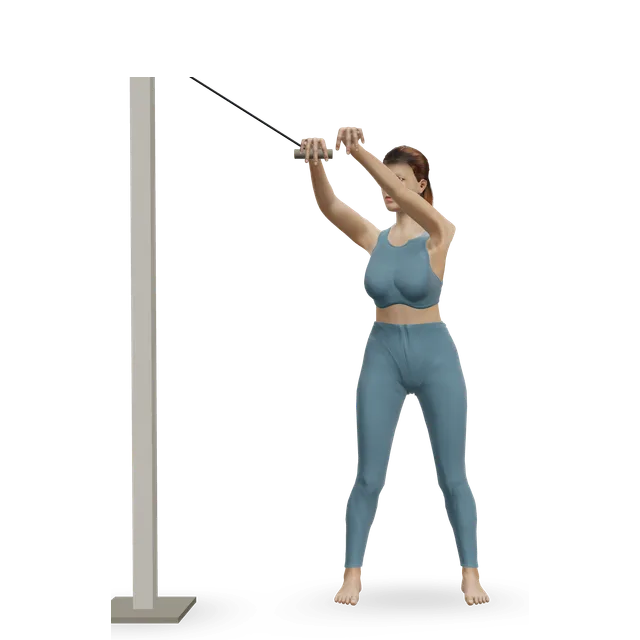
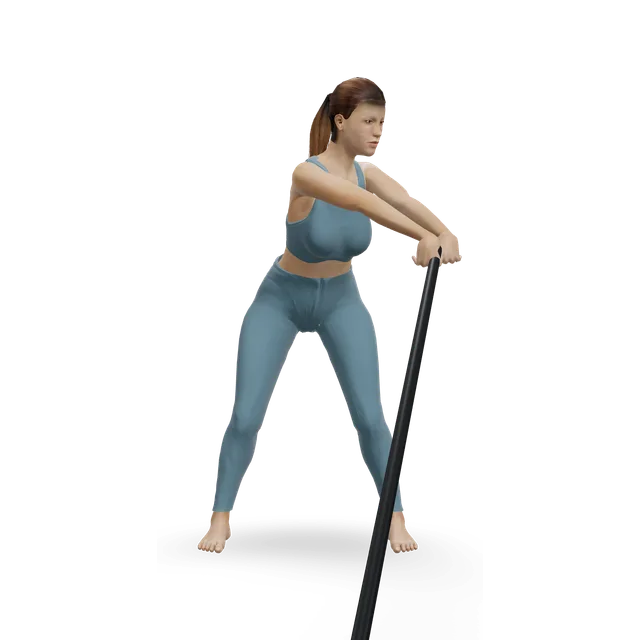
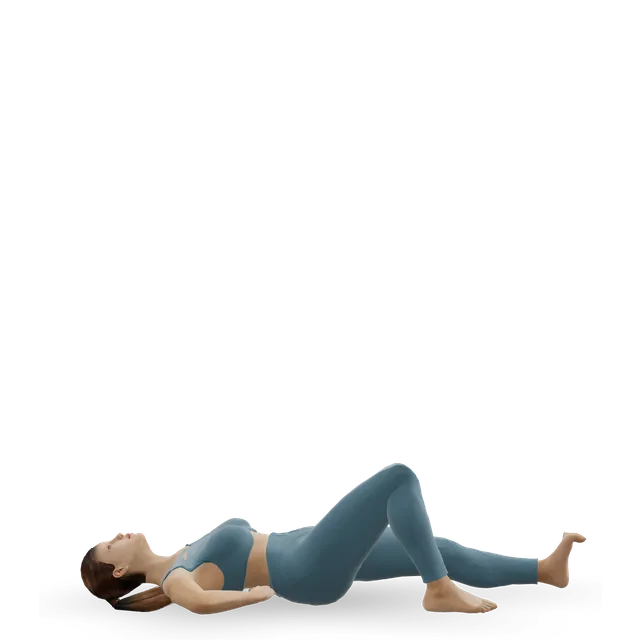
The lower back hardly twists. In a 45-degree turn of the trunk, each lower back joint turned only 1.2 to 1.7 degrees in 10 volunteers scanned lying down, while the upper back turned about 25 degrees in another small study; the hips turn much of the rest. In a twist, the small facet joints at the back of the spine take the strain first, and the trunk muscles start and stop the turn, working harder the faster it is.
So a quick twist, a loaded one or one combined with bending asks a lot of a small range, which is why it can bring on pain in a back that is already sore or tired, without meaning that anything has been damaged. That is our reading, and it fits the studies of what sets off back pain.
Sources 1, 2, 3, 4, 5, 6
Usually ordinary back painStrong evidence
The NHS says a common cause of back pain "is an injury like a pulled muscle (strain)", that it "often gets better on its own", and that serious causes are "Very rarely" the reason. In 1,172 people seeing a doctor in primary care with new back pain, 11 (0.9%) had a serious cause, 8 of them fractures.
Pain, tingling or numbness down one leg below the knee is sciatica, usually from a disc. The facet joints are a common label from mid-life that no examination can confirm, and the sacroiliac joint, low by the dimple, is one that only an examination can point to. In pregnancy, pelvic girdle pain is common. No study counts how often each is the cause of pain on twisting.
Sources 7, 8, 9, 10, 11, 12, 13
Twisting at work and in daily life: not shown to cause back pain on its ownMixed evidence
Reviewers of 7 high-quality workplace studies judged twisting "unlikely to be independently causative" of back pain, and a review of 41 reviews found no agreement that physical work causes it. In 861 Dutch workers followed for 3 years, spending more than a tenth of the day twisted by 30 degrees or more gave a small, uncertain rise in risk (a risk ratio of 1.3, which could have been chance); bending and frequent heavy lifting were clearer. In over 400 repetitive industrial lifting jobs, fast twisting with load marked the riskier jobs, a link that doesn't prove cause.
Twisting during a task does seem to matter for people who already have back pain: in 416 people with long-lasting back pain, doing something while twisting raised the odds of a flare by about half (an odds ratio of 1.48). The largest study of triggers didn't measure twisting; being distracted and heavy loads were among the strongest.
Sources 14, 15, 16, 17, 5, 6
"I twisted and slipped a disc" is rarely what happenedEmerging evidence
In cadaver spines, a twist alone damaged the facet joints before the disc, and the authors wrote that "torsion seems unimportant" in disc prolapse. Lab herniations came from repeated bending under compression over thousands of cycles, sometimes with a small twist, and in pig spines twisting alone couldn't start one. A review of mostly animal and lab studies suggests fast, twisting or explosive loading is likely bad for discs, while loading at walking and jogging speeds is likely good. The NHS slipped disc page doesn't list twisting among the causes. These are lab studies, not people.
Sources 3, 18, 19, 20, 21
The ribs, the side of the trunk and teenagers in sportEmerging evidence
Rib stress fractures affect 8% to 16% of elite rowers; in 19 golfers with one, 18 were beginners, most on the leading side, and 2 were first taken for a back strain. Side strains affected over half of 207 fast bowlers, and 30% came back. In teenagers with back pain from sport, 47 of 100 had a stress fracture of the spine, against 5 of 100 adults, and sudden jumps in fast bowling workload raised the odds.
Sources 22, 23, 24, 25, 26
What a scan shows, and what it doesn'tStrong evidence
The National Institute for Health and Care Excellence (NICE) says don't routinely image low back pain, and NHS inform says "you'll not normally need an X-ray or MRI scan". Scans find changes in backs that don't hurt: facet joint arthritis showed in 4% of pain-free 20-year-olds and 50% of 60-year-olds, and disc bulges in 30% to 84%.
No examination test picks out facet joint pain: the twist-and-arch test has "poor diagnostic accuracy", and pain on arching back and turning isn't informative on its own. How often the facet joints are the source depends on the test: 47% responded to one numbing injection but 15% to a confirming second one in 176 people. A magnetic resonance imaging (MRI) scan is for the warning signs, or for sciatica that isn't improving when surgery or an injection is being considered. A urine test, a computed tomography (CT) scan or an ultrasound look for the kidney and aorta causes.
Sources 27, 8, 28, 29, 11, 30, 31, 32, 21, 33, 34, 35
How it usually goesStrong evidence
New back pain improves most in the first 6 weeks: across 33 groups of 11,166 people, average pain fell from 52 to 23 out of 100 by 6 weeks and to 6 by a year, though pain that has already lasted a while improves less. NHS inform says "You should see the biggest change in your symptoms within the first couple of weeks" and most problems should have improved within 6 weeks. Sciatica "usually gets better in a few weeks to a few months". Back pain often comes back, which is why the plan's last stage carries on. No one can promise a date.
Sources 36, 8, 10, 37