Pain guide · Back pain

Lower back pain when lying down: positions, pillows, night pain, the warning signs and what helps

Back pain that comes on when you lie down, in bed or at night is common, and it is usually ordinary back pain that dislikes staying in one position: it aches after a while and eases when you turn over or get up. Some backs dislike lying flat or on the front while others ease that way, and no single sleeping position suits everyone. On its own, night pain is rarely a sign of anything serious.

Numbness around your genitals or bottom, new bladder or bowel problems, or weakness in both legs needs a 999 call or accident and emergency (A&E). The National Health Service (NHS) says see a general practitioner (GP) if back pain doesn't improve with rest or is worse at night. This guide covers those warning signs, how to tell the common causes apart, what the studies of positions, pillows and mattresses do and don't show, how to get in and out of bed, and a three-stage plan with a 3D demo of every move that ends with a full night in your usual position.

When to get help first

Exercise is for pain that has been checked or is clearly mild and settling.

Get urgent medical help if

  • Call 999 or go to A&E: loss of feeling or numbness around the genitals or bottom, new trouble peeing or controlling your bladder or bowels, changes in genital sensation during sex or problems with erections or orgasm, or pain, tingling, weakness or numbness in both legs. These are signs of cauda equina syndrome, which needs treating in hospital urgently. Don't drive yourself.
  • Call 999 or go to A&E: back pain with chest pain, or back pain that started after a serious accident, such as a car crash.
  • Call 999: after a fall, you may have hurt your head, neck, back or hip, or you cannot get up.
  • Call 999: sudden, severe pain in the tummy or back, which can come with breathlessness, pale or grey skin, or collapse. It can be a burst abdominal aortic aneurysm, most common in men aged 65 or over and in people who smoke or used to smoke.
  • Call 999 or go to A&E: pain spreading from the tummy to the back, with vomiting.
  • Call 999 or go to A&E: sudden, severe pain in your tummy that spreads to your back, or comes with bloating that doesn't go away, a fast heartbeat or difficulty breathing. It can be acute pancreatitis, and the NHS says the pain can feel worse when you lie down and better when you lean forward. Don't drive yourself.
  • Same day (GP or NHS 111): back pain and you feel hot, cold, shivery or generally unwell, or severe pain that starts suddenly or is getting worse quickly.
  • Same day (GP or NHS 111): pain in the lower back or side with a high temperature, burning or stinging when you pee, or needing to pee more often. It can be a kidney infection.
  • Same day (urgent GP appointment or NHS 111): severe pain that starts in your side or lower back, may spread to your groin and comes and goes, or this pain with a high temperature or feeling hot, cold or shivery. It can be a kidney stone.
  • Same day: you have or have had cancer, and new back pain that is severe and doesn't let up, is getting steadily worse, is worse at night and disturbs your sleep, is worse when you cough, sneeze or strain, or comes with tenderness over the spine. Contact your cancer team or GP urgently. With cancer, new weakness, difficulty walking, numbness or bladder or bowel problems are an emergency.
  • Same day: leg weakness that is getting worse.
  • Same day (urgent GP appointment or NHS 111): new difficulty lifting the front of your foot or toes (foot drop), or a foot that slaps down or catches as you walk, especially if it is getting worse. Weakness in both legs, or with numbness around the genitals or bottom or bladder or bowel changes, is the 999 emergency above.
  • Same day (GP or NHS 111): back pain in the second or third trimester of pregnancy, or back pain in pregnancy with a fever, vaginal bleeding or pain when you pee. It could be early labour or an infection.

See a doctor or physiotherapist if

  • Pain that doesn't improve with rest or is worse at night, or pain that is worse when you sneeze, cough or poo.
  • Back pain that is the same whatever position you lie in and isn't changed by moving, night pain that keeps building or makes it hard to lie flat, or back pain with a fever, night sweats or weight loss: see a GP.
  • Back pain that started before 45 and has lasted more than 3 months, especially if it wakes you in the second half of the night, comes with buttock pain, eases with movement or within 48 hours of anti-inflammatories, or you have psoriasis or a parent, sibling or child with spondyloarthritis. These can point to inflammatory back pain (axial spondyloarthritis, such as ankylosing spondylitis); the National Institute for Health and Care Excellence (NICE) refers people with four or more of these features to a rheumatologist.
  • Unexplained back pain with muscle spasms, loss of height, or a curved spine or change in posture: a possible osteoporotic spinal fracture, more likely with older age or long-term steroid tablets.
  • Buttock or leg pain, heaviness or tingling that comes on when you stand or walk and only eases when you sit or bend forward, or the distance you can walk keeps shrinking: see a GP or physiotherapist (possible spinal stenosis). Leg weakness that is getting worse, or numbness around your genitals or bottom, is urgent (above).
  • Pain, tingling or numbness spreading below the knee that isn't settling after a few weeks, is getting worse or stops your normal activities: see a GP.
  • Pain at the top of your tummy and your back that may feel worse when you eat or lie down and better when you lean forward, with weight loss or other symptoms that get worse or don't get better after 2 weeks: see a GP. If the whites of your eyes or your skin turn yellow, ask for an urgent GP appointment or contact NHS 111.
  • Back pain that hasn't improved after a few weeks of looking after it at home, stops you doing day-to-day activities, or worries you.
  • Unexplained weight loss, or a lump, swelling or change in the shape of your back.
  • Pain at the top of the back, between the shoulders, rather than in the lower back.
  • Pelvic pain in pregnancy that makes it hard to move around, hurts when you get out of a car or turn over in bed, or makes going up or down stairs painful: call your midwife or GP. You may be referred to a physiotherapist who specialises in pelvic joint problems in pregnancy.
  • Tummy or back pain that doesn't go away or keeps coming back, or a lump you can feel in your tummy: see a GP.
  • Back pain that wakes you most nights for more than a few weeks despite changing how you sleep: our suggestion is to see a GP or physiotherapist. In many areas you can refer yourself.

Where does it hurt?

Location narrows the likely causes; it does not diagnose.

An ache that builds after a while in one position and eases when you turn over or get up

Often stiff when you first get up: usually ordinary back pain that dislikes staying still. This guide's plan covers it.

Worse flat on your back with your legs straight, or on your front; easier curled up on your side

From about 50, with legs that ache, feel heavy or tingle when you stand or walk and ease when you sit or bend forward, this can be spinal stenosis.

Read: Lumbar spinal stenosis →
Easier lying on your front or propped on your elbows, worse sitting slumped or bending forward

A back that prefers arching, often called disc-type pain: favour the direction that eases it for now.

Read: Herniated or bulging disc →
Pain, tingling or numbness down one leg below the knee, sometimes worse in bed

Sciatica, usually from a disc.

Read: Sciatica →
Sharp and low on one side, by the dimple at the back of the pelvis, when you turn over in bed

Possibly the sacroiliac (SI) joint.

Read: SI joint pain →
In pregnancy or after giving birth, the back of the pelvis or the pubic bone, worse turning over in bed

Pelvic girdle pain.

Read: Pelvic girdle pain (SPD) →
Sudden pain after a minor fall, cough or lift, from about 50 or on long-term steroid tablets, worse moving and easier lying still

A possible osteoporotic spinal fracture: see a GP, as the see-soon signs say.

Read: Spinal compression fracture →
Stiff and sore first thing, easing within about half an hour of getting moving

Our morning back pain guide covers the first hour and mattresses.

Read: Back pain in the morning →
Worse at the end of a long day on your feet, and eased by lying down

Our back pain from standing guide.

Read: Back pain when standing →
A sudden catch or spasm as you get into or out of bed

A back spasm.

Read: Back spasm and pulled back muscle →
Between the shoulder blades when you lie down

Upper back pain. The NHS asks for a GP check for pain between the shoulders.

Read: Upper and mid back pain →
The outer hip or the groin, sore when you lie on that side

The hip rather than the back.

Read: Hip pain at night →
Wakes you in the second half of the night, with morning stiffness that eases with exercise but not rest

In back pain that started before 45 and has lasted more than 3 months, this can be inflammatory back pain: see a GP.

Upper tummy pain spreading to the back, worse after eating or lying down, easier leaning forward

This may be the pancreas, not the back: see the warning signs.

Pain in the side or lower back with a fever or burning when you pee, or severe pain that comes and goes and spreads to the groin

Possibly a kidney infection or a kidney stone: see the warning signs.

Constant pain that is the same whatever position you lie in, with weight loss, a fever or a history of cancer

This needs checking: see the warning signs.

Understand it

Most back pain that hurts lying down is ordinary back painStrong evidence

Back pain is very common and usually improves within a few weeks, the NHS says, and it often isn't obvious what started it. NHS inform lists staying in one position too long among the usual triggers, with lifting something awkwardly and a flare-up of an old problem.

Lying down can bring it out. In 375 people referred to a Finnish spine clinic with long-lasting low back pain, 77% said back pain disturbed their sleep and 87% that it made getting up difficult.

Sources 1, 2, 3

Any position can be the sore oneEmerging evidence

In the same 375 people, 42% avoided lying on their front, 35% on their back, 15% on their left side and 13% on their right, and the authors concluded that "any sleeping position could potentially exacerbate pain". When 53 people were filmed asleep at home over two nights, those who woke with low back symptoms didn't change position more often, or spend longer in positions thought to provoke pain, than people without symptoms, though they slept worse.

A 2025 review of 6 observational studies linked lying on your back, or well supported on your side, with less low back pain, and lying on your front with more. An earlier review found only 4 studies, most of them self-reported, called side lying "generally protective" and said there weren't enough good studies. Studies like these can't show cause, so treat position as something to experiment with.

Sources 3, 4, 5, 6

Why lying down can hurt: staying still, arching and bendingEmerging evidence

A long, still spell lets a sore back stiffen, which is why NHS inform suggests changing position regularly. Some backs dislike being arched. In 40 people with lumbar spinal stenosis (a narrowing of the spinal canal), lying with the legs straight and a pillow under the lower back arched the spine more on magnetic resonance imaging (MRI) than lying with the knees bent, and narrowed the canal at one level in 40% of them. Stenosis pain is typically brought on by arching and eased by bending forward, a major review says. That rests on one imaging study and the general pattern: no study has measured symptoms by lying position.

Many backs have a direction of movement that eases them, bending for some and arching for others: one was found in about 70% of people tested across 5 studies, and in 74% of 312 people in a trial. In one volunteer, the pressure inside a lower back disc was lowest lying down and rose from 0.1 to 0.24 megapascals overnight as the disc took up fluid, which is part of why backs can feel stiff in the morning.

Sources 2, 7, 8, 9, 10, 11

Night pain on its own is rarely seriousStrong evidence

Of 482 people at a back pain triage clinic, 213 had night pain (90 of them every night), and none had a serious disease. People with night pain slept about 5 hours at a stretch and woke 2 or 3 times a night, and those with pain every night scored worse for pain, disability and mood, so poor nights are worth treating. In 9,940 people at a spine centre, night pain wasn't linked to any particular diagnosis, and without a recent infection, fever, chills or sweats it was a false alarm for infection more than 96% of the time.

In 1,172 people with new back pain in primary care, 0.9% had a serious cause, though 80.4% had at least one warning sign. What changes the picture is the company night pain keeps: in a review, a history of cancer was the single sign that raised the chance of spinal cancer most (to about 33%), and reviews found that most single signs are weak and combinations matter more.

Sources 12, 13, 14, 15, 16, 17

When pain at night or at rest needs checkingStrong evidence

The NHS says see a GP if back pain "does not improve after resting or is worse at night". NHS inform adds pain where "the level of pain is not affected by movement", and the Chartered Society of Physiotherapy (CSP) night pain that stops you sleeping "due to increasing pain and/or difficulty lying flat", or pain with a fever, night sweats or weight loss.

With a past or current cancer, the National Institute for Health and Care Excellence (NICE) counts night-time back pain that disturbs sleep among the signs that need specialist advice within 24 hours. In back pain that started before 45 and has lasted more than 3 months, NICE lists waking in the second half of the night among the features of inflammatory back pain. The NHS says the pain of ankylosing spondylitis gets better with exercise but not with rest, is worse in the morning and at night, and usually starts between 18 and 40.

Sources 1, 2, 18, 19, 20, 21

A spinal fracture usually eases lying downStrong evidence

With osteoporosis, "a cough or sneeze can cause a broken rib or the partial collapse of one of the bones of the spine", the NHS says. The Royal Osteoporosis Society (ROS) lists unexplained back pain and muscle spasms, height loss and a curved spine as signs, says these fractures are stable and don't cause paralysis, and says they heal in 6 to 12 weeks.

The American Academy of Orthopaedic Surgeons (AAOS) says the pain "often gets worse when you move, especially when changing positions. Resting or lying down often helps." So pain that is worse turning over and getting up, but easier lying still, fits a fracture better than pain that is worse lying still.

Sources 22, 23, 24, 25

Two look-alikes the NHS says can be worse lying downStrong evidence

Acute pancreatitis causes tummy pain that may spread to the sides and back and "feel worse after you eat, move around or lie down", and better when you lean forward or bring your knees to your chest; sudden, severe tummy pain spreading to the back is a 999 call. Pancreatic cancer can cause "pain at the top part of your tummy and your back, which may feel worse when you're eating or lying down and better when you lean forward", often with other symptoms such as weight loss or yellow skin. Neither is a back problem; the warning signs say when to get help.

Sources 26, 27

When a scan or test helpsStrong evidence

Not for ordinary back pain that hurts lying down. NICE says don't routinely offer imaging outside specialist care, and in specialist care only if the result is likely to change treatment; NHS inform says most back problems don't need an X-ray or MRI scan.

Tests matter with the warning signs: with a cancer history and the night pain signs, NICE asks for specialist advice within 24 hours, and the specialists decide on scans; with possible inflammatory back pain, NICE asks GPs to refer to a rheumatologist or, in some cases, do a blood test first; and suspected pancreatitis is diagnosed in hospital with blood tests and sometimes a computerised tomography (CT) scan.

Sources 28, 2, 19, 20, 26

How it usually goesStrong evidence

Most back pain improves within a few weeks, the NHS says; NHS inform expects the biggest change in the first couple of weeks and most problems to improve within 6 weeks, and the CSP says most muscle and joint problems get better within 6 to 8 weeks.

Spinal stenosis changes slowly: over 3 years without surgery, about a third of people improve, half stay the same and 10 to 20% get worse. A spinal fracture takes 6 to 12 weeks to heal, though for some the pain lasts beyond 3 months. No one can promise a date.

Sources 1, 2, 18, 8, 24

What helps, and how strong the evidence is

No trial has tested a sleeping position or pillow for back painEmerging evidence

The evidence on positions is observational, and the only trial of advice was a pilot: in 20 active women in their 60s, 4 weeks of individual sleep-position advice reduced back pain complaints against no advice. NHS inform's advice is general: "If you have to sit or rest, try to change positions regularly and find one that reduces any pain in your back or legs."

The pillow advice in health-service sources is narrower than most websites suggest. The NHS says the safest position to go to sleep in pregnancy is on your side, and suggests supporting your bump with pillows and a pillow between your knees; the ROS suggests pillows to support your leg when you lie on your side after a spinal fracture. A pillow under the knees on your back, or between them on your side, is worth trying, but it is untested for back pain.

Sources 5, 6, 29, 2, 30, 31

Medium-firm mattresses did better than firmEmerging evidence

In 313 adults with long-lasting back pain who had backache in bed and on getting up, medium-firm mattresses did better than firm ones over 90 days for pain in bed (about twice the odds of improving) and for disability; pain on getting up leaned the same way but wasn't clearly different. A waterbed and a foam mattress did slightly better than a hard futon over a month in another trial (141 people analysed). A review of 47 studies calls medium-firm "the most defensible general recommendation".

The ROS says "People once believed that a very firm 'orthopaedic' mattress was best for back pain. Experts no longer recommend this", that a topper or folded duvet can soften one that is too firm, and that an old, sagging mattress can't be improved enough. The NHS's pregnancy page is the odd one out: it suggests a piece of hardboard under a soft mattress.

Sources 32, 33, 34, 31, 35

Stay active: bed rest doesn't helpStrong evidence

In 2 trials of 401 people with new low back pain, advice to stay active did slightly better than advice to rest in bed, for pain and for daily function (moderate-quality evidence); with sciatica, the two made little or no difference. The NHS says don't stay in bed for long periods, and with sciatica don't sit or lie down for long periods, because even if moving hurts, "it's not harmful". NHS inform says resting in bed "doesn't help back pain, and often makes it harder to get going again".

Sources 36, 1, 37, 2

Use the direction that eases itEmerging evidence

In a trial of 312 people with back pain, the 74% who had a direction that eased their pain did better with exercises in that direction than with the opposite direction or general exercise, on every outcome, and a third of those given the other exercises dropped out within 2 weeks. A review found such a direction in about 70% of people with back or neck pain, across 5 studies. If curling up and bending forward ease your back, the knee to chest suits it; if lying on your front or arching eases it, the sphinx and press-ups do. You don't need both.

Sources 10, 9

Exercise treats the back by dayStrong evidence

NICE says encourage normal activities and consider a group exercise programme for low back pain, and the NHS says walking, swimming, yoga and Pilates may help. NHS inform's knee rolls, pelvic tilts and knee to chest are done lying down, and it says "A good place to do this exercise is on your bed".

No trial has measured night pain as the main outcome of an exercise programme, so this plan treats the back by day and brings your usual position back by the written steps.

Sources 28, 1, 38

Sleep and back painStrong evidence

The NHS lists uncomfortable beds among the causes of poor sleep. Its advice is to make sure your mattress, pillows and covers are comfortable, relax for at least an hour before bed, exercise regularly during the day, and with insomnia "do not exercise at least 4 hours before bed". It offers cognitive behavioural therapy (CBT) for insomnia, and GPs now rarely prescribe sleeping pills. Pain every night went with worse pain, disability and mood in the triage clinic study, so it is worth treating both.

Sources 39, 12

Medicines, belts and proceduresStrong evidence

The NHS suggests an anti-inflammatory such as ibuprofen if it suits you; paracetamol on its own isn't recommended for back pain. NICE says don't offer belts, corsets or traction. A procedure to seal off nerves in the back is only for long-term lower back pain, and after a spinal fracture the ROS says vertebroplasty and kyphoplasty aren't suitable for most people.

Sources 1, 28, 24

How much pain is OK while you exercise?

The back pain rule, and judge a position by the next morningEmerging evidence

For the exercises, this guide uses the back hub's rule. Some discomfort during exercise is fine, and it does not mean you are doing damage. Aim for pain you would call mild to moderate, no more than about 5 out of 10. It should settle within an hour or so, and your back should be no worse the next morning. If it is worse, do less next time (fewer reps, a smaller range, a lighter load), not nothing.

Leg symptoms are the exception: stop or shrink any movement that sends pain, pins and needles or numbness further down your leg. If leg symptoms move back towards your spine, that is a good sign, even if your back aches a little more for a while.

If pain climbs day after day, or you notice any warning sign, stop and get it checked. NHS inform's back exercise advice uses the same limit: 0 to 3 out of 10 is minimal, 4 to 5 acceptable and 6 or more too much, and your pain should be no worse the morning after. In trials of long-lasting muscle and joint pain, exercise that allowed some pain did no worse than pain-free exercise.

Lying down (our suggestion): an ache that builds after a while in one position is a signal to change position, not a sign of damage, as NHS inform's advice to change position suggests. Judge a new position or pillow by how you feel the next morning over 3 or 4 nights, not by the first minute. If a position sends pain, tingling or numbness down a leg, change it. If a new evening exercise is followed by a worse night two or three times running, move it earlier in the day.

Sources 40, 38, 2, 3

The exercise plan: 3 stages

Start at the first stage. Each move opens a full guide with a 3D demo.

Stage 1

Settle: move in bed, find what eases it, and get up well

About the first 2 weeks, little and often, in bed and through the day. Use whichever of the knee to chest (bending) or the sphinx and press-ups (arching) eases your pain; you don't need both. Change position in bed when the ache builds, and get in and out of bed NHS inform's way (the written steps below). With a possible spinal fracture, use our spinal compression fracture guide; with spinal stenosis, skip the arching moves; in pregnancy, after the first trimester, keep time flat on your back to a few minutes and use our pelvic girdle pain guide. With any warning sign, get checked first.

Hip windshield wipers demonstrated on the 3D figure3D demoHip windshield wipersBeginner · No equipment

In bed: 2 to 3 slow rolls each side at a time, building to sets of 8, 2 to 3 times a day, up to 2 sets of 15 · NHS inform's knee rolls, with its pacing, as in our back pain in the morning guide

Easier: Supine heel slide · Harder: 90/90 switch

Pelvic tilt into bridge demonstrated on the 3D figure3D demoPelvic tilt into bridgeBeginner · No equipment

The tilt only at first (flatten your lower back into the bed and hold 2 s): 2 to 3 at a time, building to sets of 8; a small bridge once that's easy · NHS inform's pelvic tilt, with its pacing, as in our morning guide. With osteoporosis, peel up only part of the way, as the move page says

Harder: Glute bridge

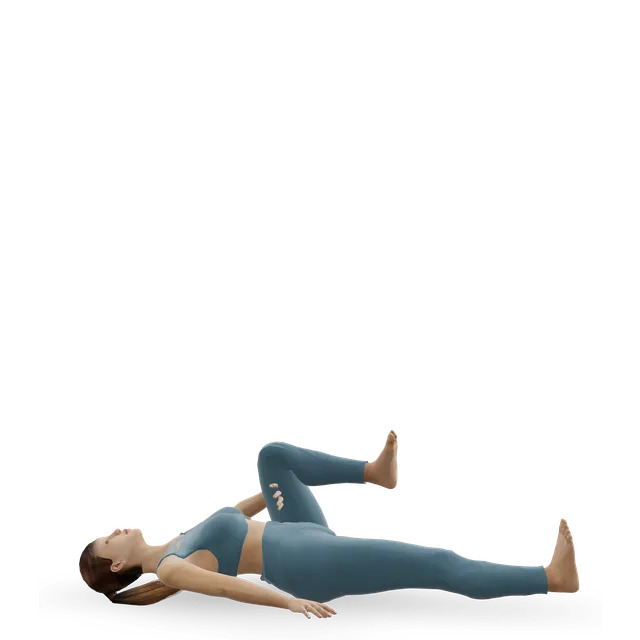
Single knee-to-chest stretch demonstrated on the 3D figure3D demoSingle knee-to-chest stretchBeginner · No equipment

Short holds at first; once comfortable, 20 to 30 s, 2 to 3 times · NHS inform's knee to chest, with its stretch dose. Keep it only if it eases your back, and leave it out if bending forward sends pain down a leg, as the move page says

Harder: 90/90 hip lift-off

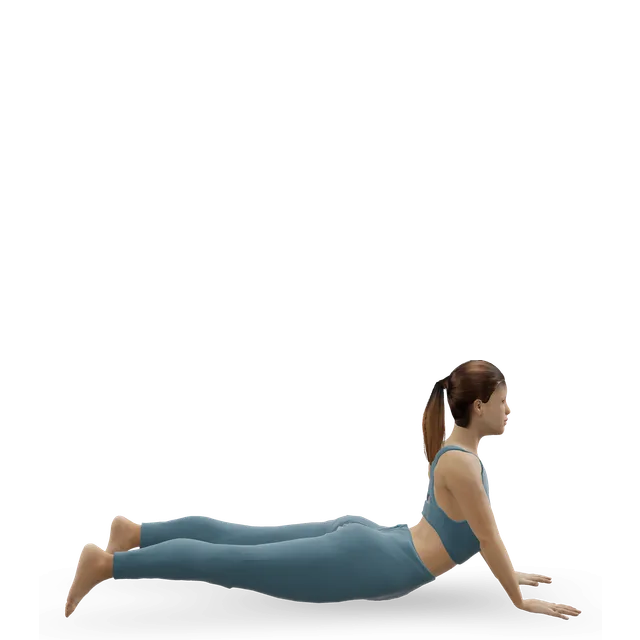
Sphinx pose (Salamba Bhujangasana) demonstrated on the 3D figure3D demoSphinx pose (Salamba Bhujangasana)Beginner · No equipment

3 holds of 20 to 30 s · As in our back pain guide. Keep it only if lying on your front or arching eases your pain; skip it with spinal stenosis, as the move page says

Harder: Cobra pose (Bhujangasana)

Prone press-up (McKenzie press-up) demonstrated on the 3D figure3D demoProne press-up (McKenzie press-up)Beginner · No equipment

10 slow reps, 3 to 5 times a day, while it helps · The move page's dose, an editorial starting point. Only once the sphinx eases your back; skip it with spinal stenosis or if arching brings on leg symptoms, as the move page says

Easier: Sphinx pose (Salamba Bhujangasana)

Treadmill walking demonstrated on the 3D figure3D demoTreadmill walkingBeginner · Cardio machine

5 to 10 min, several times a day · As in our back pain guide. Walking outdoors or around the house counts the same

Harder: Treadmill jogging

Move on when: You can get in and out of bed without a sharp catch, and the day's moves don't make the next night worse (our suggestion).

Follow along: a timer, a cue and the next move, one step at a time.
Stage 2

Build: trunk and hip strength, by day

About weeks 2 to 6: strength work 2 or 3 days a week and walking on most days, as our back pain guide's second stage does. The side plank and bridge build the muscles you lie and turn on (our suggestion).

Bird dog demonstrated on the 3D figure3D demoBird dogBeginner · No equipment

2 to 3 sets of 6 to 8 each side, 3 to 5 s holds · As in our back pain guide. One limb at a time first if you need to; make fists if your wrists hurt, as the move page says

Easier: Bird dog, one limb at a time · Harder: Bear crawl

Dead bug demonstrated on the 3D figure3D demoDead bugBeginner · No equipment

2 sets of 6 to 8 each side · As in our back pain guide. Heel taps first if you need to

Easier: Dead bug heel taps · Harder: Forearm plank

Knee side plank demonstrated on the 3D figure3D demoKnee side plankBeginner · No equipment

3 holds of 15 to 20 s each side · As in our back pain guide

Harder: Side plank

Glute bridge demonstrated on the 3D figure3D demoGlute bridgeBeginner · No equipment

2 to 3 sets of 10 · As in our back pain guide

Easier: Pelvic tilt into bridge · Harder: Single-leg glute bridge

Sit to stand from a chair demonstrated on the 3D figure3D demoSit to stand from a chairBeginner · A bench or box

3 sets of 8 to 10 · As in our back pain guide. It practises getting up, as NHS inform describes

Easier: Sit to stand, pushing on the thighs · Harder: Bodyweight squat

Treadmill walking demonstrated on the 3D figure3D demoTreadmill walkingBeginner · Cardio machine

Build towards 30 min on at least 5 days a week · As in our back pain guide (the WalkBack trial's end target there)

Harder: Treadmill jogging

Move on when: The strength work stays within the pain rule, and most mornings you wake no worse than you went to bed (our suggestion).

Follow along: a timer, a cue and the next move, one step at a time.
Stage 3

A full night in your usual position

From about week 6, strength 2 days a week and walking most days, and ongoing: our back pain guide's last stage by day, while your usual sleeping position comes back by the written steps below.

Side plank demonstrated on the 3D figure3D demoSide plankIntermediate · No equipment

3 holds of 20 to 30 s each side · As in our back pain guide. From the knees if your shoulder is sore, as the move page says

Easier: Knee side plank · Harder: Side plank with leg lift

Kettlebell deadlift demonstrated on the 3D figure3D demoKettlebell deadliftBeginner · A kettlebell

3 sets of 8 to 10, light to start · As in our back pain guide

Easier: Hip-hinge practice · Harder: Dumbbell Romanian deadlift

Dumbbell goblet squat demonstrated on the 3D figure3D demoDumbbell goblet squatIntermediate · A dumbbell

3 sets of 8 to 10 · As in our back pain guide

Easier: Bodyweight squat · Harder: Barbell front squat

Suitcase carry demonstrated on the 3D figure3D demoSuitcase carryIntermediate · A dumbbell + A kettlebell

3 walks of 20 to 30 m each side · As in our back pain guide

Easier: Farmer's carry · Harder: Overhead carry (waiter's walk)

Treadmill walking demonstrated on the 3D figure3D demoTreadmill walkingBeginner · Cardio machine

30 min on at least 5 days a week · As in our back pain guide

Harder: Treadmill jogging

Move on when: Our suggestion: a full night in your usual position, most nights, leaves you no worse the next morning. Keep two strength days a week and walking most days; if a bad night or a big day brings it back, drop back a stage for a few days rather than staying in bed.

Follow along: a timer, a cue and the next move, one step at a time.

What to change for now

Positions and pillows to try (written steps)

Our 3D figure can't show these changes. No trial has tested a sleeping position or pillow for back pain, so these are things to try, from NHS inform, the NHS and the ROS where named, and our suggestion otherwise.

  • 1. When the ache builds, change position rather than lying it out: NHS inform says change positions regularly and find one that reduces any pain in your back or legs.
  • 2. If lying flat on your back hurts, bend your knees with a pillow under them, or lie on your side with your knees bent and a pillow between them (our suggestion, as our back spasm guide says). With leg symptoms from spinal stenosis, avoid lying flat with your legs straight for long: that rests on one MRI study and the bending-versus-arching pattern, and is untested for symptoms.
  • 3. If lying on your front hurts, use your side or back.
  • 4. On your side, a pillow between your knees keeps the top leg level, and pillows can support the leg (the ROS, after a spinal fracture). In pregnancy, the NHS says the safest position to go to sleep is on your side; you can support your bump with pillows and put a pillow between your knees.
  • 5. If you're only comfortable on your front or propped on your elbows, your back may prefer arching, and the press-ups in the plan may help.
  • 6. If you can only get comfortable sitting up or leaning forward, see a GP: the NHS says pain from the pancreas can ease leaning forward, and the CSP lists difficulty lying flat as a reason to get checked. After a spinal fracture, the ROS says a reclining chair "may occasionally be useful to rest in at night".
  • 7. Try a new position or pillow for 3 or 4 nights, and judge it by how you feel the next morning (our suggestion).

Sources 2, 3, 7, 8, 10, 31, 30, 26, 18

Getting in and out of bed (written steps)

These come from NHS inform and, after a spinal fracture, the ROS.

  • 1. Getting into bed: feel the bed at the back of your legs, sit down slowly, pushing on your thighs for support, then support your body with the arm closest to the top of the bed and lower yourself down with your other arm, and roll onto the side you feel most comfortable (NHS inform).
  • 2. Getting out, one way: roll onto your tummy and edge towards the side of the bed, let the leg nearest the edge drop towards the floor as you push up with your hands, walk your hands down the bed towards your hips, then carefully bring your other leg down and stand up (NHS inform).
  • 3. Or: roll onto the side you feel most comfortable, push yourself up with your arms, then carefully bring your legs down to the floor and stand up (NHS inform).
  • 4. Turning over: roll as one piece with your knees bent (our suggestion); with pelvic girdle or SI joint pain, keep your knees together, as those guides say.
  • 5. After a spinal fracture, take pain relief about half an hour before you get up (not anti-inflammatories on an empty stomach), and ask about bed raisers, a bed lever or a sliding sheet (the ROS).

Sources 2, 31

The mattress and the evening (written steps)

These come from a mattress trial, the ROS and the NHS; where a step is our suggestion, it says so.

  • 1. If you're replacing a mattress, medium-firm did better than firm in a trial. Lie on a new one for at least 10 minutes in your usual sleeping position before you buy (the ROS).
  • 2. A topper or a folded duvet can soften a mattress that's too firm; an old, sagging one can't be improved enough (the ROS). In pregnancy, the NHS suggests a piece of hardboard under a soft mattress.
  • 3. Not the floor or a board: experts no longer recommend a very firm "orthopaedic" mattress (the ROS).
  • 4. A heat pack or hot water bottle wrapped in a tea towel can ease stiffness or muscle spasm (the NHS).
  • 5. Relax for at least an hour before bed, and exercise during the day; with insomnia, the NHS says don't exercise in the 4 hours before bed. Gentle moves in bed are fine (our suggestion).

Sources 32, 31, 35, 1, 39

A full night in your usual position (written steps)

No trial has tested how to bring back a sleeping position. These steps are our suggestion.

  • 1. Start each night in the position that eases it, with the supports that help.
  • 2. Once you've had 3 or 4 nights in a row that are no worse the next morning, try your usual position for part of the night, such as to fall asleep or when you wake in the early hours, then for longer.
  • 3. Drop one support at a time, a few nights each, if you'd rather not need it.
  • 4. In the morning, do a few moves in bed, then get up NHS inform's way; our morning back pain guide covers the first hour.
  • 5. If no position is comfortable after a few weeks, or the pain is the same whatever you do, see a GP (NHS inform and the CSP).

Sources 2, 18

Positions to swap, and why

Habit or positionWhy it mattersInstead
Lying it out in a position that achesNHS inform says change positions regularly and find one that reduces any pain in your back or legs.Turn over, bend your knees or get up for a few minutes; knee rolls in bed help.Try: Hip windshield wipers
Staying in bed on a bad dayThe NHS says don't stay in bed for long periods, NHS inform says resting in bed often makes it harder to get going again, and staying active did slightly better than bed rest in trials.Short walks through the day, and the moves in bed.Try: Treadmill walking
Sleeping on the floor or a board to straighten your backA hard futon did worst in a mattress trial, firm did worse than medium-firm in another, and the ROS says experts no longer recommend very firm mattresses.A medium-firm mattress, or a topper on one that's too firm.
Lying flat with your legs straight, when your legs ache or tingle on standing (the stenosis pattern)In one MRI study of 40 people with stenosis, lying with the legs straight and a pillow under the lower back narrowed the spinal canal compared with the knees bent, and stenosis eases with bending forward. No study has measured symptoms by position.Knees bent and supported, or on your side curled a little.
Lying on your front when it hurtsLying on your front went with more low back pain in observational studies, and it was the position people at a spine clinic avoided most.Your side or your back, with pillows.
The sphinx when arching sends pain down a leg, or with spinal stenosisThe move page says skip it with stenosis or if arching brings on leg symptoms, and stenosis pain is brought on by arching.The single knee to chest, if bending eases your back.Try: Single knee-to-chest stretch
The knee to chest when bending forward sends pain down a legThe move page says leave it out if bending forward sends pain down a leg.The sphinx, if arching eases your back.Try: Sphinx pose (Salamba Bhujangasana)
Sitting straight up from lying on your back, like a sit-upNHS inform's way rolls you onto your side or tummy first.Roll onto your side, then push up with your arms as your legs go over the edge.
Hard exercise late in the evening, if you have insomniaThe NHS says don't exercise in the 4 hours before bed with insomnia.Exercise earlier in the day; gentle pelvic tilts in bed are fine.Try: Pelvic tilt into bridge
A long lie-in after a bad nightNHS inform says resting in bed often makes it harder to get going again.Get up at your usual time, after a few heel slides or knee rolls in bed.Try: Supine heel slide

Routines to follow

More moves for this area

Questions people ask

Why does my lower back hurt when I lie down?

Usually because a sore back dislikes staying in one position, and lying still for a while lets it stiffen, which is why turning over or getting up eases it. Some backs dislike lying flat or on the front, often with spinal stenosis, while others ease that way. Less often, pain that is the same whatever position you lie in, or comes with tummy pain, a fever or weight loss, needs checking.

Why does my back hurt when lying down but not standing?

A back that dislikes long, still spells eases once you move. Lying with your legs straight can also arch your lower back more than lying with your knees bent, which some backs dislike, so try your side with your knees bent, or your back with a pillow under your knees. Upper tummy and back pain that is worse lying down and better leaning forward can come from the pancreas: see a GP, or call 999 if it is sudden and severe.

Is back pain at night a red flag?

On its own, rarely: none of 213 people with night pain at a back pain clinic had a serious cause. See a GP if it doesn't ease with rest or is worse at night, is the same whatever position you lie in, or comes with a fever, night sweats or weight loss. If you have or have had cancer, new back pain at night that disturbs your sleep needs your cancer team or GP the same day.

What is the best sleeping position for lower back pain?

No trial has tested one. Observational studies link lying on your back or well supported on your side with less pain, and lying on your front with more, but every position is the painful one for someone. Try your side with a pillow between your knees, or your back with a pillow under your knees, and judge it by how you feel the next morning.

Should I put a pillow under or between my knees?

Either is worth trying, though neither has been tested for back pain. In a scan study, lying with the knees bent arched the lower back less than lying with the legs straight, and a pillow between your knees keeps the top leg level on your side, which the NHS suggests in pregnancy. Use whichever lets you sleep and wake no worse.

Is sleeping on the floor good for back pain?

There's no evidence it helps. In mattress trials a hard futon did worst and a firm mattress did worse than a medium-firm one, and the Royal Osteoporosis Society says experts no longer recommend very firm mattresses. Lying on the floor to do your exercises is fine.

Can a mattress cause back pain?

An old, sagging mattress can't be improved enough, and one that is too firm can be softened with a topper or a folded duvet. In a trial of 313 people with backache in bed, medium-firm mattresses did better than firm ones for pain in bed and disability. If you're buying, lie on it for at least 10 minutes in your usual sleeping position first.

Why does my back hurt when I turn over in bed?

Turning is a twisting load, and a sore back or sacroiliac joint often catches as you roll. Bend your knees, keep them together and roll as one piece, and get in and out of bed by rolling onto your side or tummy first. Sudden pain after a minor fall, cough or lift from about 50 that is worse when you move or turn over can be a spinal fracture, so see a GP.

Should I stay in bed with back pain?

No. The NHS says don't stay in bed for long periods, and NHS inform says resting in bed often makes it harder to get going again; in trials, advice to stay active did slightly better than bed rest. Rest when you need to, change position often, and walk little and often.

Why does my back hurt lying down in pregnancy?

Back pain is very common in pregnancy. The NHS says the safest position to go to sleep is on your side, and suggests supporting your bump with pillows and putting a pillow between your knees. Back pain in the second or third trimester, or with a fever, bleeding or pain when you pee, needs your midwife or GP the same day.

Can back pain that's worse lying down be something other than the back?

Occasionally. The NHS says acute pancreatitis causes tummy pain that can spread to the back and feel worse lying down and better leaning forward: call 999 if it is sudden and severe. Pancreatic cancer can cause similar pain at the top of the tummy and back, and kidney stones and kidney infections cause pain in the side or lower back.

How long does back pain at night last?

Most back pain improves within a few weeks, and NHS inform expects most back problems to settle within 6 weeks. See a GP if it isn't improving after a few weeks, or straight away with any of the warning signs.

Related exercise guides

Other pain guides

Sources

  1. NHS · Back pain
  2. NHS inform · Back problems
  3. Ylinen 2024 · Sleeping positions preferred and avoided by 375 people with chronic low back pain (cross-sectional study, Cureus)
  4. Cary 2021 · Sleep posture filmed at home in 53 people with and without waking spinal symptoms (cross-sectional study, PLoS One)
  5. Saini 2025 · Sleeping posture and low back pain (systematic review of 6 observational studies, Musculoskeletal Care)
  6. Cary 2019 · Sleep posture and spinal symptoms (scoping review, BMJ Open)
  7. Rousan 2025 · Lying with the legs straight or the knees bent on MRI in 40 people with lumbar spinal stenosis (imaging study, Brain Spine)
  8. Katz 2022 · Diagnosis and management of lumbar spinal stenosis (review, JAMA)
  9. May 2012 · Centralisation and directional preference (systematic review, Manual Therapy)
  10. Long 2004 · Does it matter which exercise? Directional preference in low back pain (RCT of 312, Spine)
  11. Wilke 1999 · Disc pressure measured in one volunteer during daily life (lab study, Spine)
  12. Harding 2005 · Night pain in 482 people at a back pain triage clinic (cohort study, Spine)
  13. Premkumar 2018 · Red flags for low back pain in 9,940 people at a spine centre (cohort study, J Bone Joint Surg Am)
  14. Henschke 2009 · Serious spinal disease in 1,172 people with new low back pain in primary care (inception cohort, Arthritis Rheum)
  15. Downie 2013 · Red flags to screen for malignancy and fracture in low back pain (systematic review, BMJ)
  16. Maselli 2022 · The diagnostic value of red flags in mid and low back pain (systematic review, Disabil Rehabil)
  17. Finucane 2020 · International framework for red flags for potential serious spinal pathologies (J Orthop Sports Phys Ther)
  18. Chartered Society of Physiotherapy · Managing your back pain
  19. NICE NG234 · Spinal metastases and metastatic spinal cord compression (2023)
  20. NICE NG65 · Spondyloarthritis in over 16s: diagnosis and management (2017)
  21. NHS · Ankylosing spondylitis: symptoms (past its review date: reviewed January 2023, review due January 2026)
  22. NHS · Osteoporosis (past its review date: reviewed October 2022, review due October 2025)
  23. Royal Osteoporosis Society · Osteoporosis symptoms
  24. Royal Osteoporosis Society · Spinal fractures (vertebral fractures) (past its review date: reviewed April 2022, being reviewed)
  25. AAOS OrthoInfo · Osteoporosis and spinal fractures
  26. NHS · Acute pancreatitis
  27. NHS · Pancreatic cancer: symptoms (past its review date: reviewed June 2023, review due June 2026)
  28. NICE NG59 · Low back pain and sciatica in over 16s: assessment and management (2016, updated 2026)
  29. Desouzart 2015 · Sleep-position advice for back pain in 20 active older women (controlled pilot study, Work)
  30. NHS · Tiredness and sleep problems in pregnancy
  31. Royal Osteoporosis Society · Daily living after fractures (fact sheet, content reviewed April 2023)
  32. Kovacs 2003 · Mattress firmness and chronic low back pain in 313 people (RCT, Lancet)
  33. Bergholdt 2008 · A waterbed, a foam mattress or a hard futon for chronic low back pain (RCT, 141 analysed, Spine)
  34. Gianfilippo 2026 · Mattresses, sleep and back pain over 25 years of research (review of 47 studies, J Orthop Traumatol)
  35. NHS · Back pain in pregnancy
  36. Dahm 2010 · Advice to rest in bed vs advice to stay active for low back pain and sciatica (Cochrane review)
  37. NHS · Sciatica
  38. NHS inform · Exercises for back pain
  39. NHS · Insomnia
  40. Smith 2017 · Should exercises be painful in chronic musculoskeletal pain? (systematic review and meta-analysis, Br J Sports Med)
  41. NHS · Ankylosing spondylitis (past its review date: reviewed January 2023, review due January 2026)
  42. NHS · Kidney stones
  43. NHS · Kidney infection
  44. NHS · Abdominal aortic aneurysm (past its review date: reviewed June 2023, review due June 2026)
  45. NHS · Slipped disc
  46. South Tees Hospitals NHS Foundation Trust · Ten lumbar spinal stenosis facts

Exercise education, not a diagnosis or treatment plan. It is written from the guidelines and studies listed above; review by a clinician is pending. If your pain follows an injury, is severe, is getting worse, or comes with any warning sign listed on this page, get it assessed. Health disclaimer.