Pain guide · Back pain

Lower back pain in the morning: waking up stiff, mattresses, inflammatory back pain and what helps

Back pain and stiffness first thing in the morning are common, and usually ease within half an hour of getting moving. Overnight your discs take up water, so the spine is stiffer to bend first thing; in one trial of 85 people with long-lasting back pain, cutting down bending early in the morning reduced pain. National Health Service (NHS) advice is not to stay in bed for long, and a medium-firm mattress did better than a firm one for pain in bed and on getting up.

One pattern needs a general practitioner (GP): back pain that started before 45, has lasted more than 3 months, wakes you in the second half of the night and eases with exercise rather than rest can be inflammatory back pain. Numbness around your genitals or bottom, or new bladder or bowel problems, is a 999 call or a trip to accident and emergency (A&E). This guide covers the warning signs, the first hour of the day, mattresses and positions, how much pain is fine, and a three-stage plan with a 3D demo of every move.

When to get help first

Exercise is for pain that has been checked or is clearly mild and settling.

Get urgent medical help if

  • Call 999 or go to A&E: loss of feeling or numbness around the genitals or bottom, new trouble peeing or controlling your bladder or bowels, changes in genital sensation during sex or problems with erections or orgasm, or pain, tingling, weakness or numbness in both legs. These are signs of cauda equina syndrome, which needs treating in hospital urgently. Don't drive yourself.
  • Call 999 or go to A&E: back pain with chest pain, or back pain that started after a serious accident, such as a car crash.
  • Call 999: sudden, severe pain in the tummy or back, which can come with breathlessness, pale or grey skin, or collapse. It can be a burst abdominal aortic aneurysm, most common in men aged 65 or over and in people who smoke or used to smoke.
  • Call 999 or go to A&E: pain spreading from the tummy to the back, with vomiting.
  • Same day (GP or NHS 111): back pain and you feel hot, cold, shivery or generally unwell, or severe pain that starts suddenly or is getting worse quickly.
  • Same day (GP or NHS 111): pain in the lower back or side with a high temperature, burning or stinging when you pee, or needing to pee more often. It can be a kidney infection.
  • Same day: you have or have had cancer, and new back pain that is severe and doesn't let up, is getting steadily worse, is worse at night and disturbs your sleep, is worse when you cough, sneeze or strain, or comes with tenderness over the spine. Contact your cancer team or GP urgently. With cancer, new weakness, difficulty walking, numbness or bladder or bowel problems are an emergency.
  • Same day: leg weakness that is getting worse.
  • Same day (urgent GP appointment or NHS 111): new difficulty lifting the front of your foot or toes (foot drop), or a foot that slaps down or catches as you walk, especially if it is getting worse. Weakness in both legs, or with numbness around the genitals or bottom or bladder or bowel changes, is the 999 emergency above.
  • Same day (GP or NHS 111): back pain in the second or third trimester of pregnancy, or back pain in pregnancy with a fever, vaginal bleeding or pain when you pee. It could be early labour or an infection.
  • Same day: a painful red eye, sensitivity to light or blurred vision, especially if you have, or might have, inflammatory back pain. It needs an eye assessment the same day: ask for an urgent GP appointment or contact NHS 111.

See a doctor or physiotherapist if

  • Back pain that started before 45 and has lasted more than 3 months, especially if it wakes you in the second half of the night, comes with buttock pain, eases with movement or within 48 hours of anti-inflammatories, or you have psoriasis or a parent, sibling or child with spondyloarthritis. These can point to inflammatory back pain (axial spondyloarthritis, such as ankylosing spondylitis); the National Institute for Health and Care Excellence (NICE) refers people with four or more of these features to a rheumatologist.
  • Back pain and stiffness that persists in a teenager or young adult. Ankylosing spondylitis tends to start at that age and can affect the whole spine.
  • Back pain that hasn't improved after a few weeks of looking after it at home, stops you doing day-to-day activities, or worries you.
  • Pain that doesn't improve with rest or is worse at night, or pain that is worse when you sneeze, cough or poo.
  • Unexplained weight loss, or a lump, swelling or change in the shape of your back.
  • Pain at the top of the back, between the shoulders, rather than in the lower back.
  • Pain, tingling or numbness spreading below the knee that isn't settling after a few weeks, is getting worse or stops your normal activities: see a GP.
  • Unexplained back pain with muscle spasms, loss of height, or a curved spine or change in posture: a possible osteoporotic spinal fracture, more likely with older age or long-term steroid tablets.
  • You are over 50 and your hips and shoulders stay stiff and painful for more than 45 minutes each morning: see a GP (possible polymyalgia rheumatica).
  • Mornings keep getting worse week after week despite the changes in this guide and the plan: our suggestion is to see a GP or physiotherapist. In many areas you can refer yourself to NHS physiotherapy.

Where does it hurt?

Location narrows the likely causes; it does not diagnose.

Low back stiff and sore on waking, easing within about half an hour of getting moving

Sometimes worse after a long lie-in or on a very soft or very hard bed: ordinary (non-specific) back pain stiffening overnight. This guide's plan covers it.

Read: Back pain →
Stiffness for more than 30 minutes, waking you in the second half of the night, easing with exercise but not rest

Starting before 45 and lasting more than 3 months, sometimes with buttock pain that switches sides: possibly inflammatory back pain (axial spondyloarthritis). See a GP. Our exercise guide for ankylosing spondylitis covers it.

Worse bending forward first thing (socks, shoes, the basin)

Easing as the morning goes on, sometimes into the buttock: often called disc-type or bending-sensitive pain. This guide's first-hour steps help; our herniated disc guide covers it if a scan or leg symptoms point there.

Read: Herniated or bulging disc →
Pain, tingling or numbness down one leg below the knee

Sometimes worse after lying or sitting: sciatica.

Read: Sciatica →
A sudden, severe catch or spasm getting out of bed or bending

A back spasm.

Read: Back spasm and pulled back muscle →
From mid-life, a scan report mentioning degeneration or the facet joints

Wear-related changes, which are common without pain; stiffness that eases with movement is typical.

Read: Degenerative disc disease →
Low on one side by the dimple at the back of the pelvis

Worse turning in bed, on stairs or standing on one leg: possibly the sacroiliac (SI) joint.

Read: SI joint pain →
In pregnancy or after giving birth, the back of the pelvis or the pubic bone

Worse turning in bed and on stairs: pelvic girdle pain.

Read: Pelvic girdle pain (SPD) →
Low back pain when you sit, or after sitting

Our sitting guide covers breaks, chairs and a plan back.

Read: Back pain from sitting →
The groin or hip rather than the back, stiff for more than 30 minutes after waking

Possibly the hip joint: the NHS asks for a GP visit.

Read: Hip pain →
Between the shoulder blades

Upper back pain, which the NHS asks a GP to check.

Read: Upper and mid back pain →
Over 50, hips and shoulders stiff and painful for more than 45 minutes each morning

Possibly polymyalgia rheumatica: see a GP.

Pain in the side or lower back with a high temperature, burning when you pee or needing to pee more often

Possibly a kidney infection: get help the same day.

Pain that is constant, worse at night whatever position you lie in, with weight loss or a history of cancer

Needs checking: the warning signs explain.

Understand it

Morning stiffness is common, and rarely means damageEmerging evidence

Back pain is very common and usually improves within a few weeks, the NHS says, and stiffness first thing is part of ordinary back pain for many people. Arthritis UK says "Back pain isn't usually caused by arthritis", and that "it's usual for your back to get stiffer as you get older".

In 675 adults with back pain, on average 66 years old, worse morning stiffness went with narrowing of several discs, not with C-reactive protein (CRP), a blood marker of inflammation: morning stiffness looked more like a sign of wear than of inflammation. Disc wear is common in people with no pain at all, from 37% of 20-year-olds to 96% of 80-year-olds, so it isn't a sign of damage on its own.

Sources 1, 2, 3, 4

Why mornings: the discs take up water overnightEmerging evidence

Lying down unloads the spine and the discs take up water. People are about 19 mm taller on waking, and in two small studies more than half of the day's height loss happened in the first hour after getting up; in a third, the first hour showed the biggest change. Lumbar disc volume falls about 16% over a day's activity on magnetic resonance imaging (MRI). People with chronic back pain go through the same daily cycle as people without it (about 18 mm in both), so it's normal, not a faulty disc.

In laboratory and cadaver work, the lower spine bends about 5 degrees less early in the morning, and bending forward then puts about 300% more stress on the discs, and 80% more on the spine's ligaments, than later in the day. That's a mechanism, not proof that morning bending causes pain.

Sources 5, 6, 7, 8, 9, 10, 11

Inflammatory back pain: the pattern to recogniseStrong evidence

Axial spondyloarthritis, which includes ankylosing spondylitis, is inflammation of the spine and pelvis. The NHS says it usually starts between 18 and 40, that the pain gets better with exercise but not with rest, that pain and stiffness are worse in the morning and at night, and that it can wake you during the night. The National Institute for Health and Care Excellence (NICE) says it affects a similar number of women as men, and can be there despite a normal X-ray and a negative blood test for the human leukocyte antigen B27 (HLA-B27) gene marker.

No single feature separates it from ordinary back pain. International expert criteria use 5 features (improvement with exercise, pain at night, a gradual start, starting before 40, and no improvement with rest), and 4 of the 5 picked out about 80% of people with it in a study of 648, with some false alarms. A review in the British Journal of General Practice reports that most people's symptoms start before 45, and that the average delay to diagnosis in the UK has been 8.65 years; a systematic review found typical delays of 2 to 6 years.

Sources 12, 13, 14, 15, 16, 17, 18, 19

The 30-minute line, and its limitsEmerging evidence

Stiffness that eases within about half an hour fits ordinary back pain and arthritis: NICE diagnoses osteoarthritis with no morning stiffness or stiffness lasting "no longer than 30 minutes". Stiffness for more than 30 minutes is one of four features of inflammatory back pain in one set of research criteria, and a question on a checker from the National Axial Spondyloarthritis Society.

On its own it isn't a diagnosis: in older adults, how bad the stiffness was went with disc wear, and NICE's referral list doesn't use morning stiffness at all. It uses starting before 35, waking in the second half of the night, buttock pain, improvement with movement or within 48 hours of anti-inflammatory painkillers, a family history, psoriasis, arthritis and pain where tendons attach to bone.

Sources 20, 15, 17, 3, 12

Night pain on its own is rarely seriousEmerging evidence

In 482 people at a back pain triage clinic, 213 had night pain (90 of them every night) and none was found to have a serious disease. What matters is the company it keeps: the NHS asks you to see a GP if back pain doesn't improve after resting or is worse at night, and NHS inform adds pain that isn't affected by movement.

Sources 21, 1, 22

When a scan or test helpsStrong evidence

Not for ordinary morning back pain: NICE says don't routinely image low back pain, and disc changes are common without pain.

For suspected axial spondyloarthritis, the rheumatology referral decides: NICE asks specialists to start with an X-ray of the joints at the back of the pelvis and, if that's normal, a special MRI scan, with the HLA-B27 blood test where needed. A GP may do that blood test if exactly 3 of NICE's referral features are present. Inflammation markers and HLA-B27 can be normal, especially in women. For a suspected kidney infection, the GP tests your pee.

Sources 23, 4, 12, 18, 24

How it usually goesEmerging evidence

Ordinary back pain usually improves within a few weeks, the NHS says, and NHS inform says most problems improve within 6 weeks. In the morning-bending trial, people with persistent or recurring back pain improved once they cut down bending early in the morning, and at 3 years those who kept it up had improved further. Inflammatory back pain doesn't settle on its own, and diagnosis opens up specialist treatment. No one can promise a date.

Sources 1, 22, 25, 26, 19

What helps, and how strong the evidence is

Cutting down bending early in the morning: one trialEmerging evidence

In one trial of 85 people with chronic back pain, cutting down bending early in the morning reduced pain (by about a third, with a wide margin of uncertainty), and days in pain, disability and painkiller use fell too, against a group given sham exercises, which improved as well once they were taught it. At 3 years, 31 of the 50 who replied were still doing it, and their days in pain had fallen further, though some who stopped had also improved.

We read the trial's summary, which doesn't say how long "early" was; "the first part of the morning" in this guide is our suggestion. It fits the lab finding that the discs are stiffer to bend first thing, but it's one trial, and it doesn't make morning bending dangerous.

Sources 25, 26, 10

Medium-firm mattresses did better than firmEmerging evidence

In 313 adults with chronic back pain who had backache in bed and on getting up, medium-firm mattresses did better than firm ones over 90 days for pain in bed (about twice the odds of improving) and disability; pain on rising leaned the same way but wasn't clearly different. A waterbed and a foam mattress did slightly better than a hard futon over a month in another trial. Reviews of 24, 39 and 47 studies favour medium-firm, and a 2026 review calls it "the most defensible general recommendation" for back pain or morning stiffness. In 27 people with back and shoulder discomfort, new medium-firm mattresses were followed by less discomfort and better sleep over 12 weeks, without a comparison group.

Advice differs: an NHS community trust says people with back pain usually prefer a firm mattress, and the NHS pregnancy page suggests a board under a soft mattress, while the Chartered Society of Physiotherapy (CSP) says there's no best mattress and whatever is most comfortable is best. A sagging or very soft bed, or a board-hard one, is worth changing if your mornings are bad (our suggestion).

Sources 27, 28, 29, 30, 31, 32, 33, 34, 35

Sleeping position: observational studies onlyEmerging evidence

No trial has tested sleeping positions for back pain. In a 2025 review of 6 observational studies, sleeping on your back or well supported on your side went with less low back pain, and on your front with more; an earlier review found only 4 studies and called side lying generally protective. These studies can't show cause, so treat position as something to experiment with.

Sources 36, 37

Warmth in the morning: small, short-term helpEmerging evidence

The NHS suggests a heat pack or hot water bottle, wrapped in a tea towel, for stiffness. In 76 people with recent back pain, low-level heat wraps worn overnight for 3 nights improved next-morning pain relief, stiffness and flexibility, in a trial funded by industry. A Cochrane review found heat wraps give a small, short-term reduction in pain.

Sources 1, 38, 39

Exercise has the best evidenceStrong evidence

Exercise eases chronic low back pain by about 15 points out of 100 against no treatment, in a Cochrane review of 249 trials. With education it roughly halves the chance of a new episode, while education alone, back belts and insoles don't help. In 701 people who had recovered from back pain, a walking and education programme lengthened the time to the next episode (a median of 208 days against 112). NICE recommends exercise and advises against belts and corsets.

Sources 40, 41, 42, 23

Inflammatory back pain: specialist care decides the outcomeStrong evidence

NICE asks GPs to refer people with back pain that started before 45 and has lasted more than 3 months to a rheumatologist when four or more of its features are present. After diagnosis, NICE asks for a specialist physiotherapist's structured exercise programme, with stretching, strengthening, posture and spine movement work and aerobic exercise; medicines are the specialist's call.

Source 12

How much pain is OK while you exercise?

The back pain rule, and judge mornings by the first part of the dayEmerging evidence

For the exercises, this guide uses the back hub's rule. Some discomfort during exercise is fine, and it does not mean you are doing damage. Aim for pain you would call mild to moderate, no more than about 5 out of 10. It should settle within an hour or so, and your back should be no worse the next morning. If it is worse, do less next time (fewer reps, a smaller range, a lighter load), not nothing.

Leg symptoms are the exception: stop or shrink any movement that sends pain, pins and needles or numbness further down your leg. If leg symptoms move back towards your spine, that is a good sign, even if your back aches a little more for a while. If pain climbs day after day, or you notice any warning sign, stop and get it checked. NHS inform's back exercises use the same 0 to 5 band, and in trials of long-lasting muscle and joint pain, exercise that allowed some pain did no worse than pain-free exercise.

For mornings (our suggestion, built on the morning-bending trial): if bending forward early in the day (socks, the basin, lifting) sets your back off, keep bending small then, and do loaded bending and the heavier strength moves later in the day. After 2 settled weeks, bring morning bending back a little at a time. Stiffness that lasts more than 30 minutes most mornings, with the features in the warning signs, is a reason to see a GP, not to push harder.

Sources 43, 44, 25, 12

The exercise plan: 3 stages

Start at the first stage. Each move opens a full guide with a 3D demo.

Stage 1

Ease the first hour: move in bed, get up well, then walk

The first days to about 2 weeks: a few gentle moves in bed before you get up, getting out of bed by rolling, warmth, small bending early in the day, and a short walk once you're up (the written steps below). Keep whichever moves ease your back. With any warning sign, get checked first. Doses are editorial unless a source is named.

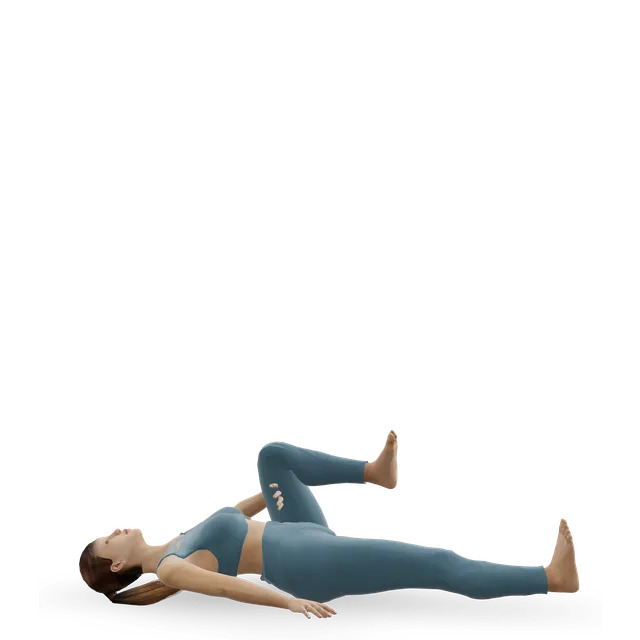
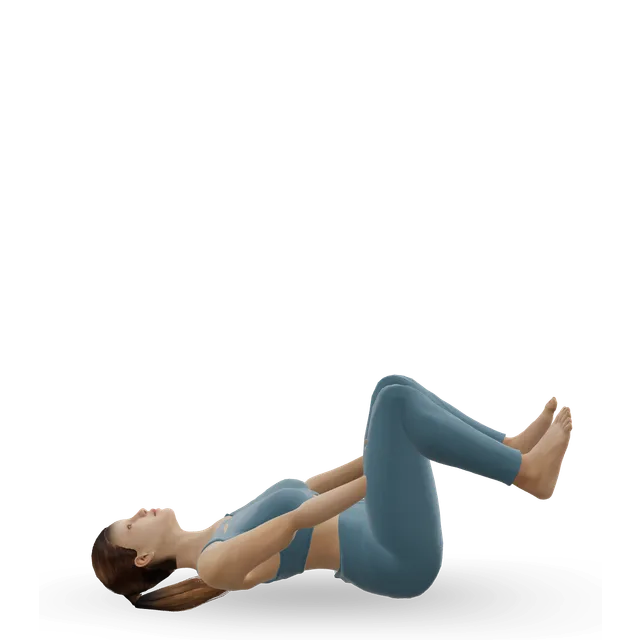
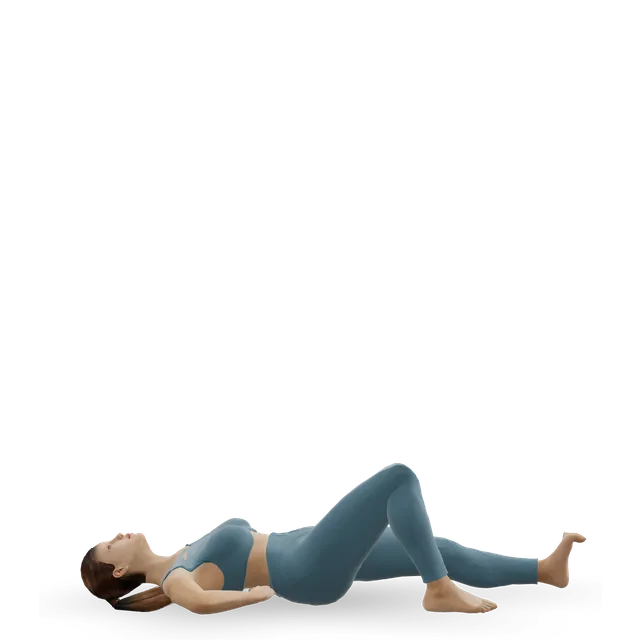
Hip windshield wipers demonstrated on the 3D figure3D demoHip windshield wipersBeginner · No equipment

In bed before getting up: 2 to 3 slow rolls each side, building to sets of 8, 2 to 3 times a day, up to 2 sets of 15 · NHS inform's knee rolls, with its pacing

Easier: Supine heel slide · Harder: 90/90 switch

Pelvic tilt into bridge demonstrated on the 3D figure3D demoPelvic tilt into bridgeBeginner · No equipment

The tilt only at first (flatten your lower back into the bed, then let it arch a little): 2 to 3 at a time, building to sets of 8; lift into a small bridge once that's easy · NHS inform's pelvic tilt, with its pacing; the bridge as in our back pain guide (8 to 10 slow reps)

Harder: Glute bridge

Supine heel slide demonstrated on the 3D figure3D demoSupine heel slideBeginner · No equipment

10 slow reps each side, once or twice a day · The move page's dose, an editorial starting point. In bed, for stiffness

Harder: Hip windshield wipers

Single knee-to-chest stretch demonstrated on the 3D figure3D demoSingle knee-to-chest stretchBeginner · No equipment

Short holds at first; once comfortable, hold 20 to 30 s, 2 to 3 times · NHS inform's knee to chest and its stretch dose. Keep it only if it eases your back; if morning bending flares you, save it for later in the day (our suggestion). Leave it out if bending sends pain down a leg, as the move page says

Harder: 90/90 hip lift-off

Cat-cow demonstrated on the 3D figure3D demoCat-cowBeginner · No equipment

8 waves, slower than feels natural · The move page's dose. NHS inform's back exercises include the same all-fours curl. Once you're up and moving

Harder: Half lord of the fishes (Ardha Matsyendrasana)

Treadmill walking demonstrated on the 3D figure3D demoTreadmill walkingBeginner · Cardio machine

5 to 10 minutes, several times a day, starting with a short walk once you're up · As in our back pain guide; the timing is our suggestion. Walking outdoors counts the same

Harder: Treadmill jogging

Move on when: Morning stiffness eases within about 30 minutes with these moves, you can walk for 15 to 20 minutes, and your back is no worse the next morning (our suggestion; the walking part is our back pain guide's).

Follow along: a timer, a cue and the next move, one step at a time.
Stage 2

Build: trunk and hip strength, later in the day

About weeks 2 to 6: strength work 2 or 3 days a week and walking on most days, as our back pain guide's second stage does. Do it later in the day if morning bending flares your back (our suggestion, from the morning-bending trial), and keep the morning routine from stage 1.

Bird dog demonstrated on the 3D figure3D demoBird dogBeginner · No equipment

2 to 3 sets of 6 to 8 each side, 3 to 5 s holds · As in our back pain guide. Start with one limb at a time if needed

Easier: Bird dog, one limb at a time · Harder: Bear crawl

Dead bug demonstrated on the 3D figure3D demoDead bugBeginner · No equipment

2 sets of 6 to 8 each side · As in our back pain guide. Heel taps first if needed

Easier: Dead bug heel taps · Harder: Forearm plank

Knee side plank demonstrated on the 3D figure3D demoKnee side plankBeginner · No equipment

3 holds of 15 to 20 s each side · As in our back pain guide

Harder: Side plank

Glute bridge demonstrated on the 3D figure3D demoGlute bridgeBeginner · No equipment

2 to 3 sets of 10 · As in our back pain guide

Easier: Pelvic tilt into bridge · Harder: Single-leg glute bridge

Hip-hinge practice demonstrated on the 3D figure3D demoHip-hinge practiceBeginner · No equipment

2 to 3 sets of 10 · As in our back pain guide. Bending from the hips is how you'll do socks and the basin

Harder: Dumbbell Romanian deadlift

Move on when: You can do every set with good control, and any pain settles by the next morning (our back pain guide's check).

Follow along: a timer, a cue and the next move, one step at a time.
Stage 3

Strengthen, and a normal morning back

From about week 6, 2 or 3 days a week and ongoing: our back pain guide's last stage, with loaded bending later in the day at first, walking built towards the WalkBack trial's target, and your usual morning routine back by the written steps below.

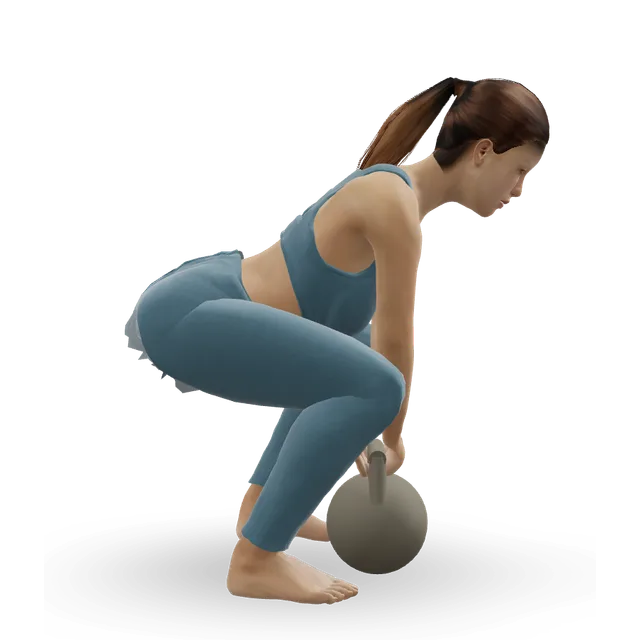
Kettlebell deadlift demonstrated on the 3D figure3D demoKettlebell deadliftBeginner · A kettlebell

3 sets of 8 to 10, light to start · As in our back pain guide. Not in the first part of the morning while morning bending flares you (our suggestion)

Easier: Hip-hinge practice · Harder: Dumbbell Romanian deadlift

Dumbbell goblet squat demonstrated on the 3D figure3D demoDumbbell goblet squatIntermediate · A dumbbell

3 sets of 8 to 10 · As in our back pain guide

Easier: Bodyweight squat · Harder: Barbell front squat

Side plank demonstrated on the 3D figure3D demoSide plankIntermediate · No equipment

3 holds of 20 to 30 s each side · As in our back pain guide

Easier: Knee side plank · Harder: Side plank with leg lift

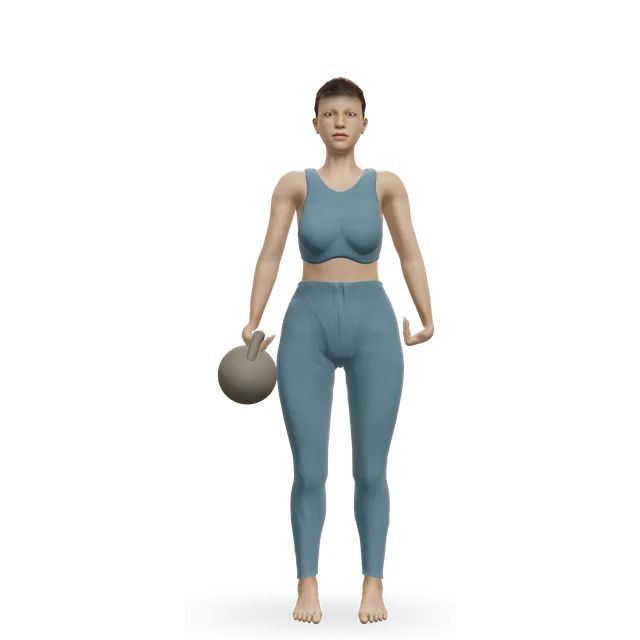
Suitcase carry demonstrated on the 3D figure3D demoSuitcase carryIntermediate · A dumbbell + A kettlebell

3 walks of 20 to 30 m each side · As in our back pain guide

Easier: Farmer's carry · Harder: Overhead carry (waiter's walk)

Child's Pose (Balasana) demonstrated on the 3D figure3D demoChild's Pose (Balasana)Beginner · No equipment

Hold 1 to 3 minutes · The move page's dose. Once morning bending is comfortable, a gentle way to bend first thing; skip it with a knee injury or replacement, as the move page says

Harder: Extended puppy pose (Uttana Shishosana)

Treadmill walking demonstrated on the 3D figure3D demoTreadmill walkingBeginner · Cardio machine

Build towards 30 minutes, at least 5 days a week · The WalkBack trial's end-of-programme target, as in our back pain guide

Harder: Treadmill jogging

Move on when: Our suggestion: bring morning bending back a step a week while the next morning stays no worse, and keep two strength days a week and regular walking for the long term. If a morning of bending sets you off, go back to easy mornings for a week, then try again.

Follow along: a timer, a cue and the next move, one step at a time.

What to change for now

The first hour (written steps)

Our 3D figure can't show these changes. They come from NHS inform, an NHS community trust and the NHS, with one trial behind the bending step and one behind overnight heat; the time spans are our suggestion.

  • 1. Before you get up: 2 or 3 gentle moves in bed (knee rolls, pelvic tilts, heel slides), a few of each. NHS inform suggests doing its knee to chest exercise on your bed.
  • 2. Get out of bed by rolling: onto your side, legs over the edge, then push yourself up sideways with your arms (an NHS community trust); or roll onto your front, let one leg drop to the floor, and walk your hands back towards your hips as you push up (NHS inform).
  • 3. Warmth: a heat pack or hot water bottle wrapped in a tea towel for stiffness (the NHS), or a warm shower. Overnight heat wraps helped in a small trial.
  • 4. Go easy on bending early in the day: sit down to dress your lower half, and bend your knees to get down to the basin (the community trust). Leave heavy lifting, digging or long forward bends until later if mornings flare your back (our suggestion, from the morning-bending trial).
  • 5. Walk for a few minutes once you're up and moving (our suggestion). Don't stay in bed: the NHS says avoid long spells in bed, and NHS inform says rest makes it harder to get going again.

Sources 43, 22, 34, 1, 38, 25

Your bed and your sleep (written steps)

Mattress and position advice is weak evidence: one mattress trial and observational studies of position. Comfort is the main guide.

  • 1. The mattress: medium-firm did better than firm in a trial of people with backache in bed and on getting up. The CSP says whatever feels most comfortable for you is best.
  • 2. Positions: try your back with a pillow under your knees, or your side with a pillow between your knees. Lying on your front went with more back pain in observational studies.
  • 3. Sleep habits (the NHS): the same wake-up time every day, an hour to relax before bed, and no caffeine or alcohol in the 6 hours, and no exercise in the 4 hours, before bed. The CSP suggests aiming for 7.5 to 8 hours.
  • 4. Pregnancy: for back pain the NHS suggests a piece of hardboard under a soft mattress, and it says the safest position to go to sleep in is on your side, either side; after 28 weeks, going to sleep on your back can double the risk of stillbirth.

Sources 27, 33, 36, 45, 35, 46

A normal morning comes back (written steps)

These steps are our suggestion, built on the morning-bending trial.

  • 1. Keep the 2 or 3 bed moves as long as they help; they take a few minutes.
  • 2. Bring morning bending back a little at a time: socks and shoes sitting down, then bending at the basin, then lifting and gardening, one step a week while the next morning stays no worse.
  • 3. If a morning of bending sets you off, go back to easy mornings for a week, then try again.
  • 4. If mornings stay bad for weeks, check your bed (a sagging or very soft mattress, or a board-hard one), and check the warning signs: stiffness that lasts more than 30 minutes, waking in the second half of the night and easing with exercise is a reason to see a GP.

Sources 25, 26, 27, 12

Painkillers, belts and other treatments

The NHS suggests anti-inflammatory painkillers such as ibuprofen if they suit you, and says paracetamol on its own is not recommended for back pain; ask a pharmacist. A clear improvement within 48 hours of anti-inflammatories is one of NICE's referral features for inflammatory back pain, not a diagnosis to make yourself. NICE advises against belts, corsets and traction, and belts and insoles didn't prevent back pain in trials.

Sources 1, 23, 41

Positions to swap, and why

Habit or positionWhy it mattersInstead
Staying in bed, or lying in, to rest a stiff backThe NHS says don't stay in bed for long periods, and NHS inform says resting in bed often makes it harder to get going again.Get up using the roll, do the bed moves, then walk.Try: Treadmill walking
Sitting straight up out of bed from flat on your backNHS inform and an NHS community trust teach rolling first.Roll onto your side or front and push up with your arms.
Toe touches and long forward folds first thing, if mornings flare your backBending stresses the discs more early in the morning, and cutting down early-morning bending eased chronic back pain in a trial.Knee rolls in bed, and forward bending later in the day.Try: Hip windshield wipers
A seated forward fold as your first stretch of the day, if bending flares youThe same reason; with disc-related back pain, the move page says keep the spine long rather than deeply rounded.Cat-cow once you're up, within comfort.Try: Cat-cow
Sphinx pose and press-ups, if arching back brings pain on or you have spinal stenosisOur back pain guide's stretch table keeps them for pain that arching back eases, and the move pages say skip them with spinal stenosis or if arching brings on leg symptoms.A gentle knee to chest within comfort, later in the day if morning bending flares you.Try: Single knee-to-chest stretch
A sagging, very soft or board-hard mattress, if mornings are badMedium-firm beat firm in a trial of people with backache in bed and on getting up, and a hard futon did worst in another.A medium-firm mattress, or whatever is most comfortable for you.
Sleeping on your front, if you wake soreLying on the front went with more back pain in observational studies.Your back with a pillow under your knees, or your side with a pillow between them.
A back belt to get going in the morningNICE says don't offer belts or corsets, and belts didn't prevent back pain in trials.The first-hour steps and the plan.
Putting up with stiffness that lasts more than 30 minutes and wakes you in the second half of the nightWith back pain that started before 45 and eases with exercise, these are features of inflammatory back pain, which needs specialist care.See a GP, as the warning signs say.
Hard exercise late in the evening if you sleep badlyThe NHS advises no exercise in the 4 hours before bed when you have trouble sleeping.Exercise earlier in the day.

Routines to follow

More moves for this area

Questions people ask

Why does my lower back hurt in the morning?

Lying down overnight lets your discs take up water, so most people are about 2 cm taller first thing and the back bends less freely until it has been upright for a while. Morning stiffness is common with ordinary back pain and usually eases within half an hour of moving. Back pain that wakes you in the second half of the night and eases with exercise, starting before 45, is different: see a GP.

Why does my back pain ease once I get up and move?

Moving warms the back up, and the discs lose some of their overnight water within the first hour or two of being upright. Easing with movement is typical of ordinary back pain, but it's also a feature of inflammatory back pain, so the age it started, how long it has lasted and whether it wakes you in the second half of the night matter too.

Is morning back pain a sign of arthritis?

Usually not. Arthritis UK says back pain isn't usually caused by arthritis, and in older adults morning stiffness went with worn discs, which are common in people without pain, not with inflammation. Inflammatory arthritis of the spine is much less common and has its own pattern.

What is inflammatory back pain?

It's back pain from inflammation in the spine and pelvis (axial spondyloarthritis, which includes ankylosing spondylitis), and it usually starts before 45. Unlike ordinary back pain, it eases with exercise but not rest, often wakes you in the second half of the night and can cause buttock pain. NICE refers people with back pain for more than 3 months and four or more of its features to a rheumatologist, so see a GP if this sounds like you.

What is the best mattress for lower back pain?

In a trial of 313 people with back pain in bed and on getting up, a medium-firm mattress did better than a firm one for pain in bed and disability, and reviews agree. The Chartered Society of Physiotherapy says there's no best mattress and whatever is most comfortable for you is best. A sagging, very soft or board-hard bed is worth changing if your mornings are bad.

What is the best sleeping position for lower back pain?

There's no trial. Observational studies link sleeping on your back or well supported on your side with less back pain, and on your front with more. Many people find it easier on their back with a pillow under the knees, or on their side with a pillow between the knees.

How should I get out of bed with lower back pain?

Roll onto your side, let your legs go over the edge of the bed and push yourself up sideways with your arms, or roll onto your front, put one leg down to the floor and walk your hands back towards your hips. Avoid sitting straight up from lying flat while it's sore, and stand up slowly.

Should I stretch as soon as I wake up?

Gentle moves in bed, such as knee rolls and pelvic tilts, are fine and can help you get going. In one trial of 85 people with long-lasting back pain, cutting down bending early in the morning reduced pain, so if mornings flare your back, save toe touches, heavy lifting and gardening for later in the day.

Does heat help morning back stiffness?

It can. The NHS suggests a heat pack or hot water bottle for stiffness, overnight heat wraps eased next-morning pain and stiffness in a small trial, and reviews find a small, short-term benefit. A warm shower is the simple version.

Why does my back hurt in the morning until I pee or have a poo?

We found no research on this pattern, and on its own it isn't a warning sign. Back or side pain with a high temperature, burning when you pee or needing to pee more often can be a kidney infection and needs a same-day appointment. Any new trouble controlling your bladder or bowels, or numbness around your genitals or bottom, is a 999 emergency.

Can kidney problems cause lower back pain in the morning?

A kidney infection can cause pain in your lower back or side with a high temperature, feeling hot, cold or shivery, burning or stinging when you pee, or needing to pee more often. If you think you have one, get an urgent GP appointment or help from NHS 111. Morning stiffness that eases as you move, without those signs, is usually the back itself.

When should I worry about lower back pain in the morning?

Call 999 for numbness around your genitals or bottom, new bladder or bowel problems, or weakness or numbness in both legs. See a GP if it doesn't improve with rest or is worse at night, comes with weight loss, or has the features of inflammatory back pain. Most morning back pain is the ordinary kind that eases as you move.

Related exercise guides

Other pain guides

Sources

  1. NHS · Back pain
  2. Arthritis UK · Back pain
  3. Feller 2024 · Morning stiffness, disc wear and inflammation in 675 older adults with back pain: the BACE study (cross-sectional study, Osteoarthr Cartil Open)
  4. Brinjikji 2015 · Spine scan findings in people without back pain (systematic review, AJNR Am J Neuroradiol)
  5. Reilly 1984 · Daily variation in height (laboratory study, Chronobiol Int)
  6. Tyrrell 1985 · Daily variation in height and the effect of spinal loading (laboratory study, Spine)
  7. Healey 2011 · Daily height change in people with and without chronic low back pain (laboratory study of 16, Clin Biomech)
  8. Botsford 1994 · Daily change in lumbar disc volume on MRI in 8 men (imaging study, Spine)
  9. Ludescher 2008 · Morning-to-evening changes in lumbar discs on MRI (imaging study, J Magn Reson Imaging)
  10. Adams 1987 · Daily changes in the stresses on the lower spine (laboratory study, Spine)
  11. Adams 1990 · Daily changes in spinal mechanics and their clinical significance (laboratory study, J Bone Joint Surg Br)
  12. NICE NG65 · Spondyloarthritis in over 16s: diagnosis and management
  13. NHS · Ankylosing spondylitis: symptoms (past its review date: reviewed January 2023, review due January 2026)
  14. Sieper 2009 · Expert criteria for inflammatory back pain (ASAS criteria, validated in 648 patients, Ann Rheum Dis)
  15. Rudwaleit 2006 · Telling inflammatory from mechanical back pain from the history in 213 people under 50 (diagnostic study, Arthritis Rheum)
  16. National Axial Spondyloarthritis Society · What is axial SpA?
  17. Act on Axial SpA (a National Axial Spondyloarthritis Society campaign) · Symptom checker
  18. Ingram 2025 · Delayed diagnosis of axial spondyloarthritis: the role of primary care (review article, Br J Gen Pract)
  19. Hay 2022 · Delay in diagnosing axial spondyloarthritis (systematic review, Clin Rheumatol)
  20. NICE NG226 · Osteoarthritis in over 16s: diagnosis and management (2022)
  21. Harding 2005 · Night pain in 482 people at a back pain triage clinic (clinic cohort, Spine)
  22. NHS inform · Back problems
  23. NICE NG59 · Low back pain and sciatica in over 16s: assessment and management (updated 2026)
  24. NHS · Kidney infection
  25. Snook 1998 · Controlling early morning bending in 85 people with chronic low back pain (RCT, Spine)
  26. Snook 2002 · Controlling early morning bending: 3-year follow-up (follow-up of an RCT, J Occup Rehabil)
  27. Kovacs 2003 · Mattress firmness and chronic low back pain in 313 people (RCT, Lancet)
  28. Bergholdt 2008 · A waterbed, a foam mattress or a hard futon for chronic low back pain (RCT, 141 analysed, Spine)
  29. Radwan 2015 · Mattress designs, sleep and back pain (systematic review of 24 controlled trials, Sleep Health)
  30. Caggiari 2021 · Which mattress for back pain and sleep? (review of 39 studies, J Orthop Traumatol)
  31. Gianfilippo 2026 · Mattresses, sleep and back pain over 25 years of research (review of 47 studies, J Orthop Traumatol)
  32. Jacobson 2010 · Medium-firm mattresses chosen by sleeping position in 27 people with back and shoulder discomfort (before-and-after study, Appl Ergon)
  33. Chartered Society of Physiotherapy · Living with back pain (last reviewed 2019)
  34. Wirral Community Health and Care NHS Foundation Trust · Acute mechanical low back pain
  35. NHS · Back pain in pregnancy
  36. Saini 2025 · Sleeping posture and low back pain (systematic review of 6 observational studies, Musculoskeletal Care)
  37. Cary 2019 · Sleep posture and spinal symptoms (scoping review, BMJ Open)
  38. Nadler 2003 · Overnight heat wraps for acute low back pain in 76 people (RCT, Arch Phys Med Rehabil)
  39. French 2006 · Superficial heat or cold for low back pain (Cochrane review)
  40. Hayden 2021 · Exercise therapy for chronic low back pain (Cochrane review of 249 trials)
  41. Steffens 2016 · Preventing low back pain (systematic review and meta-analysis of 21 trials, JAMA Intern Med)
  42. Pocovi 2024 · A walking and education programme to prevent low back pain coming back: the WalkBack trial (RCT of 701, Lancet)
  43. NHS inform · Exercises for back pain
  44. Smith 2017 · Should exercises be painful in chronic musculoskeletal pain? (meta-analysis, Br J Sports Med)
  45. NHS · Insomnia
  46. NHS · Tiredness and sleep problems in pregnancy
  47. Chartered Society of Physiotherapy · Causes of back pain (last reviewed 2019)
  48. NHS · Polymyalgia rheumatica (past its review date: reviewed April 2023, review due April 2026)
  49. NHS · Sciatica

Exercise education, not a diagnosis or treatment plan. It is written from the guidelines and studies listed above; review by a clinician is pending. If your pain follows an injury, is severe, is getting worse, or comes with any warning sign listed on this page, get it assessed. Health disclaimer.