Pain guide · Neck pain

Neck pain from sleeping: waking with a sore neck, pillows, positions and exercises

Waking with a sore or stiff neck is common, and the National Health Service (NHS) lists the neck locking in an awkward position while you sleep among the commonest causes of neck pain. The pillow, the position you sleep in and how well you sleep can all play a part, though the evidence on each is small: poor sleep has the clearest link, predicting new neck pain in studies that followed people over time.

No pillow has been shown to cure neck pain. The NHS suggests a low, firm pillow that keeps your head level with your body, and sleeping on your back or side rather than your front; NHS inform advises moving your neck gently, little and often. Strengthening the neck and shoulders has the best evidence for neck pain that lasts. A stiff neck with a fever, or a sudden, severe headache, needs a 999 call or accident and emergency (A&E), and pins and needles or weakness in an arm needs a general practitioner (GP) or NHS 111 the same day. This guide covers those warning signs, what the evidence says about pillows, positions and mattresses, how much pain is fine, and a three-stage plan with a 3D demo of every move.

When to get help first

Exercise is for pain that has been checked or is clearly mild and settling.

Get urgent medical help if

  • Call 999 or go to A&E: a stiff neck with a fever, especially if bright light hurts your eyes, you have a rash that does not fade when you press a glass on it, or a very high or very low temperature with shivering. These can be signs of meningitis.
  • Call 999 or go to A&E: a headache that came on suddenly and is extremely painful; numbness or weakness in the face or body; a drooping face, or being unable to lift both arms and keep them up; difficulty speaking, swallowing, balancing, walking or remembering; double vision or loss of vision; drowsiness or confusion. A torn neck artery often starts with headache and neck pain, sometimes with dizziness or tingling, so head or neck pain unlike any you have had before needs checking.
  • Call 999 or go to A&E: new problems walking, loss of bladder or bowel control, or a sudden loss of coordination, such as difficulty doing up buttons. These can be signs of pressure on the spinal cord.
  • Call 999: chest pain that spreads to your arm, neck or jaw, especially with breathlessness, sweating or feeling sick. It could be a heart attack.
  • Call 999 or go to A&E after a neck injury if the person is unresponsive, has severe neck pain or cannot move their head, or fell from a height such as 5 or more stairs. Do not drive yourself. Being 65 or over, a dangerous fall or crash (from more than 1 metre or 5 steps, diving, a high-speed or rollover crash, being thrown from a vehicle, or a bike or horse-riding accident), or tingling in the arms or legs after an injury puts you at high risk of a broken neck: get checked.
  • Same day (urgent GP appointment or NHS 111): severe neck pain that starts suddenly or gets worse quickly; heaviness or weakness in the arms or legs; pins and needles in an arm along with neck or arm pain; or pain between the shoulder blades.
  • Same day: clumsiness, numbness, pins and needles or weakness in one or both arms that is getting worse; problems with balance or walking since the neck pain started; or neck pain with a severe headache.
  • Same day: a headache with jaw pain when eating, a sore, tender scalp, or problems with your vision. In people over 50 especially, this can be giant cell arteritis. If you suddenly can't see from 1 or both eyes, call 999 or go to A&E.

See a doctor or physiotherapist if

  • Neck pain or stiffness that has not eased after a few weeks, or after 8 weeks of looking after it yourself; painkillers are not helping; or you are worried. In many areas you can refer yourself to NHS physiotherapy.
  • Pins and needles or a cold arm alongside neck pain, or a new loss of strength or feeling in the arm that you cannot explain (a possible nerve problem).
  • Neck pain with feeling generally unwell, or that started while you were ill with another condition such as rheumatoid arthritis or cancer; or neck pain with blurred vision, ringing in the ears or dizziness.
  • Severe pain that is constant or disturbs your sleep, a fever or unexplained weight loss, or a history of cancer, inflammatory arthritis, tuberculosis (TB), a weakened immune system, neck surgery or a violent injury. Serious causes are very rare, but these need checking.
  • You are over 50 and your shoulders and neck stay stiff for more than 45 minutes each morning (possible polymyalgia rheumatica).
  • You wake with neck pain most mornings for more than a few weeks despite changing your pillow and sleeping position, or the pain is worse lying down whatever position you try: our suggestion is to see a GP or physiotherapist.

Where does it hurt?

Location narrows the likely causes; it does not diagnose.

Waking with the neck locked and painful, often to one side, and you can't turn your head

Often with the head held tilted: a sudden wry neck (acute torticollis). Our stiff neck guide covers it.

Read: Stiff neck and wry neck →
The back or side of the neck aching on waking most mornings, easing as you get going

Ordinary neck pain made worse by the night's position, the pillow or poor sleep. This guide covers it, and our neck pain guide goes further.

Read: Neck pain →
Stiff on waking from mid-life, worse looking up, with grinding that comes and goes

Often neck arthritis (cervical spondylosis).

Read: Neck arthritis →
A headache on waking that starts at the back of the head, with a stiff neck

Possibly a headache from the neck. A sudden, severe headache is a 999 call.

Read: Headaches from the neck →
A pressing headache on both sides on waking, with tender shoulders

Often after poor sleep or stress: a tension-type headache.

Read: Tension headaches →
Pain, pins and needles or numbness down one arm, worse at night or with the head tipped back or turned

A pinched nerve in the neck.

Read: Pinched nerve in the neck →
Tingling or heaviness in the arm and hand at night, worse with your arms above your head

Possibly thoracic outlet syndrome. That guide suggests sleeping with your arms by your sides or hugging a pillow.

Read: Thoracic outlet syndrome →
The front or side of the shoulder at night, worse lying on it

The shoulder rather than the neck, often the rotator cuff.

Read: Shoulder impingement (rotator cuff pain) →
Jaw, ear or temple pain on waking, after clenching or grinding

The jaw joint and chewing muscles.

Read: Jaw pain (TMJ) →
The neck and tops of the shoulders after a day at a screen, then a sore night

Desk neck.

Read: Tech neck →
Between the shoulder blades on waking

Upper back pain. New, severe pain there needs an urgent GP appointment.

Read: Upper and mid back pain →
Over 50, the neck and shoulders (and often the hips) stiff for more than 45 minutes every morning

Possibly polymyalgia rheumatica: see a GP.

A stiff neck with a fever, a rash, or light hurting your eyes

Possibly meningitis: call 999.

After a fall out of bed, or a knock to the head or neck

A possible neck injury: the warning signs come first, then our whiplash guide.

Read: Whiplash →

Understand it

Waking with a sore neck is commonEmerging evidence

In a random telephone survey of 812 adults, 18% reported waking with neck pain, 17% with a stiff neck, 19% with a headache and 27% with pain between the shoulder blades or in the arm. Most said it lasted more than an hour, on one or two days a week. Women's waking neck pain became less common with age, while men's peaked between 40 and 59. The NHS lists the neck locking in an awkward position while sleeping among the commonest causes of neck pain.

Sources 1, 2

What lies behind it: sleep itself mattersEmerging evidence

Physiotherapists point to poor sleep, muscle tension, low activity and stress making the neck more sensitive, and to long, still positions by day more than posture itself; NHS inform names poor sleep, anxiety and stress too.

Poor sleep is a risk factor in its own right. In 396 adults followed for a year, poor sleep quality went with about 1.8 times the odds of new neck pain, while how far people bent their neck over a phone didn't predict it. In 2,059 adults, sleep problems predicted new neck pain more strongly the longer they had lasted (about 1.9 to 3 times the odds), and in 422 patients, poorer sleep at the start meant less improvement.

Sources 3, 4, 5, 6, 7

Sleeping positions: a small home video studyMixed evidence

Sleeping position has hardly been studied: a review found only 4 studies by 2018, mostly asking people how they slept, and lying on your side was generally protective.

In one small home video study of 53 adults, 13 of whom woke with neck symptoms, those 13 spent a median of 185 minutes a night (36% of the time) lying on their front or twisted on their side with the top thigh forward, against 84 minutes (18%) in people without symptoms, and they changed position more often. A pillow or duvet under the top thigh kept side lying supported rather than twisted. The study looked at each person over two nights, so it can't show whether the positions caused the pain or the pain changed how people slept. The NHS advises not sleeping on your front and not twisting your neck in bed.

Sources 8, 9, 2

Pillows: small, short trials that disagreeMixed evidence

A 2025 review of 5 studies (239 people) found no pillow type clearly better for long-lasting neck pain. A 2021 review of 9 high-quality trials (555 people) found small benefits from latex (rubber) and spring pillows for neck pain and waking pain, and none for sleep quality.

In 106 side sleepers who tried several pillows for a week each, a latex pillow beat their own for waking neck pain and comfort, their own did about as well as foam and polyester ones, a contoured foam pillow had no advantage over a regular one, and feather pillows rated worst; on their own pillows, over half reported regular waking symptoms, an uncomfortable pillow or poor sleep. In a lab study, a contoured shape didn't change how the neck lined up in side lying. A spring pillow eased neck pain slightly over 4 weeks compared with education, a water-based pillow eased morning pain in 41 people over 2 weeks, and in people with neck arthritis, no pillow changed anything.

Sources 10, 11, 12, 13, 14, 15, 16, 17

Pillow heightEmerging evidence

In a biomechanical study of 10 people, higher pillows tipped the neck back and raised the pressure under the head and neck, and the best height differed between people. No trial has tested a pillow height for pain, so the NHS's "head the same height as the rest of your body" is the practical guide.

Sources 18, 2

When a scan helpsStrong evidence

Not for waking neck pain without warning signs: 87.6% of 1,211 adults without symptoms had disc bulges on neck magnetic resonance imaging (MRI), including about three-quarters of people in their 20s, and NHS inform says scans aren't usually needed. Arm weakness that's getting worse, clumsy hands or balance problems need urgent assessment, as the warning signs say.

Sources 19, 4

How it usually goesStrong evidence

The NHS says most neck pain lasts a few weeks, and NHS inform expects most new neck problems to settle within 8 weeks, with the biggest change in the first couple of weeks. The Chartered Society of Physiotherapy (CSP) says about half of people with neck pain have it again. No study has followed waking neck pain on its own, and no one can promise a date.

Sources 2, 20, 3

What helps, and how strong the evidence is

Strengthening helps neck pain that lastsStrong evidence

For neck pain that lasts, a Cochrane review of 27 trials found moderate-quality evidence that strength training for the neck, shoulder blades and arms reduces pain by a moderate to large amount, while stretching alone may not. A year of neck training with head lifts and dumbbell shoulder work reduced pain and disability in 180 women office workers, and 2 or 12 minutes a day of band exercise, 5 days a week, cut neck and shoulder pain by 1.4 to 1.9 points out of 10 in 198 workers.

These trials were in office workers and people with long-lasting neck pain, not specifically people who wake with it.

Sources 21, 22, 23

A pillow helped only alongside exerciseEmerging evidence

In the one trial that tested both (151 people), a neck-support pillow on its own, and exercise on its own, did no better than the comparison group's hot or cold packs and massage at 12 weeks, but the two together did. A reanalysis found the exercise effects from 3 weeks and the pillow effects only from 12 weeks. In 149 people with long-lasting neck and arm pain, adding a neck pillow to rehabilitation meant less pain creeping back over a year and fewer nights disturbed by pain.

Sources 24, 25, 26

Changing the pillow and position: cheap, sensible, unprovenMixed evidence

The NHS's advice (a low, firm pillow, your head the same height as the rest of your body, not on your front and not twisted) and NHS inform's supportive pillow are sensible and cheap, but the pillow trials are small, short and mixed, and no trial has tested changing your sleeping position. If your pillow is flat, lumpy or feather and you wake sore, a firmer latex or foam pillow of the right height is reasonable to try; a contoured shape adds nothing proven.

Sources 2, 20, 10, 11, 12, 9

Sleep itself: a link worth acting onEmerging evidence

Poor sleep predicted new neck pain and slower recovery in three cohorts. No trial has tested whether sleeping better eases neck pain, but the NHS's steps for better sleep cost nothing: get up at the same time every day, relax for an hour before bed, keep the bedroom dark and quiet, make sure your mattress, pillows and covers are comfortable, and avoid alcohol, tea and coffee in the 6 hours before bed and exercise in the 4 hours before it.

Sources 5, 6, 7, 27

Mattresses: no trial for neck painMixed evidence

The NHS suggests a firm mattress for neck pain. For back pain, a medium-firm mattress did better than a firm one in a trial of 313 people over 90 days, and reviews lean the same way; no trial has tested mattresses for neck pain. The CSP says there's no best position or mattress: whatever feels most comfortable for you is best.

Sources 2, 28, 29, 30, 31

How much pain is OK while you exercise?

The 5 out of 10 rule, the arm-symptom exception, and the morning checkEmerging evidence

For the exercises, this guide uses the neck hub's rule, from NHS inform's neck exercise advice: rate your pain from 0 to 10. During exercise, 0 to 3 is minimal and 4 to 5 is acceptable; 6 or more is too much. If it goes higher, do fewer repetitions, move more slowly or rest longer between movements.

Exercise should not make your neck worse overall. Soreness from a new exercise should ease quickly, and your neck should be no worse the next morning. Stop any exercise that makes your symptoms worse or causes new pain.

Arm symptoms are the exception, as in our neck pain guide: if an exercise sends pain, tingling or numbness further down your arm, or the extra symptoms last more than an hour afterwards, make the movement smaller or leave it out. Stop and get checked for dizziness, double vision, slurred speech, trouble swallowing or any of the warning signs.

For sleep (our suggestion): the morning is the test. Judge a new pillow or position over a week or two, as the pillow trials did, not one night. If you wake no worse or better, keep it; if waking pain is worse for 2 or 3 mornings running, go back to what you had. Move your neck gently before you get up rather than lying still in pain: NHS inform advises moving it for short periods every hour.

Sources 32, 12, 15, 20

The exercise plan: 3 stages

Start at the first stage. Each move opens a full guide with a 3D demo.

Stage 1

Settle: keep it moving, and set up the bed

The first days to about 2 weeks: gentle neck movement little and often, as NHS inform advises, heat for stiffness, and tonight's changes to the pillow and position (the written steps below). Do the lying chin tuck in bed before you get up. A neck that is locked and won't turn follows our stiff neck guide. The doses are our neck pain guide's unless a source is named.

Neck CARs (controlled articular rotations) demonstrated on the 3D figure3D demoNeck CARs (controlled articular rotations)Beginner · No equipment

2 to 3 slow reps each direction, every hour or two, building towards about 10 · NHS inform's dose, as our neck pain guide uses it. Separate turns, tilts and nods before full circles, as the move page says

Harder: Rabbit pose (Sasangasana)

Chin tuck demonstrated on the 3D figure3D demoChin tuckBeginner · No equipment

5 to 10 slow reps with a 5 s hold, 2 to 3 times a day · As in our neck pain guide

Easier: Lying chin tuck · Harder: Isometric neck holds (four-way)

Lying chin tuck demonstrated on the 3D figure3D demoLying chin tuckBeginner · No equipment

5 to 10 gentle holds of up to 10 s, once or twice a day · As in our neck pain guide. It can be done lying in bed on waking

Harder: Chin tuck

Shoulder rolls demonstrated on the 3D figure3D demoShoulder rollsBeginner · No equipment

10 to 15 slow circles each way, once or twice through · The move page's dose, an editorial starting point

Harder: Shoulder CARs (controlled articular rotations)

Thoracic rotation demonstrated on the 3D figure3D demoThoracic rotationBeginner · No equipment

6 rotations per side, moving with the breath · The move page's dose

Easier: Side-lying open book · Harder: World's greatest stretch

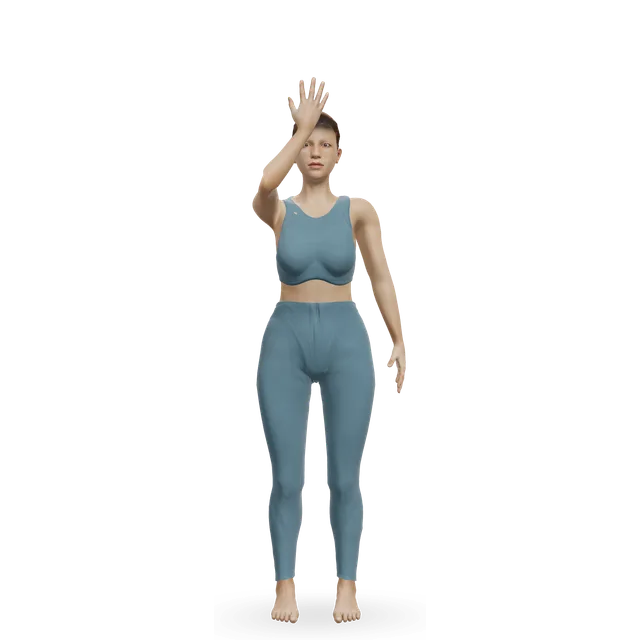
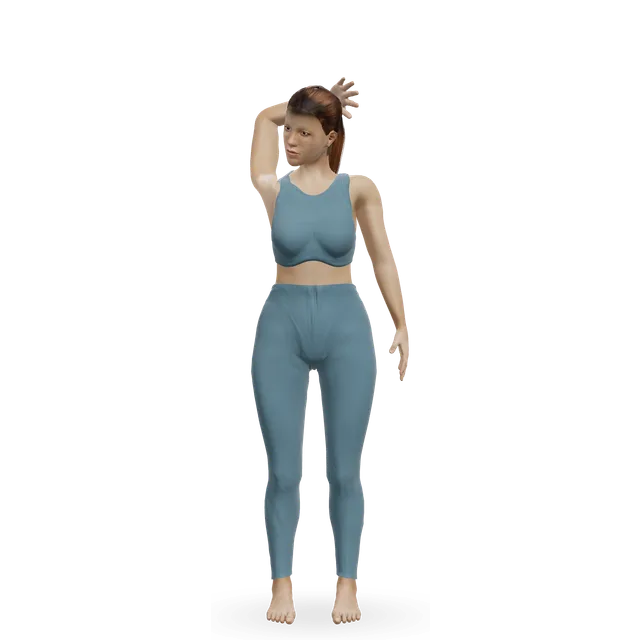
Upper trap release demonstrated on the 3D figure3D demoUpper trap releaseBeginner · No equipment

2 holds of 20 to 30 s each side, only if it eases · As in our stiff neck guide. Let the head's weight do the work, with no pulling

Easier: Side neck stretch

Move on when: Turning, tilting and nodding feel easier, and you have woken no worse, or better, for about a week (editorial).

Follow along: a timer, a cue and the next move, one step at a time.
Stage 2

Build: endurance for the neck and shoulder blades

About weeks 2 to 6: endurance and strength for the neck and shoulder blades 2 or 3 days a week, with the band raise on most days, keeping the gentle movement going. Strengthening has the best evidence for neck pain that lasts. The doses are our neck pain guide's unless a trial or the move page is named.

Isometric neck holds (four-way) demonstrated on the 3D figure3D demoIsometric neck holds (four-way)Beginner · No equipment

3 to 5 holds of 5 to 10 s each direction, light effort · As in our neck pain guide. Build towards 5 holds of 10 s at about half effort

Easier: Chin tuck · Harder: Chin tuck with head lift

Chin tuck with head lift demonstrated on the 3D figure3D demoChin tuck with head liftIntermediate · No equipment

3 to 5 holds of 5 s, building to 10 holds of 10 s · As in our neck pain guide. Head lifts were the endurance exercise in a 12-month neck pain trial

Easier: Chin tuck

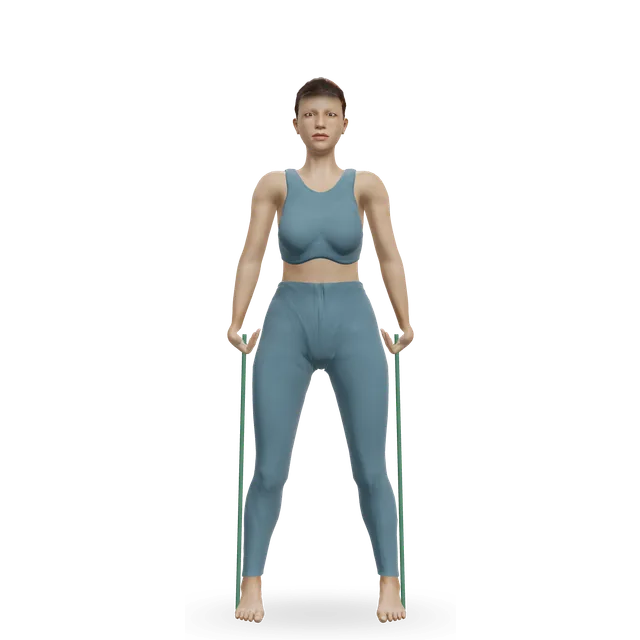
Band lateral raise demonstrated on the 3D figure3D demoBand lateral raiseBeginner · A band

2 minutes a day, 5 days a week, progressing the band · The dose from a trial in 198 workers with neck and shoulder pain, as our neck pain guide uses it

Harder: Dumbbell lateral raise

Band row demonstrated on the 3D figure3D demoBand rowBeginner · A band + An anchor point

3 sets of 10 to 15, stopping 2 to 3 reps short of failure · The move page's dose, an editorial starting point

Harder: Supported single-arm dumbbell row

Prone Y-T-W raises demonstrated on the 3D figure3D demoProne Y-T-W raisesBeginner · No equipment

5 to 8 of each shape, 2 rounds · As in our neck pain guide. Keep the neck long

Easier: Wall angel · Harder: Bent-over reverse fly

Side-lying open book demonstrated on the 3D figure3D demoSide-lying open bookBeginner · No equipment

8 to 10 slow openings each side, pausing 2 s at the end · The move page's dose, an editorial starting point

Harder: Thoracic rotation

Move on when: Every set stays within the pain rule and settles by the next morning, and you've woken no worse for 2 weeks (editorial).

Follow along: a timer, a cue and the next move, one step at a time.
Stage 3

Strengthen, and keep the good nights

From about week 6, 2 or 3 days a week, and ongoing: the strength stage from our neck pain guide, which explains where these exercises come from, while your usual sleeping position comes back by the written steps below.

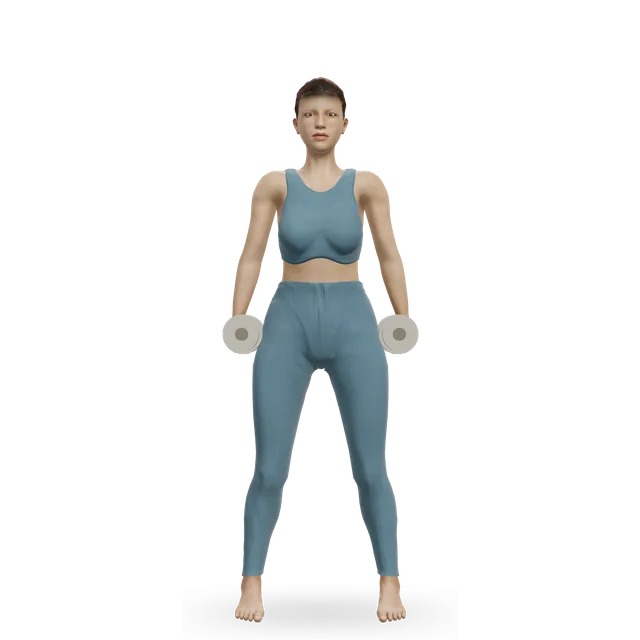
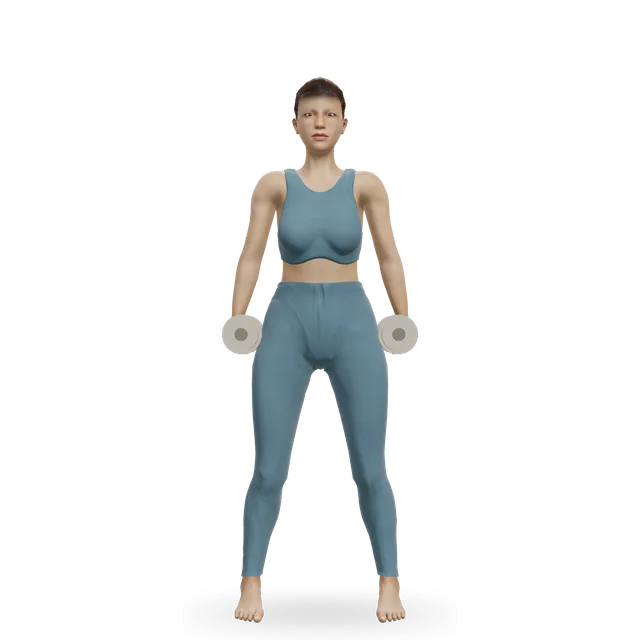
Dumbbell shrug demonstrated on the 3D figure3D demoDumbbell shrugBeginner · A dumbbell

3 sets of 8 to 12, pausing a second at the top · Our neck pain guide's sets and reps, with the move page's pause

Harder: Snatch shrug

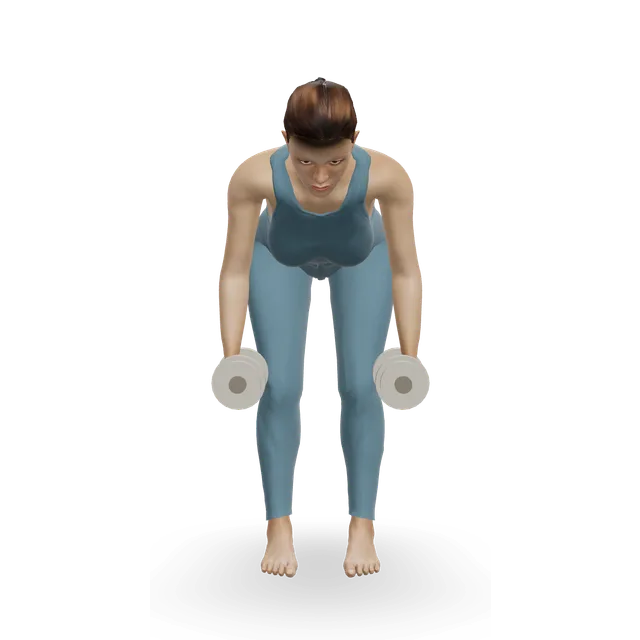
Bent-over reverse fly demonstrated on the 3D figure3D demoBent-over reverse flyIntermediate · A dumbbell

3 sets of 10 to 12 · As in our neck pain guide

Easier: Prone Y-T-W raises · Harder: Barbell rear-delt row

Dumbbell lateral raise demonstrated on the 3D figure3D demoDumbbell lateral raiseBeginner · A dumbbell

3 sets of 10 to 12, starting light · As in our neck pain guide

Easier: Band lateral raise · Harder: Smith machine upright row

Isometric neck holds (four-way) demonstrated on the 3D figure3D demoIsometric neck holds (four-way)Beginner · No equipment

3 holds of 10 s each direction at moderate effort · As in our neck pain guide

Easier: Chin tuck · Harder: Chin tuck with head lift

Move on when: Our suggestion: keep two strength days a week and 2 minutes of band work on most days for the long term, because neck pain comes back in about half of people. If waking pain returns, go back a stage for a week or two.

Follow along: a timer, a cue and the next move, one step at a time.

What to change for now

What to change tonight (written steps)

Our 3D figure can't show these changes. They come from the NHS, NHS inform and small studies, and where a step is our suggestion, it says so.

  • 1. Pillow height: the NHS says use a low, firm pillow and keep your head the same height as the rest of your body. Our translation: on your back, a lower pillow that fills the curve of your neck without pushing your chin up; on your side, a firmer or deeper one that fills the gap between your ear and shoulder so your head stays level.
  • 2. What it's made of: if your pillow is flat, lumpy or feather and you wake sore, a firmer latex or foam pillow is reasonable to try. Latex and spring pillows did a little better than people's own in some trials, feather pillows rated worst, and a contoured shape did no better than a regular foam one.
  • 3. Position: on your back or your side, not your front, and not twisted half onto your front, as the NHS advises. If you roll forward, a pillow under your top arm and thigh keeps side lying supported; in one small video study, people who woke with neck symptoms spent more time on their front or twisted.
  • 4. If you can only sleep on your front: try your side with a body pillow to hug, or a very low pillow or none, so your neck is turned but not also tipped back (our suggestion, untested).
  • 5. Give a change a fair trial: a week or two, not one night. The pillow trials ran 1 to 4 weeks per pillow.
  • 6. The mattress: the NHS suggests a firm one for neck pain, while for back pain a medium-firm mattress did better than a firm one; no trial has tested mattresses for neck pain, so choose what's comfortable.
  • 7. First thing: heat eases stiffness (the NHS suggests a hot water bottle wrapped in a tea towel for 20 minutes, 2 to 3 times a day), then gentle turns, tilts and nods before you get up.
  • 8. By day: avoid holding one position for long, and move your neck for short periods every hour (NHS inform).

Sources 2, 20, 18, 9, 12, 11, 10, 15, 16, 28, 31

Sleep habits that help (written steps)

Poor sleep went with neck pain and slower recovery. These are the NHS's steps for better sleep; our exercise for sleep guide has more.

  • 1. Get up at the same time every day, and only go to bed when you're sleepy.
  • 2. Relax for at least an hour before bed, and keep the bedroom dark and quiet.
  • 3. Make sure your mattress, pillows and covers are comfortable.
  • 4. No alcohol, tea or coffee in the 6 hours before bed, no exercise in the 4 hours before bed, and no phone or television right before bed.
  • 5. Exercise regularly during the day.

Sources 27, 5, 6, 7

Sleep comes back (written steps)

No trial has tested how to return to a usual sleeping position after neck pain. These steps are our suggestion.

  • 1. Stage 1: a low, firm pillow that keeps your head level with your body; on your back or side, not your front, and not twisted half onto it, with a pillow under your top arm or thigh if you roll; heat before bed or on waking if stiffness is the problem.
  • 2. Stage 2: if you've changed pillow, give it a week or two before judging it, and keep whatever leaves you waking no worse.
  • 3. Stage 3: if you used to sleep on your front, try your side with a body pillow; if your neck tolerates it, a very low pillow or none for front lying keeps your neck less tipped back. Go back a step after two bad mornings.
  • 4. Keep 2 minutes of band work on most days and the strength exercises twice a week, because neck pain comes back in about half of people.

Sources 2, 9, 12, 15, 18, 3, 23, 21

Collars, cracking and painkillers

The NHS says don't wear a collar unless a doctor tells you to, and NHS inform doesn't recommend one: it's better to keep your neck moving. Stretching alone may not help long-lasting neck pain, and forcing your neck to crack, or pulling it hard to the end of its range, isn't a treatment. The NHS suggests paracetamol or ibuprofen, or ibuprofen gel, if you need them.

Sources 2, 20, 21

Positions to swap, and why

Habit or positionWhy it mattersInstead
Sleeping on your frontThe NHS advises against it with neck pain, and in one small video study people who woke with neck symptoms spent more time on their front.Your side or back; hug a body pillow if you miss lying on your front (our suggestion).
Lying twisted half onto your front, with the top knee forwardOne of the positions linked with waking neck symptoms in the video study, and the NHS says don't twist your neck in bed.A pillow under your top thigh and arm to stop you rolling forward.
A tall stack of pillows, or one that pushes your chin upThe NHS says keep your head the same height as the rest of your body, and higher pillows tipped the neck back in a lab study.One low, firm pillow.
A flat, lumpy or feather pillow when you wake soreFeather pillows rated worst for comfort and sleep, and a latex pillow beat people's own in side sleepers.A firmer latex or foam pillow of the right height, judged over a week or two.
Buying a contoured "orthopaedic" pillow expecting a cureA contoured shape did no better than a regular foam pillow, and no pillow type is clearly best.Get the height and firmness right, and do the exercise plan: a pillow helped only alongside exercise in the one trial that tested both.
Lying still until the stiffness wears offNHS inform advises moving your neck for short periods every hour, and heat eases stiffness.Lying chin tucks and gentle turns before you get up.Try: Lying chin tuck
A soft collar, at night or by dayThe NHS says don't wear one unless a doctor tells you to.Gentle movement, little and often.
Pulling your head into a stretch to "unlock" itPulling on the head at the end of its range is a lot for a sore neck, as our neck pain guide explains.Let the head's weight do the work, as in the upper trap release.Try: Upper trap release
The doorway chest stretch with tingling in the armOur neck pain guide lists arm tingling with the arm out to the side as a reason for care with this stretch.Shoulder-blade strength with the arms low.Try: Band row
Falling asleep in a chair or on the sofa with your head droppedLong, still positions add to neck pain (our application of the CSP's advice to sleep).Go to bed when you're sleepy, as the NHS suggests.
Your phone or laptop in bed late at nightThe NHS's sleep advice says no devices right before bed, and long, still positions make a sore neck more sensitive.An hour to wind down before bed, away from screens.
Cracking your own neck on wakingForcing a crack isn't a treatment.Gentle movement within comfort.

Routines to follow

More moves for this area

Questions people ask

Why do I wake up with neck pain every morning?

Often a mix of the night's position, the pillow and how well you sleep. The NHS lists the neck locking in an awkward position while sleeping among the commonest causes, and poor sleep and long, still positions by day add to it. If you wake with your neck locked and can't turn it, that's a wry neck: see our stiff neck guide.

What is the best sleeping position for neck pain?

On your back or your side, with your head level with your body, and not on your front or twisted half onto it, as the NHS advises. Side lying was generally protective in a review of the few studies there are, and a pillow under your top arm and thigh stops you rolling forward.

What is the best pillow for neck pain?

No type has been shown to be clearly best. The NHS suggests a low, firm pillow; in trials, latex and spring pillows did a little better than people's own, feather pillows rated worst, and a contoured shape added nothing over a regular foam pillow. Get the height and firmness right first, and give it a week or two.

Can a pillow cause neck pain?

It can add to it: one that props your head too high or lets it drop changes your neck's angle overnight, and in one study over half of people reported regular waking symptoms, an uncomfortable pillow or poor sleep on their own pillow. But sleep quality, stress and the day's positions matter too, so a new pillow is worth trying, not a guaranteed fix.

How high should my pillow be?

High enough to keep your head level with the rest of your body, as the NHS says. On your back, that's a lower pillow that supports the curve of your neck; on your side, a firmer one that fills the gap between your ear and shoulder (our translation). No trial has tested an exact height.

Is sleeping on your stomach bad for your neck?

It keeps your neck turned for hours, and the NHS advises against it with neck pain; in one small video study, people who woke with neck symptoms spent more time on their front. If you can't sleep any other way, try your side with a body pillow to hug, or a very low pillow (our suggestions).

Should I sleep without a pillow?

It hasn't been tested, and on your back or side it usually tips your head down or sideways; the NHS advises a low, firm pillow that keeps your head level. For front sleepers, a very low pillow or none keeps the neck less tipped back (our reasoning).

How do I fix neck pain from sleeping wrong?

Keep it moving gently, a little more each time, use heat (a hot water bottle wrapped in a tea towel for 20 minutes, 2 to 3 times a day), and take simple painkillers if you need them, as the NHS advises. Don't wear a collar or force it. A sudden wry neck has its own guide: our stiff neck guide.

What mattress is best for neck pain?

No trial has tested mattresses for neck pain. The NHS suggests a firm mattress, while for back pain a medium-firm one did better than a firm one in a trial, and the CSP says whatever feels most comfortable for you is best.

What exercises help neck pain from sleeping?

Gentle neck turns, tilts and nods every hour or two at first, then strength: training the neck, shoulder blades and arms reduces long-lasting neck pain on moderate-quality evidence, and 2 minutes a day of band exercise cut neck and shoulder pain in workers. In one trial, a neck-support pillow helped only when combined with exercise.

Why is my neck pain worse at night or in the morning?

Lying still for hours can stiffen a sore neck (our explanation), and moving it for short periods eases it, which is why NHS inform advises gentle movement every hour. Pain that is severe and constant, disturbs your sleep whatever you do, or comes with a fever or weight loss needs checking, as does morning stiffness lasting more than 45 minutes if you're over 50.

When should I worry about neck pain on waking?

Call 999 for a stiff neck with a fever, a rash or light hurting your eyes, a sudden severe headache, or weakness, numbness or difficulty speaking. Get help the same day for pins and needles or weakness in an arm, and see a GP if it hasn't eased in a few weeks or painkillers aren't helping.


Related exercise guides

Other pain guides

Sources

  1. Gordon 2002 · Waking neck pain, stiffness, headache and arm pain in 812 adults (population survey, Aust J Physiother)
  2. NHS · Neck pain and stiff neck (past its review date: reviewed April 2023, review due April 2026)
  3. Chartered Society of Physiotherapy · Causes of neck pain (last reviewed 2019)
  4. NHS inform · Mechanical neck pain
  5. Correia 2025 · Poor sleep, not neck posture on a phone, predicted neck pain in 396 adults (cohort, Braz J Phys Ther)
  6. Yabe 2022 · Sleep disturbance and neck pain over 3 years in 2,059 adults (cohort, BMC Musculoskelet Disord)
  7. Kovacs 2015 · Poor sleep and recovery from neck pain in 422 patients (cohort, Clin J Pain)
  8. Cary 2019 · Sleep posture and spinal symptoms in adults (scoping review, BMJ Open)
  9. Cary 2021 · Sleep posture and waking spinal symptoms in 53 adults (home video study, PLoS One)
  10. Ghosh 2025 · Pillows for chronic neck pain (systematic review, Rehabilitacion)
  11. Chun-Yiu 2021 · Pillow designs, neck pain and sleep (systematic review and meta-analysis, Clin Biomech)
  12. Gordon 2009 · Pillows for side sleepers: waking neck pain, sleep quality and comfort in 106 people (randomised crossover trial, Man Ther)
  13. Gordon 2011 · Your pillow may not guarantee a good night's sleep or symptom-free waking (field study, Physiother Can)
  14. Gordon 2011 · Does pillow type change neck posture in side lying? (randomised lab trial, J Multidiscip Healthc)
  15. Vanti 2019 · A spring pillow against education for chronic neck pain (RCT, Phys Ther)
  16. Lavin 1997 · Three pillows for neck pain in 41 people (randomised crossover trial, Arch Phys Med Rehabil)
  17. Gordon 2019 · Pillows for people with neck pain and spinal degeneration (pilot RCT, Eur J Phys Rehabil Med)
  18. Ren 2016 · Pillow height, neck alignment and pressure under the head (biomechanical study, PeerJ)
  19. Nakashima 2015 · Neck MRI findings in 1,211 people without symptoms (cross-sectional study, Spine)
  20. NHS inform · Neck problems
  21. Gross 2015 · Exercises for neck disorders (Cochrane review)
  22. Ylinen 2003 · Neck muscle training in women with chronic neck pain (RCT, JAMA)
  23. Andersen 2011 · 2 minutes a day of band training for neck and shoulder pain in 198 workers (RCT, Pain)
  24. Helewa 2007 · Exercise and a neck-support pillow for chronic neck pain in 151 people (factorial RCT, J Rheumatol)
  25. Jamal 2016 · Neck-support pillows and exercise for chronic neck pain: a reanalysis (J Rheumatol)
  26. Bernateck 2008 · A neck pillow added to rehabilitation for neck and arm pain in 149 people (RCT, Int J Rehabil Res)
  27. NHS · Insomnia
  28. Kovacs 2003 · Mattress firmness and chronic low back pain in 313 people (RCT, Lancet)
  29. Radwan 2015 · Mattress designs, sleep and back pain (systematic review of controlled trials, Sleep Health)
  30. Caggiari 2021 · Which mattress for back pain and sleep? (review, J Orthop Traumatol)
  31. Chartered Society of Physiotherapy · Living with back pain (last reviewed 2019)
  32. NHS inform · Exercises for neck problems
  33. NHS · Polymyalgia rheumatica (past its review date: reviewed April 2023, review due April 2026)

Exercise education, not a diagnosis or treatment plan. It is written from the guidelines and studies listed above; review by a clinician is pending. If your pain follows an injury, is severe, is getting worse, or comes with any warning sign listed on this page, get it assessed. Health disclaimer.