Jaw pain and TMJ disorder: self-care, jaw exercises and what the evidence shows
Temporomandibular disorder (TMD, often called TMJ after the temporomandibular joint) causes pain around the jaw, ear and temple, clicking and stiffness, often worse when you chew or feel stressed. It is common and usually gets better with self-care. Jaw pain is usually the jaw, but not always: jaw pain with chest pain, breathlessness or sweating needs 999, and a headache with jaw pain when eating, a tender scalp or vision problems needs an urgent GP appointment or NHS 111 the same day.
For pain that lasts, the best evidence supports exercise, posture work, hands-on treatment and cognitive behavioural therapy (CBT), not splints. Jaw exercises can't be shown on the 3D figure, so they are written out as numbered steps; the staged plan, with 3D demos, covers the neck, posture and breathing. Start with the warning signs.
Exercise is for pain that has been checked or is clearly mild and settling.
Get urgent medical help if
Call 999: jaw pain with chest pain that feels tight or squeezing, or chest pain that spreads to your arms, neck or jaw, especially with shortness of breath, sweating or feeling sick. It could be a heart attack.
Call 999: you've been diagnosed with angina and have chest pain that does not stop after resting for a few minutes or after taking your angina medicine.
Call 999: one side of the face droops, you can't lift both arms and keep them there because one is weak or numb, or your speech is slurred or confused. These are signs of a stroke, even if they stop.
Call 999 or go to A&E: you have a swollen face or jaw and you're finding it hard to breathe, speak or swallow, have a swollen or painful eye or suddenly have problems seeing, have a lot of swelling in your mouth, or are finding it hard to open your mouth.
Same day (urgent GP appointment or NHS 111): a headache with jaw pain when eating or talking, a sore, tender scalp or temples, or problems with your vision. In people over 50 especially, this can be giant cell arteritis, which can lead to a stroke or blindness if not treated quickly.
Get help from NHS 111: pain or tightness in your chest, neck, shoulders, jaw or arms that comes and goes, often brought on by exercise, stress, emotion or cold and easing after a few minutes' rest. It can be angina, a sign of a heart problem.
Same day (urgent GP appointment or NHS 111): you can't eat or drink, you have difficulty opening your mouth fully or your jaw is locking, or you have frequent, severe headaches, pain or tenderness at the side of your head or on the scalp, or vision problems such as double vision or loss of vision.
Urgent dentist appointment or NHS 111 (not a GP): toothache, a swollen face or jaw, or a high temperature. It could be a dental abscess.
See a doctor or physiotherapist if
Jaw pain, clicking or stiffness that hasn't settled after a few weeks of self-care, or is affecting your eating, sleep or work: see a GP or dentist. A physiotherapist can help with jaw exercises.
Sudden attacks of sharp, shooting or electric-shock pain in the jaw, teeth or gums, lasting from a few seconds to about 2 minutes and set off by touching your face, eating or brushing your teeth: possible trigeminal neuralgia. See a dentist first to rule out a dental cause, then a GP.
A mouth ulcer lasting more than 3 weeks, a red or white patch in your mouth, a lump in your mouth, on your lip or in your neck, mouth pain that isn't going away, or difficulty swallowing or speaking: see a GP or dentist.
You grind or clench your teeth: see a dentist.
Understand it
What it is
TMD is a problem with the movement of the jaw: the joint just in front of the ear, and the chewing muscles that run up into the temple. The NHS lists pain around the jaw, ear and temple; clicking, popping or grinding noises; a headache around the temples; difficulty opening the mouth fully; and the jaw locking. It may be worse when you chew or feel stressed, and can disturb sleep. NHS physiotherapy leaflets add earache, a blocked or buzzing ear, neck stiffness and dizziness.
In pooled studies using standard criteria (27 studies, 20,971 people), about 3 in 10 people (29.5%) met the criteria for TMD, women more often than men, and muscle pain and clicking were the most frequently reported signs. Long-lasting TMD pain affects 6% to 9% of adults. Estimates vary widely between studies.
The NHS lists teeth grinding, wear and tear, a blow to the head or face, stress and an uneven bite as causes. In a US study that followed 1,729 adults aged 18 to 44 for a median of 2.8 years, a jaw injury went with about 4 times the risk of developing TMD, and 80% of those injuries came from yawning or keeping the mouth open a long time.
Clicking is common and often painless. In 25 people whose clicking jaw had never locked, the click behaved the same over 2 years; in 30 who had occasional locking it sometimes changed, but permanent locking was rare.
Scans can mislead: on MRI (magnetic resonance imaging), 22 of 62 people with no jaw symptoms (35%) had a displaced disc in the jaw joint, against 45 of 58 patients (78%). The NHS describes self-care and GP treatment first, and a specialist only if those don't help.
The NHS says TMD isn't usually serious and generally gets better on its own. Long-standing muscle pain can be more stubborn: of 165 people with jaw muscle pain followed for 5 years, a third recovered, a third had it come and go, and a third kept it. More frequent pain, more tender spots and pain elsewhere in the body made it more likely to last.
Heart pain can spread to the jaw, and angina can cause jaw pain on exertion that eases with rest. Giant cell arteritis causes jaw pain while eating or talking, with headaches, a tender scalp or temples, or vision problems, mostly in older adults. A dental abscess causes toothache, swelling and sometimes a fever. Trigeminal neuralgia causes sudden electric-shock pains lasting seconds, set off by light touch, eating or brushing the teeth. Mouth cancer can show as an ulcer lasting more than 3 weeks, a red or white patch or a lump. The warning signs above say what to do.
The NHS says TMD usually gets better without treatment. It suggests soft food, paracetamol or ibuprofen, an ice pack (frozen peas in a tea towel, for no more than 5 minutes at a time) or a heat pack (a hot water bottle in a tea towel, for 15 to 20 minutes twice a day), whichever feels better, massaging the sore jaw muscles and finding ways to relax. Don't chew gum or pen tops, bite food with your front teeth, yawn too wide, bite your nails or clench your teeth: apart from when eating, your teeth should be apart. A physiotherapy leaflet adds cutting chewy food small and avoiding hard food.
This is health-service advice built on experience rather than trials, and it is where everyone starts.
For pain that lasts: exercise, hands-on treatment and CBTStrong evidence
A 2023 guideline in the BMJ, built on a network meta-analysis of 153 trials (8,713 people), looked at TMD pain lasting 3 months or more. With moderate- to high-certainty evidence, the treatments that helped most were CBT combined with biofeedback or relaxation (36 more people in every 100 got an important pain reduction than with a placebo or sham), hands-on jaw mobilisation by a therapist (36 more in every 100) and trigger point massage (32 more). CBT alone, supervised posture exercise, supervised jaw exercise and stretching, and usual care with home exercises, stretching and reassurance followed (23 to 30 more in every 100).
All eight got strong recommendations. The authors' summary: treatments that help people cope and encourage movement and activity work best. These recommendations are for long-lasting pain, not a new flare, where the NHS self-care advice applies.
A meta-analysis of 6 trials (419 people) found jaw mobility or mixed exercise programmes gave a moderate short-term reduction in pain and better mouth opening, but not clearly better function. An earlier review of 48 trials rated the evidence for exercise and hands-on treatment as low overall. In a 70-person trial, adding a home exercise programme to education raised the 3-month success rate from 57% to 77%, a difference that could have been chance.
Posture and neck exercise help tooEmerging evidence
In a 60-person trial of people with jaw muscle pain, posture training plus self-care cut TMD symptoms by 41.9% and neck symptoms by 38.2% at 4 weeks, against 8.1% and 9.3% with self-care alone. Supervised posture exercise is one of the 2023 guideline's strong recommendations. In a 30-person trial, adding neck stabilisation training to education and home exercises eased jaw pain at rest a little more. That's why the 3D-demo plan on this page is built from neck, posture and breathing moves.
Splints and bite changes: not shown to helpMixed evidence
In a systematic review for the NIHR (the National Institute for Health and Care Research), splints did not reduce pain compared with no or minimal treatment when all types of TMD were pooled (13 trials, 1,076 people), on very low-certainty evidence, and no other outcome improved; there wasn't enough evidence to say whether they protect the teeth from grinding. The 2023 guideline advises against reversible splints for long-lasting TMD pain (a conditional recommendation) and strongly against treatment that permanently changes the bite. A separate review found no evidence that adjusting the bite treats or prevents TMD.
The Rocabado 6x6: popular, but untested in ordinary TMDMixed evidence
The Rocabado 6x6 programme, a set of jaw, neck and posture exercises, is widely taught and often described as well researched. We found no trial of it in ordinary TMD: one small trial was in rheumatoid arthritis affecting the jaw, and another, in headaches from the neck, found it less effective than a neck self-mobilisation.
For long-lasting TMD pain, the 2023 guideline makes conditional recommendations against botulinum toxin (Botox), low-level laser therapy, TENS (electrical nerve stimulation), gabapentin, relaxation therapy or biofeedback on their own (CBT that includes them is strongly recommended), and several kinds of injection. It strongly advises against irreversible splints, surgery to remove the disc and anti-inflammatories combined with opioids.
Jaw exercises should be pain-free: an NHS dental leaflet says open only as wide as you can without causing pain. Stop any jaw exercise that hurts, makes the jaw lock or makes clicking painful, and don't push opening past comfortable; the NHS says don't yawn too wide.
For the neck, shoulder and posture moves, use NHS inform's scale for neck exercise: 4 to 5 out of 10 during exercise is acceptable, 6 or more is too much, and your neck should be no worse the next morning.
Your jaw should be no worse the next day. If it is, go back a step (our suggestion).
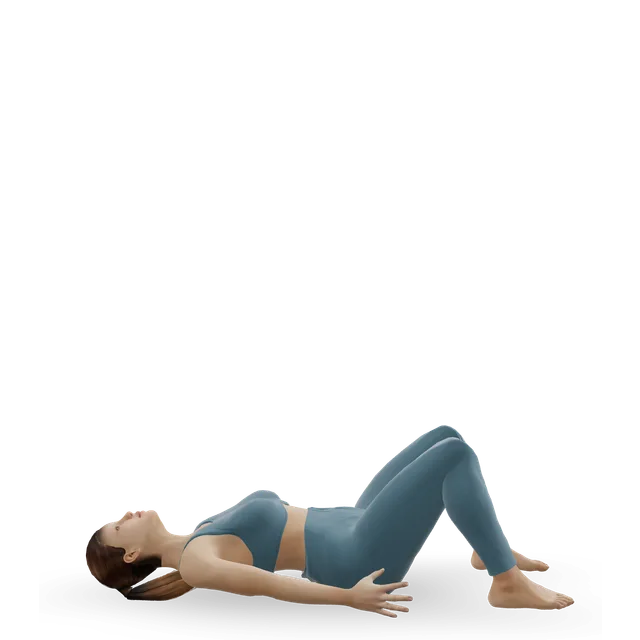
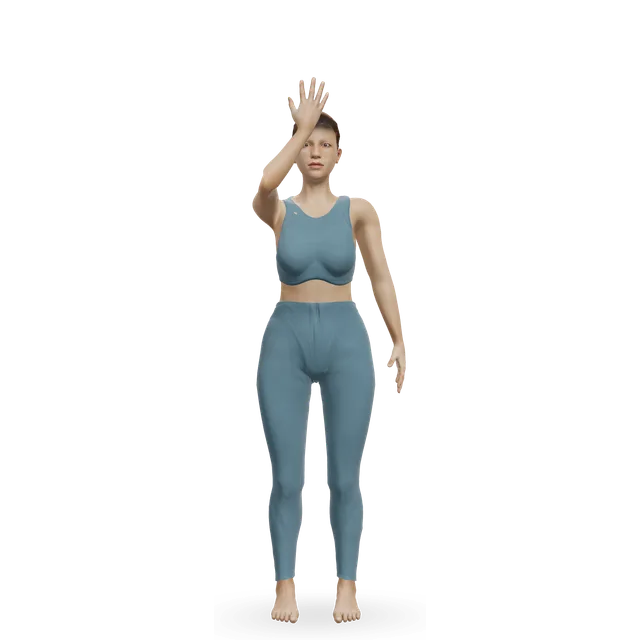
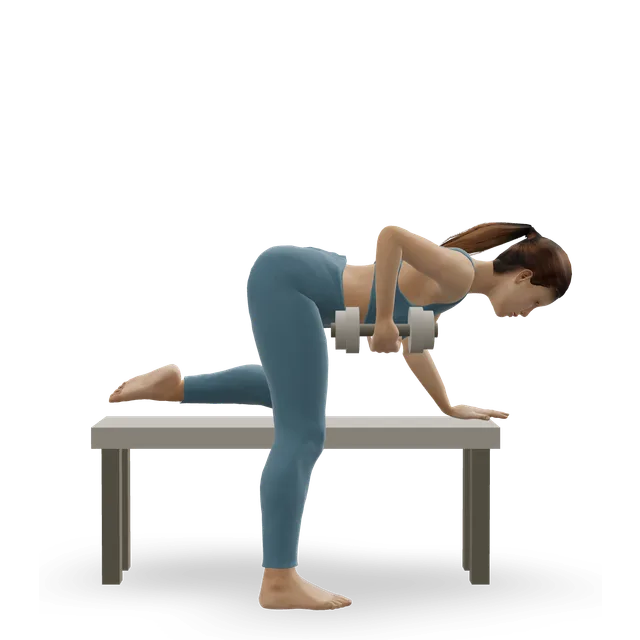
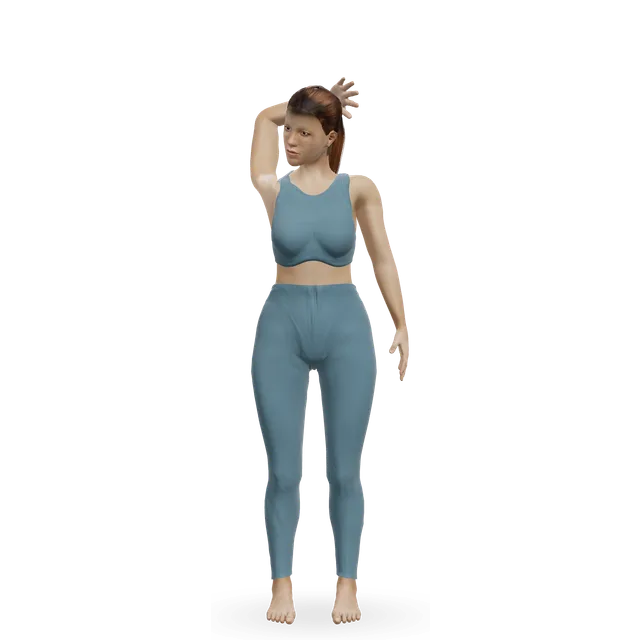
Start at the first stage. Each move opens a full guide with a 3D demo.
Stage 1
Settle: rest the jaw, relax and keep the neck moving
Weeks 0 to 2. NHS self-care: soft food, small bites, no gum, no wide yawns, teeth apart, heat or ice, massage for the sore muscles and time to relax. Do jaw steps 1 and 2, written out below, daily. The doses here are an NHS physiotherapy leaflet's, NHS inform's or the moves' own.
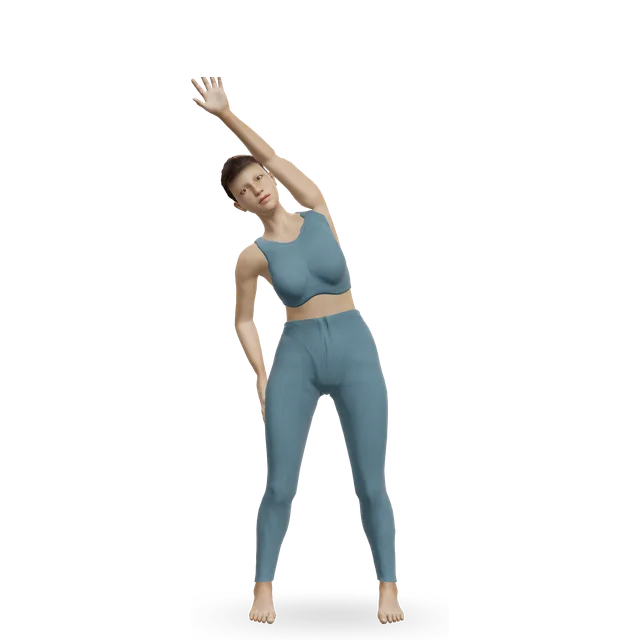
2 holds of 30 s each side · Let the head's weight do the work
Move on when: Talking and eating soft food are comfortable, and your jaw opens more easily.
Follow along: a timer, a cue and the next move, one step at a time.
Stage 2
Build: posture training and neck endurance
About weeks 2 to 6, most days. Posture training plus self-care beat self-care alone in a 60-person trial, and supervised posture exercise is strongly recommended for jaw pain that lasts. Add jaw steps 3 to 5. Doses are the moves' own or editorial.
Move on when: Jaw pain is mild or gone on most days, and the exercises don't set it off.
Follow along: a timer, a cue and the next move, one step at a time.
Stage 3
Keep it going: strength, activity and stress
From about week 6, 2 or 3 days a week. Add jaw step 6 if it's comfortable. If the pain lasts beyond about 3 months, the treatments with the best evidence are guided by a professional: CBT, hands-on jaw treatment from a therapist and supervised jaw exercise. Doses are the moves' own or editorial.
Move on when: Ongoing. Go back to stage 1 for a flare.
Follow along: a timer, a cue and the next move, one step at a time.
What to change for now
Jaw exercises: numbered written steps (no 3D demo)
Jaw movements can't be shown on the 3D figure, so these are written out from two NHS trust leaflets, one from a hospital physiotherapy team and one from a community dental service. Every jaw exercise should be pain-free. Steps 1 and 2 start in stage 1, steps 3 to 5 in stage 2 and step 6 in stage 3. The site's jaw release drill is a version of steps 1 and 2.
1. Rest position: rest the tip of your tongue lightly on the roof of your mouth, just behind your top front teeth, with your lips together, teeth slightly apart and jaw muscles soft. Check it several times a day, especially at a screen.
2. Guided opening: with your tongue on the roof of your mouth, put one index finger on the jaw joint in front of your ear and another on your chin. Open part-way and close, then open fully and close, letting your fingers keep the jaw moving straight. Use a mirror. 8 to 10 times, 4 to 5 times a day.
3. Opening without help: the same, with a finger on each jaw joint and no help from the chin, part-way and then fully open. 8 to 10 times, 4 to 5 times a day.
4. Tongue stretch: teeth touching but not clenched, tongue tip behind your front teeth. Run your tongue back along the roof of your mouth as far as it goes, then slowly open until the tongue starts to pull away. Hold for 5 seconds, relax, and repeat slowly.
5. Straight-line opening: fingers resting lightly over both jaw joints and thumbs under your chin. Open smoothly as wide as is comfortable, using your thumbs to stop the jaw swinging to one side.
6. Gentle resisted opening: hands under your chin, open part-way against their gentle pressure and hold for 20 seconds, then swallow and relax. Neither leaflet gives repetitions: start with 3 to 5, with shorter holds if 20 seconds is too much (our suggestion).
Stop any exercise that hurts, makes the jaw lock or makes clicking painful.
Soft food, cut small and chewed on the back teeth; no gum, pen tops or nail biting; and your teeth apart except when eating. Support your chin with a hand when you yawn: yawning and keeping the mouth open a long time were the commonest jaw injuries linked to new TMD. A physiotherapy leaflet also advises against cradling a phone between your ear and shoulder, and against sleeping face down.
If teeth grinding might be part of it, the NHS suggests seeing a dentist, who may offer a splint. Splints haven't been shown to ease TMD pain, and whether they protect the teeth from grinding is also unproven, so don't expect one to fix jaw pain on its own.
The NHS says avoid them, and a physiotherapy leaflet says extra chewing stops the jaw resting.
Rest the jaw, with your tongue on the roof of your mouth.
Clenching, or resting your teeth together
Apart from when eating, your teeth should be apart, the NHS says.
The rest position (jaw step 1) and slow breathing; the jaw release drill practises both.Try: Jaw release drill
Hard, chewy food and big bites with the front teeth
The NHS and a physiotherapy leaflet advise against both.
Soft food, cut small, chewed on the back teeth.
Wide yawns and long spells with your mouth open
Yawning and keeping the mouth open a long time were the commonest jaw injuries linked to new TMD, and the NHS says don't yawn too wide.
Support your chin when you yawn, and ask the dentist for breaks during long appointments (our suggestion).
Cradling a phone between your ear and shoulder
A physiotherapy leaflet advises against it.
A headset or speaker, and chin tucks from the plan.Try: Chin tuck
Sleeping face down
A physiotherapy leaflet advises against it.
Sleep on your back or side.
Forcing your jaw open to stretch it out
Jaw exercises should be pain-free.
Controlled, straight opening (jaw steps 2 to 5), as in the jaw release drill.Try: Jaw release drill
Having your bite ground down, or other permanent bite changes
A review found no evidence that adjusting the bite treats or prevents TMD, and the 2023 guideline strongly advises against permanent bite-changing treatment.
Reversible care first: self-care and exercise, then CBT or a physiotherapist if it lasts.
Temporomandibular disorder (TMD) affects the jaw joint and the chewing muscles, causing pain around the jaw, ear and temple, clicking, difficulty opening fully and sometimes locking. About 3 in 10 people met the criteria for it in pooled population studies, and 6% to 9% of adults have long-lasting TMD pain.
Will TMJ pain go away on its own?
The NHS says it usually gets better without treatment. Muscle-type jaw pain can be stubborn, though: over 5 years, a third of people recovered, a third had it come and go and a third kept it.
What exercises help TMJ?
For pain that lasts, a 2023 guideline in the BMJ strongly recommends home exercises and stretching, supervised jaw exercise and stretching, and supervised posture exercise, alongside hands-on treatment and CBT. Our written jaw exercises come from NHS trust leaflets, and the 3D-demo plan adds neck and posture work, which beat self-care alone in a small trial.
Do mouth guards or splints help TMJ pain?
Not in the trials so far: pooled across 13 trials (1,076 people), splints didn't reduce pain, on very low-certainty evidence, and the 2023 guideline advises against them for long-lasting TMD pain. A dentist may still suggest one for teeth grinding.
Why does my jaw click?
Clicking is common, often painless and usually harmless: it was the second most frequently reported sign of TMD in pooled studies, and without locking it stayed the same over 2 years in a small study. See a GP or dentist if your jaw locks, you can't open it fully, or it isn't settling.
Can jaw pain be a heart attack?
Yes. Chest pain spreading to the jaw, especially with breathlessness, sweating or feeling sick, needs 999, and jaw, neck or arm pain that comes on with exertion and stops with rest can be angina. TMD pain is usually worse with chewing and doesn't come on with walking.
Why do my jaw and ear hurt together?
TMD commonly causes pain around the ear and temple, and some people feel their ear is blocked or buzzing. Ear and tooth problems can do the same, so see a dentist or GP if you also have a fever, a swollen face or toothache.
Do I need a scan for TMJ?
Usually not. On MRI, a third of people with no jaw symptoms have a displaced disc, so scans can mislead. The NHS describes self-care and GP treatment first, and a specialist only if those don't help.
Does Botox work for TMJ?
The 2023 guideline advises against botulinum toxin (Botox) for long-lasting TMD pain, a conditional recommendation, as it does for laser therapy, TENS (electrical nerve stimulation) and several kinds of injection. The evidence for those treatments was low or very low certainty, while exercise, hands-on treatment and CBT had better support.
Can stress cause jaw pain?
The NHS lists stress as a cause and says the pain can be worse when you're stressed. CBT, especially combined with relaxation or biofeedback, was among the most effective treatments for long-lasting TMD pain in a large analysis of trials.
Should I have my bite corrected?
No: a review found no evidence that adjusting the bite treats or prevents TMD, and the 2023 guideline strongly advises against permanent bite-changing treatment. Start with care that can be undone: self-care and exercise, then CBT or a physiotherapist if the pain lasts.
Exercise education, not a diagnosis or treatment plan. It is written from the guidelines and studies listed above; review by a clinician is pending. If your pain follows an injury, is severe, is getting worse, or comes with any warning sign listed on this page, get it assessed. Health disclaimer.