Lower back pain from golf: the swing, which side, discs and nerves, range practice and what helps

Lower back pain is golfers' commonest problem, and it is usually ordinary back pain that settles within weeks. The swing is a fast, one-sided turn repeated through a round and on the range, and in one small lab study it loaded the lower back at over 6 times body weight. A past episode of back pain, age and body weight predict it more clearly than swing style does. Golf isn't bad for your back, and most golfers with back pain can keep playing.

This guide starts with the signs that need a 999 call or accident and emergency (A&E), such as numbness around your genitals or bottom, or chest pain or severe breathlessness on the course, and those that need a general practitioner (GP) or the National Health Service's 111 line (NHS 111) the same day, such as back pain with a fever. It then maps the causes by where it hurts and which side, from a strain to sciatica, the facet joints, a teenager's spine and the ribs, explains what the swing, practice and warm-up studies show, and gives a four-stage plan with a 3D demo of every move, ending with the golf warm-up and a step-by-step return from putts and chips to 18 holes.

When to get help first

Exercise is for pain that has been checked or is clearly mild and settling.

Get urgent medical help if

  • Call 999 or go to A&E: loss of feeling or numbness around the genitals or bottom, new trouble peeing or controlling your bladder or bowels, changes in genital sensation during sex or problems with erections or orgasm, or pain, tingling, weakness or numbness in both legs. These are signs of cauda equina syndrome, which needs treating in hospital urgently. Don't drive yourself.
  • Call 999 or go to A&E: leg pain with numbness around the genitals or bottom, new trouble starting or controlling peeing, not knowing when you need to poo or losing control of it, sciatica in both legs, or weakness or numbness in both legs that is severe or getting worse. These can be signs of cauda equina syndrome, which needs treating in hospital as soon as possible.
  • Call 999 or go to A&E: back pain with chest pain, or back pain that started after a serious accident, such as a car crash.
  • Call 999: chest pain that feels tight or like squeezing on your chest; chest pain that's spreading to your arms, neck or jaw; severe difficulty breathing (you're gasping, choking or not able to get words out); lips or skin that are pale, blue or grey (on brown or black skin this may be easier to see on the palms of the hands); or someone who has passed out and is not responding normally. It could be a heart attack. Don't drive yourself to A&E.
  • Get help from NHS 111: you're suddenly more short of breath than usual; you have chest pain and you feel sick or are being sick; or you have chest pain and you feel like your heart is racing, going too slowly, skipping a beat or fluttering.
  • Get help from NHS 111: pain or tightness in your chest, neck, shoulders, jaw or arms that comes and goes, often brought on by exercise, stress, emotion or cold and easing after a few minutes' rest. It can be angina, a sign of a heart problem. If you've been diagnosed with angina, get help from NHS 111 too if it feels worse than before, is happening more often, lasts longer or happens when you're resting.
  • Someone who faints while exercising, or who has fainted and can't be woken within a minute, has chest pain or a pounding, fluttering or irregular heartbeat, or hasn't fully recovered.
  • Call 999 or go to A&E if breathing suddenly becomes difficult, if pain in your chest or upper back comes on suddenly with breathlessness or a very fast heartbeat, or if someone passes out. Do not drive yourself. It can be a blood clot that has reached the lungs.
  • Call 999: sudden, severe pain in the tummy or back, which can come with breathlessness, pale or grey skin, or collapse. It can be a burst abdominal aortic aneurysm, most common in men aged 65 or over and in people who smoke or used to smoke.
  • Same day (GP or NHS 111): back pain and you feel hot, cold, shivery or generally unwell, or severe pain that starts suddenly or is getting worse quickly.
  • Ask for an urgent GP appointment or get help from NHS 111 if you think you may have a kidney infection (often pain in your lower back or side, with burning or stinging when you pee or needing to pee more often) and you have a very high temperature or feel hot, cold or shivery, a temperature below 36C, pain in the lower tummy or in the back just under the ribs, blood in your pee, you feel or are sick, you haven't had a pee all day, or you're pregnant. Call 999 or go to A&E if you're confused, drowsy or have difficulty speaking.
  • Call 999: after a fall, you may have hurt your head, neck, back or hip, or you cannot get up.
  • Same day (NHS 111): back pain after a new, significant injury in the last 7 days, such as a fall from a height (off a box, a bar or rings) or a direct blow to the back.
  • Same day: leg weakness that is getting worse; new leg pain with a history of cancer, HIV, TB or inflammatory arthritis; or leg pain with a fever, feeling unwell, loss of appetite, unexplained weight loss or night sweats.
  • Same day: leg weakness that is getting worse.
  • Same day (urgent GP appointment or NHS 111): new difficulty lifting the front of your foot or toes (foot drop), or a foot that slaps down or catches as you walk, especially if it is getting worse. Weakness in both legs, or with numbness around the genitals or bottom or bladder or bowel changes, is the 999 emergency above.
  • Same day: you have or have had cancer, and new back pain that is severe and doesn't let up, is getting steadily worse, is worse at night and disturbs your sleep, is worse when you cough, sneeze or strain, or comes with tenderness over the spine. Contact your cancer team or GP urgently. With cancer, new weakness, difficulty walking, numbness or bladder or bowel problems are an emergency.

See a doctor or physiotherapist if

  • Back pain that hasn't improved after a few weeks of looking after it at home, stops you doing day-to-day activities, worries you, or you're struggling to cope.
  • Pain, tingling or numbness spreading below the knee that isn't settling after a few weeks, is getting worse or stops your normal activities: see a GP.
  • Pain that is not improving after a few weeks, is getting worse, or is stopping your normal activities.
  • Buttock or leg pain, heaviness or tingling that comes on when you stand or walk and only eases when you sit or bend forward, or the distance you can walk keeps shrinking: see a GP or physiotherapist (possible spinal stenosis). Leg weakness that is getting worse, or numbness around your genitals or bottom, is urgent (above).
  • Leg ache when you walk that goes after a few minutes' rest: possible peripheral arterial disease (narrowed leg arteries), especially if you smoke or have diabetes.
  • Pain that doesn't improve with rest or is worse at night, or pain that is worse when you sneeze, cough or poo.
  • Unexplained weight loss, or a lump, swelling or change in the shape of your back.
  • Pain at the top of the back, between the shoulders, rather than in the lower back.
  • Sudden new back pain after a minor fall, lift, cough or sneeze, from 50 or past the menopause, or if you take long-term steroid tablets; or height loss, a curved spine or a change in posture: see a GP. It can be a spinal fracture.
  • Back pain that started before 45 and has lasted more than 3 months, especially if it started before 35, wakes you in the second half of the night, comes with buttock pain, gets better with movement or within 48 hours of anti-inflammatory painkillers, or you have or have had arthritis, pain where a tendon attaches to bone (enthesitis) or psoriasis, or a parent, brother, sister or child with spondyloarthritis. These can point to inflammatory back pain (axial spondyloarthritis, such as ankylosing spondylitis). The National Institute for Health and Care Excellence (NICE) asks GPs to refer people with 4 or more of these 9 features to a rheumatologist, and to do a blood test for the HLA-B27 gene marker if exactly 3 are present, referring if it is positive.
  • A teenager whose back pain is worse arching back and has lasted more than a couple of weeks: get it checked by a GP or sports physiotherapist. It can be a stress fracture of the spine (spondylolysis).
  • A strain that is getting worse, or isn't feeling better after looking after it yourself: see a GP or physiotherapist. In many areas you can refer yourself to physiotherapy.
  • Rib pain with no injury that builds up with rowing, golf or other training: see a GP. It may be a rib stress fracture.
  • A burning, tingling or painful patch of skin on one side of your back or chest, with or without a rash: get advice from a pharmacist or NHS 111 as soon as possible. Shingles can cause pain a few days before the rash appears, and rarely without one. Try to see a pharmacist within 3 days of the rash appearing.
  • Back pain that is persistent and unchanging after following self-care advice, isn't affected by movement, or is worse at night: contact your GP practice, or NHS 111 if it's closed.

Where does it hurt?

Location narrows the likely causes; it does not diagnose.

Across the low back or to one side, stiff and sore after a round or a big range session, with no pain down the leg

Usually ordinary back pain, often called a pulled muscle or a strain, which usually settles within weeks.

Read: Back spasm and pulled back muscle →

One side, catching at the top of the backswing or the end of the follow-through, or when you arch back, from mid-life

Often labelled facet joint pain. No test can confirm it, and it is managed like other back pain.

Read: Facet joint pain →

Pain, tingling or numbness down one leg below the knee, often worse coughing or sneezing

Usually sciatica, often from a disc.

Read: Sciatica →

Low on one side, by the dimple at the back of the pelvis

Possibly the sacroiliac (SI) joint. Only an examination can point to it.

Read: SI joint pain →

A teenager or junior golfer whose back pain is worse arching back and has lasted more than a couple of weeks

A possible stress fracture of the spine: get it checked, as the warning signs say.

Read: Spondylolisthesis →

The ribs on the lead side, building up with range practice, often in a beginner

A possible rib stress fracture, which can be mistaken for a back strain for months.

Read: Rib injury →

The side of the trunk or the tummy wall after one swing, sore to twist, cough or sit up

Possibly a side (abdominal) strain.

Read: Abdominal strain →

Buttock or leg heaviness walking the course that eases when you sit in the buggy or bend forward

Possibly spinal stenosis, which becomes more common from about 60.

Read: Lumbar spinal stenosis →

Sudden back pain after a swing or a minor fall, from 50 or with long-term steroid tablets

A possible spinal fracture from thin bones: see a GP, as the warning signs say.

Read: Spinal compression fracture →

The low back and the lead hip together

The back, the hip or both. Our hip pain from golf guide covers the hip.

Read: Hip pain from golf →

Between the shoulder blades or in the middle back

The upper back, a rib joint or a strained muscle between the ribs.

Read: Upper back pain →

Pain in the side or back with a fever, burning when you pee or waves of pain into the groin

The kidneys or another cause that isn't the back: get help the same day, as the warning signs say.

Read: Lower back pain on one side →
Show all 15 areasShow fewer areas

Understand it

How common it is, and who gets itEmerging evidence

The lower back is golfers' commonest problem. Over a season, 910 amateur golfers logged about 1.3 back episodes each and lost about 6 days of golf a year to them, more than for any other part of the body. The lower back was 18% of injuries in 588 Australian amateurs followed for a year, 25% in a mailed survey of 1,634, and 22% to 34% in four small studies of professionals, who were about 3 times as likely as amateurs to have had a low back injury over their careers. Each study counted injuries its own way, so the figures aren't directly comparable.

Injuries are uncommon per round: about 1.3 per 1,000 rounds of 18 holes in amateurs. And golf isn't the villain: 37% of 1,170 male golfers (average age 55) had had low back pain in the past week, about as many as in the general population, and their pain was much the same in everyday life as on the course. The authors judged that golf was likely not the main cause.

Sources 1, 2, 3, 4, 5, 6, 7

What goes with it: past pain, age and body weight, more than the swingStrong evidence

Pooling 19 studies, a previous episode of back pain, older age and, in club golfers, higher body weight went with golfers' back pain; in novice golfers, a previous episode brought about 10 times the risk of a new one (one prospective study). Handicap made no difference, and swing characteristics weren't consistently linked. Of Australian amateurs with a golf back injury, 77% had had a back injury before.

Sources 8, 3, 9

Sciatica, the ribs, a teenager's spine and the rarer causesEmerging evidence

Pain, tingling or numbness down one leg below the knee is sciatica. The NHS says it usually gets better in a few weeks to a few months, though it can last longer and come back; a slipped disc, the commonest cause, usually gets better slowly with rest, gentle exercise and painkillers, and surgery is not usually needed.

In 19 golfers with rib stress fractures, 18 were beginners and one had sharply increased range practice; 16 were on the lead side, and 2 were first taken for a back strain for 6 to 8 months. In teenagers, a stress fracture of the spine (spondylolysis) can come from sports that repeatedly stress the lower back, the AAOS says. The NHS says back pain is very rarely a sign of a serious problem such as a broken bone, cancer or an infection. Chest pain on the course is a different matter: chest pain that spreads to the arm, neck or jaw can be a heart attack, so see the warning signs.

Sources 10, 11, 12, 13, 14, 15

What the swing asks of the lower backEmerging evidence

The swing is a fast, one-sided turn with some bending and side bending, repeated through a round and on the range. In one small lab study of 5 college golfers, compression on the lower back peaked at over 6 times body weight in the downswing. A high load isn't the same as damage, and the lower back itself turns only a degree or two at each joint, as our twisting guide explains: most of the turn comes from the hips and the upper back.

In our reading of a review, professionals' back pain and joint wear sit mostly on the trail side (the right for a right-handed golfer); the original study wasn't available to us. In 12 professionals, those with back pain bent further forward at address, side-bent more towards the lead side in the backswing and swung close to the end of their trunk's turning range.

Sources 16, 17, 18

The swing theories: possible, not provenMixed evidence

Reviews describe a modern swing that keeps the hips still while the shoulders turn further (a big X-factor) and ends in a backward-arched reverse C finish, and a classic swing that lets the hips turn and the lead heel lift and ends upright. Reviewers argue the modern pattern may load the lower back, but direct evidence is scarce. The crunch factor (side bend combined with a fast turn) didn't differ between 12 golfers with back pain and 15 without, and a review of 9 studies called the evidence on swing mechanics and back pain very limited and conflicting.

Golfers with back pain had about 10 degrees less inward turning of the lead hip in two small studies (21 against 31 degrees in amateurs), but when studies were pooled, hip range wasn't confirmed as a risk factor.

Sources 19, 20, 21, 9, 22, 23, 8

When a scan or test mattersStrong evidence

The National Institute for Health and Care Excellence (NICE) says don't routinely offer imaging for low back pain outside specialist care, and use it in specialist care only if the result is likely to change management. A scan is for the warning signs, for sciatica that isn't improving when surgery or an injection is being considered, and for a young golfer with a suspected stress fracture of the spine, where X-rays, a computed tomography (CT) scan or a magnetic resonance imaging (MRI) scan may be used. A rib stress fracture can be hard to see on an X-ray, as our rib injury guide says. No swing measurement has been shown to predict back pain.

Sources 24, 14, 9

How it usually goesEmerging evidence

The NHS says back pain usually improves within a few weeks. In golfers it often comes back: in the two studies that followed golfers forward, 31.6% of novice club golfers had a new or returning episode in a year and 57.1% of young elite golfers over a season, and 17 of 33 young elite golfers developed back pain within 6 months. In 303 UK golfers, a lower back injury took a mean of 54 days to recover fully, with a wide spread. No one can promise a date.

Sources 10, 8, 25, 1, 26

What helps, and how strong the evidence is

Keep moving: the health-service adviceStrong evidence

The NHS says stay active and try to continue with your daily activities, don't stay in bed for long periods, and take an anti-inflammatory painkiller such as ibuprofen if it suits you; heat helps stiffness and spasm. NICE asks clinicians to promote a return to normal activities and to consider a group exercise programme for an episode or flare-up.

Sources 10, 24

Fewer range balls and rounds: survey evidence that conflictsMixed evidence

In one cross-sectional survey of Australian amateurs with a 21% response rate, golfers who did no more than an hour of full-shot practice a week had about half the odds of a golf back injury (odds ratio 0.5). In elite golfers who already had back pain, pain rose after a typical practice session.

The evidence on rounds conflicts: more play went with more injury in a year-long Australian study and in two studies of amateurs playing more than 3 or 4 rounds a week, but days of golf a week weren't linked in 910 amateurs followed for a season. Sudden jumps in range practice came before rib stress fractures in beginners. Shorter range sessions and building up gradually are a sensible first change, not a tested one.

Sources 3, 27, 2, 6, 1, 13

The golf warm-up: fewer back pain episodes in one trial in teenagersEmerging evidence

In a double-blind trial in 45 high-school golfers, a warm-up done before every golf session for 12 weeks (a lead-hip turn, trunk turns with a club, a hinge, side bends, a lunge with a turn and squat jumps, twice through) cut back pain episodes against a sham warm-up: 16 against 100, or 15.8 against 95.1 per 1,000 days of golf, in figures corrected in 2026. The number of golfers who had any back pain didn't differ clearly (5 of 23 against 8 of 22), and golf performance didn't suffer. It is one small trial in teenagers with self-reported episodes over 12 weeks, and it hasn't been tested in adults.

In adults, warming up and injury are linked only in a cross-sectional survey of 522 women with an implausibly large effect, and a review of 23 studies called the injury evidence mixed and inconclusive. About half of amateurs don't warm up at all. Experts still advise easy aerobic exercise, golf mobility, then practice swings.

Sources 28, 29, 30, 31, 32, 33, 34

Long static stretching before you hit: noEmerging evidence

In 15 young competitive golfers, 20 minutes of static stretching before hitting cut clubhead speed by about 4% and accuracy by about 31%, while moving (dynamic) stretching did better than static stretching or none in another study. In 439 Korean professionals, stretching habits and warm-up time weren't linked with spine injuries. Keep stretches short before you play, and move instead.

Sources 35, 36, 37, 32

Strength helped golfers' back pain more than swing practice with stretchingEmerging evidence

In the one trial in golfers with back pain, 30 Korean amateurs did trunk stabilisation and leg strengthening, or golf swing exercises with stretching, 40 minutes a day, 4 times a week, for 6 weeks. Pain and disability fell more with strengthening, and both groups hit the driver further. It is small and short, and its abstract gives no effect sizes, so the certainty is low.

Expert rehab paths start with trunk control (breathing and pelvic tilts lying down, then on all fours, then standing) and move to golf-like turns before full golf. The plan below follows that shape, with NHS inform's pacing for back exercises (start with 2 to 3 at a time, building to a maximum of 2 sets of 15).

Sources 38, 39, 40

A swing change and a coach: reasonable, untestedMixed evidence

One professional became pain-free after 3 months of conditioning and coaching that gave him more hip turn and less shoulder turn, and reviews suggest a more classic swing may help, but no study has tested a swing change on its own. In a lab study of 15 golfers, a taught shorter-turning swing cut lower back rotation in the downswing by about 18%, at the cost of about 2 metres a second of club speed. The American Academy of Orthopaedic Surgeons (AAOS) says back pain is often caused by a poor swing, but pooled studies don't show a link between swing faults and golfers' back pain.

Sources 41, 42, 43, 44, 9, 8

The bag: a trolley or a buggyEmerging evidence

In a survey of 703 German golfers, carrying the bag went with lower back, shoulder and ankle problems. It is one retrospective survey, but a trolley or a buggy while your back is sore costs nothing.

Source 45

Medicines, belts, scans and injectionsStrong evidence

NICE says consider an anti-inflammatory painkiller (an NSAID) at the lowest dose for the shortest time, don't offer paracetamol alone for low back pain, don't offer opioids for long-lasting back pain, don't offer belts or corsets, and don't offer spinal injections for low back pain. A procedure that numbs the small joints' nerves with heat (radiofrequency denervation) is considered only for selected long-lasting pain. The NHS says surgery may be an option for a condition like a slipped disc when other treatments haven't helped.

Sources 24, 10

After spine surgery: most golfers play againEmerging evidence

In a survey of 523 spine surgeons, the commonest advice was golf 4 to 8 weeks after a microdiscectomy or laminectomy and 6 months after a lumbar fusion. Within a year of a fusion, 52% of 34 golfers were back on the course and 77% eventually played as much or more, and 71.6% of golfers returned across 3 small studies. Your own surgeon's plan comes first.

Sources 46, 47, 48, 49

Bracing harder and freeing up the hip: not the answerMixed evidence

In 33 young elite golfers followed for 6 months, those who went on to develop back pain had used more trunk muscle in the swing at the start, not less, so bracing harder isn't the fix. Hip range isn't a confirmed risk factor in pooled studies, and in the warm-up trial hip range improved in both groups, so the hip doesn't explain the result. A lead-hip foam rolling and dynamic stretching routine added a little carry distance in 22 amateurs, with no pain outcome: a warm-up option, not a treatment.

Sources 25, 8, 30, 50

How much pain is OK while you exercise?

Up to about 5 out of 10, settling within an hour, no worse the next morning, and no pain spreading down the legEmerging evidence

This guide uses the back hub's rule. Some discomfort during exercise is fine and doesn't mean you are doing damage; aim for no more than about 5 out of 10, settling within an hour or so, with your back no worse the next morning. If it is worse, do less next time (fewer reps, a smaller range, a lighter load or a slower turn), not nothing. Leg symptoms are the exception: stop or shrink any movement that sends pain, pins and needles or numbness further down the leg.

NHS inform's back exercises use the same band (0 to 3 out of 10 is minimal pain, 4 to 5 acceptable and 6 to 10 excessive), and say your pain should be no worse the morning after you've exercised.

Chest discomfort that comes on with effort, such as brisk walking or stairs, and eases within a few minutes of rest, or feels tight, squeezing or heavy, or comes with breathlessness, sweating or feeling sick, is not a pain-rule question: that is how angina and heart attacks behave. Stop, and follow the warning signs.

For golf (our suggestion, built on the same rule and on a hospital's interval golf programme): judge each round or range session by the next morning. Aim for 0 to 3 out of 10 on the range and the course, allow up to 5 if it settles within an hour, and move on to more balls, longer clubs or more holes only when the last session was within the rule and your back was no worse the next morning. The programme itself is stricter, moving on only when the last session was pain-free with no soreness the next day; it was written for the shoulder and hasn't been tested for the back. Pain, tingling or numbness that spreads further down a leg isn't a pain-rule question: shorten or stop the swing that does it, and see the warning signs.

Sources 40, 51

The exercise plan: 4 stages

Start at the first stage. Each move opens a full guide with a 3D demo.

Stage 1

Settle: keep walking, put the full swing on hold

About the first 1 to 2 weeks, little and often. Keep moving, as the NHS and NICE advise, with gentle movement in every comfortable direction; putting, and walking the course with a trolley, can carry on if they are within the pain rule (our suggestion). With pain down a leg, our sciatica guide's first stage suits better.

Treadmill walking demonstrated on the 3D figure3D demoTreadmill walkingBeginner · Cardio machine

5 to 10 min, several times a day · As in our back pain and twisting guides (editorial). Walking outdoors, or a few holes with a trolley, counts

Harder: Treadmill jogging

Cat-cow demonstrated on the 3D figure3D demoCat-cowBeginner · No equipment

8 waves, slower than feels natural · The move page's dose. NHS inform's back exercises include the same curl and uncurl on hands and knees

Harder: Half lord of the fishes (Ardha Matsyendrasana)

Hip windshield wipers demonstrated on the 3D figure3D demoHip windshield wipersBeginner · No equipment

10 slow passes side to side, 2 rounds · The move page's dose (an editorial starting point). Keep to a small range and start towards the easier side, as in our twisting guide

Easier: Supine heel slide · Harder: 90/90 switch

Pelvic tilt into bridge demonstrated on the 3D figure3D demoPelvic tilt into bridgeBeginner · No equipment

The tilt first: 2 to 3 at a time, building to sets of 8 · As in our twisting guide: NHS inform's pelvic tilt, with its pacing

Harder: Glute bridge

Thoracic rotation demonstrated on the 3D figure3D demoThoracic rotationBeginner · No equipment

6 rotations per side, moving with the breath · The move page's dose. Most of a golf turn should come from the upper back and hips

Easier: Side-lying open book · Harder: World's greatest stretch

Move on when: You can walk for 15 to 20 minutes, putting and everyday turning are comfortable, and your back is no worse the next morning (the back hub's test, with putting added as our suggestion).

Follow along: a timer, a cue and the next move, one step at a time.
Stage 2

Build: trunk and hip strength that resists a turn

About weeks 2 to 6, 2 or 3 sessions a week, walking on most days. Trunk and hip strength from the back hub's second stage, with the hinge of your address position. In the one trial in golfers with back pain, strengthening did better than swing practice with stretching.

Bird dog, one limb at a time demonstrated on the 3D figure3D demoBird dog, one limb at a timeBeginner · No equipment

3 sets of 6 to 8 each side, with 3 to 5 s holds; then the full bird dog · As in our twisting and back pain guides (editorial)

Easier: Side-lying tummy draw-in · Harder: Bird dog

Dead bug heel taps demonstrated on the 3D figure3D demoDead bug heel tapsBeginner · No equipment

2 sets of 6 to 8 each side · As in our twisting guide (editorial)

Easier: Bent-knee fall-out · Harder: Forearm plank

Knee side plank demonstrated on the 3D figure3D demoKnee side plankBeginner · No equipment

3 holds of 15 to 20 s each side · As in our twisting guide (editorial); compare the two sides

Harder: Side plank

Half-kneeling Pallof press demonstrated on the 3D figure3D demoHalf-kneeling Pallof pressBeginner · A band + An anchor point

2 to 3 sets of 8 to 10 each side · As in our twisting guide (editorial). It trains the trunk to resist a turn

Harder: Pallof press

Glute bridge demonstrated on the 3D figure3D demoGlute bridgeBeginner · No equipment

2 to 3 sets of 10 · As in our back pain and twisting guides (editorial)

Easier: Pelvic tilt into bridge · Harder: Single-leg glute bridge

Hip-hinge practice demonstrated on the 3D figure3D demoHip-hinge practiceBeginner · No equipment

2 sets of 8 to 10, a club along your spine · Editorial, from our golf warm-up's 10 with a club along the spine. Your address posture is a hinge from the hips

Harder: Kettlebell deadlift

Move on when: Every set is controlled, chipping and half swings with a wedge are within the pain rule, and your back is no worse the next morning (editorial).

Follow along: a timer, a cue and the next move, one step at a time.
Stage 3

Turn with control: rotation, then light load

About weeks 6 to 10, 2 or 3 sessions a week: turning through the upper back and hips, resisting and then making a turn under light load, and lifting square, before full swings come back.

Side-lying open book demonstrated on the 3D figure3D demoSide-lying open bookBeginner · No equipment

8 to 10 slow openings each side, pausing 2 seconds at the end · The move page's dose (an editorial starting point), as in our twisting guide

Harder: Thoracic rotation

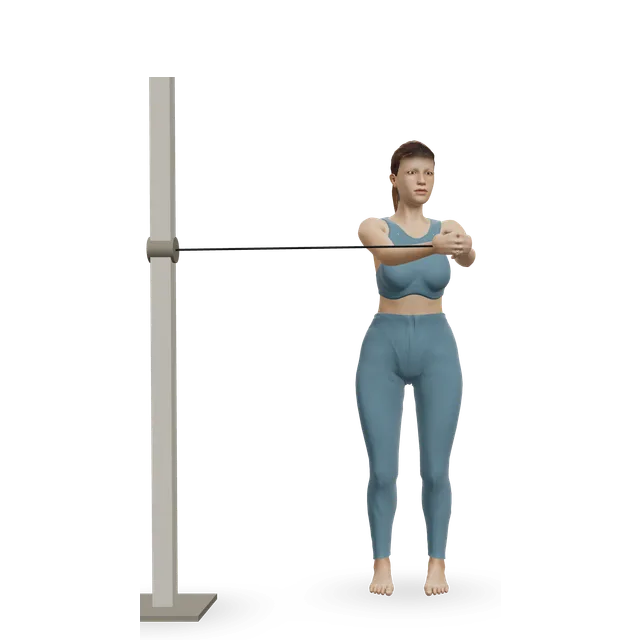
Cable press and rotation demonstrated on the 3D figure3D demoCable press and rotationIntermediate · A cable machine

2 to 3 sets of 8 to 10 each side, light and slow · As in our twisting guide (editorial); the move page gives no dose. Hold the Pallof press square first

Easier: Half-kneeling Pallof press · Harder: Cable wood chop

Suitcase carry demonstrated on the 3D figure3D demoSuitcase carryIntermediate · A dumbbell + A kettlebell

3 walks of 20 to 30 m each side · As in our back pain and twisting guides (editorial). If you can't stay level, the weight is too heavy, as the move page says

Easier: Farmer's carry · Harder: Overhead carry (waiter's walk)

Kettlebell deadlift demonstrated on the 3D figure3D demoKettlebell deadliftBeginner · A kettlebell

3 sets of 8 to 10, light to start · As in our twisting guide (editorial): lift square, then turn with your feet. Lifting the bag from the boot is the same lift

Easier: Hip-hinge practice · Harder: Dumbbell Romanian deadlift

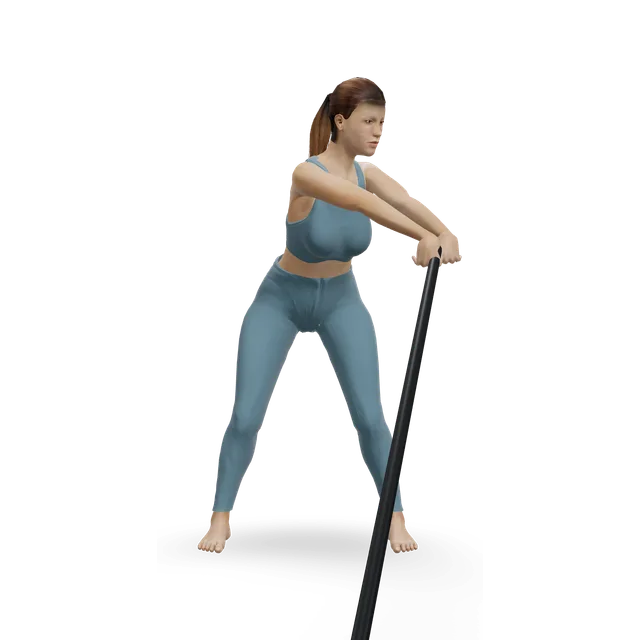
Landmine 180 (landmine rotation) demonstrated on the 3D figure3D demoLandmine 180 (landmine rotation)Intermediate · A barbell + An anchor point

2 to 3 sets of 8 to 12 each side · The move page's dose (an editorial starting point); a gym option. Start with little or no weight on the bar and control it rather than letting it swing, as the move page says

Easier: Cable press and rotation · Harder: Barbell pike rollout

Move on when: These are within the pain rule, half and three-quarter swings with short and middle irons pass the rule for a week, and your back is no worse the next morning (editorial).

Follow along: a timer, a cue and the next move, one step at a time.
Stage 4

Back to golf: the golf warm-up, then the steps back

From about weeks 6 to 10, as your back allows, then for good: the golf warm-up before every round or range session, and a step-by-step return from putts and chips to 18 holes by the written steps below. The warm-up is the one trial of a golf warm-up, done twice through; it cut back pain episodes in teenage golfers and is untested in adults. The return steps follow a hospital's interval golf programme written for the shoulder and a published graded return for a junior golfer with a spine stress fracture. How golf comes back for the back is our suggestion.

Standing march demonstrated on the 3D figure3D demoStanding marchBeginner · No equipment

2 to 3 min, brisk, arms swinging · As in our golf warm-up (editorial); or walk briskly to the first tee

Easier: Seated march · Harder: Standing band hip flexion

Standing hip CARs demonstrated on the 3D figure3D demoStanding hip CARsBeginner · A wall

10 turns onto your lead leg, a hand on the club · As in our golf warm-up: the trial's lead-hip turn, where you turn your trunk towards your lead leg so the lead hip rolls in

Easier: Hip circles on all fours · Harder: 90/90 hip lift-off

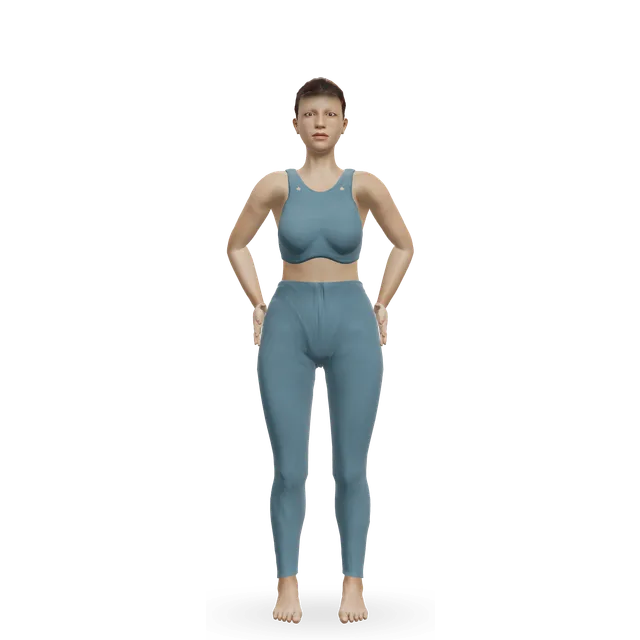
Standing trunk twist demonstrated on the 3D figure3D demoStanding trunk twistBeginner · No equipment

5 each way, a club across your back, feet wider than your shoulders · As in our golf warm-up: the trial's hip and trunk turn

Harder: Cobra pose (Bhujangasana)

Hip-hinge practice demonstrated on the 3D figure3D demoHip-hinge practiceBeginner · No equipment

10, a club along your spine · As in our golf warm-up: the trial's hinge

Harder: Kettlebell deadlift

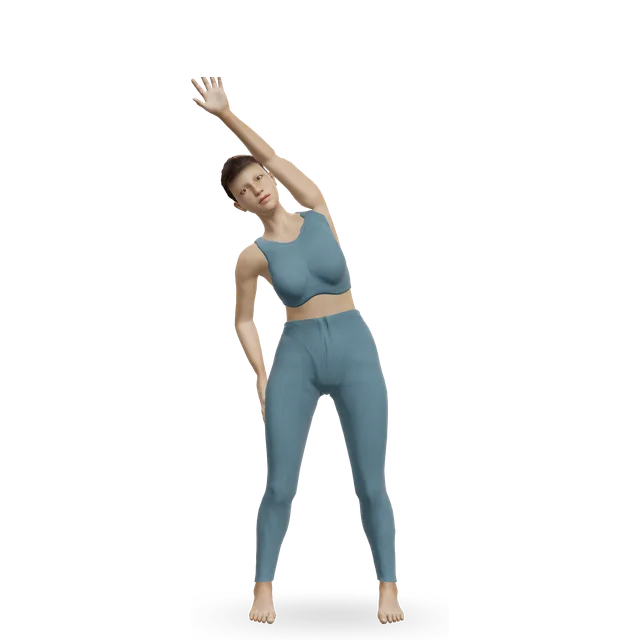
Overhead side bend demonstrated on the 3D figure3D demoOverhead side bendBeginner · No equipment

5 each side, the club in both hands overhead · As in our golf warm-up: the trial's side bend

Easier: Seated overhead side bend · Harder: Overhead lat stretch at a bench (elbows on the bench)

Reverse lunge with rotation demonstrated on the 3D figure3D demoReverse lunge with rotationIntermediate · No equipment

5 each side, turning over the front leg · As in our golf warm-up (the trial lunged forward holding the club level, then turned). Leave out the warm-up's jump while your back is sore, as our golf warm-up says

Easier: Reverse lunge · Harder: Deficit reverse lunge (from a platform)

Move on when: Our suggestion: 18 holes and your usual range sessions pass the pain rule for 2 weeks; then add back long irons and the driver, extra rounds a week and competition, one at a time. Keep two strength days a week (the stage 2 and 3 moves, or our golf strength workout), and drop back a step for a few days after a flare rather than stopping.

Follow along: a timer, a cue and the next move, one step at a time.

What to change for now

The range, the rounds and the swing for now (written steps)

Our 3D figure can't show the swing, the range or a lesson. These steps come from injury surveys of golfers, the one warm-up trial, lab studies, NHS and AAOS pages and expert reviews; where a step is our suggestion, it says so. None has been tested in a trial for back pain except the warm-up.

  • 1. While it's sore: keep moving and keep up your daily activities, and don't stay in bed for long (the NHS). Put full swings and range sessions on hold for a few days; putting, and walking with a trolley, can carry on within the pain rule (our suggestion).
  • 2. Fewer range balls: in one survey with a low response, golfers who did no more than an hour of full-shot practice a week had about half the odds of a back injury, and sudden jumps in practice came before rib stress fractures. Come back with short sessions of wedges and short irons, and add balls and longer clubs gradually (our suggestion).
  • 3. Fewer rounds for now: more play went with more injury in two studies but not in a third. Play 9 holes before 18 (our suggestion).
  • 4. Warm up before every round and range session with the golf warm-up: easy aerobic exercise, golf mobility, then practice swings, as experts advise. Keep static stretches short: 20 minutes of static stretching slowed young golfers' swings.
  • 5. A shorter, easier swing while it settles: half and three-quarter swings at an easy tempo, short irons before the driver (our suggestion). A shorter-turning swing cut lower back rotation in a lab study, with a slower club; nobody has tested it for back pain.
  • 6. A coach, when you're back: the AAOS says back pain is often caused by a poor swing, but pooled studies don't show a link between swing faults and back pain. One professional became pain-free with conditioning and coaching that gave him more hip turn and less shoulder turn. A lesson is reasonable for a swing that ends in a big backward arch, or that hurts at one point every time (our suggestion).

Sources 10, 3, 13, 2, 6, 1, 28, 33, 35, 43, 44, 9, 41, 42

The bag, bending to the ball and flare-ups (written steps)

These come from a survey of golfers, the NHS and our twisting and hip guides; where a step is our suggestion, it says so.

  • 1. The bag: carrying it went with back problems in a survey of 703 golfers. Use a trolley or a buggy while your back is sore (our suggestion), and lift the bag from the boot close to you, turning with your feet, as our twisting guide says.
  • 2. Bending to the ball: tee up and pick the ball out of the hole with a hinge, or the golfer's lift our hip pain when bending guide describes (one hand on the club, one leg lifting behind you); our suggestion.
  • 3. After a flare: keep walking, take an anti-inflammatory such as ibuprofen if it suits you, and use heat for spasm (the NHS); drop back a stage for a few days (our suggestion).
  • 4. Osteoporosis or a past spinal fracture: keep the swing smooth, shorter and comfortable, and leave out the warm-up's jump (our suggestion, as our golf warm-up says).

Sources 45, 10

How golf comes back (written steps)

No trial has tested a return to golf after back pain. These steps follow a published graded return for an elite junior golfer with a spine stress fracture, which changed one thing at a time, and a hospital's interval golf programme for the shoulder, which runs every other day; the amounts for the back are our suggestion. Move on only when the last step passed the pain rule.

  • 1. Putting and short chips, every other day.
  • 2. Half swings with a wedge or short iron at about three-quarter effort: the junior golfer started with 3 sessions a week of 40 balls, with breaks every 10 to 15 minutes from bent-over practice.
  • 3. Three-quarter swings and a par 3 course, then some full swings with middle irons.
  • 4. Long irons and woods, then the driver, a few at a time.
  • 5. 9 holes, then 18, with a trolley or a buggy at first; then more rounds a week, then competition.
  • 6. If a session flares your back, drop back a step for a few days rather than stopping.

Sources 52, 51

Positions to swap, and why

Habit or positionWhy it mattersInstead
A large bucket of drivers while your back is soreMore full-shot practice went with more back injury in one survey, and sudden jumps in practice came before rib stress fractures.Short sessions, wedges and short irons first.
Going straight to the first tee, or full swings coldA golf warm-up cut back pain episodes in a trial in teenagers.The golf warm-up: a lead-hip turn, trunk turns, a hinge, side bends and a lunge with a turn.Try: Standing hip CARs
Long static stretches before you hitA 20-minute stretching routine slowed the swing, and stretching hasn't been shown to prevent golf injuries.Moving warm-up drills, then practice swings.Try: Standing trunk twist
Carrying the bag on one shoulderCarrying went with back problems in a survey of golfers.A trolley or a buggy.
Forcing a bigger shoulder turn against still hipsReviews argue it may load the lower back, but the link is poorly tested.A comfortable turn, with the upper back doing the turning.Try: Thoracic rotation
Finishing in a big backward arch (a reverse C)Reviews describe this arched finish as part of the swing pattern suspected of loading the lower back; no trial has tested a change.A taller, balanced finish; ask a coach.
Fast, heavy Russian twists in the gym while it's soreFast, loaded twisting is the version to be careful with, and the move page says leave it out with osteoporosis or a past spinal fracture.The Pallof press, which trains the trunk to resist a turn.Try: Half-kneeling Pallof press
Stopping all activity, or staying in bedThe NHS says don't stay in bed for long periods.Short walks, putting and the stage 1 moves.Try: Treadmill walking
A back belt or brace for golfNICE says don't offer belts or corsets for low back pain.Strength, walking and a smooth swing.
Asking for a scan to find what's wrongNICE advises against routine imaging, and no swing measurement predicts back pain.Get checked if a warning sign appears.

Routines to follow

Golf warm-up

A 10-minute golf warm-up: brisk marching, then the hip and trunk turns, hinge, side bend, lunge and jump from the one trial of a golf warm-up, twice through.

10 minBeginner9 movesWall

Golf strength and power workout

A 45-minute golf gym session: jumps, a medicine-ball throw and kettlebell swings for power, then squats, hinges, rows, push-ups, fast rotation and carries.

45 minIntermediate14 movesMedicine ball, kettlebell

Spine mobility routine: neck to pelvis, every direction

A 15-minute routine that moves your neck, upper back and lower back through bending, arching, side bending and twisting, then holds the spine steady.

15 minBeginner12 movesNo equipment

Beginner core workout

A 15-minute beginner core workout on the floor: dead bugs, bird dogs, knee planks, side planks and curl-ups.

15 minBeginner6 movesNo equipment

McGill big 3 core routine

The McGill big three for the core: curl-ups, side planks and bird dogs, each held for 10 seconds at a time in falling sets of 5, 3 and 1 reps.

12 minBeginner3 movesNo equipment

Yoga for golfers: a 25-minute rotation, hip and balance class for non-golf days

A 25-minute yoga class for golfers: upper-back and hip rotation done evenly both ways, a hip hinge, one-leg balance, back endurance and forearm stretches.

25 minBeginner18 movesWall, step

Rotation-focused Pilates for golfers: a 25-minute mat and standing class

A 25-minute Pilates class for golfers: upper-back and hip rotation, trunk control, side-hip strength and one-leg balance, done equally on both sides.

25 minBeginner19 movesWall

More moves for this area

Questions people ask

Why does my lower back hurt after golf?

Usually it's ordinary back pain from a fast, repeated turn your back isn't used to, often after more range balls, more rounds or a longer swing than usual. It often settles within a few weeks. Pain down a leg, a fever or numbness around your genitals or bottom needs checking.

Is golf bad for your back?

No: in a survey of male golfers, back pain was about as common as in other people of the same age, and pain was much the same on and off the course. A previous episode, age and body weight matter more than the swing. Most people with back pain can keep playing within the pain rule.

Can I play golf with lower back pain?

Usually, if you keep it within the pain rule: up to about 5 out of 10, settling within an hour and no worse the next morning, with no pain spreading down a leg. Start with putting, chipping and half swings, play 9 holes before 18, and use a trolley or a buggy. Stop and get help for any warning sign.

Why does my back hurt on one side after golf?

A sore muscle or joint on one side is the usual cause, and the side rarely names it. In our reading of a review, professionals' back pain sits more often on the trail side. Pain with a fever, burning when you pee or waves of pain into the groin can be the kidney, and our one-sided guide covers it.

Why does my back hurt during the golf swing?

The swing turns, bends and side-bends the trunk fast, and in one small lab study it loaded the lower back at over 6 times body weight. A sore back often objects most at the top of the backswing or the end of the follow-through. A shorter, easier swing usually helps while it settles.

What exercises help golfers with back pain?

Walking and gentle turns first, then trunk and hip strength such as bird dogs, side planks, bridges and the Pallof press, then turning under light load and the golf warm-up. In the one trial in golfers with back pain, 6 weeks of trunk and leg strengthening beat swing practice with stretching for pain and disability.

Should I stretch before golf?

A short moving warm-up is better than long static holds: 20 minutes of static stretching slowed young golfers' swings, and stretching hasn't been shown to prevent golf injuries. Our golf warm-up takes about 10 minutes.

Does a warm-up prevent back pain in golfers?

In one trial of 45 teenage golfers, a 10-minute warm-up before every session cut back pain episodes from 95 to 16 per 1,000 days of golf, though not clearly the number of golfers with pain. It hasn't been tested in adults, but it costs little and didn't harm performance.

Should I change my swing?

It may help, but no trial has tested it, and pooled studies don't link swing faults with back pain. Once you're back to full swings, a coach can look at a swing that hurts at one point or ends in a big backward arch. Cut the volume first.

Can I play golf with sciatica?

Gently, if leg symptoms don't spread further down the leg while you play: putt and chip, use a buggy and keep swings short. Pain spreading below the knee that isn't settling after a few weeks needs a GP, and weakness or numbness in both legs, or around your genitals or bottom, needs 999. Our sciatica guide has the plan.

Do I need a scan?

Usually not: NICE advises against routine imaging for low back pain. A scan is for the warning signs, for sciatica that isn't improving when surgery or an injection is being considered, or for a young golfer with a suspected stress fracture of the spine.

When can I play golf after back surgery?

Follow your surgeon's plan. In a survey of spine surgeons, the commonest advice was 4 to 8 weeks after a microdiscectomy or laminectomy and 6 months after a lumbar fusion, and about half to three-quarters of golfers were back playing within a year of a fusion. In the US, call 911 where this page says 999.

Related exercise guides

Other pain guides

Sources

  1. Robinson 2024 · Injuries and illnesses in 910 amateur golfers over a season (cohort study, BMJ Open Sport Exerc Med)
  2. McHardy 2007 · A year of golf injuries in 588 Australian amateurs (cohort study, Am J Sports Med)
  3. McHardy 2007 · Golf-related lower back injuries in 1,634 Australian amateurs (survey, J Chiropr Med)
  4. Robinson 2019 · Injuries in professional golfers: 5 studies (systematic review, BJSM)
  5. Kuitunen 2024 · Injury incidence in golf: 7 studies (systematic review and meta-analysis, Ir J Med Sci)
  6. Williamson 2024 · Injuries in professional and amateur golfers: 20 studies, 9,221 golfers (systematic review and meta-analysis, BJSM)
  7. Murray 2023 · Musculoskeletal complaints in 1,170 male golfers (cross-sectional study, BMJ Open Sport Exerc Med)
  8. Smith 2018 · Risk factors for low back pain in golfers: 19 studies (systematic review and meta-analysis, Sports Health)
  9. Watson 2023 · Golf swing mechanics and low back pain: 9 studies (systematic review, J Sports Sci)
  10. NHS · Back pain
  11. NHS · Sciatica
  12. NHS · Slipped disc
  13. Lord 1996 · Rib stress fractures in 19 golfers (case series, Am J Sports Med)
  14. American Academy of Orthopaedic Surgeons, OrthoInfo · Spondylolysis and spondylolisthesis
  15. NHS · Heart attack
  16. Lim 2012 · Lower back loads and muscle activity in the golf swing in 5 college golfers (lab study, Sports Biomech)
  17. Lindsay 2014 · Golf-related low back pain: causes and prevention (narrative review, Asian J Sports Med)
  18. Lindsay 2002 · Spine motion in 12 professional golfers with and without low back pain (case-control study, J Sports Sci)
  19. Cole 2016 · The modern golf swing and lower back injuries (narrative review, Sports Med)
  20. Edwards 2020 · Low back pain and golf: biomechanical risk factors (narrative review, Sports Med Health Sci)
  21. Cole 2014 · The crunch factor in 12 golfers with and 15 without low back pain (lab study, Spine J)
  22. Vad 2004 · Hip and low back movement in 42 professional golfers with and without low back pain (cross-sectional study, Am J Sports Med)
  23. Murray 2009 · Hip rotation and low back pain in 64 amateur golfers (case-control study, Phys Ther Sport)
  24. NICE NG59 · Low back pain and sciatica in over 16s: assessment and management (2016, last updated July 2026)
  25. Quinn 2022 · Trunk muscle activity in the swing and later low back pain in 33 young elite golfers (prospective cohort study, J Electromyogr Kinesiol)
  26. Williams 2025 · Injuries in 303 UK golfers over a year (retrospective survey, Phys Sportsmed)
  27. Horton 2001 · Abdominal muscle activity in elite golfers with chronic low back pain (case-control study, Med Sci Sports Exerc)
  28. Hamada 2025 · A golf warm-up and low back pain in 45 high-school golfers (double-blind randomised trial, Transl Sports Med)
  29. Translational Sports Medicine 2026 · Correction to the golf warm-up and low back pain trial (correction notice)
  30. Hamada 2025 · The golf warm-up, physical function and golf performance in the same 45 golfers (randomised trial, BMC Sports Sci Med Rehabil)
  31. Fradkin 2007 · Warm-up habits and golf injury in 522 women (cross-sectional survey, J Sci Med Sport)
  32. Ehlert 2019 · Golf warm-ups: behaviours, injury and performance, 23 studies (systematic review, J Strength Cond Res)
  33. Murray 2018 · International consensus statement on golf and health (Delphi consensus of 25 experts, BJSM)
  34. Fradkin 2001 · Warm-up habits of 1,040 amateur golfers (observational study, BJSM)
  35. Gergley 2009 · Static stretching before driving in 15 young golfers (crossover study, J Strength Cond Res)
  36. Moran 2009 · Dynamic stretching and the golf swing (crossover study, Int J Sports Med)
  37. Kim 2025 · Flexibility, stretching habits and spine injuries in 439 professional golfers (cross-sectional study, J Orthop Surg Res)
  38. Kang 2026 · Trunk stabilisation and leg strengthening, or swing practice with stretching, for 30 amateur golfers with low back pain (randomised trial, J Back Musculoskelet Rehabil)
  39. Finn 2013 · Rehabilitation of low back pain in golfers (clinical review, Sports Health)
  40. NHS inform · Exercises for back pain
  41. Grimshaw 2000 · Reducing low back pain in a professional golfer (case report, Med Sci Sports Exerc)
  42. Gluck 2008 · The lumbar spine and low back pain in golf (narrative review, Spine J)
  43. Kanwar 2024 · Lower back and hip loads in two golf swing styles in 15 golfers (lab study, Sports Biomech)
  44. American Academy of Orthopaedic Surgeons, OrthoInfo · Golf injury prevention
  45. Gosheger 2003 · Injuries and overuse problems in 703 golfers (survey, Am J Sports Med)
  46. Abla 2011 · Return to golf after spine surgery: 523 spine surgeons (survey, J Neurosurg Spine)
  47. Shifflett 2017 · Return to golf after lumbar fusion in 34 golfers (case series, Sports Health)
  48. Luxenburg 2021 · Return to golf after spinal fusion: 3 studies (systematic review, World Neurosurg)
  49. Haddas 2022 · Protecting the spine and returning to golf after lumbar surgery (narrative review, Global Spine J)
  50. Hamada 2024 · Foam rolling and dynamic stretching of the lead hip in 22 golfers (randomised crossover study, J Strength Cond Res)
  51. Massachusetts General Hospital · Interval golf programme (patient handout)
  52. Brearley 2021 · Managing spine stress fractures in an elite junior golfer, with a graded return to golf (case report, Int J Sports Phys Ther)

Exercise education, not a diagnosis or treatment plan. It is written from the guidelines and studies listed above; review by a clinician is pending. If your pain follows an injury, is severe, is getting worse, or comes with any warning sign listed on this page, get it assessed. Health disclaimer.