No trial of Pilates in golfers
We found no study of Pilates in golfers, so claims that it adds distance or prevents golf injuries are borrowed from other evidence.
Source 1
Pilates guide
Pilates can help golfers turn more comfortably, control the trunk through the swing, strengthen the hips and stay steady on one leg, and it trains both sides of a one-sided game. What it hasn't been shown to do is add distance: no trial has tested Pilates in golfers, and strength and power training has much more evidence for clubhead speed.
So use it alongside strength work, not instead of it, and keep it for non-golf days rather than before a round.
This guide covers what the swing asks of your body, what the trials of core, strength and flexibility training in golfers found, back pain and the lead wrist and elbow, golf in later life, how to fit Pilates around your golf and the moves to start with, with a 25-minute class.
We found no study of Pilates in golfers, so claims that it adds distance or prevents golf injuries are borrowed from other evidence.
Source 1
In one trial of 36 club golfers, 8 weeks of core exercises raised clubhead speed by about 3.6%, and in one trial of 60 elite golfers, core training with arm strength work added more drive distance than core training alone. Pilates trains similar qualities, but that's our reading, not something a trial has tested.
Programmes combining gym and golf-specific training added about 4% clubhead speed and 5% distance, and speed goes with leg power and upper-body strength, not flexibility. Pair Pilates with strength work.
In golfers, a previous episode, age and body weight go with back pain, while swing style doesn't when studies are pooled. Pilates eases long-lasting back pain about as much as other exercise, and a relaxed tummy did slightly better than a braced one in a 2026 trial.
Most wrist problems on the European Tour were in the lead wrist, and lead-arm tennis elbow is the commonest arm injury in amateurs: do weight-bearing moves on fists or forearms, or swap them. Doing every move on both sides is our suggestion for a one-sided game.
Before you play, use a short dynamic warm-up and practice swings: a 20-minute static stretching routine cut clubhead speed by about 4% in one study. Keep Pilates for non-golf days.
Golf is mostly walking at a moderate pace, with a swing that turns fast through the hips, trunk and shoulders in one direction, repeated through a round and on the range. The modern swing restricts the turn of the pelvis while increasing the turn of the upper body, and clubhead speed goes with leg power and upper-body strength.
In 910 amateurs followed for a season, the low back cost the most time out, then the shoulder and knee. Professionals have more low back and wrist injuries than amateurs; wrist problems are mostly in the lead wrist, on the little-finger side; tennis elbow on the lead arm is the commonest arm injury in amateurs; and beginners who suddenly practise much more can get rib stress fractures on the lead side. (Lead means the left side for a right-handed golfer.)
Controlled rotation (the saw, spine twist, criss-cross, mermaid and open book), hip control, trunk endurance, back extension, balance, and every move on both sides. It doesn't offer heavy loading or fast power work, which is where the evidence for clubhead speed lies.
Our searches found no study of Pilates in golfers. Pages promising more yards or fewer injuries from Pilates aren't backed by golf trials.
Source 1
In 36 club golfers, 8 weeks of 8 basic core exercises raised clubhead speed by 3.6% against no change, which the researchers called a likely small improvement, and core endurance by 61%. It is one small trial.
Source 2
In 60 elite Korean golfers, gym-style core training (crunches, trunk twists, side bends with a dumbbell) 3 times a week for 8 weeks lengthened drives to an adjusted average of 235 m, against 222 m in golfers who didn't train, and core training plus strength work for the non-dominant arm to 239 m. Again, it is one small trial.
Source 3
In 18 men aged about 71, 8 weeks of flexibility, core, balance and strength training raised clubhead speed from 127.3 to 133.6 km/h, while the men who didn't train didn't change.
Source 18
Our reading: Pilates also trains trunk endurance and rotation control, so it's a reasonable way to do this kind of work, but the trials' core training wasn't Pilates, and no trial has tested Pilates for clubhead speed or distance.
Across 20 studies, clubhead speed went with jump power and upper-body strength, but not with flexibility or balance; a second review agreed on flexibility.
In 15 young golfers, a 20-minute static stretching routine before hitting cut clubhead speed by about 4% and distance by about 6%, compared with a dynamic warm-up.
Source 12
Two reviews of small trials found resistance training raises clubhead speed and distance: programmes combining gym and golf-specific training averaged 4.1% more speed and 5.2% more distance, best with 8-week programmes that included fast golf-specific moves.
Pilates is light resistance: good for control, comfortable rotation and endurance, but not the heavy or fast work that clubhead speed goes with. Do both: Pilates on one or two days, and strength and power on two, as our golf guide and golf strength workout set out (our reading).
The modern swing restricts the turn of the pelvis while increasing the turn of the upper body. A link with back injury is argued, but poorly tested.
Source 14
In two small studies, golfers with back pain turned their lead hip inwards less (21° against 31° in amateurs), but analyses pooling the studies found no link between hip range and back pain.
In 22 golfers, foam rolling and dynamic stretching of the lead hip raised its inward rotation and carry distance more than practice swings did.
Source 22
Rotation and hip mobility help you reach swing positions comfortably, but they haven't been shown to add speed or prevent back pain. Train both directions, in the upper back and the hips, slowly and with control (our reading).
Across 19 studies, a previous episode of back pain, age and body weight went with back pain in golfers, and swing characteristics didn't when studies were pooled. A review of 9 studies found "no conclusive evidence" linking "poor" golf swing technique with back pain.
In 33 elite golfers, those who went on to develop back pain used more of their front tummy and back muscles in the swing at the start, not less. In 152 people with long-lasting back pain, Pilates taught with a relaxed tummy improved disability slightly more than Pilates with the core held tight (1.4 points on a 0 to 24 scale).
Across 10 trials, Pilates eased long-lasting low back pain by about 14 points out of 100 in the short term compared with minimal treatment, with no evidence it beats other exercise. Exercise in general helps, and NICE (the National Institute for Health and Care Excellence) suggests considering group exercise, including mind-body approaches, for low back pain.
In 45 teenage golfers, a golf warm-up before every session for 12 weeks cut back pain episodes against a sham warm-up (16 against 100), though not the number of golfers affected. It hasn't been tested in adults.
Source 27
Nothing is banned: keep pain mild and settling, as our Pilates for back pain guide says, and check the warning signs below.
Among 128 European Tour golfers, 30% had a wrist problem, two-thirds of them in the lead wrist, most often on the little-finger side. If your lead wrist hurts, do the leg pull, push-up, knee hover and side bend on fists or forearms, or swap them.
Source 10
Lead-arm tennis elbow is the commonest arm injury in amateur golfers, and most shoulder injuries are in the lead shoulder (a narrative review). Pilates isn't a treatment for either: keep your grip light on rings and bands (our suggestion), and see our elbow and shoulder guides.
Source 11
Of 19 golfers with rib stress fractures, 18 were beginners, most had them on the lead side, and some were mistaken for back strain. The authors suggest strengthening the serratus anterior, the muscle the scapular push-up works. Build range sessions up gradually.
Source 17
Experts agree golf is likely to help strength and balance in older adults, and in men aged about 71, training that included core and balance work added about 5% clubhead speed. The NHS asks adults over 65 to do activities that build strength, balance and flexibility on at least 2 days a week.
The UK consensus on osteoporosis says twisting "should be safe if performed smoothly and comfortably", and vertebral fractures during a golf swing have been described in case studies. Swap roll-downs and curl-ups for head-down and flat-back versions, and skip rolling and legs-overhead moves.
Source 29
80% of golfers went back to golf after a hip, knee or shoulder replacement (hip 90%, knee 70%), on average 4.4 months after surgery, and experts advise a graduated return. One NHS trust starts golf with chipping and putting from 8 to 12 weeks after a knee replacement, keeping off the driving range for up to 3 months, and allows golf from 3 to 6 months after a hip replacement. Our Pilates after a hip replacement and Pilates after a knee replacement guides cover the Pilates side.
Our editorial plan, built on the trials:
Move slowly and turn the same amount each way; the move pages' doses (8 waves of cat-cow, 6 thoracic rotations and 3 to 4 spine twists or saws each side) are a good start.
 3D demoLateral breathing (Pilates breathing)Beginner · No equipment
 3D demoCat-cowBeginner · No equipment
 3D demoThoracic rotationBeginner · No equipment
 3D demoSide-lying open bookBeginner · No equipment
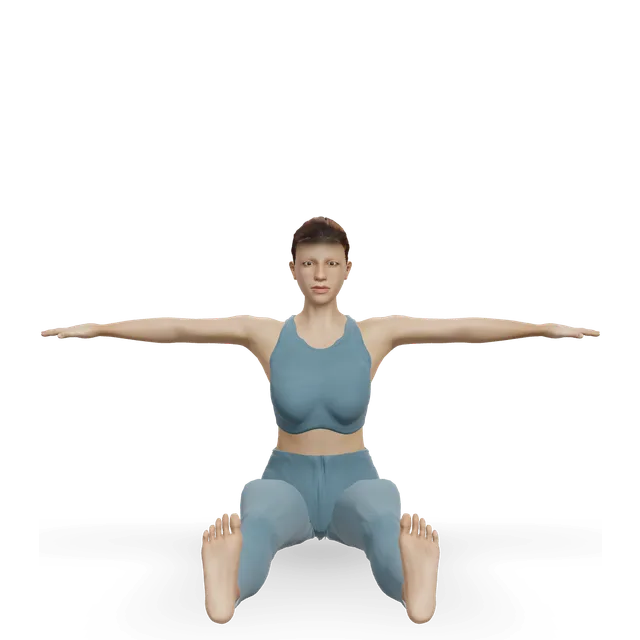 3D demoSpine twist (Pilates)Beginner · No equipment
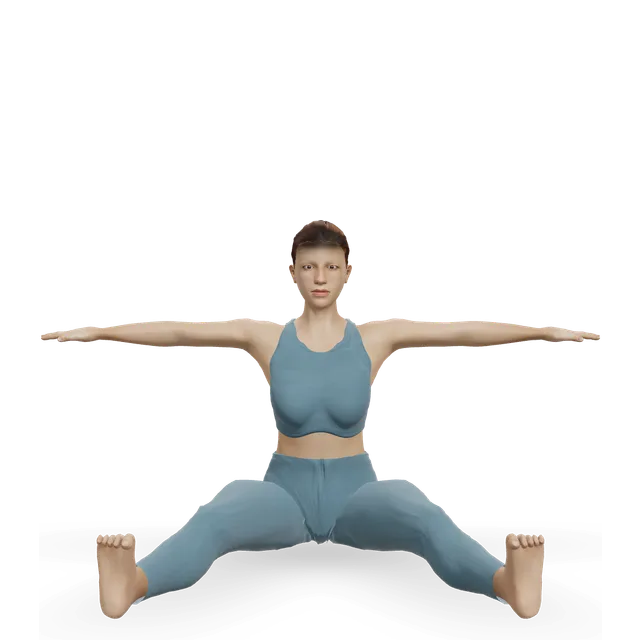 3D demoSaw (Pilates)Intermediate · No equipment
 3D demoMermaid (Pilates seated side bend)Beginner · No equipment
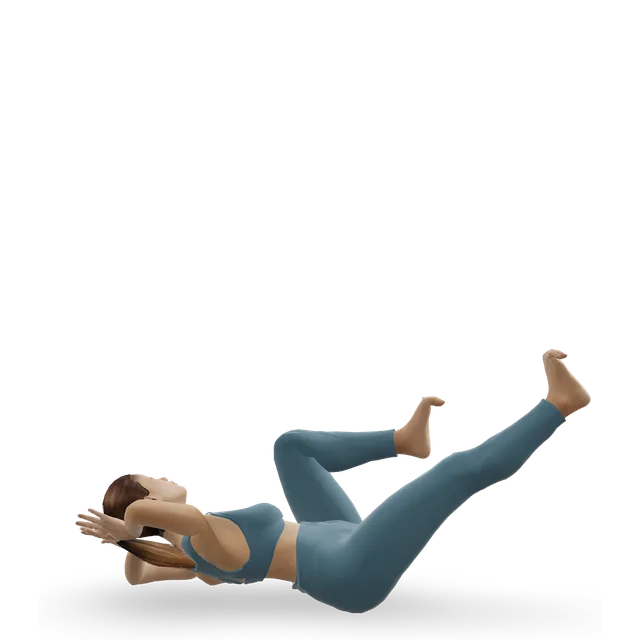 3D demoCriss-cross (Pilates)Intermediate · No equipment
Start with the hundred's 50 beats and 6 to 10 single-leg stretches each side (the move pages' doses), and 6 dead bugs each side and two 20-second side planks on your forearm (our editorial starting point).
Work both sides equally: 10 clams each side and 2 sets of 8 to 10 scapular push-ups are our editorial starting point, and the other moves' pages give their doses.
 3D demoSide kick (Pilates side kick series)Beginner · No equipment
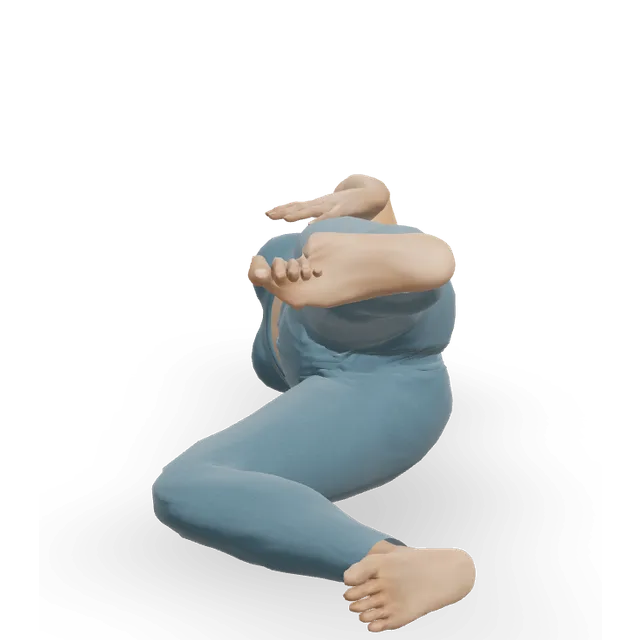 3D demoSide-lying leg circles (Pilates side kick series)Beginner · No equipment
 3D demoClamshellBeginner · No equipment
 3D demoSingle-leg circle (Pilates one leg circle)Beginner · No equipment
 3D demo90/90 switchIntermediate · No equipment
 3D demoSwan (Pilates swan dive)Intermediate · No equipment
 3D demoSwimming (Pilates)Intermediate · No equipment
 3D demoScapular push-up (push-up plus)Beginner · No equipment
Hold a counter at first: 3 holds of 20 to 30 seconds on each leg for the single-leg stand (our editorial starting point), and the hip airplane and hip circles pages' doses.
With lead-wrist pain, do the leg pull front, push-up, knee hover and side bend on fists or forearms, or swap them.
Source 10
With back or neck pain or osteoporosis, leave out the roll-over, jack knife, control balance, boomerang and neck pull, which bend the spine under load and put weight on the neck. During a back pain flare, use the half roll back for the roll-up; with osteoporosis, a head-down chest lift and a flat-back hinge.
Source 29
A 20-minute static stretching routine cut clubhead speed by about 4%. Use the golf warm-up before you play, and keep this class for non-golf days.
Source 12
With tennis elbow, keep your grip light on rings and bands (our suggestion).
Do the 25-minute Pilates class on non-golf days, the golf warm-up before every round, and the golf strength workout twice a week to build speed. The others add mobility, back comfort and wrist strength.
A 25-minute Pilates class for golfers: upper-back and hip rotation, trunk control, side-hip strength and one-leg balance, done equally on both sides.
25 minBeginner19 movesA wallA 10-minute golf warm-up: brisk marching, then the hip and trunk turns, hinge, side bend, lunge and jump from the one trial of a golf warm-up, twice through.
10 minBeginner9 movesA wallA 45-minute golf gym session: jumps, a medicine-ball throw and kettlebell swings for power, then squats, hinges, rows, push-ups, fast rotation and carries.
45 minIntermediate14 movesMedicine ball, A kettlebellA gentle 15-minute Pilates-based routine for ongoing low back pain, built from neutral-spine moves with options for backs that dislike bending or arching.
15 minBeginner10 movesNo equipmentA 15-minute routine that moves your neck, upper back and lower back through bending, arching, side bending and twisting, then holds the spine steady.
15 minBeginner12 movesNo equipmentA 15-minute hip opener: 90/90 switches, windshield wipers, CARs, Cossack squats, frog and pigeon.
15 minIntermediate8 movesA wallWrist mobility and forearm strength for desk work, climbing, push-ups and handstands.
10 minBeginner7 movesA wall, A dumbbellEach plan gives you two or three strength days a week; add a Pilates class on one or two of the other days.
A 3-day strength plan for men over 40 with power and bone work, two cardio days and mobility, built on research on ageing muscle.
3 training days45 minBeginner3 days a weekA weekly plan for women over 50: strength, bone-loading and balance on 3 days plus walking, built on UK osteoporosis consensus advice.
3 training days45 minBeginnerCall 999 if:
If you have back pain and any of these. The first four can be signs of cauda equina syndrome, pressure on the nerves at the base of the spine, which needs treating in hospital urgently. Don't drive yourself: ask someone to drive you or call an ambulance.
Source 36
If you have back pain and you feel hot, cold, shivery or generally unwell, or the pain is severe and started suddenly, or is getting worse quickly. See a GP if it hasn't improved after a few weeks, it's stopping your daily activities, or it's worse at night.
Source 36
See a GP or physiotherapist for wrist pain that hasn't improved after 2 weeks of looking after it, tingling or loss of feeling in the hand, elbow pain that hasn't gone after a few weeks of self-care, or shoulder pain that hasn't improved after 2 weeks or makes it very hard to move your arm. In many areas you can refer yourself to NHS physiotherapy. Our wrist, elbow and shoulder guides have the details.
See a GP for rib pain that lasts or is sharp when you breathe or swing, especially after a jump in practice (our wording; the NHS has no golf rib page). Our rib injury guide has more.
Source 17
Not shown: no trial has tested Pilates in golfers. Core training added about 3.6% clubhead speed in one small 8-week trial, and strength and power programmes added about 4% speed and 5% distance.
Across studies, flexibility didn't go with clubhead speed, while leg power and upper-body strength did.
Not shown. A previous episode, age and body weight go with golfers' back pain; golfers who went on to develop it used more tummy muscle in the swing, not less; and no trial has tested core training to prevent it.
A 20-minute static stretching routine cut clubhead speed by about 4% and distance by about 6%. Use a dynamic warm-up and practice swings instead.
The reformer adds springs and straps for resistance, but the mat does the same jobs, and the core training trials in golfers used simple exercises.
A review found "no conclusive evidence" that back pain in golfers is linked with "poor" swing technique.
Source 23
It's a good way to train trunk control, rotation, hip strength and balance, though no trial has tested Pilates in golfers. Core training improved clubhead speed a little in one small trial. Pair it with strength and power work, which has more evidence for speed.
Not as far as trials show. Core training added about 3.6% clubhead speed in one small 8-week trial, and strength and power programmes about 4% speed and 5% distance; flexibility doesn't predict speed.
Rotation (the saw, spine twist, open book and criss-cross), trunk control (the hundred, single-leg stretch and dead bug), the hips (side kicks, clams and 90/90 switches), back extension (swan and swimming) and one-leg balance. Our 25-minute class puts them together, done equally on both sides.
Pilates eases long-lasting back pain about as much as other exercise, and doing it with a relaxed rather than braced tummy did slightly better in one trial. In golfers, a past episode of back pain is the strongest predictor of the next.
It can be: the springs and straps add resistance to rotation and hip work. No trial has tested it in golfers, and the mat does the same jobs.
No: before you play, use a short dynamic warm-up and practice swings. A 20-minute static stretching routine cut clubhead speed by about 4%, so keep Pilates for non-golf days.
Two or three times a week for at least 8 weeks, the length of the core training trials, is a good start. Strength and power work twice a week, in the off-season or a quieter spell, sits alongside it.
Neither has been tested in golfers. Both train mobility and control, while strength and power training has the most evidence for clubhead speed. Our yoga for golfers guide has a yoga class for non-golf days.
Yes, especially for balance and strength: in men aged about 71, 8 weeks of training that included core and balance work added about 5% clubhead speed. With osteoporosis, keep twisting smooth and comfortable.
It isn't a treatment for either; our elbow guides cover what helps. In amateur golfers, tennis elbow on the lead arm is the commoner problem, so keep your grip light on rings and bands.
Yes: do weight-bearing moves on your forearms or fists, or swap them, and see a GP or physiotherapist if the pain hasn't improved after 2 weeks of looking after it. Most wrist problems in tour golfers are in the lead wrist.
Most people get back to golf: 80% return, at about 4.4 months on average. One NHS trust starts golf from 8 to 12 weeks after a knee replacement, without the driving range for 3 months, and from 3 to 6 months after a hip replacement; our Pilates after hip and knee replacement guides cover the Pilates side.
Exercise education, not a personal prescription, and clinical review of these guides is pending. If you are pregnant, have a health condition or have had recent surgery, check with a doctor, midwife or physiotherapist before starting, and stop for sharp or increasing pain. Health disclaimer.