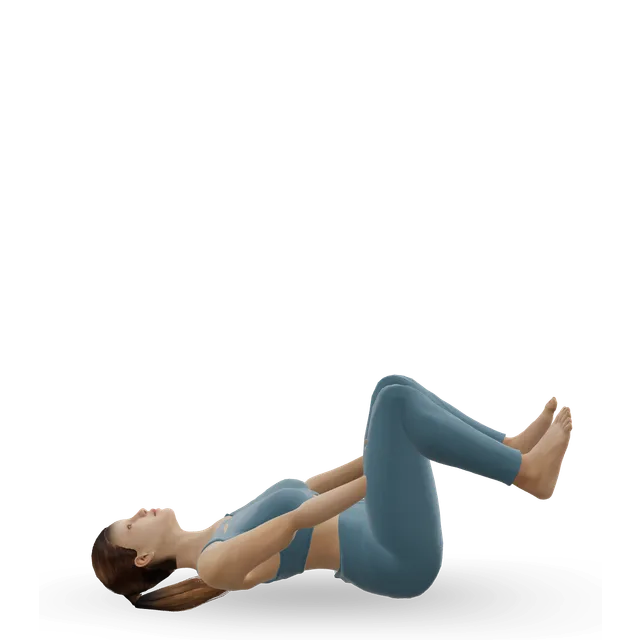
Yoga guide

Yoga for golfers: rotation, hips and back pain, and what it does for your swing

Yoga can help golfers turn comfortably both ways, keep the hips rotating, stand steady on one leg through the finish and wind down, and it trains both sides of a one-sided game. It fits best on non-golf days.

What it hasn't been shown to do is add distance. We found no published trial of yoga in golfers, flexibility doesn't predict how fast you swing, and long stretches just before you play cost a little clubhead speed. Strength and power training carry the evidence for speed.

This guide covers what the swing asks, the evidence, rotation and the hips, back pain, the lead wrist and elbows, older golfers and osteoporosis, how to fit yoga around golf, the poses, the warning signs, and a free 25-minute class.

The short version

A fast, one-sided turn, repeated

The modern swing turns the upper body more than the pelvis. Most golfers are injured at some point (56.6% of amateurs and 73.5% of professionals over their lifetime), and in amateurs the low back costs the most time, then the shoulder and knee.

Sources 1, 2, 3

No published trial of yoga in golfers

We found no peer-reviewed trial of yoga in golfers of any age in PubMed or Europe PMC, the same as for Pilates. So what yoga does for golf is borrowed from other evidence.

Sources 4, 5

Flexibility doesn't predict speed; strength and power do

Across 20 studies, clubhead speed tracked jumping power and upper-body explosive strength, not flexibility. Strength and conditioning programmes added about 4% to 6% to clubhead speed and distance where they worked.

Sources 6, 7, 8, 9

Not before a round

A 20-minute static stretching routine before hitting cut clubhead speed by about 4%. Before you play, use a short dynamic warm-up and practice swings, like our golf warm-up, and keep yoga for non-golf days or after the round.

Sources 10, 11

Back pain is about past pain, age and weight more than the swing

In pooled studies, golfers' back pain went with a previous episode, age and body weight, not swing characteristics. Yoga eases long-lasting back pain a little, about as much as other exercise, and in a small trial in golfers, trunk and leg strengthening beat swing practice with stretching.

Sources 12, 13, 14, 15

What yoga can do

Help you turn comfortably and evenly both ways, keep the hips moving, stay steady through the finish and settle your breathing. Look after your lead wrist and elbows by swapping weight on bent-back wrists for forearms or fists, and with osteoporosis keep every twist smooth.

Sources 16, 17, 18

What the swing asks, and where golfers get hurt

The swing

A brief, fast, one-sided rotation through the hips, trunk and shoulders, from a hip-hinged address position to a balanced finish on the lead leg (the lead side is the left for a right-handed golfer). The modern swing restricts the turn of the pelvis while the upper body turns more, the gap golfers call the X-factor; some argue this loads the low back, but the link with injury is poorly tested. Clubhead speed tracks leg power and upper-body explosive strength, not flexibility.

Sources 1, 6, 7

How often golfers get hurtEmerging evidence

Across 20 studies (9,221 golfers), 56.6% of amateurs and 73.5% of professionals had been injured in their lifetime, and professionals had more low back and hand and wrist injuries. In 910 amateurs with a median age of 60, followed for a season, most injuries were minor, but the lower back cost the most time (5.93 days per player per year), then the shoulder (3.47) and knee (2.08); older age, osteoarthritis and past injury raised the risk. In 303 UK golfers, low back injuries ran at 9.94 per 1,000 hours of golf, and injuries from repeated movement were commoner than sudden ones.

Sources 2, 3, 19

Wrists, elbows and ribsEmerging evidence

On the European Tour, 30% of 128 golfers had a wrist problem, two-thirds of them in the lead wrist. In amateurs, tennis elbow in the lead arm is the leading arm injury, and most shoulder problems are in the lead shoulder. Beginners who suddenly practise much more can get stress fractures of the ribs on the lead side.

Sources 17, 18, 20

What the evidence says

We found no trial of yoga in golfersMixed evidence

A PubMed search for yoga, Pilates, mind-body exercise or tai chi with golf returned 21 records, and none was a trial of yoga in golfers; Europe PMC searches of titles and abstracts found none either. That goes for golfers of any age, including older golfers. Our Pilates for golfers guide found the same for Pilates.

Sources 4, 5

Flexibility doesn't predict clubhead speedStrong evidence

Across 20 studies, clubhead speed was strongly linked with jumping power and upper-body explosive strength, and moderately with leg and upper-body strength, but not with flexibility or balance. A second review agreed: flexibility had a trivial link with speed.

Sources 6, 7

Strength and power add speedStrong evidence

Across 25 studies, strength and conditioning programmes raised clubhead speed, ball speed and distance by 4% to 6.4% where they made a difference. Combining general and golf-specific resistance training averaged 4.1% more clubhead speed and 5.2% more distance, and 8 weeks of core training added 3.6% in 36 club golfers. Most of these trials were small.

Sources 8, 9, 21

Older golfers: programmes that mixed flexibility with strengthEmerging evidence

In 31 men aged 55 to 79, an 8-week strength and flexibility programme raised clubhead speed from 85.0 to 87.1 mph against a control group. In 18 men aged about 71, 8 weeks of functional training (flexibility, core stability, balance and resistance work) raised it from 127.3 to 133.6 km/h, with no change in the control group. Neither was yoga, and the flexibility part can't be separated from the strength part.

Sources 22, 23

Weaker studies of stretching and conditioningMixed evidence

In 15 trained men with no control group, an 8-week golf conditioning programme improved flexibility, strength, club speed and distance. In 20 amateurs, a 12-week stretching programme improved driving distance, direction and ball speed against no stretching. Both designs are too weak to say stretching itself added speed.

Sources 24, 25

Calm under pressureEmerging evidence

Across 15 studies (606 golfers), psychological skills training, mostly imagery, eased competitive anxiety a little and improved performance, on low-certainty evidence; none of the studies tested yoga. Mindfulness training improved performance in precision sports such as shooting and darts, and slow breathing raises heart rate variability, a sign of the body's calming system, while you do it. Slow breathing before a shot is a reasonable way to settle, but it hasn't been tested on scores.

Sources 26, 27, 28

Rotation and the hips

The X-factorMixed evidence

A narrative review argues that the modern swing's restricted pelvis and bigger upper-body turn may load the low back, but the link is poorly tested, and a review of 9 weak studies found no conclusive link between swing technique and back pain. A comfortable, even turn matters more than chasing range (our reading).

Sources 1, 13

Lead-hip rotation and back painMixed evidence

Professionals with a history of back pain had less inward rotation of the lead hip and less backward bending of the lower back. Amateurs with back pain had less inward rotation of the lead hip (21 against 31 degrees when moved by an examiner). But when studies were pooled, hip range wasn't confirmed as a risk factor.

Sources 29, 30, 12

Hip mobility before hittingEmerging evidence

In 22 amateur men, foam rolling and dynamic stretching of the lead hip improved carry distance and the hip's inward rotation range and strength more than practice swings did, in a small crossover study.

Source 31

What this means for yoga

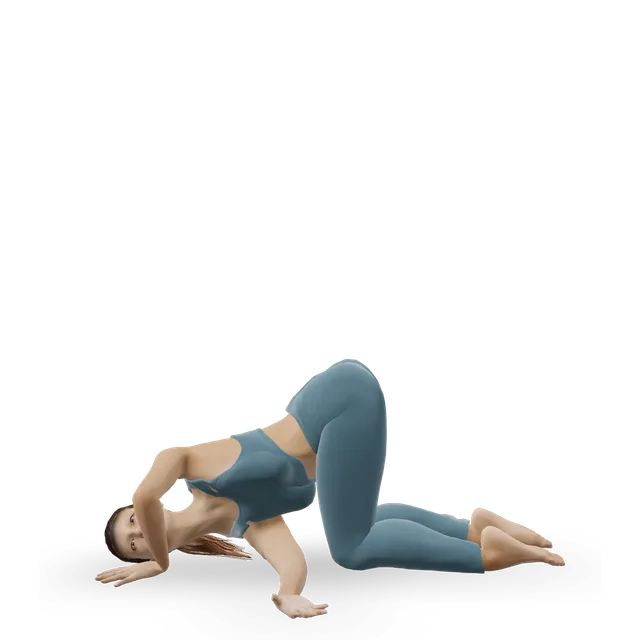
Turn your upper back with your hips still (thoracic rotation, open book, thread the needle), keep the hips turning in and out (90/90, hip circles), practise the hinge of your address position, and give both sides the same: golf is one-sided, and your yoga shouldn't be (our suggestion, as on our Pilates for golfers guide).

Back pain

What goes with itEmerging evidence

Across 19 studies, golfers' back pain was linked with age and body weight, and in studies that followed golfers over time, a previous episode predicted future pain; swing characteristics weren't related. In 33 young elite golfers, those who went on to develop back pain used their abdominal and large back (latissimus) muscles more during the swing at the start, which doesn't support advice to brace harder.

Sources 12, 13, 32

Stretching habitsMixed evidence

In 439 Korean professional golfers, 33.7% reported spine injuries. How often they did golf-related stretching, and how long they warmed up, weren't linked with spine injuries. A middling shoulder reach score went with fewer mid and lower back injuries, while higher scores didn't, and a floor-touch test made no difference. It's a survey at one point in time, so it can't show cause.

Source 33

Yoga for back painStrong evidence

Across 21 trials (2,223 people), yoga for long-lasting low back pain improved function and pain a little against no exercise, by less than people usually notice, and about as much as other back exercise, with more side effects than no exercise, mostly more back pain. NICE (the National Institute for Health and Care Excellence) suggests considering a group exercise programme, which can include mind-body exercise, for an episode or flare-up.

Sources 14, 34

Strengthening beat swing practice with stretchingEmerging evidence

In 30 amateur golfers with low back pain, 6 weeks of trunk stabilisation and leg strengthening (40 minutes, 4 times a week) eased pain and disability and improved balance more than golf swing exercises with stretching. Both groups hit the driver further and faster.

Source 15

The teenage warm-up trialEmerging evidence

In 45 high-school golfers, a golf warm-up done before every session for 12 weeks cut the number of back pain episodes (16 against 100) but not, clearly, the number of golfers who had back pain (5 against 8). Hip rotation and trunk endurance improved in both groups, and golf performance didn't differ. The trial's 2026 correction gives the same figures. Our golf warm-up follows this programme.

Sources 35, 37, 36

In practice

With back pain, nothing is banned: keep pain mild and settling, as our back pain guides say, and add trunk and leg strength. Yoga is a reasonable way to keep moving, not special protection for golfers' backs.

Before a round

Long static stretching costs speedEmerging evidence

In 15 young golfers, a 20-minute total-body static stretching routine before hitting cut clubhead speed by 4.19%, distance by 5.62% and accuracy by 31% against an active warm-up with clubs. Across sports, holds of 60 seconds or more per muscle just before testing cost about 4.6% on average.

Sources 10, 38

What to do insteadStrong evidence

A 2018 consensus of 25 experts advises golfers to "warm up with some aerobic exercise, then golf-specific mobility exercises, then practice swings to maximise performance and minimise injury risk". Our golf warm-up, built on the teenage trial's programme, does this in 10 minutes.

Sources 11, 35

A few moving poses are fine

If you like, add 2 or 3 slow sun salutations or standing twists inside your warm-up, with any hold under 30 seconds (our suggestion, as on our yoga for athletes guide). Save the class for non-golf days or after the round.

Wrists, elbows, shoulders and ribs

The lead wristEmerging evidence

Of 128 European Tour golfers, 30% had a wrist problem and 67% of those were in the lead wrist; a slipping tendon on the little-finger side of the wrist cost the most competition time.

Source 17

ElbowsEmerging evidence

Tennis elbow (outer elbow) in the lead arm is the leading arm injury in amateur golfers. Golfer's elbow (inner elbow) is mostly caused by gripping and manual work rather than golf, as our golfer's elbow guide explains.

Source 18

Swaps while it's sore

Swap all-fours and plank-type poses to your forearms or fists, avoid putting weight through bent-back wrists, use the standing wrist flexor stretch against a wall rather than the kneeling forearm stretch, and keep a light grip on straps (our golfer's elbow and Pilates for golfers guides).

RibsEmerging evidence

In a series of 19 rib stress fractures in golfers, 18 were beginners and one was an experienced golfer who had sharply increased range practice; 16 were on the lead side, and two had been mistaken for back strains for 6 to 8 months. Build practice up gradually.

Source 20

Older golfers, osteoporosis and joint replacements

Golf and older adultsStrong evidence

The golf and health consensus says golf is likely to give older adults strength and balance benefits, and suggests walking the course if you can and aiming for at least 150 minutes of moderate activity a week. The UK guidelines ask adults aged 65 and over to do activities for strength, balance and flexibility on at least 2 days a week; yoga counts towards that.

Sources 11, 39

Osteoporosis: smooth twistingStrong evidence

The UK osteoporosis consensus says "Rotation (twisting) movements should be safe if performed smoothly and comfortably", advises avoiding loaded or end-of-range rounding of the spine, including in yoga, and notes that spinal fractures during a golf swing have been described in case reports. Fold from your hips with a long back, keep twists smooth, and leave out plough and shoulder stand, as our osteoporosis and yoga for seniors guides say.

Source 16

After a hip or knee replacement

Follow your surgical team's limits: no cross-legged sitting, deep folds, pigeon or figure four while you recover, and kneeling only once you're cleared. Our hip and knee replacement guides cover getting back to golf.

Fitting yoga around golf

These are our editorial suggestions: no trial has tested how golfers should fit yoga in.

How often

Two short sessions a week on non-golf days, the strength and power workout on our golf page twice a week to build and once a week in season, and the golf warm-up before every round.

After a round

A few gentle twists, hip stretches and slow breathing are fine after a round, evenly on both sides.

Slower, hold-based classes

Yin and other hold-based classes suit non-golf days. Strong or hot classes are training sessions, so not the day before a competition.

Rotation, both ways equally

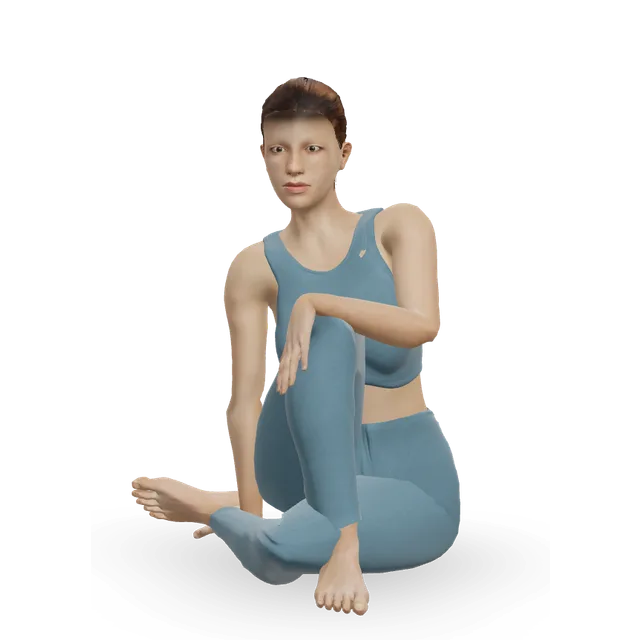
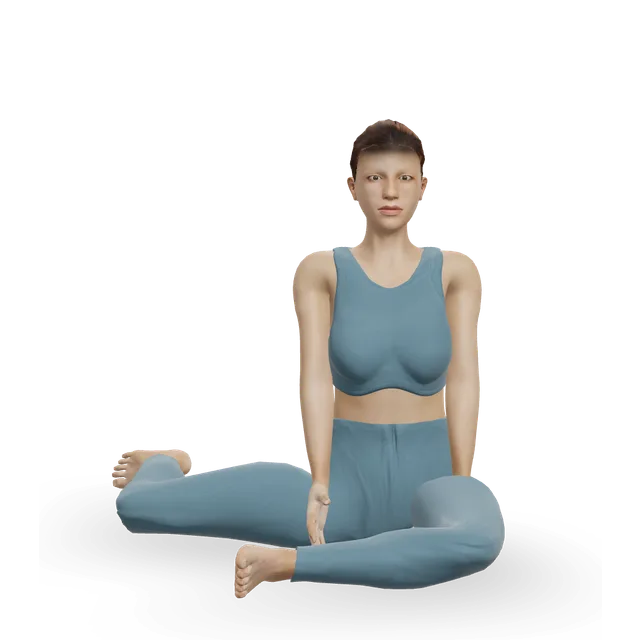
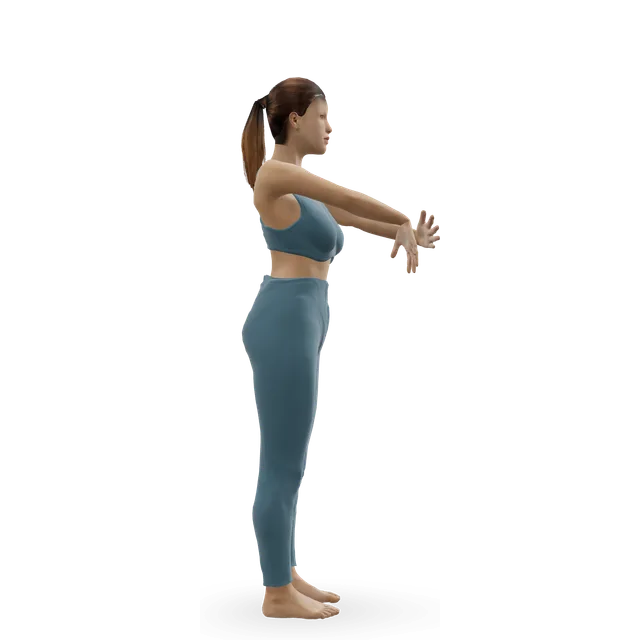
Thoracic rotation: 6 rotations per side, moving with the breath; side-lying open book: 8 to 10 slow openings each side; thread the needle: 30 to 60 seconds each side, 2 rounds, on your forearm or skipped with a sore lead wrist; standing trunk twist: hold each turn about 5 seconds, 5 times each side; standing spiral reach: 5 to 8 slow reps per side, gently with osteoporosis (the moves' pages). Supine twist: 45 seconds each side; half lord of the fishes: 5 slow breaths each side, easing off if your low back pinches (our editorial starting points). Turn the same amount each way.

Hips turning in and out

90/90 switch: 10 slow switches, pausing at the ends; 90/90 hip lift-off: 3 holds of 5 to 8 seconds each way, each side; standing hip circles (controlled articular rotations): 3 slow circles each way with each leg, 20 to 30 seconds a circle (the moves' pages). Reclined figure four and low lunge: 45 seconds each side (our yoga for runners routine). Never press on the crossed knee.

Hinge, stance and balance

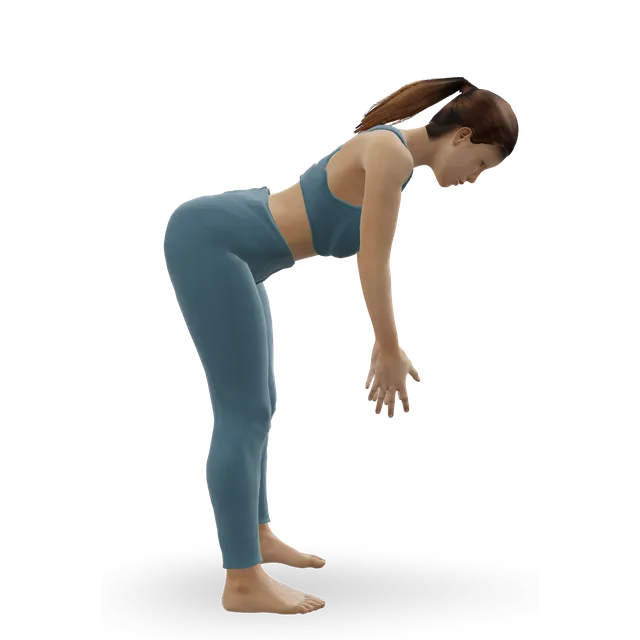
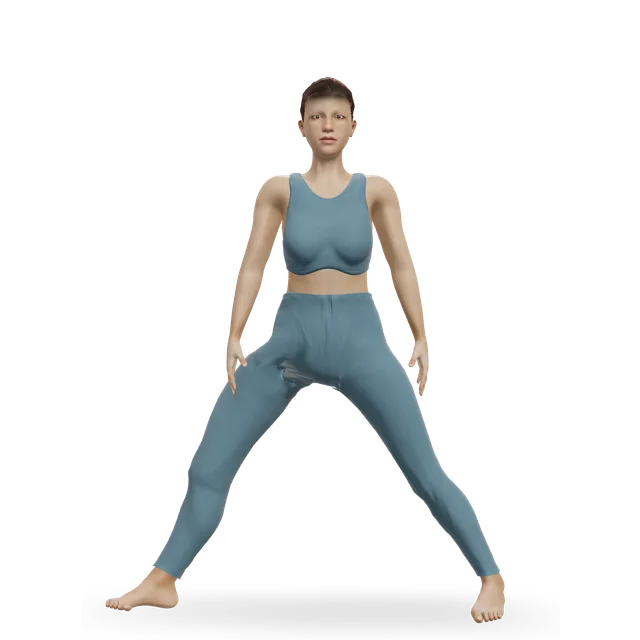
Hip hinge fold: 5 slow folds, 3 breaths at the bottom; mountain pose: 5 to 10 slow breaths, 2 or 3 times (the moves' pages). Warrior II and triangle: 5 breaths each side, with a block under your hand in triangle (our editorial starting point). Tree pose: 30 seconds each side, fingertips on a wall at first (our yoga for runners routine). Warrior III near a wall: 3 breaths each side; chair pose: 3 holds of 30 to 45 seconds (our yoga for athletes guide).

Wrists, forearms and shoulders

Wrist and forearm flow: 10 slow reps each direction (our golf warm-up). Wrist extensor stretch: 3 holds of 30 seconds, once or twice a day (the move's page). Wrist flexor stretch against a wall: 4 holds of 20 seconds, up to 3 times a day (NHS inform's dose, as our golfer's elbow guide gives it). Cross-body shoulder stretch: 2 to 4 holds of 15 to 30 seconds (our editorial starting point), skipped with pain at the top of the shoulder. Stop any stretch that brings on tingling.

Back endurance and breathing

Locust: 2 holds of 5 breaths; side plank: 2 holds of 15 to 30 seconds each side (our yoga for athletes guide). Glute bridge: 2 sets of 10 (our editorial starting point). Slow breathing: at least 5 minutes as a daily practice (the move's page), or 3 or 4 slow breaths before a shot (our suggestion; not tested on scores).

Poses to change or leave out

Before you play

No yoga class or long static holds before a round or range session: use the golf warm-up.

Sources 10, 11

A sore lead wrist or elbow

Take weight through your forearms or fists, or swap the pose, rather than through bent-back wrists (our golfer's elbow and Pilates for golfers guides).

Sources 17, 18

Osteoporosis

No fast, forced or loaded twists, no loaded rounding of the spine, and no plough or shoulder stand.

Source 16

Pregnancy

Leave out closed, deep twists such as revolved chair and half lord of the fishes in later pregnancy, as those moves' cautions say, and after the first trimester keep time flat on your back short (our pregnancy guide).

Eyes and blood pressure

With glaucoma, skip headstands, shoulder stands and other full inversions, and keep other head-down poses brief or use a supported version. With high blood pressure that isn't controlled, skip headstands, shoulder stands and long head-down holds, with no breath holds (our glaucoma and high blood pressure guides).

Free classes

Do our 25-minute yoga for golfers class once or twice a week on non-golf days (our suggestion). Before every round, use the golf warm-up; for distance, the golf strength workout. The Pilates for golfers class is the Pilates equivalent, and the wrist and forearm routine is for later stages of elbow or wrist pain.

Yoga for golfers: a 25-minute rotation, hip and balance class for non-golf days

A 25-minute yoga class for golfers: upper-back and hip rotation done evenly both ways, a hip hinge, one-leg balance, back endurance and forearm stretches.

25 minBeginner18 movesA wall, A step

Golf warm-up

A 10-minute golf warm-up: brisk marching, then the hip and trunk turns, hinge, side bend, lunge and jump from the one trial of a golf warm-up, twice through.

10 minBeginner9 movesA wall

Golf strength and power workout

A 45-minute golf gym session: jumps, a medicine-ball throw and kettlebell swings for power, then squats, hinges, rows, push-ups, fast rotation and carries.

45 minIntermediate14 movesMedicine ball, A kettlebell

Rotation-focused Pilates for golfers: a 25-minute mat and standing class

A 25-minute Pilates class for golfers: upper-back and hip rotation, trunk control, side-hip strength and one-leg balance, done equally on both sides.

25 minBeginner19 movesA wall

Yoga for mobility: a 20-minute flow for range you can control

Twenty minutes of joint circles, a standing flow and end-of-range strength: yoga for range you can reach and control, for desk days, rest days or older joints.

20 minBeginner16 movesA step, A wall

Yoga for balance: a 30-minute standing class, from steady to moving

Thirty minutes of standing yoga for balance: strong standing poses, one-leg poses at the wall, and side steps, backward steps, reaches and sit-to-stands.

30 minBeginner16 movesA wall, A bench or box

Yoga for back pain (gentle beginner sequence)

A gentle 20-minute yoga sequence for back pain, based on the first weeks of a 12-week trial programme: lying, all-fours and standing poses, then rest.

20 minBeginner12 movesFirm cushion

Yoga for tight hips

A hip-opening yoga sequence: low lunge, lizard, goddess, pigeon, bound angle and happy baby.

25 minBeginner10 movesA wall

Wrist and forearm routine

Wrist mobility and forearm strength for desk work, climbing, push-ups and handstands.

10 minBeginner7 movesA wall, A dumbbell

When to stop and get help

These follow our Pilates for golfers guide, word for word, and the NHS. A&E means accident and emergency. In the US, call 911 for 999, and use your doctor's urgent line or urgent care for NHS 111.

Call 999

Call 999 if:

  • You get sudden pain or discomfort in your chest that doesn't go away; it can feel like squeezing or pressure, burning or indigestion.
  • The pain spreads to your left or right arm, or your neck, jaw, stomach or back.
  • You have chest pain and feel sweaty, sick, light-headed or short of breath.
  • Someone faints while exercising, can't be woken within 1 minute, or has chest pain or a pounding, fluttering or irregular heartbeat.

Sources 40, 41

Back pain: call 999 (911 in the US) or go to A&E

If you have back pain and any of these. The first four can be signs of cauda equina syndrome, pressure on the nerves at the base of the spine, which needs treating in hospital urgently. Don't drive yourself: ask someone to drive you or call an ambulance.

  • pain, tingling, weakness or numbness in both legs
  • a loss of feeling around your genitals or anus
  • changes in your bladder or bowels, such as difficulty peeing, or peeing or pooing yourself
  • changes in how your penis or vagina feels during sex, not being able to get or keep an erection, or not being able to orgasm
  • chest pain
  • pain that started after a serious accident, such as a car accident

Source 42

Back pain: urgent GP appointment or NHS 111

If you have back pain and you feel hot, cold, shivery or generally unwell, or the pain is severe and started suddenly, or is getting worse quickly. See a GP if it hasn't improved after a few weeks, it's stopping your daily activities, or it's worse at night.

Source 42

Wrist, elbow or shoulder pain that lasts

See a GP or physiotherapist for wrist pain that hasn't improved after 2 weeks of looking after it, tingling or loss of feeling in the hand, elbow pain that hasn't gone after a few weeks of self-care, or shoulder pain that hasn't improved after 2 weeks or makes it very hard to move your arm. In many areas you can refer yourself to NHS physiotherapy. Our wrist, elbow and shoulder guides have the details.

Rib pain in a beginner

See a GP for rib pain that lasts or is sharp when you breathe or swing, especially after a jump in practice (our wording; the NHS has no golf rib page). Our rib injury guide has more.

Source 20

During yoga

Keep back pain mild and settling, as our back pain guides say, and stop any pose that sends pain, pins and needles or numbness down a leg or into the hand. Stop for chest pain, dizziness or unusual breathlessness.

Myths

"Yoga will add yards to your drive"Strong evidence

We found no trial of yoga in golfers, and flexibility doesn't predict clubhead speed in pooled studies, while strength and power programmes added about 4% to 6%. Yoga may make swing positions more comfortable; strength and power training is what adds distance.

Sources 4, 6, 7, 8, 9

"Stretch before you tee off"Emerging evidence

A 20-minute static stretching routine before hitting cut clubhead speed by 4.19% and accuracy by 31%. Warm up with easy aerobic exercise, golf-specific mobility and practice swings instead.

Sources 10, 11

"Golfers' back pain comes from tight hips, so stretch them"Mixed evidence

Golfers with back pain had less inward turn of the lead hip in two small studies, but pooled studies didn't confirm it, while past back pain, age and body weight did predict pain. In golfers with back pain, trunk and leg strengthening beat swing practice with stretching.

Sources 29, 30, 12, 15

"A bigger turn is always better"Mixed evidence

The modern swing's big upper-body turn against a restricted pelvis may load the low back, though the link is poorly tested, and no conclusive evidence links swing technique with back pain. Comfortable, even rotation matters more than chasing range.

Sources 1, 13

"Golfer's elbow comes from golf"Emerging evidence

Most golfer's elbow comes from repeated gripping and manual work, as our golfer's elbow guide explains. In golfers, tennis elbow in the lead arm is the commoner problem.

Source 18

"Older golfers should only stretch"Emerging evidence

Programmes that combined strength with flexibility raised clubhead speed in men aged 55 to 79 and about 71, and golf's likely benefits for older adults are strength and balance. Keep the strength work.

Sources 22, 23, 11

Questions people ask

Is yoga good for golfers?

It can help you turn comfortably both ways, keep your hips moving, stay steady on one leg through the finish and wind down. We found no published trial of yoga in golfers, and flexibility doesn't predict how fast you swing, so pair it with strength work.

Will yoga improve my golf swing?

It may make swing positions more comfortable, but it hasn't been shown to improve the swing. Strength and power programmes added about 4% to 6% to clubhead speed in trials, while flexibility didn't predict speed.

What are the best yoga poses for golfers?

Upper-back twists (thoracic rotation, open book, thread the needle), hip rotation (90/90 and figure four), a hip hinge, warrior and triangle, and tree pose for balance, done evenly on both sides, with forearm stretches. Our free 25-minute class has them.

Should I do yoga before a round of golf?

Not a class. A 20-minute static stretching routine before hitting cut clubhead speed by about 4%, so before you play, use a short dynamic warm-up and practice swings, like our golf warm-up.

Can yoga help golfers' back pain?

Yoga eases long-lasting back pain a little, about as much as other exercise. In golfers, back pain goes with past back pain, age and weight more than the swing, and in a small trial, strengthening the trunk and legs beat swing practice with stretching.

Do tight hips cause golfers' back pain?

Golfers with back pain had less inward turn of the lead hip in two small studies, but pooled studies didn't confirm a link. Hip rotation work is reasonable for comfort, not a proven fix.

Is yoga good for golfer's elbow?

Gentle wrist and forearm stretches can help, alongside the strengthening in our golfer's elbow guide. Avoid weight through bent-back wrists while it's sore, and remember that tennis elbow in the lead arm is the commoner golf injury.

Is yoga good for golfers over 50 or 60?

Yes, if it's adapted. In older men, programmes mixing flexibility with strength raised clubhead speed by a few per cent, and golf itself likely helps strength and balance. With osteoporosis, keep twists smooth and comfortable.

Is hot yoga good for golf?

We found no study of hot yoga for golf. Hot yoga adds heat and fluid loss, and our hot yoga guide covers who should avoid it; a gentle or mobility class does the same job for golf without the heat.

Is yoga or Pilates better for golfers?

Neither has been tested in golfers. Both train mobility and control, while strength and power training has the most evidence for clubhead speed.

Can yoga help with nerves on the course?

Slow breathing helps you settle in the moment. In golfers, mental skills training, mostly imagery, eased competitive anxiety a little on low-certainty evidence, and none of those studies tested yoga.

How often should golfers do yoga?

Two short sessions a week on non-golf days is a reasonable start (our suggestion). Add strength work twice a week in the off-season, and a dynamic warm-up before every round.


Sources

  1. Cole 2016 · The modern golf swing and lower back injuries (narrative review, Sports Med)

  2. Williamson 2024 · Injuries in professional and amateur golfers: 20 studies, 9,221 golfers (systematic review and meta-analysis, Br J Sports Med)
  3. Robinson 2024 · Injuries and illnesses in 910 amateur golfers over one season (prospective cohort study, BMJ Open Sport Exerc Med)
  4. PubMed · Search for yoga, Pilates, mind-body exercise or tai chi and golf: 21 records, no trial of yoga in golfers (27 October 2026)
  5. Europe PMC · Search for yoga with swimmers, golf or cycling in the title: 6 records, no yoga trial in swimmers or golfers, and only a stress pilot in cyclists (27 October 2026)
  6. Brennan 2024 · Physical characteristics and golf clubhead speed: 20 studies (systematic review and meta-analysis, Sports Med)
  7. Ehlert 2021 · Physical attributes and golf clubhead speed (systematic review, Eur J Sport Sci)
  8. Ehlert 2020 · Strength and conditioning programmes and golf performance: 25 studies (systematic review, J Sports Sci)
  9. Uthoff 2021 · Resistance training, clubhead speed and hitting distance (systematic review, J Strength Cond Res)
  10. Gergley 2009 · Static stretching before hitting: clubhead speed, distance and accuracy in 15 young golfers (crossover study, J Strength Cond Res)
  11. Murray 2018 · International consensus statement on golf and health: 25 experts (consensus statement, Br J Sports Med; full text read)
  12. Smith 2018 · Risk factors for low back pain in golfers: 19 studies (systematic review and meta-analysis, Sports Health)
  13. Watson 2023 · Golf swing mechanics and low back pain: 9 studies (systematic review, J Sports Sci)
  14. Wieland 2022 · Yoga for chronic low back pain: 21 trials, 2,223 people (Cochrane review, Cochrane Database Syst Rev)
  15. Kang 2026 · Trunk stabilisation and leg strengthening, or swing practice with stretching, for 30 amateur golfers with low back pain (randomised trial, J Back Musculoskelet Rehabil)
  16. Brooke-Wavell 2022 · Strong, steady and straight: UK consensus on exercise for osteoporosis (consensus statement, Br J Sports Med; full text read)
  17. Hawkes 2013 · Wrist problems in 128 European Tour golfers (cohort study, Br J Sports Med)
  18. Bayes 2009 · Upper limb injuries in golf (narrative review, Phys Sportsmed)
  19. Williams 2025 · Injuries in 303 UK golfers (retrospective survey, Phys Sportsmed)
  20. Lord 1996 · Rib stress fractures in 19 golfers (case series, Am J Sports Med)
  21. Weston 2013 · Core training and the golf swing: 36 club golfers (randomised trial, Med Sci Sports Exerc)
  22. Thompson 2004 · An 8-week strength and flexibility programme in 31 golfers aged 55 to 79 (randomised trial, J Aging Phys Act)
  23. Thompson 2007 · Functional training and clubhead speed in 18 older golfers (randomised trial, J Strength Cond Res)
  24. Lephart 2007 · An 8-week golf-specific exercise programme in 15 recreational golfers (study without a control group, J Strength Cond Res)
  25. Lee 2015 · A 12-week stretching programme and the swing in 20 amateur golfers (controlled study, J Phys Ther Sci)
  26. Li 2026 · Psychological skills training for anxiety and performance in golfers: 15 studies, 606 golfers (systematic review and meta-analysis, BMC Sports Sci Med Rehabil; full text read)
  27. Bühlmayer 2017 · Mindfulness practice and sports performance (meta-analysis, Sports Med)
  28. Laborde 2022 · Slow breathing and heart rate variability: 223 studies (systematic review and meta-analysis, Neurosci Biobehav Rev)
  29. Vad 2004 · Hip and low back range of motion in 42 professional golfers with and without low back pain (cross-sectional study, Am J Sports Med)
  30. Murray 2009 · Hip rotation and low back pain in 64 amateur golfers (observational study, Phys Ther Sport)
  31. Hamada 2024 · Foam rolling and dynamic stretching of the lead hip, or practice swings: 22 amateur golfers (crossover study, J Strength Cond Res)
  32. Quinn 2022 · Trunk muscle activity in the swing and later low back pain in 33 young elite golfers (prospective cohort study, J Electromyogr Kinesiol)
  33. Kim 2025 · Flexibility, stretching habits and spine injuries in 439 professional golfers (cross-sectional study, J Orthop Surg Res; full text read)
  34. NICE NG59 · Low back pain and sciatica in over 16s: assessment and management (2016, updated July 2026)
  35. Hamada 2025 · A golf warm-up (GLEP) and low back pain in 45 high-school golfers (double-blind randomised trial, Transl Sports Med)
  36. Hamada 2025 · The GLEP warm-up, physical function and golf performance in adolescent golfers (randomised trial, BMC Sports Sci Med Rehabil)
  37. Translational Sports Medicine 2026 · Correction to the golf warm-up and low back pain trial (correction notice; its tables give the same figures)
  38. Behm 2016 · Stretching just before exercise: effects on performance, range of motion and injury (systematic review, Appl Physiol Nutr Metab)
  39. UK Chief Medical Officers · Physical activity guidelines (2019; page updated July 2026)
  40. NHS · Chest pain (past its review date: reviewed August 2023, review due August 2026)
  41. NHS · Fainting (last reviewed August 2026)
  42. NHS · Back pain (last reviewed March 2026)

Exercise education, not a personal prescription, and clinical review of these guides is pending. If you are pregnant, have a health condition such as glaucoma, high blood pressure or osteoporosis, or have had recent surgery, check with a doctor, midwife or physiotherapist before starting, and stop for sharp or increasing pain. Health disclaimer.