Pain guide · Knee pain

Outer knee pain: the IT band, the outer ligament, the meniscus, the nerve and how to build back

Pain on the outside of the knee without an injury is usually the iliotibial (IT) band, especially in runners, cyclists and hikers: it builds at the same point in each run or ride and is worse downhill. After a blow to the inside of the knee, a twist or the knee bending backwards, it is more often the outer ligament (the lateral collateral ligament, LCL) or the outer meniscus, and tingling down the outer shin points to a nerve just below the knee.

This guide starts with the signs that need help today, from a 999 call or accident and emergency (A&E) to National Health Service (NHS) 111 or a general practitioner (GP), including a loose knee or a numb foot after an injury. It then maps the causes by the exact spot, explains why stretching and foam rolling don't lengthen the IT band and what the hip strengthening studies show, and gives a three-stage plan that ends with running, riding and hills.

When to get help first

Exercise is for pain that has been checked or is clearly mild and settling.

Get urgent medical help if

  • Call 999 or go to A&E after a high-energy injury, such as a car crash, a fall from a height or a heavy tackle, if the knee looks deformed or felt as if it came out of joint, the foot is cold, pale or numb, or you can't lift your foot or toes. The knee may have dislocated, which can damage the artery and nerve behind it, even when a pulse can still be felt. Don't drive yourself.
  • You cannot move the knee or put any weight on it, or it is very painful, badly swollen or has changed shape.
  • You hurt your knee and cannot take 4 steps, or you are 55 or over and hurt it in a fall: get it checked the same day for a broken bone.
  • Same day, after an injury to the outer knee: numbness or tingling on the top of the foot or the outer shin, or difficulty lifting the front of the foot and toes (foot drop). Go to A&E or an urgent treatment centre, or get help from NHS 111. The nerve that lifts the foot runs past the outer knee, and it can be injured in more serious outer-knee injuries.
  • Signs of more than an LCL (lateral collateral ligament) sprain: the whole knee swells within a few hours, you felt a pop, or the knee gives way, feels very unstable or bends backwards when you stand. Get it assessed promptly: a combined injury needs a knee surgeon's opinion, and surgery, when it's needed, is usually within about 3 weeks.
  • Your knee swelled up straight away after a twisting injury: get advice from NHS 111.
  • Get advice from NHS 111 now: a hot, red or swollen knee with sudden severe pain, a very high temperature, or feeling hot, cold or shivery. This can be a joint infection.
  • The knee locks, gives way or clicks painfully. Painless clicking is normal.
  • Same day (urgent GP appointment or NHS 111): new difficulty lifting the front of your foot or toes (foot drop), or a foot that slaps down or catches as you walk, especially if it is getting worse. Weakness in both legs, or with numbness around the genitals or bottom or bladder or bowel changes, is the 999 emergency above.
  • Throbbing pain in one leg, usually the calf or thigh; swelling in one leg; red, blue or darkened skin; or swollen veins; or sudden worse pain and swelling around a lump at the back of the knee (a possible clot or a burst Baker's cyst).
  • Leg pain or swelling with breathlessness or chest pain: call 999 or go to A&E, and do not drive yourself. It can be a blood clot that has reached the lungs.
  • Back or leg symptoms with numbness around the genitals or bottom, new trouble controlling your bladder or bowels, or severe or worsening weakness or numbness in both legs.

See a doctor or physiotherapist if

  • Knee pain that has not improved within a few weeks of looking after it at home. Many areas offer NHS physiotherapy without a GP referral.
  • An outer-knee injury that still feels loose, lets the knee bow outwards when you walk, or gives way after the first couple of weeks: ask for an orthopaedic opinion rather than waiting.
  • Tenderness on the bony bump on the outer side just below the knee (the head of the fibula) after an injury: get it checked, because doctors use this sign to decide whether you need an X-ray for a broken bone.
  • A child or teenager with pain on the outer side of the knee after an injury: get it checked, because the growth plate can be injured instead of the ligament.
  • Tingling or numbness down the outer shin or on the top of your foot, without an injury or weakness, after sitting with your legs crossed, kneeling or squatting for a long time: change position, and see a GP if it doesn't settle. Difficulty lifting the front of your foot is the same-day line above.
  • A child or teenager with outer knee pain, clunking, popping or locking, without an injury: see a GP. It can be a disc-shaped meniscus.
  • Outer knee pain that started with a twist, or comes with swelling or locking: that is not typical of IT band syndrome. After a blow or a twist, see our LCL sprain guide.
  • Numbness, tingling or weakness that travels down the leg from the back. That points to a nerve (sciatica) rather than the knee.
  • Your knee is hot, swollen or tender, especially if you can't remember injuring it: contact your GP practice, or NHS 111 if it's closed. A hot knee with a very high temperature is urgent (above).
  • Knee pain with night sweats or weight loss, night pain that stops you sleeping, a change in your walking or balance, or heaviness in your legs: see a GP. A hot, swollen knee with a high temperature is urgent (above).

Where does it hurt?

Location narrows the likely causes; it does not diagnose.

The bony point on the outside of the knee, building at the same point in each run, ride or hike, worse downhill and easing when you stop, with no injury

IT band syndrome.

Read: IT band syndrome →
The outside of the knee on the bike, at about the same time into each ride

Usually the IT band; check the saddle and cleats.

Read: Knee pain when cycling →
The outer side after a blow to the inside of the knee, a twist or the knee bending backwards, tender over the ligament

An LCL sprain, sometimes with the back outer corner of the knee.

Read: LCL sprain →
After a big injury: a knee that feels loose or bows outwards when you walk, or a numb foot or one that won't lift

The back outer corner and the nerve: get it assessed promptly, as the warning signs say.

Read: LCL sprain →
The outer joint line with catching, locking or swelling over the next day or two, often after a twist with the foot planted

A possible outer meniscus tear, common with an anterior cruciate ligament (ACL) injury.

Read: Meniscus tear →
A pop, swelling within hours and a knee that gives way when you turn

An ACL injury: get it assessed.

Read: ACL injury →
A child or teenager with outer knee pain, clunking, popping or locking, without an injury

Possibly a disc-shaped (discoid) outer meniscus: see a GP.

Read: Meniscus tear →
A stiff, achy outer knee from mid-life, worse with activity and after rest, often with knock knees

Arthritis on the outer side, the less common side.

Read: Knee arthritis →
Deep at the back outer corner, sore taking weight with the knee slightly bent, or after a twist

The popliteus tendon: our pain behind the knee guide covers it.

Read: Pain behind the knee →
The tendon running down to the bony bump below the outer knee, after sprinting or long rides

The biceps femoris (outer hamstring) tendon: our pain behind the knee guide covers it.

Read: Pain behind the knee →
Tingling, numbness or burning down the outer shin or on top of the foot, or a foot that catches or slaps, sometimes after sitting cross-legged or kneeling for long

The common peroneal (fibular) nerve.

Read: Foot drop →
Pain from the back running down the leg below the knee, with tingling

Sciatica, from a nerve in the back.

Read: Sciatica →
The outside of the hip rather than the knee, sore to lie on

Outer hip pain.

Read: Outer hip pain →
After a crash, a fall from a height or a twist, a swollen knee you can't put weight on

Possibly a break at the top of the shin bone: get it checked the same day.

Read: Tibial plateau fracture →
Pain mostly when you run

Our knee pain when running guide.

Read: Knee pain when running →
Pain mostly going down stairs

Our knee pain on stairs guide.

Read: Knee pain on stairs →
Pain mostly when you walk, or walking downhill

Our knee pain when walking guide.

Read: Knee pain when walking →
A hot, red, swollen knee with a high temperature

Possibly an infection: get advice from NHS 111 now, as the warning signs say.

Understand it

The IT band: the commonest cause without an injuryEmerging evidence

IT band syndrome is the commonest injury on the outer side of the knee in runners, with an estimated 5% to 14% getting it, and the second commonest diagnosis among 2,002 running injuries at one sports clinic; it is common in cyclists and military recruits too. It is diagnosed from the story and an examination.

The IT band is a thick strip of the thigh's outer fascia, anchored to the thigh bone; no bursa was found under it in 15 cadavers. At about 30° of knee bend it presses on a sensitive fat layer, so the pain is thought to come from compression rather than rubbing. In a model built from 9 runners, the irritation happened near footstrike at about 21° of bend, which is why downhill running, with the knee straighter as the foot lands, provokes it, and faster running on the flat is less likely to.

Sources 1, 2, 3, 4, 5

The outer ligament and the back outer cornerEmerging evidence

LCL injuries are uncommon: 1.1% of 7,769 sports knee injuries at one centre, against 7.9% for the inner ligament (MCL). The LCL is hurt by a force on the inside of the knee pushing it outwards, a twist or the knee bending backwards.

With the popliteus tendon, the LCL forms the back outer corner of the knee (the posterolateral corner). In 331 acute knee injuries with bleeding into the joint, corner injuries were found in 9.1%, and 26 of those 30 came with other ligament tears; a review warns that a missed corner injury can leave the knee unstable. In 61 operated corner injuries, the peroneal nerve was injured in 16 (26%).

Sources 6, 7, 8, 9, 10

The outer meniscus, a child's clunking knee and arthritisEmerging evidence

Outer meniscus tears are more common with a fresh ACL injury, while inner tears are more typical of a long-standing one; meniscus damage is found in 21% to 64% of ACL injuries that are operated on. In children the outer meniscus can be disc-shaped (a discoid meniscus): it may cause no trouble, or pain, swelling, catching, popping or locking, often from childhood.

Arthritis on the outer side is the less common pattern: patterns involving the outer part of the main knee joint made up 15% of 3,786 arthritic knees. Knock knees (valgus) raised the odds of the outer side getting worse about 5-fold over 18 months.

Sources 11, 12, 13, 14

The nerve below the kneeStrong evidence

The common peroneal (fibular) nerve winds round the bony bump below the outer knee (the head of the fibula), the commonest place for it to be squeezed. Squeezing it causes a partial or complete foot drop, sometimes with numbness, and it is the commonest trapped nerve in the leg. The NHS lists crossing your legs, kneeling or squatting for long periods, sports injuries, a slipped disc and knee replacement surgery among the causes of foot drop.

Sources 15, 16

Tendons at the side and back, and a rare jointEmerging evidence

The popliteus, a small muscle deep at the back outer corner, can be hurt on its own or with the corner; it hurts bearing weight with the knee bent 15° to 30°, or early in the swing of a stride. The biceps femoris, the outer hamstring, attaches to the bony bump below the outer knee, and its tendon can be sore there; we found no review describing this in detail, so this guide only names it.

Rarely, the joint between the top of the shin and calf bones (the proximal tibiofibular joint) is unstable: 44 studies described 96 people in all.

Sources 9, 17

When a scan or test helpsStrong evidence

IT band syndrome is diagnosed from the story and an examination, with imaging only if it doesn't settle. After an injury, tenderness on the bony bump below the outer knee is one of the Ottawa knee rule's reasons for an X-ray; X-rays can show a flake of bone pulled off with the ligament, and a magnetic resonance imaging (MRI) scan gives the best view of the ligaments and the back outer corner.

For the nerve, a GP examines your leg and walk and may arrange an X-ray, an ultrasound scan or a computed tomography (CT) scan; nerve tests help find where it's squeezed and the outlook. A child's clunking knee is checked with an X-ray and an MRI.

Sources 3, 18, 19, 7, 9, 16, 15, 12

How it usually goesEmerging evidence

In the hip-strengthening studies, programmes ran 2 to 8 weeks, and in one series of 24 runners without a comparison group, 22 were pain-free and running after 6 weeks; no study has followed untreated IT band pain over time. Foot drop can get better on its own or with treatment, but sometimes it's permanent; after corner injuries, half of the stretched nerves recovered fully. New knee problems should begin to settle within 6 weeks, NHS inform says. No one can promise a date.

Sources 20, 21, 16, 10, 22

What helps, and how strong the evidence is

IT band pain: hip strengthening, though the studies are smallEmerging evidence

In 24 distance runners with IT band syndrome, hip abduction strength was lower on the painful side; after 6 weeks of hip strengthening, strength rose 35% to 51% and 22 were pain-free and running, with no recurrence at 6 months. There was no comparison group. Across 13 studies of 201 runners (5 of them randomised trials), hip abductor strengthening was the common thread, with pain falling by 27% to 100% over 2 to 8 weeks, though the studies were too varied to pool.

An older review called the research on causes and treatment poor and conflicting, and said hip and knee coordination and running style appear key. That's why the plan below is our IT band guide's, built from these studies.

Sources 20, 21, 1

Change the running and riding, not just the kneeEmerging evidence

Downhill running provokes IT band pain, and faster running on the flat is less likely to, a model built from 9 runners suggests. So cut the volume and the downhill, keep running on the flat if it's painless, and bring downhill back last. A review suggests runners may benefit from advice on shoes and running surfaces. On a bike, our cycling guide covers the saddle and cleats; none of those changes has been tested against knee pain in a trial.

Sources 5, 1

Stretching and foam rolling don't lengthen the IT bandEmerging evidence

Three common IT band stretches produced only small strains in cadavers, and in 20 people the band lengthened less than 0.5% during a hip contraction. In a trial of 30 adults, one session of foam rolling or stretching didn't change its stiffness. Rolling may feel good, so use it for comfort if you like, but hip strength is what the treatment studies used. If the outer hip also hurts, leave IT band stretches out, as our IT band guide says.

Sources 23, 24, 4

The LCL, the corner and the nerve: early assessment mattersEmerging evidence

Stable grade 1 and 2 LCL tears are treated without surgery, often with a hinged brace and physiotherapy; surgery is for a ligament pulled off the bone or other injured structures, the American Academy of Orthopaedic Surgeons (AAOS) says. Because most corner injuries come with other ligament tears, and a missed one can leave the knee unstable, a loose knee or a numb foot after an injury needs a knee surgeon's opinion early.

For the nerve, many people improve with changes to activity, a brace and physiotherapy; surgery to free it is for stubborn cases, a lump pressing on it or a cut nerve.

Sources 7, 8, 9, 10, 15

Arthritis and the rare causesStrong evidence

For arthritis on the outer side, the National Institute for Health and Care Excellence (NICE) makes therapeutic exercise and weight management, where it's relevant, the core treatments. Surgery for an unstable joint between the shin and calf bones improved outcomes in small studies, but fixing the joint had a 28% complication rate and removing the head of the fibula 20%. A discoid meniscus that causes symptoms is usually treated with keyhole surgery.

Sources 25, 17, 12

How much pain is OK while you exercise?

0 to 2 is safe, up to 5 is acceptable; after a sprain, below about 3Emerging evidence

This guide uses the knee hub's rule, as our IT band guide does. Rate your knee pain from 0 to 10 during and after exercise. In the pain-monitoring model used in knee trials, 0 to 2 counts as safe, up to 5 as acceptable and above 5 as too much. Aim for 0 to 3 most of the time.

By the next morning your knee should be back to its usual level. If it is not, drop back one step next time (fewer sets, a shallower range, a lower step), not to nothing. Over the weeks pain should hold steady or ease; that last check is our suggestion rather than a tested rule.

Some knee programmes say you should feel no pain at all. The trials allowed some, and a meta-analysis found exercising into some pain did no worse than pain-free exercise.

On runs and rides (our suggestion, built on the same rule): go at a distance, speed and route where the outer knee stays at 5 out of 10 or less and is back to usual by the next morning. IT band pain usually comes on at a predictable point, so stop a little before it, and add distance before hills, with downhill last.

After an LCL sprain, use our LCL guide's tighter rule, borrowed from the MCL guide: some discomfort is acceptable, but ease off a sharp, shooting pain, as an NHS trust leaflet says, and keep pain with activity below about 3 out of 10, with the outer knee no more swollen, sore or loose the next morning. A knee that bows outwards, gives way or bends backwards is never part of the rule: stop and get it checked.

Numbness or tingling on the top of the foot, a foot that won't lift, or swelling straight after a twist aren't pain-rule questions either: see the warning signs.

Sources 26, 27, 28, 5, 29

The exercise plan: 3 stages

Start at the first stage. Each move opens a full guide with a 3D demo.

Stage 1

Settle: less running, riding and downhill, and hip strength from the floor

About the first 2 weeks: for IT band pain, reduce or pause running and leave out downhill, and ride or swim if it's pain-free (our IT band guide); on a bike, check the saddle and cleats first (our cycling guide). After a blow, a twist or the knee bending backwards on the outer side, our LCL guide's first stage replaces this one. Numbness on the top of the foot or a foot that won't lift goes to the warning signs first.

Side-lying leg raise demonstrated on the 3D figure3D demoSide-lying leg raiseBeginner · No equipment

3 sets of 12 to 15 each side · As in our IT band guide. After an LCL sprain, leave out lying on the good side with the injured leg on top (our LCL guide); if the outside of the hip is sore, use a smaller range, as the move page says

Easier: Lateral band walk · Harder: Lateral band walk, band at the feet

Clamshell demonstrated on the 3D figure3D demoClamshellBeginner · No equipment

3 sets of 15 each side · As in our IT band guide

Easier: Supine isometric hip abduction (belt press) · Harder: Lateral band walk

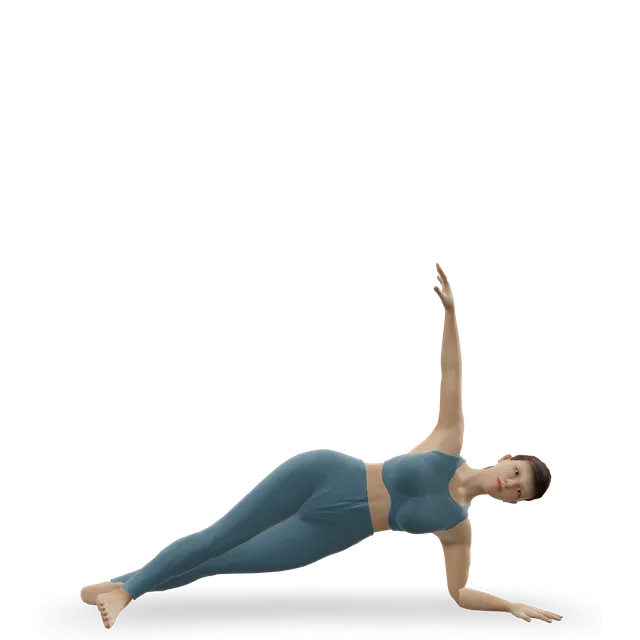
Knee side plank demonstrated on the 3D figure3D demoKnee side plankBeginner · No equipment

3 holds of 20 to 30 s each side · As in our IT band guide

Harder: Side plank

Quad set (static quads) demonstrated on the 3D figure3D demoQuad set (static quads)Beginner · No equipment

Hold 10 s: 2 to 3 at a time, building to 8, 2 to 3 times a day · NHS inform's knee exercise, with its pacing; for a sore outer joint line or arthritis on the outer side

Harder: Straight-leg raise

Stationary cycling demonstrated on the 3D figure3D demoStationary cyclingBeginner · Cardio machine

10 to 15 minutes, easy, if it's pain-free, with the saddle checked · As in our knee pain guide; the saddle check is our cycling guide's

Easier: Recumbent exercise bike · Harder: Air bike intervals

Move on when: Daily activity and these moves stay within the pain rule and the knee is no worse the next morning (our IT band guide's check), and 20 to 30 minutes of brisk walking on the flat is comfortable (our suggestion).

Follow along: a timer, a cue and the next move, one step at a time.
Stage 2

Build: hip strength standing and on one leg

About weeks 2 to 4: hip strength standing and on one leg, the common thread of the IT band studies, with the pelvis level.

Side plank demonstrated on the 3D figure3D demoSide plankIntermediate · No equipment

3 holds of 30 s each side · As in our IT band guide. Stop if the supporting shoulder hurts, as the move page says

Easier: Knee side plank · Harder: Side plank with leg lift

Lateral band walk demonstrated on the 3D figure3D demoLateral band walkBeginner · A band

3 sets of 12 to 15 steps each way, the band above the knees · As in our IT band guide; the band above the knees is our LCL guide's caution. Stay low and quiet, as the move page says

Easier: Hip abduction machine · Harder: Lateral band walk, band at the feet

Single-leg stand demonstrated on the 3D figure3D demoSingle-leg standBeginner · A wall

3 holds of 30 to 45 s each leg, the pelvis level · As in our IT band guide

Easier: Tandem stance and heel-to-toe walk · Harder: Single-leg reach matrix

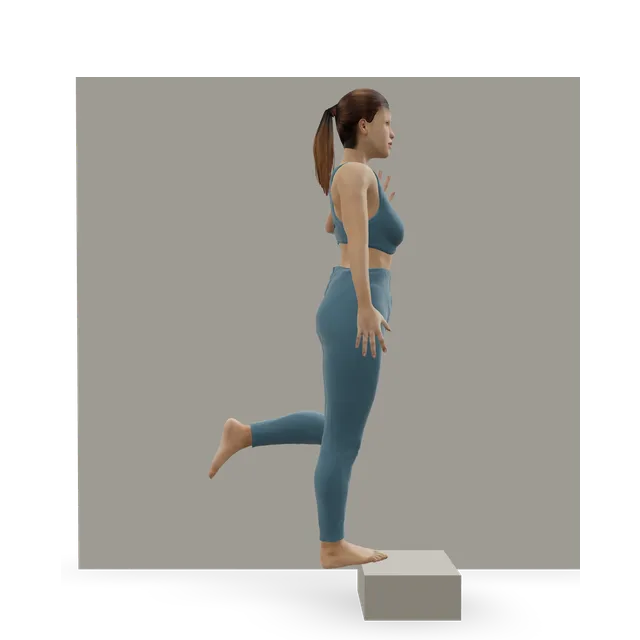
Step-up demonstrated on the 3D figure3D demoStep-upBeginner · A step

3 sets of 10 each leg · As in our IT band guide

Easier: Low step-up · Harder: Dumbbell step-up

Single-leg glute bridge demonstrated on the 3D figure3D demoSingle-leg glute bridgeIntermediate · No equipment

3 sets of 10 each leg · As in our IT band guide. If the hamstring cramps, bring the working foot closer in, as the move page says

Easier: Glute bridge · Harder: Barbell hip thrust

Move on when: Step-ups and single-leg work stay within the pain rule, with the pelvis level (our IT band guide's check).

Follow along: a timer, a cue and the next move, one step at a time.
Stage 3

Strengthen, then running, riding and hills come back

About weeks 4 to 8, then ongoing: our IT band guide's last stage (the hip programmes in the studies ran 2 to 8 weeks), while running, riding and hills come back by the written steps below.

Side plank with leg lift demonstrated on the 3D figure3D demoSide plank with leg liftAdvanced · No equipment

3 sets of 8 to 10 each side · As in our IT band guide

Easier: Side plank · Harder: Copenhagen plank

Single-leg Romanian deadlift demonstrated on the 3D figure3D demoSingle-leg Romanian deadliftAdvanced · A dumbbell

3 sets of 8 each leg · As in our IT band guide. Learn it with your fingertips on a wall or rail, as the move page says

Easier: Dumbbell Romanian deadlift

Patrick step-down demonstrated on the 3D figure3D demoPatrick step-downIntermediate · A step

3 sets of 10 each leg · As in our IT band guide; it practises the controlled lowering that downhill running and stairs need (our reasoning)

Easier: Bodyweight squat · Harder: Skater squat

Split squat demonstrated on the 3D figure3D demoSplit squatIntermediate · No equipment

3 sets of 8 to 10 each leg · As in our IT band guide

Easier: Bodyweight squat · Harder: Reverse lunge

Treadmill jogging demonstrated on the 3D figure3D demoTreadmill joggingIntermediate · Cardio machine

Flat walk-run intervals, then flat continuous runs; downhill last · As in our IT band guide: downhill running provokes IT band pain, and faster flat running is less likely to

Easier: Treadmill walking · Harder: Sprint intervals

Move on when: Our suggestion: your usual runs, rides and walks, including hills, stay within the pain rule, and the knee is back to usual by the next morning. Keep two strength days a week; if a long or hilly session flares it, go back to the last distance and route that were fine.

Follow along: a timer, a cue and the next move, one step at a time.

What to change for now

What to change for now (written steps)

Our 3D figure can't show these changes. They come from the studies above and the NHS; where a step is our suggestion or another of our guides' advice, it says so. No trial has tested a running, riding or hiking change for outer knee pain as such.

  • 1. Running: reduce the volume and leave out downhill running for now; running on the flat, and faster running, is less likely to provoke IT band pain. Cross-train with whatever doesn't hurt (our IT band guide).
  • 2. Riding: check that the saddle isn't too high or low and that your cleats let your feet sit at their natural angle, changing one thing at a time. Our cycling guide covers the set-up, which hasn't been tested against knee pain in a trial.
  • 3. Hiking and stairs: shorter steps going down, walking poles and routes with less descent while it settles (our suggestion, built on the downhill finding).
  • 4. After an LCL sprain: for the first weeks, leave out positions that bow the knee outwards or twist the shin out, such as sitting cross-legged or with an ankle on the other knee (our LCL guide).
  • 5. The nerve: sitting with your legs crossed, kneeling or squatting for long periods can squeeze it, the NHS says. Uncross your legs, take kneeling breaks and keep pressure off the outer knee just below the joint, such as from a tight strap or a cast edge (our suggestion). With foot drop, wear shoes that fit well and support your feet, remove things you could trip on, and use a stick if you need one (the NHS).
  • 6. Foam rolling and stretching: comfort at most, as the IT band studies show; leave IT band stretches out if the outer hip also hurts (our IT band guide).

Sources 5, 1, 16, 23, 24

Running, riding and hills come back (written steps)

No trial has tested a return-to-running schedule for outer knee pain. These steps are our suggestion unless a source is named.

  • 1. Running: flat walk-run intervals first, stopping a little before the point where the pain usually starts; then continuous flat runs; then some faster running on the flat; then gentle hills, with downhill last, because downhill provokes IT band pain. Change one thing at a time.
  • 2. Riding: keep the saddle and cleats set as our cycling guide describes, and build ride length before hills and big gears.
  • 3. Hiking and stairs: shorter steps and poles going down at first; long descents last.
  • 4. After an LCL sprain: sideways moves, hopping and cutting come last, with our LCL guide's return checks (jog without a limp, change direction without pain, hop without pain or giving way).
  • 5. The nerve: keep uncrossing your legs and taking kneeling and squatting breaks while it recovers; our foot drop guide covers braces and exercises.
  • 6. Keep two strength days a week. If it isn't improving within about 6 weeks, see a GP or physiotherapist (NHS inform).

Sources 5, 16, 22

Positions to swap, and why

Habit or positionWhy it mattersInstead
Running downhill, or long descents on a walk, while it's soreDownhill running provokes IT band pain because the knee is straighter as the foot lands.Flat routes, faster flat running if it's painless, and cross-training.Try: Stationary cycling
Running on through the pain to the end of a planned runIT band pain comes on at about the same point in each run, and our IT band guide cuts the volume first.Stop a little before the usual point; walk-run intervals.Try: Treadmill jogging
Foam rolling or stretching the IT band hard as the fixThe band lengthened less than 0.5% in a hip contraction, and one session of rolling or stretching didn't change its stiffness.Hip strength.Try: Side plank with leg lift
A big jump in distance, hills or a new bike set-up all at onceIf several things change at once, you can't tell which one helped or hurt (our suggestion, as our cycling guide advises).One change at a time.
Sitting cross-legged or a figure-four stretch early after an LCL sprainThese positions bow the knee outwards and twist the shin out, the stresses the LCL resists (our LCL guide).Both feet flat, and a hamstring stretch with a strap.Try: Supine hamstring stretch with a strap
Side-lying leg raises with the injured leg on top, early after an LCL sprainThe weight of the lower leg bends the top knee outwards (our LCL guide's reasoning).Bridges now; band work above the knees later.Try: Glute bridge
Side-stepping with the band round your feetThe band pulls the foot in and bows the knee outwards (our LCL guide).The band above the knees.Try: Lateral band walk
Sitting with your legs crossed, or kneeling or squatting for long spells, with tingling down the outer shinThe NHS lists these among the causes of foot drop.Uncross your legs, change position and take breaks.
Waiting weeks with a loose knee after an injuryMost back outer corner injuries come with other ligament tears, and a missed one can leave the knee unstable.An early orthopaedic opinion (our LCL guide).
Relying on a strap or brace for IT band painWe found no study that tested one for IT band pain.Hip strength and changes to your running.Try: Lateral band walk

Routines to follow

More moves for this area

Questions people ask

What causes pain on the outside of the knee?

Without an injury, the commonest cause in active people is the IT band, especially in runners and cyclists. After a blow, a twist or the knee bending backwards, it may be the outer ligament (LCL) or the outer meniscus, and from mid-life, arthritis on the outer side. Tingling down the outer shin points to a nerve.

Is outer knee pain my IT band?

Often, if it builds at the same point in each run, ride or hike, sits over the bony point on the outside and is worse downhill. If it started with a twist, comes with swelling, catching or locking, or the knee feels loose, it's more likely a ligament or meniscus injury, which needs checking.

Why does the outside of my knee hurt when I run downhill?

Running downhill keeps the knee straighter when your foot lands, near the angle where the IT band presses on a sensitive fat layer, which is why it provokes IT band pain; faster running on the flat is less likely to. Leave out downhill running for now, build hip strength and bring hills back last.

Should I stretch or foam roll my IT band?

Do it if it feels good, but it won't make the band longer: it lengthened less than 0.5% in a hip contraction, and one session of rolling or stretching didn't change its stiffness. Hip strengthening has better support: in one series, 22 of 24 runners were pain-free and running after 6 weeks.

Why does the outside of my knee hurt when I cycle?

It's usually the IT band, often after a jump in riding or a change to the bike. Check that your saddle isn't too high or low and that your cleats let your feet sit at their natural angle, changing one thing at a time; our cycling guide covers the set-up.

Why does the outside of my knee hurt when I bend it, squat or straighten it?

With catching, locking or swelling after a twist, it can be the outer meniscus. A deep ache at the back outer corner when you load a slightly bent knee can be the popliteus tendon, and IT band pain often bites at about 30° of bend.

Why does the outside of my knee hurt going down stairs?

Going down stairs takes the knee through about the bend where IT band pain bites (our reading of the anatomy studies), and the NHS says arthritic knees are often most painful on stairs. Lead with your sore leg going down and use the rail, and build the lowering strength in the plan with step-downs; our knee pain on stairs guide has more.

Why is the outside of my knee or shin numb or tingling?

The common peroneal nerve winds round the bony bump just below the outer knee, and it can be squeezed there; the NHS lists crossing your legs and kneeling or squatting for long spells among the causes of foot drop. Change position and see a GP if it doesn't settle, and get help the same day if your foot drags or won't lift, especially after an injury.

Can outer knee pain be a ligament or meniscus tear?

Yes, after a blow to the inside of the knee, a twist or the knee bending backwards. LCL injuries are uncommon, but most injuries to the back outer corner come with other ligament tears, so a loose knee or a numb foot needs assessing early. The outer meniscus is more often torn along with an ACL injury.

What exercises help outer knee pain?

For IT band pain, hip strengthening is the common thread of the studies, with pain falling by 27% to 100% over 2 to 8 weeks. The plan on this page starts with side-lying leg raises, clams and bridges and builds to single-leg work and flat runs, with downhill last. After a sprain, our LCL guide's plan comes first.

When should I see a doctor for outer knee pain?

Call 999 if the knee looks deformed after a big injury, or the foot is cold, pale, numb or won't lift. Get help the same day for numbness on the top of the foot after an injury, a knee you can't put weight on, or swelling straight after a twist. Otherwise, see a GP or physiotherapist if it isn't improving within a few weeks.

Related exercise guides

Other pain guides

Sources

  1. van der Worp 2012 · Iliotibial band syndrome in runners (systematic review, Sports Med)
  2. Taunton 2002 · 2,002 running injuries at a sports medicine clinic (retrospective case-control analysis, Br J Sports Med)
  3. Strauss 2011 · Iliotibial band syndrome: evaluation and management (review, J Am Acad Orthop Surg)
  4. Fairclough 2006 · The anatomy of the iliotibial band as the knee bends and straightens (anatomy and MRI study, J Anat)
  5. Orchard 1996 · Biomechanics of iliotibial band syndrome in runners (biomechanical study, Am J Sports Med)
  6. Majewski 2006 · 7,769 sports knee injuries over 10 years at one centre (registry study, Knee)
  7. American Academy of Orthopaedic Surgeons (OrthoInfo) · Collateral ligament injuries
  8. LaPrade 2007 · Back outer corner and multiple ligament injuries in 331 acute knee injuries (prospective MRI study, Arthroscopy)
  9. English 2010 · Posterior knee pain (review, Curr Rev Musculoskelet Med)
  10. Ridley 2018 · Peroneal nerve injuries with back outer corner injuries of the knee, 61 people (surgical series, Knee Surg Sports Traumatol Arthrosc)
  11. Feroe 2024 · Meniscus tears with an anterior cruciate ligament injury (review, Curr Rev Musculoskelet Med)
  12. American Academy of Orthopaedic Surgeons (OrthoInfo) · Discoid meniscus
  13. Stoddart 2021 · Where osteoarthritis sits in the knee, across 3,786 knees (systematic review and meta-analysis, Osteoarthritis Cartilage)
  14. Sharma 2001 · Knee alignment and osteoarthritis getting worse in 237 people (cohort study, JAMA)
  15. Poage 2016 · Peroneal nerve palsy: evaluation and management (review, J Am Acad Orthop Surg)
  16. NHS · Foot drop
  17. Kruckeberg 2017 · Instability of the joint between the shin and calf bones (systematic review, Arthroscopy)
  18. Bachmann 2004 · The Ottawa knee rule for ruling out fractures (systematic review, Ann Intern Med)
  19. Bunt 2018 · Knee pain in adults and adolescents: the initial evaluation (clinical review, Am Fam Physician)
  20. Fredericson 2000 · Hip abductor weakness and hip strengthening in 24 runners with IT band syndrome (case series, Clin J Sport Med)
  21. Sanchez-Alvarado 2024 · Conservative treatment of IT band syndrome in runners, 13 studies (systematic review, Front Sports Act Living)
  22. NHS inform · Knee problems
  23. Falvey 2010 · Iliotibial band syndrome: the evidence behind some treatments (cadaver and laboratory study, Scand J Med Sci Sports)
  24. Pepper 2021 · Foam rolling, stretching and IT band stiffness in 30 adults (RCT, Int J Sports Phys Ther)
  25. NICE NG226 · Osteoarthritis in over 16s: diagnosis and management (2022)
  26. Thomeé 1997 · Treating kneecap pain in young women with a pain-monitoring model (trial, Phys Ther)
  27. Ageberg 2010 · Neuromuscular training for severe hip or knee osteoarthritis, and its pain rule (feasibility study, BMC Musculoskelet Disord)
  28. Smith 2017 · Should exercises be painful in chronic musculoskeletal pain? (systematic review and meta-analysis, Br J Sports Med)
  29. Sherwood Forest Hospitals NHS Foundation Trust · Medial collateral ligament (MCL) sprain (patient leaflet, revised March 2026)
  30. NHS · Osteoarthritis: symptoms (past its review date: reviewed March 2023, review due March 2026)
  31. NHS · Knee pain
  32. NHS · Septic arthritis
  33. NHS · Sprains and strains
  34. NHS · DVT (deep vein thrombosis)
  35. NHS · Sciatica
  36. Chartered Society of Physiotherapy · Managing your knee pain
  37. NHS inform · Exercises for knee muscle and joint problems

Exercise education, not a diagnosis or treatment plan. It is written from the guidelines and studies listed above; review by a clinician is pending. If your pain follows an injury, is severe, is getting worse, or comes with any warning sign listed on this page, get it assessed. Health disclaimer.