Pain guide · Hip pain

Outer hip pain: the tendons and bursa, the IT band, the back or the hip joint, and how to build back

Pain on the outside of the hip is usually the tendons of the buttock muscles where they attach to the bony point you lie on, often called hip bursitis or greater trochanteric pain syndrome. It is commonest in women aged about 40 to 60, and it is typically worse lying on that side, on stairs and after crossing your legs. On scans, tendon changes are far more common than a swollen bursa.

This guide starts with the signs that need help today, from a 999 call or accident and emergency (A&E) to the National Health Service's 111 line (NHS 111) or a general practitioner (GP): not being able to stand or walk after a fall, a hot, swollen hip, and a runner's groin pain. It then maps the other causes felt on the side of the hip (a click, a burning patch on the thigh, the hip joint and the back), explains what to change in sitting, standing and sleeping, and gives a three-stage plan, based on the programme that beat a steroid injection in a trial, that ends with walking, stairs, sleeping on that side and sport.

When to get help first

Exercise is for pain that has been checked or is clearly mild and settling.

Get urgent medical help if

  • Call 999 or go to A&E: you have severe hip pain after a fall or injury, you're unable to walk or put weight on your leg, or you have any tingling or loss of feeling in your hip or leg after an injury. In an older adult this can be a broken hip; the leg may look shorter or turned outward. Don't drive yourself.
  • Buttock or leg pain with numbness around the genitals or bottom, new trouble controlling your bladder or bowels, or weakness or numbness in both legs.
  • Ask for an urgent GP appointment or get help from NHS 111: you have severe hip pain that started suddenly but you've not had a fall or injured your hip, your hip is swollen and feels hot, the skin around your hip has changed colour, or you have hip pain, feel generally unwell and have a high temperature (or feel hot, cold or shivery).
  • A child or teenager with sudden hip, thigh or knee pain, a limp, or who will not put weight on a leg. Hip problems in children can sometimes be felt in the thigh or knee, and in some children knee pain is the only sign.
  • Same day, and stop running now: groin or front-of-hip pain in a runner, sometimes felt in the thigh or knee, that builds with running, hurts with every step or at night, or hurts when the hip is turned to the end of its range. Keep weight off the leg, using crutches if you have them, and get an urgent GP appointment or help from NHS 111 the same day: a stress fracture of the hip (femoral neck) needs urgent imaging.
  • Same day (GP or NHS 111): weakness in the leg, or numbness that is spreading quickly or getting worse. Meralgia never makes the leg weak, because the nerve it affects carries only feeling.
  • Same day, for an X-ray: a teenager with sudden pain at the front of the hip bone or along its rim during a sprint, kick or jump, often with a pop and no knock, especially if walking or lifting the leg is painful. It can be a piece of growth plate pulled off the pelvis (an avulsion fracture), which is often mistaken for a strain.

See a doctor or physiotherapist if

  • See a GP: hip pain is stopping you doing normal activities or affecting your sleep, the pain is getting worse or keeps coming back, the pain has not improved after treating it at home for 2 weeks, or you have hip stiffness for more than 30 minutes after waking up.
  • Outer hip pain that hasn't improved within 6 weeks of following this advice, or that gets worse: talk to a GP or physiotherapist. In many areas you can refer yourself.
  • No improvement after 3 months of good rehabilitation, or sudden weakness walking (a tendon tear is possible).
  • A limp, or your pelvis dropping on the other side when you stand on the painful leg, that isn't getting better with exercise: ask about a scan. A tear in the gluteal tendon can look like stubborn bursitis, and large tears often do well with surgery (our suggestion).
  • Bone pain that is constant or worse at night, especially with a lump, unexplained weight loss, fever or tiredness, or a past history of cancer.
  • Hip or groin pain that hasn't settled after 6 weeks, especially with a normal X-ray, or new hip pain if you take high-dose steroids, drink heavily, or have sickle cell disease or lupus: ask your GP about an MRI (magnetic resonance imaging) scan and a hip specialist. It can be avascular necrosis, which an X-ray can miss early on.
  • You are over 50 and your hips and shoulders stay stiff and painful for more than 45 minutes each morning: see a GP (possible polymyalgia rheumatica).
  • Pain, tingling or numbness spreading below the knee that isn't settling after a few weeks, is getting worse or stops your normal activities: see a GP.
  • Weakness, a knee that gives way, or trouble climbing stairs or getting up from a chair; numbness that spreads to the front or inside of the thigh, below the knee or into the foot; back pain with the thigh symptoms; or symptoms in both thighs. These point to a nerve in the back or another cause, so see a GP.
  • Pelvic pain in pregnancy that makes it hard to move around, hurts when you get out of a car or turn over in bed, or makes going up or down stairs painful: call your midwife or GP. You may be referred to a physiotherapist who specialises in pelvic joint problems in pregnancy.
  • The hip catches, locks or gives way, or the click hurts deep in the groin: a problem inside the joint, such as a labral tear or a loose fragment, is possible.

Where does it hurt?

Location narrows the likely causes; it does not diagnose.

The bony point on the side of the hip that you lie on, tender to press, worse lying on that side, standing on that leg, on stairs and after crossing your legs

Usually the gluteal tendons, with or without bursitis: greater trochanteric pain syndrome, often called hip bursitis.

Read: Hip bursitis (gluteal tendinopathy) →
The same pain that hasn't settled after months, with a limp, the pelvis dropping on the other side as you walk, or sudden weakness

Possibly a tear in the gluteus medius tendon: ask about a scan.

Read: Hip bursitis (gluteal tendinopathy) →
A click, clunk or snap on the outside of the hip as you walk or swing the leg, usually painless

The iliotibial (IT) band flicking over the bony point: an external snapping hip.

Read: Snapping hip →
Burning, tingling or a numb patch on the outer thigh with no weakness, worse with tight belts, leggings or a tool belt

Meralgia paraesthetica, a squeezed skin nerve.

Read: Meralgia paresthetica →
A deep ache in the buttock, groin or front of the thigh from mid-life, stiff after rest, with socks and car seats hard

The hip joint (arthritis), which is felt in the buttock, thigh and groin more than on the side.

Read: Hip arthritis →
Buttock and outer thigh pain with back pain, pain below the knee, or pins and needles

Sciatica, from a nerve in the lower back.

Read: Sciatica →
Low back pain on one side that spreads to the hip

The back and the outer hip are easily mixed up: our one-sided back pain guide shows how they differ.

Read: Lower back pain on one side →
Low on one side at the back of the pelvis, near the dimple

The sacroiliac (SI) joint.

Read: SI joint pain →
The top of the hip bone, the rim you rest your hands on, after a knock or a fall onto it

A hip pointer (a bruised hip bone).

Read: Hip pointer →
A runner or walker with groin or front-of-hip pain that builds with every step, later at night

A possible stress fracture of the hip: stop running and get it checked the same day, as the warning signs say.

Read: Stress fracture →
The outside of the knee rather than the hip, at the same point in each run or ride

IT band syndrome at the knee.

Read: IT band syndrome →
The outside of the knee, from other causes

Our outer knee pain guide.

Read: Outer knee pain →
In pregnancy or after giving birth, the back of the pelvis or the pubic bone, worse turning in bed and getting out of a car

Pelvic girdle pain.

Read: Pelvic girdle pain (SPD) →
After a hip replacement

Your team's plan comes first.

Read: Hip replacement →
A child or teenager with hip, thigh or knee pain or a limp

A same-day check, as the warning signs say.

Read: SUFE (slipped hip growth plate) →
Bone pain that is constant or worse at night, with weight loss, a fever or a history of cancer

See a GP soon, as the warning signs say.

Pain mostly at night, or when you lie on your side

Our hip pain at night guide.

Read: Hip pain at night →
Pain mostly when you walk

Our hip pain when walking guide.

Read: Hip pain when walking →
Pain mostly when you run

Our hip pain when running guide.

Read: Hip pain when running →
Pain mostly when you sit

Our hip pain when sitting guide.

Read: Hip pain when sitting →
Pain mostly when you cycle

Our hip pain when cycling guide.

Read: Hip pain when cycling →
Pain mostly when you squat

Our hip pain when squatting guide.

Read: Hip pain when squatting →

Understand it

Usually the gluteal tendons, not just a bursaStrong evidence

Outer hip pain is most commonly greater trochanteric pain syndrome, which takes in tendinopathy or tears of the gluteus medius tendon, bursitis and friction from the iliotibial (IT) band, a 2021 clinical review says, and gluteus medius tendinopathy or tears are now thought to be more common than bursitis. NHS inform describes it as irritation of the tendons and the bursa (a small fluid-filled sac) over the outside of the hip bone.

On ultrasound in 877 people with this pain, 177 (about 1 in 5) had bursitis, while about half had gluteal tendon changes and 28.5% a thickened IT band. On magnetic resonance imaging (MRI) in 24 women, 11 had a gluteus medius tear and only 2 a swollen bursa, never without tendon changes. A review explains why position matters: the tendons are thought to suffer most when they're squeezed against the bone as the thigh drifts across the body and are loaded at the same time.

Sources 1, 2, 3, 4, 5

Who gets it, and what brings it onEmerging evidence

In an American population study of 3,026 adults aged 50 to 79, it affected 15% of women and 6.6% of men on one side, and 8.5% and 1.9% on both; women had about 3.4 times the odds. Tenderness over the IT band, knee arthritis on the same side and low back pain went with it; body mass index didn't, once those were allowed for. NHS inform says it is more common in women and between 40 and 60.

NHS inform lists pain in the hip, thigh or buttock, worse lying on that side or with direct pressure, with walking, standing or running, sitting with your legs crossed, standing on that leg ("hanging on the hip"), climbing stairs, and lifting your legs in or out of a car or bed. A sudden rise in walking, a fall onto the side of the hip, weakness, hormone changes, arthritis in the hip or knee and low back pain can all contribute.

Sources 6, 2

What clinicians checkEmerging evidence

In 65 people with outer hip pain, pain within 30 seconds of standing on the painful leg made tendon changes on MRI very likely, and no tenderness over the bony point made them unlikely; but 31% had tendon changes on MRI without positive tests. Across 6 studies of 272 people, pressing on the tendons and then testing the hip pushing outwards against resistance moved the chance of the diagnosis from 59% to 96% when both hurt, and to 14% when neither did; the certainty was very low to moderate.

In 24 women, the pelvis dropping on the other side when standing on the painful leg (a positive Trendelenburg sign) was the best clue to a tear. The 2021 review says that if the pain doesn't improve with physiotherapy and anti-inflammatories, a tear should be considered.

Sources 7, 8, 4, 1

Other causes felt on the side of the hipEmerging evidence

The commonest snapping hip is on the outside, where the IT band flicks over the bony point; it is usually painless. A burning, tingling or numb patch on the outer thigh, sometimes down to the outer knee, is meralgia paraesthetica, a squeezed skin nerve; tight clothing, a heavy tool belt and weight gain are common causes, the American Academy of Orthopaedic Surgeons (AAOS) says.

Pain from the hip joint itself is mostly felt elsewhere: in 51 people whose hip joint was confirmed as the source by an injection, it was felt in the buttock in 71%, the thigh in 57% and the groin in 55%, and never in the lower back. Pain from the back can be felt at the outer hip, and the two are easily mixed up: in one spine centre, outer hip tendon pain turned out to be the cause for a sizeable share of the people referred with low back pain. A stress fracture of the top of the thigh bone in a runner usually causes groin pain, so it is a warning sign rather than outer hip pain.

Sources 9, 10, 11, 12, 13

When a scan helpsEmerging evidence

A scan isn't needed to start treatment for the typical pattern. If it isn't improving with physiotherapy and anti-inflammatories, an ultrasound or MRI can look for a gluteus medius tear, the 2021 review says; MRI is also how the main trial confirmed the diagnosis. Standing X-rays of the hip and pelvis are the first test for long-lasting hip pain that isn't clear, mainly to look at the joint, and the National Institute for Health and Care Excellence (NICE) diagnoses hip osteoarthritis without imaging from 45 when the pattern fits. A runner's groin pain that builds with every step needs urgent imaging.

Sources 1, 14, 15, 13

How it usually goesEmerging evidence

It is often slow. NHS inform says it can take 6 to 12 months of rehabilitation to settle, and flare-ups along the way are normal. In Dutch general practice, at least 36% of 164 people still had pain after a year and 29% after 5 years, and arthritis in the legs raised the chance of it lasting.

It often improves anyway: in the main trial, 20 of 68 people who waited and saw reported success at 8 weeks and 31 of 60 at a year, and in another trial 34% had recovered by 3 months and 60% by a year with usual care. No one can promise a date.

Sources 2, 16, 15, 17
What helps, and how strong the evidence is

Education and exercise did best in the main trialStrong evidence

The LEAP trial included 204 people aged 35 to 70 with outer hip tendon pain confirmed on MRI (167 women, average age 55). At 8 weeks, 51 of 66 reported success after 14 physiotherapy sessions of education and exercise, against 38 of 65 after one steroid injection and 20 of 68 with wait and see; average pain was 1.5, 2.7 and 3.8 out of 10. At a year, education and exercise still led on overall improvement (51 of 65, against 36 of 63 and 31 of 60), while pain was similar to the injection group. There were no serious side effects.

The education taught people to avoid positions that squeeze the tendons, mostly the thigh drifting across the body, and to build up load gradually, with a daily home programme of 4 to 6 exercises taking 15 to 20 minutes. Strength didn't differ between the groups at 8 weeks, and the authors think much of the benefit may have come from the education.

Sources 15, 18

A steroid injection: short-term helpStrong evidence

In 120 people in Dutch general practice, 55% had recovered at 3 months after an injection, against 34% with usual care, but there was no difference at a year (61% and 60%). In a trial of 229 people allocated in turn, one injection did best at 1 month (75% success, against 7% for a home programme and 13% for shockwave) and worst at 15 months (48%, against 80% and 74%); its home programme wasn't aimed at the gluteal tendons.

NHS inform says an injection may help the pain but won't cure the condition, and the AAOS advises limiting how many you have.

Sources 17, 20, 2, 21

Exercise ranks first, and the advice may matter as much as the exercisesEmerging evidence

Across 19 trials of 1,701 people, exercise therapy ranked first for easing pain and improving function, and injections helped function on one scale; the trials are few. In a trial of 132 postmenopausal women, everyone was taught to avoid positions that squeeze the tendons, and all groups improved, whether they did tendon exercises or sham exercises and whether they had a hormone cream or a dummy one. The hormone cream made no clear difference overall, and any effect seemed to depend on body weight, so the trial doesn't support it as a treatment.

Sources 22, 23

Shockwave, platelet-rich plasma and surgeryMixed evidence

Shockwave therapy did best at 4 months in one trial (68%, against 41% for a home programme and 51% for an injection), but NICE says the evidence is limited, it should be used only with special arrangements, and symptoms may get worse. Platelet-rich plasma (PRP) injections did no better than a placebo injection in a double-blind trial of 79 people, whose authors don't support their routine use; a review of 11 trials, 5 of them in outer hip pain (263 people), found an effect in their favour on one hip score, but the studies varied widely.

Surgery for a gluteus medius tear typically has good results, and referral is often advised for large partial or complete tears, the 2021 review says; the evidence is mainly small case series, with no randomised trials.

Sources 24, 20, 25, 26, 1, 27

IT band and outer hip stretches aren't the answerEmerging evidence

Stretching is still widely advised, and the AAOS lists stretching the IT band among its treatments. The LEAP programme left out IT band and piriformis stretches because they hold the hip in the squeezed position, and its authors note a lack of evidence that the structures on the outside of the hip are tight. The plan on this page loads the tendons with holds instead.

Sources 18, 21

How much pain is OK while you exercise?

Up to 5 out of 10 in strength work, no extra outer hip pain in squats, bridges and side steps, and tonight is the testEmerging evidence

This guide uses the hip hub's rule. During the exercise, pain up to about 5 out of 10 is acceptable. It should settle within an hour or so, and your hip should be no worse that night or the next morning. If it is, do less next time (fewer repetitions, a smaller range, a lighter load), not nothing. Pain can go up a little when you start a new exercise programme; guidelines for arthritis say so and still recommend keeping going.

For the outer hip tendons, the LEAP programme set a tighter limit in squats, bridges and side steps: no change in pain over the bony point, because pain there suggests the tendon is being squeezed. In its heavier strength work, pain up to 5 out of 10 was accepted as long as it eased afterwards and was no worse that night or the next morning. NHS inform's outer hip exercises use a 0 to 5 limit too.

The night after exercise is the check: if the hip wakes you more than usual, drop back one step, not to nothing (our suggestion). The 5 out of 10 figure borrows from an Achilles trial's pain-monitoring rule, and in trials of long-lasting muscle and joint pain, exercise that allowed some pain did no worse than pain-free exercise. A fall, a hot swollen hip, a runner's groin pain and a child's limp aren't pain-rule questions: see the warning signs.

Sources 18, 28, 14, 29, 30

The exercise plan: 3 stages

Start at the first stage. Each move opens a full guide with a 3D demo.

Stage 1

Settle: take the squeeze off the tendons, and load them without squeezing

About the first 2 weeks: change sitting, standing and sleeping today (no crossed legs, weight on both feet, no low chairs, a pillow between your knees in bed), as NHS inform advises, and start the LEAP programme's first week: holds and small movements, knees apart, that load the tendons without squeezing them. A fall, a hot swollen hip, a runner's groin pain or a child's limp gets checked first; with confirmed hip bursitis, hip arthritis, meralgia or sciatica, that guide's plan can replace this one.

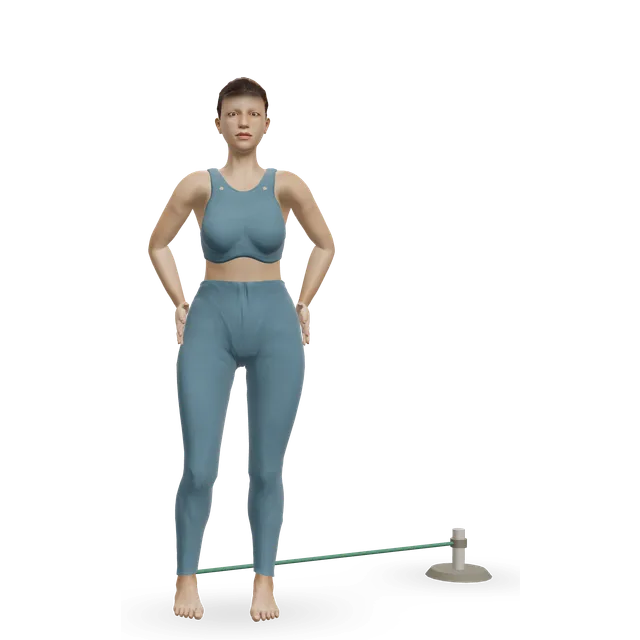
Supine isometric hip abduction (belt press) demonstrated on the 3D figure3D demoSupine isometric hip abduction (belt press)Beginner · A band

3 to 5 holds of 5 to 10 s, twice a day, at a light effort · The move page's dose, from the LEAP trial programme. Lying on your back, not your side

Harder: Lateral band walk

Standing wall-press hip abduction demonstrated on the 3D figure3D demoStanding wall-press hip abductionBeginner · A wall

3 to 5 holds of 5 to 15 s each side, twice a day · The move page's dose, from the LEAP trial programme. Keep the standing hip level rather than sagging out, as the move page says

Easier: Supine isometric hip abduction (belt press) · Harder: Lateral band walk

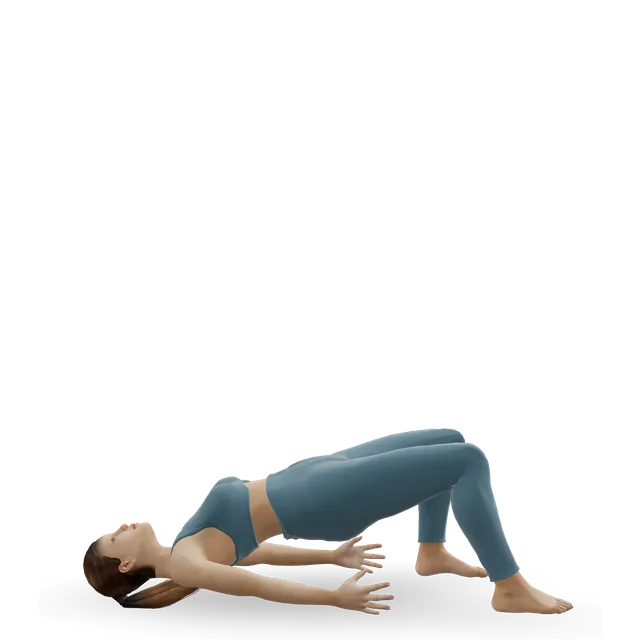
Glute bridge demonstrated on the 3D figure3D demoGlute bridgeBeginner · No equipment

2 to 3 slow reps at a time, building to sets of 8, 2 to 3 times a day, up to 2 sets of 15 · NHS inform's outer hip bridge, with its pacing; the LEAP programme's first week used 10 a day

Easier: Pelvic tilt into bridge · Harder: Single-leg glute bridge

Sit squat (partial squat) demonstrated on the 3D figure3D demoSit squat (partial squat)Beginner · No equipment

10 slow reps, once a day, knees over your toes · The LEAP programme's first-week squat, as in our hip bursitis guide. No extra outer hip pain

Harder: Bodyweight squat

Side-stepping (sideways walking) demonstrated on the 3D figure3D demoSide-stepping (sideways walking)Beginner · A wall

10 steps each way, next to a counter, daily · The move page's dose (the NHS balance exercises); the LEAP programme's first week used 10 each way too

Harder: Lateral band walk

Move on when: None of these raises outer hip pain, and your nights have been no worse for about a week (as in our hip bursitis and hip pain at night guides).

Follow along: a timer, a cue and the next move, one step at a time.
Stage 2

Build: shift the load onto one leg with the pelvis level

About weeks 2 to 6, daily home work with the harder moves 3 or 4 days a week: the LEAP programme's step from two legs to one (offset bridges and squats, then band side steps), plus NHS inform's step-up, keeping the hip from drifting across the body.

Staggered-stance bridge (offset bridge) demonstrated on the 3D figure3D demoStaggered-stance bridge (offset bridge)Beginner · No equipment

5 slow reps each side once a day, building to 2 sets of 5 to 10 at a somewhat hard effort · The move page's dose, from the LEAP trial programme

Easier: Pelvic tilt into bridge · Harder: Single-leg glute bridge

Split squat demonstrated on the 3D figure3D demoSplit squatIntermediate · No equipment

5 slow reps each side, short range, building to 2 sets of 5 to 10 · The LEAP programme's offset squat step, as in our hip bursitis guide; a narrow stance at first

Easier: Bodyweight squat · Harder: Reverse lunge

Step-up demonstrated on the 3D figure3D demoStep-upBeginner · A step

Lead with the sore leg onto a low step: 2 to 3 at a time, building to sets of 8, up to 2 sets of 15 · NHS inform's step-up for outer hip pain, with its pacing. Keep the pelvis level

Easier: Low step-up · Harder: Dumbbell step-up

Lateral band walk demonstrated on the 3D figure3D demoLateral band walkBeginner · A band

10 to 15 steps each way with a band · As in our hip bursitis guide; the LEAP programme added band side steps from week 3

Easier: Hip abduction machine · Harder: Lateral band walk, band at the feet

Single-leg stand demonstrated on the 3D figure3D demoSingle-leg standBeginner · A wall

3 holds of 10 to 30 s each side, pelvis level, a hand near a support · As in our hip bursitis guide; standing on the painful leg for 30 s is also the clinical test

Easier: Tandem stance and heel-to-toe walk · Harder: Single-leg reach matrix

Move on when: You can stand on the sore leg for 30 seconds with the pelvis level and no outer hip pain (as in our hip bursitis guide), and you're sleeping through most nights in your chosen position (as in our hip pain at night guide).

Follow along: a timer, a cue and the next move, one step at a time.
Stage 3

Strengthen, then walking, stairs, sleeping on that side and sport come back

From about week 6, 2 or 3 strength days a week and ongoing: heavier single-leg strength without squeezing the tendons, as the LEAP programme's twice-weekly heavier sessions did, while everyday activities come back by the written steps below. Expect months rather than weeks: NHS inform says 6 to 12 months of rehabilitation is common.

Single-leg glute bridge demonstrated on the 3D figure3D demoSingle-leg glute bridgeIntermediate · No equipment

2 to 3 sets of 8 each side · As in our hip bursitis guide

Easier: Glute bridge · Harder: Barbell hip thrust

Side-lying leg raise demonstrated on the 3D figure3D demoSide-lying leg raiseBeginner · No equipment

Lying on your good side with a pillow between your knees: build to 2 sets of 15 · NHS inform's exercise and pacing: keep the top leg in line with your body, not in front of it. The move page says this position can aggravate a painful outer hip, so it comes last

Easier: Lateral band walk · Harder: Lateral band walk, band at the feet

Patrick step-down demonstrated on the 3D figure3D demoPatrick step-downIntermediate · A step

3 sets of 8 each side · As in our hip bursitis guide

Easier: Bodyweight squat · Harder: Skater squat

Single-leg Romanian deadlift demonstrated on the 3D figure3D demoSingle-leg Romanian deadliftAdvanced · A dumbbell

2 to 3 sets of 6 to 8 each side · As in our hip bursitis guide; fingertips on a wall at first, as the move page says

Easier: Dumbbell Romanian deadlift

Knee side plank demonstrated on the 3D figure3D demoKnee side plankBeginner · No equipment

3 holds of 15 to 30 s each side · As in our hip bursitis guide; lie on the good side first

Harder: Side plank

Standing band hip abduction demonstrated on the 3D figure3D demoStanding band hip abductionBeginner · A band + An anchor point

3 sets of 10 to 12 each side · As in our hip bursitis guide (a standing band hip abduction)

Easier: Hip abduction machine · Harder: Lateral band walk, band at the feet

Move on when: Our suggestion: your usual walks, stairs and a night on the sore side stay within the pain rule, with nights no worse. Keep two strength days a week; flare-ups are normal, and NHS inform suggests fewer repetitions or a few days' rest before starting again.

Follow along: a timer, a cue and the next move, one step at a time.

What to change for now

What to change for now (written steps)

Our 3D figure can't show these changes. They come from NHS inform, the NHS, the LEAP programme and the AAOS; where a step is our suggestion or another of our guides' advice, it says so.

  • 1. Crossing your legs: avoid it for now (NHS inform). Crossing the thigh over the body squeezes the tendons against the bone, which the LEAP programme taught people to avoid. Sit with your knees hip-width apart and your hips a little higher than your knees (our hip bursitis guide's advice).
  • 2. Standing: spread your weight evenly across both feet rather than leaning on one leg (NHS inform). If you carry a child on your hip, swap sides often (our suggestion).
  • 3. Sleeping: avoid lying on the painful side. Lie on your back with a pillow under your knees, or on your good side with a pillow between your legs to keep them in line with your hip joints (NHS inform).
  • 4. Chairs: avoid low chairs (NHS inform and the NHS); a cushion or a higher seat helps.
  • 5. Moving: keep moving but try not to overdo things, wear comfortable, shock-absorbing shoes with a soft sole, and don't carry anything heavy (the NHS). Keep active and stay at work, even if your duties change (NHS inform).
  • 6. Weight: NHS inform suggests losing weight if you're overweight; in a population study, body weight wasn't linked to outer hip pain once other factors were allowed for, so treat this as general health advice.
  • 7. A burning, numb outer thigh: tight belts, leggings or a heavy tool belt can squeeze the skin nerve, so loosen them or use a toolbox instead (the AAOS).

Sources 2, 19, 18, 6, 10

Walking, stairs, sleeping on that side and sport come back (written steps)

No trial has tested how to bring these back after outer hip pain. These steps are our suggestion unless a source is named.

  • 1. Walking: build distance before pace and hills, at a level where hip pain stays at 5 out of 10 or below and is back to usual by the next morning (our hip pain when walking guide's suggestion). A walking stick in the opposite hand helps a limp.
  • 2. Stairs: use a rail at first and go one step at a time if it hurts, building to step over step as your single-leg strength returns.
  • 3. Sleeping on the sore side: once your nights have been settled for 2 weeks, try a few minutes on that side at the start of the night, on a soft topper or a folded duvet with a pillow between your knees; roll off before it builds, and add a few minutes every few nights (our hip pain at night guide's suggestion, untested). Until then, follow NHS inform's positions above.
  • 4. Sitting cross-legged comes back last, once crossing your legs no longer brings the pain on.
  • 5. Running: run on the flat at an easy pace, and leave long hills and cambered roads for now (our hip pain when running guide). Stop if the pain builds as you go.
  • 6. If it isn't improving within 6 weeks, or it's getting worse, talk to a GP or physiotherapist (NHS inform); in many areas you can refer yourself.

Sources 2, 18, 19

Positions to swap, and why

Habit or positionWhy it mattersInstead
Sitting with your legs crossedThe thigh crosses the body and presses the tendons against the bone; NHS inform advises avoiding it.Knees hip-width apart, hips a little higher than the knees.
Standing hanging on one hip, or carrying a child on that hipThe hip drifts out sideways under your weight, which squeezes the tendons; NHS inform advises spreading your weight across both feet.Weight even on both feet; swap sides.
Lying on the painful sideDirect pressure on the bony point for hours; NHS inform advises avoiding it.On your back with a pillow under your knees, or on the good side with a pillow between your legs.
Lying on your good side with the top knee dropped acrossThe top thigh falls across the body; NHS inform says keep the legs in line with the hip joints.A pillow or two between your knees.
Low chairs and car seatsThe NHS and NHS inform both say avoid low chairs.A higher seat or a cushion.
IT band and outer hip stretchesThe stretch position is the squeezed position, and the LEAP programme left these stretches out. The move page says skip it if the bony point on the outside of your hip is sore.Leave the outer hip unstretched while it's painful, and load it with holds.Try: Supine isometric hip abduction (belt press)
The knee-across-the-body stretchIt pulls the thigh across the body, and the move page says skip it with pain on the outside of the hip.Standing wall-press holds.Try: Standing wall-press hip abduction
Foam rolling the outer thighIt presses on the sore area; the move page says roll gently, if at all, and skip it if the bony point is sore.Skip it while it's painful; bridges instead.Try: Glute bridge
Side-lying leg raises in the first weeks, or with the top leg drifting forwardThe move page says this position can aggravate a painful outer hip, and NHS inform keeps the top leg in line with the body.Holds and bridges first; side-lying raises last.Try: Standing wall-press hip abduction
Deep squats with the knees falling inThe LEAP programme allowed no change in outer hip pain in squats, because pain there suggests the tendon is being squeezed.Partial squats to a chair, knees over your toes.Try: Sit squat (partial squat)
Relying on repeated steroid injectionsThe relief is short-term and had faded by a year in trials, education and exercise did better in LEAP, and the AAOS advises limiting the number.Education and exercise first; an injection to get going, if needed.Try: Staggered-stance bridge (offset bridge)
Tight belts, leggings or a tool belt with a burning, numb outer thighThe AAOS names tight clothing and heavy tool belts as common causes of a squeezed skin nerve.Looser clothing; a toolbox instead of a tool belt.

Routines to follow

More moves for this area

Questions people ask

What causes pain on the outside of the hip, and is it bursitis?

Usually it's the tendons of the buttock muscles where they attach to the bony point on the side of the hip, often called hip bursitis or greater trochanteric pain syndrome. A swollen bursa is less common than the name suggests: on ultrasound in 877 people with outer hip pain, about 1 in 5 had bursitis, while about half had gluteal tendon changes. Less often the pain comes from the iliotibial (IT) band, a squeezed skin nerve, the hip joint or the lower back, and the map on this page shows how they differ.

Why does my outer hip hurt at night or when I lie on my side?

Lying on the painful side presses the sore tendons against the bone, and lying on the other side lets the top knee drop across the body, which squeezes them too. Lie on your back with a pillow under your knees, or on your good side with a pillow between your knees. Our hip pain at night guide has more on getting back to sleeping on that side.

Why does the outside of my hip hurt when I walk or climb stairs?

Walking, standing on one leg and stairs all load the outer hip tendons, and NHS inform lists them among the things that bring this pain on. Spread long walks through the day, use a rail on the stairs for now, and build strength with the plan. Pain within 30 seconds of standing on the sore leg is one of the clearest clues that the tendons are involved.

Why does my outer hip hurt when I sit cross-legged or in low chairs?

Crossing your legs brings the thigh across the body, which squeezes the outer hip tendons against the bone. NHS inform advises avoiding crossed legs and low chairs while it's painful, and the NHS also says don't sit in low chairs. Sit with your knees apart and your hips a little higher than your knees, and bring crossed legs back last.

Should I stretch my IT band for outer hip pain?

Not while it hurts. The programme that did best in the main trial left out IT band and outer hip stretches because they put the tendons in the squeezed position, and its authors note a lack of evidence that the structures there are tight. Holds, bridges and small squats are a better start.

What exercises help outer hip pain?

In the LEAP trial, education plus exercise beat a steroid injection and wait and see at 8 weeks: 51 of 66 people reported success, against 38 of 65 and 20 of 68. The programme started with gentle holds pressing the leg outwards, bridges, small squats and side steps, then built up to single-leg work. NHS inform's version uses a bridge, a side-lying leg raise and a step-up.

Does a steroid injection help outer hip pain?

It can help in the short term: in one trial, 55% had recovered at 3 months after an injection against 34% with usual care, but there was no difference at a year. In the LEAP trial, education and exercise did better than an injection at 8 weeks, and NHS inform says an injection may help the pain but won't cure it.

Can outer hip pain come from my back?

Yes, and the two are easily mixed up: in one spine centre, outer hip tendon pain turned out to be the cause for a sizeable share of people referred with low back pain. Pain below the knee, pins and needles or numbness in the leg, or pain that changes with back movements points to the back. Tenderness on the bony point and pain within 30 seconds of standing on that leg point to the hip tendons.

Why does the outside of my hip and thigh burn or feel numb?

A burning, tingling or numb patch on the outer thigh, with no weakness, is often meralgia paraesthetica, a squeezed skin nerve; tight clothing, a heavy tool belt and weight gain are common causes. Weakness in the leg, or numbness that spreads quickly, needs a GP or NHS 111 the same day.

Is outer hip pain linked to the menopause?

It's commonest in women, mostly between 40 and 60, and in an American population study women had about 3.4 times the odds of men. In a trial of 132 postmenopausal women, everyone improved with education about avoiding positions that squeeze the tendons, and a hormone cream made no clear difference overall; any effect seemed to depend on body weight. Education and exercise are the core either way.

How long does outer hip pain take to get better?

It can take months: NHS inform says 6 to 12 months of rehabilitation is common, with flare-ups along the way. In one primary care study, at least 36% still had pain after a year, while in the LEAP trial most people who did education and exercise reported success by 8 weeks and still did at a year. Talk to a GP or physiotherapist if it isn't improving within 6 weeks.

When should I worry about outer hip pain?

Call 999 or go to A&E for severe hip pain after a fall or injury, not being able to walk or put weight on your leg, or tingling or loss of feeling after an injury. Get an urgent GP appointment or call NHS 111 for severe pain that started suddenly without a fall, a hot, swollen hip, skin that has changed colour, or hip pain with feeling unwell and a high temperature. A runner's groin or hip pain that builds with every step needs a same-day check and no more running.

Related exercise guides

Other pain guides

Sources

  1. Chamberlain 2021 · Hip pain in adults: evaluation and differential diagnosis (American Family Physician)
  2. NHS inform · Greater trochanteric pain syndrome
  3. Long 2013 · Ultrasound in 877 people with greater trochanteric pain syndrome, and the rarity of bursitis (imaging series, AJR Am J Roentgenol)
  4. Bird 2001 · MRI and examination findings in 24 women with greater trochanteric pain syndrome (prospective study, Arthritis Rheum)
  5. Grimaldi 2015 · Gluteal tendinopathy: a review of mechanisms, assessment and management (Sports Medicine)
  6. Segal 2007 · Greater trochanteric pain syndrome in 3,026 adults aged 50 to 79 (population study, Arch Phys Med Rehabil)
  7. Grimaldi 2017 · Clinical tests against MRI for gluteal tendinopathy in 65 people with outer hip pain (diagnostic study, Br J Sports Med)
  8. Kinsella 2024 · Clinical tests for greater trochanteric pain syndrome in 6 studies (diagnostic meta-analysis, J Orthop Sports Phys Ther)
  9. American Academy of Orthopaedic Surgeons (OrthoInfo) · Snapping hip
  10. American Academy of Orthopaedic Surgeons (OrthoInfo) · Burning thigh pain (meralgia paresthetica)
  11. Lesher 2008 · Where hip joint pain is felt, in 51 people confirmed by injection (descriptive study, Pain Med)
  12. Tortolani 2002 · Greater trochanteric pain syndrome in people referred to spine specialists with low back pain (case series, Spine J)
  13. Robertson 2017 · Femoral neck stress fractures in sport (current concepts review, Sports Med Int Open)
  14. NICE NG226 · Osteoarthritis in over 16s: diagnosis and management (2022)
  15. Mellor 2018 · Education plus exercise vs corticosteroid injection vs wait and see for gluteal tendinopathy (RCT, BMJ)
  16. Lievense 2005 · Outer hip (trochanteric) pain 1 and 5 years on in 164 people in primary care (cohort study, Br J Gen Pract)
  17. Brinks 2011 · A steroid injection against usual care for greater trochanteric pain syndrome in 120 people (RCT, Ann Fam Med)
  18. Mellor 2016 · The LEAP trial protocol (BMC Musculoskeletal Disorders)
  19. NHS · Hip pain in adults
  20. Rompe 2009 · Home training, a steroid injection or shockwave for greater trochanteric pain syndrome in 229 people (controlled trial, Am J Sports Med)
  21. American Academy of Orthopaedic Surgeons (OrthoInfo) · Hip bursitis
  22. Wang 2025 · Conservative treatment of greater trochanteric pain syndrome (network meta-analysis of 19 RCTs)
  23. Mary McMillan 2022 · Hormone therapy, exercise, or both for greater trochanteric pain syndrome in postmenopausal women (factorial RCT, AJSM)
  24. NICE HTG248 · Extracorporeal shockwave therapy for refractory greater trochanteric pain syndrome (2011, first published as IPG376)
  25. Atchia 2025 · Platelet-rich plasma against a placebo injection for greater trochanteric pain syndrome in 79 people (double-blind RCT, J Bone Joint Surg Am)
  26. Kuhns 2026 · Platelet-rich plasma for hip problems outside the joint in 11 trials (systematic review, Arthroscopy)
  27. Ramadanov 2025 · Endoscopic against open gluteal tendon repair (systematic review protocol, BMJ Open)
  28. NHS inform · Exercises for greater trochanteric pain syndrome
  29. Smith 2017 · Should exercises be painful in chronic musculoskeletal pain? (systematic review and meta-analysis, Br J Sports Med)
  30. Silbernagel 2007 · Carrying on with sport under a pain-monitoring model for Achilles tendon pain in 38 people (RCT, Am J Sports Med)

Exercise education, not a diagnosis or treatment plan. It is written from the guidelines and studies listed above; review by a clinician is pending. If your pain follows an injury, is severe, is getting worse, or comes with any warning sign listed on this page, get it assessed. Health disclaimer.