Pain guide · Hip pain

Hip pointer: a bruised hip bone, the teenage fractures that mimic it, and getting back to sport

A hip pointer is a deep bruise of the iliac crest, the rim of the hip bone you rest your hands on, from a tackle, a knee or a fall onto your side. It's very tender, it hurts to move your trunk or lift your leg out to the side, and expert reviews say it usually settles within 1 to 3 weeks. Go to A&E or call 999 if you can't walk on the leg or the pain is severe after a fall, especially in later life, when a fall can break the hip; and get urgent help for severe tummy pain, or dizziness with a fast heartbeat, after a hard blow to your side.

Teenagers are different. The crest of the hip bone is one of the last growth plates to close, in the late teens, and until the pelvis stops growing, a sudden sprint, kick or jump can pull a piece of bone off it, often with a pop and no knock. That needs an X-ray the same day, as it's often mistaken for a strain. This guide covers how to tell them apart, what helps, padding for contact sport, and a staged plan with 3D demos.

When to get help first

Exercise is for pain that has been checked or is clearly mild and settling.

Get urgent medical help if

  • Severe hip pain after a fall or injury, or you cannot stand, walk or put weight on the leg. In an older adult this can be a broken hip; the leg may look shorter or turned outward.
  • Tingling or loss of feeling in the hip or leg after an injury.
  • Call 999 or go to A&E after a hard blow to the tummy, side, lower ribs or hip if you then have severe tummy pain, your tummy hurts when you touch it, there's pain behind your left lower ribs that is tender to touch, you feel dizzy with a fast heartbeat, or, with a bruised or broken rib, you have pain in your tummy or shoulder. The spleen, liver or another organ can be injured, and a damaged spleen can burst straight away or weeks later. Each sign comes from an NHS page; the list combining them is ours.
  • Same day (urgent GP appointment or NHS 111): blood in your pee after a hard blow to the side or lower back. It may look pink, red or dark brown. The NHS asks for any blood in the pee to be checked, and a hard blow can injure a kidney.
  • A child or teenager with sudden hip, thigh or knee pain, a limp, or who will not put weight on a leg. Hip problems in children can be felt only in the knee.
  • Same day, for an X-ray: a teenager with sudden pain at the front of the hip bone or along its rim during a sprint, kick or jump, often with a pop and no knock, especially if walking or lifting the leg is painful. It can be a piece of growth plate pulled off the pelvis (an avulsion fracture), which is often mistaken for a strain.
  • Same day: after a blow to the hip bone, severe pain that spreads into the side of the tummy, you can't sit up, or there's a dent above the bone. The tummy muscles may have torn off the bone.
  • After an avulsion fracture or an operation: get help from NHS 111 the same day for a wound that is red, hot, swollen or oozing, a very high temperature or feeling hot, cold or shivery, or throbbing pain and swelling in one calf with red or darker skin, which could be a blood clot. Call 999 for breathlessness or chest pain.

See a doctor or physiotherapist if

  • Hip pain that stops normal activities or disturbs sleep, keeps getting worse, or has not improved after 2 weeks of looking after it at home.
  • A hard, painful lump that stays or grows weeks after the knock: bone can form in a bruised muscle (myositis ossificans).
  • A burning, tingling or numb patch on the outer thigh after a knock near the bony point at the front of the hip: a skin nerve runs there, and our meralgia paresthetica guide covers it.
  • Bone pain that is constant or worse at night, especially with a lump, unexplained weight loss, fever or tiredness, or a past history of cancer.
  • A teenage runner with an ache along the rim of the hip bone that builds up over weeks, with no injury: see a GP or physiotherapist. The growth plate there can be irritated by overuse, and in one series it settled with 4 to 6 weeks' rest.

Understand it

What it is

The iliac crest is the curved rim of the hip bone you rest your hands on. It sits just under the skin, with little padding. A direct blow, such as a tackle, a knee or a fall onto your side, crushes the tissue against it: there's bleeding under the bone's thin outer layer and into the muscles that attach there (the side tummy muscles above, the hip muscles below), and the bone itself is bruised. The bruise can be anywhere from the bony point at the front of the hip to the back of the crest.

Sources 1, 2, 3, 4

Who gets it

Players of collision sports: American football, rugby, ice hockey and Australian football, and cricket fielders landing on the ball. In the National Football League (NFL), hip injuries were 3.1% of all injuries over 10 years; contact injuries were most often bruises, and most players were back within 2 weeks. A fall onto your side can do the same at any age.

Sources 1, 2, 3, 5

How it's recognised, and when an X-ray is needed

Pain at the moment of impact, marked tenderness along the crest, swelling and later bruising; twisting or bending the trunk, and lifting the leg out to the side, hurt. A typical hip pointer doesn't need a scan. An X-ray is needed when:

  • You can't walk or put weight on the leg, the pain is severe after a fall, or there's tingling or numbness (NHS advice).
  • You're older and fell: in later life a fall onto the hip can break it, which our broken hip guide covers.
  • A teenager's pain came with a pop during a sprint, kick or jump rather than a blow, or sits at the bony point at the front of the hip.
  • An athlete can't play on after a painkilling injection, which suggests a fracture.

Sources 2, 1, 6, 7, 8

The severe variant: a tummy muscle torn off the bone

Sometimes the blow tears the internal oblique, a side tummy muscle, off the crest. Pain is worst at the moment of injury and spreads into the side of the tummy, the player can't sit up, injections barely help, and a dent may be felt above the bone. In two Australian footballers, MRI (magnetic resonance imaging) showed tears of 65 to 80 mm with collections of blood; one returned in 6 weeks, and both recovered fully over the off-season. Three professional footballers had the muscle reattached and returned at 55, 60 and 122 days.

Sources 2, 9

After a hard blow: the organs inside

A hard blow to the tummy or side can injure the organs inside, including the spleen, liver and kidney, and team doctors check for spleen, kidney and bowel injury after a hip pointer. The NHS says the spleen can be damaged by a blow or a sporting accident and can burst straight away or weeks later, causing pain behind the left ribs that is tender to touch, dizziness and a fast heartbeat.

The warning signs about a blow combine NHS pages: the spleen page, the stomach ache page for severe tummy pain or a tummy that hurts to touch, the broken ribs page for tummy or shoulder pain with a rib injury, and the blood in urine page for an urgent check of any blood in your pee. Putting them together is ours.

Sources 10, 2, 11, 12, 13, 14

Teenagers: the fractures that mimic it

Until it stops growing, the pelvis has growth plates where big muscles pull: the bony point at the front of the hip (the anterior superior iliac spine, or ASIS, for the sartorius), the point just below it (the anterior inferior iliac spine, or AIIS, for the rectus femoris), the crest (for the tummy muscles), and the sitting bone (for the hamstrings). In a sudden sprint, kick or jump, the muscle can pull off a piece of growth plate: an avulsion fracture. The crest of the hip bone is one of the last growth plates to close, in the late teens.

These fractures happen in teenagers, at an average age of about 14.5, and 75% to 80% are in boys, mostly from running, kicking and jumping in football, American football, baseball and gymnastics. Where they happen varies by series: the front of the hip (the ASIS and AIIS) and the sitting bone come first, and the crest made up 1.5% to 11%. In one series of 242, girls were more likely than boys to have a crest avulsion.

An avulsion usually comes from the athlete's own effort, not a blow, often with a pop or crack, and pain at a bony point at the front of the hip or along the crest. Walking may still be possible, but lifting the leg against resistance hurts sharply. A standard X-ray of the pelvis usually shows it.

Sources 8, 21, 22, 15, 16, 17, 18, 19, 20

A gap on the X-ray isn't always a fracture

A gap in the crest's growth plate on X-ray was found in 9 of 13 teenagers with a hip pointer, on both sides in all 9, although only 2 had pain on both sides; it disappeared once they stopped growing, so it is probably a normal variant. When the X-ray is unclear, MRI or CT (computed tomography) scans help, and in one study ultrasound identified avulsions correctly 84% of the time, including some that X-rays missed.

Sources 23, 8, 24

What helps, and how strong the evidence is

A bruise: rest, ice and compression, then movement and strengthEmerging evidence

For any muscle bruise, OrthoInfo, the American Academy of Orthopaedic Surgeons' patient site, advises rest, ice, compression and raising it for the first 24 to 48 hours, no massage, gentle heat after a few days, then rehabilitation exercises. Back to non-contact sport once movement is full and pain-free, and to contact sport once strength, movement and endurance are back, with a protective pad. A review of hip pointers calls this approach, with anti-inflammatories if suitable, successful.

How long it takes: expert reviews say a typical hip pointer settles within 1 to 3 weeks, but no study has followed a group of people with one to time it. In the NFL, most hip injuries, bruises included, were back within 2 weeks. No trial has tested any treatment for a hip pointer, and no study has tested whether padding prevents another; professional players with severe hip pointers returned wearing moulded plastic guards over the crest.

Sources 10, 1, 2, 5

Painkilling injections in professional sportMixed evidence

Team doctors in professional football and rugby sometimes inject local anaesthetic so a player can carry on. In three Australian teams over 6 years it was used for 268 injuries, with 11 minor and 6 major complications. Hip pointer injections were among the commonest, and a 2004 review counted them among the safer sites. In one rugby league team, 98% of 100 players would have the injections again, though 32% thought they'd had side effects and 6% had lasting pain where they were injected.

A 2021 review of 1,970 injections in 540 athletes found the evidence low in quality, with no proof of safety. It's a team-doctor decision in professional sport, not a treatment for recreational players.

Sources 25, 26, 27, 28

Teenage avulsion fractures: usually no surgeryEmerging evidence

Most are treated without surgery: rest, crutches while walking hurts, then a gradual return. That worked in 97% of 228 teenagers in one series, in all 242 in another and in all 27 in a classic 1985 series, and 87% of 852 fractures in a 2026 review were treated without surgery, with good results either way. Surgery is considered for a large, displaced piece (more than about 1.5 to 2 cm) in high-demand athletes: pooled studies found more returned to sport after surgery (92% against 80%), but the groups weren't comparable and the studies were weak, and the 2026 review found no proven size threshold. The fracture specialist decides.

Pain lasting beyond 3 months affected 14% of the 228, especially fractures of the point just below the front of the hip, and 5 didn't heal, 4 of them at the sitting bone; a piece displaced by more than 20 mm was 26 times more likely not to heal.

Sources 16, 20, 19, 29, 8, 30

Teenage avulsion fractures: how long the way back takesEmerging evidence

In one series of 208 young athletes under 20, being cleared to start building back towards sport took 67 days on average from the injury, and longer when the diagnosis was delayed. In 225 cases from the same clinic, the diagnosis took about 20 days on average: the commonest reason was waiting before seeking care, being told it was a muscle strain was also common, and those who felt no pop were diagnosed later.

Non-surgical protocols in a 2018 review generally allow a return to sport from about 6 weeks. These are case series and protocols, not trials, and the fracture team's plan comes first.

Sources 7, 8

How much pain is OK while you exercise?

Up to 3 out of 10 in the first week, then the hip rule; 2 out of 10 after a teenager's fractureEmerging evidence

A bruise: in the first week, keep pain during exercise to about 3 out of 10, as our groin strain and hip flexor guides do early on. After that, use the hip pain rule: up to about 5 out of 10 during exercise, settled within an hour or so and no worse that night or the next morning. These numbers are our suggestion, matching the other hip guides; no study has tested a pain rule for a hip pointer. Going back to non-contact sport needs full, pain-free movement, and contact sport full strength and endurance.

A teenager's avulsion fracture: follow the fracture team's advice on weight-bearing first. Then keep pain to 2 out of 10 or less, during, straight after and the next morning, before moving up a step. That stricter rule is borrowed from our Osgood-Schlatter guide, for a growing bone.

Severe pain after a fall, being unable to walk, or severe tummy pain after a blow isn't a pain-rule question: see the warning signs.

Sources 10, 8

The exercise plan: 3 stages

Start at the first stage. Each move opens a full guide with a 3D demo.

Stage 1

Calm it down (days 0 to about 3)

Ice for 15 to 20 minutes at a time, several times a day, compression, no massage or heat, and no sport. Walk as comfort allows, using crutches only while you limp. A teenager with a suspected avulsion fracture follows the fracture team's plan instead: crutches first, then these moves more slowly. Doses and stage timings are editorial unless named.

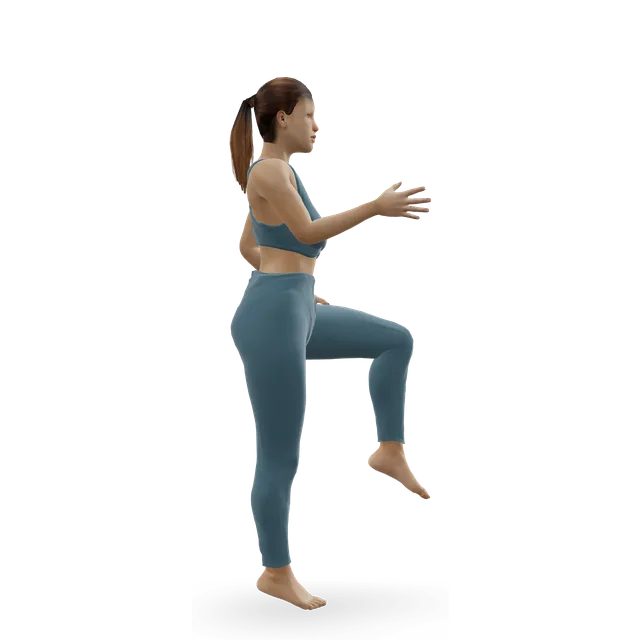
Treadmill walking demonstrated on the 3D figure3D demoTreadmill walkingBeginner · Cardio machine

Short walks as comfort allows · Or walk outside. Crutches only while you limp

Harder: Treadmill jogging

Supine heel slide demonstrated on the 3D figure3D demoSupine heel slideBeginner · No equipment

10 slow repetitions each side, once or twice a day · The move page's dose

Harder: Hip windshield wipers

Supine isometric hip abduction (belt press) demonstrated on the 3D figure3D demoSupine isometric hip abduction (belt press)Beginner · A band

3 to 5 holds of 5 to 10 s at a light effort, twice a day · The LEAP trial programme's starting dose, from the move page: gentle work for the muscles below the crest

Harder: Lateral band walk

Dead bug heel taps demonstrated on the 3D figure3D demoDead bug heel tapsBeginner · No equipment

2 sets of 6 each side, gently · The side tummy muscles attach above the crest

Harder: Forearm plank

Move on when: You walk without a limp, and lying on your back and getting out of bed are comfortable.

Follow along: a timer, a cue and the next move, one step at a time.
Stage 2

Move and strengthen (about days 3 to 10)

Restore trunk and hip movement, and strengthen the muscles that attach to the crest. For side-lying work, lie on the uninjured side with a pillow under the hip. Doses and stage timings are editorial unless named.

Clamshell demonstrated on the 3D figure3D demoClamshellBeginner · No equipment

2 to 3 sets of 10 to 12, lying on the uninjured side · A pillow under the bottom hip

Harder: Lateral band walk

Standing wall-press hip abduction demonstrated on the 3D figure3D demoStanding wall-press hip abductionBeginner · A wall

3 to 5 holds of 5 to 15 s each side, twice a day · The LEAP trial programme's standing hold, from the move page

Harder: Lateral band walk

Move on when: These are comfortable, twisting and bending sideways are close to normal, and jogging feels possible.

Follow along: a timer, a cue and the next move, one step at a time.
Stage 3

Run, cut and get back to contact (about weeks 1 to 3)

Running, cutting and trunk strength for contact sport, with a padded guard over the crest when you go back to contact. Doses and stage timings are editorial unless named.

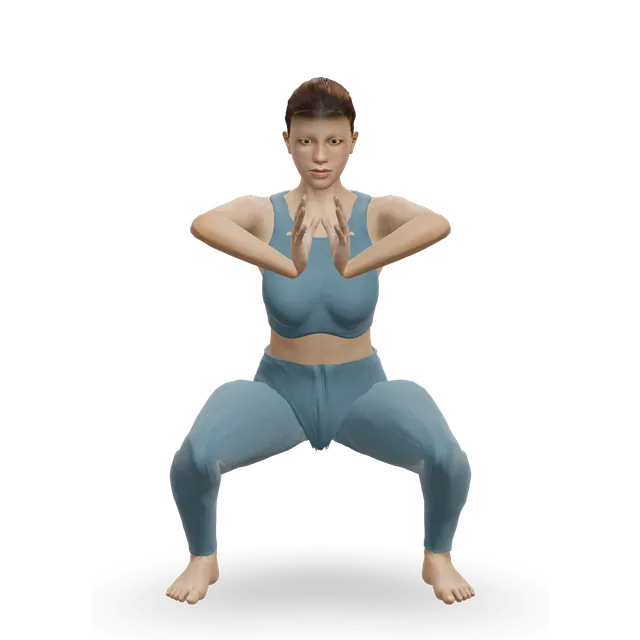
Side plank demonstrated on the 3D figure3D demoSide plankIntermediate · No equipment

3 holds of 20 to 30 s each side · On the injured side, start from the knees with a folded towel under the hip

Easier: Knee side plank · Harder: Side plank with leg lift

Shuttle runs demonstrated on the 3D figure3D demoShuttle runsAdvanced · No equipment

4 to 6 runs, wide turns first, sharper over the sessions · The move page's caution: start with wide, unhurried turns

Easier: Treadmill jogging

Move on when: Non-contact sport once movement is full and pain-free; contact sport once strength, movement and endurance are back, with a guard over the crest.

Follow along: a timer, a cue and the next move, one step at a time.

What to change for now

A teenager with a suspected avulsion fracture

The plan above is for a bruise. After an avulsion fracture, the fracture team's plan comes first: usually crutches with weight as comfortable, then the same kinds of moves more slowly, keeping pain to 2 out of 10 or less, and a gradual return to running and kicking. Non-surgical protocols generally allow sport from about 6 weeks, though in one series being cleared to start building back took 67 days on average.

Sources 8, 16, 7

Padding and day to day

Use a padded guard over the crest when you go back to contact sport, as OrthoInfo advises after a muscle bruise; professional players have used moulded plastic guards. Use crutches only while walking is too painful: nothing shows that staying on them longer speeds healing (our reading of the advice). Sleeping on your back or the uninjured side, with a pillow between your knees, keeps pressure off the bruise (our suggestion).

Sources 10, 2

Positions to swap, and why

Habit or positionWhy it mattersInstead
Massage or heat in the first daysOrthoInfo advises no massage of a fresh bruise, and heat only after a few days.Ice and compression.
Lying on the injured sideIt presses on the bruised bone (our reasoning).Side-lying exercises on the uninjured side, with a pillow under the hip.Try: Side-lying leg raise
Contact sport without a guard, or before your strength is backOrthoInfo advises full strength and a protective pad before contact, and professional players returned with moulded guards.Non-contact running and drills first.Try: Shuttle runs
Playing on with a painkilling injectionIt's a professional-sport practice with risks, and the evidence on its safety is low in quality.Rest from contact until it settles.
Stretching the front of the hip after a teenager's sudden popA pop with no knock can be an avulsion fracture, which is often mistaken for a strain.An X-ray first, then the fracture team's plan.
Sit-ups and hard side bends in the first daysThe side tummy muscles pull on the bruised crest.Gentle trunk holds.Try: Dead bug heel taps

Routines to follow

More moves for this area

Questions people ask

What is a hip pointer?

A deep bruise of the rim of the hip bone (the iliac crest), from a direct blow or a fall onto it, common in contact sports. It's very tender, and moving the trunk or lifting the leg out to the side hurts.

How long does a hip pointer take to heal?

Expert reviews say a typical one settles within 1 to 3 weeks, though no study has timed it. A severe one, where a tummy muscle tears off the bone, can take weeks to months.

Do I need an X-ray?

Usually not for a bruise. You do if you can't walk or put weight on the leg, after a fall in later life, if a teenager's pain came with a pop during a sprint or kick, or if the pain isn't settling.

Is it a hip pointer or a broken hip?

A hip pointer is on the rim of the hip bone, at your belt line. A broken hip hurts in the groin or outer hip after a fall, usually in later life, and you often can't stand or walk on the leg. Call 999 or go to A&E for severe hip pain after a fall, or if you can't walk.

Is it a hip pointer or a hip flexor strain?

A hip pointer follows a blow to the hip bone; a hip flexor strain follows an effort such as a sprint or kick and hurts at the front of the hip when you lift the knee. A teenager with sudden pain at the front of the hip after a sprint or kick needs an X-ray for an avulsion fracture.

My teenager felt a pop at the front of the hip. What now?

Get an X-ray the same day: in teenagers, a sudden sprint, kick or jump can pull a piece of growth plate off the pelvis. Most heal without surgery, but it's often mistaken for a strain. In one series of 208 young athletes, being cleared to start building back towards sport took about 67 days on average, and longer when the diagnosis was late.

Should I use heat or ice?

Ice and compression for the first 1 to 2 days, and no massage. Gentle heat after a few days is fine if you like it.

When can I play again?

Non-contact sport once movement is full and pain-free, and contact sport once your strength, movement and endurance are back, with a padded guard over the bone. Expert reviews put a typical hip pointer at 1 to 3 weeks, but go by those milestones rather than the calendar.

Do I need hip pads?

A protective pad is advised for going back to contact sport after a bruise like this, and professional players have used moulded guards over the crest. No study has tested whether padding prevents another one.

Why do professional players get an injection and play on?

Team doctors in professional sport sometimes inject local anaesthetic into a hip pointer. Studies call it relatively safe in that setting, but the evidence is low in quality and some players had lasting pain where it was injected, so it isn't a treatment for recreational players.

Related exercise guides

Other pain guides

Sources

  1. Hall 2013 · Hip pointers (review, Clin Sports Med)
  2. Gultekin 2019 · The Franklin-Naismith lesion, a severe hip pointer: two cases and a review (case report, OJSM)
  3. Mehta 2021 · Side strains and impact injuries where the side tummy muscles join the hip bone, in cricketers (case series, Indian J Radiol Imaging)
  4. Drigny 2025 · A posterior hip pointer in two elite athletes (case report, Muscles)
  5. Feeley 2008 · Hip injuries in the National Football League (surveillance study, AJSM)
  6. NHS · Hip pain
  7. Moeller 2022 · Delay in diagnosing pelvic avulsion fractures in young athletes (retrospective review, Clin J Sport Med)
  8. Calderazzi 2018 · Avulsion fractures of the pelvic growth plates (review, Acta Biomed)
  9. Lohrer 2023 · Repair of the internal oblique torn off the hip bone in professional footballers (case series, Orthop Surg)
  10. AAOS OrthoInfo · Muscle contusion (bruise)
  11. NHS · Spleen problems and spleen removal
  12. NHS · Stomach ache
  13. NHS · Broken or bruised ribs
  14. NHS · Blood in urine
  15. Ferraro 2023 · Pelvic and hip avulsion fractures in teenagers: 719 cases (case series, J Pediatr Orthop)
  16. Schuett 2015 · Pelvic avulsion fractures: 228 cases (retrospective review, J Pediatr Orthop)
  17. Rossi 2001 · Pelvic avulsion fractures in 203 teenage competitive athletes (case series, Skeletal Radiol)
  18. Di Maria 2022 · Treating pelvic avulsion fractures in teenage athletes (scoping review, Front Pediatr)
  19. Molina 2026 · Surgery or no surgery for teenage pelvic and hip avulsion fractures: 852 fractures (systematic review and meta-analysis, J Pediatr Orthop)
  20. Moeller 2022 · Pelvic avulsion fractures in teenage athletes: 242 cases (case series, Clin J Sport Med)
  21. Lottering 2017 · When the hip bone's crest growth plate closes, on CT in young Australians (imaging study, J Forensic Sci)
  22. Wittschieber 2013 · The hip bone's crest growth plate on X-ray (imaging study, Int J Legal Med)
  23. Lombardo 1983 · X-ray changes of the hip bone's crest growth plate in teenage athletes (case series, J Bone Joint Surg Am)
  24. Meiyyappan 2026 · Ultrasound for teenage pelvic avulsion fractures (diagnostic accuracy study, J Clin Ultrasound)
  25. Orchard 2002 · Local anaesthetic to allow early return to play in professional football (case series, Br J Sports Med)
  26. Orchard 2004 · Is it safe to use local anaesthetic painkilling injections in professional football? (review, Sports Med)
  27. Orchard 2010 · Long-term safety of local anaesthetic injections in professional rugby league (cohort study, AJSM)
  28. Gultekin 2021 · Local anaesthetic painkilling injections in athletes: 1,970 injections (systematic review, Clin J Sport Med)
  29. Eberbach 2017 · Surgery or no surgery for teenage pelvic avulsion fractures (systematic review and meta-analysis, BMC Musculoskelet Disord)
  30. Metzmaker 1985 · Avulsion fractures of the pelvis (case series, AJSM)
  31. Clancy 1976 · Iliac apophysitis and stress fractures in teenage runners (case series, AJSM)

Exercise education, not a diagnosis or treatment plan. It is written from the guidelines and studies listed above; review by a clinician is pending. If your pain follows an injury, is severe, is getting worse, or comes with any warning sign listed on this page, get it assessed. Health disclaimer.