Pain guide · Hip pain

Meralgia paresthetica: a burning, numb outer thigh, what helps and when it's your back

Meralgia paresthetica (meralgia paraesthetica in UK spelling) is burning, tingling or a numb patch on the outer thigh. It happens when a skin nerve, the lateral femoral cutaneous nerve, is squeezed where it leaves the pelvis near the bony point at the front of your hip. Tight belts and trousers, weight gain, pregnancy and diabetes make it more likely. It isn't dangerous, and it often settles.

Exercise isn't the main treatment: taking the pressure off is. This guide explains the causes, what medicines, injections and surgery offer, the signs that point to your back instead, and a short plan for staying active and strong, with a 3D demo of every exercise.

When to get help first

Exercise is for pain that has been checked or is clearly mild and settling.

Get urgent medical help if

  • Buttock or leg pain with numbness around the genitals or bottom, new trouble controlling your bladder or bowels, or weakness or numbness in both legs.
  • Tingling or loss of feeling in the hip or leg after an injury.
  • Same day (GP or NHS 111): weakness in the leg, or numbness that is spreading quickly or getting worse. Meralgia never makes the leg weak, because the nerve it affects carries only feeling.
  • After an operation near the hip, in the tummy or on the spine: new numbness, tingling or weakness down the leg or in the foot, or a cold, pale leg. Get help the same day, and follow your surgical team's leaflet.

See a doctor or physiotherapist if

  • Weakness, a knee that gives way, or trouble climbing stairs or getting up from a chair; numbness that spreads to the front or inside of the thigh, below the knee or into the foot; back pain with the thigh symptoms; or symptoms in both thighs. These point to a nerve in the back or another cause, so see a GP.
  • Thigh symptoms that started suddenly, constant severe pain, a lump or swelling in the groin or at the front of the hip, a fever, unexplained weight loss, or a history of cancer: see a GP.
  • Pins and needles that keep coming back or don't go away: see a GP.
  • Numbness or burning on the thigh after surgery near the hip that isn't improving over the first weeks: tell your surgical team.
  • Pain that stops you sleeping, working or exercising, or hasn't eased after a few months of taking the pressure off: a GP can offer nerve pain medicines, an injection or a referral.
  • If you're pregnant, tell your midwife. If you have diabetes, or signs of it such as being very thirsty or peeing more than usual, tell your GP: meralgia is linked with diabetes.

Understand it

What it isStrong evidence

The lateral femoral cutaneous nerve carries feeling from the skin of the outer thigh. It crosses the inside of the pelvis and leaves it close to the bony point at the front of the hip, passing under or through the inguinal ligament, the band that runs along the groin crease. If it's squeezed or stretched there, the skin it supplies burns, tingles or goes numb. That is meralgia paresthetica, which means thigh pain with pins and needles.

The nerve carries only feeling, with no branches to muscles, so it can't make the leg weak or change the knee reflex. Its path varies: anatomy studies describe five different routes out of the pelvis, which may be one reason some people get it and others don't.

Sources 1, 2, 3, 4

How it feels

Burning, tingling, numbness, aching, buzzing or stabbing on the outer thigh, sometimes reaching the outer knee. Light touch, such as clothing brushing the skin, can feel worse than firm pressure. An NHS Scotland guide describes a painful patch of numbness that people can draw around with a finger.

It's often worse after standing or walking for a long time, or with the hip stretched backwards, and eased by sitting. It's usually on one side; about 1 in 5 people have it on both.

Sources 1, 4, 3, 2, 5

Who gets itEmerging evidence

It isn't rare. A US population study found about 33 new cases per 100,000 people a year, and a Dutch study found 4.3 per 10,000 a year in general practice, enough for every practice to see at least one case a year. It's most common between 41 and 60, and slightly more common in men.

Higher weight, pregnancy and diabetes all go with it. People with it had an average body mass index (BMI) of 30.1, against 27.3 in people of the same age and sex. In the Dutch study, the odds were about 12 times higher in pregnancy, though with a very wide margin of error, and most cases had no clear cause. In people with diabetes it was about 7 times as common, and people with meralgia were twice as likely to develop diabetes later, so a GP may check your blood sugar.

Sources 6, 7, 2

Causes

From outside: tight trousers, belts and shapewear, heavy tool belts, body armour and police kit, and seat-belt injuries. From inside: weight gain, pregnancy, a swollen tummy and, rarely, a growth in the pelvis. Diabetes, alcohol and lead can affect the nerve itself.

Operations can stretch or press on it: surgery at the front of the hip, taking bone from the pelvis, hernia repair, caesarean section, and long spells lying face down. A review reports thigh numbness or tingling in most people a year after a hip replacement done from the front (81% in one series), usually mild and not limiting, and in about 1 in 8 people after back surgery lying face down.

Sources 2, 4, 1, 8

How it's recognised, and when tests matter

NHS Borders' referral guidance says the diagnosis is made from the typical story and where the numbness is, and that no further tests are needed. A clinician checks that the leg muscles and reflexes are normal and that the numb area fits the nerve. Pressing down on the side of the pelvis for 45 seconds can ease the symptoms (the pelvic compression test); in one small series it picked up most cases.

Nerve tests, an ultrasound scan or a numbing injection near the nerve help when the picture isn't clear. X-rays, computed tomography (CT) or magnetic resonance imaging (MRI) look for something pressing on the nerve, or a problem in the back, when there are warning signs.

Sources 3, 2, 9, 1, 8

What else it can be

A trapped nerve root high in the lower back is the most important look-alike. Others are the femoral nerve, which also weakens the front of the thigh, hip problems and, rarely, a growth in the pelvis or tummy. A review of 66 reports listed the clues that point away from ordinary meralgia: sudden onset, numbness outside the usual area, back pain, a fever, a swelling in the groin, a history of cancer and constant severe pain. In one surgical series, a patient's symptoms turned out to come from a pelvic tumour that hadn't been found.

Pain over the bony point on the outside of the hip when you lie on it, without numbness, is more often gluteal tendon pain, covered in the hip bursitis guide.

Sources 8, 2, 10, 11

How it usually goesEmerging evidence

Most cases improve. In the one study of untreated meralgia in a Cochrane review, 20 of 29 people (69%) got better without treatment, and 97% of 102 people whose nerve was injured during surgery recovered fully. Pregnancy cases usually settle after the birth. Numbness can linger even when the burning goes.

A 2025 review quotes 91% getting better with treatment that doesn't involve surgery, but that figure comes from a series in which about half also had injections.

Sources 12, 2, 11, 5, 13, 1
What helps, and how strong the evidence is

Take the pressure off firstEmerging evidence

The first step is to remove what's squeezing the nerve: looser clothing, no tight belt, a toolbox instead of a tool belt, and weight loss if it applies, as the American Academy of Orthopaedic Surgeons (AAOS) advises. A 2025 review adds reassurance when symptoms are mild, then physiotherapy and medicines. NHS Borders says most people need no further treatment. For pregnancy, an NHS physiotherapy leaflet adds: avoid standing or walking for too long, use a pregnancy pillow, and don't lie on the sore side.

None of this has been tested in a trial. It's the consistent advice of health services and reviews, and it makes sense for a nerve that is being squeezed.

Sources 1, 2, 3, 5

Exercise: a supporting role, not testedMixed evidence

No trial has tested an exercise programme for meralgia. A 2013 review found no thorough study of physiotherapy, only case reports of hands-on treatment, stretching and pelvic stabilising exercise. An NHS physiotherapy leaflet for meralgia in pregnancy uses two hip-front stretches held for at least 30 seconds, a standing nerve glide, wide bridges and clams, 3 times a day. They're sensible, but untested.

Exercise still earns its place: it helps with weight and blood sugar, both linked with meralgia, and keeps you fit while the nerve settles. The NHS recommends 150 minutes of moderate activity a week for adults, plus strength exercises on at least 2 days. Stretching the hip backwards can aggravate the nerve, so the stretch in this plan is optional.

Sources 4, 14, 5, 2, 15

Physical treatments: two small trialsEmerging evidence

In 30 women after giving birth, a muscle energy technique (a stretch guided by a therapist) added to exercises eased pain by 1.7 points out of 10 more than exercises alone. In 62 people (54 analysed), high-intensity laser therapy beat a sham treatment on pain, function and nerve tests at 12 weeks, with more mild side effects. A review also reports a pilot of 10 people in whom kinesiology taping eased symptoms over 4 weeks.

Each is a single small study from one region: promising, not proven.

Sources 16, 17, 4

Nerve pain medicines, borrowed from nerve pain in generalEmerging evidence

For nerve pain in general, NICE (the National Institute for Health and Care Excellence) recommends a choice of amitriptyline, duloxetine, gabapentin or pregabalin, switching if the first doesn't help, and capsaicin cream for pain in a small area if you'd rather avoid tablets. That advice covers nerve pain of many kinds: no trial has tested these medicines in meralgia itself. Your GP will talk you through the side effects.

Sources 18, 3

Injections: often short-livedMixed evidence

In observational studies, 83% of 157 people improved after an injection of local anaesthetic and steroid near the nerve. But in a small placebo-controlled trial (20 people), the injection did no better than salt water at 12 weeks. A meta-analysis found more pain relief at 15 days but not at 1 month, and across 25 studies only 22% had complete relief after an injection, with most later having another procedure.

Ultrasound guidance finds the nerve far more reliably than feeling for landmarks (84% against 5% in a study on donated bodies). A numbing injection can also help confirm the diagnosis.

Sources 12, 19, 20, 21, 2

Surgery, for the fewEmerging evidence

For persistent, disabling symptoms, a surgeon can free the nerve (decompression) or cut it (neurectomy). In observational studies, 88% of 300 people improved after decompression and 94% of 48 after the nerve was cut. Complete pain relief was 63% after freeing the nerve and 85% after cutting it, and 12% of those who had it freed needed another operation, against none after cutting.

Cutting the nerve leaves a permanent numb patch; freeing it keeps feeling, but symptoms can come back. There are no randomised trials of surgery: a 2023 German review found no high-quality studies of any treatment, and reports good results from surgery when it's needed and variable results from injections.

Sources 12, 21, 4, 2, 22

How much pain is OK while you exercise?

Up to 5 out of 10, and the patch shouldn't spreadEmerging evidence

For the exercises, use the hip pain guide's rule: up to about 5 out of 10 during exercise is fine, as long as it settles within an hour or so and you're no worse that night or the next morning. If you are worse, do less next time, not nothing. The rule is borrowed from pain-monitoring studies in arthritis and tendon pain; it hasn't been tested in meralgia.

The nerve rule matters more (our suggestion): the burning or tingling shouldn't spread, and shouldn't last more than a few minutes after an exercise. If a stretch or position sets it off and it lingers, leave that one out: stretching the hip backwards can aggravate the nerve, and the NHS leaflet's stretches are optional.

Every move page says to stop for numbness or tingling. With meralgia, a patch that is already numb isn't a reason to stop. Numbness that spreads beyond it, new numbness somewhere else, or any weakness is, and needs checking.

Sources 23, 24, 25, 2, 5

The exercise plan: 2 stages

Start at the first stage. Each move opens a full guide with a 3D demo.

Stage 1

Take the pressure off and keep moving (about weeks 0 to 6)

Loosen waistbands and belts, swap a tool belt for a toolbox, sleep on the other side with a pillow between your knees, break up long spells of standing, and stay active within comfort. That is the main treatment; these exercises support it. Sitting tends to ease the burning, so cycling often suits. Exercise on most days. Doses are an NHS leaflet's where marked; the rest are editorial.

Recumbent exercise bike demonstrated on the 3D figure3D demoRecumbent exercise bikeBeginner · Cardio machine

10 to 20 min at a moderate effort, building towards 30 · Or an upright exercise bike. Moderate means you can talk but not sing

Harder: Stationary cycling

Treadmill walking demonstrated on the 3D figure3D demoTreadmill walkingBeginner · Cardio machine

Bouts you can manage without bringing it on, such as 10 min with a sit-down break · Walking outdoors counts. Build up the total, not one long walk

Harder: Treadmill jogging

Glute bridge demonstrated on the 3D figure3D demoGlute bridgeBeginner · No equipment

10 slow bridges with a 10 s hold, up to 3 times a day · With your feet wide apart: an NHS leaflet's wide bridge and its dose

Easier: Pelvic tilt into bridge · Harder: Glute kickback (quadruped hip extension)

Clamshell demonstrated on the 3D figure3D demoClamshellBeginner · No equipment

10 each side, up to 3 times a day · Hips stacked, without rolling back: the same NHS leaflet's dose

Harder: Lateral band walk

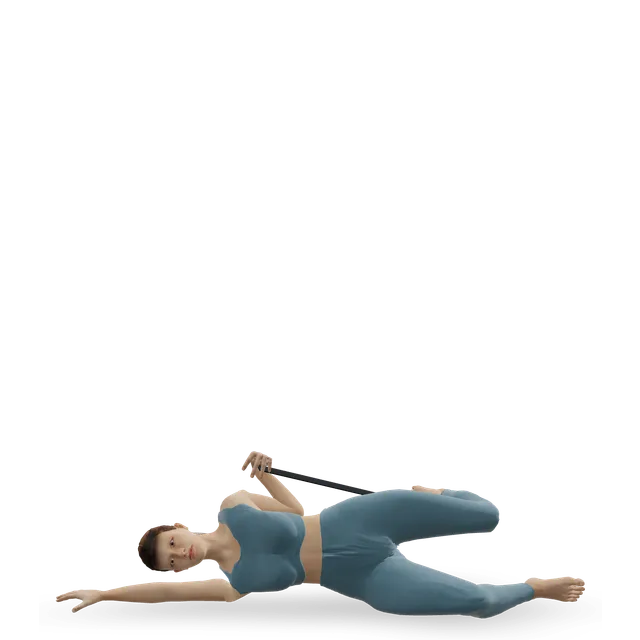
Side-lying quad stretch with a strap demonstrated on the 3D figure3D demoSide-lying quad stretch with a strapBeginner · Other / check instructions

Hold at least 30 s, up to 3 times a day, if it suits you · The NHS leaflet's side-lying hip stretch, with the hip kept straight. Leave it out if it sets off burning that lingers

Harder: Couch stretch

Move on when: The burning is easing or no worse, and walking and standing for a while are more comfortable.

Follow along: a timer, a cue and the next move, one step at a time.
Stage 2

Build fitness and strength for the long run (from about week 6)

Work towards the NHS guideline for adults: 150 minutes of moderate activity a week and strength exercises on at least 2 days. That helps with weight and blood sugar, both linked with meralgia, and weight loss is one of the main recommended treatments when weight is a factor. Keep waistbands loose while you train. Doses are editorial.

Dumbbell goblet squat demonstrated on the 3D figure3D demoDumbbell goblet squatIntermediate · A dumbbell

3 sets of 8 to 10 · Once sit-to-stands are easy

Easier: Bodyweight squat · Harder: Back squat with bands

Step-up demonstrated on the 3D figure3D demoStep-upBeginner · A step

2 to 3 sets of 8 each side · A low step to start

Easier: Low step-up · Harder: Dumbbell step-up

Side-lying leg raise demonstrated on the 3D figure3D demoSide-lying leg raiseBeginner · No equipment

2 to 3 sets of 10 to 12 each side · A pillow under the bottom thigh if lying on the sore side presses on the patch

Easier: Lateral band walk · Harder: Lateral band walk, band at the feet

Elliptical trainer demonstrated on the 3D figure3D demoElliptical trainerBeginner · Cardio machine

Build towards 30 min on 5 days a week · Or brisk walking or cycling

Harder: Stair-stepper machine

Move on when: Keep going. If the patch is no better after about 3 months of taking the pressure off, see a GP about nerve pain medicines, an injection or a referral (that timing is our suggestion).

Follow along: a timer, a cue and the next move, one step at a time.

What to change for now

Taking the pressure off

Wear looser trousers and skirts, and wear a belt loosely or not at all; braces can replace a belt. Swap a heavy tool belt for a toolbox, and if you wear a duty belt or body armour, ask whether kit can sit away from the front of the hip. Sleep on the other side with a pillow between your knees, or a pregnancy pillow in pregnancy. Break up long spells of standing and walking with a few minutes' sitting.

Sources 1, 5, 4, 2

The NHS leaflet's nerve glide (optional)

An NHS physiotherapy leaflet for meralgia in pregnancy suggests this nerve glide. No study has tested it, the 3D figure can't show it, and you can leave it out. Stop if it brings on burning that doesn't settle within a few minutes (our caution).

  • 1. Stand side-on in an open doorway, so you can reach the frame.
  • 2. Lift the arm on the sore side up and over your head, stretching your side and reaching for the far side of the doorframe.
  • 3. At the same time, bend the sore leg behind you and reach for that ankle with your other hand.
  • 4. Once you've touched the ankle and the doorframe, let go of both and stand normally.
  • 5. The leaflet suggests at least 10 times, 3 times a day.

Source 5

Positions to swap, and why

Habit or positionWhy it mattersInstead
Tight belts, waistbands, low-rise trousers and shapewearThey press on the nerve where it leaves the pelvis.Looser clothing, and a belt worn loosely or braces instead.
A heavy tool belt, duty belt or body armourThey press on the same spot.A toolbox instead of a tool belt, and kit moved away from the front of the hip where you can.
Long spells of standing or walkingThey often make it worse, and sitting eases it.Break them up with a few minutes' sitting, and cycle for fitness.Try: Recumbent exercise bike
Lying on the sore sideIt presses on the thigh.Lie on the other side with a pillow between your knees.
Deep hip-front stretches such as the couch stretchStretching the hip backwards can aggravate the nerve, and there's no evidence these stretches help.A gentle side-lying quad stretch, only if it doesn't set off the burning.Try: Side-lying quad stretch with a strap
Foam rolling or deep massage over the patchUntested, and the skin may be oversensitive (our caution).Leave the patch alone and take the pressure off instead.
A tight lifting belt for every gym setIt squeezes the same spot (our caution).Loosen it between sets, or keep it for your heaviest sets.

Routines to follow

More moves for this area

Questions people ask

What is meralgia paresthetica?

Burning, tingling or numbness on the outer thigh, caused by a skin nerve being squeezed where it leaves the pelvis near the bony point at the front of your hip. It's usually harmless and often settles on its own.

What causes it?

Pressure on the nerve: tight trousers, belts and tool belts, weight gain and pregnancy are the commonest causes. It's also more likely with diabetes, and it can follow surgery near the hip or a seat-belt injury.

How long does it last?

It varies. In one study, 69% of people improved without treatment, and pregnancy cases usually go after the birth. Some numbness can linger even when the burning stops.

What exercises help?

Exercise isn't the main treatment: taking the pressure off is. Cycling, walking in manageable bouts, and hip strengthening such as bridges and clams keep you fit and help with weight. An NHS leaflet adds gentle hip-front stretches, which you can skip if they set off the burning.

Which exercises should I avoid?

Nothing is banned, but deep hip-front stretches and long spells of standing can make it worse. Keep waistbands and lifting belts loose, and swap long walks for cycling or shorter bouts while it's flared.

Is it my back?

Usually not, but a trapped nerve in the back can mimic it. Weakness, a knee that gives way, back pain, numbness spreading beyond the outer thigh or into both legs, or problems with your bladder or bowels point elsewhere and need checking.

Do I need a scan?

Not usually. The diagnosis comes from your story and where the numbness is. Tests are for unusual features, such as weakness, a lump, back pain or symptoms that don't fit.

Will losing weight help?

It's one of the main recommended steps when weight is a factor, because higher weight is linked with meralgia. No trial has tested it directly.

I'm pregnant and my outer thigh is numb. Is that normal?

Meralgia is more common in pregnancy, and it usually settles after the birth. Loose clothing, not standing for too long and a pregnancy pillow help. Tell your midwife, and know the pregnancy warning signs.

Why is my thigh numb after hip surgery?

The nerve runs close to where surgeons work at the front of the hip and can be stretched, so numbness on the outer thigh is common afterwards and usually causes little trouble. Tell your surgical team if it isn't improving over the first weeks.

What if it doesn't go away?

A GP can offer nerve pain medicines, such as amitriptyline, duloxetine, gabapentin or pregabalin, or capsaicin cream for a small area. An injection or a specialist referral are other options, and surgery is for the few with persistent, disabling pain.

Do injections work?

Many people improve after one in observational studies, but in a small placebo-controlled trial a steroid injection did no better than salt water, and relief is often short-lived. A numbing injection can also help confirm the diagnosis.

Related exercise guides

Other pain guides

Sources

  1. AAOS OrthoInfo · Burning thigh pain (meralgia paresthetica)
  2. Bromley 2025 · Meralgia paraesthetica (review, BJA Educ)
  3. NHS Borders · Meralgia paraesthetica: who to refer and how (referral guidance, NHS Scotland, 2025)
  4. Cheatham 2013 · Meralgia paresthetica: a review of the literature (Int J Sports Phys Ther)
  5. Royal Berkshire NHS Foundation Trust · Meralgia paraesthetica in pregnancy (physiotherapy leaflet, 2025)
  6. Parisi 2011 · Meralgia paresthetica, obesity, age and diabetes (population study, Neurology)
  7. van Slobbe 2004 · Meralgia paresthetica in general practice (cohort and case-control study, J Neurol)
  8. de Ruiter 2023 · Unusual causes of meralgia paresthetica (systematic review, Neurosurg Rev)
  9. Nouraei 2007 · A new approach to diagnosing and managing meralgia paresthetica (case series, Neurosurgery)
  10. Harney 2007 · Meralgia paresthetica: diagnosis and management (review, Pain Med)
  11. Williams 1991 · Managing meralgia paresthetica (case series of 277, J Neurosurg)
  12. Khalil 2012 · Treatment for meralgia paraesthetica (Cochrane review)
  13. Leung 2025 · Hip and pelvis conditions in pregnancy (review, Curr Rev Musculoskelet Med)
  14. Ahmed 2025 · Diagnosing and managing meralgia paresthetica (narrative review, Pain Ther)
  15. NHS · Physical activity guidelines for adults aged 19 to 64
  16. El-Din Mahmoud 2023 · Muscle energy technique for meralgia paresthetica after birth (RCT of 30, J Back Musculoskelet Rehabil)
  17. Mogahed 2026 · High-intensity laser therapy for meralgia paresthetica (sham-controlled RCT of 62, Am J Phys Med Rehabil)
  18. NICE CG173 · Neuropathic pain in adults: medicines in non-specialist settings (2013, updated 2020)
  19. Kloosterziel 2020 · Steroid injection vs placebo for meralgia paresthetica (RCT of 20, Muscle Nerve)
  20. Jawaid 2024 · Steroids for meralgia paresthetica (meta-analysis, Pak J Med Sci)
  21. Lu 2021 · Injection, nerve release and nerve cutting for meralgia paresthetica (meta-analysis of 25 studies, J Neurosurg)
  22. Scholz 2023 · Meralgia paresthetica: relevance, diagnosis and treatment (review, Dtsch Arztebl Int)
  23. Ageberg 2010 · NEMEX-TJR neuromuscular training for severe hip or knee osteoarthritis, and its pain rule (BMC Musculoskelet Disord)
  24. Silbernagel 2007 · Continued sports activity with a pain-monitoring model in Achilles tendinopathy (RCT, AJSM)
  25. Smith 2017 · Should exercises be painful in chronic musculoskeletal pain? (meta-analysis, BJSM)
  26. NHS · Sciatica
  27. NHS · Pins and needles
  28. NHS · Hip pain in adults

Exercise education, not a diagnosis or treatment plan. It is written from the guidelines and studies listed above; review by a clinician is pending. If your pain follows an injury, is severe, is getting worse, or comes with any warning sign listed on this page, get it assessed. Health disclaimer.