Hip pain when running: what's likely, the stress fracture not to miss, and how to build back
Most hip pain in runners comes from a tendon or a muscle: the outside of the hip, the hip flexors at the front, the groin, or the hamstring where it attaches at the sitting bone. One cause can't wait: groin or front-of-hip pain that builds with every run, or hurts at night, can be a stress fracture of the hip and needs checking the same day. Running isn't bad for healthy hips.
This guide starts with that and the other warning signs, then maps the likely causes by where it hurts, what to change in your running, the pain rule, and a three-stage plan from simple holds back to running, with a 3D demo of every move.
Exercise is for pain that has been checked or is clearly mild and settling.
Get urgent medical help if
Same day, and stop running now: groin or front-of-hip pain in a runner, sometimes felt in the thigh or knee, that builds with running, hurts with every step or at night, or hurts when the hip is turned to the end of its range. Keep weight off the leg, using crutches if you have them, and get an urgent GP appointment or help from NHS 111 the same day: a stress fracture of the hip (femoral neck) needs urgent imaging.
Severe hip pain after a fall or injury, or you cannot stand, walk or put weight on the leg. In an older adult this can be a broken hip; the leg may look shorter or turned outward.
Same day: a pop near the sitting bone, a large bruise high on the back of the thigh, or you cannot put weight on the leg. The tendon may have pulled away from the bone, which needs assessing before you start these exercises.
Same day: a teenager with sudden pain at the front or top of the hip bone after a sprint, kick or jump, often with a pop. A piece of growth plate can pull off the pelvis (an avulsion fracture), and it needs an X-ray the same day.
A hot, swollen hip, or hip pain with a fever or feeling generally unwell (a possible joint infection).
Tingling or loss of feeling in the hip or leg after an injury.
Buttock or leg pain with numbness around the genitals or bottom, new trouble controlling your bladder or bowels, or weakness or numbness in both legs.
A child or teenager with sudden hip, thigh or knee pain, a limp, or who will not put weight on a leg. Hip problems in children can sometimes be felt in the thigh or knee, and in some children knee pain is the only sign.
See a doctor or physiotherapist if
Pain in one spot on the pubic bone, or low back or buttock pain on one side, brought on by running in a distance runner, especially if your periods have stopped or become irregular, you've lost weight or you've had a stress fracture before: stop running and see a GP. It can be a stress fracture of the pelvis or the sacrum, and a magnetic resonance imaging (MRI) scan is the usual test.
A stress fracture from ordinary activity, more than one stress fracture, periods that have stopped or become irregular, or worries that you're eating too little for your training: see a GP about bone health and energy intake.
Painful catching or locking deep in the groin, or a hip that gives way: get it assessed.
Hip pain that stops normal activities or disturbs sleep, keeps getting worse, or has not improved after 2 weeks of looking after it at home.
Stiffness lasting more than 30 minutes after waking.
Bone pain that is constant or worse at night, especially with a lump, unexplained weight loss, fever or tiredness, or a past history of cancer.
Hip or groin pain that hasn't settled after 6 weeks, especially with a normal X-ray, or new hip pain if you take high-dose steroids, drink heavily, or have sickle cell disease or lupus: ask your GP about an MRI (magnetic resonance imaging) scan and a hip specialist. It can be avascular necrosis, which an X-ray can miss early on.
Where does it hurt?
Location narrows the likely causes; it does not diagnose.
Hip and groin injuries were about 1 in 9 new running injuries in pooled studies (11%), and the thigh another 8%. Gluteal strain or tendon pain made up 4.5% of new injuries and hip flexor (iliopsoas) injuries about 1%, while hamstring or thigh tendon pain made up about 4% of current injuries.
Outer hip tendon pain is commonest in women aged 40 to 60, and the protocol of the largest trial notes it is also often seen in runners. A review suggests the most damaging load on these tendons is squeezing (compression) plus stretch, with the hip drifting inwards. Hamstring tendon pain at the sitting bone shows as a deep ache low in the buttock with running and sitting.
The stress fracture that mustn't be missedEmerging evidence
Stress fractures of the femoral neck, just below the ball of the hip, are about 3% of sports stress fractures, mostly in marathon and long-distance runners, and commoner in women. The usual story is groin pain that starts late in a run, builds until it limits running, often with a limp, and later comes at rest and at night. The commonest finding is pain when the hip is turned to the end of its range (79% in one series); tapping the heel was painful in only 6%.
As many as two-thirds look normal on the first X-ray, so magnetic resonance imaging (MRI) is the next test. A crack on the upper side of the bone, or one that has shifted, usually needs an operation, and delay makes shifting more likely. About half of athletes don't get back to their previous level, up to 60% after a shifted fracture, while those caught early have done much better. In pooled studies, return to sport took about 107 days on average, and the femoral neck was among the sites with the most complications, though more than 90% of athletes with a bone stress injury got back to sport. Stress fractures of the sacrum and the lower pubic bones also happen in runners and are lower risk.
Eating too little for the training you do (low energy availability) harms bone in women and men. The International Olympic Committee (IOC) calls the wider problem relative energy deficiency in sport (REDs). In 259 active girls and women, bone stress injuries became commoner as risk factors stacked up: about 15 to 20% with one factor, and 30 to 50% with several. In runners, a previous stress fracture and being female are the best-supported risk factors for a stress fracture.
When a scan helps, and what it can't tell youStrong evidence
For a suspected hip stress fracture: X-rays first, then MRI if the X-ray is clear, which was 100% accurate in one study. For deep groin pain, impingement syndrome needs symptoms, examination signs and imaging together.
Scans of hips that don't hurt often show impingement shapes (cam shapes in 37%, and 55% in athletes) and labral tears (54% of people without hip pain against 62% with it), so a report has to match your symptoms. The National Institute for Health and Care Excellence (NICE) diagnoses hip arthritis without an X-ray from 45.
Outer hip tendon pain is slow. In the largest trial (204 adults aged 35 to 70, not runners), 51 of 65 people who had education and exercise rated themselves a success at a year. In new runners, the middle time to recovery was 124 days for a gluteal muscle injury and 71 days for a hip flexor injury, from small numbers. In a trial of hamstring tendon pain, people had had symptoms for about 2 years on average before treatment. No one can promise a date.
Outer hip pain: education plus exercise beat an injectionEmerging evidence
In a trial of 204 adults with outer hip tendon pain, 14 physiotherapy sessions of education and exercise over 8 weeks beat a steroid injection and wait-and-see: 51 of 66 rated it a success at 8 weeks, against 38 of 65 after an injection and 20 of 68 waiting. At a year it was 51 of 65, against 36 of 63 and 31 of 60, though pain was similar after the injection by then.
The education taught people to avoid squeezing the tendons, and the exercise started with holds before moving to one-leg work. The trial was in adults aged 35 to 70, mostly women, not runners: no trial has tested this in runners.
Running within a pain limit with sitting-bone painEmerging evidence
In a trial of 100 people with hamstring tendon pain at the sitting bone (average age about 45, 74% women), a staged physiotherapy programme and shockwave therapy did equally well over a year. Both groups could keep running with up to 4 out of 10 pain, or moderate discomfort, as long as pain didn't rise by more than 2 points over the next 12 to 24 hours.
We found no treatment trial for hip flexor pain in runners. In 33 healthy adults, 6 weeks of band training (3 times 10 minutes a week, from a load lifted 15 times to one lifted 8 times) raised hip flexor strength by 17%. An international agreement groups groin pain in athletes by its source: adductor, hip flexor (iliopsoas), inguinal, pubic or the hip joint.
Hip-related pain: 3 months of exercise, and keep activeEmerging evidence
For young and middle-aged active adults with hip-related pain, including impingement, an international consensus recommends exercise-based treatment for at least 3 months, and physical activity, which may include sport. Strong evidence for any one programme is lacking.
A wider, quicker step: our inferenceEmerging evidence
This is our inference, not a tested treatment. Squeezing of the outer hip tendons rises as the hip drifts inwards, and in a lab study of 15 healthy runners, narrower steps raised strain in the iliotibial (IT) band, which lies over those tendons. In other lab studies, 10% more steps a minute lowered how far the hip drifted inwards. Experts recommend running retraining for gluteal and hamstring tendon pain, but no trial has tested it for them.
Running isn't bad for healthy hipsEmerging evidence
In pooled studies, recreational runners had less hip and knee arthritis (3.5%) than people who didn't run (10.2%). In 3,804 marathon runners, years of running, the number of marathons and weekly distance didn't predict hip or knee arthritis, while age, body weight, past injury or surgery and family history did.
This guide uses the hip hub's pain rule. During the exercise, pain up to about 5 out of 10 is acceptable. It should settle within an hour or so, and your hip should be no worse that night or the next morning. If it is, do less next time (fewer repetitions, a smaller range, a lighter load, a shorter run), not nothing.
With outer hip pain, the hip bursitis guide's rule applies to squats, bridges and side steps: no extra outer hip pain, because pain there suggests the tendon is being squeezed, as in the largest trial.
Running follows the same rule, and stop the run if a pain is sharp, makes you limp or change how you run, or builds as you go. For context, the hamstring tendon trial let people keep running with up to 4 out of 10 pain and no rise of more than 2 points over the next 12 to 24 hours.
Groin or front-of-hip pain that builds with every run is the exception: it isn't a pain to manage. Stop and get it checked the same day.
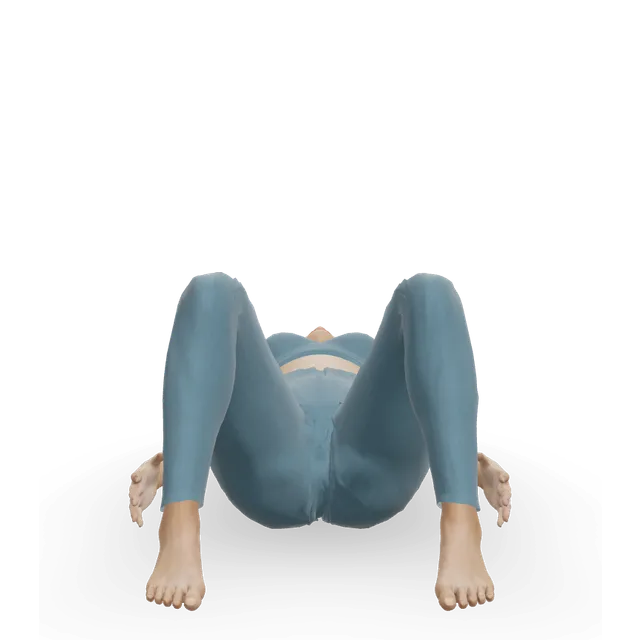
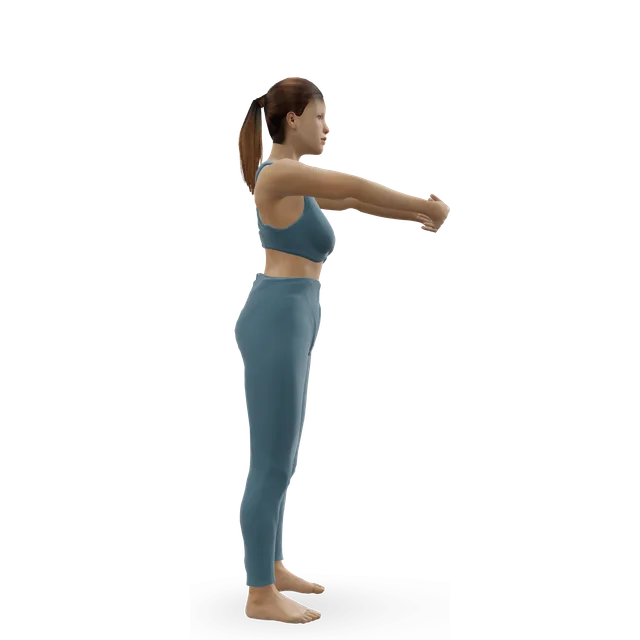
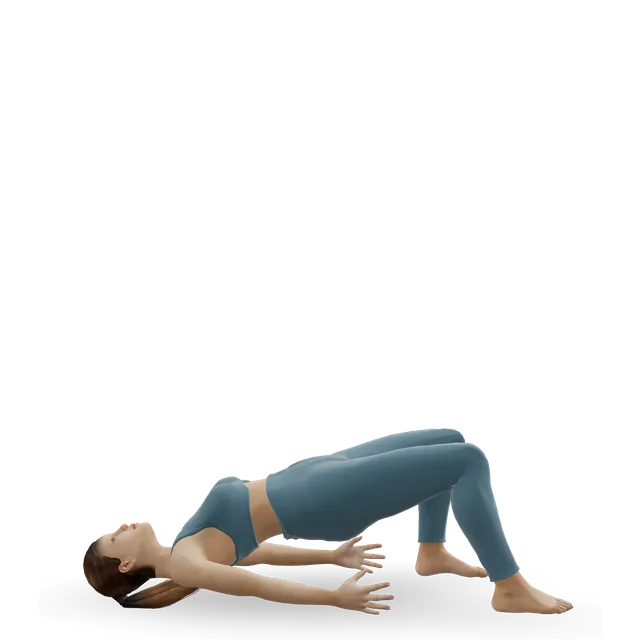
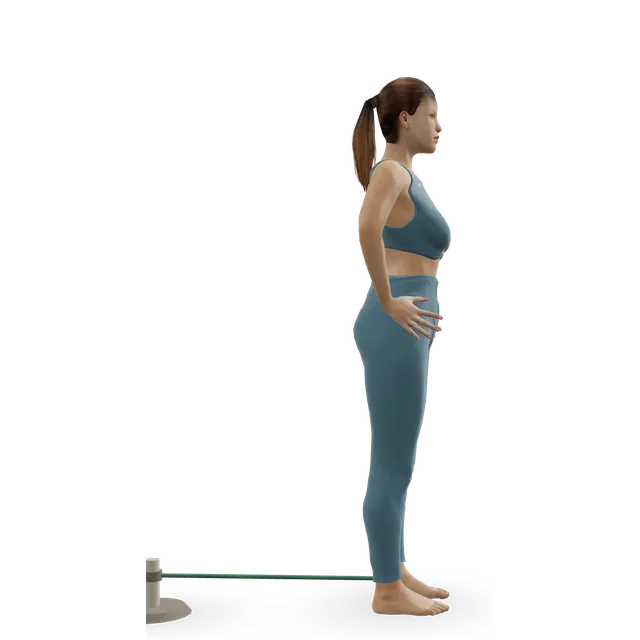
Start at the first stage. Each move opens a full guide with a 3D demo.
Stage 1
Settle: load without squeezing
About weeks 0 to 2. Daily holds that load the outer hip without squeezing it, the habit changes below, and running only within the pain rule. If groin pain builds with every run, stop and get it checked before starting. Doses are editorial unless a source is named.
Move on when: None of these raise your pain, and nights are no worse, for a week (the hip bursitis guide's check).
Follow along: a timer, a cue and the next move, one step at a time.
Stage 2
Build: one-leg strength
About weeks 2 to 6. Shift the load onto one leg with the pelvis level, and add band strength for the front of the hip. Running carries on within the pain rule.
5 slow reps each side once a day, building to 2 sets of 5 to 10 at a somewhat hard effort · The move page's dose, from the outer hip pain trial's programme
3 times a week, about 10 min: from a load you can lift 15 times to one you can lift 8 times over 6 weeks · For pain at the front of the hip, within the pain rule. The dose from a trial in healthy adults
Move on when: You can stand on the sore leg for 30 seconds with the pelvis level and no outer hip pain, and 30 minutes of brisk walking is pain-free, the NHS service's starting point for running.
Follow along: a timer, a cue and the next move, one step at a time.
Stage 3
Walk-jog back, and strengthen
About 6 weeks, then ongoing. Running comes back through the NHS Oxford return to running programme, every other day on flat ground, with strength work twice a week. With sitting-bone pain, keep within the hamstring trial's limit. After a hip stress fracture, start only when your specialist says the bone has healed.
Every other day for 30 min: week 1, jog 1 min and walk 1 min; week 2, jog 2 and walk 1; week 3, jog 4 and walk 1; week 4, jog 9 and walk 1; week 5, jog 15 and walk 1; week 6, jog 30 min · The NHS service's programme: move up a level after a week without pain, and down a level if you get pain. Flat ground outdoors counts
Move on when: From week 7, add no more than about 10% a week and don't increase distance and time in the same week, as the NHS service advises. Bring back hills, strides and sprints last (our suggestion). With impingement-type pain, keep the exercise going for at least 3 months, as the consensus recommends.
Follow along: a timer, a cue and the next move, one step at a time.
What to change for now
What to change in your running today (written steps)
Our 3D figure can't show these changes. Most come from trials that weren't in runners, lab studies in healthy runners and an NHS service's return to running programme, so keep what passes the pain rule.
1. Groin or front-of-hip pain that builds with every run, or hurts at night: stop running, keep weight off the leg and get it checked the same day.
2. Outer hip pain: don't cross your legs, stand hanging on one hip or lie on that side, which squeeze the tendons, as the outer hip trial taught. Run on the flat at an easy pace, and leave long hills and cambered roads for now (our suggestion).
3. If your feet land close to one line, try slightly wider steps and 5 to 10% more steps a minute. This is our inference from lab studies in healthy runners, untested in people with hip pain.
4. Sitting-bone pain: keep running within the trial's limit, up to 4 out of 10 with no rise of more than 2 points over the next 12 to 24 hours. Cut uphill running, speed work and long strides first, and sit on a cushion (our suggestions).
5. Pain at the front of the hip when you lift the knee: leave out sprints, strides, hill repeats and high-knee drills for now (our suggestion).
6. Run every other day while it settles, spread your running across the week, and keep each run within your longest pain-free run of the past month (the NHS service's tips, and a large study of runners' training).
A steroid injection eased outer hip pain in the short term but did worse than education and exercise on overall improvement at a year. Shockwave therapy did as well as physiotherapy for hamstring tendon pain at the sitting bone. A hip stress fracture on the upper side of the bone, or one that has shifted, usually needs an operation, while a small crack on the lower side is usually treated off weight at first. Our hip impingement guide covers surgery for impingement.
See a GP about bone health and energy intake if you've had a stress fracture from ordinary training or more than one, your periods have stopped or become irregular, or you think you may be eating too little for your training. Low energy availability means taking in too little energy for what your training uses, and it affects men as well as women.
Stress fractures of the lower pubic bones and the sacrum, the bone at the back of the pelvis, are lower risk than the femoral neck, and MRI is the preferred test. What we know about the sacrum comes from small case series: earlier reports found it most often in women distance runners, all 3 women in a series of 5 athletes had signs of eating too little for their training, and in 13 athletes most had sudden low back pain while running, 69% were women, and 83% returned to sport after treatment without surgery.
Groin or front-of-hip pain that builds with running, hurts with every step or at night, or hurts when the hip is turned to the end of its range needs a same-day check: it can be a stress fracture of the hip. Severe pain after a fall, a hot, swollen hip or a fever are urgent too.
Can I keep running with hip pain?
It depends on the cause. Not with a possible stress fracture. With outer hip or sitting-bone tendon pain, usually yes within limits: in a hamstring tendon trial, people kept running with up to 4 out of 10 pain and no worse pain the next day.
Why does the outside of my hip hurt when I run?
Usually the gluteal tendons at the bony point you lie on: commonest in women aged 40 to 60, and often seen in runners. Squeezing the tendons, by crossing your legs, hanging on one hip or lying on that side, aggravates it, and education plus exercise beat an injection in a trial.
Is it hip bursitis?
Most outer hip pain called bursitis comes from the gluteal tendons. In a trial, education plus exercise did better than a steroid injection at 8 weeks and on overall improvement at a year. Our hip bursitis guide covers it in detail.
Should I stretch my IT band or do the pigeon stretch?
Not while the outside of the hip hurts: those stretches press the tendons against the bone. With pain at the sitting bone, deep hamstring stretches press on that tendon too.
What causes pain at the front of the hip when I run?
Often the hip flexors, which are worse with sprints, strides and hills, or hip-related pain such as impingement, or the groin muscles. Pain that builds with every run, or hurts at night, needs a same-day check for a stress fracture.
Why does my buttock hurt when I run uphill?
A deep ache at the sitting bone, worse running uphill and sitting, is usually the hamstring tendon. Pain that spreads below the knee with pins and needles points to a nerve in the back instead.
Could not eating enough be part of it?
For bone, yes. Eating too little for your training harms bone in women and men, and bone stress injuries became commoner as risk factors stacked up. See a GP if your periods have stopped or you've had more than one stress fracture.
Will running wear out my hips?
Recreational runners had less hip and knee arthritis than people who didn't run. In 3,804 marathon runners, years of running and weekly distance didn't predict arthritis, while age, body weight, past injury and family history did.
Do I need a scan?
If a hip stress fracture is possible, an X-ray first and then an MRI scan, because the first X-ray is often normal. Otherwise usually not: labral tears and impingement shapes are common in hips that don't hurt.
How long will it take?
Outer hip tendon pain improves over weeks to months: in the largest trial, most people who had education and exercise rated themselves better at 8 weeks and at a year. No one can promise a date.
Exercise education, not a diagnosis or treatment plan. It is written from the guidelines and studies listed above; review by a clinician is pending. If your pain follows an injury, is severe, is getting worse, or comes with any warning sign listed on this page, get it assessed. Health disclaimer.