Lower back pain when running: why it happens, whether running harms your back, and the way back
Lower back pain in runners is usually ordinary back pain, the kind most people get at some point, and it usually settles within a few weeks. Running itself seems not to harm the back: in a one-time comparison, regular runners' discs looked healthier on scans than inactive people's, and in a small trial a run-walk programme eased long-lasting back pain.
This guide starts with the 999 signs, then covers why running can bring back pain on, the rare stress fracture to know about, what to change, the pain rule, and a staged plan back that ends with the trial's run-walk programme, with a 3D demo of every move.
Exercise is for pain that has been checked or is clearly mild and settling.
Get urgent medical help if
Call 999 or go to A&E: loss of feeling or numbness around the genitals or bottom, new trouble peeing or controlling your bladder or bowels, changes in genital sensation during sex or problems with erections or orgasm, or pain, tingling, weakness or numbness in both legs. These are signs of cauda equina syndrome, which needs treating in hospital urgently. Don't drive yourself.
Call 999 or go to A&E: back pain with chest pain, or back pain that started after a serious accident, such as a car crash.
Call 999: sudden, severe pain in the tummy or back, which can come with breathlessness, pale or grey skin, or collapse. It can be a burst abdominal aortic aneurysm, most common in men aged 65 or over and in people who smoke or used to smoke.
Same day: leg weakness that is getting worse.
Same day (urgent GP appointment or NHS 111): new difficulty lifting the front of your foot or toes (foot drop), or a foot that slaps down or catches as you walk, especially if it is getting worse. Weakness in both legs, or with numbness around the genitals or bottom or bladder or bowel changes, is the 999 emergency above.
Same day (GP or NHS 111): back pain and you feel hot, cold, shivery or generally unwell, or severe pain that starts suddenly or is getting worse quickly.
Same day (GP or NHS 111): pain in the lower back or side with a high temperature, burning or stinging when you pee, or needing to pee more often. It can be a kidney infection.
Same day: you have or have had cancer, and new back pain that is severe and doesn't let up, is getting steadily worse, is worse at night and disturbs your sleep, is worse when you cough, sneeze or strain, or comes with tenderness over the spine. Contact your cancer team or GP urgently. With cancer, new weakness, difficulty walking, numbness or bladder or bowel problems are an emergency.
See a doctor or physiotherapist if
Low back or buttock pain on one side that comes on with running, in a distance runner, especially if your periods have stopped or become irregular, you've lost weight or you've had a stress fracture before: stop running and see a GP. It can be a stress fracture of the sacrum, which an MRI (magnetic resonance imaging) scan shows.
A teenager whose back pain is worse arching back and has lasted more than a couple of weeks: get it checked by a GP or sports physiotherapist. It can be a stress fracture of the spine (spondylolysis).
Pain, tingling or numbness spreading below the knee that isn't settling after a few weeks, is getting worse or stops your normal activities: see a GP.
Back pain that hasn't improved after a few weeks of looking after it at home, stops you doing day-to-day activities, or worries you.
Pain that doesn't improve with rest or is worse at night, or pain that is worse when you sneeze, cough or poo.
Unexplained weight loss, or a lump, swelling or change in the shape of your back.
Back pain that started before 45 and has lasted more than 3 months, especially if it wakes you in the second half of the night, comes with buttock pain, eases with movement or within 48 hours of anti-inflammatories, or you have psoriasis or a parent, sibling or child with spondyloarthritis. These can point to inflammatory back pain (axial spondyloarthritis, such as ankylosing spondylitis); the National Institute for Health and Care Excellence (NICE) refers people with four or more of these features to a rheumatologist.
Where does it hurt?
Location narrows the likely causes; it does not diagnose.
Back or pelvic pain when running after giving birth
With leaking or a heavy feeling, the pelvic floor needs attention first: our guide to exercise after giving birth and the return to running after birth checks cover it.
Understand it
What usually lies behind itEmerging evidence
Back pain in a runner is usually ordinary low back pain. A strained muscle is a common cause, the cause often isn't obvious, and it usually improves within a few weeks, though it can last longer or come back.
Low back pain is uncommon in runners: across 19 studies, the share of runners with it ranged from 0.7 to 20%, low compared with other running injuries and other athletes, and the lower back was about 3% of new running injuries in pooled studies. Reported risk factors included running for more than 6 years, a body mass index (BMI) over 24, greater height, no other aerobic exercise each week, stiff hips, a difference in leg length and tight hamstrings and back. None of these has been tested as a cause.
Does running harm the back? It seems not toEmerging evidence
In a one-time comparison of 79 adults aged 25 to 35, people who had jogged 20 to 40 km a week for at least 5 years had discs that looked about 9% better hydrated on magnetic resonance imaging (MRI) than inactive people, and long-distance runners about 11% better. That is a snapshot, not proof that running caused the difference.
A review of 13 studies found discs lose a little height straight after a run as water is squeezed out, 3 of 5 comparison studies found better-looking discs in runners, and a 15-year follow-up found no difference between runners and non-runners. A 2026 meta-analysis of 39 studies linked upright loading, mostly running, with better disc health, at very low certainty, and found no other kind of loading linked with it.
The rare stress fracture to know aboutEmerging evidence
A stress fracture of the sacrum, the bone at the back of the pelvis, is a rare cause of low back and buttock pain in runners. A report on 5 athletes notes that earlier case reports found it most often in women distance runners; in its own series, MRI made every diagnosis, and all 3 women had signs of eating too little for their training (irregular periods, disordered eating or low bone density). In 13 athletes, most had sudden low back pain while running; 69% were women, treatment without surgery averaged 3.8 months, and 83% returned to sport.
These are small case series, so the pattern may not hold for everyone. A clinical review counts the sacrum among the lower-risk sites for stress fractures and names MRI as the preferred test.
The National Institute for Health and Care Excellence (NICE) advises against routine scans for low back pain, and says a specialist should arrange one only if the result would change treatment. Scans of people without back pain often show disc wear (37% at 20, 96% at 80) and bulges (30% and 84%). The exceptions are the warning signs and a suspected stress fracture, where MRI is the test.
Across 33 groups of people with new back pain, average pain fell from 52 out of 100 to 23 at 6 weeks, 12 at 6 months and 6 at a year; pain that had already lasted for months improved more slowly. It often comes back: in one trial's comparison group, half had another bout that limited their activity within 112 days. No one can promise a date.
A run-walk programme eased long-lasting back painEmerging evidence
In a trial of 40 adults aged 18 to 45 with non-specific back pain for more than 12 weeks, a 12-week run-walk programme, three 30-minute sessions a week supported online, reduced average pain by about 15 points out of 100 and current pain by about 19 against a waiting list, and disability by about 5 points on a 100-point scale. No one dropped out, people did about 2 of their 3 weekly sessions, and there were 9 minor problems, 7 of them leg aches or injuries.
It was one small trial. It excluded people whose leg pain was worse than their back pain, and it tells us nothing about people over 45. A quarter of the people in it thought running was unsafe for their back at the start, and their beliefs improved.
In 2 trials (401 people) with new back pain, advice to stay active did slightly better than advice to rest in bed, for pain and for function (moderate quality evidence). The NHS says to stay active and try to carry on with your daily activities.
In 29 trials (2,431 people) with long-lasting back pain, motor control (core stability) exercise did no better than other forms of exercise. We found no trial of core training for back pain in runners. In a trial of 325 new runners, a supervised hip and core programme cut leg injuries, but exercise programmes overall didn't clearly reduce running injuries. Choose strength work you'll keep up.
Walking helps delay the next boutEmerging evidence
In 701 adults who had recovered from a bout of back pain, a walking and education programme delayed the next bout that limited their activity: the middle time to it was 208 days, against 112 without the programme. People in the walking group reported more minor leg problems.
Shoes, insoles and scans aren't the answerStrong evidence
NICE says not to offer insoles (foot orthotics), rocker-sole shoes, or belts and corsets for low back pain, and not to scan routinely. It suggests considering a group exercise programme, with manual therapy only alongside exercise. For medicines, it suggests considering anti-inflammatory painkillers at the lowest dose for the shortest time, and not paracetamol on its own.
This guide uses the back hub's pain rule. Some discomfort during exercise is fine, and it doesn't mean you are doing damage. Aim for pain you would call mild to moderate, no more than about 5 out of 10. It should settle within an hour or so, and your back should be no worse the next morning. If it is worse, do less next time (a shorter run, more walking, fewer reps), not nothing.
Leg symptoms are the exception: stop or shrink any running or exercise that sends pain, pins and needles or numbness further down your leg. If leg symptoms move back towards your spine, that is a good sign.
In the run-walk trial, people chose how many run-walk repeats to do by how hard it felt, their breathing and their back pain, and dropped back a stage after a marked rise in back pain. The 5 out of 10 figure matches this site's other pain guides and hasn't been tested in a back pain trial; in trials of long-lasting muscle and joint pain, exercise that allowed some pain did no harm.
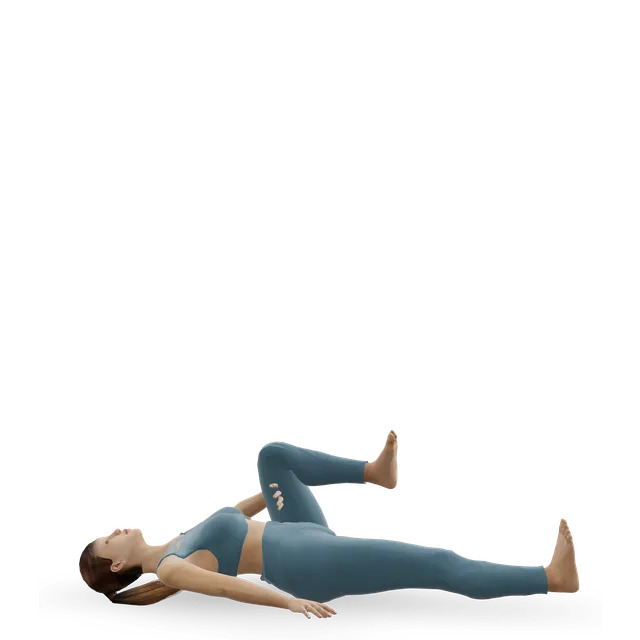
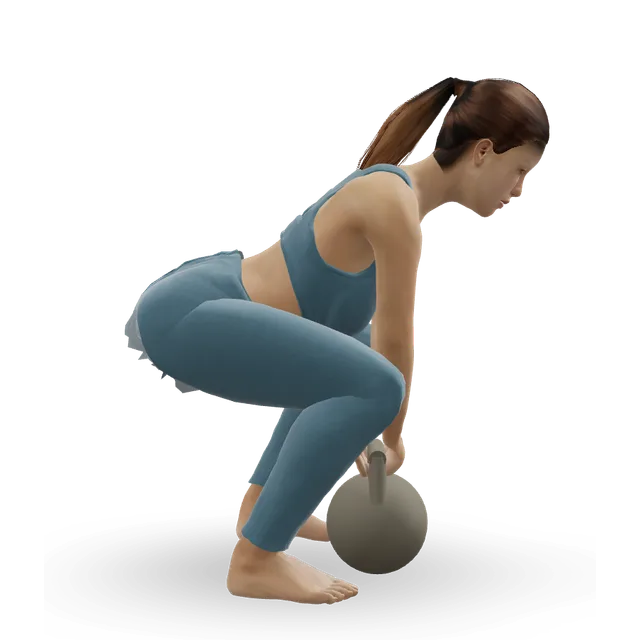
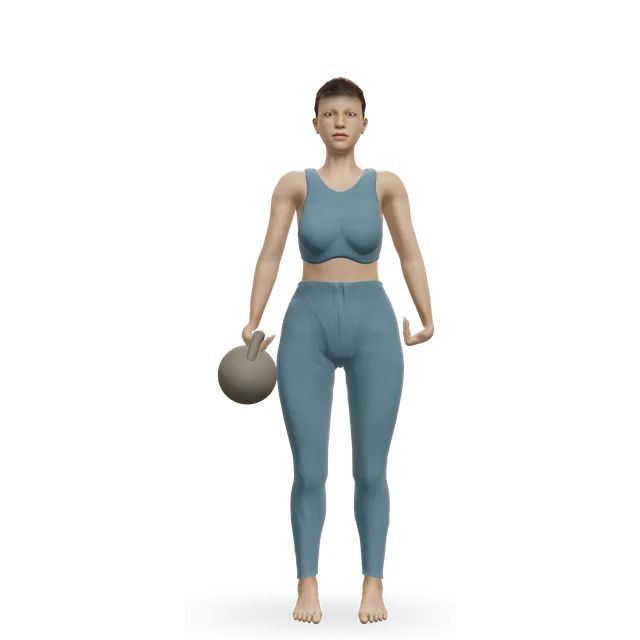
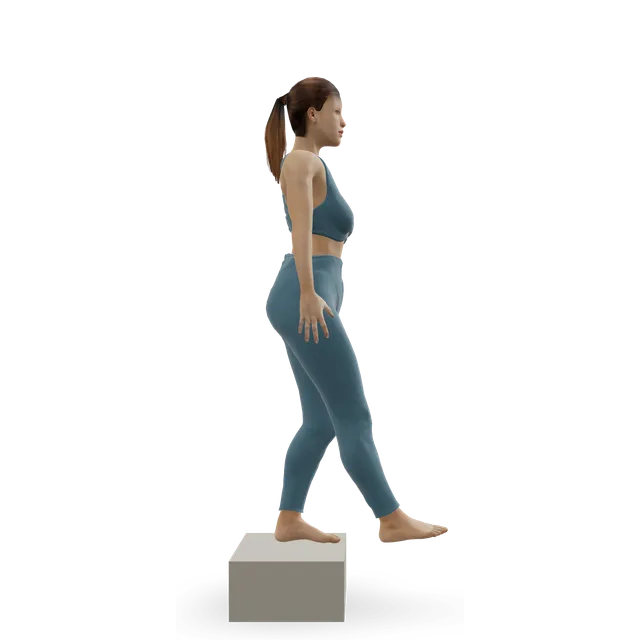
Start at the first stage. Each move opens a full guide with a 3D demo.
Stage 1
Settle: keep moving
The first days to about 2 weeks. Stay active: walk every day, and move gently in the directions that ease it. Run only if it stays within the pain rule. Doses are editorial unless a source is named.
Move on when: Walking for 20 to 30 minutes feels fine, and your back is settling by the next morning.
Follow along: a timer, a cue and the next move, one step at a time.
Stage 2
Build: strength you'll keep up
About weeks 2 to 6, strength work 2 to 3 days a week and brisk walking most days. No single core method beats another, so choose what you'll keep doing.
Move on when: 30 minutes of brisk walking is within the pain rule, and the strength work feels steady.
Follow along: a timer, a cue and the next move, one step at a time.
Stage 3
Run-walk back over 12 weeks, and keep strong
The run-walk programme from the back pain trial, three times a week at a slow to moderate pace (no faster than about 6 minutes per kilometre), with strength work twice a week. If you're an experienced runner and your back has settled, the NHS Oxford walk-jog programme suits too.
3 sessions a week of about 30 min. Jog and walk stages: 15 s and 2 min, 30 s and 2 min, 45 s and just under 2 min, 60 s and 90 s, 75 s and 75 s, 90 s and 60 s, 105 s and 45 s, and 2 min and 45 s, each 6 to 10 times; then jogs of 2 min 15 s up to 3 min 30 s with 45 to 15 s walks, 6 to 8 times · The trial's programme. Start at one of the first three stages, depending on how long you can jog comfortably, up to 2 minutes. Move up a stage when you manage the most repeats, no more than one stage a week and after at least 2 sessions that week; drop back a stage after a marked rise in back pain
Move on when: After the 12 weeks, add no more than about 10% a week, as the NHS service advises, and keep two strength sessions a week (our suggestion).
Follow along: a timer, a cue and the next move, one step at a time.
What to change for now
What to change in your running today (written steps)
Our 3D figure can't show these changes. They come from the NHS, a back pain trial's run-walk programme, NICE and an NHS service's return to running programme, so keep what passes the pain rule.
1. Keep moving: walk on the first days, then run-walk. Advice to stay active did slightly better than bed rest.
2. Run shorter and slower for now, with walking breaks: the trial kept to a slow to moderate pace. Flat routes are our suggestion.
3. Shorten or stop any run that sends pain, tingling or numbness further down a leg.
4. One-sided low back or buttock pain that comes on with running, in a distance runner: stop and see a GP to rule out a stress fracture of the sacrum.
5. Don't buy new shoes or insoles to fix the back: NICE advises against insoles, rocker-sole shoes and belts for back pain. Choose running shoes for comfort.
6. When you build back, add no more than about 10% a week (the NHS service), and keep each run within your longest pain-free run of the past month.
It seems not. Back pain is uncommon in runners, and regular runners' discs looked healthier on scans than inactive people's, though that was a one-time comparison rather than proof. In a pooled analysis, running was the only kind of physical loading linked with better disc health.
Can I run with lower back pain?
Usually, yes, if it stays within the pain rule and none of the warning signs apply. In a trial of 40 adults with long-lasting back pain, a 12-week run-walk programme improved pain and disability compared with waiting.
Why does my lower back hurt when I run?
Usually it's ordinary back pain, often from a strained muscle or with no clear cause, and it usually settles within a few weeks. A sudden jump in distance, speed or hills is a common story behind running injuries (our reading of the studies).
Will running help my back pain?
It may. The run-walk programme in one trial cut pain by about 15 points out of 100 against waiting, and a walking programme delayed the next bout of back pain in another. Start gently and build slowly.
Do I need a stronger core?
No single exercise method is best: core (motor control) exercise did no better than other exercise in 29 trials, and we found no trial of core training for runners with back pain. Pick strength work you'll keep up.
Should I change my shoes or get insoles?
NICE says not to offer insoles or rocker-sole shoes for back pain. Choose running shoes that feel comfortable.
Do I need a scan?
Usually not: NICE advises against routine scans, and disc changes are common in people without back pain. The warning signs decide who needs one, and a suspected stress fracture needs an MRI scan.
When should I worry about back pain from running?
Call 999 or go to A&E for numbness around your genitals or bottom, new trouble peeing or pooing, changes in sexual sensation, or symptoms in both legs. One-sided low back or buttock pain that comes on with running in a distance runner, especially with missed periods or a past stress fracture, needs a GP check for a stress fracture of the sacrum.
Is it sciatica?
Pain, tingling or numbness spreading down a leg below the knee, often worse than the back pain, points to sciatica. Shorten any run that sends symptoms further down the leg, and see our sciatica guide.
How should I start running again?
Walk first, then build up with a run-walk programme like the one in the back pain trial, which started with 15 to 30 second jogs and 2-minute walks three times a week and lengthened the jogs over 12 weeks. If you're already a runner and the pain has settled, the NHS service's 6-week walk-jog programme suits too.
Why does my back hurt more on a treadmill or uphill?
We found no study comparing them for back pain. Try the other surface, a slower pace and flatter routes, and judge by the pain rule (our suggestion).
Exercise education, not a diagnosis or treatment plan. It is written from the guidelines and studies listed above; review by a clinician is pending. If your pain follows an injury, is severe, is getting worse, or comes with any warning sign listed on this page, get it assessed. Health disclaimer.