Hip pain when squatting: the pinch at the front of the hip, finding your stance and building back
A pinch at the front of the hip or groin as you reach the bottom of a squat is usually where your hip runs out of bend. Hip shape varies a lot between people, so the depth and stance that suit one lifter can pinch another. A box just above the pinch and a slightly wider stance with the toes turned out are the usual first changes, from a clinical commentary rather than a trial. When the pain is consistent, the examination fits and an X-ray shows an extra bump on the thigh bone (cam) or extra socket cover (pincer), it may be femoroacetabular impingement (FAI) syndrome, and exercise is still the first treatment.
Some hip pain needs help first: severe pain after a fall or injury, being unable to put weight on the leg, or a hot, swollen hip with a fever. This guide covers those signs, the other hip pains in the squat, what butt wink is and isn't, what the surgery trials found, and a staged plan back to depth, with 3D demos.
Exercise is for pain that has been checked or is clearly mild and settling.
Get urgent medical help if
Severe hip pain after a fall or injury, or you cannot stand, walk or put weight on the leg. In an older adult this can be a broken hip; the leg may look shorter or turned outward.
Tingling or loss of feeling in the hip or leg after an injury.
Buttock or leg pain with numbness around the genitals or bottom, new trouble controlling your bladder or bowels, or weakness or numbness in both legs.
A hot, swollen hip, or hip pain with a fever or feeling generally unwell (a possible joint infection).
A child or teenager with sudden hip, thigh or knee pain, a limp, or who will not put weight on a leg. Hip problems in children can sometimes be felt in the thigh or knee, and in some children knee pain is the only sign.
Same day: a teenager with sudden pain at the front or top of the hip bone after a heavy lift, sprint, kick or jump, often with a pop. A piece of growth plate can pull off the pelvis (an avulsion fracture), and it needs an X-ray the same day.
Same day, and stop running now: groin or front-of-hip pain in a runner, sometimes felt in the thigh or knee, that builds with running, hurts with every step or at night, or hurts when the hip is turned to the end of its range. Keep weight off the leg, using crutches if you have them, and get an urgent GP appointment or help from NHS 111 the same day: a stress fracture of the hip (femoral neck) needs urgent imaging.
See a doctor or physiotherapist if
Hip pain that stops normal activities or disturbs sleep, keeps getting worse, or has not improved after 2 weeks of looking after it at home.
Stiffness lasting more than 30 minutes after waking.
Hip or groin pain that hasn't settled after 6 weeks, especially with a normal X-ray, or new hip pain if you take high-dose steroids, drink heavily, or have sickle cell disease or lupus: ask your GP about an MRI (magnetic resonance imaging) scan and a hip specialist. It can be avascular necrosis, which an X-ray can miss early on.
Pain that has not improved after a good 3 months of exercise-based treatment: ask about a hip specialist.
Painful catching or locking deep in the groin, or a hip that gives way: get it assessed.
Where does it hurt?
Location narrows the likely causes; it does not diagnose.
The pinch at the front of the hipEmerging evidence
The hip is a ball in a socket. As you squat, the hip bends until the neck of the thigh bone meets the rim of the socket; then the pelvis tilts back (the butt wink) and the lower back bends. Where that happens differs between people: in 442 hips, those with a forward-twisted thigh bone and a forward-facing socket turned inwards about 44°, against about 20° with the opposite combination. In people with FAI syndrome, up to 51% had an unusual twist in the thigh bone and up to 31% an unusual socket angle.
A bony bump where the ball meets the neck of the thigh bone (cam) or extra socket cover (pincer) brings the contact sooner: in a lab study, 15 people with cam-type FAI couldn't squat as low as 11 people without it, and tilted the pelvis less. So the depth and stance that suit one lifter can pinch another, and a pinch at the very bottom of a deep squat is often the end of that person's range.
When it is FAI syndrome or a labral tearStrong evidence
An international agreement (the Warwick agreement) defines FAI syndrome as symptoms, signs on examination and imaging, all together: hip or groin pain linked to movement or position is the symptom. A later consensus groups hip-related pain in active adults into FAI syndrome, a shallow or unstable socket (dysplasia), and labral, cartilage or ligament problems without a distinct bone shape.
Shapes and tears are common in hips that don't hurt: cam shapes in 37% of pain-free hips (54.8% of athletes) and labral damage in 68%, and labral tears in 54% of people without hip pain against 62% with it. A scan finding is not the diagnosis on its own.
Butt wink is the pelvis tucking under at the bottom of the squat when the hips run out of bend. It rounds the lower back and adds compressive and shearing load in biomechanical analyses. But the lower back rounds as soon as a bar is on the back anyway, by about 13° in women and 26° in men on the way down in 30 trained lifters, and in women, less hip bend and weaker back muscles went with more rounding in a squat lift.
We found no study linking butt wink with injury, and bending the lower back while lifting hasn't been linked with back pain. With a heavy bar, squat to just above where it starts (our suggestion, and the site's squat guide says the same).
The hip was one of the three commonest injury sites in Swedish classic powerlifters. If a clinician suspects a problem in the hip joint, X-rays come first (a front view of the pelvis and a side view of the hip); an MRI scan is for confirming the diagnosis or planning surgery. Hip arthritis is diagnosed without an X-ray from 45 if the pain comes with activity and morning stiffness lasts 30 minutes or less.
Exercise-based treatment is recommended for at least 3 months, and people are encouraged to stay active, sport included. In the two UK trials, people improved with physiotherapy as well as with surgery, the surgery groups by a little more, and at about 3 years one of them found no difference in arthritis on X-ray. An NHS trust page says most FAI is managed without surgery. No one can promise a date.
Exercise first, for at least 3 monthsEmerging evidence
An international consensus recommends exercise-based treatment for hip-related pain for at least 3 months, with education and staying active, sport included, though strong trial evidence for physiotherapy is lacking and the best dose is unknown. An NHS trust page says most FAI is managed without surgery, that steroid injections give temporary relief to help rehab, and that keyhole surgery is an option if conservative care fails.
Surgery or physiotherapy: a small differenceMixed evidence
In the UK FASHIoN trial (348 people), keyhole surgery scored 6.8 points better than physiotherapist-led care on a 100-point hip quality-of-life score at 12 months, just above the smallest difference patients notice (6.1). Both groups improved. Adverse events were reported by 72% of the surgery group and 60% of the physiotherapy group, most often muscle soreness, and 5 of the 6 serious ones in the surgery group were linked to the treatment.
In the FAIT trial (222 people), surgery scored 10 points better on a 100-point function score at 8 months, where the smallest noticeable difference was 9; at about 3 years, arthritis on X-ray didn't differ. A 2025 meta-analysis of 21 trials (1,799 people) found the advantages of surgery fell short of the smallest noticeable difference, with no difference in pain.
Depth and stance: one commentary and indirect evidenceEmerging evidence
No trial has tested squat depth or stance in people with hip pain. A clinical commentary advises keeping the squat within your available hip bend, avoiding deep squats with FAI, and using a wider stance with the toes turned out, which it says turns the hips outward and lowers the chance of impingement. The rest is indirect: hip shape and rotation vary a lot between people, and people with cam-type FAI couldn't squat as low.
In lab studies of people without hip pain, a wider stance gave the hips more of the work without changing the hip bend at parallel, and extreme combinations of stance and foot angle gave the largest hip and knee loads. The same commentary notes that up to 25% of people with FAI squat deep without pain, but still advises against deep squats; the site's hip impingement plan lowers the box as the pinch allows. No trial has compared the two.
Strength work improves range about as much as stretchingEmerging evidence
In a meta-analysis of 11 trials (452 people), strength training improved range of motion about as much as stretching. The pinch is bone meeting socket, so stretching into it doesn't change the shape that causes it, and pushing into the pinch is how the clinical test for hip-related pain brings it on.
The 5 out of 10 rule, and the pinch as a depth signalEmerging evidence
During the exercise, pain up to about 5 out of 10 is acceptable. It should settle afterwards, and your hip should be no worse that night or the next morning. If it is, do less next time (fewer repetitions, a smaller range, a lighter load), not nothing. This follows the rule a trial of outer-hip tendon pain used, and the National Institute for Health and Care Excellence (NICE) says joint pain may rise when you start exercising with arthritis.
A pinch at the front of the hip at the bottom of the squat is a depth signal, not a pain score to push through: set the box just above it, and build depth only when the box height you're on has been pinch-free for a week (our suggestion). Sharp, catching or locking pain deep in the groin, or a hip that gives way, is a reason to stop and get it checked.
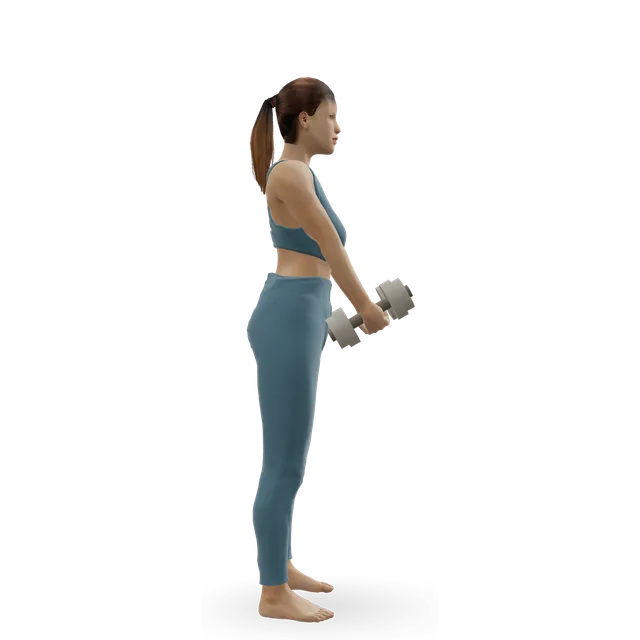
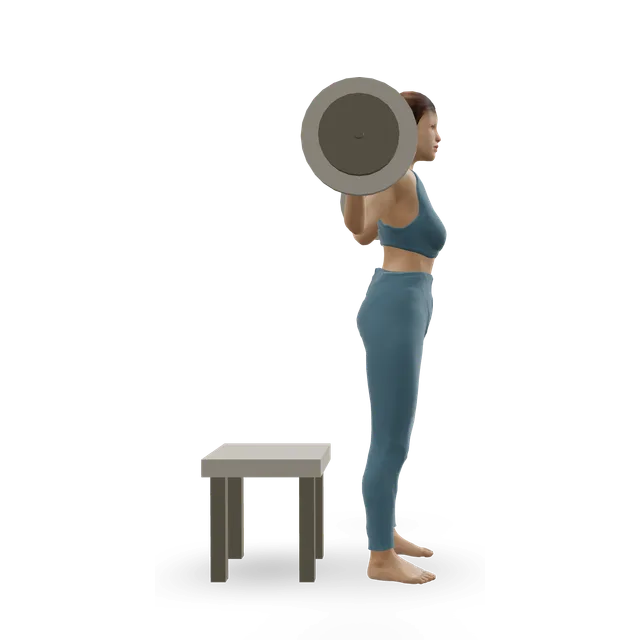
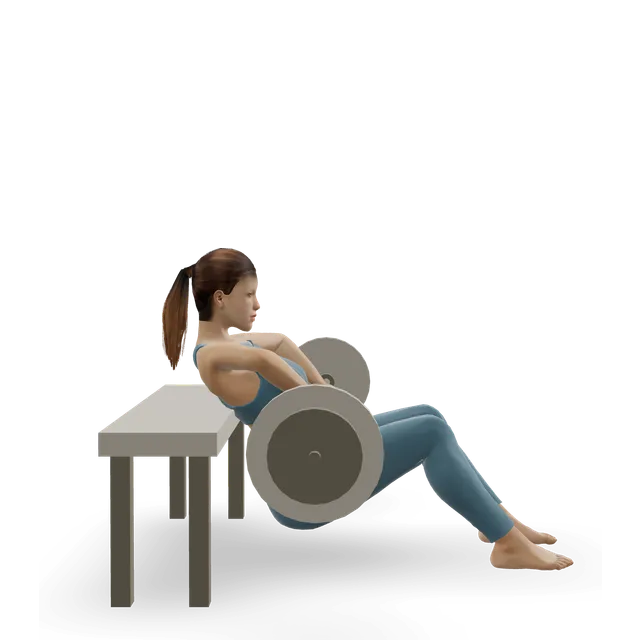
Start at the first stage. Each move opens a full guide with a 3D demo.
Stage 1
Find your squat: above the pinch
About weeks 0 to 2, 2 or 3 sessions a week. Train without bringing on the pinch, and find the depth and stance that suit your hips (written steps below). Doses are editorial, mostly the hip impingement guide's starting points, unless a source is named.
2 to 3 sets of 8 to 12, stopping with 2 or 3 reps in reserve · The move page's dose. Bench set just above the pinch, stance a little wider, toes out about 15 to 30°: a clinical commentary's advice, untested in a trial
Move on when: You can lower the box a little without bringing on the pinch, as the hip impingement guide puts it.
Follow along: a timer, a cue and the next move, one step at a time.
Stage 3
Back to the barbell: depth before load
About weeks 8 to 12 and beyond. Your own squat depth and stance under the bar, with single-leg and hip strength kept up. Start at about half your old working weight and add load in steps of about 2 to 10% while within the pain rule; that's our suggestion, and no trial has tested it. With FAI syndrome on imaging, your own depth may stay above parallel, so agree a target depth with your physiotherapist if your sport needs deep squats.
3 sets of 5 to 8 · At your own depth and stance. Add load in steps of about 2 to 10% while within the pain rule (our suggestion, using the steps the American College of Sports Medicine gives healthy adults)
2 sets of 5 slow turns each leg · The move page's dose, holding a support. With pain at the front of the standing hip, keep to the opening turn, as its page advises
Move on when: Your usual squat passes the pain rule at your chosen depth for 2 weeks. If a good 3 months of exercise hasn't helped, it's reasonable to ask about a hip specialist.
Follow along: a timer, a cue and the next move, one step at a time.
What to change for now
Changing the squat (written steps)
Our 3D figure can't show these changes. No trial has tested them in people with hip pain: they come from one clinical commentary and indirect lab studies of hip shape and stance, so treat them as a starting point and keep what passes the pain rule.
1. Depth: squat to a box set just above the pinch, and lower it a notch at a time over the weeks as the pinch allows.
2. Stance: try a little wider than usual with the toes turned out about 15 to 30°, letting the knees follow the toes. Test widths with bodyweight squats first.
3. Avoid the extremes: very wide with the toes pointing forward, or narrow with the toes turned far out.
4. Pelvis and back: with a heavy bar, stop just above the point where your pelvis starts to tuck under.
5. Bar position: a goblet or front squat keeps the trunk upright, and a box squat with upright shins and a wider stance is another option (our suggestion).
6. Load and tempo: lighter, a slower lowering, and a pause on the box rather than bouncing (our suggestion).
Expert opinion differs. A clinical commentary advises avoiding deep squats with FAI even when they're pain-free, because deep squats raise hip joint stress and need the hip bend and inward turn that bring on impingement; it also notes that up to 25% of people with FAI squat deep without pain. The site's hip impingement plan lowers the box as the pinch allows, and no trial has compared the two. Our suggestion: build towards the depth that stays pinch-free and within the pain rule, and if you have FAI syndrome on imaging and compete in a sport that needs deep squats, agree a target depth with your physiotherapist.
Deep squat holds, Cossack squats, frog rocks and pigeon push the hip to the end of its range, and pulling the knee to the opposite shoulder copies the clinical test for hip-related pain, which bends the hip deeply and turns it in. Stretching into the pinch doesn't change the bone shape that causes it, and the hip impingement guide leaves these out too. The hip mobility routine includes Cossack squats, frog rocks and pigeon, and both it and the squat technique workout end in the deep squat hold, so leave them for the last stage and stay short of the pinch.
Pulling the knee to the opposite shoulder copies the clinical test for hip-related pain, and stretching into the pinch doesn't change bone shape (the hip hub).
At the bottom, the neck of your thigh bone meets the rim of the socket and your pelvis starts to tuck under. Where that happens depends on your hip shape, which varies a lot between people. In a lab study, people with a bony bump on the neck of the thigh bone (cam-type impingement) couldn't squat as low.
Is it hip impingement?
Only if consistent groin or hip pain, the examination and an X-ray all fit together: that's femoroacetabular impingement (FAI) syndrome, as an international agreement defines it. A cam shape on its own is common in hips that don't hurt, especially in athletes.
What should I change in my squat?
Squat to a box set just above the pinch, try a slightly wider stance with your toes turned out, and keep the weight lighter while you build strength. This comes from a clinical commentary and studies of hip shape, not a trial in people with hip pain, so keep what passes the pain rule. Lower the box gradually as the pinch allows.
Is butt wink bad?
It's where your hips run out of bend and your pelvis tucks under. We found no study linking it with injury: the lower back rounds a little under a loaded bar anyway, and back rounding while lifting hasn't been linked with back pain. Our suggestion: with a heavy bar, stop just above where it starts.
Should I stretch my hip flexors to fix it?
It won't change the bone shape behind the pinch. Strength training through your available range improves flexibility about as much as stretching does, and pushing into the pinch is how the clinical test brings it on.
Can I keep squatting with hip impingement?
Usually, at a depth and stance that don't pinch. Experts recommend exercise-based treatment for at least 3 months, and staying active, sport included. A clinical commentary advises against deep squats with impingement even when they're pain-free, so agree a target depth with your physiotherapist if your sport needs them.
Do I need surgery for impingement or a labral tear?
Exercise comes first. In two UK trials, keyhole surgery did a little better than physiotherapy on average, around the smallest difference patients notice, and a 2025 review found the differences fell short of that. If a good 3 months of exercise hasn't helped, it's reasonable to ask about a hip specialist.
Do I need a scan?
X-rays come first if a clinician suspects a problem in the hip joint; an MRI scan is mainly for confirming the diagnosis or planning surgery. Labral tears are found in about half of people without hip pain, so a scan has to match your symptoms.
Why does my groin hurt when I squat wide?
Inner thigh pain with wide stances, sumo or Cossack squats is often the adductor muscles, and our groin strain guide has the plan. Pain deep at the front of the hip at the bottom of the squat is more often the hip joint itself.
What about hip pain when squatting and deadlifting?
A deep ache low in the buttock at the sitting bone, worse with deep squats and Romanian deadlifts, is often the hamstring tendon, and our high hamstring tendinopathy guide covers it. Pain down the leg with pins and needles points to the back instead.
How long does it take?
Exercise programmes for hip-related pain are recommended for at least 3 months, and physiotherapy in one UK trial ran up to 8 sessions over 5 months. No one can promise a date, but steady progress over the weeks is the aim.
Exercise education, not a diagnosis or treatment plan. It is written from the guidelines and studies listed above; review by a clinician is pending. If your pain follows an injury, is severe, is getting worse, or comes with any warning sign listed on this page, get it assessed. Health disclaimer.