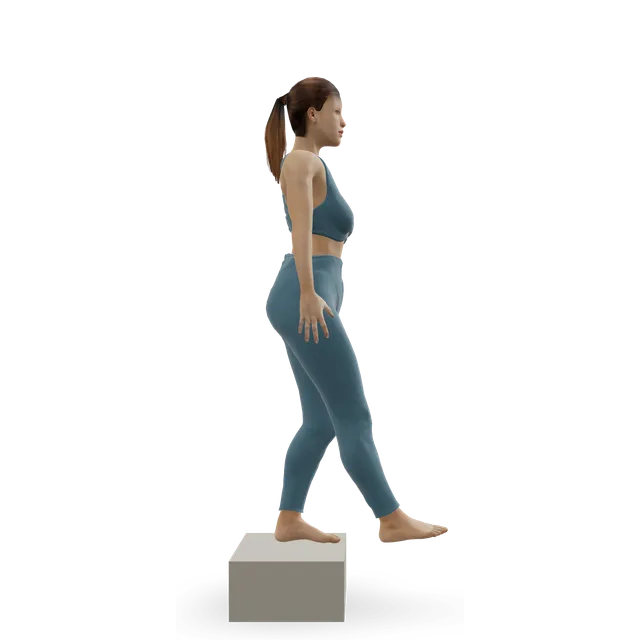
Pain guide · Hip pain

Hip pain when walking: the joint, the outer hip, a limp, walking sticks and how to build back

Walking is good for most hip pain, even when it hurts a little. Where you feel it is the first clue: groin pain from mid-life is often the hip joint, pain on the outside of the hip is usually the gluteal tendons, and buttock pain can come from the back. Leg or buttock ache that goes after a few minutes' rest can mean narrowed arteries, so it needs a general practitioner (GP).

Changing how far, how fast and where you walk can keep you walking while you build strength, and National Health Service (NHS) advice is to hold a walking stick in the hand opposite the sore hip. Severe hip pain after a fall, or not being able to put weight on the leg, is a 999 call or a trip to accident and emergency (A&E). This guide covers the warning signs, how to tell the causes apart, how to walk for now, how much pain is fine, and a three-stage plan with a 3D demo of every move.

When to get help first

Exercise is for pain that has been checked or is clearly mild and settling.

Get urgent medical help if

  • Severe hip pain after a fall or injury, or you cannot stand, walk or put weight on the leg. In an older adult this can be a broken hip; the leg may look shorter or turned outward.
  • Tingling or loss of feeling in the hip or leg after an injury.
  • Buttock or leg pain with numbness around the genitals or bottom, new trouble controlling your bladder or bowels, or weakness or numbness in both legs.
  • A hot, swollen hip, or hip pain with a fever or feeling generally unwell (a possible joint infection).
  • A child or teenager with sudden hip, thigh or knee pain, a limp, or who will not put weight on a leg. Hip problems in children can sometimes be felt in the thigh or knee, and in some children knee pain is the only sign.
  • Same day, and stop the long walks now: groin or front-of-hip pain, sometimes felt in the thigh or knee, that built up after you walked much more than usual (a long-distance walk, a hike, a new job on your feet or military training), and hurts with every step, at night or makes you limp. Keep weight off the leg, using crutches if you have them, and get an urgent GP appointment or help from NHS 111 the same day: a stress fracture of the hip (femoral neck) needs urgent imaging.
  • Same day (urgent GP appointment or NHS 111): severe hip pain that started suddenly without a fall or injury, or the skin around your hip has changed colour.
  • Call 999 or go to A&E: a leg that suddenly becomes very painful, pale or blue, cold, numb or weak. A sudden blockage of a leg artery is an emergency.
  • Contact a GP immediately (or NHS 111 if you can't): a severe burning pain in your legs and feet that continues even when you're resting, skin on your feet or toes that turns pale, cold or numb or changes colour, or wounds on your feet or legs that don't heal. These can be signs that the blood supply to the leg is badly reduced.

See a doctor or physiotherapist if

  • Hip pain that stops normal activities or disturbs sleep, keeps getting worse, or has not improved after 2 weeks of looking after it at home.
  • Stiffness lasting more than 30 minutes after waking.
  • Bone pain that is constant or worse at night, especially with a lump, unexplained weight loss, fever or tiredness, or a past history of cancer.
  • Hip or groin pain that hasn't settled after 6 weeks, especially with a normal X-ray, or new hip pain if you take high-dose steroids, drink heavily, or have sickle cell disease or lupus: ask your GP about an MRI (magnetic resonance imaging) scan and a hip specialist. It can be avascular necrosis, which an X-ray can miss early on.
  • You are 60 or over with bone pain in your hips, back, ribs or shoulders that won't go away, especially with tiredness, feeling very thirsty or weight loss: see a GP. The National Institute for Health and Care Excellence (NICE) asks GPs to offer blood tests for myeloma in people 60 and over with persistent bone pain.
  • You are over 50 and your hips and shoulders stay stiff and painful for more than 45 minutes each morning: see a GP (possible polymyalgia rheumatica).
  • Outer hip pain that hasn't improved within 6 weeks of following this advice, or that gets worse: talk to a GP or physiotherapist. In many areas you can refer yourself.
  • Pelvic pain in pregnancy that makes it hard to move around, hurts when you get out of a car or turn over in bed, or makes going up or down stairs painful: call your midwife or GP. You may be referred to a physiotherapist who specialises in pelvic joint problems in pregnancy.
  • Leg pain, usually in the calf but sometimes the thigh or buttock, that keeps coming on when you walk and goes after a few minutes' rest: see a GP. It can be peripheral arterial disease (narrowed leg arteries).
  • Buttock or leg pain, heaviness or tingling that comes on when you stand or walk and only eases when you sit or bend forward, or the distance you can walk keeps shrinking: see a GP or physiotherapist (possible spinal stenosis). Leg weakness that is getting worse, or numbness around your genitals or bottom, is urgent (above).
  • A lump in your groin, or pain or swelling around your testicles, with hip or groin pain: contact your GP.

Where does it hurt?

Location narrows the likely causes; it does not diagnose.

The groin or front of the hip, a deep ache that builds as you walk, from 45

Stiff after sitting still and for less than 30 minutes in the morning, with socks and car seats hard: hip arthritis.

Read: Hip arthritis →
The groin in a younger, active adult, with a pinch on deep bending

Sometimes clicking or catching: possibly hip impingement or a labral tear.

Read: Hip impingement (FAI) →
The bony point on the outside of the hip, worse walking further or faster

Also worse standing on that leg, on stairs, crossing your legs and lying on that side: gluteal tendon pain, often called hip bursitis.

Read: Outer hip pain (hip bursitis) →
The front of the hip when you lift your knee, walk uphill or climb stairs

Possibly the hip flexors.

Read: Hip flexor pain →
The inner groin after a twist, kick or sprint

Possibly a groin strain.

Read: Groin strain →
Groin pain that built up after walking much more than usual, hurting with every step or at night

A possible stress fracture of the hip: stop the long walks and get it checked the same day.

Read: Stress fracture →
Buttock pain with low back pain, sometimes down the leg below the knee

Pain from the back: sciatica.

Read: Sciatica →
Both buttocks and legs, heavy or tingling on walking or standing, easing only when you sit or bend forward

Usually from 50: the pattern of lumbar spinal stenosis.

Read: Lumbar spinal stenosis →
A cramping ache in the calf, thigh or buttock on walking that goes after a few minutes standing still

More likely if you smoke or have diabetes: possibly narrowed leg arteries (peripheral arterial disease). See a GP; our leg pain guide explains.

Read: Leg pain →
The back of the pelvis by the dimple, worse on stairs or standing on one leg

Possibly the sacroiliac (SI) joint.

Read: SI joint pain →
In pregnancy or after giving birth, the pubic bone or the back of the pelvis

Worse walking, on stairs and standing on one leg: pelvic girdle pain.

Read: Pelvic girdle pain (SPD) →
A click, clunk or snap you feel or hear as you walk

Snapping hip.

Read: Snapping hip →
Burning, tingling or a numb patch on the outer thigh, with no weakness

Meralgia paresthetica, a squeezed skin nerve.

Read: Meralgia paresthetica →
Deep groin, buttock or thigh pain with high-dose steroids, heavy drinking, sickle cell disease or lupus

Not settling after 6 weeks: possibly avascular necrosis. Ask your GP about a magnetic resonance imaging (MRI) scan.

Read: Avascular necrosis (hip) →
Hip or buttock pain when you run

Our hip pain when running guide covers it.

Read: Hip pain when running →
Hip pain at night, or when you lie on your side

Our hip pain at night guide covers how to sleep.

Read: Hip pain at night →
A lump in the groin, or pain or swelling around the testicles

Contact your GP.

A child or teenager with a limp, or hip, thigh or knee pain

Get help the same day: hip problems in children can be felt in the thigh or knee.

Read: SUFE (slipped hip growth plate) →

Understand it

Hip arthritis: the commonest cause from mid-lifeStrong evidence

The NHS pairs "over 45 years of age, pain worse when walking and stiffness after moving" with osteoarthritis, and the National Institute for Health and Care Excellence (NICE) diagnoses it without imaging in people 45 or over with activity-related pain and morning stiffness of 30 minutes or less. The NHS says hip arthritis causes pain in the groin or the outside of the hip, more pain and stiffness after the joints have been still for a while, and trouble with shoes and socks or getting in and out of a car.

Sources 1, 2, 3, 4

Outer hip pain: walking is often what it limitsEmerging evidence

Outer hip pain (greater trochanteric pain syndrome, mostly gluteal tendinopathy) is commonest in women aged 40 to 60, NHS inform says; in 3,026 adults aged 50 to 79, 15% of women and about 7% of men had it on one side. NHS inform lists pain that increases with walking and standing, pain standing on the affected leg ("hanging on the hip") and sitting with crossed legs, and says longer walks or a faster pace can bring it on. In the LEAP trial, walking was the activity people most often said it limited (68% of 201).

Each step puts your weight through one hip. In a study of 40 people with outer hip pain and 40 without, those with pain walked with more sideways load on the hip, more dropping of the pelvis and more lean of the trunk, and the LEAP trial's protocol explains that weak hip muscles let the hip drift inwards on one leg, squeezing the tendons against the bone.

Sources 5, 6, 7, 8, 9

Hip joint pain isn't only in the groinEmerging evidence

In 51 people whose hip joint pain was confirmed with an injection, the pain was felt in the buttock (71%), the thigh (57%), the groin (55%) and below the knee (22%), but never in the lower back. NHS inform adds that a back problem can cause hip pain even when the back doesn't hurt.

Sources 10, 11

Pain on walking that eases with rest: arteries or spine?Strong evidence

Narrowed leg arteries (peripheral arterial disease) cause an ache in the legs when walking that usually goes after a few minutes' rest. It's usually felt in the calf, but NHS leaflets say it can be felt in the thigh or buttock too. The NHS says see a GP if you get recurring leg pain when exercising.

If the pain needs sitting or bending forward to ease, rather than just standing still, the spine is more likely: in older adults with leg pain, no pain when sitting and improvement bending forward were the strongest clues to lumbar spinal stenosis. The two can occur together, so this kind of pain needs assessing.

Sources 12, 13, 14, 15, 16

A limp and the Trendelenburg signEmerging evidence

A limp from pain, where you spend less time on the sore leg, is common with arthritis and tendon pain. A Trendelenburg gait is different: the pelvis drops on the side of the swinging leg because the hip muscles on the standing side can't hold it level, from weakness or hip pain. In 24 women with outer hip pain, a positive Trendelenburg sign picked out a torn gluteus medius tendon about three times in four.

Sources 17, 18, 8

A stress fracture after a jump in walkingStrong evidence

Stress fractures aren't only a runner's problem: the American Academy of Orthopaedic Surgeons says people who aren't athletes can get one by walking much more than usual, with aching at night and a limp. A stress fracture of the neck of the thigh bone causes groin pain with exercise, and a delay in diagnosis makes it more likely to shift out of place, which is why it needs checking the same day.

Sources 19, 20

When a scan or test helpsStrong evidence

Hip arthritis: NICE advises against routine imaging unless the symptoms aren't typical. A suspected stress fracture: an X-ray first, then an MRI scan. Outer hip pain is diagnosed with simple clinical tests, and in 65 people with outer hip pain, 20 had tendon changes on MRI but negative clinical tests, so a scan report has to match the story.

Suspected narrowed arteries: comparing the blood pressure at the ankle and the arm, called the ankle brachial pressure index (ABPI). Stenosis: scans aren't usually needed at first, an NHS spinal service says.

Sources 2, 20, 21, 22, 23, 12, 16

How it usually goesEmerging evidence

Arthritis "doesn't necessarily get any worse over time and it can sometimes gradually improve", the NHS says, and NICE says pain may rise when you start exercising and settle as you carry on. Outer hip pain "can often take 6 to 12 months of rehabilitation to settle", NHS inform says; in the LEAP trial, about half of those who waited and saw had improved by a year, against more than three-quarters with education and exercise.

With narrowed arteries, 75% of people stay the same or improve and 5% to 10% get worse to the point of threatening the leg, an NHS Scotland pathway says, and walking distance usually increases over 3 to 6 months of regular walking. No one can promise a date.

Sources 4, 2, 5, 24, 14, 13

What helps, and how strong the evidence is

A stick in the hand opposite the sore hipEmerging evidence

The NHS says hold a stick "on the opposite side of your body to your affected leg so that it takes some of your weight", and an NHS trust's leaflet says the same, with the handle at wrist height. You can borrow some sticks from the NHS. NICE says consider walking aids for hip and knee arthritis, and an American guideline strongly recommends a cane for hip arthritis.

In 27 people with severe hip arthritis, a stick in the opposite hand cut the sideways load on the hip by about a quarter and walking pain from 42 to 26 out of 100. In 24 people with hip replacements, it cut the hip muscles' work by about 31%, while a stick in the same-side hand changed nothing. These are small laboratory studies, not trials.

Sources 25, 26, 27, 2, 28, 29, 30

Outer hip pain: education plus exercise beat an injectionStrong evidence

In the LEAP trial, 204 people aged 35 to 70 with outer hip pain had education plus exercise, a steroid injection, or wait and see. At 8 weeks, 77% rated education plus exercise a success, against 58% after the injection and 29% who waited; at a year it was 79% against 58% and 52%. The programme was a daily home routine of 4 to 6 exercises taking 15 to 20 minutes, with 14 physiotherapy sessions over 8 weeks, and education on avoiding positions that squeeze the tendons.

NHS inform's exercises for outer hip pain use similar moves, such as bridges, sit squats to a chair and step-ups leading with the sore leg, built up from 2 or 3 repetitions at a time.

Sources 24, 9, 31

Hip arthritis: exercise helps a littleMixed evidence

In a 2026 Cochrane review of 18 studies (1,368 people), exercise reduced hip arthritis pain by about 7 points out of 100 and improved function by about 9 against no treatment, on moderate-certainty evidence, sizes the review judged unlikely to matter much on average; against a placebo or attention, it may make little difference to pain. NICE still offers exercise to everyone with osteoarthritis, and an American guideline strongly recommends it. Exercise helps many people a modest amount.

Sources 32, 2, 28

Nordic walkingEmerging evidence

In 152 people over 60 with hip arthritis, 4 months of supervised Nordic walking (walking with poles) improved function more than strength training or home exercise, and the advantage held at a year. It's one trial.

Source 33

Walking doesn't wear out a hipEmerging evidence

In a review of studies covering 125,810 people, recreational runners had less hip and knee arthritis than people who didn't run (3.5% against 10.2%); the studies show links, not cause and effect. The NHS says arthritis doesn't necessarily get worse and can improve.

Sources 34, 4

Narrowed arteries: a different, supervised programmeStrong evidence

Once a GP has diagnosed narrowed leg arteries, NICE offers a supervised exercise programme, considering 2 hours a week for 3 months and encouraging people to exercise to the point of maximal pain. An NHS trust advises a brisk walk as far as comfort allows for about 30 minutes, at least 3 times a week. This is a different rule from the hip's, for a different problem, and our exercise guide for peripheral arterial disease covers it.

Sources 23, 13, 14, 12

Shoes, insoles and braces: NICE and the NHS differStrong evidence

The NHS suggests comfortable, shock-absorbing shoes with a soft sole. Its osteoarthritis page, past its review date, says special insoles may help spread your weight and that leg braces and supports work in the same way, while NICE says don't routinely offer insoles, braces, tape or supports unless the joint is unstable or loaded unevenly, exercise isn't enough and the aid is likely to help. This guide follows NICE.

Sources 1, 25, 2

How much pain is OK while you exercise?

The 5 out of 10 rule, no squeezing, and the next morning is the testEmerging evidence

For the exercises, this guide uses the hip hub's rule. During the exercise, pain up to about 5 out of 10 is acceptable. It should settle within an hour or so, and your hip should be no worse that night or the next morning. If it is, do less next time (fewer repetitions, a smaller range, a lighter load), not nothing. Pain can go up a little when you start a new exercise programme; NICE says so for arthritis and still recommends keeping going. If pain climbs week after week, or a warning sign appears, stop and get it checked.

With outer hip pain, our hip bursitis guide adds the LEAP programme's rule: no increase in outer hip pain during squats, bridges and side-stepping, because pain there suggests the tendon is being squeezed. During heavier strengthening, pain up to about 5 out of 10 was fine if it eased afterwards and was no worse that night or the next morning.

For walking (our suggestion, built on a pain-monitoring programme for hip and knee arthritis and NHS inform's rule): walk at a distance and pace where hip pain stays at 5 out of 10 or below and is back to your usual level by the next morning; if it isn't, make the next walk shorter, flatter or slower, not none. In that programme, people with severe hip or knee arthritis kept 94% of sessions within the acceptable range.

The exception: calf, thigh or buttock pain on walking that goes after a few minutes standing still isn't a hip pain rule matter. See a GP first; once narrowed arteries are diagnosed, NICE's programme exercises to the point of maximal pain, under supervision.

Sources 2, 9, 35, 36, 12, 23

The exercise plan: 3 stages

Start at the first stage. Each move opens a full guide with a 3D demo.

Stage 1

Settle: keep walking, shorter and flatter, and load the hip gently

About the first 1 to 2 weeks: walks within the pain rule (shorter, flatter, split in two, with a stick in the opposite hand if you limp, as the written steps below say), NHS inform's hip exercises with its pacing, and for outer hip pain the LEAP holds that load the tendons without squeezing them. With any warning sign, get checked first. Doses are editorial unless a source is named.

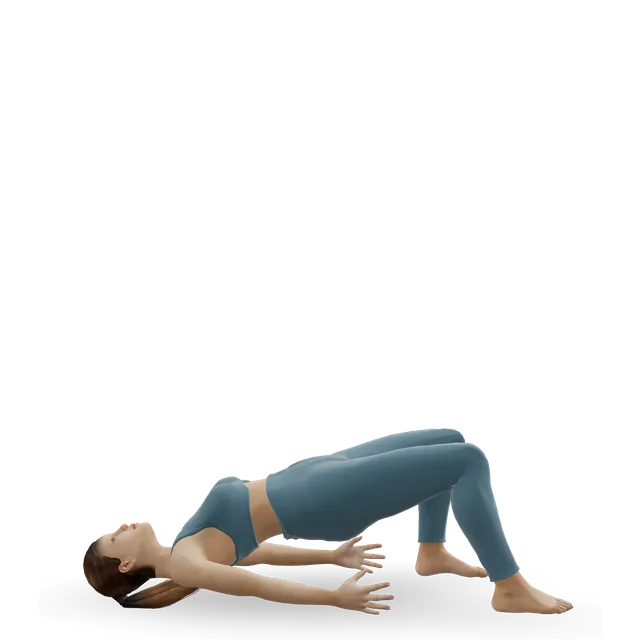
Glute bridge demonstrated on the 3D figure3D demoGlute bridgeBeginner · No equipment

2 to 3 slow reps at a time, building to sets of 8, 2 to 3 times a day, up to 2 sets of 15 · NHS inform's hip and outer hip bridge, with its pacing

Easier: Pelvic tilt into bridge · Harder: Single-leg glute bridge

Sit squat (partial squat) demonstrated on the 3D figure3D demoSit squat (partial squat)Beginner · No equipment

Lower until your bottom just touches a chair behind you: 2 to 3 at a time, building to sets of 8 · NHS inform's sit squat, with its pacing. No increase in outer hip pain, as in the LEAP programme

Harder: Bodyweight squat

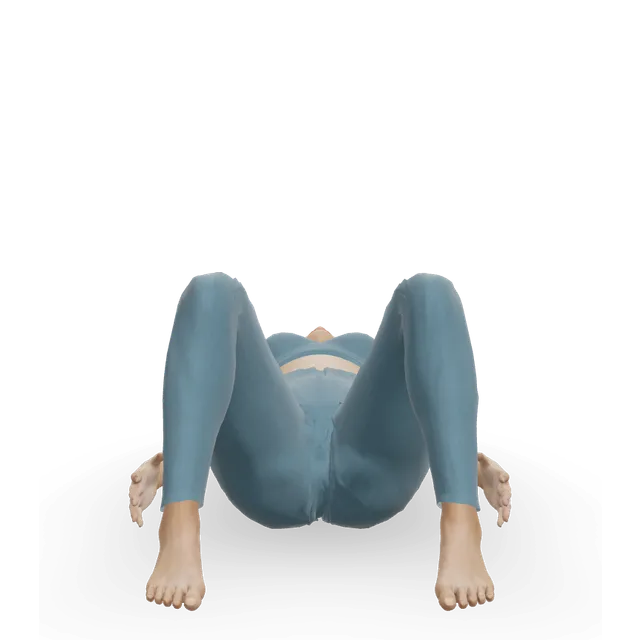
Supine isometric hip abduction (belt press) demonstrated on the 3D figure3D demoSupine isometric hip abduction (belt press)Beginner · A band

3 to 5 holds of 5 to 10 s, twice a day, at a light effort · The move page's dose, from the LEAP trial programme. For outer hip pain

Harder: Lateral band walk

Standing wall-press hip abduction demonstrated on the 3D figure3D demoStanding wall-press hip abductionBeginner · A wall

3 to 5 holds of 5 to 15 s each side, twice a day · The move page's dose, from the LEAP trial programme. Keep the standing hip level rather than sagging out, as the move page says

Easier: Supine isometric hip abduction (belt press) · Harder: Lateral band walk

Supine heel slide demonstrated on the 3D figure3D demoSupine heel slideBeginner · No equipment

10 slow reps each side, once or twice a day · The move page's dose, an editorial starting point. For arthritis stiffness, in bed before you get up

Harder: Hip windshield wipers

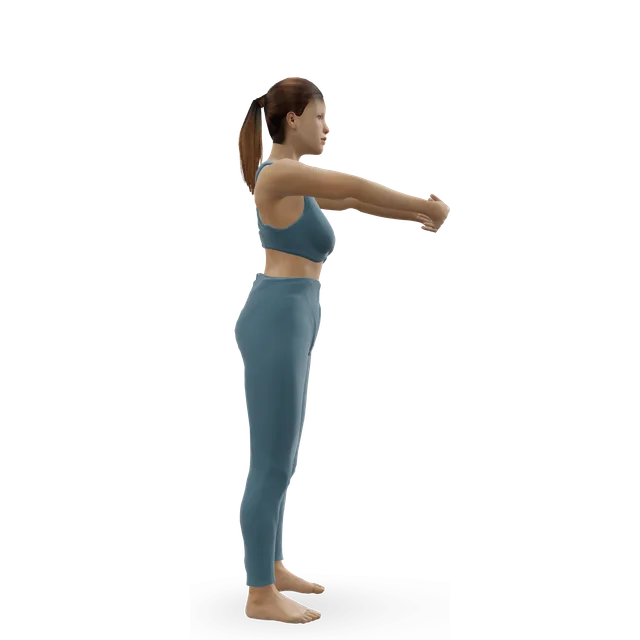
Treadmill walking demonstrated on the 3D figure3D demoTreadmill walkingBeginner · Cardio machine

About 10 minutes at a comfortable pace on the flat, once or twice a day, within the pain rule · The editorial starting point on our exercise for arthritis page; the NHS counts a brisk 10-minute walk towards 150 minutes a week. Walking outdoors counts the same

Harder: Treadmill jogging

Move on when: You can walk 15 to 20 minutes on the flat within the pain rule and be no worse the next morning, and none of these raises outer hip pain (our suggestion; the second part as in our hip bursitis guide).

Follow along: a timer, a cue and the next move, one step at a time.
Stage 2

Build: one-leg strength and longer walks

About weeks 2 to 6, strength 3 or 4 days a week and walking on most days: the LEAP progression onto one leg with the pelvis level, NHS inform's step-up and hip extension, and balance, while walks lengthen by a few minutes a week and gentle slopes come in (our suggestion).

Staggered-stance bridge (offset bridge) demonstrated on the 3D figure3D demoStaggered-stance bridge (offset bridge)Beginner · No equipment

5 slow reps each side once a day, building to 2 sets of 5 to 10 at a somewhat hard effort · The move page's dose, from the LEAP trial programme

Easier: Pelvic tilt into bridge · Harder: Single-leg glute bridge

Step-up demonstrated on the 3D figure3D demoStep-upBeginner · A step

Lead with the sore leg onto a low step: 2 to 3 at a time, building to sets of 8, up to 2 sets of 15 · NHS inform's step-up for outer hip pain, with its pacing. Keep the pelvis level

Easier: Low step-up · Harder: Dumbbell step-up

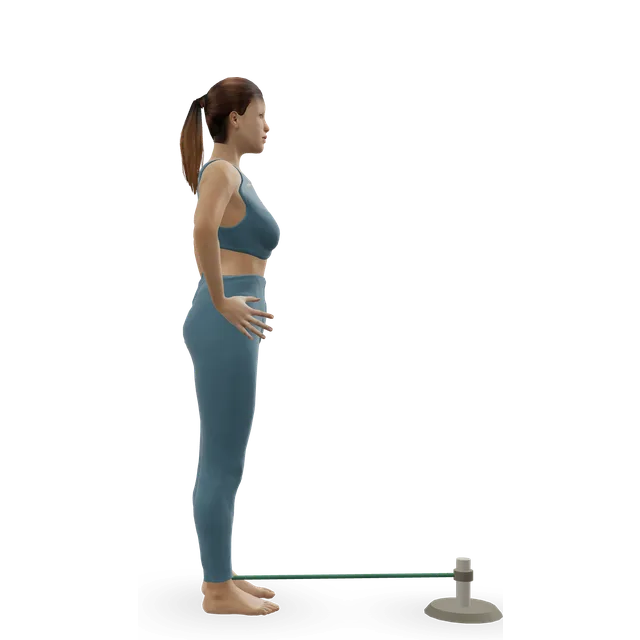
Standing band hip extension demonstrated on the 3D figure3D demoStanding band hip extensionBeginner · A band + An anchor point

2 to 3 sets of 8 to 12 each side, 2 or 3 reps in reserve · The move page's dose, an editorial starting point. NHS inform's standing hip extension, holding a chair, is the unloaded version

Harder: Back extension on a 45-degree bench

Side-stepping (sideways walking) demonstrated on the 3D figure3D demoSide-stepping (sideways walking)Beginner · A wall

10 steps each way, next to a counter · The move page's dose, from the NHS balance exercises

Harder: Lateral band walk

Single-leg stand demonstrated on the 3D figure3D demoSingle-leg standBeginner · A wall

3 holds of 10 to 30 s each side, pelvis level, a hand near a support · As in our hip bursitis guide. Skip it with pelvic girdle pain in pregnancy, as the move page says

Easier: Tandem stance and heel-to-toe walk · Harder: Single-leg reach matrix

Sit to stand from a chair demonstrated on the 3D figure3D demoSit to stand from a chairBeginner · A bench or box

3 sets of 8 to 10, lower seat, no hands · As in our hip pain guide

Easier: Sit to stand, pushing on the thighs · Harder: Bodyweight squat

Move on when: You can stand on the sore leg for 30 seconds with the pelvis level and no outer hip pain (as in our hip bursitis guide), and walk for 30 minutes on the flat within the pain rule (our suggestion).

Follow along: a timer, a cue and the next move, one step at a time.
Stage 3

Strengthen, and your usual walks back

From about week 6, 2 or 3 strength days a week and walking on most days: our hip pain guide's last stage, balance for uneven ground, and your usual walks back by the written steps below.

Dumbbell goblet squat demonstrated on the 3D figure3D demoDumbbell goblet squatIntermediate · A dumbbell

3 sets of 8 to 10, to a box or chair · As in our hip pain guide

Easier: Bodyweight squat · Harder: Barbell front squat

Split squat demonstrated on the 3D figure3D demoSplit squatIntermediate · No equipment

3 sets of 6 to 10 each side · As in our hip pain guide. Skip it, or keep the stance narrow, with pelvic girdle pain, as the move page says

Easier: Bodyweight squat · Harder: Reverse lunge

Single-leg glute bridge demonstrated on the 3D figure3D demoSingle-leg glute bridgeIntermediate · No equipment

2 to 3 sets of 8 each side · As in our hip pain guide

Easier: Glute bridge · Harder: Barbell hip thrust

Patrick step-down demonstrated on the 3D figure3D demoPatrick step-downIntermediate · A step

2 to 3 sets of 8 each side · As in our hip pain guide. Practises the downhill and downstairs step

Easier: Bodyweight squat · Harder: Skater squat

Tandem stance and heel-to-toe walk demonstrated on the 3D figure3D demoTandem stance and heel-to-toe walkBeginner · A wall

3 holds of 20 to 30 s · As in our spinal stenosis guide. Balance for paths and uneven ground

Easier: Semi-tandem stance · Harder: Single-leg stand

Treadmill walking demonstrated on the 3D figure3D demoTreadmill walkingBeginner · Cardio machine

Build towards 30 minutes on most days, adding one of distance, pace, hills or rough ground at a time · Towards the 150 minutes a week the NHS counts brisk walking towards; the build is our suggestion

Harder: Treadmill jogging

Move on when: Our suggestion: keep adding a few minutes a week while the next morning stays no worse, change one thing at a time, and keep two strength days a week for the long term. If a walk flares the hip, go back to the last walk that was fine, not to nothing.

Follow along: a timer, a cue and the next move, one step at a time.

What to change for now

How to walk for now (written steps)

Our 3D figure can't show these changes. They come from the NHS, NHS inform and a pain-monitoring programme for arthritis; the distances are our suggestion.

  • 1. Walk at a distance where pain stays at 5 out of 10 or less and your hip is back to usual by the next morning. If you're unsure, start with about 10 minutes on the flat (our suggestion).
  • 2. Split long walks into two, and choose flat, even routes first (our suggestion). In the first day or two of a flare, NHS inform says avoid long periods on your feet and move the hip gently every hour.
  • 3. Pace: a brisk walk is about 3 miles an hour, when you can still talk but can't sing (the NHS). Speed up only once the distance is comfortable.
  • 4. Stairs: lead with your good leg going up and your sore leg coming down, and use the handrail (NHS inform).
  • 5. With outer hip pain, keep your weight even on both feet, and avoid standing on the sore leg with the hip pushed out (NHS inform).
  • 6. Wear comfortable, shock-absorbing shoes with a soft sole (the NHS). Carry loads in a backpack or split them between both hands rather than on the sore side (our suggestion; the NHS says don't carry anything heavy while the hip hurts).
  • 7. Calf, thigh or buttock ache that comes on as you walk and goes after a few minutes standing still: see a GP before building up further.

Sources 37, 1, 11, 5, 35

Using a walking stick (written steps)

These come from the NHS and an NHS trust's physiotherapy leaflet.

  • 1. Hold the stick in the hand opposite the sore hip, so it takes some of your weight (the NHS).
  • 2. Put the stick forward a stride length and a little out to the side, step forward with your sore leg, push some weight through the stick, then step through with your good leg (the trust's leaflet).
  • 3. Set the height so the handle is at wrist height, wear supportive flat shoes, and replace a worn rubber tip; a stick lasts about 2 years (the leaflet).
  • 4. Stairs with a stick: going up, step up with your good leg first, then the sore leg; going down, put the stick down first, then the sore leg (the leaflet). The NHS says see a physiotherapist before using a stick on steps.
  • 5. You can borrow some sticks from the NHS through a GP, physiotherapist, occupational therapist or hospital staff, or buy one for about £15 to £50; ask for advice on the right height (the NHS).

Sources 25, 26, 27

Your usual walks come back (written steps)

No trial has tested how to build walking back after hip pain. These steps are our suggestion.

  • 1. Add a few minutes a week, and change one thing at a time: distance, then pace, then hills, then rough ground. NHS inform says longer walks or a faster pace can bring outer hip pain on.
  • 2. Long or steep downhills and stairs come last.
  • 3. Walking poles are an option for longer walks: supervised Nordic walking improved function in people over 60 with hip arthritis in a trial.
  • 4. Put the stick away when you can walk your usual distance without limping and within the pain rule; keep it for long or rough walks if it helps. NICE says consider walking aids.
  • 5. If a walk flares the hip, go back to the last walk that was fine, not to nothing.
  • 6. If walking starts to bring on calf, thigh or buttock pain that goes after a few minutes standing still, stop building up and see a GP.

Sources 5, 11, 33, 2, 12

Injections, weight and surgery

For arthritis, NICE says weight loss helps if you carry extra weight (losing 10% of body weight is likely to be better than 5%), that joint steroid injections give short-term relief of 2 to 10 weeks and should support exercise, and that manual therapy is only for use alongside exercise. For outer hip pain, a steroid injection did worse than education and exercise at 8 weeks and at a year. Hip replacement is for when other treatment hasn't helped, as our hip arthritis guide explains.

Sources 2, 24

Positions to swap, and why

Habit or positionWhy it mattersInstead
Long walks on bad days, or pushing through pain that keeps risingThe pain rule allows up to 5 out of 10, settling by the next morning, not rising pain.Shorter, flatter walks, or two short walks instead of one.
Standing with your weight on the sore leg and the hip pushed out"Hanging on the hip" squeezes the outer hip tendons, NHS inform and the LEAP programme say.Weight even on both feet.
Holding a stick in the same-side handIn a laboratory study, a stick in the same-side hand didn't reduce the hip muscles' work; the NHS says use the opposite side.The hand opposite the sore hip, with the handle at wrist height.
Big jumps in distance, pace or hillsLonger walks or a faster pace can bring on outer hip pain, and walking much more than usual can cause a stress fracture.One change at a time, a few minutes a week.
Long, steep downhills and stairs early onOur hip bursitis guide advises avoiding long steep hills early on, and stairs load the hip more than flat walking.Flat routes first; on stairs, good leg up and sore leg down, with the rail. Step-downs come in stage 3.Try: Patrick step-down
Low chairs and sofas after a walkThe NHS says low chairs can put extra pressure on your hips, and NHS inform says avoid them with outer hip pain.A higher, firm seat.
Crossing your legs when you restIt squeezes the outer hip tendons, NHS inform says.Knees apart.
Iliotibial (IT) band and outer hip stretches, with outer hip painDrawing the leg across the body presses the gluteal tendons against the bone, as the LEAP protocol explains and the move page says.Load the tendons without squeezing them, with the lying hip abduction hold.Try: Supine isometric hip abduction (belt press)
Side-lying leg raises early on, with outer hip painThe move page cautions that this position can aggravate a painful outer hip.Standing wall-press holds now, and side-lying leg raises later.Try: Standing wall-press hip abduction
Heavy shopping in one hand on the sore sideThe NHS says don't carry anything heavy while your hip hurts.A backpack, or split the load between both hands.
Shrugging off calf, thigh or buttock ache that goes when you stand stillIt can be narrowed leg arteries, which need a GP's assessment.Book a GP appointment, as the warning signs say.
Insoles, braces or supports as the fixNICE says don't routinely offer them for arthritis.Comfortable, shock-absorbing shoes with a soft sole.

Routines to follow

Arthritis exercise routine: a joint-friendly circuit

A 30-minute joint-friendly circuit built like the GLA:D and ESCAPE-pain programmes: a gentle warm-up, chair, step and band strength moves, balance, then stretches.

30 minBeginner14 movesA bench or box, A step

Balance exercises routine

Balance practice in 10 minutes: tandem stance, single-leg stands, marches, heel walks, tree pose and floor transfers.

10 minBeginner7 movesA wall, A bench or box

Strength and balance exercises for seniors

A 40-minute strength and balance session for over-65s, built from the Otago home programme and NHS exercises, using a chair, a counter and a step.

40 minBeginner18 movesA bench or box, Something with weight

Low-impact leg workout (no jumping)

A gentle leg strength routine with no jumping: sit-to-stands, step-ups, wall sits, bridges and calf raises.

20 minBeginner7 movesA bench or box, A step

Glute workout at home

A 25-minute glute workout with bodyweight and a mini band: bridges, clamshells, band walks, kickbacks and lunges.

25 minBeginner9 movesA wall, A band

Interval walking workout: 3 minutes fast, 3 minutes easy

A 40-minute walk alternating 3 minutes fast and 3 minutes easy, five times over: the interval walking tested in Japanese trials, built up from three rounds.

40 minBeginner3 movesCardio machine, A wall

Claudication walking workout: walk-rest-walk

The walk-rest-walk session for leg pain from narrowed arteries: walk until the pain is close to the most you can bear, rest until it goes, repeat to 30 minutes.

45 minBeginner8 movesA wall, Cardio machine

More moves for this area

Questions people ask

Why does my hip hurt when I walk?

Each step puts your weight through one hip, so walking shows up a sore joint or tendon. From 45, groin pain that builds with walking is often arthritis, pain on the outside of the hip that builds with longer or faster walks is usually the gluteal tendons, and buttock pain can come from the back. The map in this guide helps you tell them apart.

Is walking good for hip pain?

For most hip pain, yes. NICE recommends exercise for hip arthritis and says pain may increase at first but regular exercise helps, and walking doesn't wear out a hip: recreational runners had less arthritis than non-runners. Walk within the pain rule, and build up a few minutes a week.

Is walking bad for hip bursitis?

Usually not, but how you walk matters. Keep your weight even on both feet, avoid standing with the sore hip pushed out, and build distance and pace gradually, because sudden increases can bring it on. Our hip bursitis guide has the full plan.

Which hand should I hold a walking stick in?

In the hand opposite the sore hip: the NHS says hold it on the opposite side to your affected leg so it takes some of your weight. Move the stick forward with your sore leg, set the handle at wrist height, and ask a physiotherapist before using it on stairs. In a laboratory study, a stick in the opposite hand cut the load on an arthritic hip by about a quarter.

Why does my hip hurt after walking a long distance?

Long walks load the hip over and over, and arthritis and outer hip tendon pain both build with distance. Shorten the walk or split it in two, choose flat routes, and build back up by a few minutes a week. Groin pain that keeps building after a big jump in walking, and hurts with every step or at night, needs a same-day check for a stress fracture.

Why does my hip hurt when walking uphill or on stairs?

Hills and stairs ask more of the hip muscles and joint, and both arthritis and outer hip pain are often worse on stairs. Going up, lead with your good leg; coming down, lead with the sore leg, and use the rail. Bring hills back once flat walks feel easy.

Why do I limp when I walk?

A limp often comes from pain: you spend less time on the sore leg. A limp where your pelvis dips towards the other side as you step can mean the hip muscles on the sore side are weak or painful, called a Trendelenburg gait. A stick in the opposite hand and hip strengthening help, and a limp after a fall, or in a child, needs checking the same day.

What does groin pain when walking mean?

From mid-life it's often the hip joint, especially with stiffness after sitting and trouble putting on socks. In younger, active people it can be hip impingement or a groin strain. Groin pain that built up after a big increase in walking and hurts with every step or at night can be a stress fracture and needs checking the same day.

Why does my buttock or leg hurt when I walk but stop when I rest?

If it goes after a few minutes standing still, it can be narrowed arteries in the legs (peripheral arterial disease), which can affect the calf, thigh or buttock: see a GP. If you need to sit or bend forward for it to ease, it's more likely the spine (spinal stenosis). Both need assessing, and they can occur together.

What shoes help hip pain when walking?

The NHS suggests comfortable, shock-absorbing shoes with a soft sole. NICE doesn't recommend routine insoles or braces for arthritis. Choose comfort and grip over special designs.

Will exercise help hip pain when walking?

Usually, by different amounts. For outer hip pain, education and exercise worked for 77% at 8 weeks against 58% after an injection; for hip arthritis, exercise helps a modest amount on average, and in people over 60, Nordic walking improved function more than gym strength training. The plan builds from gentle holds to single-leg strength and longer walks.

When should I see a doctor about hip pain when walking?

Call 999 or go to A&E for severe pain after a fall, or if you can't walk or put weight on the leg. Get a same-day appointment for sudden severe pain, a hot, swollen hip, a fever or feeling unwell. See a GP if it stops you doing normal things, hasn't improved after 2 weeks, or you're stiff for more than 30 minutes after waking.

Related exercise guides

Other pain guides

Sources

  1. NHS · Hip pain in adults
  2. NICE NG226 · Osteoarthritis in over 16s: diagnosis and management (2022)
  3. NHS · Osteoarthritis: symptoms (past its review date: reviewed March 2023, review due March 2026)
  4. NHS · Osteoarthritis (past its review date: reviewed March 2023, review due March 2026)
  5. NHS inform · Greater trochanteric pain syndrome
  6. Segal 2007 · Greater trochanteric pain syndrome in 3,026 adults aged 50 to 79 (population study, Arch Phys Med Rehabil)
  7. Grimaldi 2026 · Which daily activities outer hip tendon pain limits, in 201 LEAP trial participants (secondary analysis, Braz J Phys Ther)
  8. Allison 2016 · How people with outer hip tendon pain walk: 40 against 40 controls (gait study, Clin Biomech)
  9. Mellor 2016 · The LEAP trial protocol: exercise and load modification for outer hip tendon pain (trial protocol, BMC Musculoskelet Disord)
  10. Lesher 2008 · Where hip joint pain is felt, in 51 people confirmed by injection (descriptive study, Pain Med)
  11. NHS inform · Hip problems
  12. NHS · Peripheral arterial disease (PAD)
  13. Gloucestershire Hospitals NHS Foundation Trust · Intermittent claudication (patient leaflet)
  14. Right Decisions, NHS Scotland · Vascular surgery pathway: intermittent claudication (past its review date: review due September 2026)
  15. Suri 2010 · Clinical signs of lumbar spinal stenosis in older adults with leg pain (systematic review of 4 studies, JAMA)
  16. South Tees Hospitals NHS Foundation Trust · Ten lumbar spinal stenosis facts
  17. Gandbhir 2024 · Trendelenburg gait (reference chapter, StatPearls)
  18. Bird 2001 · MRI and examination findings in 24 women with outer hip pain (prospective study, Arthritis Rheum)
  19. American Academy of Orthopaedic Surgeons, OrthoInfo · Stress fractures
  20. Robertson 2017 · Stress fractures of the femoral neck in sport (current concepts review, Sports Med Int Open)
  21. Grimaldi 2017 · Clinical tests for gluteal tendinopathy confirmed on MRI (diagnostic study of 65, Br J Sports Med)
  22. Kinsella 2024 · Clinical tests for greater trochanteric pain syndrome (systematic review and meta-analysis, J Orthop Sports Phys Ther)
  23. NICE CG147 · Peripheral arterial disease: diagnosis and management (updated 2020)
  24. Mellor 2018 · Education plus exercise, a steroid injection or wait and see for outer hip pain: the LEAP trial (RCT of 204, BMJ)
  25. NHS · Osteoarthritis: treatment (past its review date: reviewed March 2023, review due March 2026)
  26. South Tees Hospitals NHS Foundation Trust · How to use walking sticks (physiotherapy leaflet)
  27. NHS · Walking aids, wheelchairs and mobility scooters
  28. Kolasinski 2020 · American College of Rheumatology and Arthritis Foundation guideline for osteoarthritis of the hand, hip and knee (guideline, Arthritis Care Res)
  29. Tazawa 2022 · Walking with a cane in 27 people with late-stage hip osteoarthritis (laboratory study, Arch Rehabil Res Clin Transl)
  30. Neumann 1998 · Hip muscle activity with a cane in either hand in 24 people with hip replacements (laboratory study, Phys Ther)
  31. NHS inform · Exercises for greater trochanteric pain syndrome
  32. Hall 2026 · Exercise for osteoarthritis of the hip (Cochrane review)
  33. Bieler 2017 · Nordic walking, strength training or home exercise in 152 people over 60 with hip osteoarthritis (RCT, Scand J Med Sci Sports)
  34. Alentorn-Geli 2017 · Running and hip and knee osteoarthritis in 125,810 people (systematic review and meta-analysis, J Orthop Sports Phys Ther)
  35. Ageberg 2010 · Pain monitoring during neuromuscular training in severe hip or knee osteoarthritis: NEMEX-TJR (feasibility study, BMC Musculoskelet Disord)
  36. NHS inform · Exercises for hip problems
  37. NHS · Walking for health (past its review date: reviewed December 2022, review due December 2025)
  38. NHS · Bone cancer: symptoms
  39. NICE NG12 · Suspected cancer: recognition and referral (updated 2026)
  40. NHS · Polymyalgia rheumatica (past its review date: reviewed April 2023, review due April 2026)
  41. NHS · Septic arthritis
  42. NHS · Pelvic pain in pregnancy (past its review date: reviewed December 2022, review due December 2025)

Exercise education, not a diagnosis or treatment plan. It is written from the guidelines and studies listed above; review by a clinician is pending. If your pain follows an injury, is severe, is getting worse, or comes with any warning sign listed on this page, get it assessed. Health disclaimer.