Where it hurts is a clue, not a diagnosis
A clinical review of knee pain starts with where it hurts, how it began, whether it swells and what brings it on. Pain only at the front of the knee usually comes from the kneecap, its tendon or their attachments: a dull ache made worse by long sitting or stairs is typical of kneecap pain, overuse in running and jumping sports can cause tendon pain, and in a teenager in a growth spurt the growth areas below the kneecap or at its tip can be the source. The map above points to a likely cause and its guide; an examination decides.
Sources 1, 2
Kneecap pain: what it isStrong evidence
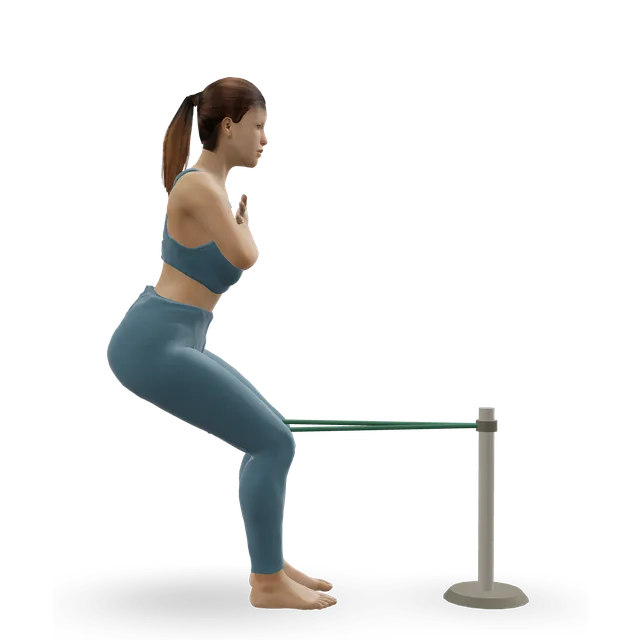
Kneecap (patellofemoral) pain is pain around or behind the kneecap made worse by at least one activity that loads the knee while it's bent: squatting, stairs, running, hopping or jumping. An international consensus statement names pain on squatting as the best single test: 80% of people who test positive have kneecap pain. Pain after sitting for a while with the knees bent, at the cinema or driving, is typical too, NHS inform says, and some people feel the knee might give way. Painless clicking is normal, the NHS says.
Sources 2, 3, 4
How common it isEmerging evidence
In a review of 23 studies, 22.7% of the general population and 28.9% of adolescents reported kneecap pain over a year, though the studies defined it differently. The consensus statement gives 7% to 28% in young adolescents. An NHS trust leaflet says about 1 in 4 people are affected at some point, and that it often follows a sudden change in activity, up or down.
Sources 5, 2, 6
It usually isn't your knee wearing outMixed evidence
In a follow-up of people 5 to 8 years after kneecap pain was diagnosed, 48 of the 50 who had an X-ray had no knee arthritis. Kneecap pain can last, though: 57% of those who replied reported an unfavourable recovery, and pain for more than 12 months at the start predicted a poorer outcome. Only 19% replied, so the true figure is uncertain.
Whether kneecap pain in younger adults leads to kneecap arthritis later is unclear: a review found only one case-control study, which suggested a link, and six small studies without a comparison group, which put the yearly risk at 0% to 3.4%. The cartilage behind the kneecap has no nerves, so damage to it can't directly cause pain, the American Academy of Orthopaedic Surgeons (AAOS) says, and the consensus statement calls the link between the joint's structure and pain imprecise.
Sources 7, 8, 9, 2
Tendons, growing knees and the fat padEmerging evidence
Patellar tendinopathy is pain at the lower tip of the kneecap that rises with load on the thigh muscles, especially jumping and landing. It's diagnosed by examination, because scans show tendon changes in people whose pain comes from elsewhere. In a growing knee, Osgood-Schlatter, at the bump below the kneecap, affected 9.8% of 956 Brazilian 12 to 15 year olds, more often those who played sport; Sinding-Larsen-Johansson, at the kneecap's lower tip, is less common and usually comes at about 10 to 13. The AAOS says that carrying on with activity won't cause long-term damage to the knee.
The fat pad under the tendon is rich in nerves. Its pain is a burning or aching below the kneecap, brought on by pinching it at full straightening, and it is usually managed with physiotherapy; the consensus statement calls it a potential cause of kneecap pain. No trial has tested a treatment for it.
Sources 10, 1, 11, 12, 13, 2
Kneecap arthritisStrong evidence
Arthritis can affect the joint behind the kneecap on its own: in 11% to 24% of older people, the consensus statement says. In a review, the crude rate was 25% in population studies of people over 20, and 39% in studies of people over 30 with knee symptoms. It hurts on stairs, sitting with the knees bent, rising from a chair, kneeling and squatting, the AAOS says, much like kneecap pain.
Sources 2, 14, 15
A swelling on the kneecap: bursitisEmerging evidence
Bursitis on the kneecap is a soft swelling on its front, usually from kneeling or a blow. In a review, kneecap and elbow bursitis together affected at least 10 in 100,000 people a year, 80% of them men aged 40 to 60, and about a third were infected; the AAOS says infection can get in through broken skin and brings redness, a fever or chills. The NHS asks you to rest it from pressure; our knee bursitis guide has the plan.
Sources 16, 17, 18
When a scan helpsStrong evidence
Usually not at first. After an injury, the Ottawa knee rule decides whether you need an X-ray: you do if you're 55 or over, the bony point on the outer side just below the knee is tender, only the kneecap is tender, you can't bend the knee to 90 degrees, or you can't take 4 steps. Across 6 studies of 4,249 adults, the rule picked up 98.5% of breaks.
For front of knee pain without locking, catching or swelling, a US review advises against magnetic resonance imaging (MRI) unless a good rehabilitation programme hasn't helped; the AAOS often uses an X-ray to rule out bone damage, and MRI only if symptoms don't improve with treatment. Tendon changes on scans are common in people whose pain comes from elsewhere.
Sources 19, 1, 9, 10
How it usually goesEmerging evidence
NHS inform says a new knee problem should begin to settle within 6 weeks, and to talk to a professional if kneecap pain hasn't improved within 6 weeks of its advice. An NHS trust leaflet expects improvement over 3 to 6 months of rehabilitation, and says most people get back to their usual activities, sport included.
In the trial behind our knee pain rule, 85% of 40 young women were doing sport without pain at 12 months. In 151 adolescents, changing activities and managing load was followed by success in 86% at 12 weeks and 81% at 12 months; with Osgood-Schlatter, 80% had improved by 12 weeks, but only 69% were back in sport at a year. The adolescent studies had no comparison group, a patellar tendon trial measured its gains at 24 weeks, and no one can promise a date.
Sources 20, 3, 6, 21, 22, 23, 24