Pain guide · Knee pain

Knee bursitis (housemaid's knee): what helps, and when it's infected

Knee bursitis is a swollen, tender, fluid-filled sac (a bursa) on the front of the kneecap, called housemaid's knee, or just below it, called clergyman's knee. It usually comes from kneeling, especially in jobs such as carpet laying, plumbing and roofing, and most cases settle within a few weeks with rest from kneeling, ice and painkillers.

Some bursitis is infected and needs antibiotics, so this guide starts with the warning signs. It then explains what draining and steroid injections offer (the evidence is thin), how knee pads help, and a plan that keeps your knee moving and strong without pressing on the swelling, then gets you back to kneeling on a pad. Exercise doesn't treat the bursa itself.

When to get help first

Exercise is for pain that has been checked or is clearly mild and settling.

Get urgent medical help if

  • Call 999 or go to A&E if redness spreads through the skin around the knee (cellulitis) and you have a very high temperature or feel hot, cold or shivery, a fast heartbeat or fast breathing, purple patches on the skin, feel dizzy or faint, are confused, or have cold, clammy or pale skin. These can be signs of a serious infection. Don't drive yourself.
  • Same day: the swelling over or below the kneecap becomes hot, red or more painful, the skin over it is broken, or you have a high temperature or feel shivery, sick or unwell. Ask for an urgent GP appointment or call NHS 111: it may be infected and need antibiotics.
  • A hot, red or swollen knee with sudden severe pain, a very high temperature, or feeling hot, cold or shivery. This can be a joint infection.
  • You cannot move the knee or put any weight on it, or it is very painful, badly swollen or has changed shape.
  • You hurt your knee and cannot take 4 steps, or you are 55 or over and hurt it in a fall: get it checked the same day for a broken bone.

See a doctor or physiotherapist if

  • Bursitis that hasn't improved, or is getting worse, after 1 to 2 weeks of looking after it yourself, a knee you can't move, or very severe, sharp or shooting pains: see a GP.
  • Swelling that keeps coming back, or a lump that stays for months: see a GP. Draining it, an injection or, rarely, surgery may be discussed, and other causes ruled out.
  • Bursitis when you have diabetes, kidney disease, gout or rheumatoid arthritis, or take medicines that weaken the immune system, such as steroids or chemotherapy: see a GP sooner, because infection is more likely and the cause may need treating.
  • Swelling of the whole knee, all around it and making it hard to bend, rather than a soft swelling on the front of the kneecap: that is usually fluid inside the joint, from an injury, arthritis or gout, and it needs its own check.

Understand it

What it isStrong evidence

Bursae are small, fluid-filled sacs that cushion places where skin, tendon and bone rub. The knee has several. The one most often affected sits between the kneecap and the skin (prepatellar bursitis, or housemaid's knee). A rarer one sits just below the kneecap, over the tendon (superficial infrapatellar bursitis, or clergyman's knee, said to come from kneeling more upright). Both sit under the skin, outside the knee joint.

There are four kinds: after a fall or blow, when the bursa can fill with blood; from repeated kneeling and friction, the commonest; with gout or rheumatoid arthritis; and infected (septic) bursitis, usually from germs getting in through a cut, scratch, graze or bite, or after a needle has been put into the bursa.

Sources 1, 2, 3, 4, 5

Who gets itEmerging evidence

Kneeling is the usual cause: plumbers, roofers, carpet and floor layers, concrete finishers, miners and gardeners, and sports with falls on the knee, such as football, wrestling and basketball. In a US study, 20% of carpet layers reported bursitis against 6% of millwrights and bricklayers, who seldom kneel, and using a knee kicker to stretch carpet was the only significant predictor. On ultrasound, the bursa was thickened in 49% of carpet and floor layers against 7% of house painters. Floor layers spent 56% of their working time in knee-straining positions, and that kind of work went with bursitis on examination.

Knee and elbow bursitis together affect at least 10 in 100,000 people a year, 80% of them men aged 40 to 60. In the UK, bursitis or cellulitis at or about the knee from severe or prolonged pressure is a prescribed industrial disease (A6) for people who kneel a lot at work.

Sources 2, 4, 3, 6, 7, 8, 9, 10

How it's recognisedStrong evidence

A swelling on the front of the knee, usually soft and movable, tender and warm, sometimes red, with pain when kneeling or bending the knee. Some long-standing bursitis is barely painful. A GP examines it and asks about your work, injuries and other conditions.

The knee joint itself usually still bends, because the swelling sits in front of the kneecap rather than inside the joint. After a fall, an X-ray checks for a broken kneecap, and an ultrasound scan can help tell bursitis from a skin infection (cellulitis).

Sources 1, 3, 2, 4

Infected bursitisEmerging evidence

In reviews of knee and elbow bursitis together, about 1 in 3 cases was infected: a 2014 German literature review and the French Society for Rheumatology's 2023 recommendations both give this figure (we read their summaries, not the full papers). The germ is usually Staphylococcus aureus, in 80 to 85% of cases.

Signs that point to infection are a high temperature, skin over the bursa that is clearly warmer than over the other knee, and a cut or broken skin over it. Up to half of infected cases are in people with diabetes or kidney disease, heavy drinking and a weak immune system raise the risk, and children are more likely to have an infected bursa. A fever should be treated as infection until proven otherwise, but having no fever doesn't rule it out. Whatever the figures, heat, redness, broken skin over the swelling or feeling unwell needs a same-day check.

Sources 9, 11, 4, 3

What scans do and don't showEmerging evidence

Fluid in knee bursae is common in knees without symptoms. On MRI (magnetic resonance imaging) of 102 knees without symptoms, 49 had a fluid-filled bursa, most often the deep one behind the tendon below the kneecap. MRI 'bursitis' around the kneecap was found in 18% of graphic designers, who never kneel at work, and 16% of floor layers. On ultrasound, half of carpet and floor layers had a thickened bursa, but only 10 of 96 had fluid in it, and it was the fluid that went with pain when kneeling.

So a scan finding of fluid in a bursa doesn't prove bursitis. The diagnosis is made by examination, and a sample of fluid taken with a needle is what tests for infection or gout.

Sources 12, 13, 7, 1, 4

How it usually goesEmerging evidence

Bursitis that isn't infected usually improves in a few weeks with rest from kneeling and self-care. It can come back with continued kneeling, which is why prevention matters.

Sources 1, 3, 2, 4

How it differs from the knee's other lumps and bursae

Pain a few centimetres below the joint on the inner shin, worse on stairs and getting out of a chair, without a swelling on the front, is pes anserine pain. A soft lump at the back of the knee is usually a Baker's cyst, which can burst and look like a clot. Pain on the tendon just below the kneecap that rises with jumping is jumper's knee. Pain either side of that tendon, worse as the knee straightens fully, without a soft swelling on the front of the kneecap, may be the fat pad being pinched (fat pad impingement). Each has its own guide.

Sources 4, 12, 25

What helps, and how strong the evidence is

Self-care firstStrong evidence

The NHS advises resting the joint and avoiding pressure on it, an ice pack wrapped in a tea towel for about 10 minutes at a time every few hours, paracetamol or ibuprofen, and extra cushions around the knee at night; it should go away in a few weeks. An NHS trust adds avoiding kneeling, and using cushioning or knee pads in future.

The American Academy of Orthopaedic Surgeons (AAOS) suggests cycling or an elliptical trainer instead of kneeling activities, ice 3 or 4 times a day for 20 minutes, and raising the leg. A firm bandage is part of a UK GP reference's treatment, and in a trial of elbow bursitis, the authors judged a compression bandage with anti-inflammatory tablets the best balance of safety and effect.

Sources 1, 3, 2, 5, 14

Draining it (aspiration): mainly a testMixed evidence

A GP may take fluid with a needle to test for infection and gout, which may also ease the swelling. The AAOS drains it if infection is suspected, or if swelling and pain don't respond to self-care. A German review's treatment plan drains both infected and non-infected bursitis, partly to tell them apart. A US review advises draining whenever infection is suspected, but not routinely for clearly non-infected bursitis from kneeling, because the needle can carry infection in; when it is done, a compression bandage afterwards may stop the fluid coming back.

Sources 1, 2, 9, 4

Steroid injections: thin evidenceMixed evidence

No trial has tested steroid injections for knee bursitis: a 2025 appraisal by an NHS physiotherapist found no studies from 2015 to 2025. The only randomised evidence is in the elbow. In 90 people, compression and anti-inflammatory tablets cleared the bursitis in 83% by 4 weeks, draining in 65%, and draining plus a steroid injection in 85%. The steroid group settled fastest (2.3 weeks, against about 3), but the trial was small, and its authors favoured compression and tablets for safety. A review of elbow bursitis found steroid shortened symptoms but brought more complications, including infection and thinning of the skin, and advised keeping it for bursitis that doesn't settle.

Guidance differs. The NHS lists steroid injections (not for infection), one NHS trust keeps them for when everything else has failed and the bursitis still severely affects work or sport, a German review suggests them for people with high work or sport demands, and a US review advises against routine use in bursitis from kneeling. When gout or rheumatoid arthritis is the cause, a steroid injection into the bursa is often used.

Sources 15, 14, 16, 1, 3, 9, 4

Infected bursitis: antibiotics, and sometimes surgeryEmerging evidence

Infected bursitis is treated with antibiotics: by mouth if it is mild and you're otherwise well, or in hospital through a drip if you're unwell, have a weak immune system or the skin infection is spreading. The NHS says the course lasts at least 7 days. In 272 French patients, most settled without surgery, 26% had an operation, and treatment failed in 5.9%, more often with courses under 14 days.

In a trial of 164 hospital patients with infected elbow or knee bursitis, removing the bursa in one operation failed no more often than doing it in two (10% against 16%), with shorter stays. The 2023 French recommendations cover tests, antibiotic choices and durations, and when to operate.

Sources 4, 1, 17, 18, 11

Surgery: rarelyEmerging evidence

Rarely, a bursa that is severe or keeps coming back is drained or removed (a bursectomy). Across 10 studies (702 patients), keyhole and open removal had similar rates of the bursitis coming back at a year, and similar complications, and 80% were free of pain a year after keyhole surgery.

Sources 1, 2, 3, 19

Prevention: pads, breaks and less kneelingEmerging evidence

Use padding when kneeling and take regular breaks (the NHS); wear kneepads at work and in contact sports, rest the knees regularly and switch tasks (the AAOS). In lab studies, kneepads lowered and spread the pressure on the knee, but high pressure points remained, and the design of the pad changed how the force was spread, so breaks and less kneeling still matter.

In Danish floor layers, training in tools and working methods that cut kneeling was still in use by 38% two years later (against 16% of untrained floor layers), and severe knee complaints were rarer in those who had used the methods for longer. Carpet layers' bursitis was linked with kicking a knee kicker. In the UK, people whose bursitis is caused by kneeling at work may be able to claim Industrial Injuries Disablement Benefit.

Sources 1, 2, 3, 20, 21, 22, 6, 10

Exercise doesn't treat the bursaEmerging evidence

Exercise isn't a treatment for bursitis, and no study has tested it. Keeping the knee moving and the thigh strong while avoiding pressure on the front of the knee is sensible, and in line with NHS advice to rest the joint from pressure and the AAOS's suggestion of cycling instead of kneeling. The plan below is our editorial starting point, not a tested treatment.

Sources 1, 2, 4

How much pain is OK while you exercise?

No pressure on the bursa, low pain, and no bigger swelling the next morningEmerging evidence

No pain rule has been tested for bursitis, and exercise isn't its treatment, so this rule is ours. Choose exercises that don't press on the front of the knee, and keep pain during them at about 0 to 3 out of 10, the low end of the pain-monitoring rule used in knee trials.

The next morning, the swelling over the kneecap should be no bigger, warmer or more tender. If it is, drop back a stage and kneel less.

Heat, redness, broken skin over the swelling, a high temperature or feeling unwell isn't a pain-rule question: stop and get a same-day check.

Sources 23, 24, 1, 3

The exercise plan: 3 stages

Start at the first stage. Each move opens a full guide with a 3D demo.

Stage 1

Settle: take the pressure off (the first days to about 2 weeks)

No kneeling. Use an ice pack wrapped in a tea towel for about 10 minutes at a time, every few hours, painkillers such as paracetamol or ibuprofen if they suit you, and extra cushions around the knee at night (the NHS advice). Raise the leg when resting, and swap kneeling activities for cycling (the AAOS). If the bursa is infected, antibiotics and your clinician's advice come first; start once it's settling. Doses are borrowed from our knee pain guide's plan, as editorial starting points.

Straight-leg raise demonstrated on the 3D figure3D demoStraight-leg raiseBeginner · No equipment

2 sets of 10 each leg · Lock the knee straight first

Easier: Quad set (static quads) · Harder: Leg extension

Supine heel slide demonstrated on the 3D figure3D demoSupine heel slideBeginner · No equipment

10 to 15 slow reps · Bend only as far as the front of the knee is comfortable

Harder: Hip windshield wipers

Stationary cycling demonstrated on the 3D figure3D demoStationary cyclingBeginner · Cardio machine

10 to 15 min easy, seat high · Cycling is the AAOS's suggested swap for kneeling activities

Harder: Air bike intervals

Move on when: The swelling is going down, there's no heat or redness, and the knee bends comfortably.

Follow along: a timer, a cue and the next move, one step at a time.
Stage 2

Build: strength without kneeling (about weeks 2 to 6)

Strength 2 or 3 days a week, standing and seated only. Keep kneeling for essentials, on a thick pad.

Wall sit demonstrated on the 3D figure3D demoWall sitBeginner · A wall

4 holds of 20 to 45 s at a comfortable depth · Breathe normally through the hold

Easier: Straight-leg raise · Harder: Spanish squat (band squat hold)

Step-up demonstrated on the 3D figure3D demoStep-upBeginner · A step

3 sets of 8 to 10 each leg · Low step first

Easier: Low step-up · Harder: Dumbbell step-up

Elliptical trainer demonstrated on the 3D figure3D demoElliptical trainerBeginner · Cardio machine

10 to 20 min at a moderate effort · The AAOS's other suggested swap; build towards 30 min

Harder: Stair-stepper machine

Move on when: These are comfortable, and the swelling over the kneecap is no bigger the next morning.

Follow along: a timer, a cue and the next move, one step at a time.
Stage 3

Back to kneeling and work (from about weeks 4 to 6)

Heavier leg strength, then short spells of kneeling on a thick pad, building up while the bursa stays quiet. Keep using pads or a kneeling mat, take regular breaks and change position often (NHS and AAOS advice).

Dumbbell goblet squat demonstrated on the 3D figure3D demoDumbbell goblet squatIntermediate · A dumbbell

3 sets of 8 to 12 · Go deeper as tolerated

Easier: Bodyweight squat · Harder: Back squat with bands

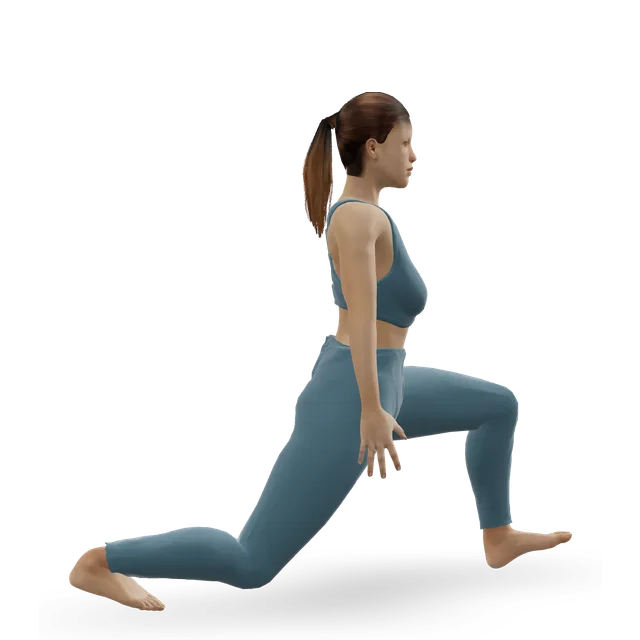
Split squat demonstrated on the 3D figure3D demoSplit squatIntermediate · No equipment

3 sets of 8 each leg · Pad the back knee and stop just short of the floor

Easier: Bodyweight squat · Harder: Reverse lunge

Reverse lunge demonstrated on the 3D figure3D demoReverse lungeIntermediate · No equipment

2 to 3 sets of 8 each leg · Lower the back knee under control rather than dropping onto it (editorial dose)

Easier: Split squat · Harder: Split squat with dumbbells

Get up and down from the floor demonstrated on the 3D figure3D demoGet up and down from the floorBeginner · No equipment

5 to 8 slow cycles, kneeling on a cushion · The first real test of kneeling

Easier: Sit to stand from a chair · Harder: Bodyweight get-up

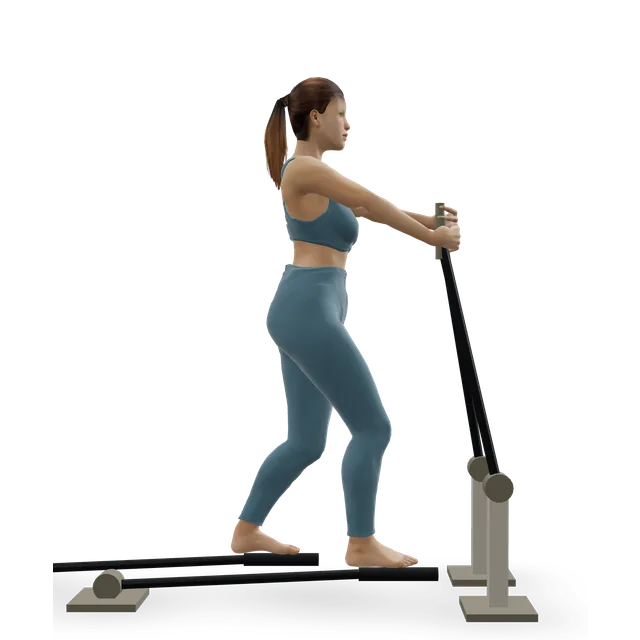
Single-leg stand demonstrated on the 3D figure3D demoSingle-leg standBeginner · A wall

3 holds of 20 to 30 s each leg · Hand on a wall

Easier: Tandem stance and heel-to-toe walk · Harder: Single-leg reach matrix

Move on when: A few minutes of kneeling on a pad leaves no extra swelling or warmth the next day. Then build up kneeling at work gradually, with pads and breaks.

Follow along: a timer, a cue and the next move, one step at a time.

What to change for now

Kneeling at work

Use a thick pad or a kneeling mat, kneel on the other knee, or squat or sit on a low stool for low tasks. Take regular breaks, stand up and stretch your legs, and switch tasks. Carpet layers who used a knee kicker to stretch carpet had more bursitis, and in floor layers, tools and methods that cut kneeling reduced severe knee complaints, so it's worth asking about other tools at work.

Sources 1, 2, 3, 6, 22

Look after the skin over the knee

Germs can get into the bursa through a cut, scratch, graze or bite, so clean and cover any break in the skin over the knee, and watch for redness, heat or a high temperature. Leave draining to a clinician: squeezing or pricking the swelling yourself can let infection in.

Sources 2, 3, 1

Positions to swap, and why

Habit or positionWhy it mattersInstead
Kneeling on a hard floor, or with your weight on the kneecapPressure and friction from kneeling cause most cases.A thick pad or kneeling mat; kneel on the other knee, squat, or sit on a low stool.
Long spells of kneeling without breaksThe NHS advises regular breaks, and the AAOS standing up to stretch the legs and switching tasks.Change position often, and stand and march on the spot between spells.Try: Standing march
Kicking a carpet stretcher (knee kicker) with the kneeUsing a knee kicker was the only predictor of bursitis in a study of carpet layers.Other tools and methods that cut kneeling; in floor layers they reduced severe knee complaints.
Squeezing, pricking or draining the swelling yourselfA needle or a break in the skin can carry infection into the bursa.Leave draining to a clinician.
Reverse Nordics and other exercises kneeling on the sore kneeThey press straight on the bursa (our caution).Thigh strength without kneeling, such as the seated knee extension.Try: Seated knee extension (chair)
Half-kneeling stretches on the sore kneeYour weight rests on the front of the knee (our caution).A standing quad stretch.Try: Standing quad stretch
Split squats with the back knee touching downThe back knee lands on the sore spot; this move's own caution is to pad the back knee.Pad the back knee and stop just short of the floor, or do step-ups for now.Try: Step-up
Expecting an injection to fix it while you carry on kneelingIn the elbow, a steroid sped recovery a little but brought more infection and skin thinning, there's no knee trial, and the pressure that caused it remains.Pads, breaks and less kneeling first.

Routines to follow

More moves for this area

Questions people ask

What is housemaid's knee?

It's the old name for prepatellar bursitis: a swollen, tender, fluid-filled sac on the front of the kneecap, usually from kneeling. It's the knee bursa most often affected.

Housemaid's knee or clergyman's knee: what's the difference?

Housemaid's knee is the bursa on the kneecap; clergyman's knee is the bursa just below it, over the tendon, said to come from kneeling more upright. They're treated the same way.

How long does knee bursitis last?

Bursitis that isn't infected usually goes in a few weeks with rest from kneeling, ice and painkillers. See a GP if it isn't better after 1 to 2 weeks of looking after it yourself.

How do I know if it's infected?

Heat, redness, increasing pain, broken skin over it, or a high temperature, shivering or feeling unwell. In reviews of knee and elbow bursitis together, about 1 in 3 cases was infected, and having no fever doesn't rule it out. If you're unsure, get a same-day check.

Should it be drained?

Not routinely. A GP may take a sample with a needle to check for infection or gout, which can also ease the swelling. A US review advises against routinely draining bursitis that isn't infected, because the needle can carry infection in.

Do steroid injections work?

They may speed recovery a little, but the evidence is thin. No trial has tested them in the knee, and in the elbow a steroid cleared bursitis about a week faster, while a review linked it with more infection and skin thinning. One NHS service keeps them for when other measures haven't worked and the bursitis still affects work or sport.

What exercises help, and which should I avoid?

Exercise doesn't treat the bursa, but keeping the thigh strong and the knee moving without pressing on it is sensible: straight-leg raises, bridges, sit-to-stands and cycling. Avoid kneeling, and exercises that put your weight on the knee, until it settles.

Do knee pads help?

They're the main prevention, along with regular breaks from kneeling. In lab studies, pads spread the pressure but didn't remove it, so cutting the time you spend kneeling matters too.

I kneel at work. Can I claim anything?

In the UK, bursitis at or about the knee from severe or prolonged pressure is a prescribed industrial disease (A6) for people who kneel a lot at work, so you may be able to claim Industrial Injuries Disablement Benefit. Whatever you claim, pads, breaks and less time kneeling make it less likely to come back.

Is it a Baker's cyst, or fluid on the knee?

Bursitis is a swelling on the front of the kneecap, outside the joint. A Baker's cyst is a lump at the back of the knee, and 'water on the knee' is fluid inside the joint, which makes the whole knee swollen and hard to bend. Each needs its own check, and Baker's cysts have their own guide.

Will I need surgery?

Rarely: only if the bursitis is severe, keeps coming back, or an infection doesn't settle. Keyhole and open removal of the bursa gave similar results in a review of 10 studies.

Related exercise guides

Other pain guides

Sources

  1. NHS · Bursitis
  2. AAOS OrthoInfo · Prepatellar (kneecap) bursitis
  3. Leeds Community Healthcare NHS Trust · Pre-patella bursitis (MSK service page)
  4. Khodaee 2017 · Common superficial bursitis (review, Am Fam Physician)
  5. GPnotebook · Infrapatellar bursitis
  6. Thun 1987 · Knee problems from repeated kneeling in carpet and floor layers (cross-sectional study, Br J Ind Med)
  7. Kivimäki 1992 · Ultrasound findings in carpet and floor layers' knees (cross-sectional study, Scand J Work Environ Health)
  8. Jensen 2000 · Work-related knee disorders in floor layers and carpenters (cross-sectional study, J Occup Environ Med)
  9. Baumbach 2014 · Knee and elbow bursitis: literature review and treatment algorithm (Arch Orthop Trauma Surg)
  10. GOV.UK (Department for Work and Pensions) · Industrial Injuries Disablement Benefits: list of prescribed diseases (A6, bursitis of the knee)
  11. Darrieutort-Laffite 2024 · 2023 French recommendations for septic bursitis of the knee and elbow (Joint Bone Spine)
  12. Tschirch 2003 · Cysts and fluid-filled bursae on MRI of 102 knees without symptoms (AJR Am J Roentgenol)
  13. Jensen 2012 · Knee X-ray and MRI findings in floor layers and graphic designers (cross-sectional study, BMJ Open)
  14. Kim 2016 · Compression and anti-inflammatories, draining, or draining with a steroid injection for elbow bursitis (RCT of 90, Clin Orthop Relat Res)
  15. Hallam 2025 · Physiotherapy with or without a steroid injection for knee bursitis (critically appraised topic, Keele University)
  16. Kaur 2023 · Non-surgical treatment of non-infected elbow bursitis (systematic review, Reumatol Clin)
  17. Charret 2021 · Infected elbow and knee bursitis in 272 patients (multicentre study, J Antimicrob Chemother)
  18. Uçkay 2017 · One or two operations for infected elbow and knee bursitis (RCT of 164, Mayo Clin Proc)
  19. Brown 2022 · Managing infected and non-infected prepatellar bursitis (systematic review, Arch Orthop Trauma Surg)
  20. Porter 2010 · Pressure on the knee when kneeling, with and without kneepads (lab study, Appl Ergon)
  21. Xu 2017 · Knee forces when kneeling with different kneepads (lab study, Appl Ergon)
  22. Jensen 2008 · Training floor layers in working methods that cut kneeling: 2-year follow-up (controlled study, Occup Environ Med)
  23. Thomeé 1997 · Treating patellofemoral pain in young women with a pain-monitoring model (Phys Ther)
  24. Ageberg 2010 · NEMEX-TJR neuromuscular training for severe hip or knee osteoarthritis, and its pain rule (BMC Musculoskelet Disord)
  25. Dragoo 2012 · Evaluation and treatment of disorders of the infrapatellar fat pad (review, Sports Med)
  26. NHS · Cellulitis
  27. NHS · Septic arthritis
  28. NHS · Knee pain

Exercise education, not a diagnosis or treatment plan. It is written from the guidelines and studies listed above; review by a clinician is pending. If your pain follows an injury, is severe, is getting worse, or comes with any warning sign listed on this page, get it assessed. Health disclaimer.