Strengthen the muscles round the knee
The quadriceps, hamstrings, glutes and side hip muscles, and calves move and steady your knee. For sport, balance and landing practice are the other half.
Training guide
You can't strengthen the knee joint itself, but you can strengthen the muscles that move and steady it: the quadriceps at the front of your thigh, your hamstrings, the glutes and side hip muscles that keep the knee in line, and your calves. Five kinds of move, 2 or 3 times a week, cover them, and they suit healthy knees, ageing knees and many sore ones.
Exercise helps sore knees, but modestly, and heavier isn't automatically better. This guide covers what supports a knee, what the trials show for arthritis, kneecap pain and sport, the knee strengthening exercises with doses and steps from a chair to a barbell, why squats and knees past your toes are fine, how long it takes, and when knee pain needs its own plan first. Our knee strengthening workout puts it into one session.
The quadriceps, hamstrings, glutes and side hip muscles, and calves move and steady your knee. For sport, balance and landing practice are the other half.
In 139 trials of knee arthritis, exercise eased pain by about 13 points on a 100-point scale compared with no treatment, and NICE recommends muscle-strengthening exercise for everyone with osteoarthritis. For kneecap pain, hip and knee exercises together beat knee exercises alone.
Programmes focused on the quadriceps eased more arthritis pain than general leg programmes, and weaker thigh muscles go with knee arthritis later (a link, not proof). Add hamstring, side hip and calf work.
A squat or leg press, a single-leg move such as step-ups or split squats, a hamstring move, side hip work and calf raises: 2 or 3 sets of 8 to 15, stopping 2 or 3 reps short of failure, as our plans advise.
In 377 adults with knee arthritis, heavy strength training eased pain no more than lighter training over 18 months, and strength has to rise a lot before pain changes. Give it months, within our knee pain rule.
Squat as deep as you can with control and without pain, and let your knees travel past your toes: blocking them shifts the load to your hips and lower back, as our squat guide explains.
A knee is a hinge between the thigh bone and the shin bone, with the kneecap gliding in a groove at the front, as our knee joint page explains. You can't strengthen the joint itself; you strengthen the muscles that move and steady it, and the tendons and bone adapt with them.
The four muscles at the front of your thigh straighten the knee and control it as you sit down, squat, land and go downstairs. They are the muscles most linked with knee arthritis and kneecap pain.
The hamstrings bend the knee and share the load with the knee's ligaments. The glutes and side hip muscles keep the knee in line over your foot as you step, land and stand on one leg. One of the calf muscles crosses the back of the knee too.
Source 1
Some want knees that cope with sport and stairs, some are getting older, and some have a knee that aches. The training is the same core; what changes is the depth, the load and the pain rule. A knee that hurts belongs first with its pain guide (see "When your knee hurts" below).
Long thighs or stiff ankles mean more forward lean or more knee travel in a squat, which is normal. If you're heavier, body-weight moves are already a real load, so sit-to-stands and step-ups are a good start (our suggestion). Beginners get stronger within weeks, but painful knees take months to change.
Most trials here are in people with knee arthritis or kneecap pain, or in young athletes. We found no trial of knee strengthening in people whose knees don't hurt, other than injury prevention in sport.
In a 2024 Cochrane review of 139 trials and 12,468 people, exercise improved pain by about 13 points and function by about 12.5 points on 100-point scales compared with no treatment or usual care, straight after the programme (low and moderate certainty). No type of exercise beat another. The authors call the size of the benefit of uncertain clinical importance, partly because people knew which treatment they had.
Source 3
NICE recommends therapeutic exercise for everyone with osteoarthritis, such as local muscle strengthening and general aerobic fitness, and warns that joint pain may rise at first while regular exercise still helps the joint. OARSI makes structured exercise a core treatment for knee osteoarthritis, and the NHS calls exercise one of the most important treatments.
Across 48 knee arthritis trials, aerobic, strength and functional exercise eased pain by similar amounts. Programmes focused on the quadriceps eased more pain than general leg programmes, and supervised exercise at least 3 times a week did better than less often. These are comparisons between trials, not head-to-head tests.
Source 6
In 45 trials of 4,699 people, strength programmes built more thigh strength than other exercise but didn't ease more pain; the authors estimate strength has to rise by about 30 to 40% before pain likely changes. In the START trial of 377 adults aged 50 and over, heavy strength training was no better for knee pain at 18 months than lighter training or an attention control.
In 11 cohort studies of 46,819 people followed for at least 2 years, weaker thigh muscles went with higher odds of painful knee arthritis later, in women (1.85 times) and men (1.43 times). The evidence is low quality and shows a link, not that strengthening prevents arthritis.
Source 7
An international consensus recommends exercise for kneecap (patellofemoral) pain, combining hip and knee exercises in preference to knee exercises alone. In the Cochrane review of 31 trials, exercise cut pain during activity by about 1.5 points out of 10 (very low-quality but consistent evidence). In 14 trials of 673 people, hip and knee strengthening cut pain by 1.5 points out of 10 more than knee strengthening alone, without a measurable strength gain.
In 18 studies that followed 4,818 people, weak quadriceps predicted kneecap pain in military recruits. Weak hips didn't, and nor did age, height, weight or body mass index.
Source 12
Warm-ups that combine strength, balance and landing work cut ACL (anterior cruciate ligament, a major knee ligament) injuries by about 40% in 13 studies and by half when 8 meta-analyses were pooled, and non-contact ACL injuries in female athletes by about two-thirds; there's too little data in men to say. Across 25 trials of 26,610 people, strength training cut sports injuries to under a third, while stretching did nothing. The FIFA 11+ warm-up cut football injuries by 39%.
In 25 studies of 125,810 people, 3.5% of recreational runners had hip or knee arthritis, against 10.2% of non-runners and 13.3% of competitive runners. These are links that can't prove cause.
Source 20
A squat or leg press for the quadriceps; a single-leg move (step-ups, split squats, reverse lunges or step-downs); a hamstring move (Romanian deadlifts, leg curls, slider curls or Nordic curls); side hip work (lateral band walks, side-lying leg raises or clamshells); and calf and shin work (calf raises and tibialis raises). For sport, add landings and one-leg balance. This is our editorial grouping, matching our knee strengthening workout and bigger legs guide.
Two or three sessions a week on days that aren't back to back. The NHS asks for strength work on at least 2 days a week, and in knee arthritis trials, 3 supervised sessions a week did better than fewer.
Two or three sets of 8 to 15 per move (our editorial starting point). Stop squats, split squats and hinges 2 or 3 reps short of failure, and the last set of leg extensions, curls and calf raises 0 to 2 reps short, as our plans advise. In your first two weeks, stop every set with 3 or 4 reps to spare.
Two to 3 minutes between heavy squat sets, 90 seconds to 2 minutes for single-leg work, and 60 to 90 seconds for curls, extensions and calf raises, as our plans' notes say.
As deep as you can with control and without pain, as our bigger legs guide says. With kneecap pain, start with squats to about 45 degrees of knee bend and deepen them as the pain allows, as our squat guide explains. With sore knees, add depth before you add load.
Pain from 0 to 2 out of 10 is fine, and up to 5 is acceptable if your knee is back to its usual level by the next morning; for tendon pain just below or above the kneecap, keep it to 3 or less. Sharp, catching or giving-way pain, or new swelling, means stop. That's our knee guides' rule.
NICE says joint pain may increase when you start exercising with osteoarthritis, and that regular exercise still helps your joints. Build up gradually, within the rule above, and see our knee arthritis guide.
Source 4
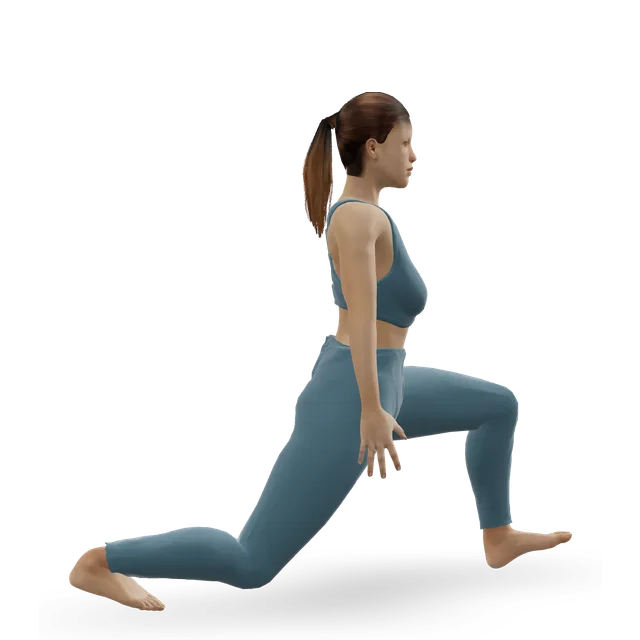
Our editorial order, built on our knee strengthening workout, our plans' shared notes and the kneecap pain consensus's hip and knee advice. The split squat shows the single-leg step; our split squat guide teaches it.
Loading the 3D figure…
The movement on the figure: Split squat
From the chair to the barbell: sit-to-stands 3 sets of 8 to 12, bodyweight squats 3 sets of 10 to 20, goblet squats 3 or 4 sets of 8 to 12 (our squat guide's ladder), the leg press 3 sets of 8 to 12 and wall sits of 30 seconds (our machine leg and knee strengthening workouts).
 3D demoSit to stand from a chairBeginner · A bench or box
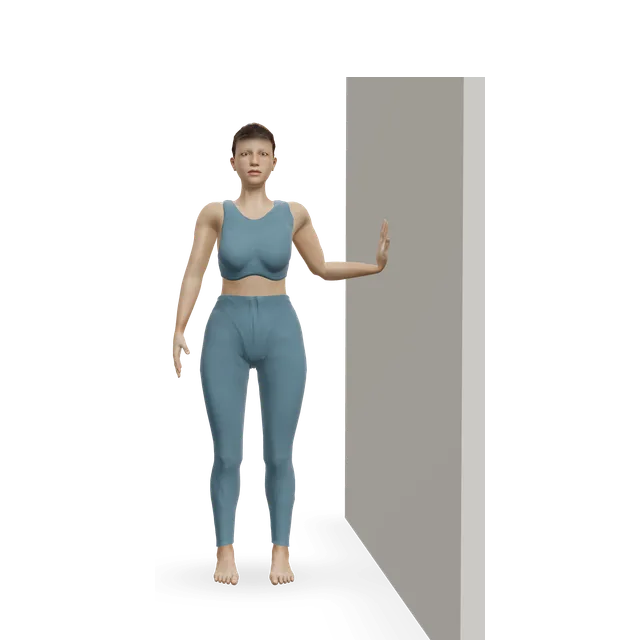
 3D demoWall sitBeginner · A wall
 3D demoBodyweight squatBeginner · No equipment
 3D demoDumbbell goblet squatIntermediate · A dumbbell
 3D demoLeg pressBeginner · Strength machine
 3D demoBarbell back squatAdvanced · A barbell
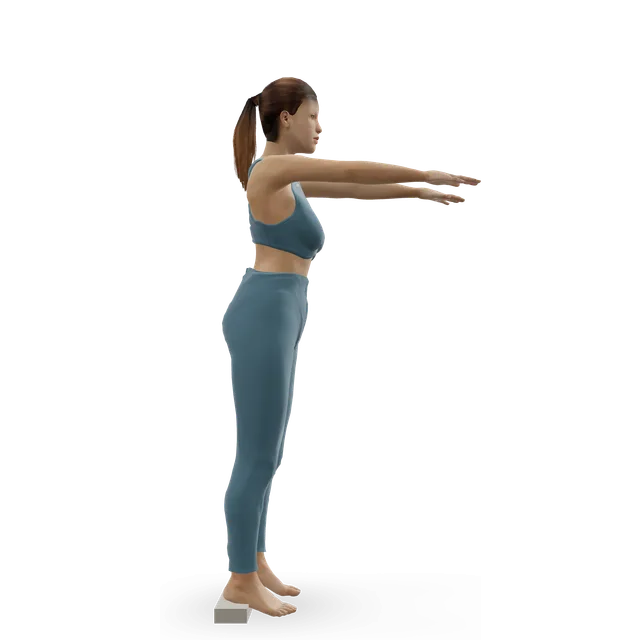 3D demoHeel-elevated deep squat (slant board squat)Intermediate · A step
Step-ups and slow step-downs, 8 each side, and split squats, 2 or 3 sets of 8 to 12 each side (our knee strengthening and home leg workouts). Bulgarian split squats come last.
Romanian deadlifts 3 sets of 8 to 10, curls 3 sets of 10 to 12, lateral band walks 2 sets of 10 steps each way and calf raises 2 or 3 sets of 10 to 15 (our bigger legs guide and leg workouts). Nordic curls come from week 3, 2 sets of 3 to 5 slow lowers.
 3D demoDumbbell Romanian deadliftIntermediate · A dumbbell
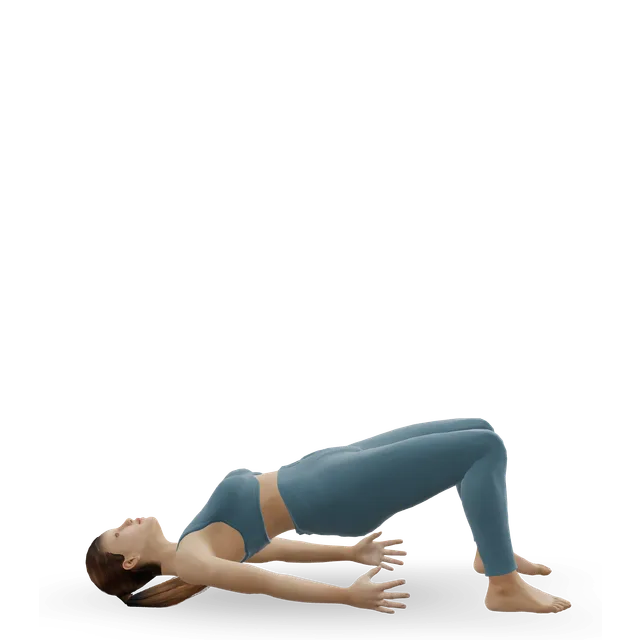 3D demoSlider hamstring curlIntermediate · No equipment
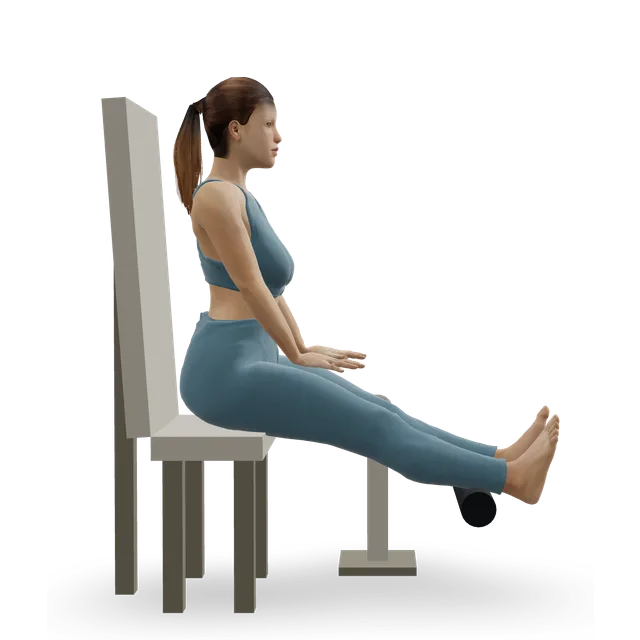 3D demoMachine leg curlBeginner · Strength machine
 3D demoNordic curlAdvanced · An anchor point
 3D demoLateral band walkBeginner · A band
 3D demoSide-lying leg raiseBeginner · No equipment
 3D demoClamshellBeginner · No equipment
 3D demoSlow calf raiseBeginner · A wall
 3D demoSingle-leg calf raise from a stepIntermediate · A step + A wall
 3D demoTibialis raiseBeginner · No equipment
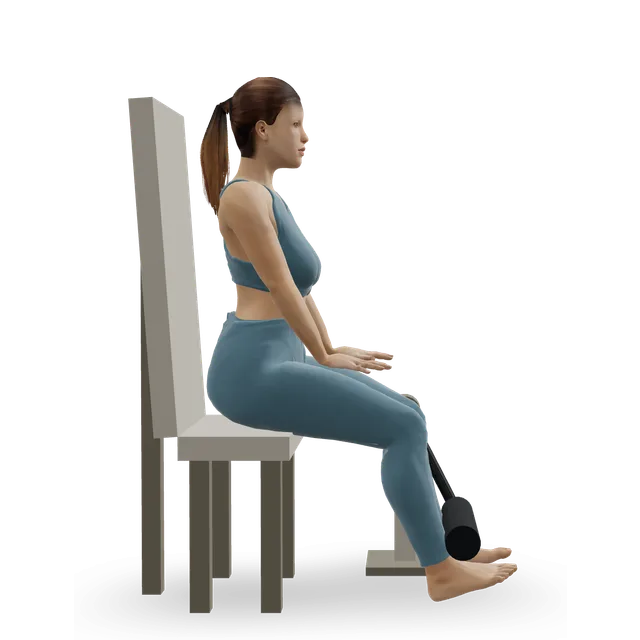
Leg extensions 2 sets of 12 to 15 and reverse Nordics 2 sets of 3 to 5 load the quadriceps with little skill. For sport: one-leg stands of 30 seconds, snapdowns 2 sets of 5 holding each landing, and hop and stick once two-foot landings are steady (our knee control warm-up and runners' workouts).
In 7 weight-trained men, stopping the knees from passing the toes lowered the load on the knee but moved it to the hips and lower back, so the authors concluded the knees may need to move a little past the toes. What matters is that your knees follow your toes rather than caving in, as our squat guide explains.
Source 10
The evidence is biomechanical reviews, with no outcome trials. One found the parallel squat wasn't harmful to healthy knees and could improve their stability; the other found no evidence that deep squats raise the risk to the knee's passive tissues when technique is learned and loads build gradually. They disagree on depth: the older review prefers parallel squats for athletes, the newer one says the stress behind the kneecap peaks at about a right angle, not deeper.
Change the depth and the load within our knee pain rule rather than dropping the move: squats to about 45 degrees of knee bend load the kneecap least, as our squat guide says, and the leg press lets you control the depth.
The warm-ups that protect knees combine strength, balance and landing practice. In 1,892 girls aged 13 to 17, the FIFA 11+ warm-up lowered the risk of injuries overall and of severe injuries over a season. Our knee control warm-up builds this into 10 minutes before training.
Recreational running isn't linked with more knee arthritis. Two short strength sessions a week, as in our strength training plan for runners, cover the knee's muscles; build your running up gradually, and see our knee pain when running guide if a knee aches.
Source 20
Pain around or behind the kneecap with stairs, squats or sitting: our runner's knee guide has a staged plan with hip and knee exercises.
Exercise is a first-line treatment. Our knee arthritis guide and exercise for arthritis guide give the plans, and say how to handle pain that rises when you start.
Often a tendon. Our jumper's knee and quadriceps tendinopathy guides keep tendon pain to 3 out of 10 or less with a loading plan.
Our meniscus tear and ACL injury guides cover these, and the warning signs below say when to get it checked first. After surgery, follow your surgical team's limits and our ACL surgery or knee replacement guide.
Strength rises within 2 to 6 weeks, as our get stronger guide explains, but the arthritis trials suggest strength has to rise a lot before pain changes, and the changes are modest. Treat 12 weeks as your first block (our editorial starting point) and keep going.
Our knee strengthening workout goes from sit-to-stands to reverse Nordics, with step-downs, side hip work and one-leg balance. The knee control warm-up suits sport; the step-up, squat and lunge workouts build each move.
A 25-minute session for knees that don't currently hurt: thigh and hamstring strength, single-leg control, then an optional full-range block with knees over toes.
25 minBeginner14 movesA bench or box, A wallA 20-minute warm-up that trains your knees to track over your toes: side-hip strength, squats and lunges with alignment practice, balance and quiet landings.
20 minBeginner10 movesA wall, A bandA 30-minute step-up workout at home or in the gym: step-ups, split squats, step-downs and calf raises on one step, with the height set to your level.
30 minBeginner9 movesA wall, A stepA 25-minute practice session for the squat: find your depth on a chair, groove the bodyweight squat with pauses, then load it with a slow goblet squat.
25 minBeginner8 movesA wall, A bench or boxA 25-minute session from the split squat to the walking lunge: ankle and balance prep, slow split squats, reverse lunges, then walking lunges.
25 minBeginner11 movesA wall, A bench or boxA gentle leg strength routine with no jumping: sit-to-stands, step-ups, wall sits, bridges and calf raises.
20 minBeginner7 movesA bench or box, A stepA lower body workout at home: split squats, slider hamstring curls, single-leg bridges, step-ups, band walks and calf raises, with dumbbell options.
30 minIntermediate12 movesA wall, A stepA gym leg day: back squats, leg press, leg curls, Bulgarian split squats, leg extensions and calf raises.
55 minIntermediate9 movesA wall, A barbellA 45-minute leg day on machines only: the leg press, then leg extensions and seated leg curls for the muscles it misses, hip abduction and calf presses.
45 minBeginner10 movesCardio machine, Strength machineFIFA's 11+ injury prevention warm-up as its manual sets it out: running drills, strength, balance and jumping at three levels, then faster running.
20 minBeginner20 movesCardio machine, A wallA 40-minute strength and balance session for over-65s, built from the Otago home programme and NHS exercises, using a chair, a counter and a step.
40 minBeginner18 movesA bench or box, Something with weightA 25-minute Pilates class for sore knees and knee arthritis: lying and side-lying leg work, shallow squats and balance, with no kneeling at all.
25 minBeginner15 movesA bench or box, Something with weightA 25-minute knee-friendly yoga practice with no kneeling and no deep bends: shallow standing poses, hip and thigh strength on the floor, and supported stretches.
25 minBeginner15 movesFirm cushionThe runners' plan adds two short strength sessions to running; the seniors' plan builds strength and balance through the week.
A 12-week strength plan for runners: two sessions a week of heavy lifts, single-leg work, calf raises and hops, fitted around your runs.
2 training days45 minBeginner3 days a weekA 12-week exercise plan for over-65s: strength and balance three times a week, short balance sessions and daily walks, based on falls-prevention trials.
3 training days40 minBeginner3 days a weekA free 30-day squat challenge with a chair track and a single-leg track: 3 short sessions a week, optional practice days and a before-and-after test.
3 training days15 minBeginner3 days a weekA 3-day workout plan: three full-body gym sessions a week, alternating workouts A and B, with sets, reps, rest and an 8-week progression.
3 training days45 minBeginner3 days a weekThree full-body home workouts a week with dumbbells or no equipment at all, plus walks and an 8-week plan to keep progressing.
3 training days35 minBeginnerFollow your surgical team's limits. Our knee replacement, hip replacement and ACL (anterior cruciate ligament) injury guides cover the stages.
Start with sit-to-stands, step-ups and leg extensions, and add balance work: strength and balance training together cut falls by about a third in older adults. The NHS asks adults 65 and over for strength, balance and flexibility work on at least 2 days a week.
With osteoporosis or a past spinal fracture, avoid repeated or loaded deep rounding of the back, and bend from the hips. The osteoporosis guide covers impact and lifting.
A knee that hurts below the kneecap in a growing child can be Osgood-Schlatter disease: see our guide. Our children's exercise guide covers strength training for young people.
Go to A&E (accident and emergency) if you've injured your knee and it has changed shape, it becomes very swollen very quickly, you felt a pop or snap, you can see bone sticking out, or it's bleeding heavily. Don't drive yourself: ask someone to take you, or call 999 if the pain means you can't move your leg to get there.
Get advice from NHS 111 now: you cannot move the knee or put any weight on it, or it is very painful, badly swollen or has changed shape.
Get advice from NHS 111 now: the knee locks, gives way or clicks painfully. Painless clicking is normal.
Get advice from NHS 111 now: a hot, red or swollen knee with sudden severe pain, a very high temperature, or feeling hot, cold or shivery. This can be a joint infection.
Source 25
You hurt your knee and cannot take 4 steps, or you are 55 or over and have injured it: get it checked the same day for a broken bone.
A pop or tearing feeling at the front of the knee after a fall, a jump, a landing or a heavy squat, then you can't straighten the knee or lift the straight leg, there's a dent above or below the kneecap, or the kneecap sits higher or lower than on the other side. Go to A&E or an urgent treatment centre, or get help from NHS 111, as our knee pain when squatting guide explains. In the US, go to urgent care or the emergency department.
Same day (urgent GP appointment or NHS 111): throbbing pain in one leg (rarely both), usually the calf or thigh; swelling in one leg (rarely both); red, blue or darkened skin; or swollen veins; or sudden worse pain and swelling around a lump at the back of the knee (a possible clot or a burst Baker's cyst).
Knee pain that has not improved within a few weeks of looking after it at home. Many areas offer NHS physiotherapy without a GP referral.
Source 25
If you get chest pain or pressure, feel faint or dizzy, are unusually breathless, or your heart races or beats irregularly during exercise, as our plans advise.
For chest pain that comes on suddenly and doesn't go away, feels tight or like squeezing, spreads to your arms, neck, jaw, stomach or back, or comes with sweating, feeling sick, light-headedness or breathlessness; severe difficulty breathing; someone who faints while exercising; palpitations that don't go away, or come with chest pain, shortness of breath or feeling faint; or a headache that starts suddenly and is extremely painful, especially while lifting or straining, or comes with numbness or weakness, difficulty speaking or loss of vision. The NHS says a bleed on the brain may be more likely when lifting something heavy. Don't drive yourself to A&E.
Ask for an urgent GP appointment or get help from NHS 111 for a headache that's triggered or made worse by coughing, sneezing, bending down or exercising. In the US, contact your doctor or urgent care.
Stop straight away if you feel any pain or become unwell, the NHS says, and contact 111 if your symptoms worry you or don't go away.
A dull ache in your muscles for a day or two after something new is normal. Joint pain that's sharp, gets worse during a set or lingers into the next day means switching to the easier option, and seeing a GP or physiotherapist if it carries on (our plans' rule). Our muscle soreness guide has more.
Speak to your GP first if you haven't exercised for some time or have medical conditions or concerns, as the NHS advises. Get advice before heavy lifting or hard straining work if your blood pressure is uncontrolled, or you have heart disease or chest pain when you're active, a pacemaker or defibrillator, diabetic eye disease, glaucoma, a hernia, recent eye or tummy surgery, or you're pregnant, as our breathing guide lists. After a recent shoulder dislocation or shoulder surgery, follow our shoulder dislocation guide or your surgical team first.
Speak to a GP first if you haven't exercised for some time, or if you have a medical condition or concerns. Get advice first, too, if you have a health problem, an injury or symptoms, have recently had a heart attack or an operation, or are pregnant or have recently given birth.
Source 21
See a GP if you think you have a hernia, a bulge or lump that may get bigger when you strain and smaller when you lie down. Get help from NHS 111 if you have a hernia and pain in or around it, a bloated tummy, you feel or are sick, you're vomiting blood or your vomit looks like coffee grounds, you're constipated, you have a high temperature or feel hot, cold or shivery, or you've suddenly become confused. Call 999 or go to A&E for a femoral hernia (a small lump at the top of your thigh, in your groin) with very bad tummy pain, sickness, being unable to fart or poo, a high temperature or sudden confusion.
Reviews of the biomechanics found no evidence that squats harm healthy knees, though they are reviews rather than outcome trials and disagree on the best depth. Squats and split squats are part of the programmes that ease knee arthritis and kneecap pain. With a sore knee, change the depth and load rather than dropping them.
Stopping the knees moved the load to the hips and lower back in a lab study. The NHS's own mini-squat tells you to aim your knees over your big toe. With kneecap pain, limit it for a while, then build it back.
For knee arthritis and kneecap pain, exercise is a first-line treatment, and NICE says pain may rise at first without that meaning harm. Use our pain rule, and the warning signs above for the exceptions.
Heavy strength training eased knee arthritis pain no more than lighter training over 18 months in 377 adults. Choose loads by effort and pain, not a target weight.
Recreational runners had less hip and knee arthritis than non-runners in observational studies, though competitive runners had more.
Source 20
We found no trial support for isolating one part of the quadriceps. The kneecap pain consensus recommends hip and knee exercise together, and that combination eased pain without a measurable change in strength, so exercise seems to help in more ways than one muscle getting bigger (our reading).
There isn't one. A squat or leg press, a single-leg move such as step-ups or split squats, a hamstring move, side hip work and calf raises, 2 or 3 times a week, cover the muscles that support the knee. Programmes focused on the quadriceps, with hip work added, did best in trials of sore knees.
Yes: the muscles around them can, at any age. In knee arthritis trials, exercise eased pain and improved function, and NICE recommends muscle-strengthening exercise for everyone with osteoarthritis.
Strength starts to rise within a few weeks, but in knee arthritis trials strength had to rise a lot before pain clearly changed. Give it 12 weeks and keep going.
Not for healthy knees: reviews of squat biomechanics found no evidence that squats harm them, though they disagree on the best depth. With a sore knee, change the depth and load within our pain rule rather than stopping; our squat guide covers technique.
Yes, as far as your ankles allow. Holding them back shifted the load to the hips and lower back in a lab study; what matters is that your knees follow your toes rather than caving in.
Keep pain to 0 to 2 out of 10, or up to 5 if your knee is back to its usual level by the next morning. Start with sit-to-stands, step-ups and leg extensions through a comfortable range, and add depth before load. Heavy training wasn't better than lighter training for knee arthritis pain.
Yes: sit-to-stands, wall sits, split squats, step-ups, step-downs, slider curls, side-lying leg raises and calf raises need only a chair, a step and a wall. Our knee strengthening workout puts them in order.
Yes, modestly: across 139 trials, exercise improved knee arthritis pain by about 13 points on a 100-point scale compared with no treatment. Pain may rise when you start, and regular exercise still helps; our knee arthritis guide has the plan.
Add landings, hops and one-leg balance to the strength work. Warm-ups that combine strength, balance and landing practice cut ACL injuries by about 40% to a half, and our knee control warm-up builds this in before training.
The same moves work: start with chair and step versions and build up. Strength and balance training together cut falls in older adults, and our older adults guide has more.
Not for recreational runners, who had less knee and hip arthritis than non-runners in observational studies. Competitive runners had more.
Go to A&E if you injured your knee and it swelled very quickly, changed shape or you felt a pop. Get advice from NHS 111 if you can't put weight on it or it locks or gives way, and see a GP if pain hasn't improved within a few weeks.
Exercise education, not a personal prescription, and clinical review of these guides is pending. Check with a GP before starting hard training if you have a heart condition, chest pain, dizziness or breathlessness when active, and stop for sharp or increasing pain. Health disclaimer.