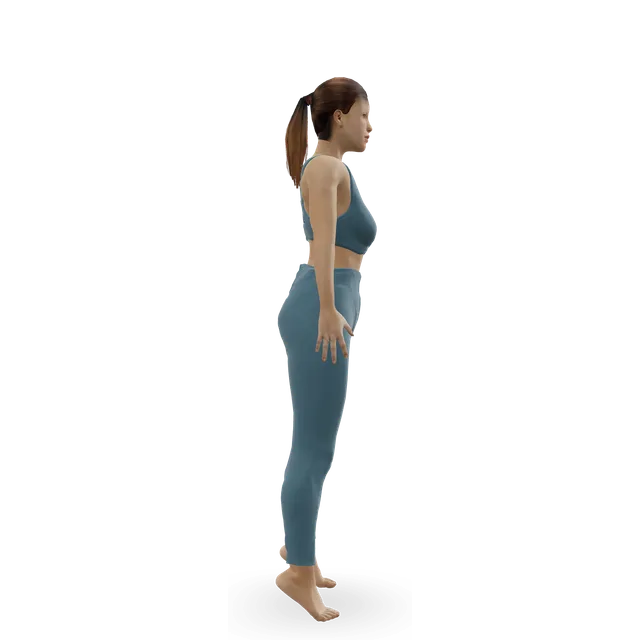
Strength plus balance
Your calves push you off, the muscles on the outside of your shin stop you rolling over, and the front-of-shin muscles lift your foot. Balance, how fast you catch a wobble, is trained separately and matters as much.
Training guide
Strong ankles need strong calves and shin muscles, and the balance to catch a wobble before it becomes a sprain. Balance training is the best-tested way to prevent ankle sprains, and calf raises, band work and, for sport, hops build the rest, 2 or 3 times a week.
This guide covers what protects an ankle, what the trials show after a sprain and for ankles that keep giving way, the ankle strengthening exercises with doses, a calf raise test, braces and tape, running and sport, older adults, and when an ankle needs checking first. Our foot and ankle strengthening routine puts it into one session.
Your calves push you off, the muscles on the outside of your shin stop you rolling over, and the front-of-shin muscles lift your foot. Balance, how fast you catch a wobble, is trained separately and matters as much.
It cut ankle sprains by about a third in 7 trials of 3,726 sporting people, mostly in those who had sprained before. After a sprain, 8 weeks of home balance work cut repeat sprains from 33% to 22% in 522 athletes.
People whose ankles keep giving way are weaker at turning the foot in and out, and both balance and strength training improved how their ankles worked in trials.
Lace-up braces cut ankle injuries by about two-thirds in 3,541 school athletes without raising knee injuries. The only direct evidence on weakening is one 8-week study of muscle reflexes in 20 students, which found no change; long-term strength hasn't been tested.
In 566 adults, the median was 24 single-leg calf raises to fatigue for men and 21 for women. Compare yourself with yourself.
Source 8
If you heard a crack, the ankle looks deformed or you can't put weight on it, follow the warning signs below before you start any exercise.
The true ankle moves your foot up and down; the joint below it rolls it in and out. Our ankle and foot page explains them. The ligaments on the outside of the ankle are the ones that tear in the usual sprain, when the foot rolls under.
The calves: the gastrocnemius, which works best with your knee straight, and the soleus, which works with it bent. The peroneals on the outside of your lower leg, which turn the foot out and resist rolling over. The tibialis muscles at the front and inside of the shin, which lift the foot and support the arch. And the small muscles of the foot.
Balance is how quickly and well you correct a wobble, and it's trained by balancing. People with ankles that keep giving way are weaker at turning the foot out and in, and often at the knee and hip too.
Source 1
Ankle sprains are the most common injury in active people and often happen again, and many people go on to have an ankle that keeps giving way (chronic ankle instability). An ankle that still gives way months after a sprain is worth seeing a GP or physiotherapist about; our chronic ankle instability guide has the plan.
Source 9
Calf raise counts vary widely, and women over 60 did better than men over 60 in one study. Stiff ankles after a sprain limit squats and landings; the knee-to-wall rock is the drill our squat guide uses. Balance falls quickly after the mid-50s, as our balance guide explains.
Source 8
Most trials are in athletes or school sport. The ankle instability trials are small, and their programmes vary a lot.
In 7 trials of 3,726 sporting people, balance (proprioceptive) training cut ankle sprains by about a third, including in people with a past sprain. For people who had never sprained an ankle, the pooled result came from two trials that were each inconclusive.
Source 2
In 522 athletes aged 12 to 70, a home balance-board programme of 3 sessions a week, up to 30 minutes each, harder each week for 8 weeks, cut repeat sprains over a year from 33% to 22%, although only 23% did the whole programme.
Source 3
Across 46 reviews, there was strong evidence for bracing and moderate evidence for exercise to prevent repeat sprains, and early movement helps recovery after a sprain. A clinical guideline prefers supervised exercise to passive treatments and says braces should be considered to prevent repeat sprains.
In 1,460 high-school basketball players, lace-up braces cut acute ankle injuries from 1.41 to 0.47 per 1,000 practices and games, with and without a past injury. In 2,081 American football players they cut ankle injuries too, and knee injuries didn't change. Braces didn't make injuries less severe.
The only direct evidence is one 8-week study of muscle reflexes in 20 students: wearing a lace-up or semi-rigid brace didn't change how fast the outer calf muscle reacted to a sudden turn of the ankle. Long-term strength hasn't been tested.
Source 7
Across 20 studies comparing people with and without ankle instability, those with it were weaker at turning the foot out and in, and at straightening the knee. These studies show a difference, not what caused it.
Source 1
In 20 trials of 682 people, balance training improved self-rated ankle function and reach in a balance test. In 58 trials of 2,097 people, balance training had the broadest benefits, and strength training improved function, balance and strength too.
In 566 adults aged 20 to 81 doing single-leg raises to fatigue on a slight slope, the median was 24 for men and 21 for women. The test was very reliable, but a change of about 6 either way can be day-to-day noise.
Source 8
Across 108 trials, balance and functional exercise cut falls by 24% (high certainty), and programmes that added strength training by about a third (moderate certainty).
Source 14
Balance (one-leg standing, made harder); calves (calf raises with a straight and a bent knee); turning the foot out and in and lifting it (band work, tibialis raises, heel walks); and for running and sport, spring and landing (ankle bounces, pogo hops, hop and stick). Add the knee-to-wall rock if your ankle is stiff after a sprain. This is our editorial grouping, matching our foot and ankle strengthening routine.
Hold each balance exercise for about 20 to 40 seconds, twice, and make one thing harder every week or two: less hand support, a narrower stance, head turns, then eyes closed with a hand hovering over the counter, as our balance guide sets out. The NHS's one-leg stand starts with 5 to 10 seconds, 3 times each side.
Source 15
Calf raises, 2 or 3 sets of 10 to 15, building to single-leg raises from a step; seated calf raises for the soleus; tibialis raises, 15 reps; and band eversion and inversion, from 8 each side (our foot and ankle routine and calf workout). Stop the last set 0 to 2 reps short of failure, as our plans advise for small moves.
Two or three sessions a week. The NHS asks adults for strength work on at least 2 days a week, and adults 65 and over for strength, balance and flexibility work on at least 2 days.
In pooled trials, balance sessions of 20 to 30 minutes, 3 times a week for 4 to 6 weeks, did best. That comes from comparing groups across small trials whose results varied a lot, so treat it as a starting point and keep going after that. Our chronic ankle instability guide has the plan.
Source 12
Some discomfort during exercise is fine. Aim for pain you would call mild to moderate, no more than about 5 out of 10, that settles within an hour, with no more swelling or stiffness the next morning. If it's worse the next day, do a little less (a smaller range, fewer reps, a lighter band), not nothing.
The exceptions: pain in one spot on a bone should be pain-free, because it could be a stress fracture; burning, tingling or numbness means stop that movement; and if your feet are numb, pain won't warn you, so check your skin after exercise.
Our editorial order, built on our foot and ankle strengthening routine and our balance guide's ladder. Our calf raise guide teaches the single-leg raise.
Loading the 3D figure…
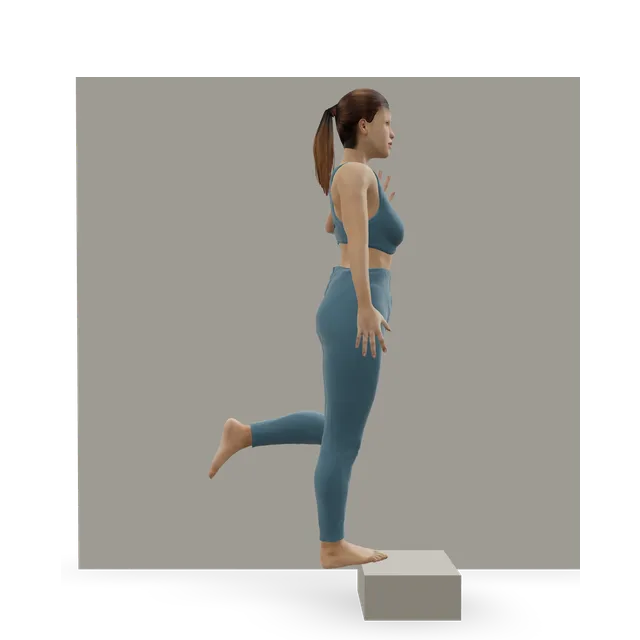
The movement on the figure: Single-leg calf raise from a step
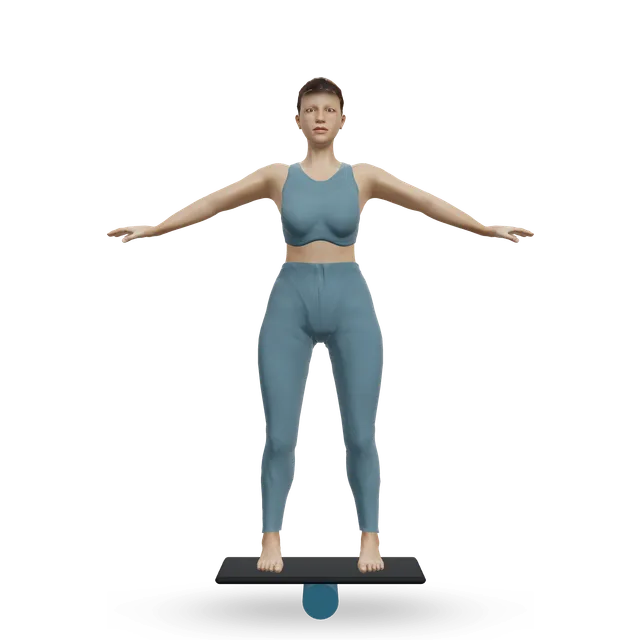
One-leg stands of 30 seconds, made harder step by step; the reach matrix, 3 rounds of 5 reaches in each direction, each leg (the move page's dose, its editorial starting point); a balance board only once one-leg standing on the floor is steady.
Single-leg calf raises, 3 rounds of 12 to 20 each leg (our calf workout); seated calf and tibialis raises, 15 each; band eversion and inversion, 8 each side to start (our foot and ankle routine). For an ankle that keeps giving way, the band inversion move page gives a trial's dose: 3 sets of 10 at 3 to 5 seconds a rep, rising to 4 sets of 10 with a heavier band, three times a week for 6 weeks (the Hall 2018 trial).
 3D demoSlow calf raiseBeginner · A wall
 3D demoSingle-leg calf raise from a stepIntermediate · A step + A wall
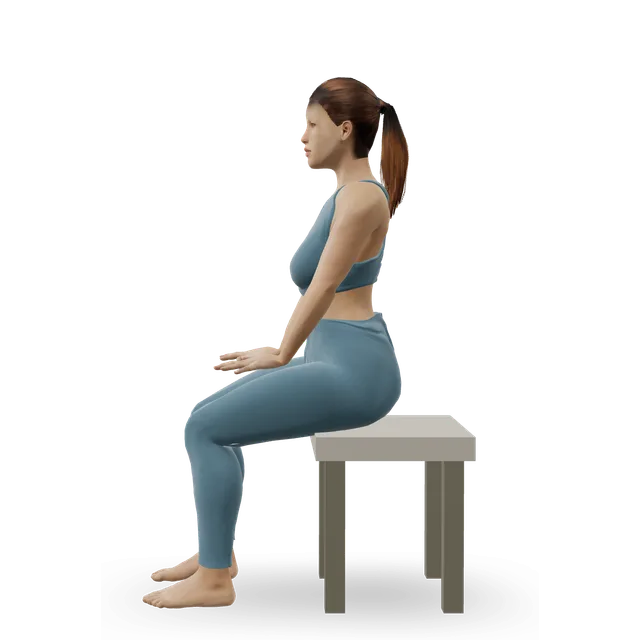
 3D demoSeated bent-knee calf raise (soleus raise)Beginner · A bench or box
 3D demoTibialis raiseBeginner · No equipment
 3D demoBand ankle eversionBeginner · A band + A bench or box
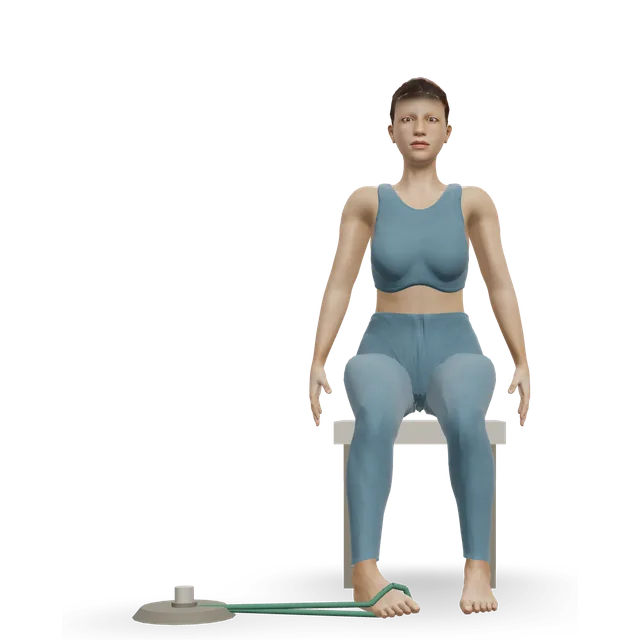 3D demoBand ankle inversionBeginner · A band + A bench or box
 3D demoHeel walkBeginner · No equipment
Ankle circles, 10 slow circles each way with each foot (the move page's dose, its editorial starting point), and knee-to-wall rocks, 8 each side. Then ankle bounces, 2 sets of 20, and single-leg hop and stick, 2 sets of 3 forward and 3 sideways each leg, for active people.
 3D demoAnkle circlesBeginner · No equipment
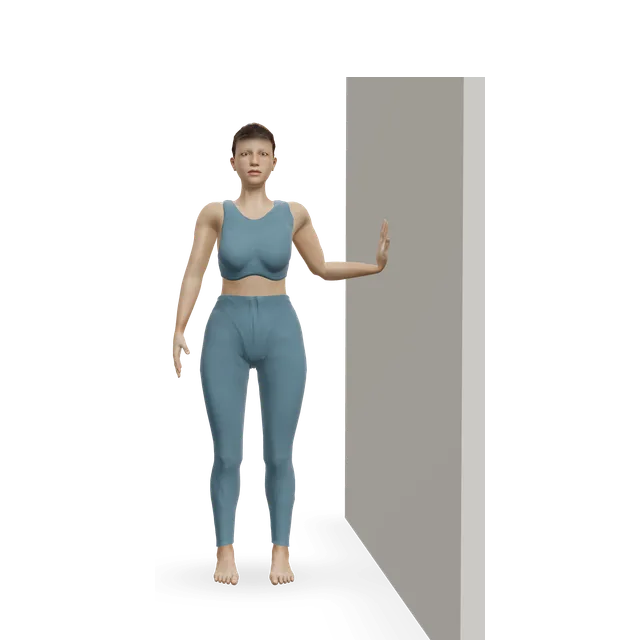
 3D demoKnee-to-wall ankle rockBeginner · A wall
 3D demoAnkle bounces (mini pogo)Beginner · No equipment
 3D demoPogo hopsIntermediate · No equipment
 3D demoSingle-leg hop and stickIntermediate · No equipment
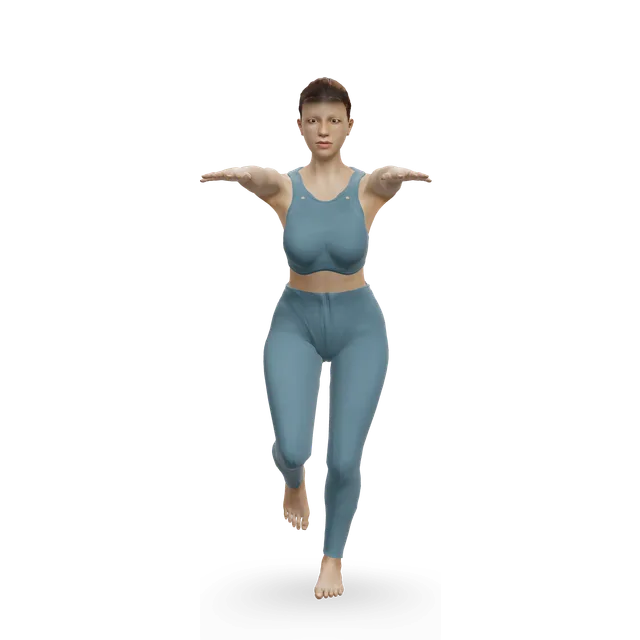 3D demoSingle-leg lateral hopAdvanced · Other / check instructions
Once you can walk without a limp and your clinician agrees, practise single-leg balance 3 times a week for at least 8 weeks, a little harder each week: a home programme like this cut repeat sprains by 35%. Our ankle sprain and chronic ankle instability guides cover the rest of the rehab.
The NHS says most sprains feel better after 2 weeks, but advises avoiding strenuous exercise such as running for up to 8 weeks, as there's a risk of further damage.
Follow our ankle sprain guide, and leave out one-leg jumps until you can hop on that leg without pain (our suggestion). Hop and balance training is part of the rehabilitation that lowers the chance of another sprain, as our single-leg hop and stick move page explains; our chronic ankle instability guide covers ankles that keep giving way.
Source 18
Supervised exercise is preferred to passive treatments. Our ankle sprain guide covers the first days and the stages, and our chronic ankle instability guide covers an ankle that keeps rolling.
Source 11
Bracing has strong evidence for preventing repeat sprains, and lace-up braces cut ankle injuries in school sport without raising knee injuries. After a sprain, a brace or tape for sport alongside balance training is a reasonable choice (our suggestion); our ankle sprain guide has more.
The only direct evidence is one 8-week study of muscle reflexes in 20 students, which found no change. Long-term strength hasn't been tested, so keep doing your balance and strength work as well.
Source 7
Stand on one leg with a hand on a wall for balance and do as many full calf raises as you can at a steady pace. Typical adults manage a median of about 21 to 24. Retest every 4 to 6 weeks the same way (our suggestion), and compare your two legs and yourself over time.
Source 8
Our balance test page times a one-leg stand with your eyes open and closed, next to a counter.
Balance training cut sports injuries by about half across trials. Add single-leg calf raises and small hops once one-leg balance is steady, as our runners' injury prevention exercises do, and build hops up gradually.
Source 19
Calf raises by a counter, heel walks and one-leg balance, made harder over weeks: balance and strength work together cut falls by about a third. Our strength and balance exercises for seniors put them in one session.
Source 14
Our foot and ankle strengthening routine trains toes, arches, calves, the sides of the ankle and balance in one session; the balance training workout adds hops and a board; the calf workout builds the calves.
A 15-minute barefoot routine for stronger toes, arches, calves and ankles, finishing with balance. You need only a towel, a wall and a resistance band.
15 minBeginner11 movesA wall, Other / check instructionsA 20-minute balance workout for steady adults: harder stances, head turns and eyes closed, single-leg reaches and hinges, step-ups and stuck landings.
20 minIntermediate13 movesA wall, A dumbbellA 25-minute calf workout with a step and a dumbbell: single-leg raises for the big calf muscle, then seated raises for the soleus, with gym swaps for each move.
25 minIntermediate7 movesA wall, A stepFoot, calf, balance and hop exercises taken from the running trials with positive results, in a 25-minute home routine for 3 or 4 days a week.
25 minBeginner11 movesOther / check instructions, A bench or boxA 40-minute strength workout for runners at home: hops, Bulgarian split squats, single-leg deadlifts, step-ups, calf raises and side planks.
40 minIntermediate15 movesA wall, A bench or boxA beginner's springy session: calf strength first, then heel drops, calf springs and gentle bounces, building towards skipping and pogo hops.
20 minBeginner11 movesA wall, A stepBalance practice in 10 minutes: tandem stance, single-leg stands, marches, heel walks, tree pose and floor transfers.
10 minBeginner7 movesA wall, A bench or boxA 40-minute strength and balance session for over-65s, built from the Otago home programme and NHS exercises, using a chair, a counter and a step.
40 minBeginner18 movesA bench or box, Something with weightFIFA's 11+ injury prevention warm-up as its manual sets it out: running drills, strength, balance and jumping at three levels, then faster running.
20 minBeginner20 movesCardio machine, A wallThe runners' plan adds two strength sessions with calf and hop work; the seniors' plan builds balance through the week.
A 12-week strength plan for runners: two sessions a week of heavy lifts, single-leg work, calf raises and hops, fitted around your runs.
2 training days45 minBeginner3 days a weekA 12-week exercise plan for over-65s: strength and balance three times a week, short balance sessions and daily walks, based on falls-prevention trials.
3 training days40 minBeginner3 days a weekA weekly plan for women over 50: strength, bone-loading and balance on 3 days plus walking, built on UK osteoporosis consensus advice.
3 training days45 minBeginnerMost people can start walking without a check-up first. Plan with your team first if you take insulin or a sulfonylurea, which can cause hypos, or have eye, foot, kidney or heart problems. With numb feet, wear good shoes and check your feet every day. With advanced eye disease (proliferative retinopathy), avoid straining, jumping and head-down positions.
Follow your team's plan first; our broken ankle guide sets out the stages.
A step-based heel drop may be unsuitable for some Achilles problems, as our calf raise move page says: do calf raises on the floor and see our Achilles tendinopathy guide.
The same calf, band and balance work applies; we found no trial on heels. The NHS advises not wearing high heels while an ankle is painful.
Source 20
Call 999 or go to A&E: after an injury, you heard a crack, the foot or ankle has changed shape or points at an odd angle, a bone is sticking out, there is a bad cut over it, you're in severe pain, or the toes look blue or white, feel numb or are cold to touch. These can mean a broken bone. Don't drive yourself.
Source 18
Same day (NHS 111 or an urgent treatment centre): after an injury, you can't put weight on it or walk more than a few steps, the pain is very bad or getting worse, there is a lot of swelling or bruising or it is getting worse, it feels very stiff, or it's not feeling any better after treating it yourself. Get the same help if you also have a very high temperature, or feel hot, cold or shivery: this could be an infection. If you think it's broken, don't treat it yourself.
Source 18
Same day: a sudden snap or pop at the back of the heel or calf, or a feeling of being kicked there, then walking flat-footed and being unable to push off, stand on tiptoe or climb stairs. It could be an Achilles tendon rupture or a broken heel bone. Go to A&E or a minor injuries unit, or contact NHS 111.
Same day (urgent GP appointment or NHS 111): throbbing pain in one leg (rarely both), usually the calf or thigh; swelling in one leg (rarely both); red, blue or darkened skin around the painful area, which may be harder to see on brown or black skin; or swollen veins. It could be a blood clot (DVT). Watch for it after an ankle injury or time in a cast or boot.
Pain that isn't better after 2 weeks of looking after it yourself, is getting worse, keeps coming back, or stops you doing normal things.
An ankle that keeps giving way months after a sprain.
One spot on a foot bone that hurts with every step and later at night: a possible stress fracture.
Source 20
Call 999 or go to A&E if you heard a crack, the joint has changed shape or points at an odd angle, it's numb or tingling, or the skin looks blue or grey or feels cold. Get help from NHS 111 if it's very painful or swollen, or you can't put weight on it or walk more than a few steps. Call 999 if someone has fallen and may have injured their head, back, neck or hip, or can't get up.
Stop if you feel dizzy or light-headed. Keep a counter or wall within reach, and have someone nearby for the hardest moves if you've fallen recently (our suggestion, as in our older adults guide).
If you get chest pain or pressure, feel faint or dizzy, are unusually breathless, or your heart races or beats irregularly during exercise, as our plans advise.
For chest pain that comes on suddenly and doesn't go away, feels tight or like squeezing, spreads to your arms, neck, jaw, stomach or back, or comes with sweating, feeling sick, light-headedness or breathlessness; severe difficulty breathing; someone who faints while exercising; palpitations that don't go away, or come with chest pain, shortness of breath or feeling faint; or a headache that starts suddenly and is extremely painful, especially while lifting or straining, or comes with numbness or weakness, difficulty speaking or loss of vision. The NHS says a bleed on the brain may be more likely when lifting something heavy. Don't drive yourself to A&E.
Stop straight away if you feel any pain or become unwell, the NHS says, and contact 111 if your symptoms worry you or don't go away.
A dull ache in your muscles for a day or two after something new is normal. Joint pain that's sharp, gets worse during a set or lingers into the next day means switching to the easier option, and seeing a GP or physiotherapist if it carries on (our plans' rule). Our muscle soreness guide has more.
Speak to your GP first if you haven't exercised for some time or have medical conditions or concerns, as the NHS advises. Get advice before heavy lifting or hard straining work if your blood pressure is uncontrolled, or you have heart disease or chest pain when you're active, a pacemaker or defibrillator, diabetic eye disease, glaucoma, a hernia, recent eye or tummy surgery, or you're pregnant, as our breathing guide lists. After a recent shoulder dislocation or shoulder surgery, follow our shoulder dislocation guide or your surgical team first.
Source 16
No trial has shown it. The only direct evidence is one 8-week study of muscle reflexes in 20 students, which found no change, and in school athletes braces cut ankle injuries without raising knee injuries. Long-term strength hasn't been tested.
Repeat sprains are common, but 8 weeks of home balance training cut them by about a third, and balance training improves ankles that keep giving way.
They move the joint through its range, which helps a stiff ankle. Strength needs load, such as calf raises and band work, and control needs balance practice (our reading).
Balance progressions on the floor work, and our balance guide makes the board the last step, once one-leg standing on the floor is steady.
Source 2
Combine balance (one-leg standing, made harder), strength (calf raises with a straight and a bent knee, band work and tibialis raises) and, for sport, hops and landings, 2 or 3 times a week. Balance training is the best-tested way to prevent sprains.
Often an old sprain: ankles that keep giving way are weaker at turning the foot in and out, and balance is worse on that side. See a GP if an ankle keeps giving way months after a sprain.
Once you can walk without a limp and your clinician agrees, practise one-leg balance 3 times a week for at least 8 weeks, a little harder each week. A home programme like this cut repeat sprains from 33% to 22%; our ankle sprain guide has the stages.
Balance training cut ankle sprains by about a third in sporting people, mostly those who had sprained before, and lace-up braces cut ankle injuries in school athletes. Calf and band work add strength.
No trial has shown it: one 8-week study of 20 students found no change in the outer calf muscle's reflex. Long-term strength hasn't been tested, so keep doing your balance and strength work too.
In 566 adults, the median was about 24 single-leg calf raises to fatigue for men and 21 for women. Compare yourself with yourself, as a change of about 6 can be day-to-day noise.
Yes: calf raises on a step, seated calf raises, tibialis raises, a resistance band and one-leg balance by a counter are all you need. Our foot and ankle strengthening routine puts them in order.
Add single-leg calf raises and small hops to balance work, building up gradually. Our injury prevention exercises for runners and strength workout for runners at home do this.
The same calf, band and balance work applies, though we found no trial on heels. The NHS advises not wearing high heels while an ankle is painful.
The sprain trial ran 8 weeks, and balance programmes for ankles that keep giving way ran 4 to 6 weeks in pooled trials. Keep going after that.
Calf raises by a counter, heel walks and one-leg balance, made harder over weeks. Balance and functional exercise cut falls by about a quarter, and by about a third with strength work added.
Call 999 or go to A&E if you heard a crack, the ankle has changed shape or the toes are cold or numb. Get same-day help from NHS 111 or an urgent treatment centre if you can't put weight on it or walk more than a few steps.
Exercise education, not a personal prescription, and clinical review of these guides is pending. Check with a GP before starting hard training if you have a heart condition, chest pain, dizziness or breathlessness when active, and stop for sharp or increasing pain. Health disclaimer.